More like Blue Eel
anchored on:thriller & suspenserevengecontemporarydarkscience fictiongenetic engineering+3 more
but
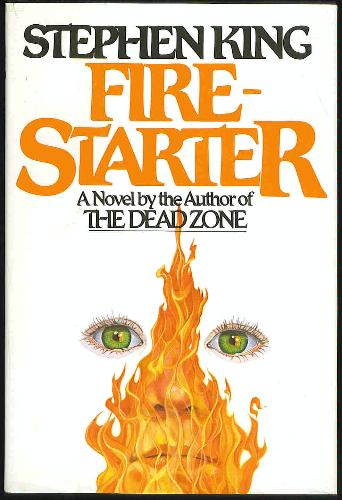
- Firestarter
Stephen Kingstandalone novel1980
similar bycontemporarynorth americascience fictionthriller & suspensedarktense+1 more
WorldCat: Innocence and beauty ignite with evil and terror... First, a man and a woman are subjects of a top-secret government experiment designed to produce extraordinary psychic powers. Then, they are married and have a child. A daughter. Early on the daughter shows signs of a wild and horrifying force growing within her. Desperately, her parents try to train her to keep that force in check, to 'act normal'. Now the government wants its brainchild back for its own insane ends.
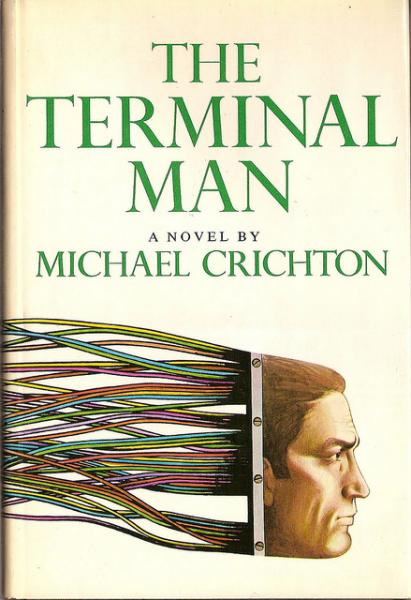
- The Terminal Man
Michael Crichtonstandalone novel1972
similar bycontemporarynorth americascience fictionthriller & suspensedarktensemadness
The Terminal Man is a novel by American writer Michael Crichton. It is his second novel under his own name, his 12th overall, and is about the dangers of mind control. It was published in April 1972 and also serialized in Playboy in March, April, and May 1972. In 1974, it was made into a film of the same name.
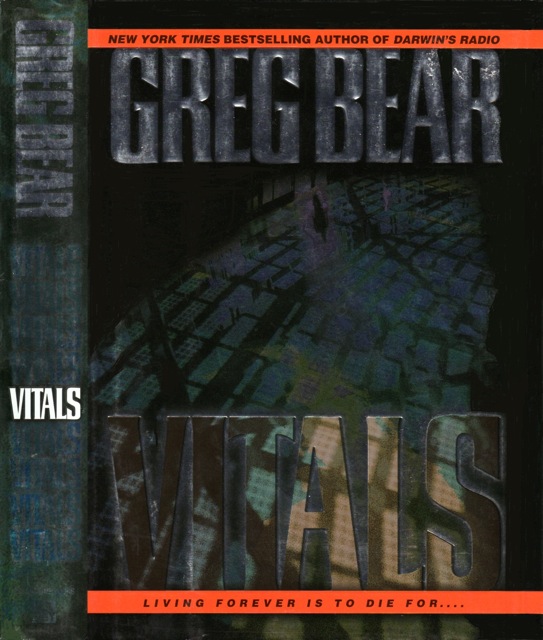
- Vitals
Greg Bearstandalone novel2002
similar bycontemporarynorth americascience fictionthriller & suspensetensegenetic engineering+2 more
From the flaps of the Del Rey first edition: "Hal Cousins is one of a handful of scientists nearing the most sought after discovery in human history: the key to short-circuiting the aging process. Fueled by a wealth of research, an overdose of self-confidence, and the money of influential patrons to whom he makes outrageous promises, Hal experiments with organisms living in the hot thermal plumes in the ocean depths. But as he journeys beneath the sea, his other world is falling apart. Across the country, scientists are being inexplicably murdered - including Hal's identical twin brother, who is also working to unlock the key to immortality. Hal himself barely eludes a cold-blooded attack at sea, and when he returns home to Seattle, he finds himself walking into an eerie realm where voices speak to him from the dead ... where a once-brilliant historian turned crackpot is leading him on a deadly game of hide-and-seek ... and where the beautiful, rich widow of his twin is more than willing to pick up the pieces of Hal's life-and take him places he's never been before. Suddenly Hal is trapped inside an ever-twisting maze of shocking revelations. For he is not the first person to come close to ending aging forever - and those who came before him will stop at nothing to keep the secret to themselves. Now every person on earth is at risk of being made an unsuspecting player in one man's spectacular and horrifying master plan. From the bottom of Russia's Lake Baikal to a billionaire's bionic house built into the cliffs of the Washington seashore, from the darkest days of World War II and the reign of Josef Stalin to the capitalist free-for-all that is the United States, Vitals tells an astounding tale of the most unimaginable scientific secret of all - exposed by the quest for immortality itself..."
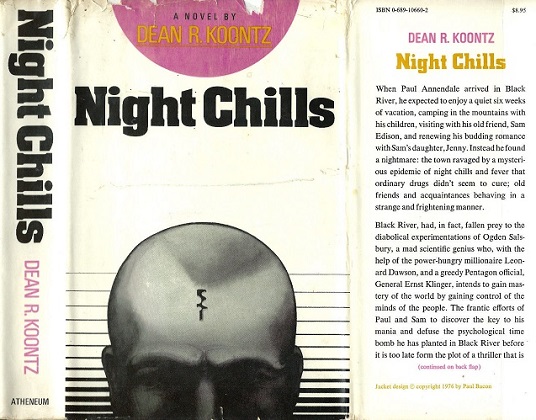
- Night Chills
Dean R. Koontzstandalone novel1976
similar bycontemporarynorth americathriller & suspensescience fictiondarktense
A single father and his 2 children, along with the father's love interest and her father, stumble upon a plot to perfect mind control via scientific means and must stop it before it is extended to everyone in the world.
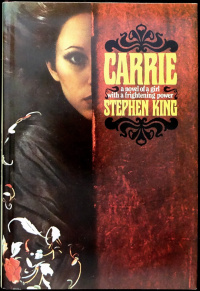
- Carrie
Stephen Kingstandalone novel1974
similar bycontemporarynorth americatensedarkrevenge+1 more
In one way or another, everybody abused Carrie. This sixteen-year-old misfit was forbidden everything that was young and fun by her fanatical mother. She was teased and taunted by her classmates, misunderstood by her teachers, and given up as hopeless by almost everyone. But Carrie had a secret: She possessed terrifying telekinetic powers that could make inanimate objects move, a lighted candle fall, or a door lock. Carrie could make all kinds of startling bizarre, and malevolent things happen. (WorldCat)
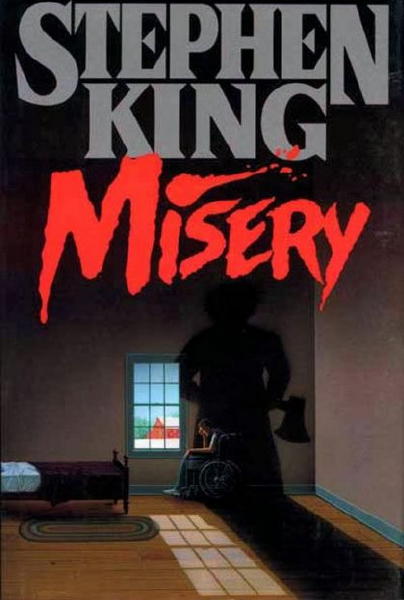
- Misery
Stephen Kingstandalone novel1987
similar bycontemporarynorth americathriller & suspensedarktense+1 more
Novelist Paul Sheldon finishes the manuscript that will finally kill off Misery Chastain, the heroine who made his career, when a snowstorm sends his car off a Colorado road. He wakes with both legs shattered, in the care of Annie Wilkes, a former nurse and 'number one fan' with no intention of taking him to a hospital. Annie manages his pain with drugs he comes to depend on, and her moods swing between doting and violent. When she learns Misery doesn't survive his new manuscript, her reaction makes clear Paul isn't just her patient, he's her hostage. A Stephen King novel about a writer at his most devoted fan's mercy.
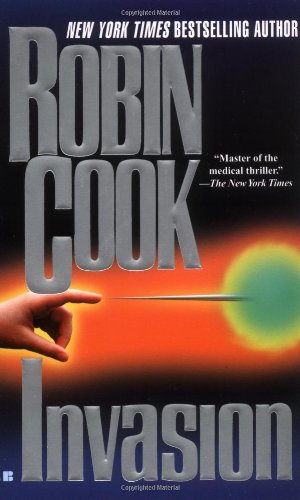
- Invasion
Robin Cookstandalone novel1997
similar bycontemporarynorth americascience fictionthriller & suspensetensegenetic engineering+1 more
Earth is bombarded from space by small disks which, in addition to having powerful physical armaments, when handled activate latent viral DNA which causes humans to mutate into alien beings; a small group recognize the danger and attempt to develop a biological counterweapon.
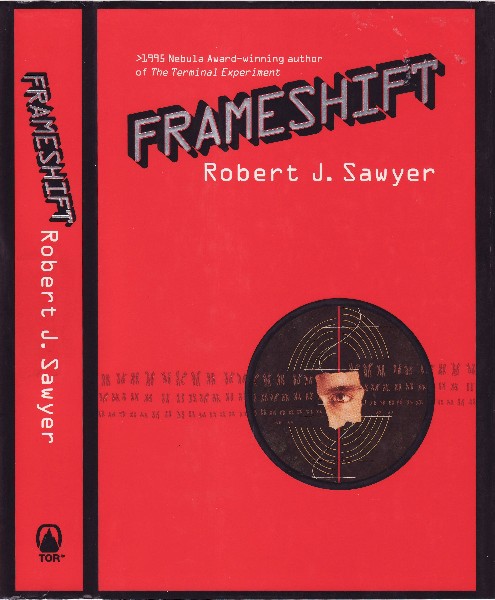
- Frameshift
Robert J. Sawyerstandalone novel1997
similar bycontemporarynorth americascience fictionthriller & suspensetensegenetic engineering+1 more
Winner of Japan's Seiun Award and Hugo Award finalist Pierre Tardivel is a scientist working on the Human Genome Project with the Nobel Prize winner, Dr. Burian Klimus. A driven man, Pierre works with the awareness that he may not have long to live: he has a fifty-fifty chance of dying from Huntington's disease, an incurable hereditary disorder of the central nervous system. While he still has his health, Pierre and his wife decide to have a child, and they search for a sperm donor. When Pierre informs Dr. Klimus of their plan, Klimus makes an odd but generous offer: to be the sperm donor as well as to pay for the expensive in vitro fertilization. Shortly thereafter it transpires that Klimus might be hiding a grim past: he may be Ivan Marchenko, the notorious Treblinka death-camp guard known as Ivan the Terrible. While digging into Klimus's past with the help of Nazi hunter Avi Meyer, Pierre and his wife discover that Pierre's insurance company has been illegally screening clients for genetic defects. The two lines of investigation begin to coverage in a sinister manner, while they worry about the possibility of bearing the child of an evil, sadistic killer.
- The Rick Keller Project
series2 books2014
similar bycontemporarynorth americathriller & suspenserevengedarktense+1 more
- Cell
Stephen Kingstandalone novel2006
similar bycontemporarynorth americadarkscience fictiontense
In Cell, King taps into readers fears of technological warfare and terrorism. Mobile phones deliver the apocalypse to millions of unsuspecting humans by wiping their brains of any humanity, leaving only aggressive and destructive impulses behind. Those without cell phones, like illustrator Clayton Riddell and his small band of "normies," must fight for survival, and their journey to find Clayton's estranged wife and young son rockets the book toward resolution.
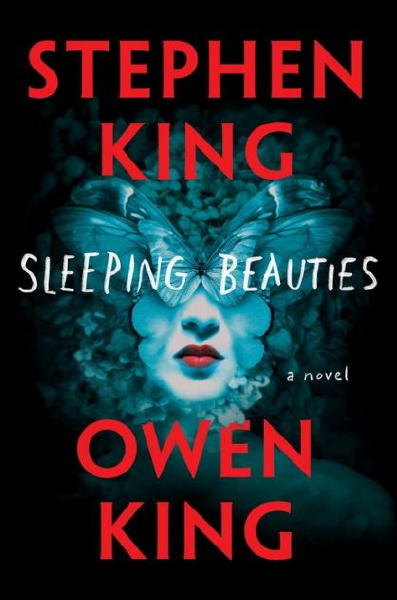
- Sleeping Beauties
Stephen King & Owen Kingstandalone novel2017
similar bycontemporarynorth americadarkscience fictiontense+1 more
Sleeping Beauties is a novel by Stephen King and his son Owen King, released on September 26, 2017. The book was first mentioned during a promotional appearance on the CBC radio program q. Of the novel, Stephen King stated, "Owen brought me this dynamite idea and I've collaborated a couple of times with Joe. I'm not going to say what the idea is because it's too good."
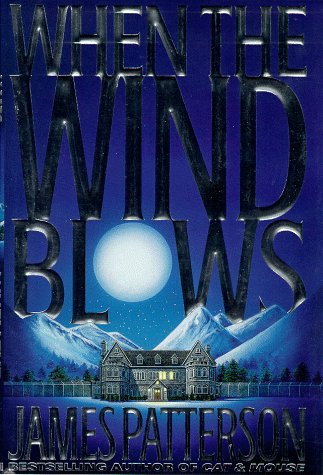
- When the Wind Blows
series2 books1998
similar bycontemporarynorth americathriller & suspensescience fictiontensegenetic engineering+1 more
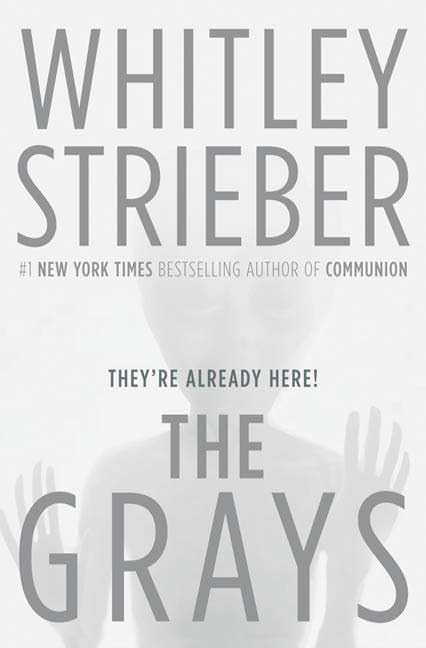
- The Grays
Whitley Strieberstandalone novel2006
similar bycontemporarynorth americascience fictionthriller & suspensedarktensegenetic engineering
Millions of people are confronting aliens that authorities say do not exist. Whitley Strieber -- author of the legendary, #1 bestseller Communion, which detailed his own close encounters -- now returns to the riddle of aliens with The Grays. Drawing on a lifetime of research, Strieber offers up a fictional account of the conspiracy behind alien presence on Earth while also giving us a startling look inside the alien mind that will astound, frighten, and enthrall readers. Meet the Three Thieves, a group of Grays assigned to duty in a small Kentucky town. For decades, they have abducted its residents and manipulated bloodlines trying to create an ultra-intelligent human being. Nine year-old Conner Callahan will face the ultimate terror as he struggles to understand who he has been bred to be, and what he must do to save humanity. Meet Colonel Michael Wilkes, the head of a select group of government and military officials who have been monitoring the Grays for years. Wilkes has done everything in his power to keep the secret of the Grays from the public. But when the Grays begin to reveal themselves, Wilkess fear of occupation forces him to set in motion his own sinister plan to ensure the survival of humanity, but at what cost? The fate of the human race lies with one woman, Lauren Glass, whose unique ability to communicate with the last remaining captive Gray, known as A for Adam, may be the only way humans can truly unravel the Grays ultimate plan. The Grays is a mind-bending journey behind the curtain of secrecy that surrounds the subject of aliens, written by the fields great master. This book will make you think deeply, not only about the mystery of who the Grays are, but who exactly we are.
- The Institute
Stephen Kingstandalone novel2019
similar bycontemporarynorth americascience fictionthriller & suspensedarktense
The Institute is a 2019 American science fiction-horror novel by Stephen King, published by Scribner. The book follows twelve-year-old genius Luke Ellis. When his parents are murdered, he is kidnapped by intruders and awakens in the Institute, a facility that houses other abducted children who have telepathy or telekinesis. The Institute was published on September 10, 2019, and met with generally positive reviews.
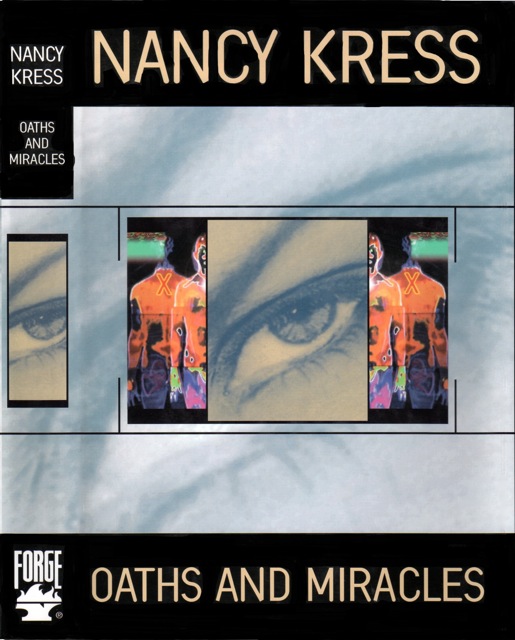
- Oaths and Miracles / Robert Cavanaugh
series2 books1996
similar bycontemporarynorth americathriller & suspensetensedarkgenetic engineering+1 more
- Under the Dome
Stephen Kingstandalone novel2009
similar bycontemporarynorth americascience fictiondarktense+1 more
A small town in Maine finds itself suddenly cut off from the outside world by an impenetrable barrier, and the clash of personalities of the trapped people takes its inexorable devastating course.
- Heart-Shaped Box
Joe Hillstandalone novel2007
similar bycontemporarynorth americadarktenserevenge
Heart-Shaped Box is the debut horror novel by American author Joe Hill. The book was published on February 13, 2007, by William Morrow.
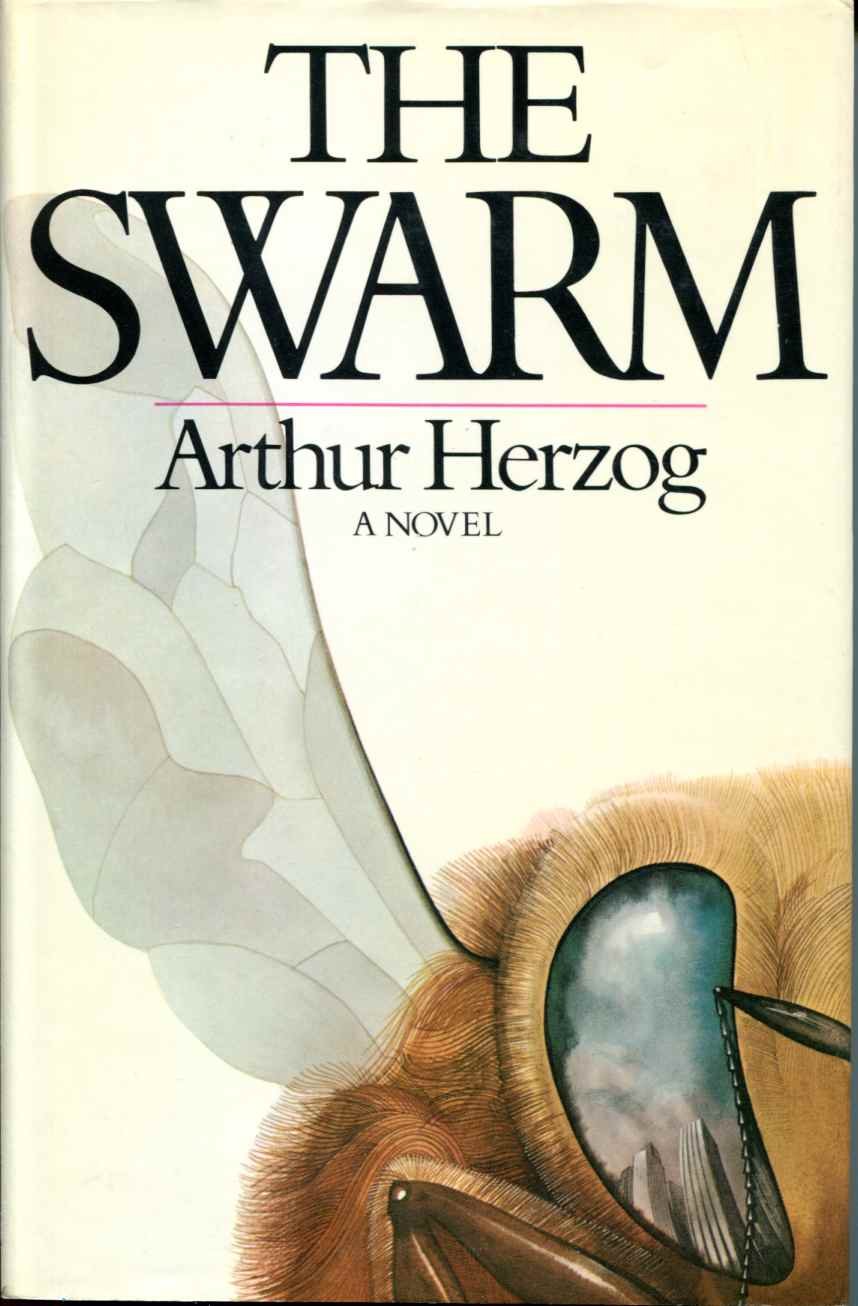
- The Swarm
Arthur Herzogstandalone novel1974
similar bycontemporarynorth americascience fictionthriller & suspensedarktense
The United States faces an outbreak of offspring of Africanized honeybees, mutated so as to enhance their rapid spread as well as their aggressiveness and lethality.
- Midnight
Dean R. Koontzstandalone novel1989
similar bycontemporarynorth americascience fictiondarktensegenetic engineering
A wealthy tech entrepreneur, intending to create superhumans by infecting them with nanotech to assist their physical and mental abilities, picks a California town as his secret pilot project, but things go terribly wrong.
- Burn
Bill Ransomstandalone novel1995
similar bycontemporarynorth americascience fictionthriller & suspensedarktensegenetic engineering
From the front flap of the Ace first edition: "It is called GenoVax. The death it brings is terrifying. Quarantine and isolations are futile - the infection rate is nearly one hundred percent. It is the most frightening weapon man has ever created. And when it is unleashed, the human race will know what it is like to burn... It started in Mexico City disguised as a vaccine. Now it is out, and spreading. Virologist Marte Chang is determined to isolate and destroy the virus, but first she must unlock the secret of its origins - and uncover the brilliant and fanatical intelligence behind it. As a scientist she understands the necessary dangers of her work, to herself and to those who have been exposed. But can one woman halt a genocidal plan specifically designed to wipe out the entire human race? And even if she can... will there be anyone left to save?"
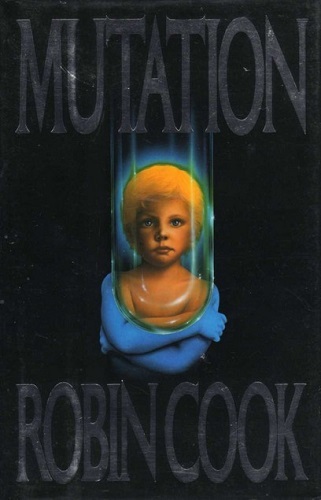
- Mutation
Robin Cookstandalone novel1989
similar bycontemporarynorth americascience fictionthriller & suspensedarktensegenetic engineering
Mutation is a novel by Robin Cook about the ethics of genetic engineering.
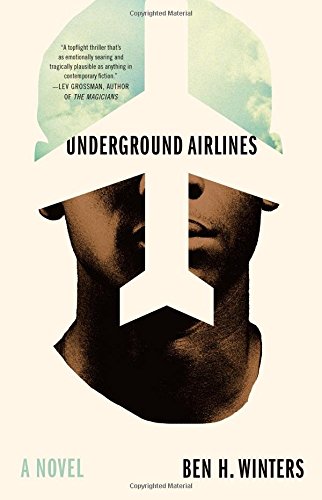
- Underground Airlines
Ben H. Wintersstandalone novel2016
similar bycontemporarynorth americascience fictionthriller & suspensedarktense
Underground Airlines is a 2016 science fiction novel by American writer Ben Winters, set in a contemporary alternate-history United States where the American Civil War never occurred because Abraham Lincoln was assassinated prior to his 1861 inauguration and a version of the Crittenden Compromise was adopted instead. As a result, slavery has remained legal in a group of Southern states known as the "Hard Four": Alabama, Louisiana, Mississippi and a unified Carolina. Its name evokes the Underground Railroad in relations to its setting. The novel attracted praise for exploring racism through the alternate-history mechanism.
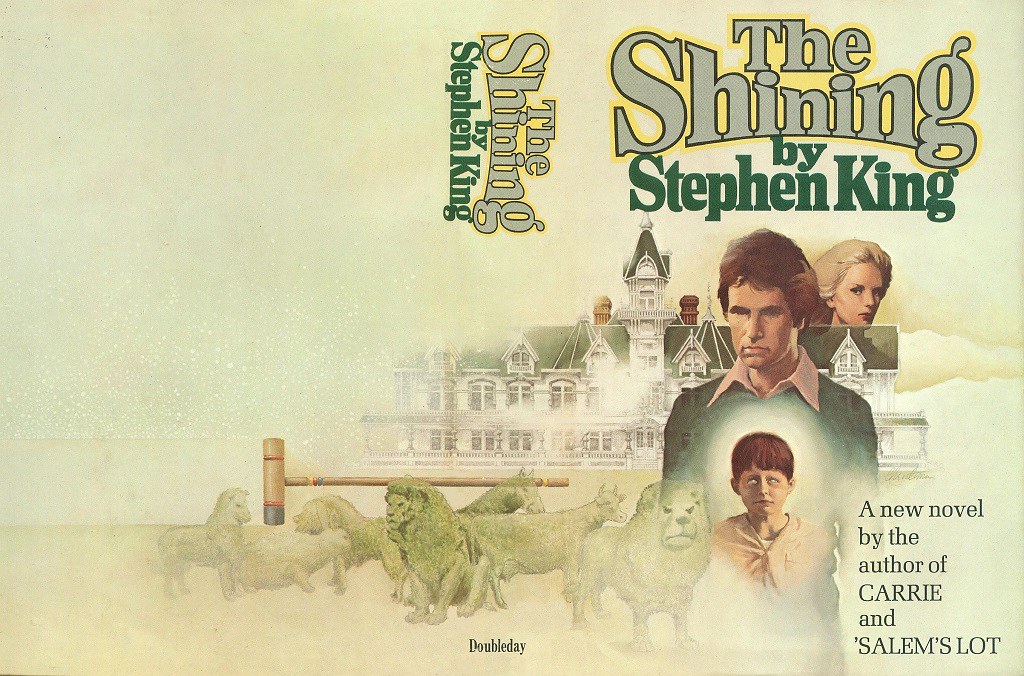
- The Shining
series5 books1977
similar bynorth americacontemporarydarktense+1 more
Stephen King's 1977 novel The Shining follows the Torrance family as winter caretakers of the isolated, malevolent Overlook Hotel, where father Jack is gradually consumed by the hotel's influence while his young son Danny's psychic "shining" draws its attention. Doctor Sleep (2013) picks up the story decades later, following Danny as an adult still marked by that childhood ordeal. Together the two form a horror duology spanning nearly forty years of real-world publication.
- Jerusalem's Lot
series3 books1975
similar bycontemporarynorth americadarktense
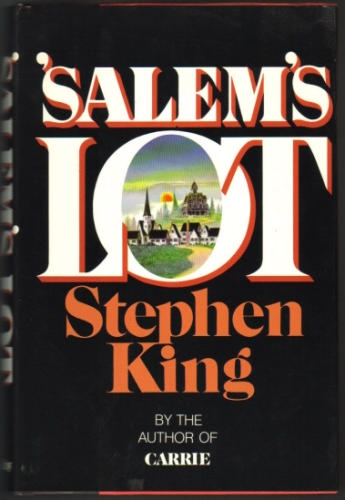
Stephen King's 1975 novel 'Salem's Lot follows writer Ben Mears as he returns to his childhood town of Jerusalem's Lot, Maine, only to discover that its residents are being turned into vampires by a newly arrived stranger. It transplants Gothic vampire horror into a small New England community, tracking that community's collapse under a supernatural siege. It is a single, self-contained novel.