More like Bones & All
anchored on:horrorcoming of agenorth americalate 20th centurydarkidentity+3 more
but
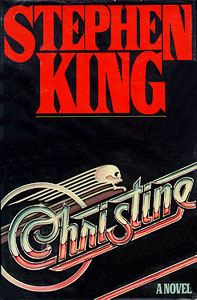
- Christine
Stephen Kingstandalone novel1983
similar byhorrorlate 20th centurydarkcoming of agenorth america
Christine is a horror novel by American writer Stephen King, published in 1983. It tells the story of a car possessed by malevolent supernatural forces.
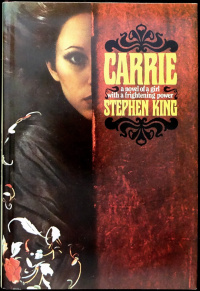
- Carrie
Stephen Kingstandalone novel1974
similar byhorrorlate 20th centurydarknorth americacoming of age
In one way or another, everybody abused Carrie. This sixteen-year-old misfit was forbidden everything that was young and fun by her fanatical mother. She was teased and taunted by her classmates, misunderstood by her teachers, and given up as hopeless by almost everyone. But Carrie had a secret: She possessed terrifying telekinetic powers that could make inanimate objects move, a lighted candle fall, or a door lock. Carrie could make all kinds of startling bizarre, and malevolent things happen. (WorldCat)
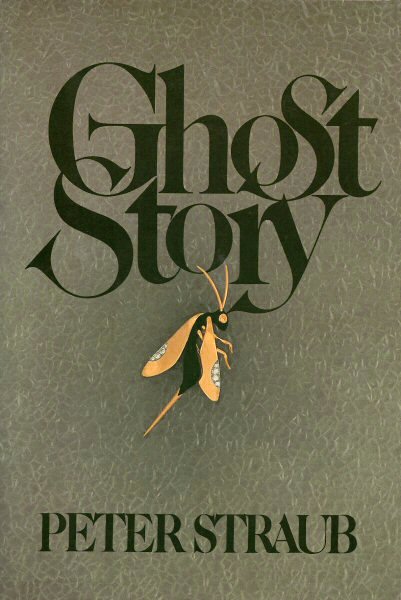
- Ghost Story
Peter Straubstandalone novel1979
similar byhorrorlate 20th centurydarknorth america
Four prominent citizens of a small town in upstate New York who share guilt over something that happened in their youth are revisited late in life by a destructive evil force which uses their guilt as an opportunity to destroy them as well as the entire town.
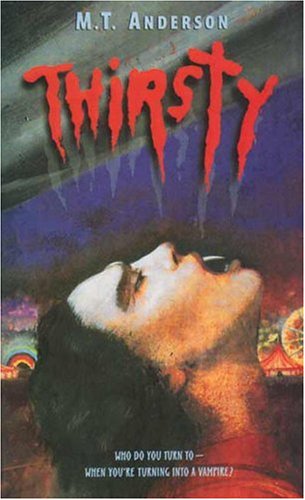
- Thirsty
M. T. Andersonstandalone novel1997
similar byhorrordarkcoming of ageidentitynorth americayoung adult+1 more
Thirsty is a 1997 horror novel written by M. T. Anderson. It is set in modern Clayton, Massachusetts. The main character, Christopher, just wants a normal life; to date his crush Rebecca Schwartz, stay up late, and other teenager things. Unfortunately, Chris has much more to worry about than puberty — he also has to deal with his vampirism.
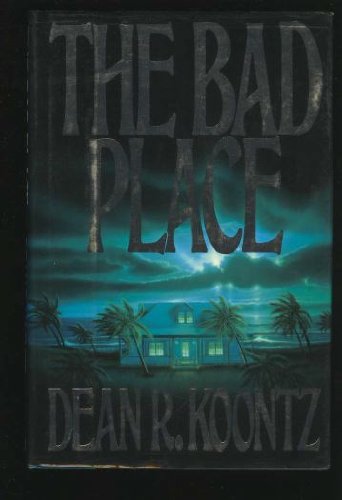
- The Bad Place
Dean R. Koontzstandalone novel1990
similar byhorrorlate 20th centurydarkidentitynorth america
The Bad Place is a horror novel by American writer Dean Koontz, released in 1990. It includes elements of horror, suspense, and mystery, and is presented partially as a twist on the private eye drama. The story follows Frank Pollard, a man who wakes up each night with no memory of where he has been or what he has done, only to find himself covered in injuries or in possession of strange items. As his condition worsens, private investigators Bobby and Julie Dakota are hired to track him and uncover the truth behind his blackouts. Their investigation leads them into a disturbing web of genetic experimentation, family secrets, and a hidden force manipulating human lives from the shadows. As the plot unfolds, the novel reveals that Frank and others are being pursued by powerful, almost inhuman figures connected to a twisted experiment involving selective breeding and enhanced abilities. The Dakotas become entangled in a struggle not only to save Frank but also to survive against forces that seem to operate beyond normal human limits. Themes in the novel include identity, memory loss, the abuse of science, and the nature of evil. Koontz blends psychological horror with fast-paced action, creating a narrative that shifts between detective fiction and supernatural thriller. The book received generally positive reception from readers who enjoyed Koontz’s signature suspense style, though some critics noted its complex and sometimes chaotic plot structure. Over time, it has remained one of his more memorable early-1990s works due to its unusual blend of genres and its dark, unsettling tone.
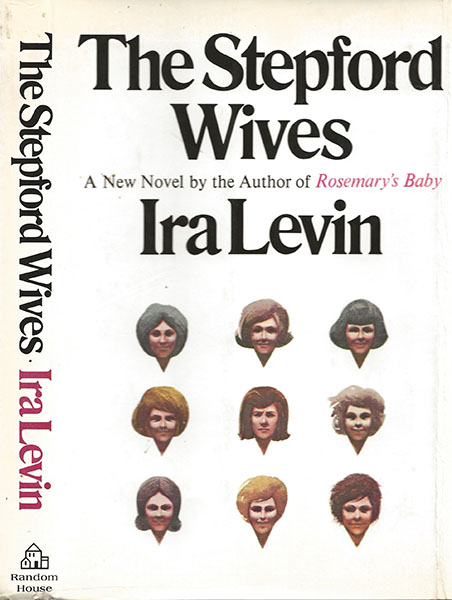
- The Stepford Wives
Ira Levinstandalone novel1972
similar byhorrorlate 20th centurydarkidentitynorth america
The Stepford Wives is a 1972 satirical "feminist horror" novel by Ira Levin. The story concerns Joanna Eberhart, a talented photographer, wife, and young mother who suspects that something in the town of Stepford is changing the wives from free-thinking, intelligent women into compliant wives dedicated solely to homemaking. As her friends slowly transform, Joanna realizes the horrific truth.
- The Silver Kiss
Annette Curtis Klausestandalone novel1990
similar byhorrorlate 20th centuryemotionalcoming of agenorth americayoung adult
The Silver Kiss is a young adult, romance and horror novel written by Annette Curtis Klause; it is printed in hardcover and paperback versions. The novel was Klause's first; it was published on September 1, 1990, and was re-issued in 2009 with two bonus short stories by Klause. The Silver Kiss was inspired by Klause's poems and her teenage fantasy about romancing with a vampire. It is set in a suburban area near the east coast, in the late 80s and explores themes of belonging, death, and loss through the romance between a young woman—Zoë Sutcliff—and Simon, an English vampire who was turned since he was a nineteen-year-old youth. During the story, Zoë's mother is in hospital dying from cancer. Zoë and Simon come to terms with their own mortality and the loss of their loved ones through their growing relationship and their battle with an evil vampire named Christopher.
- American Psycho
Bret Easton Ellisstandalone novel1991
similar byhorrorlate 20th centurydarknorth america+1 more
American Psycho is a horror novel by American writer Bret Easton Ellis, published in 1991. The story is told in the first-person by Patrick Bateman, a wealthy, narcissistic, and vain Manhattan investment banker who lives a double life as a serial killer. Alison Kelly of The Observer notes that while "Some countries [deem it] so potentially controversial that it only to be sold as shrink-wrapped", "critics rave about it" and "academics revel in its transgressive and postmodern qualities".
- Fraternity
Andy Mientusstandalone novel2022
similar byhorrorlate 20th centurydarkcoming of agenorth americayoung adult
In the fall of 1991, Zooey Orson transfers to the Blackfriars School for Boys hoping for a fresh start following a scandal at his last school. However, he quickly learns that he isn’t the only student keeping a secret. Before he knows it, he’s fallen in with a group of boys who all share the same secret, one which they can only express openly within the safety of the clandestine gatherings of the Vicious Circle––the covert club for gay students going back decades. But when the boys unwittingly happen upon the headmaster’s copy of an arcane occult text, they unleash an eldritch secret so terrible, it threatens to consume them all.
- Bag of Bones
Stephen Kingstandalone novel1998
similar byhorrordarkemotionalnorth americacountryside & village
Bag of Bones is a 1998 horror novel by American writer Stephen King. It focuses on an author who suffers severe writer's block and delusions at an isolated lake house four years after the death of his wife. It won the 1999 Bram Stoker Award for Best Novel, the 1999 British Fantasy Award for Best Novel, and the 1999 Locus Award for Best Dark Fantasy/Horror Novel.
- Maynard's House
Herman Raucherstandalone novel1980
similar byhorrorlate 20th centurydarklonelinessnorth americacountryside & village
Amazon: At its heart, this is the story of a young bedeviled Vietnam war vet with issues, Austin Fletcher, who is willed a small house deep in the woods of northern Maine by a fellow soldier and confidante, Maynard Whittier, killed in action by a wayward mortar shell. Austin--"a sailboat awaiting a breeze"--makes the trip for his new home. The landscape is an intoxicating blend of claustrophobic interiors and endless frozen wastelands. Little by little, the mysterious force in the house asserts itself until neither Austin nor the reader is exactly sure what is in his mind and what is real. Raucher plays to his strength here: "A man can be crazy only if there's someone around to tell him that such is the case." Austin's disturbing isolation is well managed and chillingly realized. And just when our hero's had enough and is ready to quit the place, a blizzard arrives and the real haunting begins.
- Scowler
Daniel Krausstandalone novel2013
similar byhorrorlate 20th centurydarknorth americacountryside & village+1 more
In the midst of a 1981 meteor shower in Iowa, a homicidal maniac escapes from prison and returns to the farm where his nineteen-year-old son, Ry, must summon three childhood toys--Mr. Furrington, Jesus Christ, and Scowler--to protect himself, his eleven-year-old sister, Sarah, and their mother.
- Neverland
Douglas Cleggstandalone novel1991
similar byhorrorlate 20th centurydarknorth america+1 more
For years, the Jackson family has vacationed at Rowena Wandigaux Lee's old Victorian house on Gull Island, a place of superstition and legend off the southern coast of the U.S. One particular summer, young Beau follows his cousin Sumter into a hidden shack in the woods-and christens this new clubhouse "Neverland." Neverland has a secret history, unknown to the children...The rundown shack in the woods is the key to an age-old mystery, a place forbidden to all. But Sumter and his cousins gather in its dusty shadows to escape the tensions at their grandmother's house. Neverland becomes the place where children begin to worship a creature of shadows, which Sumter calls "Lucy." All gods demand sacrifice...It begins with small sacrifices, little games, strange imaginings. While Sumter's games spiral out of control, twisting from the mysterious to the macabre, a nightmarish presence rises among the straggly trees beyond the bluffs overlooking the sea. And when Neverland itself is threatened with destruction, the children's games take on a horrifying reality-and Gull Island becomes a place of unrelenting terror.
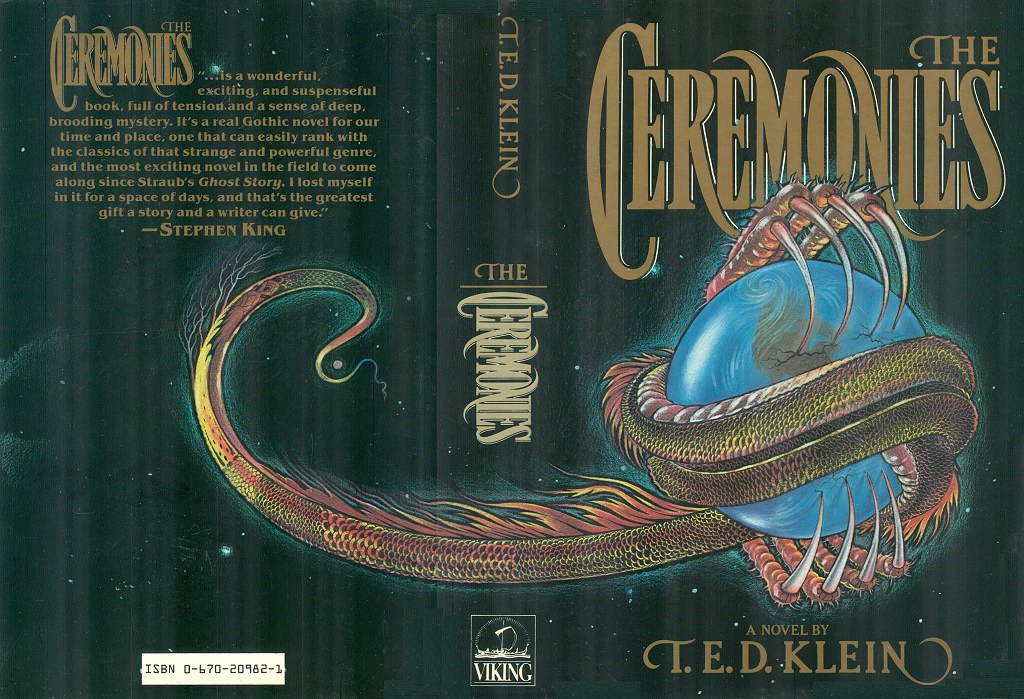
- The Ceremonies
T. E. D. Kleinstandalone novel1984
similar byhorrorlate 20th centurydarknorth americacountryside & village
The Ceremonies is a novel by T. E. D. Klein published in 1984. The Ceremonies is an extension of Klein's earlier novella, "The Events at Poroth Farm", which he released in 1972.
- I Am Legend
Richard Mathesonstandalone novel1954
similar byhorrordarklonelinessnorth america
The last human survivor of the vampire epidemic has to maintain his defences against their onslaught, while attempting to research the cause and possibly solution to the plague. Robert Neville is the last living man on Earth... but he is not alone. Every other man, woman and child on the planet has become a vampire, and they are hungry for Neville's blood. By day he is the hunter, stalking the undead through the ruins of civilization. By night, he barricades himself in his home and prays for the dawn. How long can a man survive like this?
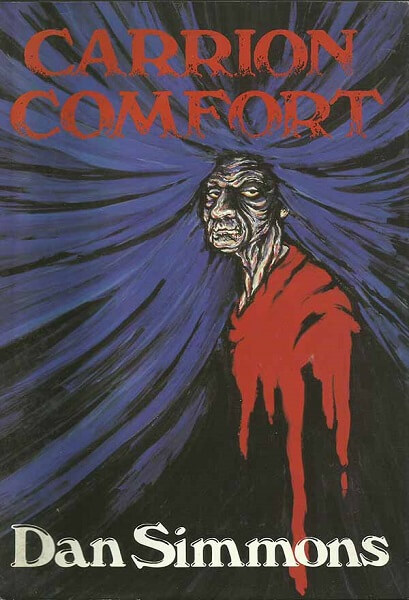
- Carrion Comfort
Dan Simmonsstandalone novel1989
similar byhorrorlate 20th centurydarknorth america
Carrion Comfort is a science fiction/horror novel by American writer Dan Simmons, published in 1989 in hardcover by Dark Harvest and in 1990 in paperback by Warner Books. It won the Bram Stoker Award, the Locus Poll Award for Best Horror Novel, and the August Derleth Award for Best Novel. It is based on a novelette of the same title, published in 1983 in the magazine Omni. The first half of the novelette makes up chapter 1 of the novel, while the second half forms chapter 3.
- Shadows
John Saulstandalone novel1992
similar byhorrorlate 20th centurydarknorth america+1 more
"They call it the Academy. A secluded, cliff-top mansion overlooking the rugged Pacific coast. A school for children gifted—or cursed—with extraordinary minds. Children soon to come under the influence of an intelligence even more brilliant than their own—and unspeakably evil. For within this mind a dark plan is taking form. A plan so horrifying, no one will believe it. No one but the children. And for them it is already too late. Too late, unless one young student can resist the seductive invitation that will lead . . . into the Shadows. — quoted from the product description that is found on this book's page on Amazon.com.
- The Reformatory
Tananarive Duestandalone novel2023
similar byhorrordarkemotionalcoming of agenorth america
The Reformatory is a 2023 novel by Tananarive Due which combines elements of horror, historical fiction, and literary fiction. It is loosely based on the Dozier School for Boys and the atrocities committed there. The novel received critical acclaim, including a win for the 2024 Bram Stoker Award for Best Novel and 2024 World Fantasy Award for Best Novel.
- The Pillow Friend
Lisa Tuttlestandalone novel1996
similar byhorrorlate 20th centurydarkcoming of ageidentitynorth america
"Agnes Grey, a young child growing up in Houston, Texas in the early sixties, is troubled by her mother's depressive and erratic mood swings. She escapes to a delusional dream state where she finds that her made-up relationships are more gratifying and often more tangible than her real ones. A beloved porcelain doll whispers unintelligible mutterings to her well into the night. An enigmatic high-school boyfriend appears upon command to silently fulfill her adolescent desires. A handsome and soulful English poet steals her away to serve as his devoted muse..."--BOOK JACKET. "Aunt Marjorie, whose cameo appearances are peppered with tales of life abroad, warns Agnes that she must be prepared to deal with the consequences of what she wishes for. And as Agnes approaches and enters adulthood, her fantastical relationships and their consequences become deceptively real, with a chilling and bizarre aftermath."--BOOK JACKET.
- Punish the Sinners
John Saulstandalone novel1978
similar byhorrorlate 20th centurydarknorth america
Punish the Sinners is a horror novel and the second novel by author John Saul, first published in 1978. The novel concerns a rash of violent suicides at a Catholic high school. There is an audiobook narrated by Jonathan Davis on Audible. Punish the Sinners was the first book with a UPC code on the cover.
- Let's Go Play at the Adams'
Mendal W. Johnsonstandalone novel1974
similar byhorrorlate 20th centurydarknorth america+1 more
Let's Go Play at the Adams' is a 1974 psychological horror novel by Mendal W. Johnson and originally published by Thomas Y. Crowell Co. Its plot focuses on a group of rural Maryland children who drug, incapacitate, and eventually torture the college student babysitter hired by their parents while they are away in Europe for two weeks.
- Mongrels
Stephen Graham Jonesstandalone novel2016
similar byhorrorcoming of agelate 20th centurydarknorth america
A spellbinding and darkly humorous coming-of-age story about an unusual boy whose family lives on the fringes of society and struggles to survive in a hostile world that shuns and fears them. He was born an outsider, like the rest of his family. Poor yet resilient, he lives in the shadows with his Aunt Libby and Uncle Darren, folk who stubbornly make their way in a society that does not understand or want them. They are mongrels, mixedblood, neither this nor that. The boy at the center of Mongrels must decide if he belongs on the road with his aunt and uncle, or if he fits with the people on the other side of the tracks. For ten years, he and his family have lived a life of late-night exits and close calls—always on the move across the South to stay one step ahead of the law. But the time is drawing near when Darren and Libby will know if their nephew is like them or not. And the close calls they’ve been running from for so long are catching up fast, now. Everything is about to change. A compelling and fascinating journey, Mongrels alternates between past and present to create an unforgettable portrait of a boy trying to understand his family and his place in a complex and unforgiving world. A smart and innovative story—funny, bloody, raw, and real—told in a rhythmic voice full of heart, Mongrels is a deeply moving, sometimes grisly novel that illuminates the challenges and tender joys of a life beyond the ordinary in a bold and imaginative new way.
- The Weight of Blood
Tiffany D. Jacksonstandalone novel2022
similar byhorrordarkcoming of agenorth americayoung adult
The Weight of Blood is a 2022 young adult horror novel by Tiffany D. Jackson. Set in the fictional "sundown town" of Springville, Georgia, the story follows Maddy Washington, a biracial high school senior who has been forced by her racist father to hide her ethnicity by passing as white and straightening her hair. When a rainstorm leads to her hair reverting to its natural form, her heritage is revealed and a viral bullying video exposes the racism at Springville High. In a bid to salvage the school’s reputation, popular and high-achieving Wendy Quinn convinces her Black football star boyfriend to take Maddy to prom. However, a revenge prank pulled by one of her bullies on prom night humiliates Maddy, setting off a chain of events that destroy the town and leave her classmates dead.