More like Border Guards
anchored on:science fictionfar futurehard science fictionvirtual realitymind uploadingidentity+2 more
but
- Richard Forthrast
series2 books2011
similar byvirtual worldscience fictionvirtual reality+5 more
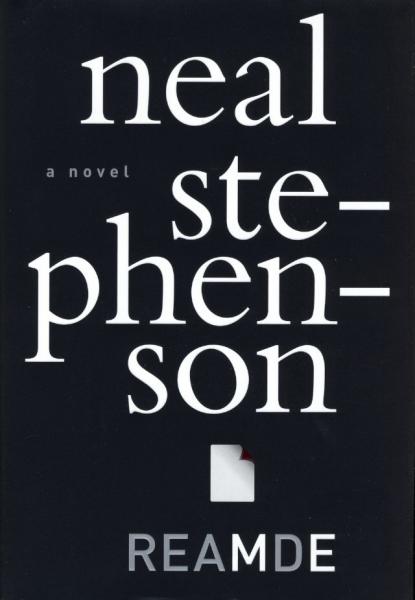
Neal Stephenson's Richard 'Dodge' Forthrast novels open with Reamde, a globe-spanning thriller that starts when ransomware inside an MMORPG economy pulls Richard's extended family into a real-world hostage crisis involving hackers, jihadists and Russian mobsters. The sequel Fall; or, Dodge in Hell shifts registers entirely, following Richard's digitally preserved mind after death into an afterlife simulation built from his scanned brain. The two books share a protagonist and family but differ sharply in genre and scale.
- Diaspora
Greg Eganstandalone novel1997
similar bychallengingfar futurescience fictionhard science fictionmind uploading+2 more
Diaspora is a hard science fiction novel by the Australian writer Greg Egan which first appeared in print in 1997. It originated as the short story "Wang's Carpets" which originally appeared in the Greg Bear-edited anthology New Legends. The story appears as a chapter of the novel.
- Jean le Flambeur
series3 books2010
similar bychallengingfar futurescience fictionvirtual realityhard science fiction+1 more
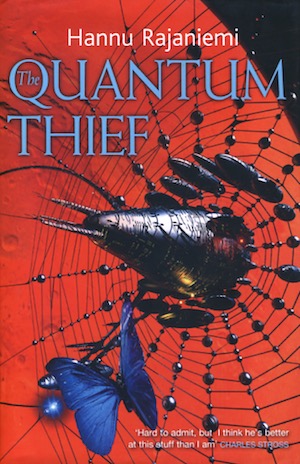
Jean le Flambeur is a master thief broken out of a virtual prison to pull off one more impossible heist, in a solar system reshaped by uploaded minds, post-human factions, and economies built on memory and privacy themselves. Hannu Rajaniemi's trilogy - The Quantum Thief, The Fractal Prince, The Causal Angel - is dense, idea-heavy hard SF that trusts readers to piece its future together from context rather than exposition.
- Implied Spaces
Walter Jon Williamsstandalone novel2008
similar bychallengingfar futurescience fictionvirtual realityreflective+2 more
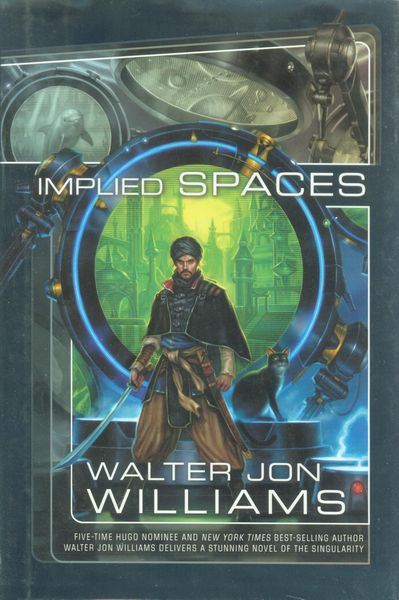
Implied Spaces is a 2008 space opera novel by American author Walter Jon Williams. It explores themes of transhumanism, artificial intelligence and ontology.
- Subjective Cosmology
series3 books1992
similar bychallengingscience fictionhard science fiction+5 more
- Glasshouse
Charles Strossstandalone novel2006
similar byfar futurevirtual worldscience fictionvirtual realityidentity
Robin wakes in a rehabilitation clinic with his memory deliberately erased, convinced that whoever tried to kill him before is still out there. To disappear completely, he volunteers for an experimental study recreating a vanished slice of 20th/21st-century society inside a closed habitat called the glasshouse -- a former high-security detention facility for war criminals -- and is assigned a female body and a new name, Reeve. As the simulation's rules of gender and conformity close in, Reeve starts to suspect the experiment's organizers are running something considerably darker than sociology. A standalone posthuman-future novel by Charles Stross.
- The Gods Themselves
Isaac Asimovstandalone novel1972
similar bychallengingfar futurescience fictionhard science fiction
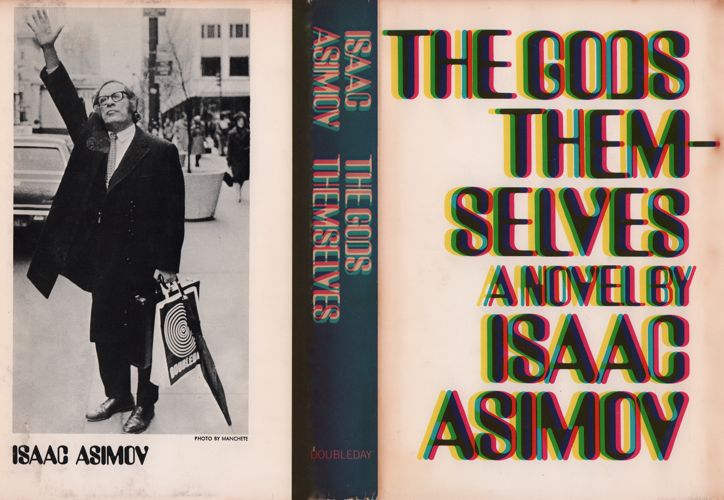
The Gods Themselves is a 1972 science fiction novel written by Isaac Asimov, and his first original novel in fifteen years. It won the Nebula Award for Best Novel in 1972, and the Hugo Award for Best Novel in 1973.
- Aurora
Kim Stanley Robinsonstandalone novel2015
similar bychallengingfar futurescience fictionhard science fictionreflective
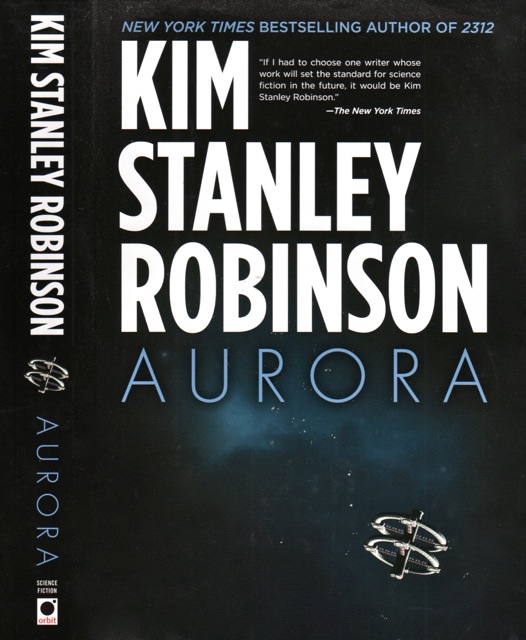
Aurora is a 2015 novel by American science fiction author Kim Stanley Robinson. The novel concerns a generation ship built in the style of a Stanford torus, traveling to Tau Ceti to start a human colony. The novel's primary narrative voice is that of the starship's artificial intelligence. Aurora was well received by critics.
- Triton
Samuel R. Delanystandalone novel1976
similar bychallengingfar futurescience fictionidentityreflective
Trouble on Triton: An Ambiguous Heterotopia (1976) is a science fiction novel by American writer Samuel R. Delany. It was nominated for the 1976 Nebula Award for Best Novel, and was shortlisted for a retrospective James Tiptree, Jr. Award in 1995. It was originally published under the shorter title Triton.
- Son of Man
Robert Silverbergstandalone novel1971
similar bychallengingfar futurescience fictionidentity+1 more
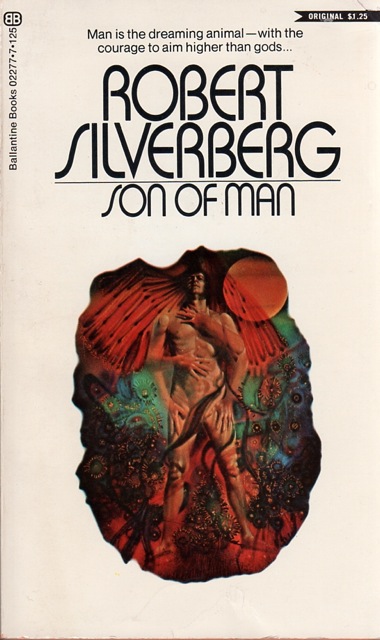
Son of Man is a science fiction novel by American writer Robert Silverberg, published in 1971. The book is about Clay, a 20th-century man, who travels billions of years into the future and meets humanity in its future forms. Some of the issues discussed in the book are sexuality, telepathic communication between people, physical prowess or frailty, division of humans by caste or ability, and the preservation of ancient wisdom, among other things.
- Stars in My Pocket Like Grains of Sand
Samuel R. Delanystandalone novel1984
similar bychallengingfar futurescience fictionidentityreflective
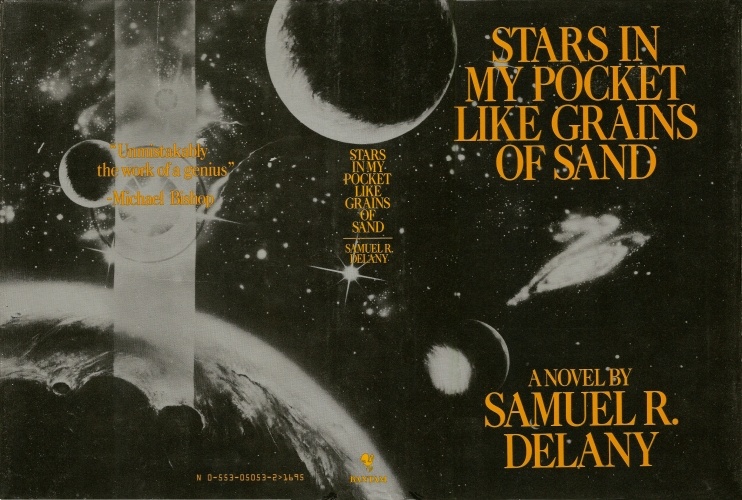
Stars in My Pocket Like Grains of Sand (1984) is a science fiction novel by Samuel R. Delany. It is part of what would have been a "diptych", in Delany's description, of which the second half, The Splendor and Misery of Bodies, of Cities, remains unfinished.
- Dune
series20 books1963
part of Dune Universe
similar byfar futurescience fiction+2 more
Frank Herbert's Dune Chronicles opens with 1965's Dune, set on the desert planet Arrakis where House Atreides takes control of the only source of the vital spice melange and young Paul Atreides is pulled into a struggle over its politics and religion. Herbert carried the story forward across five further novels — Dune Messiah, Children of Dune, God Emperor of Dune, Heretics of Dune, and Chapterhouse: Dune — following Paul's line over the following millennia, before Brian Herbert and Kevin J. Anderson later extended the saga. Many other editions of these six novels are omnibus and box-set repackagings rather than separate stories.
- Hegira
Greg Bearstandalone novel1979
similar bychallengingfar futurescience fictionhard science fiction+1 more
Hegira is a 1979 science fiction novel by American writer Greg Bear. It deals with themes including cyclic time, artificial intelligence, artificial life, and artificial structures of planetary scale.
- Building Harlequin's Moon
Larry Niven & Brenda Cooperstandalone novel2005
similar bychallengingfar futurescience fictionhard science fictionreflective
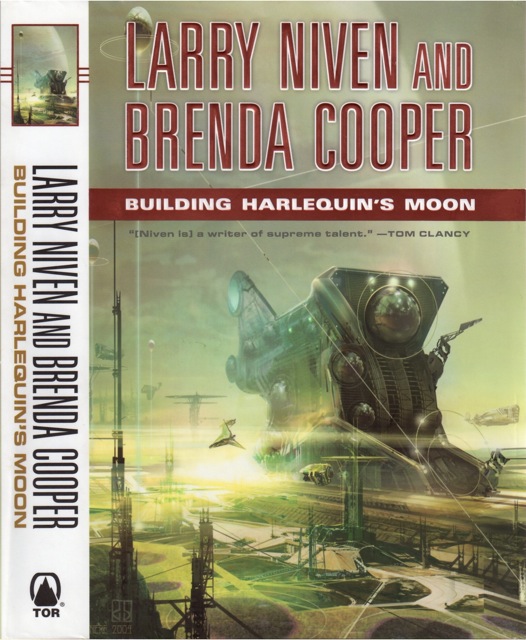
The first interstellar starship, John Glenn, fled a Solar System populated by rogue AIs and machine/human hybrids, threatened by too much nanotechnology and rife with political dangers. The John Glenn’s crew intended to terraform the nearly pristine planet Ymir, in hopes of creating a utopian society that will limit intelligent technology. But by some miscalculation they have landed in another solar system, and extremely low on the antimatter needed to continue to Ymir, they must shape the nearby planet Harlequin’s moon, Selene, into a new, temporary home. Their only hope of ever reaching Ymir is to rebuild their store of antimatter through decades of terraforming the moon. Gabriel, the head terraformer, must lead this nearly impossible task, with all the wrong materials. His primary tools are the uneducated and nearly illiterate children of the original colonists, born and bred to build Harlequin’s moon into a virtual antimatter factory. With no concept of the future and with life defined as duty, one girl, Rachel Vanowen, begins to ask herself the question: what will become of the children of Selene once the terraforming is complete.
- A Time of Changes
Robert Silverbergstandalone novel1971
similar byfar futurescience fictionidentityreflective+1 more
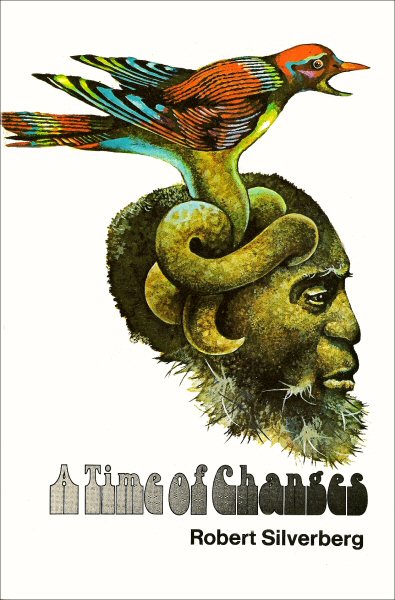
A Time of Changes is a 1971 science fiction novel by American writer Robert Silverberg. It won the Nebula Award for that year, and was also nominated for the 1972 Hugo and Locus Awards.
- To Live Again
Robert Silverbergstandalone novel1969
similar byfar futurescience fictionmind uploadingidentityreflectiveimmortality
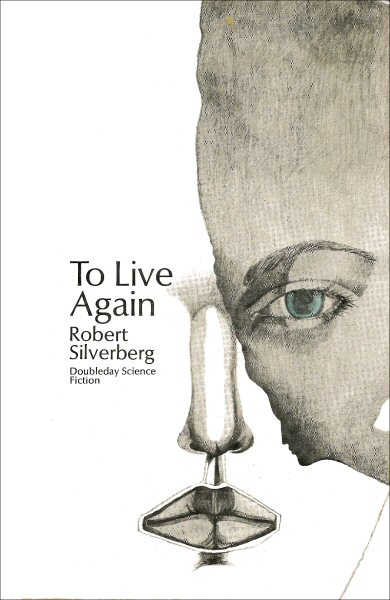
In a future where the very rich can have their personalities recorded before death and then implanted into a living host to share, or dominate, that person's mind and body, owning a recorded soul becomes the ultimate status symbol among the powerful. The practice carries real risk: a strong enough recorded personality can overwhelm its host entirely, a fate the novel calls going dybbuk. Robert Silverberg builds a society around this trade in secondhand immortality, and the people who profit, or don't survive, dealing in it. A standalone novel from Silverberg's prolific late-1960s run.
- A Meeting with Medusa
series2 books1971
similar byscience fictionchallengingfar futurehard science fictionreflectiveimmortality
Arthur C. Clarke's A Meeting with Medusa follows an astronaut, badly injured in an earlier disaster, on a solo balloon expedition into Jupiter's atmosphere, where he encounters vast floating lifeforms unlike anything previously catalogued. Decades later, Stephen Baxter and Alastair Reynolds continued the story in The Medusa Chronicles, following the same protagonist across a much longer span of future history. The original novella won the 1972 Nebula Award.
- The Old Axolotl
Jacek Dukajstandalone novel2015
similar bychallengingfar futurescience fictionhard science fictionmind uploadingidentity+1 more
The Old Axolotl is a 2015 digital-only novel by Polish science-fiction author Jacek Dukaj. The novel was released in Polish on March 10, 2015, and shortly afterward, on March 24 that year, in English. It has been described as "an experiment in reading the electronic literature of the future".
- The Einstein Intersection
Samuel R. Delanystandalone novel1967
similar bychallengingfar futurescience fictionidentity
The Einstein Intersection is a 1967 science fiction novel by Samuel R. Delany. The title is a reference to Einstein's Theory of Relativity connecting to Kurt Gödel's Constructible universe, which is an analogy to science meeting philosophy. The original publisher, Ace Books, changed Delany's originally intended title from A Fabulous, Formless Darkness for commercial reasons.
- Stranger in a Strange Land
Robert A. Heinleinstandalone novel1961
similar byscience fictionchallengingidentityreflective
Stranger in a Strange Land is a 1961 science fiction novel by the American author Robert A. Heinlein. It tells the story of Valentine Michael Smith, a human who comes to Earth in early adulthood after being born on the planet Mars and raised by Martians, and explores his interaction with and eventual transformation of Terran culture.
- Schild's Ladder
Greg Eganstandalone novel2002
similar bychallengingfar futurescience fictionhard science fiction
Schild's Ladder is a 2002 science fiction novel by Australian author Greg Egan. The book derives its name from Schild's ladder, a construction in differential geometry, devised by the mathematician and physicist Alfred Schild.
- Helliconia
series4 books1982
completed
similar bychallengingfar futurescience fictionreflective
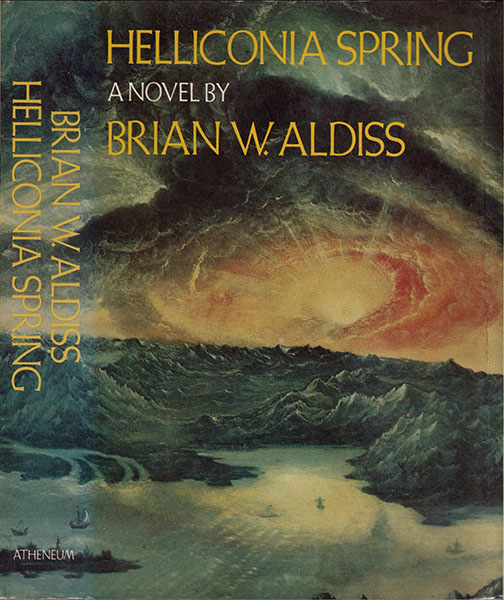
The Helliconia trilogy is a series of science fiction books by British writer Brian W. Aldiss, set on the Earth-like planet Helliconia. It is an epic chronicling the rise and fall of a civilisation over thousands of years as the planet progresses through its incredibly long seasons, which last for centuries.
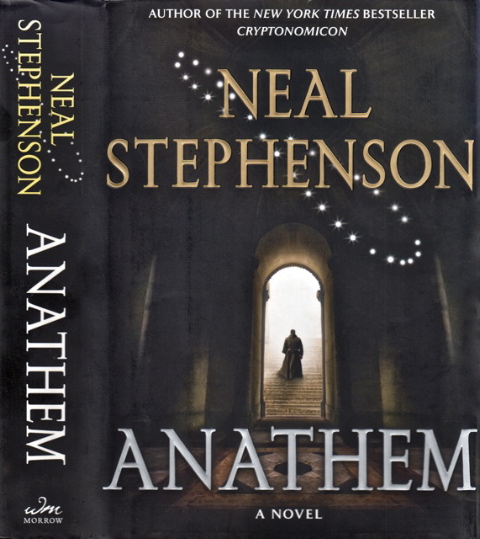
- Anathem
Neal Stephensonstandalone novel2008
similar bychallengingscience fictionhard science fictionreflective+1 more
On a planet where quasi-monastic academic institutions have existed alongside the secular world for thousands of years, a young scholar from one such institution becomes part of a planetwide effort to muster an appropriate reaction to a shocking discovery.
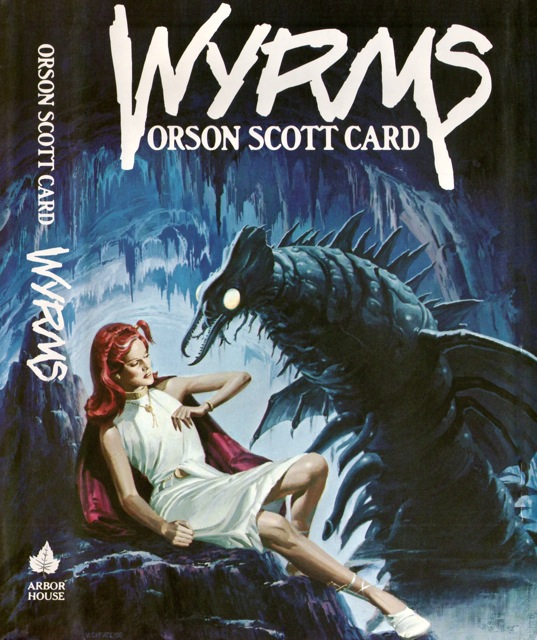
- Wyrms
Orson Scott Cardstandalone novel1987
similar byfar futurescience fictionidentityreflective+1 more
Wyrms (1987) is a science fiction novel by American writer Orson Scott Card. The story examines desire, wisdom, and human will. Card describes a version of the tri-partite soul, similar to that articulated by Plato in the Republic.