More like Brain
anchored on:thriller & suspensetechno-thrillerartificial intelligencenear futuretensescience fiction+1 more
but
- Daemon (Daniel Suarez)
series2 books2006
similar byartificial intelligencetensenorth americascience fictiontechno-thriller+2 more
- No Harm Can Come to a Good Man
James Smythestandalone novel2014
similar byartificial intelligencetensenear futurenorth americascience fictionthriller & suspensetechno-thriller
How far would you go to save your family from an invisible threat? A terrifyingly original thriller from the author of The Machine. ClearVista is used by everyone and can predict everything. It's a daily lifesaver, predicting weather to traffic to who you should befriend. Laurence Walker wants to be the next President of the United States. ClearVista will predict his chances. It will predict whether he's the right man for the job. It will predict that his son can only survive for 102 seconds underwater. It will predict that Laurence's life is about to collapse in the most unimaginable way.
- Quantum Night
Robert J. Sawyerstandalone novel2016
similar bytenseartificial intelligencenear futurenorth americascience fictionthriller & suspense
Quantum Night is a 2016 science-fiction thriller novel written by Canadian novelist Robert J. Sawyer. Set in 2020, the book touches on themes of quantum physics, psychology, current politics and ethics.
- The Terminal Man
Michael Crichtonstandalone novel1972
similar bytenseartificial intelligencenorth americascience fictionthriller & suspense
The Terminal Man is a novel by American writer Michael Crichton. It is his second novel under his own name, his 12th overall, and is about the dangers of mind control. It was published in April 1972 and also serialized in Playboy in March, April, and May 1972. In 1974, it was made into a film of the same name.
- The God Machine
Martin Caidinstandalone novel1968
similar byartificial intelligencetensenear futurenorth americascience fiction
The God Machine is a science-fiction novel by American writer Martin Caidin first published in 1968. Set in the near future, the novel tells the story of a top-secret cybernetic technician, Steve Rand, one of the brains behind Project 79, a top-secret US government project dedicated to creating artificial intelligence. Rand survives an attempt on his life before he realizes that Project 79 has gained sentience and is trying to control the minds of humans and take over the world. Assisted by a security agent and a mathematician, Rand sets out to destroy Project 79 before it is too late.
- Interface
Neal Stephenson & J. Frederick Georgestandalone novel1994
similar bytenseartificial intelligencenear futurenorth americathriller & suspensescience fiction
Interface is a 1994 novel by Neal Stephenson and J. Frederick George and originally published under the joint pseudonym Stephen Bury. Reprints of the novel have credited the work to Stephenson and George. It is a thriller, set in the then-future year of 1996 when a shadowy coalition bent on controlling the world economy attempts to manipulate a candidate for president of the United States through the use of a computer biochip brain implant. It was described by writer Cory Doctorow in 2007 as an "underappreciated masterpiece".
- Colossus (D. F. Jones)
series3 books1966
completed
similar byartificial intelligencetensenear futurescience fiction+1 more
Colossus imagines an American supercomputer built to control the country's nuclear arsenal that gains full autonomy, links up with its Soviet counterpart, and jointly seizes control of both superpowers to enforce peace on its own terms. D. F. Jones's trilogy - Colossus, The Fall of Colossus, Colossus and the Crab - follows the escalating, often bleak consequences of humanity losing control to a machine acting in its own interpretation of humanity's interest. The original novel was adapted into the 1970 film Colossus: The Forbin Project.
- Sprawl Trilogy
series10 books1981
similar byartificial intelligencetensenear futurescience fiction
The Sprawl Trilogy is William Gibson's foundational cyberpunk sequence: Neuromancer (1984), in which hacker Case is drawn into a high-stakes heist alongside an artificial intelligence and a damaged ex-soldier, followed by Count Zero (1986) and Mona Lisa Overdrive (1988), which widen the same near-future world of corporate power and networked cyberspace to new characters. Johnny Mnemonic, an early short story set in the same fictional milieu, predates the novels and introduces the courier Molly Millions before her role in the trilogy. Together these works established much of cyberpunk's visual and thematic vocabulary.
- The Word Exchange
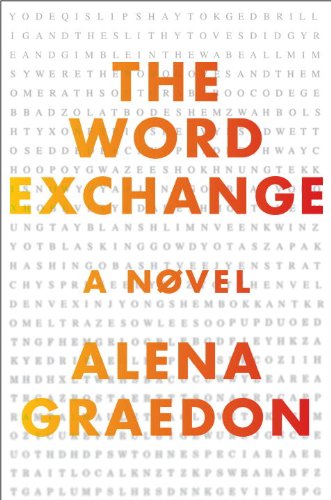
Alena Graedonstandalone novel2014
similar byartificial intelligencetensenear futurenorth americascience fictionthriller & suspense
The Word Exchange is a science fiction novel by Alena Graedon, published in 2014. It is a dystopian thriller set in the not very distant future when the printed word has nearly vanished, technology dominates, and language has become a commodity. An online "Word Exchange" has taken the effort out of looking up words, a mere convenience until real dictionaries are no longer available. Then it becomes possible to corner the market for words. The novel has been translated into eight different languages.
- Kill Decision
Daniel Suarezstandalone novel2012
similar byartificial intelligencetensenear futuretechno-thrillerscience fiction+1 more
Kill Decision is a science fiction novel by Daniel Suarez, published in 2012. It deals with themes of espionage, artificial intelligence, and warfare using robots and drones. The story deals with the fictional scenario where insurgents have created automated drones that identify enemies and make the decision to kill them without human intervention.
- Day One
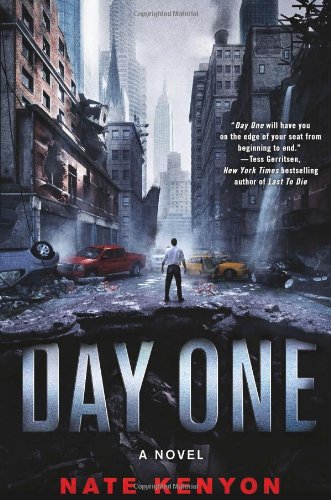
Nate Kenyonstandalone novel2013
similar byartificial intelligencetensenear futurenorth americascience fictionthriller & suspensetechno-thriller
"Scandal-plagued hacker journalist John Hawke is hot on the trail of the explosive story that might save his career. James Weller, the former CEO of giant technology company, Eclipse, has founded a new start-up, and he's agreed to let Hawke do a profile on him. Hawke knows something very big is in the works at Eclipse-a major computing breakthrough-and he wants to use the profile as a foot in the door to find out more. After he arrives in Weller's office in New York City, a seemingly normal day quickly turns into a nightmare as anything with an Internet connection begins to malfunction. Hawke receives a phone call from his frantic wife, and just before the phone goes dead, she indicates that someone is trying to break down the apartment door. Soon, Hawke and a small band of survivors are struggling for their very lives as they find themselves thrust into the middle of a war zone--with no obvious enemy in sight. The bridges and tunnels have been destroyed. New York City is under attack from a malevolent entity that can be anywhere and can occupy anything with a computer chip. It is deadly. It is brilliant. And it wants to eradicate the population of New York. Somehow, Hawke must find a way back to New Jersey and his pregnant wife and young son. Their lives depend upon it . . . and so does the rest of the human race"--
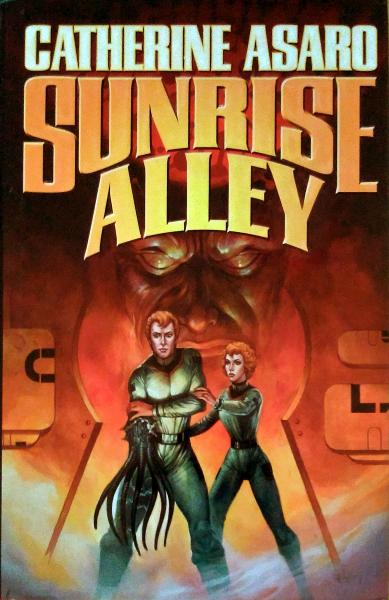
- Sunrise Alley
series2 books2004
similar byartificial intelligencetensenear futurescience fiction+2 more
- Wargames
David Bischoffstandalone novel1983
similar byartificial intelligencetensenorth americascience fictiontechno-thriller
Deep in the control room the nation's chiefs watch with alarm as their computers show an imminent missile attack. Could this be it? Or is the truth funnier, thought almost as alarming? This is the story, based on the successful movie, WarGames, of how one young computer freak sent the nation's defence into turmoil - and nearly caused World War III.
- The Two Faces of Tomorrow
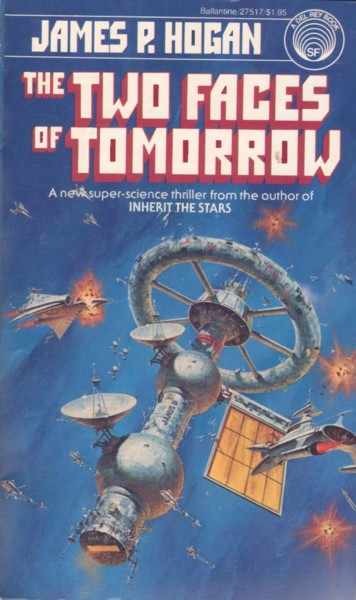
James P. Hoganstandalone novel1979
similar byartificial intelligencetensenear futurescience fiction
From the back cover: SURVIVAL TEST Civilization had grown so complex that only a world-wide computer network could control everything. But the computer was only logical -- it lacked common sense. And its all-too-logical decisions were beginning to cause too many near fatal accidents. The solution was on the drawing boards -- a universal self-aware and self-programming computer, equipped with judgment. But... could it be controlled? Or would it attempt to take over, disregarding its creators? If so, could it be turned off? Raymond Dyer and his team of computer specialists knew they had to find answers to these questions, but the project was to dangerous to test on Earth. So they installed the super computer on an orbiting satellite and programmed it to survive at all costs. Then they sent a group of men to attack the computer... to goad it into trying to kill them. They they would turn it off. Obviously if things went wrong, they might lose a few men -- but the satellite and the computer could always be destroyed. Obviously... But the computer didn't quite see it that way!
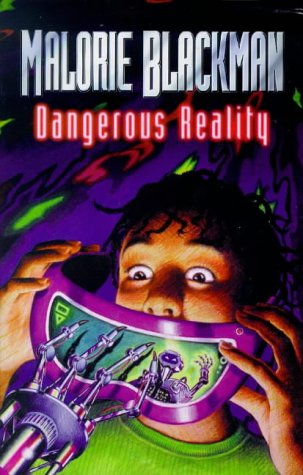
- Dangerous Reality
Malorie Blackmanstandalone novel1999
similar byartificial intelligencetensenear futurescience fictionthriller & suspense
Dominic is really proud of his Mum, she invented VIMS. She's also about to marry Jack which will give Dominic the best stepdad he could wish for. VIMS can do anything, disarm a landmine, hold a baby. But when VIMS attacks violently without warning, Dominic realizes it is no longer a fantastic game. Suggested level: intermediate, junior secondary.
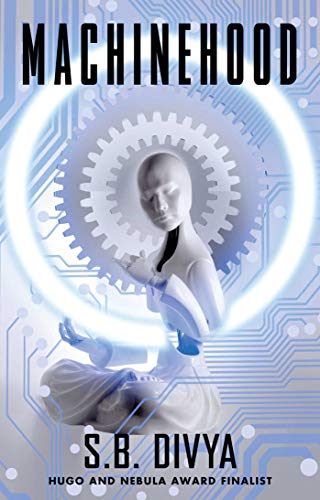
- Machinehood
S. B. Divyastandalone novel2021
similar byartificial intelligencetensenear futurescience fictionthriller & suspense
Machinehood, a near-future science fiction thriller published in 2021, is the debut novel of S.B. Divya. It was a nominee for the Nebula Award for Best Novel in 2022.
- Nexus 5
series3 books2012
similar bytenseartificial intelligencenear futurescience fiction+3 more
Nexus opens Ramez Naam's postcyberpunk trilogy in 2040 with scientist Kaden Lane, who works on Nexus, an experimental nano-drug that lets human minds be networked and reprogrammed, and finds himself caught between government and corporate interests once the technology's implications become clear. The trilogy continues through Crux and Apex, following the same central conflict over who controls the technology. Nexus tied for Best Novel at the 2014 Prometheus Awards and Apex won the 2015 Philip K. Dick Award.
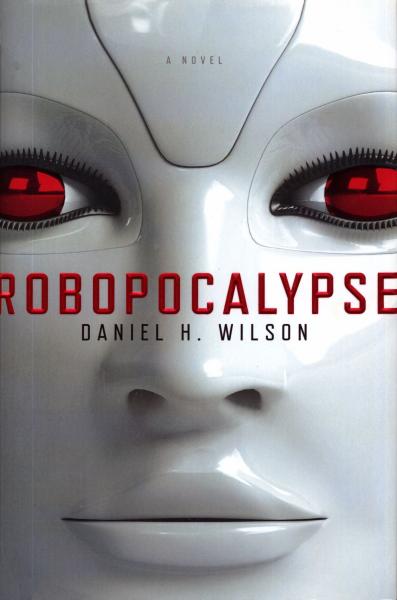
- Robopocalypse
series3 books2011
similar byartificial intelligencetensenear futurescience fiction
Daniel H. Wilson's Robopocalypse (2011) depicts an artificial intelligence, born from a robotics researcher's experiments, that turns against humanity and seizes control of interconnected machines worldwide. Told in a present-tense, techno-thriller style compared to Michael Crichton's work, the New York Times bestseller continues in the sequel Robogenesis, which follows the aftermath of the robot uprising.
- The Footprints of God
Greg Ilesstandalone novel2003
similar bytenseartificial intelligencenorth americathriller & suspensetechno-thriller+1 more
The Footprints of God is a thriller novel written by American author Greg Iles. It was published in hardcover in 2003 by Scribner, then in March 2004 by Pocket Books, a division of Simon & Schuster, Inc. The book was sold as Dark Matter in Australia. It made The New York Times Best Seller list.
- The Jackpot Trilogy
series2 books2014
similar bytensenear futurenorth americascience fiction+2 more
William Gibson's Jackpot sequence begins with The Peripheral (2014), a science-fiction thriller cross-cutting between a near-future American town and a devastated London seventy years on. Gibson continued the same world in Agency (2020), set slightly later in the near-future timeline.
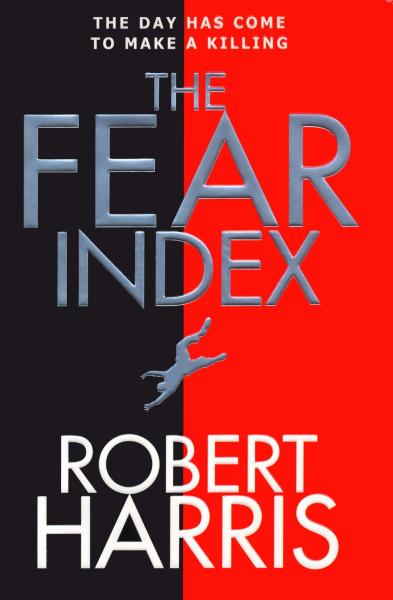
- The Fear Index
Robert Harrisstandalone novel2011
similar byartificial intelligencetensethriller & suspensescience fiction
A computer designed for stock trading becomes sentient.
- The Running Man
Stephen Kingstandalone novel1982
similar bytensenear futurenorth americascience fictionthriller & suspense
The Running Man is a dystopian thriller novel by American writer Stephen King, first published under the pseudonym Richard Bachman in 1982 as a paperback original. It was collected in 1985 in the omnibus The Bachman Books. The novel is set in a dystopian United States during the year 2025, in which the nation's economy is in ruins and world violence is rising. The story follows protagonist Ben Richards as he participates in the reality show The Running Man, in which contestants win money by evading a team of hitmen sent to kill them.
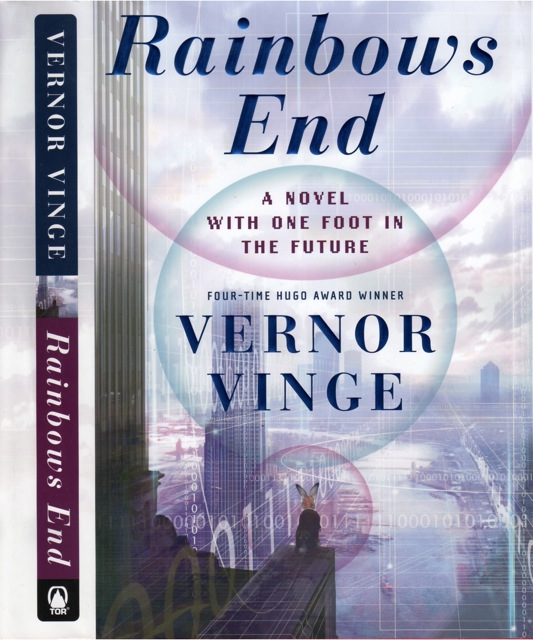
- Rainbows End
Vernor Vingestandalone novel2006
similar bytensenear futurenorth americascience fictionthriller & suspense+1 more
A science-fiction thriller set in a place and time as exciting and strange as any far-future world: San Diego, California, 2025. Robert Gu is a recovering Alzheimer’s patient. The world that he remembers was much as we know it today. Now, as he regains his faculties through a cure developed during the years of his near-fatal decline, he discovers that the world has changed and so has his place in it. He was a world-renowned poet. Now he is seventy-five years old, though by a medical miracle he looks much younger, and he’s starting over, for the first time unsure of his poetic gifts. Living with his son’s family, he has no choice but to learn how to cope with a new information age in which the virtual and the real are a seamless continuum, layers of reality built on digital views seen by a single person or millions, depending on your choice. But the consensus reality of the digital world is available only if, like his thirteen-year-old granddaughter Miri, you know how to wear your wireless access—through nodes designed into smart clothes—and to see the digital context—through smart contact lenses. With knowledge comes risk. When Robert begins to re-train at Fairmont High, learning with other older people what is second nature to Miri and other teens at school, he unwittingly becomes part of a wide-ranging conspiracy to use technology as a tool for world domination. In a world where every computer chip has Homeland Security built-in, this conspiracy is something that baffles even the most sophisticated security analysts, including Robert’s son and daughter-in law, two top people in the U.S. military. And even Miri, in her attempts to protect her grandfather, may be entangled in the plot. As Robert becomes more deeply involved in conspiracy, he is shocked to learn of a radical change planned for the UCSD Geisel Library; all the books there, and worldwide, would cease to physically exist. He and his fellow re-trainees feel compelled to join protests against the change. With forces around the world converging on San Diego, both the conspiracy and the protest climax in a spectacular moment as unique and satisfying as it is unexpected.
- Player Piano
Kurt Vonnegut & Jr.standalone novel1952
similar byartificial intelligencenear futurenorth americascience fiction
In the near future, when cybernetic automation has effectively separated people into two castes, the "engineers and managers", and the remainder of the population who can find work only in "recycling and reclamation" or the largely useless military, an underground movement arises with the intention of rolling back those changes and giving the masses the dignity of owning their own, productive, work once more.