More like Brainchild
anchored on:our world
but
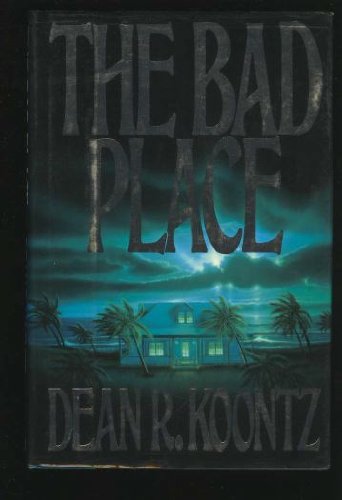
- The Bad Place
Dean R. Koontzstandalone novel1990
similar byhorrortensegenetic engineeringidentitylate 20th century
The Bad Place is a horror novel by American writer Dean Koontz, released in 1990. It includes elements of horror, suspense, and mystery, and is presented partially as a twist on the private eye drama. The story follows Frank Pollard, a man who wakes up each night with no memory of where he has been or what he has done, only to find himself covered in injuries or in possession of strange items. As his condition worsens, private investigators Bobby and Julie Dakota are hired to track him and uncover the truth behind his blackouts. Their investigation leads them into a disturbing web of genetic experimentation, family secrets, and a hidden force manipulating human lives from the shadows. As the plot unfolds, the novel reveals that Frank and others are being pursued by powerful, almost inhuman figures connected to a twisted experiment involving selective breeding and enhanced abilities. The Dakotas become entangled in a struggle not only to save Frank but also to survive against forces that seem to operate beyond normal human limits. Themes in the novel include identity, memory loss, the abuse of science, and the nature of evil. Koontz blends psychological horror with fast-paced action, creating a narrative that shifts between detective fiction and supernatural thriller. The book received generally positive reception from readers who enjoyed Koontz’s signature suspense style, though some critics noted its complex and sometimes chaotic plot structure. Over time, it has remained one of his more memorable early-1990s works due to its unusual blend of genres and its dark, unsettling tone.
- The Island of Dr. Moreau
series12 books1896
similar by+2 more
H. G. Wells's 1896 novel The Island of Doctor Moreau follows a shipwrecked man stranded on a remote island where a reclusive scientist creates human-animal hybrids through vivisection, using the scenario to probe questions of cruelty, control, and what separates humanity from the beasts it experiments on. The premise has drawn later reimaginings gathered alongside it here, including Brian Aldiss's Moreau's Other Island and Silvia Moreno-Garcia's The Daughter of Doctor Moreau, each transplanting Wells's central idea into a new setting and voice. Taken together, the group traces one unsettling premise across more than a century of speculative fiction rather than forming a single ongoing story.
- Castle Rock
series16 books1978
similar byhorror+1 more
Castle Rock is the fictional Maine town that links a cluster of otherwise separate Stephen King novels and novellas, including The Dead Zone, Cujo, The Dark Half, Needful Things, and Elevation. Rather than telling one continuous story, the books share a setting and occasional recurring figures, such as Sheriff Alan Pangborn, while each follows its own self-contained plot and cast. Any title can be read on its own without needing the others.
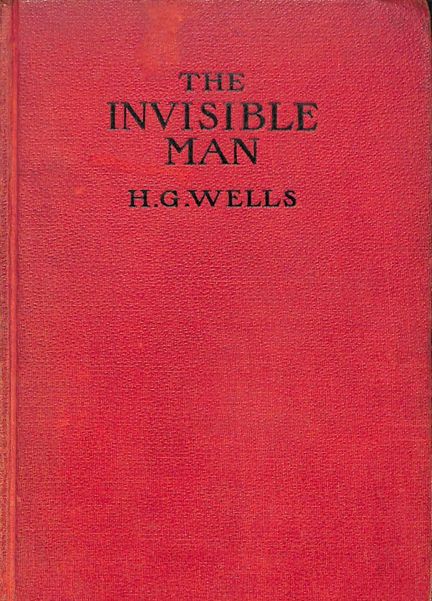
- The Invisible Man
series6 books1897
similar by+3 more
The Invisible Man is H. G. Wells's 1897 science fiction novel about Griffin, a scientist who works out how to make living tissue invisible and tests the process on himself, only to discover he has no way to reverse it. Unseen and increasingly cut off from other people, he turns to theft and violence while trying to survive and find a cure, making the book as much about his moral collapse as about the invisibility premise itself. It's a single self-contained novel; the two listed titles here are duplicate editions rather than separate books.
- Blue Rose (Peter Straub)
series9 books1985
completed
similar byhorrorlate 20th century+2 more
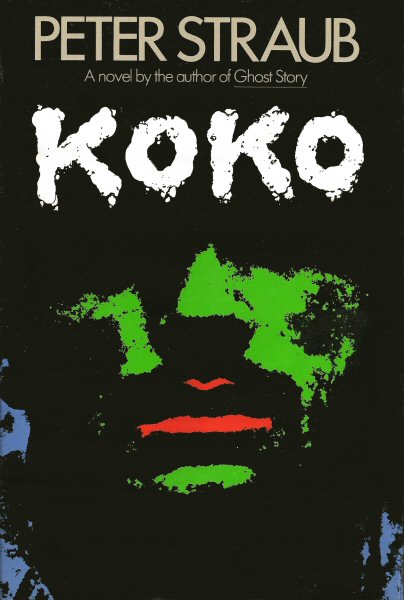
The Blue Rose novels are only loosely a series: Peter Straub's Koko, Mystery, and The Throat are separate suspense novels connected by recurring characters, a shared Midwestern town, and the shadow of a Vietnam-era program called Blue Rose that haunts several of the men at their centers. Koko follows a group of Vietnam veterans hunting a former comrade turned serial killer decades after the war. The 1985 novella Blue Rose and later story collections explore the same program's darker origins.
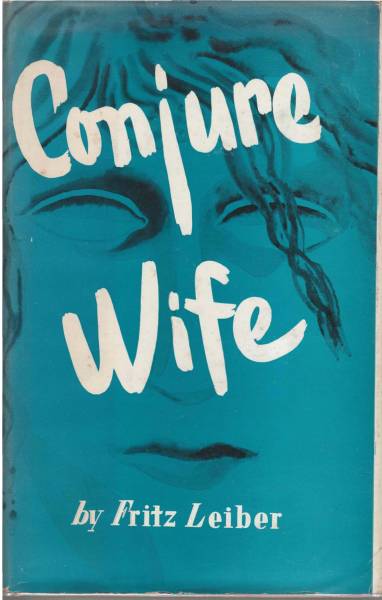
- Conjure Wife
Fritz Leiberstandalone novel1943
similar byhorrortenseour world+1 more
From the front cover of the Lion first paperback: "Potions in the house... evil in the air... and a witch in his bed." From the back cover of the Lion first paperback: ""Conjure Wife... is easily the most frightening (and necessarily) the most thoroughly convincing of all modern horror stories. Its premise is that witchcraft still flourishes, or at any rate survives, an open secret among women, a closed book to men. Under the rational overlay of 20th-century civilization this sickly growth, uncultivated, unsuspected, still manages to propagate itself. Leiber develops this theme with the utmost dexterity, piling up alternate layers of the mundane and outre, until at the story's real climax, the shocker at the end of chapter 14, I am not ashamed to say that I jumped an inch out of my seat. From that point onward the story anticlimax so skillfully managed that I am not really certain I touched the slipcover again until after the last page. Leiber has never written anything better... which perhaps is all that needed to be said." Damon Knight, Science Fiction Adventures"
- Kairos
series11 books1962
completed
similar by+1 more
The Time Quintet is a science fantasy series of five young adult novels written by American author Madeleine L'Engle and made up of A Wrinkle in Time (1962), A Wind in the Door (1973), A Swiftly Tilting Planet (1978), Many Waters (1986), and An Acceptable Time (1989).
- Southern Reach Trilogy
series4 books2014
similar byhorrorour world+2 more
The Southern Reach Series is a series of novels by the American author Jeff VanderMeer first published in 2014—Annihilation, Authority, Acceptance, and Absolution. The series takes its name from the secret agency that is central to the plot. In 2013, Paramount Pictures bought the movie rights for the series, and a film adaptation of Annihilation was made with Alex Garland as writer-director. The film was released in 2018. The most recent book in the series, Absolution, was released on 22 October 2024.
- Carrion Comfort
Dan Simmonsstandalone novel1989
similar byhorrortenseour worldlate 20th century
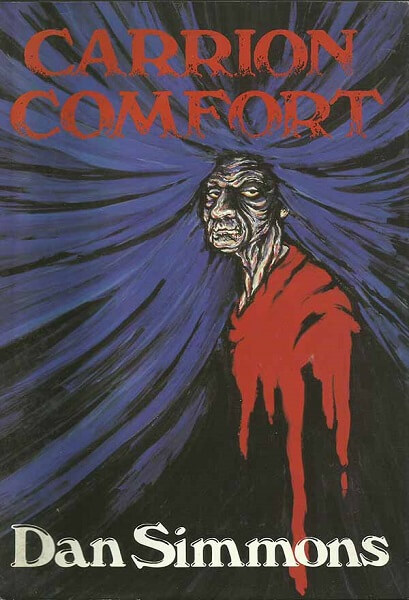
Carrion Comfort is a science fiction/horror novel by American writer Dan Simmons, published in 1989 in hardcover by Dark Harvest and in 1990 in paperback by Warner Books. It won the Bram Stoker Award, the Locus Poll Award for Best Horror Novel, and the August Derleth Award for Best Novel. It is based on a novelette of the same title, published in 1983 in the magazine Omni. The first half of the novelette makes up chapter 1 of the novel, while the second half forms chapter 3.
- Beyond This Horizon
Robert A. Heinleinstandalone novel1948
similar byour worldgenetic engineering+2 more
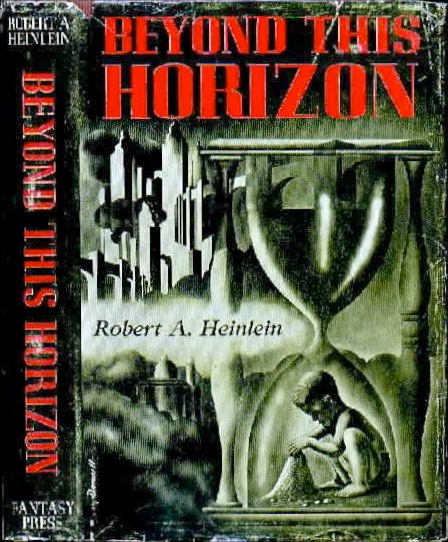
From the front flap of a 2001 Baen reprint: "Utopia has been achieved. For centuries, disease, hunger, poverty, and war have been things found only in the history tapes. And applied genetics has given men and women the bodies of athletes and a lifespan of over a century. They should all have been very happy... But Hamilton Felix is bored. And he is the culmination of a star line, each of his last thirty ancestors chosen for superior genes. Hamilton is, as far as genetics can produce one, the ultimate man. And this ultimate man can see no reason why the human race should survive, and has no intention of continuing the pointless comedy. However, Hamilton's life is about to become less boring. A secret cabal of revolutionaries who find utopia not just boring, but desperately in need of leaders who know just What Needs to be Done, are planning to revolt and put themselves in charge. Knowing of Hamilton's disenchantment with the modern world, they have recruited him to join their Glorious Revolution. Big mistake! The revolutionaries are about to find out that recruiting a superman was definitely not a good idea..."
- Blade Runner Universe
series6 books1968
similar byidentity+2 more
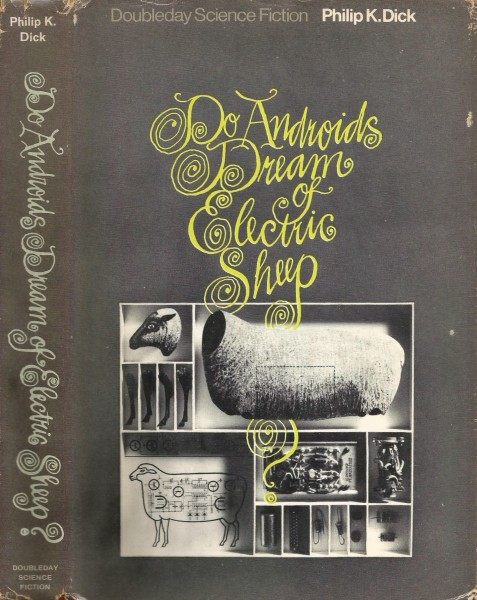
Philip K. Dick's 1968 novel Do Androids Dream of Electric Sheep? follows bounty hunter Rick Deckard as he tracks escaped androids through an irradiated, near-abandoned San Francisco, using the hunt to probe questions of empathy and what separates human from machine. The novel became the basis for Ridley Scott's 1982 film Blade Runner, and Marvel Comics later published an illustrated adaptation of that film. Together the two trace the story's path from prose original to screen and comic-page adaptation.
- Dr. Patrick Cory
series3 books1942
completed
similar byour world+3 more
Donovan's Brain (1942) is one of the earliest and most influential 'brain in a jar' stories: Dr. Patrick Cory keeps the disembodied brain of a dead millionaire alive in his lab, only to find it telepathically overriding his own mind and will. Curt Siodmak revisited the same premise and character in Hauser's Memory, where Cory absorbs a dying spy's memories through an experimental serum, with consequences of his own. Both were adapted for film and television, and the 1942 original is often cited as a formative influence on later mad-science and body-horror fiction.
- The Shining
series5 books1977
similar byhorrortense
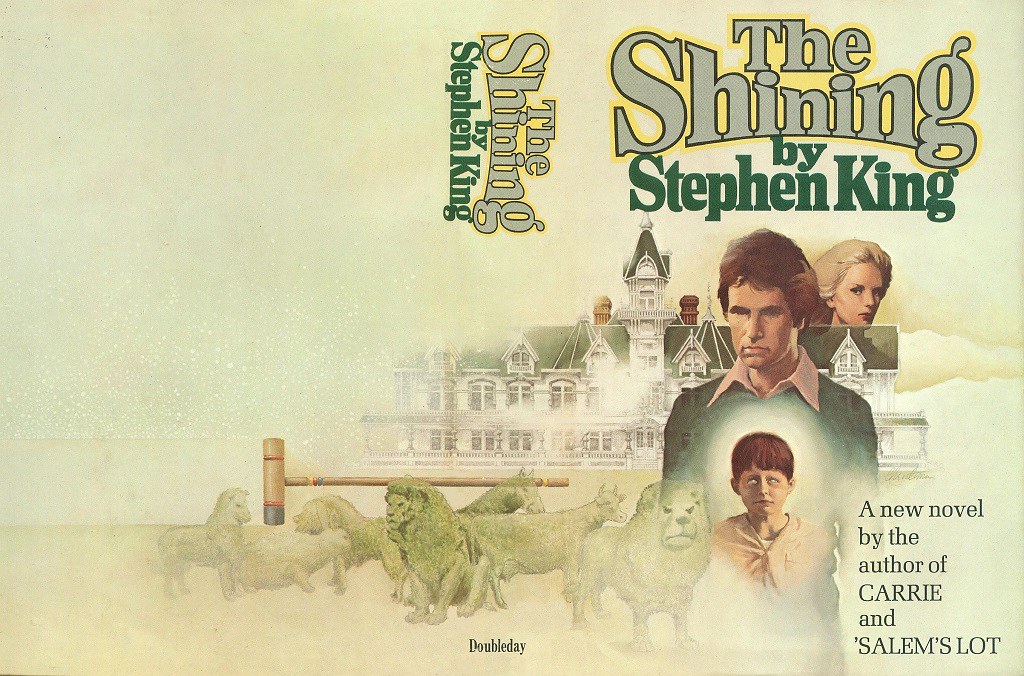
Stephen King's 1977 novel The Shining follows the Torrance family as winter caretakers of the isolated, malevolent Overlook Hotel, where father Jack is gradually consumed by the hotel's influence while his young son Danny's psychic "shining" draws its attention. Doctor Sleep (2013) picks up the story decades later, following Danny as an adult still marked by that childhood ordeal. Together the two form a horror duology spanning nearly forty years of real-world publication.
- Carrie
Stephen Kingstandalone novel1974
similar byhorrortenselate 20th century
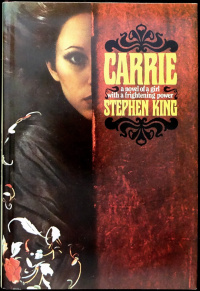
In one way or another, everybody abused Carrie. This sixteen-year-old misfit was forbidden everything that was young and fun by her fanatical mother. She was teased and taunted by her classmates, misunderstood by her teachers, and given up as hopeless by almost everyone. But Carrie had a secret: She possessed terrifying telekinetic powers that could make inanimate objects move, a lighted candle fall, or a door lock. Carrie could make all kinds of startling bizarre, and malevolent things happen. (WorldCat)
- The Omen
series5 books1976
similar byhorrorour world+2 more
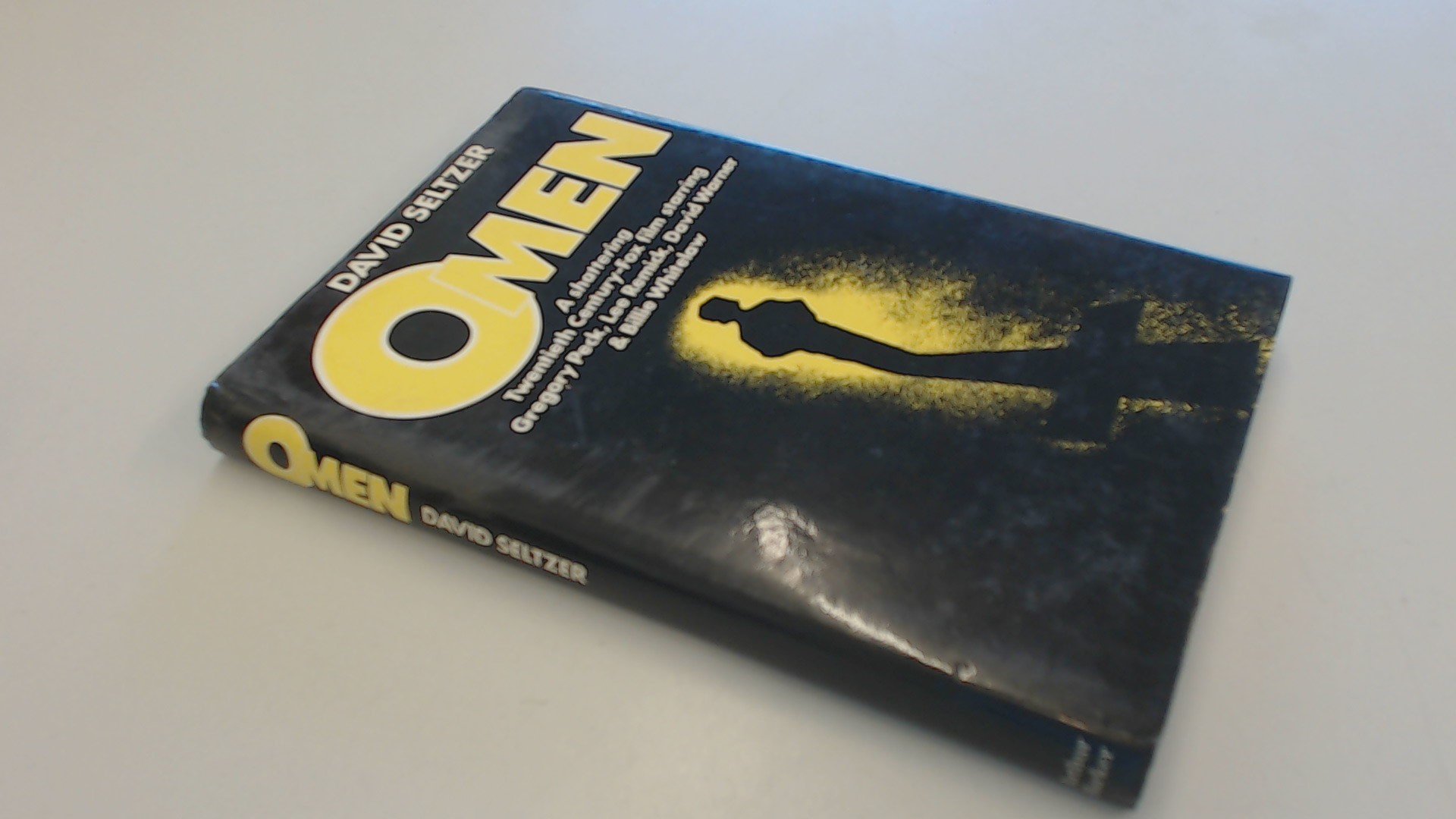
The Omen book series novelizes and continues the 1976-1981 horror film franchise about Damien Thorn, the secretly substituted child revealed to be the Antichrist. David Seltzer's tie-in novel adapted the original film, and Joseph Howard and Gordon McGill carried the story forward across further volumes (Damien: Omen II, The Final Conflict, and later original sequels), following Damien's rise to power and the escalating attempts to stop him.
- Stephen King multiverse
universe46 books1967
Start hereThe Gunslinger · Start here
similar by+2 more
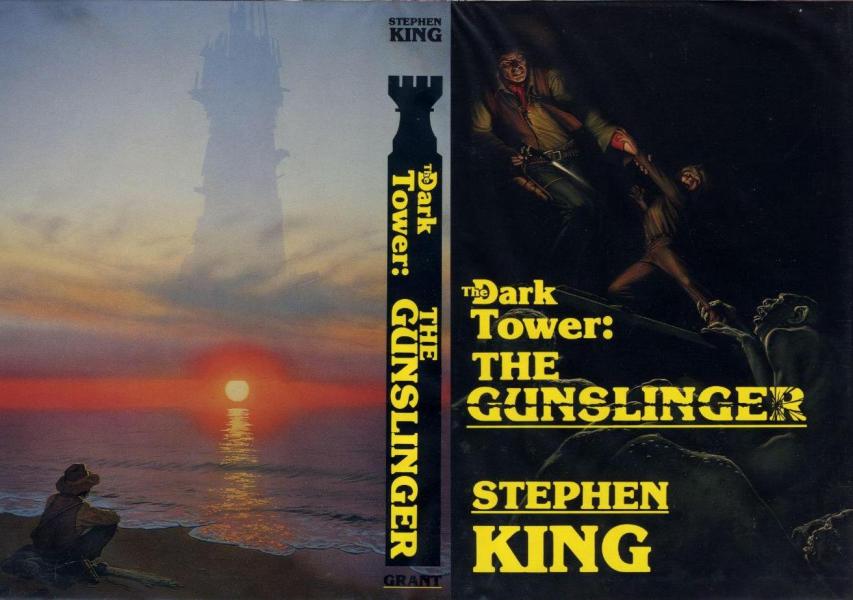
The man in black fled across the desert, and the gunslinger followed. So begins the long walk of Roland Deschain, last of an order of knight-errant pistoleers, across a land that has "moved on" — where the compass points drift, dead machines rot toward sentience, and the weave of what's real wears thin. His quest is the Dark Tower itself: a spire standing at the hub of every world that exists, the linchpin that holds all of them back from ruin. Roland's road runs eight volumes, from The Gunslinger through the closing Dark Tower, with the later, interleaved tale The Wind Through the Keyhole folding a story-within-a-story back into his youth. Along the way he draws a ka-tet — a fellowship bound by fate, not choosing — through doorways between worlds: a heroin-shackled New Yorker, a woman of two minds, a boy who dies twice. The Tower is also the secret axle around which the wider shelf of King's work turns; threads from The Stand, 'Salem's Lot and beyond wind quietly toward it. Expect a mongrel of Western, high fantasy, horror and decayed science fiction, told in a dusty, incantatory dialect all its own — ka, thankee-sai, the world that has moved on. This is King at his most mythic and most personal, a decades-spanning circle that rewards a patient reader. Begin at the beginning: The Gunslinger, then walk forward in publication order. There are other worlds than these — but this door opens first.
- Patternist
series6 books1976
completed
similar bygenetic engineering+3 more
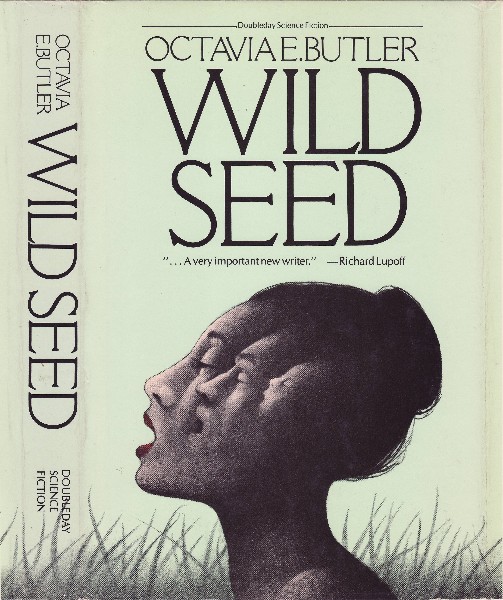
The Patternist series is a group of science fiction novels by Octavia E. Butler that detail a secret history continuing from the Ancient Egyptian period to the far future that involves telepathic mind control and an extraterrestrial plague. A profile of Butler in Black Women in America notes that the themes of the series include "racial and gender-based animosity, the ethical implications of biological engineering, the question of what it means to be human, ethical and unethical uses of power, and how the assumption of power changes people."
- The Vampire Chronicles
series15 books1976
completed
similar byhorrorour world+1 more
The Vampire Chronicles is a series of Gothic vampire novels and a media franchise, created by American author Anne Rice, that revolves around the fictional character Lestat de Lioncourt, a French nobleman turned into a vampire in the 18th century.
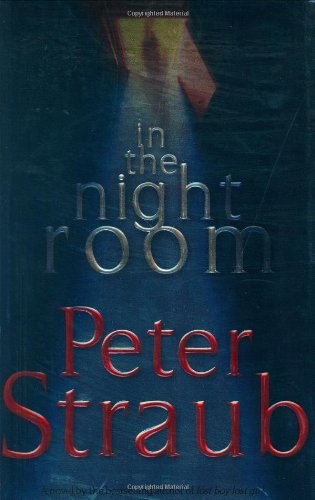
- In the Night Room
Peter Straubstandalone novel2004
similar byhorrortenseour worldidentity
In the Night Room is a 2004 horror-thriller novel by American author Peter Straub, a sequel to his 2003 book Lost Boy, Lost Girl. The work was first published in hardback on October 26, 2004, through Random House and it won the 2004 Bram Stoker Award for Novel. Straub encountered some difficulties while writing In the Night Room and had written several different passages for the work before growing bored with each version before writing it using the same technique he used for its predecessor in which he "reached down inside the book and turned it inside out."
- Strangers
Dean R. Koontzstandalone novel1986
similar byhorrortenseour worldidentity
Strangers is a horror novel written by Dean Koontz, released in 1986.
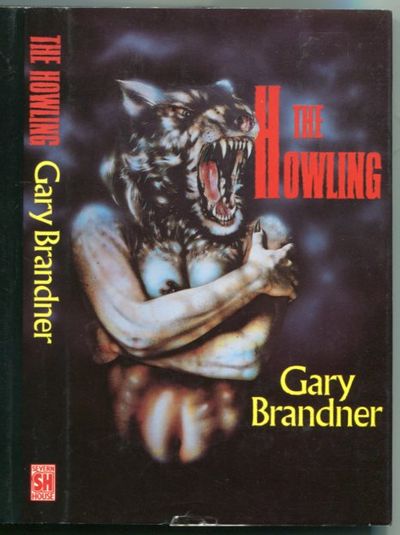
- The Howling
series3 books1977
completed
similar byhorrortenseour world+1 more
The Howling, Gary Brandner's 1977 novel, sets a woman recovering from trauma against a small California town that turns out to be sheltering a colony of werewolves. Brandner wrote two further novels under the same title banner, The Howling II and The Howling III, but by the author's own account they're only loosely connected sequels rather than a continuous story, and neither maps onto the better-known film series the first book inspired.