More like Brainwashed!
anchored on:our worldcontemporarymiddle gradescience fiction
but
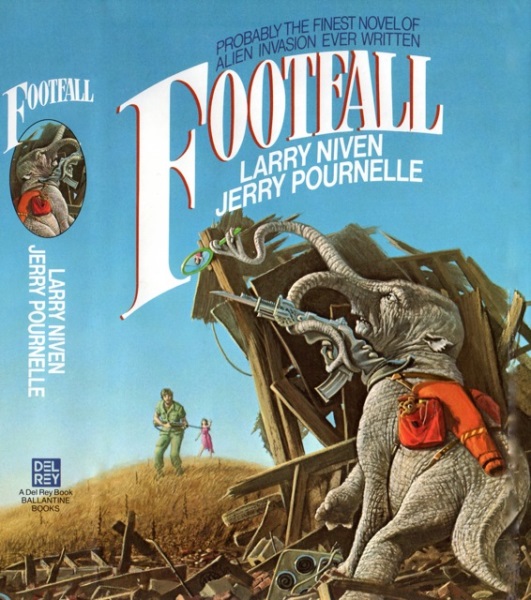
- Footfall
Larry Niven & Jerry Pournellestandalone novel1985
similar bysurvivalscience fictionour worldcontemporary+1 more
When aliens travel to Earth from Alpha Centauri, differences between alien and human psychology result in an unprovoked invasion, and the resulting resistance results in the aliens' use of a devastating weapon.
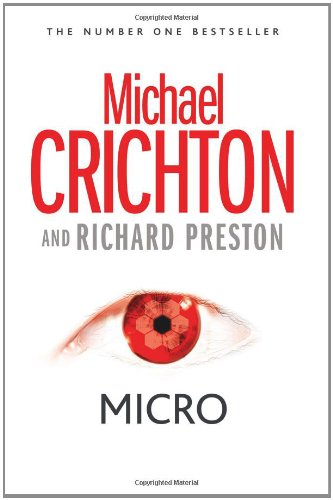
- Micro
Michael Crichton & Richard Prestonstandalone novel2011
similar bysurvivalscience fictionour worldcontemporary+1 more
Micro is a techno-thriller novel by Michael Crichton, the seventeenth under his own name and second to be published after his death, published in 2011. Upon his death in 2008, an untitled, unfinished manuscript was found on his computer, which would become Micro. Publisher HarperCollins chose science writer Richard Preston to complete the novel from Crichton's remaining notes and research, and it was finally published in 2011. Micro followed the historical thriller Pirate Latitudes, which was also found on his computer and published posthumously in 2009.
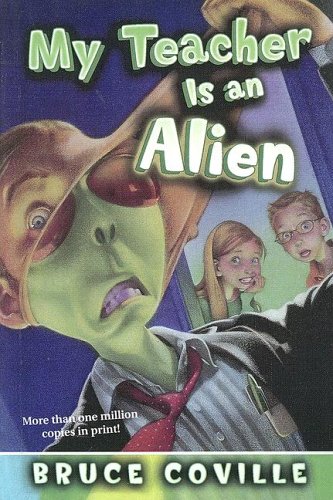
- My Teacher Is an Alien
series4 books1989
similar byscience fictionadventurouscontemporarymiddle grade+1 more
My Teacher Is an Alien is a four-book science fiction children's book series authored by Bruce Coville. The titles include:My Teacher Is an Alien (1989) My Teacher Fried My Brains (1991) My Teacher Glows in the Dark (1991) My Teacher Flunked the Planet (1992)
- Richard Forthrast
series2 books2011
similar byscience fictionour world+2 more
Neal Stephenson's Richard 'Dodge' Forthrast novels open with Reamde, a globe-spanning thriller that starts when ransomware inside an MMORPG economy pulls Richard's extended family into a real-world hostage crisis involving hackers, jihadists and Russian mobsters. The sequel Fall; or, Dodge in Hell shifts registers entirely, following Richard's digitally preserved mind after death into an afterlife simulation built from his scanned brain. The two books share a protagonist and family but differ sharply in genre and scale.
- Bromeliad
series3 books1989
completed
similar bysurvivaladventurousour worldcontemporary+2 more
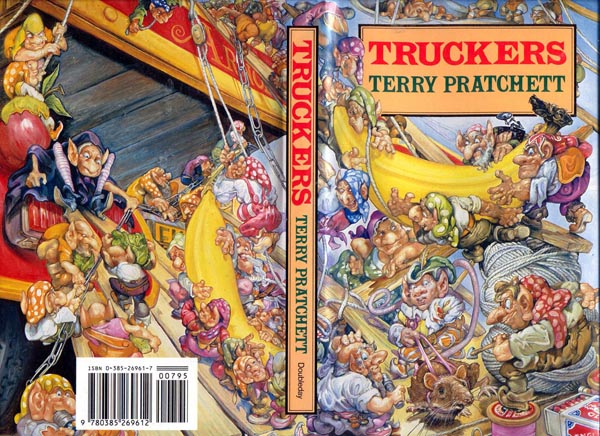
The Nome Trilogy, also known as The Bromeliad, is a trilogy of children's books by British writer Terry Pratchett, consisting of the books Truckers (1989), Diggers (1990) and Wings (1990). The trilogy tells the story of the Nomes, a race of tiny people from another world who now live hidden among humans. Through the books they struggle to survive in the human world and, once they learn of their history from an artefact known as "The Thing", make plans to return home.
- Rats of NIMH
series3 books1971
similar bysurvivaladventurousour worldcontemporarymiddle grade+1 more
Robert C. O'Brien's Mrs. Frisby and the Rats of NIMH follows a widowed mouse seeking help to save her sick son and her home from a farmer's plow, turning to a colony of rats who escaped laboratory experiments at the National Institute of Mental Health with enhanced intelligence and a literate, technological society of their own. After O'Brien's death, his daughter Jane Leslie Conly continued the story in Racso and the Rats of NIMH, in which a city rat joins the colony ahead of a flood, and R-T, Margaret, and the Rats of NIMH, in which the rats rescue and are helped by lost human children. All three carry forward the original's interest in community, responsibility, and the costs of intelligence.
- Kairos
series11 books1962
completed
similar byscience fiction+3 more
The Time Quintet is a science fantasy series of five young adult novels written by American author Madeleine L'Engle and made up of A Wrinkle in Time (1962), A Wind in the Door (1973), A Swiftly Tilting Planet (1978), Many Waters (1986), and An Acceptable Time (1989).
- The Apocalypse Troll
David Weberstandalone novel1999
similar byscience fictionadventurousour worldcontemporary+1 more
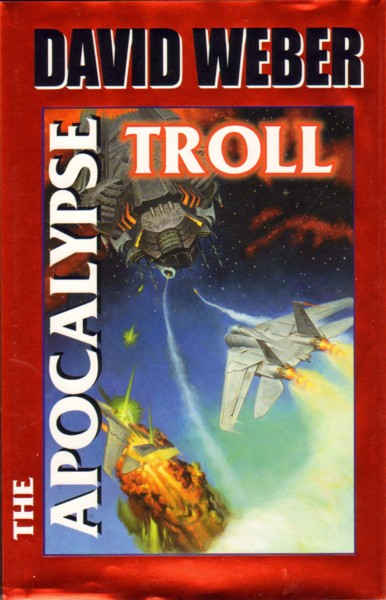
The Apocalypse Troll is a novel by American writer David Weber, first published by Baen Books in January 1999. It is a story about time travel and alien invasion.
- Tripods
series4 books1967
completed
similar byscience fictionour world+2 more
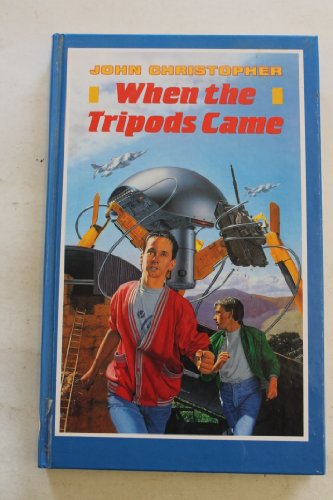
The Tripods is a series of young adult science fiction novels by John Christopher. The series takes place in a post-apocalyptic world where humanity is enslaved by "Tripods"—gigantic three-legged walking machines piloted by an alien race later identified as the "Masters". The first two books were the basis of a science fiction TV series, produced in the United Kingdom in the 1980s.
- Cavor
series2 books1901
similar byscience fictionadventurous+1 more
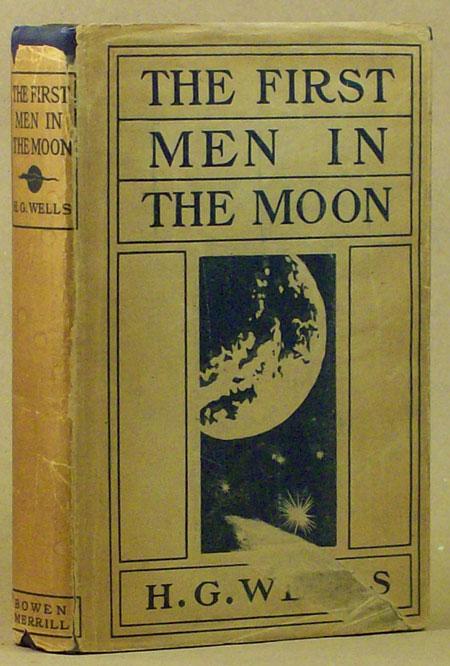
H. G. Wells's 1901 novel The First Men in the Moon is narrated by the businessman Bedford, who joins the reclusive scientist Cavor after Cavor invents cavorite, a gravity-blocking substance that carries the two men to the Moon. There they discover a vast underground civilization of insect-like Selenites, and the expedition that began as a hunt for lunar minerals turns into an encounter with an alien society. It is a standalone novel; later editions crediting Stephen Baxter add an introduction or afterword rather than a continuing story.
- Maximum Ride
series12 books2005
similar bysurvivalscience fictionadventurousour world+1 more
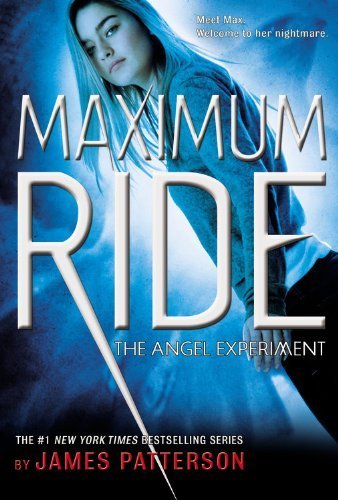
Maximum Ride is a series of young adult science fantasy novels by American author James Patterson. The series centers on the adventures of Maximum "Max" Ride and her family, called the Flock, who are winged human-avian hybrids created at a lab called The School. The series was inspired by Patterson's earlier novels When the Wind Blows and The Lake House, which were intended for older readers.
- The Chronicles of St. Mary's
series46 books2013
similar byscience fictionour worldcontemporaryfunny+1 more
Jodi Taylor's Chronicles of St Mary's follows the disaster-prone historians of St Mary's Institute of Historical Research, who insist they don't 'time travel' but merely 'investigate major historical events in contemporary time' — usually while narrowly avoiding death and causing chaos. Beginning with Just One Damned Thing After Another, the comic time-travel series has grown to nineteen novels ranging across historical periods from the Cretaceous to the twentieth century.
- Jumper
series6 books1992
similar byscience fictionadventurouscontemporary+2 more
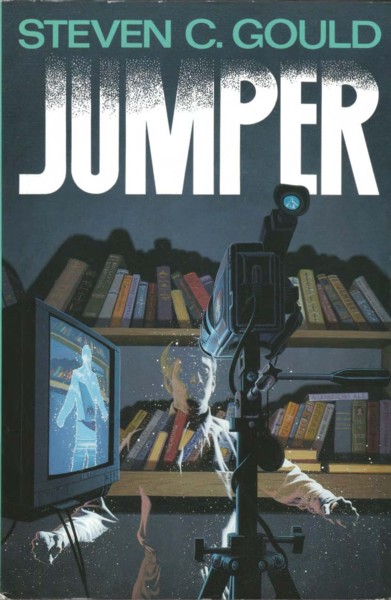
Jumper follows David Rice, a teenager who discovers he can teleport anywhere he's been and uses the power to escape an abusive home, only to find that ability alone doesn't solve the harder problems of finding his absent mother, building an honest relationship, or staying off the radar of people who'd exploit him. Steven Gould's series continues across Reflex, Impulse, and Exo, later following his and his wife's daughter as a second-generation jumper. A 2008 film loosely adapted the first novel.
- H. G. Wells' War of the Worlds
universe65 books1898
Start hereThe War of the Worlds · Start here
similar byscience fiction+1 more
No one would have believed, in the closing years of the nineteenth century, that human affairs were being watched keenly and closely from the timeless worlds of space. And then the cylinders fell. H. G. Wells' War of the Worlds opens in the quiet of the Surrey commons, where a falling star proves to be the first Martian craft — and from the pit rise the towering tripods, the Heat-Ray, the choking Black Smoke and the creeping red weed, wielded by minds that regard mankind much as we regard the creatures we boil for supper. This is invasion rendered as natural disaster: cold, methodical, and vast beyond argument. Wells' 1898 novel is the seed; everything else grows from that Martian soil. The catalogue gathers direct sequels and continuations alongside a wide field of other hands. In War of the Worlds: Global Dispatches the invasion is retold across the whole planet through the eyes of Twain, Verne, Tolstoy, Lowell and Kipling; in the Manly Wade and Wade Wellman crossover, Sherlock Holmes, Watson and Professor Challenger take the field against the machines; and Scott Washburn's Great Martian War stretches the fighting into a decades-long alternate history of steam, artillery and grinding attrition. It is a loose shared world — no single decreed sequence, many voices answering one calamity. What sets this world apart is its refusal of heroics: the invaders fall not to generals but to the smallest things of Earth, humbling and indifferent. Begin, always, with Wells' original novel — it is short, and it is the ground every later book stands upon. From there follow your appetite: Global Dispatches for the panorama, the Holmes campaign for adventure, Washburn for the long war.
- Daniel X
series6 books2008
similar byscience fictionadventurouscontemporaryour world
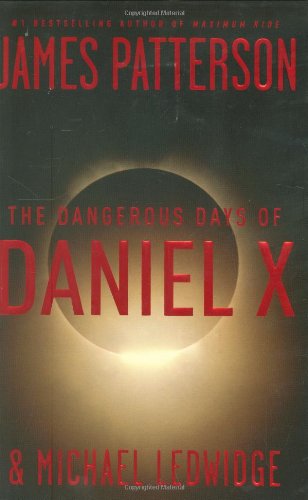
The Dangerous Days of Daniel X opens James Patterson's science-fiction series, co-written with Michael Ledwidge, marking Patterson's return to genre science fiction in a similar vein to his Maximum Ride series. Released in 2008, it became the first of six books following the same teenage protagonist. Patterson's later collaborators on the sequels include Chris Grabenstein, Ned Rust, and Adam Sadler.
- Attack of the 50 Foot Wallflower
Christian McKay Heidickerstandalone novel2018
similar bysurvivalscience fictionadventurousour worldcontemporarymiddle gradefunny
Phoebe Lane is a lightning rod for monsters. She and her mom are forced to flee flesh-eating plants, blobs from outer space, and radioactive ants. They survive thanks to Phoebe s dad an invisible titan, whose giant eyes warn them where the next monster attack will take place.
- Once a Pirate
Susan Grantstandalone novel2000
similar byscience fictionadventurousour worldcontemporary+1 more
Rescued from the freezing Atlantic by a pirate who has lived to plunder merchant vessels, downed fighter pilot Carly Callahan is soon falling for this unlikely hero as well. Time Travel Romance
- Nemesis Saga
series8 books2012
similar bysurvivalscience fictionour worldcontemporary+1 more
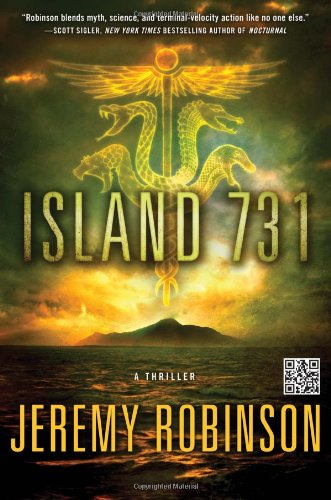
The Nemesis Saga is a series of six kaiju thriller novels written by American author Jeremy Robinson, featuring the massive Goddess of Vengeance Nemesis. Robinson noted that various classic kaiju films especially those featuring Godzilla and Gamera were big influences on the series.
- ゴジラ / Godzilla
series17 books1955
similar byscience fictionour worldcontemporary+2 more
Godzilla is a series of novels written by author Marc Cerasini, based on the film series of the same name produced by Toho. While all set within the same continuity, each novel has its own plot and storyline, with Toho's kaiju featured as the stars.
- The Andromeda Strain
series2 books1969
similar bysurvivalscience fictioncontemporary+1 more
Michael Crichton's 1969 novel The Andromeda Strain follows a team of scientists racing to contain a lethal extraterrestrial microorganism that crash-lands in Arizona, told in the clinical, document-driven style that helped establish the techno-thriller genre. Daniel H. Wilson's authorized 2019 sequel The Andromeda Evolution revisits the same threat five decades later. Together the two books form a two-part outbreak story separated by a fifty-year gap in publication.
- Needle
series2 books1950
completed
similar bysurvivalscience fictionadventurousour world+1 more
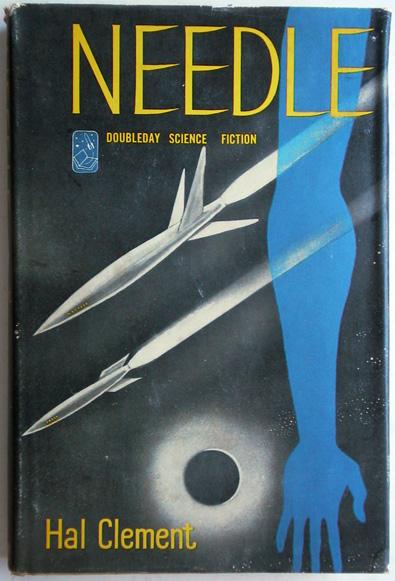
Hal Clement's Needle follows an alien detective nicknamed the Hunter, a shapeless symbiotic being that can live inside a host body, as it crash-lands on Earth pursuing a fugitive of its own kind and takes refuge inside an American teenager, Robert Kinnaird. Together the mismatched pair must learn to communicate and cooperate, first to survive and later to track down the second alien, which has hidden inside another human in the same Pacific island community. The sequel, Through the Eye of a Needle, published nearly three decades later, continues the Hunter's story.
- Monsters Unleashed
series2 books2017
similar byscience fictionour worldcontemporarymiddle grade+3 more