More like Breaking World
anchored on:science fictionpost-apocalypticour worldnear future
but
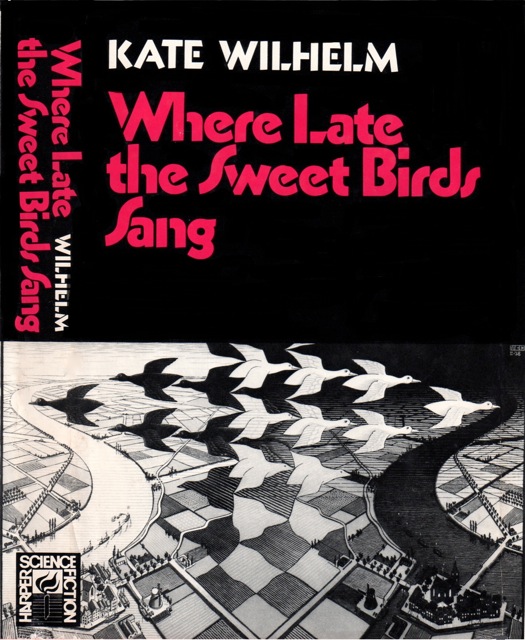
- Where Late the Sweet Birds Sang
Kate Wilhelmstandalone novel1976
similar byecological collapsedarkour worldnear futurescience fictionpost-apocalypticsurvival
Where Late the Sweet Birds Sang is a science fiction novel by American writer Kate Wilhelm, published in 1976. The novel is composed of three parts, "Where Late the Sweet Birds Sang," "Shenandoah," and "At the Still Point," and is set in a post-apocalyptic era, a concept popular among authors who took part in the New Wave Science Fiction movement in the 1960s.
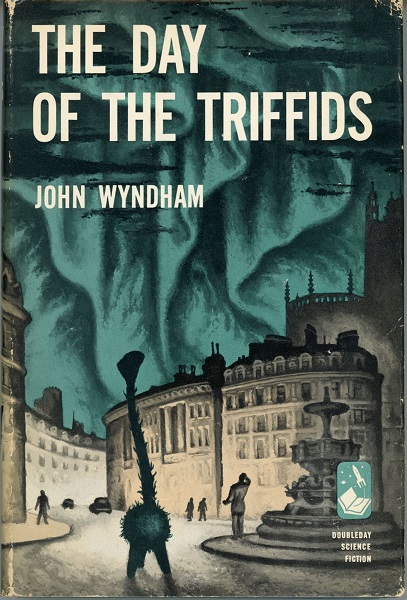
- The Triffids
series3 books1951
similar bydarkour worldscience fictionpost-apocalypticsurvival+2 more
John Wyndham's The Day of the Triffids (1951) opens with a meteor-shower-like event that leaves most of Britain's population blind, throwing civilization into collapse just as triffids, an aggressive and mobile species of poisonous plant, become free to hunt the helpless survivors. Simon Clark's authorized sequel The Night of the Triffids (2001) picks up a generation later, narrated by the original protagonist's son as he confronts a new triffid-dominated world, and John Whitbourn's The Age of the Triffids extends the shared setting further still. Together the three novels form a loose post-apocalyptic trilogy built on Wyndham's original premise rather than a tightly plotted single story.
- Mother of Storms
John Barnesstandalone novel1994
similar byecological collapseour worldnear futurescience fictionpost-apocalypticsurvivaltense+1 more
From the flaps of the Tor first edition: "It is 2028. A strike to destroy an illegal Arctic weapons cache has a catastrophic side effect. Massive amounts of energy are liberated from the polar ice, suddenly warming the Earth's climate. In the middle of the Pacific, a gigantic hurricane thousands of miles across is forming, larger than any in human history. A storm with winds of supersonic speed. A storm that changes direction at whim. A storm that refuses to die. A storm so vast it spawns dozens more in its wake... Blinded by intrigue, expedience, and greed, the world's politicians and power brokers have ignored the killer storms threat until it is too late. Already the death toll is in the tens of millions, as it savages the Pacific coast, while its devil's brood of smaller storms are wreaking havoc across the face of the planet. While the survivors scramble for advantage, a handful of courageous men and women undertake a daring, desperate plan to save humanity from total destruction - a plan so visionary it may alter forever the future of the human race."
- Make Room! Make Room!
Harry Harrisonstandalone novel1966
similar byecological collapsedarkour worldnear futurescience fictionsurvivaltense
Make Room! Make Room! is a 1966 science fiction novel written by Harry Harrison exploring the consequences of both unchecked population growth on society and the hoarding of resources by a wealthy minority. It was originally serialized in Impulse magazine.
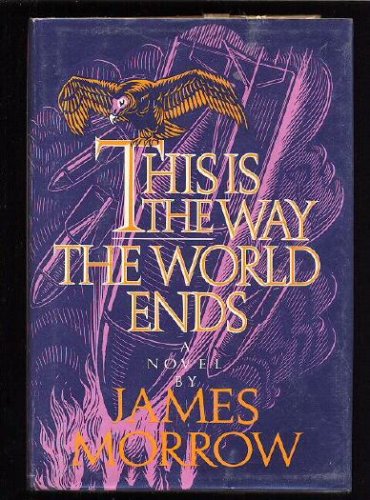
- This Is the Way the World Ends
James Morrowstandalone novel1986
similar byecological collapsedarkour worldnear futurescience fictionpost-apocalypticsurvival
This Is the Way the World Ends is a post-apocalyptic novel by American writer James K. Morrow, published in 1986.
- Gold Fame Citrus
Claire Vaye Watkinsstandalone novel2015
similar byecological collapsedarkour worldnear futurescience fictionpost-apocalypticsurvival+1 more
Gold Fame Citrus is a 2015 speculative fiction novel by Claire Vaye Watkins. It is her second book, but her first novel. The work received positive reviews.
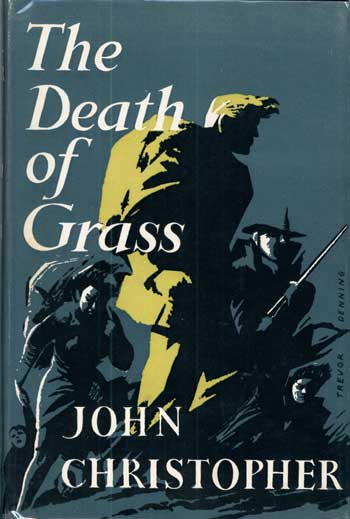
- The Death of Grass
John Christopherstandalone novel1956
similar byecological collapsedarkour worldscience fictionpost-apocalypticsurvivaltense
The Death of Grass is a 1956 post-apocalyptic science fiction novel written by the English author Sam Youd under the pen name John Christopher. The plot concerns a virus that kills off grass species, including rice and wheat. The Death of Grass was the first of several post-apocalyptic novels written by Youd. The novel was written in a matter of weeks and liberated him from his day job.
- The Hopkins Manuscript
R. C. Sherriffstandalone novel1939
similar byecological collapsedarknear futurescience fictionour worldpost-apocalypticsurvivaltense
The Hopkins Manuscript is a dystopian science fiction novel by R. C. Sherriff, first published in 1939 by Victor Gollancz. In 1958 it was reissued in a revised edition as a Pan paperback under the title The Cataclysm. The novel was later republished under its original title by The Macmillan Company in 1963 and by Persephone Books in 2002.
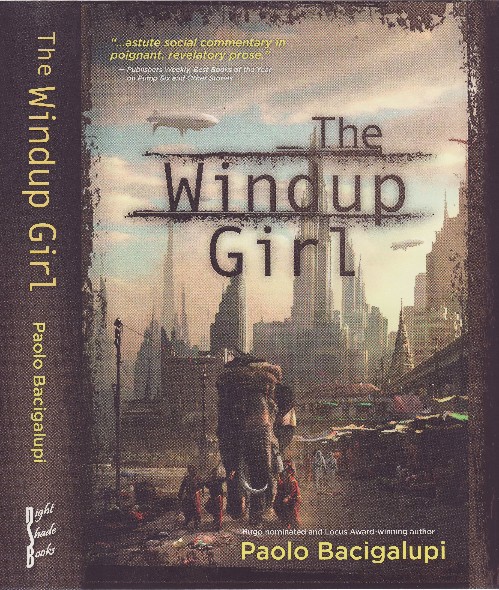
- The Windup Universe
series3 books2005
similar byecological collapsedarknear futureour worldscience fiction+1 more
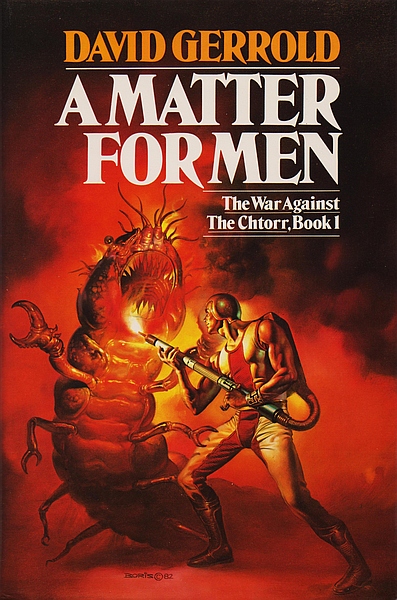
- War Against the Chtorr
series7 books1983
similar byecological collapsedarknear futurescience fictionpost-apocalypticsurvivaltense+1 more
The War Against the Chtorr is a series of science fiction novels by American writer David Gerrold. The Chtorr series was originally planned as a trilogy, but as the story became more intricate, Gerrold realized that three books would not be enough for him to tell the entire story. For a time, he was uncertain how many books there would be in the end but plans on seven. As of 2022, four books have been completed. As of 2017, a fifth and sixth were in the works, 24 years after the publication of the fourth book.
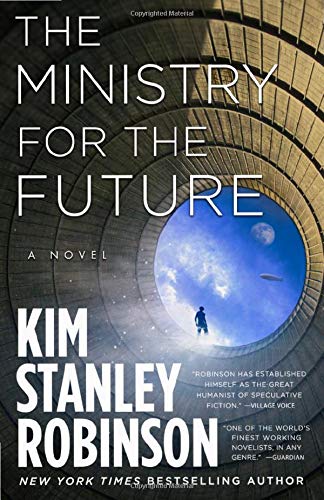
- The Ministry for the Future
Kim Stanley Robinsonstandalone novel2020
similar byecological collapseour worldnear futurescience fictionsurvival+1 more
The Ministry for the Future is a climate fiction novel by American science fiction writer Kim Stanley Robinson, published in 2020. Set in the near future, the novel follows a subsidiary body, established under the Paris Agreement, whose mission is to act as an advocate for the world's future generations of citizens as if their rights were as valid as the present generation's. While the ministry pursues various ambitious projects, the effects of climate change are determined to be the most consequential. The plot primarily follows Mary Murphy, the head of the titular Ministry for the Future, and Frank May, an American aid worker traumatized by experiencing a deadly heat wave in India. Many chapters are devoted to other characters' accounts of future events, as well as their ideas about ecology, economics, and other subjects.
- The Genocides
Thomas M. Dischstandalone novel1965
similar byecological collapsedarkour worldnear futurescience fictionpost-apocalypticsurvival
The Genocides is a 1965 science fiction novel by American writer Thomas M. Disch, first published by Berkley Books as a Berkley Medallion paperback. It was Disch's first novel and was nominated for the Nebula Award for Best Novel for 1965.
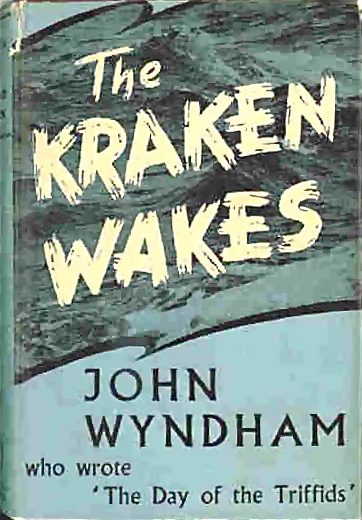
- The Kraken Wakes
John Wyndhamstandalone novel1953
similar bydarkour worldscience fictionpost-apocalypticsurvivaltense+1 more
" Behind a spectacular meteor shower actually hides the beginning of an invasion by a mysterious and powerful alien race. Earth's life is disrupted by the attacks of extraterrestrials whose war machines, emerging from the depths of the oceans, seem indestructible. The coalitioned forces of the whole world are worthless, powerless in the face of the indecipherable and deadly plans of a superior intelligence, capable of bringing the entire planet to the brink of catastrophe" Goodreads May 20, 2022
- Rings of Ice
Piers Anthonystandalone novel1974
similar byecological collapseour worldnear futurescience fictionpost-apocalypticsurvivaltense+1 more
When an attempt at providing humans with a new energy source goes disastrously wrong, causing a worldwide mass disaster, a handful of random men and women attempt to work together to survive, despite their individual peculiarities.
- Earthseed
series7 books1993
similar bydarknear futurescience fictionpost-apocalypticsurvival+1 more
Octavia E. Butler's Earthseed novels, Parable of the Sower and Parable of the Talents, follow Lauren Olamina as she survives the collapse of a climate-ravaged, near-future United States and founds a belief system built on the idea that "God is Change." The two-book series was left unfinished at Butler's death; a planned third novel, Parable of the Trickster, was never completed. Later graphic-novel adaptations retell the same two stories rather than continuing the narrative.
- Ship Breaker
series3 books2010
similar bydarkscience fictionpost-apocalypticnear futuresurvivaltense+2 more
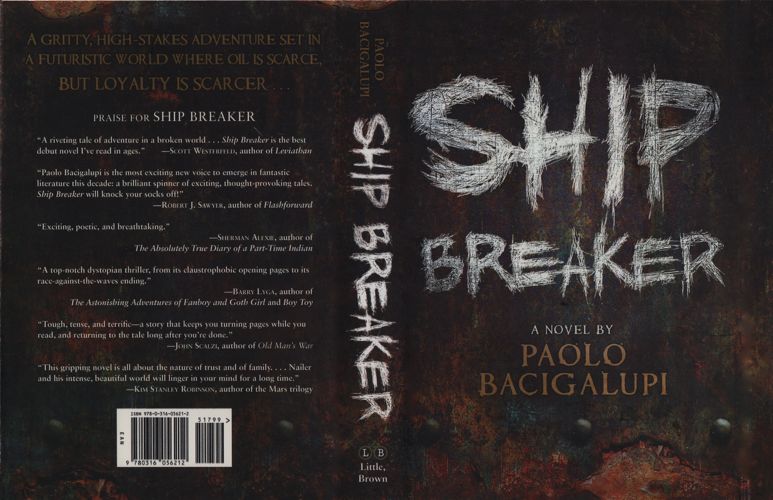
Nailer works a light-crew scavenging copper wire and scrap from beached oil tankers on a Gulf Coast reshaped by rising seas and vanished order, until a wrecked clipper ship washes ashore carrying a half-drowned girl from the wealthy world he'll never belong to. Paolo Bacigalupi's Ship Breaker follows Nailer as helping her pulls him out of his abusive father's orbit and into a much larger, more dangerous game involving her family's fortune. The sequels The Drowned Cities and Tool of War widen the same flooded, resource-scavenging future to new characters and coastlines.
- Riddley Walker
Russell Hobanstandalone novel1980
similar bydarkour worldscience fictionpost-apocalypticsurvival+1 more
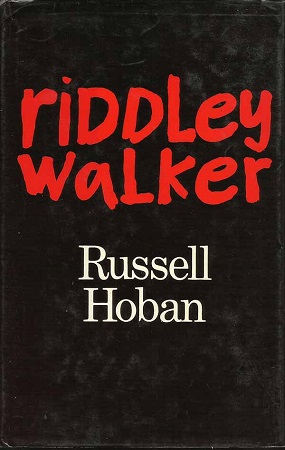
WorldCat: Composed in an English which has never been spoken and laced with a storytelling tradition that predates the written word, RIDDLEY WALKER is the world waiting for us at the bitter end of the nuclear road. It is desolate, dangerous and harrowing, and a modern masterpiece.
- The Long Winter
John Christopherstandalone novel1962
similar byecological collapsedarkour worldnear futurescience fictionpost-apocalypticsurvival
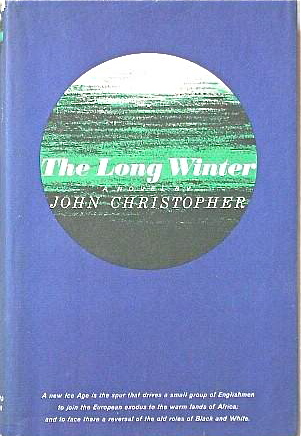
The World in Winter is a 1962 post-apocalyptic science fiction novel by British writer John Christopher. It deals with a new ice age caused by a reduction in the output of the Sun.
- How High We Go in the Dark
Sequoia Nagamatsustandalone novel2022
similar byecological collapsedarkour worldnear futurescience fiction+1 more
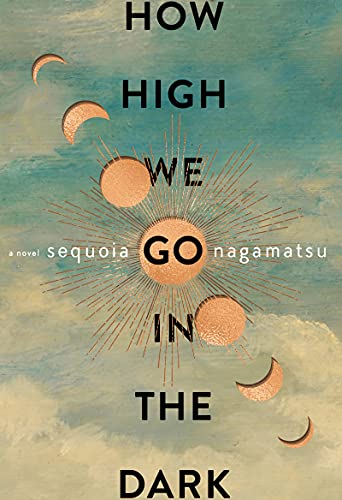
(Robin MacArthur, in Scientific American): "[A] dystopian narrative set in the near future about an ancient virus that is uncovered by a scientist ... while she is researching melting permafrost in the Arctic."
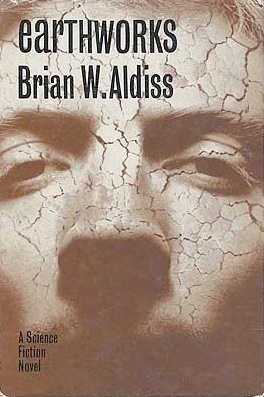
- Earthworks
Brian W. Aldissstandalone novel1965
similar byecological collapsedarkour worldnear futurescience fictiontense
Earthworks is a 1965 dystopian science fiction novel by British science fiction author Brian Aldiss. The novel draws its premise from prevalent fears about population growth and overcrowding of the Earth.
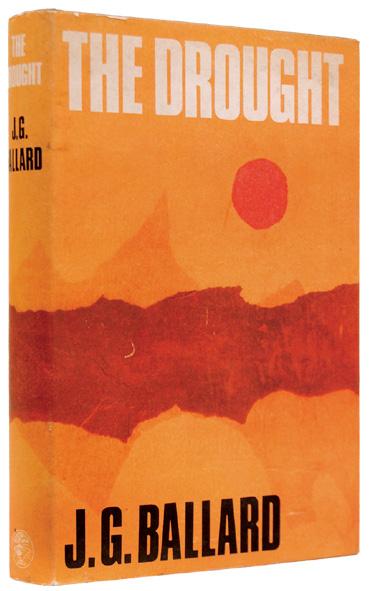
- The Drought
J. G. Ballardstandalone novel1964
similar byecological collapsedarkour worldscience fictionpost-apocalypticsurvival
Dr. Charles Ransom watches his world dry up along with his marriage: an industrial film has coated the oceans, evaporation has stalled, and rivers, lakes and reservoirs are shrinking into cracked mud across the globe. As neighbors flee the drying city for the coast, Ransom refuses to leave, staying behind on his houseboat with others unwilling to go -- a woman running an improvised zoo, a boatman, an architect turning his estate into something like a fortress. As the water keeps disappearing and order breaks down, each of them must decide what survival looks like now. J. G. Ballard's second novel, published in the US as The Burning World.
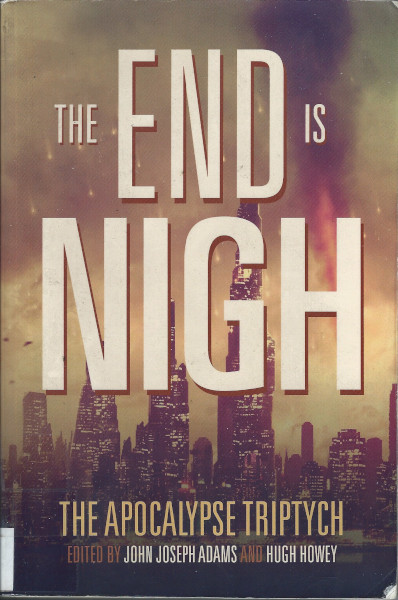
- The Apocalypse Triptych
series4 books2014
similar byecological collapsedarkour worldnear futurescience fictionpost-apocalypticsurvivaltense
- The Future
Naomi Aldermanstandalone novel2023
similar byecological collapsedarkour worldnear futurescience fictiontense
The Future is a 2023 science fiction novel by English writer Naomi Alderman, published by Simon & Schuster. The novel is set in a future dystopia where the world has been altered by environmental crisis and a powerful technocracy.
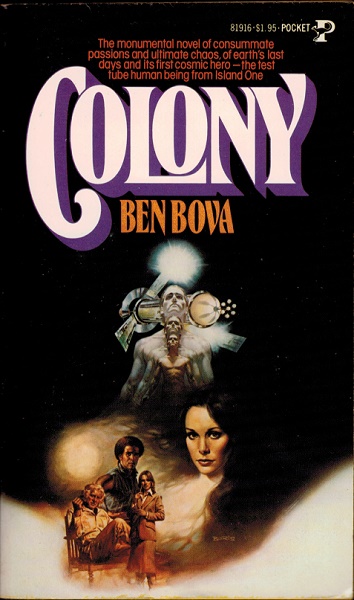
- Colony
Ben Bovastandalone novel1978
similar bynear futurescience fictionsurvivaltense+3 more
Colony continues the story Ben Bova began in Millennium, following astronaut-turned-administrator Chet Kinsman years later as the head of an orbiting space habitat that has become Earth's only real refuge from a planet buckling under overpopulation, food shortages and unrest. Getting a place in the habitat is a matter of life and death for millions who will never be chosen, and as Earth's governments grow more desperate to control or dismantle the colony outright, Kinsman has to decide how far he'll go to protect the world he's built off-world. Bova later folded both novels together into the omnibus The Kinsman Saga. Part of Ben Bova's Chet Kinsman series.