More like Brightwork
anchored on:science fictionfar futureother star systems
but
- Tunnel in the Sky
Robert A. Heinleinstandalone novel1955
similar bysurvivalscience fictionfar futureother star systemsadventuroustense+1 more
As the final test of a survivalist/explorer class, teenagers are dumped on an alien planet to use their skills while awaiting pickup. But something has gone wrong, and they find they are on their own.
- Brion Brandd
series2 books1962
completed
similar bysurvivalscience fictionfar futureother star systems+2 more
Harry Harrison's Brion Brandd books are two loosely connected science fiction adventures: Planet of the Damned (1962), a Hugo Award finalist, and its later sequel Planet of No Return. Both follow the same troubleshooting protagonist sent to defuse crises on different alien worlds, but the two stories are self-contained rather than parts of one continuous plot.
- Catteni Sequence
series5 books1970
completed
similar byscience fictionfar futureother star systemsadventurousspace opera+3 more
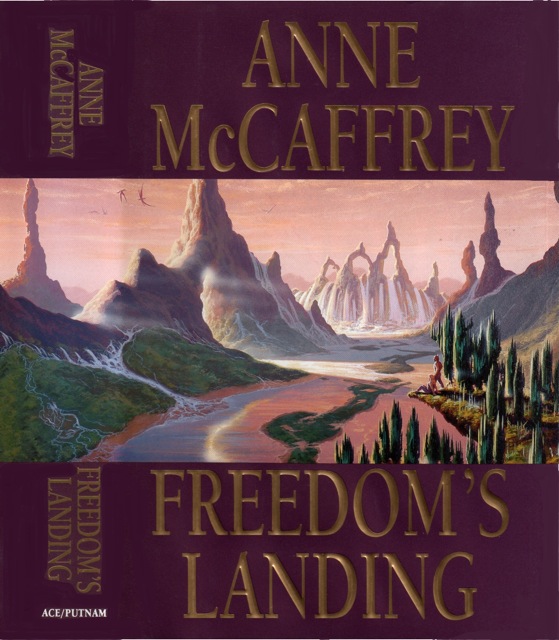
The Catteni series is a tetralogy of science fiction novels by American writer Anne McCaffrey. In this universe, humans are slaves of aliens, the humanoid Catteni. Woven through all four of the books are details of the relationship between Kristin Bjornsen, a former slave, and Zainal, a renegade Catteni.
- Pax / Astra
series2 books1954
completed
similar bysurvivalscience fictionfar futureadventuroustense+2 more
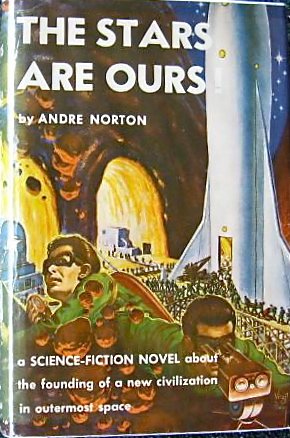
Andre Norton's The Stars Are Ours! (1954) and its sequel Star Born (1957) follow a group of scientists and their families who flee a repressive future Earth to colonize a distant world they name Astra, and then the next generation, who must contend with that world's original inhabitants. Star Flight appears to be a later omnibus or reissue rather than a third original novel.
- Heorot
series4 books1987
similar byscience fictionfar futureother star systems+3 more
Larry Niven, Jerry Pournelle and Steven Barnes's The Legacy of Heorot strands human colonists on an idyllic-seeming alien world where they discover apex predators -- grendels -- hidden beneath the surface, forcing them to fight for survival. Beowulf's Children continues the colony a generation later as the children born on the planet clash with their parents over how to live alongside the grendels, and a fourth book, Starborn and Godsons, returns to the settlement decades further on. It's hard-SF creature-horror crossed with generational colony drama.
- Deathworld
series4 books1960
completed
similar bysurvivalscience fictionfar futureother star systemsadventurous+2 more
Deathworld is the name of a series of science fiction novels by American writer Harry Harrison, including the books Deathworld, Deathworld 2 and Deathworld 3, plus the short story "The Mothballed Spaceship". The central hero is a gambler who becomes involved with colonists of an extremely hostile planet.
- The Stars My Destination
Alfred Besterstandalone novel1956
similar bysurvivalscience fictionfar futureother star systemsadventurousspace operaspace
When a passing spaceship refuses to rescue the lone survivor from the drifting wreck of another ship, he dedicates his life to discovering who made that decision and exacting his revenge, in the process altering human history and his own character.
- Wolfling
Gordon R. Dicksonstandalone novel1969
similar byscience fictionfar futureother star systemsadventuroustensespace operaspace+1 more
From the flaps of the Baen/SFBC edition: "Is Earth merely the lost colony of a superior race? - She was well over six feet tall, and beautiful in a sculpted, abstract way. She had skin the color of white onyx, and her eyes... her eyes were large and feline - a startling lemon yellow in color. She was the Princess Afuan, one of the High-born, and she had chosen the Earthman Kim Keil to return to the Throne World with her - for she had decided that his performance in the bull-ring might amuse the Emperor. She didn't know that Jim was a bull-fighter only by virtue of six months' intensive training, nor that the bull was programmed - his behavior following and impressively fierce but unswerving pattern. Jim was just another wolfling to Afuan - a lesser being from a backward colony world. Jim, however, was keenly aware that he was playing a role, one which might prove to be extremely dangerous. Up until 10 years earlier, when their first ship had reached Alpha Centauri, the people of Earth hadn't even known that the vast Empire of human-occupied worlds existed. The discovery had been a profound shock. Had we evolved independently? Or were we merely descendants of the Empire's first space pioneers - a lost colony found at last, perhaps with devastating consequences? That's what Jim Keil had to find out. Chosen from among numerous highly qualified candidates - an anthropologist trained, mentally and physically, beyond the limits of his profession - it was his mission to observe the Throne World and the High-born... to determine whether or not they posed a threat to Earth. One thing was apparent from the start. The High-born were superior beings - physically taller and stronger than other humans, endowed with faster reflexes, superior mental capacity... and extraordinary technological resources. Their contempt for the new wolfling in their midst was open, their intrigues complex. An enormous gulf separated the people of the Throne World from Earthlings. But that gulf was not so wide that Jim couldn't recognize an enemy when he met one. Clearly, if he remained merely a passive observer of the High-born, he'd never survive among them."
- Dune
series20 books1963
part of Dune Universe
similar byscience fictionfar futureother star systemsspace opera+1 more
Frank Herbert's Dune Chronicles opens with 1965's Dune, set on the desert planet Arrakis where House Atreides takes control of the only source of the vital spice melange and young Paul Atreides is pulled into a struggle over its politics and religion. Herbert carried the story forward across five further novels — Dune Messiah, Children of Dune, God Emperor of Dune, Heretics of Dune, and Chapterhouse: Dune — following Paul's line over the following millennia, before Brian Herbert and Kevin J. Anderson later extended the saga. Many other editions of these six novels are omnibus and box-set repackagings rather than separate stories.
- Empire of Man
series4 books2001
similar bysurvivalscience fictionfar futureother star systemsadventuroustensespace opera
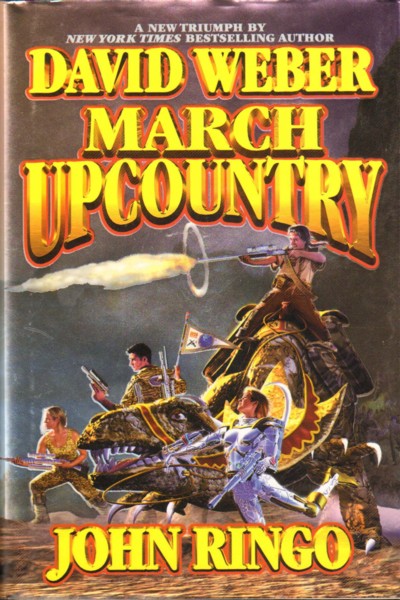
The Empire of Man is a series of science fiction books by David Weber and John Ringo published by Baen Books. It combines elements of space opera and military science fiction.
- The Final Architecture
series6 books2021
similar byscience fictionfar futureother star systemsadventuroustensespace operaspace+1 more
The Final Architecture is a series of science fiction novels by British writer Adrian Tchaikovsky. It contains the books Shards of Earth, Eyes of the Void, and Lords of Uncreation. The series focuses on a group of humans fighting against the mysterious Architects, who destroy inhabited planets. The series has been well-received critically, with Shards of Earth winning the 2021 BSFA Award for Best Novel. The entire series was a finalist for the 2024 Hugo Award for Best Series.
- Space Beagle
series5 books1939
completed
similar byscience fictionfar futureadventuroustensespace operaspace+1 more
The Voyage of the Space Beagle is a 1950 fix-up novel by A. E. van Vogt, stitched together from four previously published pulp stories into a single continuous account of the exploration ship Space Beagle's encounters with a series of dangerous alien life forms. Its episodic, crew-versus-monster structure reads as a loose sequence of adventures rather than one continuous plot.
- Icerigger Trilogy
series3 books1974
part of Humanx Commonwealth
similar bysurvivalscience fictionfar futureother star systemsadventurous+2 more
Alan Dean Foster's Icerigger trilogy, set in his Humanx Commonwealth universe, strands a group of characters on the frozen world of Tran-Ky-Ky, where they get pulled into the local population's fight against a destructive nomadic force. Much of the trilogy follows their overland journey by ice-sailing craft toward the planet's one interstellar outpost, a trek of roughly a year across the ice, as they help the natives survive along the way.
- Mickey7
series2 books2022
similar bysurvivalscience fictionfar futureother star systemstensespace+2 more
- Chronicle of the Fallers
series2 books2014
part of Commonwealth Universe
similar byscience fictionfar futureother star systemstensespace opera+3 more
Peter F. Hamilton's Chronicle of the Fallers duology is set within his Commonwealth Saga universe, following physicist Nigel Sheldon as prophetic dreams of a lost civilization lead him into the mysterious Void and onto Bienvenido, a world settled by descendants of Commonwealth colonists under centuries-long siege by the shapeshifting, world-conquering Fallers. It comprises The Abyss Beyond Dreams and Night Without Stars.
- Fractalverse
series2 books2020
similar bysurvivalscience fictionfar futureother star systemstensespace operaspace+1 more
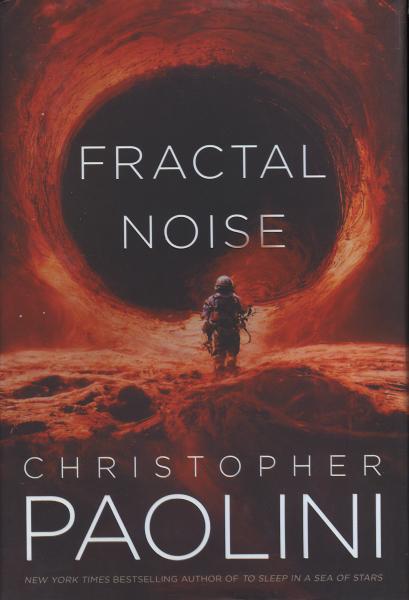
To Sleep in a Sea of Stars opens Christopher Paolini's Fractalverse with Kira Navárez, a xenobiologist whose survey of an unexplored planet triggers first contact with an ancient alien intelligence, dragging her and the wider human Alliance into a wider interstellar conflict for survival. Fractal Noise, a parallel entry, follows a separate crew investigating a mysterious signal-emitting structure on another world within the same universe. Both books were published between 2020 and 2023.
- The Dosadi Experiment
Frank Herbertstandalone novel1977
similar bysurvivalscience fictionfar futureother star systemstensespace opera
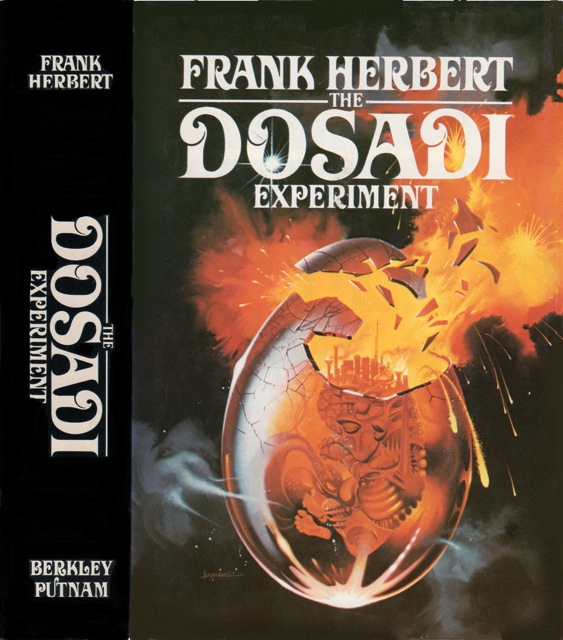
From the flaps of the Berkley Putnam first edition: "In his first new work of science fiction since the best-selling Children of Dune, Frank Herbert returns to his world of Whipping Star, and involves Jorj X. McKie, Saboteur Extraordinary, in a new intrigue. In Whipping Star, McKie discovered that some of the stars in the universe are actually intelligent, super-powerful beings, and was able to befriend one of them, the star Alcyone - affectionately known as Fannie Mae. As The Dosadi Experiment opens, McKie is assigned to investigate the planet Dosadi, which is isolated from the rest of the galaxy by a "god-wall," a barrier set up by one of the intelligent stars. Dosadi is rumored to be an experimental planet, and the experimenters are the froglike Gowachin, whose culture is founded upon a strange legal system in which McKie is the only human ever trained. He learns that humans and Gowachin have been placed on Dosadi, without their consent, for an experiment that could last centuries: an experiment in extreme overcrowding. But this monstrous plot is apparently out of control, and it seems the Gowachin may be prepared to destroy Dosadi rather than expose its secret, thus breaking the peace among the races, and starting the first interstellar war. But this is just the beginning. When McKie finally reaches Dosadi he discovers that the Dosadis have taken control of their own evolution and produced a competitive, highly evolved elite, of both humans and Gowachin, who have been able to extrapolate the existence of a universe beyond the god-wall and hate whoever has imprisoned them like this. They plan to break out and avenge themselves on the galaxy."
- Pushing Ice
Alastair Reynoldsstandalone novel2005
similar bysurvivalscience fictionfar futureother star systemstensespace+1 more
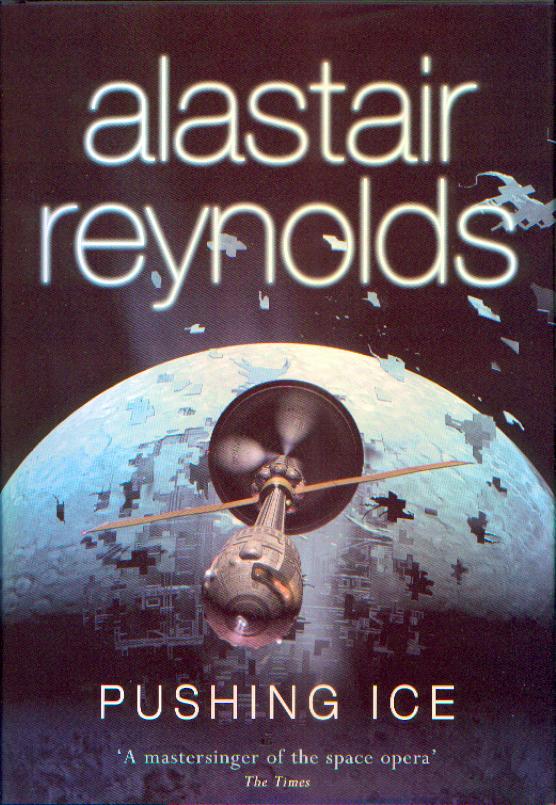
When Saturn's moon Janus suddenly takes off into interstellar space, an ice mining spaceship sent to investigate finds itself swept along into distant space until it ends up trapped in a gigantic alien structure, wherein the crew must prepare to reside for the foreseeable future.
- West of the Sun
Edgar Pangbornstandalone novel1953
similar bysurvivalscience fictionfar futureother star systemsadventurous+1 more
From the back cover of the Dell first paperback printing: "After eleven years in space the Argo landed... West of the Sun ... on the dangerous planet Lucifer. The crew faced and untamed world of huge carnivorous birds with wolverine heads and flashing black teeth; furred, ten-foot tall men; red-skinned man-eating pygmies. They fought for mere survival but - their duty was to colonize and populate the planet - four men and only two women."
- Company Wars
series7 books1981
part of Alliance-Union Universe
similar byscience fictionfar futuretensespace operaspace+1 more
Company Wars gathers the novels C. J. Cherryh set during the breakaway conflict between Earth's colonial Company and the newly independent Union, within her wider Alliance-Union future history. Anchored by the Hugo Award-winning Downbelow Station, the books follow different ships, stations, and crews caught on either side, from merchanter traders to military spacers, rather than a single continuing cast. Read in any order, they build up a picture of the political and economic pressure that reshapes Cherryh's larger Alliance-Union universe.
- Central Control
series2 books1953
completed
similar byscience fictionfar futureother star systemsadventurousspace+2 more
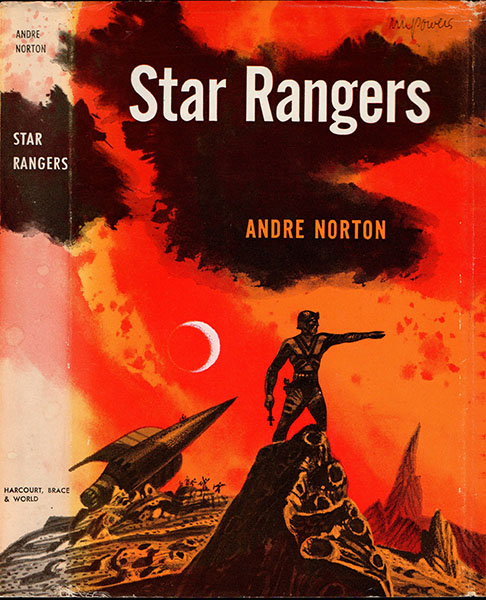
Andre Norton's Central Control novels are a loose future history that sketches the rise of a galactic empire through events echoing Norton's own reading of Terran history rather than following one continuing cast. Star Rangers follows the crew of a crashed Stellar Patrol scoutship who, after entangling themselves in a local rebellion on what seems an unknown world, discover they have found humanity's long-lost original homeworld, Terra. Star Guard and Star Soldiers extend the same shared background with their own separate stories.
- Uplift
series5 books1980
part of Uplift Universe
similar byscience fictionfar futureother star systemsadventurousspace operaspace+1 more
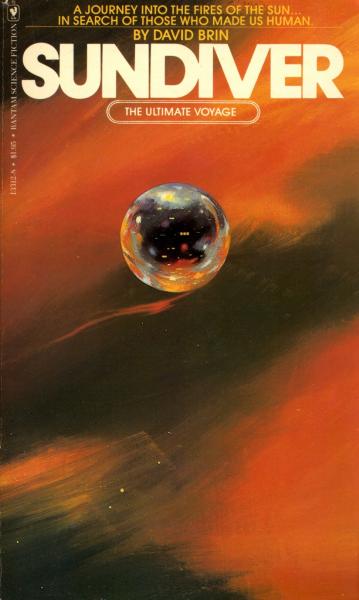
David Brin's Uplift trilogy opens with Sundiver, sending human explorers into the Sun itself, then follows a dolphin-crewed starship on the run from hostile aliens in Startide Rising and a fight over the colony world Garth in The Uplift War. The books sit inside Brin's wider Uplift Universe, built on the idea that spacefaring "patron" species genetically engineer younger "client" species into full sapience, with humanity an anomaly that reached the stars without a patron of its own.
- Burl
series4 books1920
completed
similar bysurvivalscience fictionfar futureother star systems+2 more
Murray Leinster's Burl sequence is set on a planet deliberately seeded with insect and plant life for later human colonization, but the follow-up mission meant to introduce animal life never arrived; over centuries the surviving flora and insects grew to monstrous size, leaving the marooned descendants of a crashed expedition to survive among ant colonies, giant wasps, and spiders. Burl, born into this stranded, near-primitive community, has to out-think these giant predators to keep his people alive. The story began as two 1920s pulp novellas and a 1953 sequel before Leinster fused all three into the single fix-up novel The Forgotten Planet.
- Pandora
series4 books1966
similar bysurvivalscience fictionfar futureother star systems+1 more
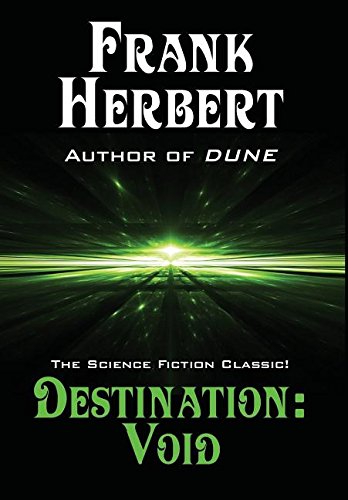
The Pandora Sequence opens with Frank Herbert's solo novel Destination: Void, in which a starship crew must jury-rig a working artificial consciousness after their vessel's control systems fail. Bill Ransom co-writes the three novels that follow, carrying the survivors to the world Pandora, where they must contend with both a manipulative machine intelligence and the planet's own hostile ecology. Across its four books the series moves from a claustrophobic ship-bound crisis to a generations-long struggle over faith, control, and survival on a dangerous new world.