More like Brinkman
anchored on:science fictionnear futurenorth america
but
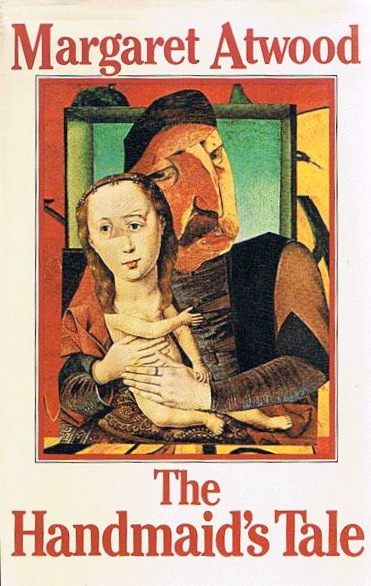
- The Handmaid's Tale
series3 books1985
similar byscience fictiontensenear futurenorth americadarkdystopia
The Handmaid's Tale is Margaret Atwood's 1985 novel set in Gilead, a totalitarian theocracy that has overthrown the United States and forces fertile women into reproductive servitude as Handmaids; it is narrated by one such woman, Offred. Atwood returned to the world in her 2019 sequel The Testaments, set fifteen years later and narrated by three women, including the regime's Aunt Lydia. Together the two novels move from Gilead's grip on power toward the first cracks in it.
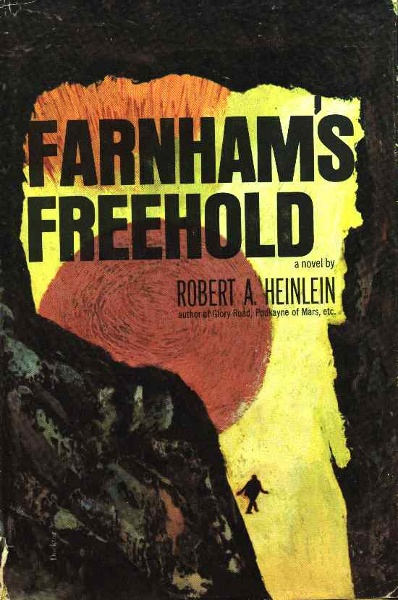
- Farnham's Freehold
Robert A. Heinleinstandalone novel1964
similar byscience fictiontensenear futurenorth america+1 more
Farnham's Freehold is a science fiction novel by American writer Robert A. Heinlein. A serialized version, edited by Frederik Pohl, appeared in Worlds of If magazine. The complete version was published in novel form by G. P. Putnam later in 1964.
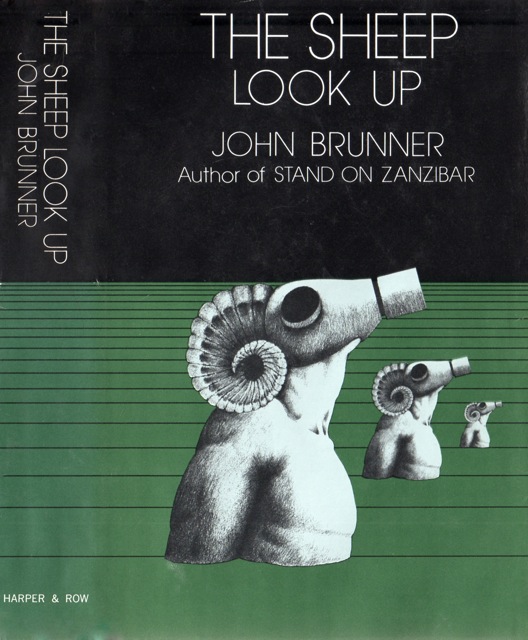
- The Sheep Look Up
John Brunnerstandalone novel1972
similar byscience fictionnear futurenorth americadarkdystopia+1 more
The Sheep Look Up is a 1972 dystopian science fiction novel by British author John Brunner, dealing with the deterioration of the environment in the United States. It was nominated for the 1972 Nebula Award for Best Novel.
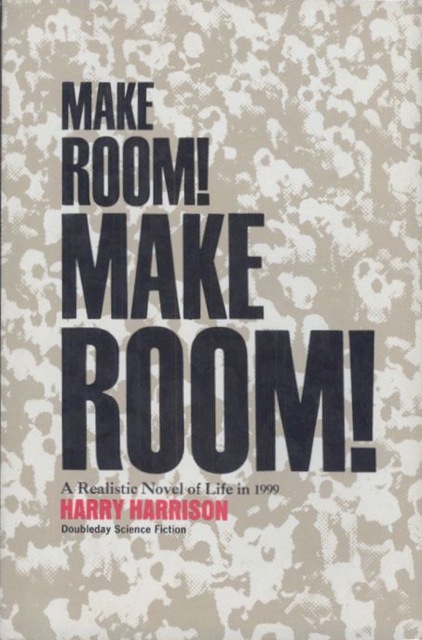
- Make Room! Make Room!
Harry Harrisonstandalone novel1966
similar byscience fictiontensenear futurenorth americadarkdystopia
Make Room! Make Room! is a 1966 science fiction novel written by Harry Harrison exploring the consequences of both unchecked population growth on society and the hoarding of resources by a wealthy minority. It was originally serialized in Impulse magazine.
- The Shockwave Rider
John Brunnerstandalone novel1975
similar byscience fictiontensenear futurenorth americadarkdystopia
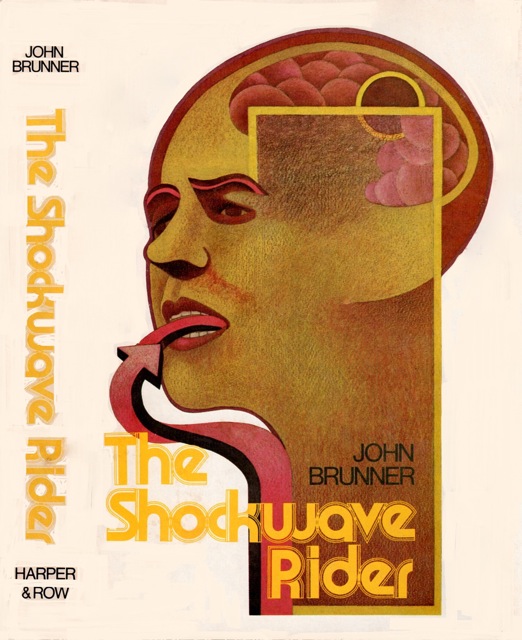
The Shockwave Rider is a science fiction novel by John Brunner, originally published in 1975. It is notable for its hero's use of computer hacking skills to escape pursuit in a dystopian future, and for the coining of the word "worm" to describe a program that propagates itself through a computer network. It also introduces the concept of a Delphi pool, perhaps derived from the RAND Corporation's Delphi method – a prediction market on world events which bears close resemblance to DARPA's controversial and cancelled Policy Analysis Market.
- Space Merchants
series2 books1953
completed
similar byscience fictionnear futuredarkdystopia+2 more
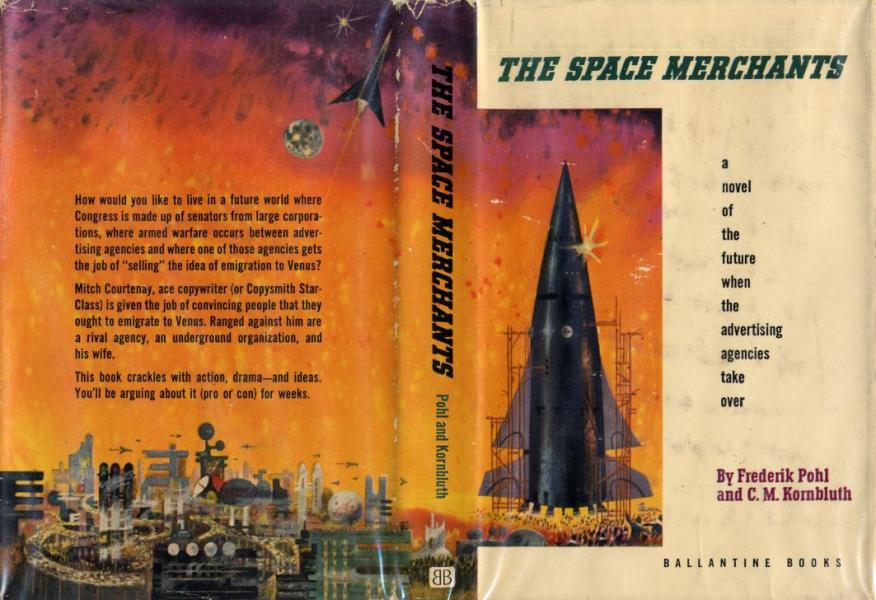
The Space Merchants (1953) is a satirical science fiction novel by Frederik Pohl and C. M. Kornbluth that follows an advertising executive navigating a future where aggressive consumer capitalism has swallowed politics and daily life. The authors reunited three decades later for a direct sequel, The Merchants' War (1984), returning to the same satirical world. Together the two books form a compact bookend pair rather than an ongoing series.
- Sprawl Trilogy
series10 books1981
similar byscience fictiontensenear futuredark
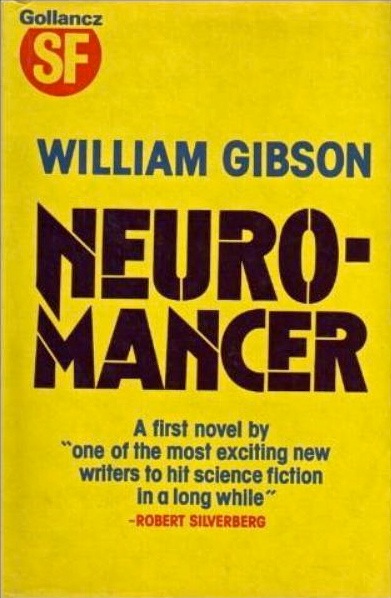
The Sprawl Trilogy is William Gibson's foundational cyberpunk sequence: Neuromancer (1984), in which hacker Case is drawn into a high-stakes heist alongside an artificial intelligence and a damaged ex-soldier, followed by Count Zero (1986) and Mona Lisa Overdrive (1988), which widen the same near-future world of corporate power and networked cyberspace to new characters. Johnny Mnemonic, an early short story set in the same fictional milieu, predates the novels and introduces the courier Molly Millions before her role in the trilogy. Together these works established much of cyberpunk's visual and thematic vocabulary.
- The World Jones Made
Philip K. Dickstandalone novel1956
similar byscience fictiontensenear futurenorth americadarkdystopia
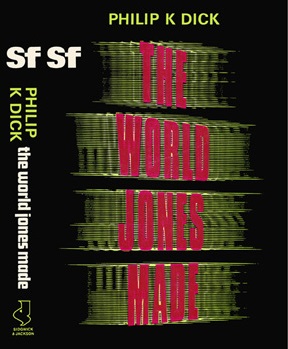
The World Jones Made is a 1956 science fiction novel by American writer Philip K. Dick, examining notions of precognition, humanity, and politics. It was first published by Ace Books as one half of Ace Double D-150, bound dos-à-dos with Agent of the Unknown by Margaret St. Clair.The story takes place after a nuclear war in which society is dominated by relativism, which rejects absolute truths and preaches tolerance as the highest principle. The mutant Floyd Jones, who can see into the future, plans to overthrow the system and colonise space. The story ends with the defeat of Jones, whose plans fail despite his ability to see the future due to the immutability of fate.
- Blade Runner Universe
series6 books1968
similar byscience fictionnear futuredark+1 more
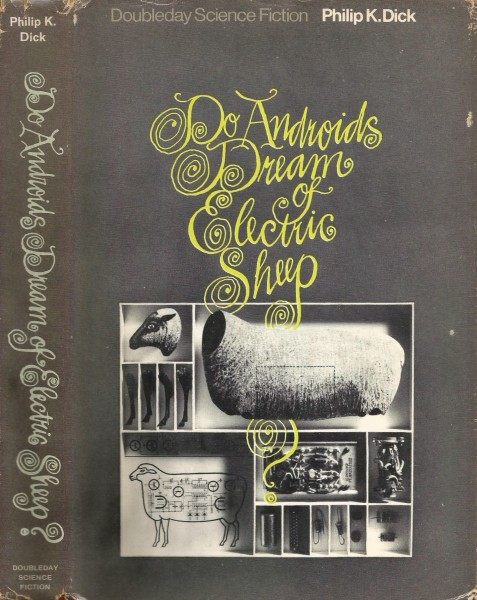
Philip K. Dick's 1968 novel Do Androids Dream of Electric Sheep? follows bounty hunter Rick Deckard as he tracks escaped androids through an irradiated, near-abandoned San Francisco, using the hunt to probe questions of empathy and what separates human from machine. The novel became the basis for Ridley Scott's 1982 film Blade Runner, and Marvel Comics later published an illustrated adaptation of that film. Together the two trace the story's path from prose original to screen and comic-page adaptation.
- Bridge Trilogy
series4 books1990
similar byscience fictionnear futurenorth america+2 more
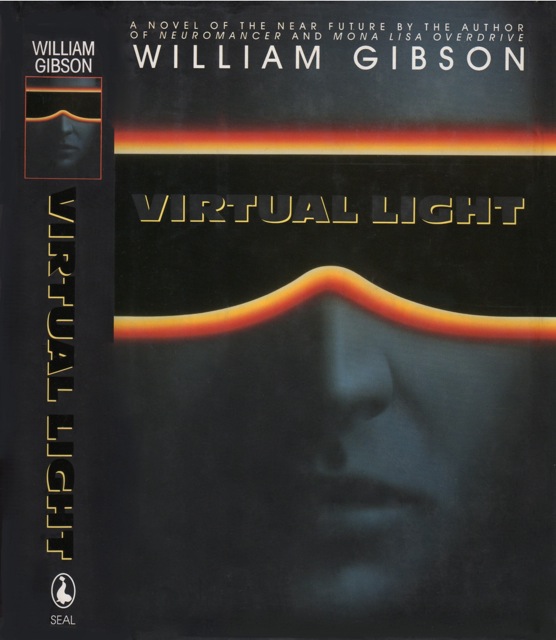
The Bridge trilogy is a series of novels by William Gibson, his second after the successful Sprawl trilogy. The trilogy comprises the novels Virtual Light (1993), Idoru (1996) and All Tomorrow's Parties (1999). A short story, "Skinner's Room", was originally composed for Visionary San Francisco, a 1990 museum exhibition exploring the future of San Francisco.
- Bug Jack Barron
Norman Spinradstandalone novel1969
similar byscience fictiontensenear futurenorth america+1 more
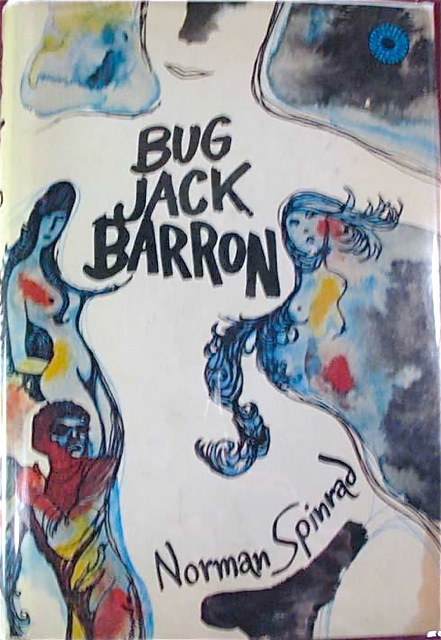
Bug Jack Barron is a 1969 science fiction novel by American writer Norman Spinrad, first serialized in the New Worlds magazine under the editorship of Michael Moorcock. It was nominated for the 1970 Hugo Award. The novel is notable for its lyrical style and unique use of cut-up phrases. In this regard, Spinrad has cited the influence of Beat writers William S. Burroughs, Allen Ginsberg, and Jack Kerouac.
- The Zap Gun
Philip K. Dickstandalone novel1967
similar byscience fictionnear futurenorth americadark+1 more
The Zap Gun is a 1967 science fiction novel by American writer Philip K. Dick. It was first published as the two-part serial Project Plowshare in Worlds of Tomorrow in 1965 and 1966, before Pyramid Books issued it in paperback under its present title. The novel originated in a title-first commission devised by Pyramid editor Don Bensen and was written in 1964 during a period of rapid production in Dick's career.
- The Running Man
Stephen Kingstandalone novel1982
similar byscience fictiontensenear futurenorth americadarkdystopia
The Running Man is a dystopian thriller novel by American writer Stephen King, first published under the pseudonym Richard Bachman in 1982 as a paperback original. It was collected in 1985 in the omnibus The Bachman Books. The novel is set in a dystopian United States during the year 2025, in which the nation's economy is in ruins and world violence is rising. The story follows protagonist Ben Richards as he participates in the reality show The Running Man, in which contestants win money by evading a team of hitmen sent to kill them.
- Oath of Fealty
Larry Niven & Jerry Pournellestandalone novel1981
similar byscience fictiontensenear futurenorth americadystopia
Oath of Fealty is a 1981 novel by American writers Larry Niven and Jerry Pournelle, published originally by Phantasia Press, then by Timescape Books, with numerous reprints. Set in the near future, it involves an arcology, a large inhabited structure, called Todos Santos, which rises above a crime-ridden Los Angeles, California, but has little beyond casual contact with the city. The novel popularized the phrase "think of it as evolution in action", which occurs elsewhere in Niven's books. The novel anticipated the building of the Los Angeles subway. It was included in David Pringle's book Science Fiction: The 100 Best Novels.
- Friday
Robert A. Heinleinstandalone novel1982
similar byscience fictiontensenear futurenorth america
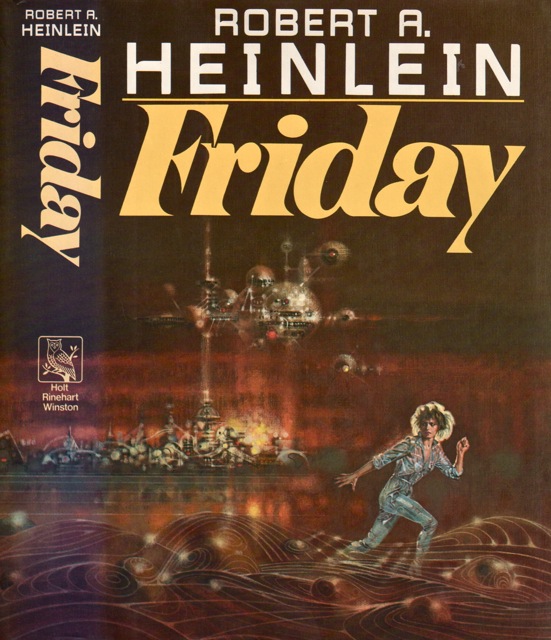
Friday is a 1982 science fiction novel by American writer Robert A. Heinlein. It is the story of a female "artificial person", the eponymous Friday, genetically engineered to be stronger, faster, smarter, and generally better than normal humans. Artificial humans are widely resented, and much of the story deals with Friday's struggle both against prejudice and to conceal her enhanced attributes from other humans. The story is set in a Balkanized 21st century, in which the nations of the North American continent have been split up into a number of smaller states.
- The Fireman
Joe Hillstandalone novel2016
similar byscience fictiontensenear futurenorth americadark
The Fireman is a novel set in a post-apocalyptic time by American author Joe Hill. The novel, Hill's fourth, tells the tale of a deadly spore that has infected most of the world's population. Hill first spoke of the novel in 2013 in promotional interviews for his then-new novel NOS4A2. The novel was released on May 17, 2016.
- The Water Knife
Paolo Bacigalupistandalone novel2015
similar byscience fictiontensenear futurenorth americadarkdystopia
The Water Knife is a 2015 science fiction novel by Paolo Bacigalupi. It is Bacigalupi's sixth novel, and is based on his short story, The Tamarisk Hunter, first published in the news magazine High Country News. It takes place in the near future, where drought brought on by climate change has devastated the Southwestern United States.
- Divergent
series10 books2011
similar bytensescience fictionnorth americanear futuredystopia+1 more
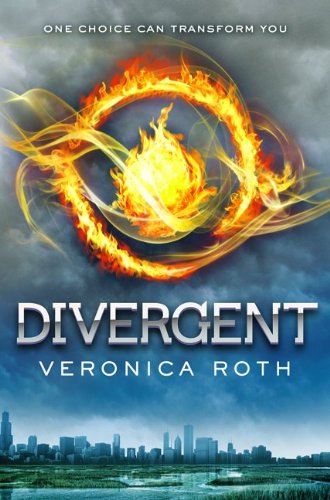
Divergent, also known as The Divergent Series, is a series of young adult dystopian novels by American novelist Veronica Roth set in a post-apocalyptic dystopian Chicago. The trilogy consists of Divergent (2011), Insurgent (2012), and Allegiant (2013). A related book, Four (2014), presents a series of short stories told from the perspective of one of the trilogy's characters, the male love interest Tobias. A later short story, We Can Be Mended (2018), serves as an epilogue five years after the events of the trilogy, again from Tobias/Four's perspective.
- The Passage
series3 books2010
similar bytensescience fictionnear futurenorth americadark+1 more
The Passage is a novel series by Justin Cronin. There are three published books in the series. The film rights were acquired by Fox Entertainment Group in 2007 for adaptation into a film trilogy, but after 12 years of development and planning, it was changed to a television series, which premiered in January 2019 and was canceled after the first season.
- Hummingbird Salamander
Jeff VanderMeerstandalone novel2021
similar byscience fictiontensenear futurenorth americadystopia+1 more
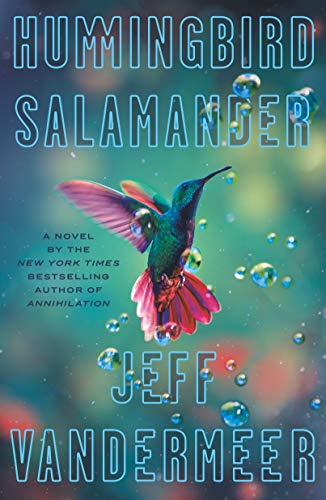
Hummingbird Salamander is a 2021 novel by American author Jeff VanderMeer. It is set in a near-future dystopia affected by climate change, and narrated by a corporate security consultant, "Jane Smith," who is drawn into a mystery incited by her receipt of a taxidermied hummingbird from an extinct species.
- The Thousandth Floor
series3 books2016
similar byscience fictiontensenear futurenorth americadystopia+1 more
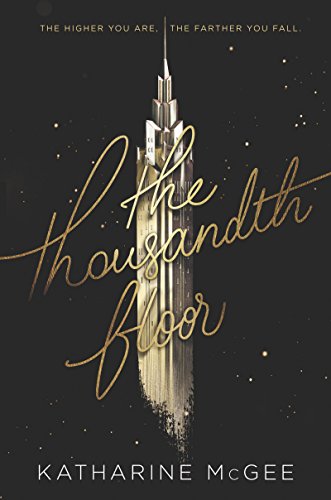
Katharine McGee's trilogy imagines Manhattan in 2118 as a single thousand-story tower housing every stratum of society, following five teenagers whose ambitions collide as they climb toward, or fall from, its highest floors. Across The Thousandth Floor, The Dazzling Heights, and The Towering Sky, addiction, surveillance, genetic privilege, and family betrayal play out as soap-opera drama in a meticulously built near-future setting.
- Tomorrow!
Philip Wyliestandalone novel1954
similar byscience fictiontensenear futurenorth americadarkdystopia
Conjecture of a tomorrow which brings an attack by the enemy and the destruction of all major cities across an unprepared country.
- Have Space Suit - Will Travel
Robert A. Heinleinstandalone novel1958
similar byscience fictiontensenear futurenorth america
From the back cover of the Del Rey 9th printing: "Skyjacked - Everything happened at once. One minute Kip Russell was walking about in his own backyard, testing out an old space suit and dreaming about going to the moon - and the next he was out cold and the captive of an insidious space pirate. The whole thing seemed like a very bad dream until he discovered he wasn't the only prisoner on board. Then the reality of the situation became inescapable. He - along with the daughter of a world-renowned scientist and a beautiful creature from an alien planet - had been skyjacked by a monstrous extraterrestrial and they were on their way to the Moon... a journey toward a fate worse than death!"
- Darwin
series2 books1999
completed
similar byscience fictiontensenear futurenorth america
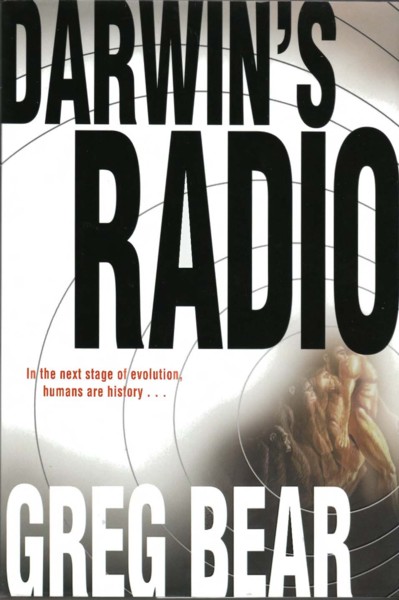
Greg Bear's Darwin's Radio imagines a dormant retrovirus in human DNA activating worldwide, triggering an accelerated leap in human evolution that governments respond to as a plague. The 1999 novel won the Nebula Award; its sequel Darwin's Children follows the first generation of changed children as society decides what to do with them. Together they're speculative near-future science fiction grounded in genetics rather than space opera.