Loreful
HomeDiscover
Search series, authors…⌘K
Loreful

Reading orders for SF/F series and shared universes — with your place kept in every one.

Explore

UniversesSeriesWorksAuthorsAtlas

Help

FAQAboutSite map

Account & legal

Sign inCreate accountPrivacyTerms

Data

Built on ISFDB, Wikipedia, Wikidata and Open Library. Curated reading orders carry their reasoning on the page; the rest follow publication order. Data sources & licenses

© Loreful · data: ISFDB · CC BY

More like Broken Light

anchored on:literary & generalcontemporary

but

Mood

The mood the book leaves you in.

  • The reading experience is propelled by journeys, exploration, and physical risk; excitement and forward momentum dominate over dread or introspection.
  • Joy and loss are deliberately mixed; the resolution grants characters something real while taking something else away, leaving warmth and sorrow together.
  • The book demands work from the reader — dense prose, difficult structure, unfamiliar ideas, or morally uncomfortable material — as part of its intended effect.
  • Grim events, cruelty, or despair dominate the atmosphere, and the book does not soften them with comfort or comic relief.
  • The atmosphere is quietly unsettling — wrongness, unease, and the uncanny pervade the book without necessarily escalating into overt horror.
  • The book is built to move the reader; character feeling is foregrounded and major scenes aim at a strong emotional response.
  • Humor is a primary aim and the prose plays for laughs — comic situations, wit, or dialogue produce sustained comedy, not occasional levity.
  • The book insists that things can improve; effort and decency are shown to matter, and the arc bends toward better outcomes even through hardship.
  • The book teaches as it goes — real facts, history, science, or craft are conveyed in enough depth that learning is part of the reading experience.
  • The book is designed to uplift and motivate, presenting perseverance or achievement in a way that invites the reader to aspire or act.
  • The overall register is cheerful and easygoing; stakes are kept gentle and the book avoids dwelling on pain or dread.
  • Withheld information drives the experience; the book sustains enigmas and secrets the reader wants resolved, whatever its genre.
  • The book is contemplative and inward-looking, giving more weight to thought, memory, and meaning than to external events.
  • The book works as comfort reading — low tension, a soothing pace, and an atmosphere the reader can unwind in.
  • Grief, loss, or melancholy set the dominant register, and the book lets sorrow stand rather than resolving it into comfort.
  • Sustained suspense is the point; the book keeps the reader braced for what happens next through danger, pressure, or impending revelation.
  • Playful invention and charm define the register — fanciful conceits, light absurdity, and a narration that delights in its own oddity.

About

What the story runs on.

  • Stories in which extraterrestrial beings are central — as characters, cultures, or the object of the plot.
  • Stories structured as a quest — a journey undertaken to find, deliver, or destroy something of great import.
  • Stories in which staying alive against nature, catastrophe, or scarcity is the central problem.
  • Stories of lovers kept apart by law, family, faith, or station, where the obstacle to love is the plot.
  • Stories in which a friendship — its making, testing, or loss — is the emotional center.
  • Stories of growing up — a young protagonist crossing from childhood into adult knowledge and responsibility.
  • Stories about who a character truly is — self-discovery, doubled lives, and the search for a self.
  • Stories about mourning — living through the death of a loved one and what loss does to the survivors.
  • Stories in which a buried family truth — hidden parentage, crimes, or shames — surfaces and reorders the present.
  • Stories driven by maneuvering for power — factions, conspiracies, and statecraft conducted in shadow.
  • Stories in which war itself is the subject — combat, occupation, and what warfare does to soldiers and civilians.
  • Stories organized around investigating a killing — the case, the clues, and the pursuit of the killer, in any genre's clothing.

Shelf

Where it sits in the library.

    • Fiction built on magic or other supernatural elements that have no scientific explanation.
    • Secondary-world fantasy at large scale, where the fate of nations or the world turns on the protagonists' struggle.
    • Fantasy set in a recognizably modern city or contemporary world where the supernatural intrudes on everyday life.
    • Fantasy that blends in horror's atmosphere and imagery, keeping a fantastical frame around grim or frightening material.
    • Action-driven fantasy following warriors or rogues with personal stakes against sorcerous threats, rather than world-spanning conflicts.
    • Fantasy set in a real historical period or a close analogue of one, with magic woven into the era.
    • Fantasy in which protagonists cross from the ordinary world into another world through a portal or similar passage.
    • Fiction that retells or reworks a traditional fairy tale in a new form or setting.
    • Fantasy drawing directly on myths, legends, and folklore, retelling them or building on their figures and logic.
    • Fantasy of ghosts, vampires, shapeshifters, psychics, and similar phenomena, usually set in an otherwise ordinary world.
    • Fiction mixing science-fictional trappings with overtly magical or impossible elements in one setting.
    • Low-stakes fantasy emphasizing comfort, community, and everyday pleasures over conflict and peril.
    • Speculative fiction of pervasive moral ambiguity, violence, and cynicism that rejects heroic conventions — fantasy and SF alike.
      • Fiction that extrapolates from science and technology — future societies, space travel, or speculative inventions — within at least nominally natural laws.
      • Science fiction of interstellar scope — starships, galactic polities, and adventure across star systems.
      • Science fiction committed to scientific rigor, where technical plausibility constrains the story.
      • Science fiction centered on armed forces and warfare, told largely from a military point of view.
      • Science fiction of networked, corporate-dominated near futures, pairing high technology with social decay.
      • Science fiction styled on nineteenth-century steam-powered technology, often in a Victorian or pseudo-Victorian setting.
      • Fiction depicting an oppressive or catastrophic society, presented as a warning.
      • Fiction set after civilization's collapse, following survivors in the ruins of the old world.
      • Fiction in which characters move between past and future, and the mechanics or consequences of that travel drive the plot.
      • Fiction exploring a world where a historical event went differently and history diverged from ours.
      • Science fiction about humanity's first encounter and communication with an alien intelligence.
      • Science fiction in which extraterrestrial forces attack or occupy Earth and humanity resists.
      • Fiction whose primary aim is to frighten or unsettle the reader through dread, menace, or the monstrous.
      • Horror of vast, indifferent, incomprehensible entities before which humanity is insignificant, in the Lovecraft tradition.
      • Horror of decaying houses, buried family secrets, and oppressive atmosphere in the Gothic literary tradition.
      • Horror centered on hauntings and the returning dead.
      • Horror located in the mind — paranoia, obsession, and unreliable perception rather than external monsters.
      • Horror built around the reanimated dead and survival amid their outbreaks.
      • Horror defined by explicit, transgressive gore that refuses to cut away from violence.
      • Speculative fiction of the strange and uncanny that resists both natural explanation and standard genre categories.
      • Fiction organized around solving a crime or puzzle, typically following an investigator toward the identification of a culprit.
      • A puzzle-first mystery that lays out clues so the culprit's identity can be deduced before the reveal.
      • Crime fiction of moral ambiguity, fatalism, and hard-edged style, set among the corrupt and the doomed.
      • A mystery following the realistic routines of police work — forensics, interviews, and case-building.
      • A gentle mystery with an amateur sleuth, a small community, and violence kept off the page.
      • A mystery set in a past era, where the investigation works within that period's methods and society.
      • Fast-paced fiction driven by imminent danger, pursuit, or high-stakes conspiracy, built to sustain tension.
      • A thriller of espionage — agents, tradecraft, and intelligence services in conflict.
      • A thriller centered on lawyers and the courtroom, where litigation carries the suspense.
      • A thriller driven by detailed contemporary or near-future technology, often military or scientific.
      • A thriller whose tension comes from mental states and manipulation between characters rather than external action.
      • Fiction whose central plot is a romantic relationship and its development toward an emotionally satisfying resolution.
      • Romance in which one or both partners are supernatural beings, blending fantasy elements into the love story.
      • A fantasy-romance hybrid in which the romantic arc and the fantasy plot carry equal weight.
      • Romance set in a past era, with courtship shaped by the period's society and manners.
      • Romance set in the present day, without supernatural or historical elements.
      • Fiction set in a real past period, where the historical setting materially shapes characters and events.
        • General and literary fiction emphasizing prose style, character interiority, or formal ambition over genre plot conventions.
        • Fiction in a realistic world where magical events occur and are treated as ordinary, in the tradition of Latin American literature.
        • Fiction that ridicules people, institutions, or society in order to criticize them.
        • Fiction of dreamlike, irrational imagery and logic that breaks from realistic representation.
        • Fiction that plays with narrative convention through metafiction, fragmentation, and self-reference.
        • Fiction propelled by journeys, exploration, and physical peril, where action and survival carry the plot.
        • Adventure fiction of ships and seafaring — naval engagements, voyages, and life at sea.
        • Fiction of the American frontier West — gunmen, ranchers, and lawmen, typically in the late nineteenth century.
        • Fiction centered on soldiers, campaigns, and the experience of warfare, historical or imagined.
          • Fiction written primarily to amuse, using comedic situations, wit, or parody as its organizing principle.
            • Multi-generational fiction following a family or dynasty across decades, with inheritance and kinship as the through-line.
              • Fiction whose world runs on explicit game mechanics — levels, stats, and skills that characters can see and exploit.
                • Fiction about costumed or superpowered heroes and their conflicts with comparable villains.

                Practical

                How long a commitment, whether it stands alone, and whether it has finished.

                Tap a chip to ask for it · tap again to rule it out · once more to clear. Numbers show what would be left.

                • Cover of Fifth Child
                  Fifth Child

                  series · 2 books · 1988

                  completed

                  similar byliterary & generalcontemporary+6 more

                • Cover of Crash
                  Crash

                  J. G. Ballard · standalone novel · 1973

                  similar byliterary & generaldarkcontemporaryour worldbritish islesmadness+1 more

                  Crash is a novel by J. G. Ballard, first published in 1973 with a cover designed by Bill Botten. It follows a group of car-crash fetishists who, inspired by the famous crashes of celebrities, become sexually aroused by staging and participating in car accidents.

                • Cover of Love
                  Love

                  Angela Carter · standalone novel · 1971

                  similar byliterary & generaldarkcontemporaryour worldmadnessemotional+1 more

                  Love is a 1971 novel by Angela Carter. Her fifth novel, it follows the destructive love triangle between a psychologically unstable woman, her charming husband, and her volatile brother-in-law. Effectively exploring themes of infidelity, self-loathing, suicide, and emotional disconnection, the novel depicts three characters so alienated from society and reality, that they depend solely on each other. This unhealthy fixation slowly eats away at their individual relationships and themselves, until eventually culminating in despair and tragedy.

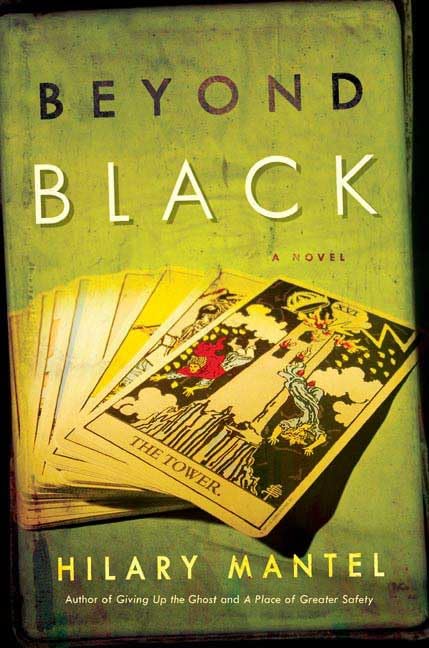
                • Cover of Beyond Black
                  Beyond Black

                  Hilary Mantel · standalone novel · 2005

                  similar byliterary & generaldarkcontemporaryour worldbritish islesidentitymadness+1 more

                  Beyond Black is a 2005 novel by English writer Hilary Mantel. It was shortlisted for the 2006 Orange Prize for Fiction.

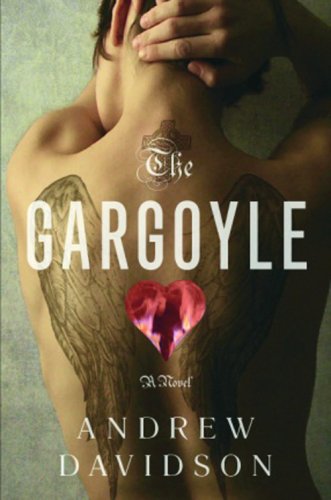
                • Cover of The Gargoyle
                  The Gargoyle

                  Andrew Davidson · standalone novel · 2008

                  similar byliterary & generalgrief and lossdarkcontemporaryour worldemotional

                  The Gargoyle is the debut novel by Andrew Davidson. It was published in 2008.

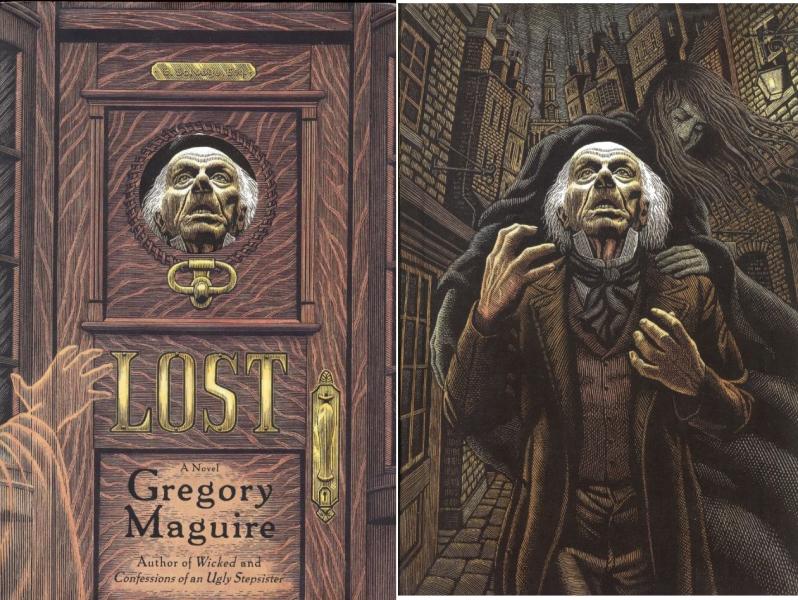
                • Cover of Lost
                  Lost

                  Gregory Maguire · standalone novel · 2001

                  similar byliterary & generalgrief and losscontemporaryour worldbritish islesidentityreflective

                  Lost is a 2001 novel by American author Gregory Maguire. Unlike many of Maguire's other adult novels, Lost is set in the real world. The novel's concept is that the protagonist is a distant relative of the man who inspired Charles Dickens' character of Ebenezer Scrooge.

                • Cover of The Midnight World
                  The Midnight World

                  series · 2 books · 2020

                  similar bygrief and losscontemporaryidentityemotional+3 more

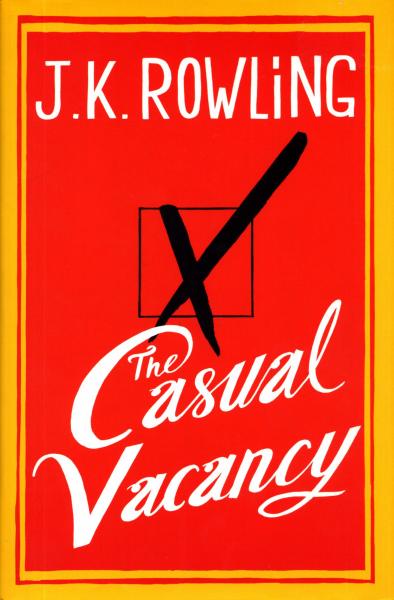
                • Cover of The Casual Vacancy
                  The Casual Vacancy

                  J. K. Rowling · standalone novel · 2012

                  similar byliterary & generaldarkcontemporarybritish isles+1 more

                  Publisher: "When Barry Fairbrother dies unexpectedly in his early forties, the little town of Pagford is left in shock. Pagford is, seemingly, an English idyll, with a cobbled market square and an ancient abbey, but what lies behind the pretty façade is a town at war. Rich at war with poor, teenagers at war with their parents, wives at war with their husbands, teachers at war with their pupils…. Pagford is not what it first seems. And the empty seat left by Barry on the town's council soon becomes the catalyst for the biggest war the town has yet seen. Who will triumph in an election fraught with passion, duplicity and unexpected revelations?"

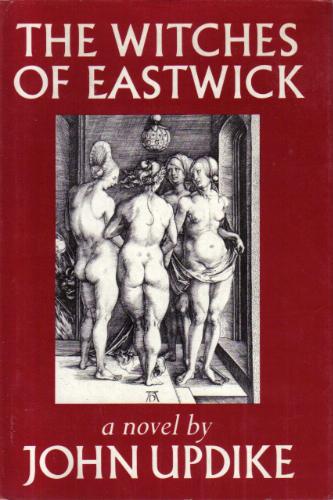
                • Cover of The Witches of Eastwick
                  The Witches of Eastwick

                  series · 2 books · 1984

                  completed

                  similar byliterary & generalcontemporary+3 more

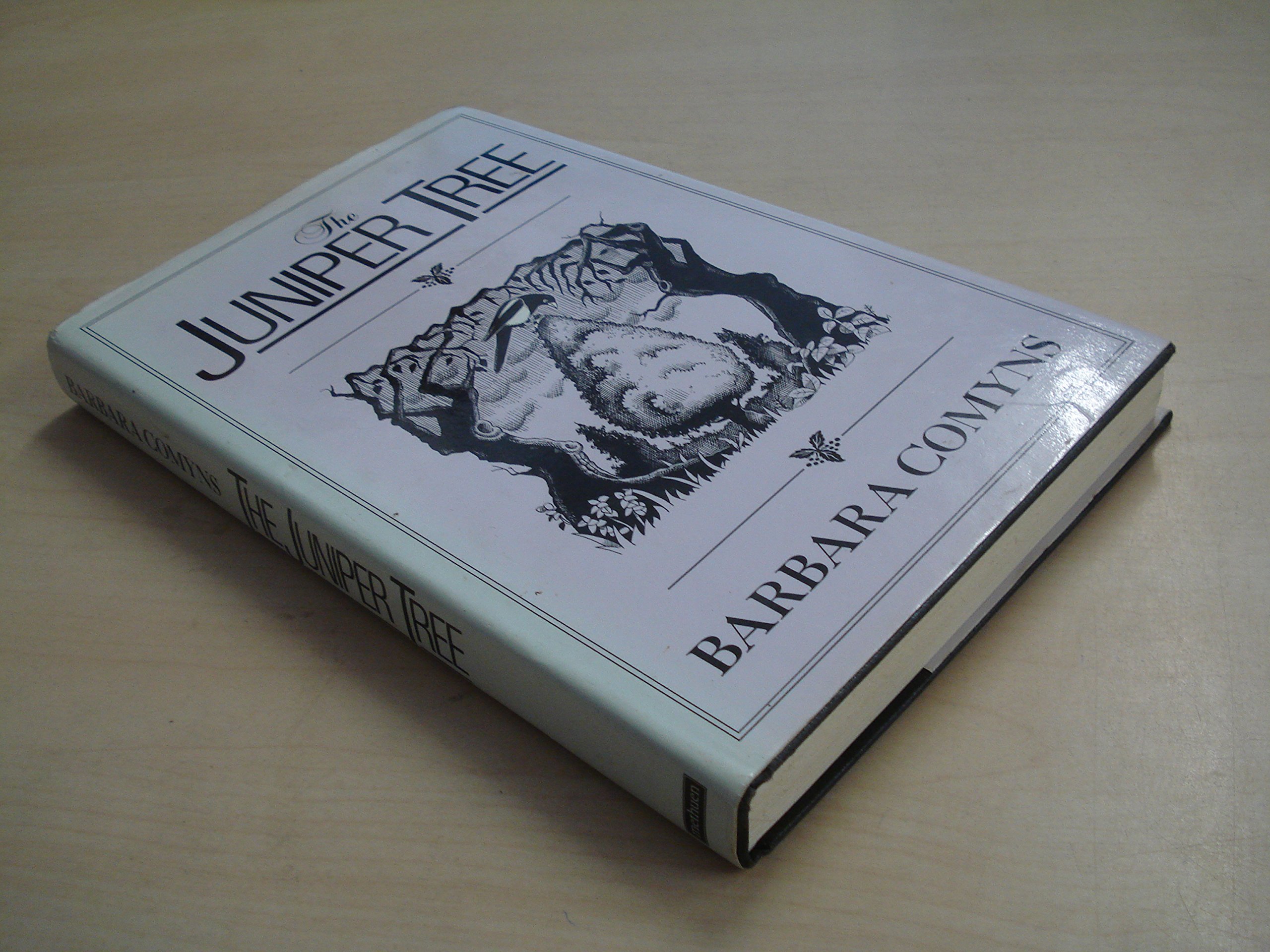
                • Cover of The Juniper Tree
                  The Juniper Tree

                  Barbara Comyns · standalone novel · 1985

                  similar byliterary & generalgrief and lossdarkcontemporarybritish islesidentity

                  The Juniper Tree is a 1985 novel by British writer Barbara Comyns. The penultimate novel of the author, it combines gothic literature, family drama, magical realism, and fairy tale. The book contains allusions to the 1812 fairy tale "The Juniper Tree" by the Brothers Grimm, which is where the title of the novel comes from. The story features Bella Winter, a homeless, jobless mother of a toddler, who is disfigured from a car accident and distancing herself from her abusive mother.

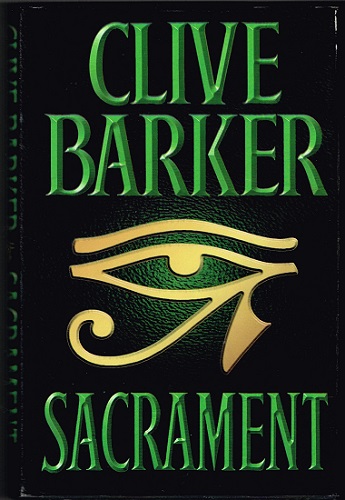
                • Cover of Sacrament
                  Sacrament

                  Clive Barker · standalone novel · 1995

                  similar byliterary & generalcontemporarybritish islesidentityreflective+2 more

                  Sacrament is a 1996 novel by British author Clive Barker. It follows a wildlife photographer who is obsessed with documenting species of animals that are faced with extinction. It is set in Yorkshire, England, San Francisco and Hudson Bay, Canada and explores how his obsession is connected to his upbringing in Yorkshire. The Author described it as "a story about how we become who we are and how we must deal with what we are by facing up to including the things that happened to us in childhood, good and bad. It's also about what's happening to our planet."

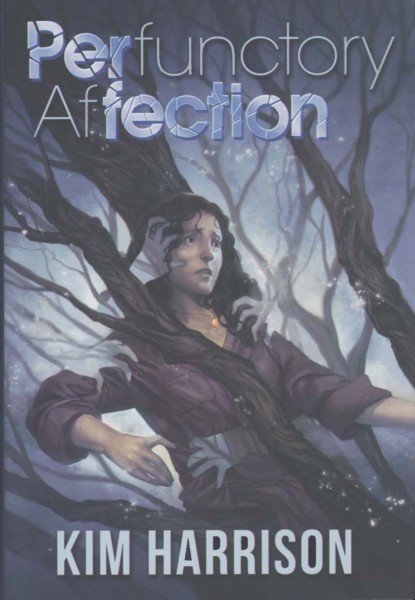
                • Cover of Perfunctory Affection
                  Perfunctory Affection

                  Kim Harrison · standalone novel · 2019

                  similar bygrief and lossliterary & generaldarkcontemporaryour worldmadness+1 more

                  Is it better to live a lie of perfection when the truth is too ugly to survive? Meg wants a normal life. Her new artistic style, born in the depression of her mother’s death, is poised to take the art world by storm, if she could just overcome the debilitating anxiety caused by the car accident that scarred her boyfriend, Austin. Encouraged by her therapist, Meg pushes outside her comfort zone to befriend Haley, a guest instructor at the university where Meg teaches. Haley is everything Meg wants to be: charismatic, confident, and perfect, but when Austin expresses his worry that Haley is changing Meg too fast and leads her to realize that Austin is trying to keep her afraid and needing him, Meg kicks him out of her life. Or at least, she tries. Kim Harrison, author of the number one bestselling Urban Fantasy Hollows series, brings to life a world terrifyingly near to our own, where what’s real and what shouldn’t exist twine together in the madness of a troubled mind desperate for a way out. But when the truth is revealed, the question remains, is it better to live a lie of perfection, or cleave to an ugly reality that will destroy you?

                • Cover of How the Dead Live
                  How the Dead Live

                  Will Self · standalone novel · 2000

                  similar byliterary & generalgrief and lossdarkcontemporaryour worldbritish islesidentity

                  How the Dead Live is a novel by Will Self. It was originally published by Bloomsbury in 2000.

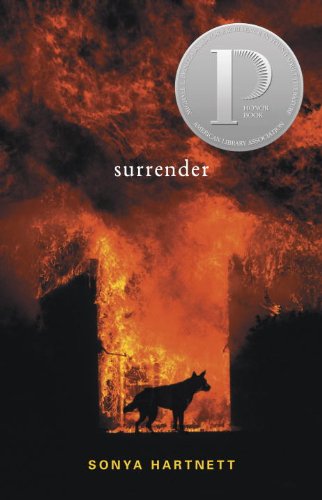
                • Cover of Surrender
                  Surrender

                  Sonya Hartnett · standalone novel · 2005

                  similar byliterary & generalgrief and losscontemporaryour world+1 more

                  Surrender is a novel written by the award-winning Australian novelist, Sonya Hartnett. It was first published in 2005 in Australia by Walker Books. It is narrated by twenty-year-old Gabriel, who is dying, and twenty-year-old Finnigan, a homeless boy who is Gabriel's only friend.

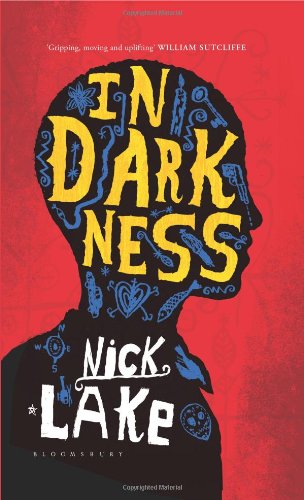
                • Cover of In Darkness
                  In Darkness

                  Nick Lake · standalone novel · 2012

                  similar byliterary & generalgrief and lossdarkcontemporaryemotional

                  In the aftermath of the Haitian earthquake, fifteen-year-old Shorty, a poor gang member from the slums of Site Soleil, is trapped in the rubble of a ruined hospital, and as he grows weaker he has visions and memories of his life of violence, his lost twin sister, and of Toussaint L'Ouverture, who liberated Haiti from French rule in the 1804.

                • Cover of Great Apes
                  Great Apes

                  Will Self · standalone novel · 1997

                  similar byliterary & generaldarkcontemporaryour worldbritish islesidentity+1 more

                  Great Apes is a 1997 novel by Will Self.

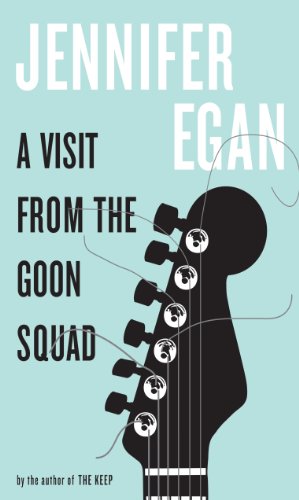
                • Cover of A Visit from the Goon Squad
                  A Visit from the Goon Squad

                  series · 2 books · 2010

                  similar byliterary & generalcontemporaryreflective+2 more

                  Jennifer Egan's A Visit from the Goon Squad follows a loosely connected group of characters orbiting the music industry across several decades, told through interlocking chapters that jump between narrators, timelines, and, in one chapter, a PowerPoint presentation. The Candy House returns to several of the same characters and their descendants a decade later, in a world reshaped by a technology that lets people access and share their memories. Egan links the two books through recurring characters more than a continuous plot.

                • Cover of Freddie Montgomery
                  Freddie Montgomery

                  series · 1 book · 1989

                  similar byliterary & generalcontemporarybritish islesidentitymadnessreflective+1 more

                • Cover of Rouge
                  Rouge

                  Mona Awad · standalone novel · 2023

                  similar byliterary & generalcontemporaryour world+1 more

                • Cover of A Monster Calls
                  A Monster Calls

                  series · 2 books · 2011

                  similar bygrief and lossliterary & generalcontemporarybritish islesemotional+1 more

                  A Monster Calls follows a boy struggling with his mother's terminal illness, who is visited each night by a tree-like monster demanding an honest story from him in exchange for the unsettling tales it tells. Patrick Ness wrote the novel from an idea left unfinished by Siobhan Dowd, who died of cancer before she could write it herself, with illustrations by Jim Kay integral to the original edition. It was later adapted for the stage.

                • Cover of Slaughterhouse-Five or the Children's Crusade: A Duty-Dance with Death
                  Slaughterhouse-Five or the Children's Crusade: A Duty-Dance with Death

                  Kurt Vonnegut & Jr. · standalone novel · 1969

                  similar byliterary & generaldarkreflective+1 more

                  Vonnegut opens in his own voice, describing the twenty years it took him to face writing about surviving the firebombing of Dresden as a POW. He then hands the story to Billy Pilgrim, an awkward, fatalistic American chaplain's assistant swept into the Battle of the Bulge and captured by German forces alongside a soldier who dies blaming him for it. Imprisoned in a disused slaughterhouse in Dresden, Billy survives the firebombing that follows, and, we're told upfront, has also come 'unstuck in time,' living his life out of order, including a stretch on the alien world of Tralfamadore. Vonnegut's best-known novel folds war memoir into science fiction and black comedy.

                • Cover of Shark Heart
                  Shark Heart

                  Emily Habeck · standalone novel · 2023

                  similar byliterary & generalgrief and losscontemporaryour worldidentityemotional

                  Subtitled "A Love Story"

                • Cover of We Have Always Lived in the Castle
                  We Have Always Lived in the Castle

                  Shirley Jackson · standalone novel · 1962

                  similar byliterary & generalmadness+2 more

                  A young woman lives with her older sister and sickly uncle in their old family house, after a mysterious tragedy turns the townsfolk against them.

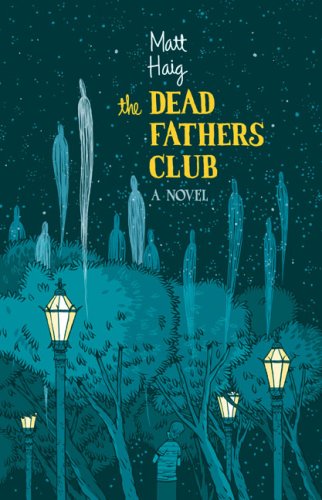
                • Cover of The Dead Fathers Club
                  The Dead Fathers Club

                  Matt Haig · standalone novel · 2006

                  similar byliterary & generalgrief and losscontemporarybritish islesreflective+1 more

                  The Dead Fathers Club is a 2006 novel by Matt Haig. The book was published in the United Kingdom by Jonathan Cape and in the United States by Viking Press. The story is a retelling of William Shakespeare's Hamlet, and thus an example of intertextuality.