More like Broken Moons
but
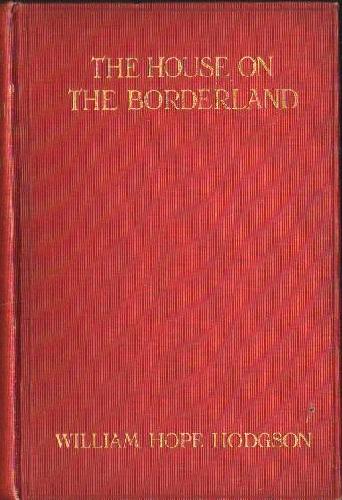
- The House on the Borderland
William Hope Hodgsonstandalone novel1908
similar byhorrorweird fictiondarkeerie
The House on the Borderland (1908) is a supernatural horror novel by British fantasist William Hope Hodgson. The novel is a hallucinatory account of a recluse's stay at a remote house, and his experiences of supernatural creatures and otherworldly dimensions.
- The Lair of the White Worm
Bram Stokerstandalone novel1911
similar byhorroreerie+2 more
A huge snake or dragon from prehistoric times survives in England, with intelligence and the ability to transform into a lady.
- Books of Blood
series10 books1984
similar byhorrordarkshort story cycle+2 more
Books of Blood is a series of six horror fiction anthologies collecting original stories written by English author, playwright, and filmmaker Clive Barker in 1984 and 1985. Known primarily for writing stage plays beforehand, Barker gained a wider audience and fanbase through this anthology series, leading to a successful career as a novelist. Originally presented as six volumes, the anthologies were subsequently re-published in two omnibus editions containing three volumes each. Each volume contains four, five or six stories. The Volume 1–3 omnibus contained a foreword by Barker's fellow Liverpudlian horror writer Ramsey Campbell. Author Stephen King praised Books of Blood, leading to a quote from him appearing on the first US edition of the book: "I have seen the future of horror and his name is Clive Barker."
- The Collected Fiction of William Hope Hodgson
series6 books1907
completed
similar byhorrorweird fictioneerie+2 more
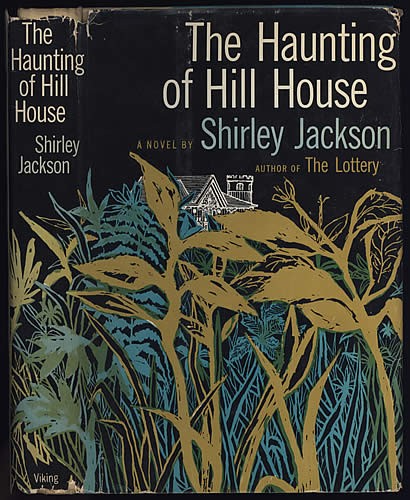
- The Haunting of Hill House
Shirley Jacksonstandalone novel1959
similar byhorrorweird fictiondarkeerie
The Haunting of Hill House is a 1959 gothic horror novel by American author Shirley Jackson. It was a finalist for the National Book Award and has been made into two feature films, a play, and is the basis of a Netflix series.
- 100 Stories / Barnes & Noble
series17 books1981
similar byhorrorshort story cycle+2 more
The 100 Stories series gathers themed anthologies of exactly 100 very short pieces apiece, edited by a rotating team led by Martin H. Greenberg, Robert Weinberg, and Stefan Dziemianowicz (with Isaac Asimov among the named editors on several volumes), each built around a single genre hook: mysteries, ghost stories, horror, crime, vampires, aliens. Published by Barnes & Noble between the 1980s and 2000s, the books function as genre-survey anthologies rather than a continuing story, with the contributing authors varying from volume to volume.
- New Crobuzon
series4 books2000
similar byweird fictiondark+1 more
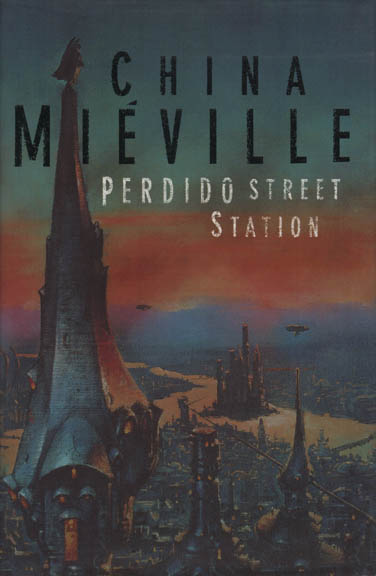
The New Crobuzon books are three standalone novels by China Miéville set in and around New Crobuzon, a vast, corrupt industrial city in his invented world of Bas-Lag where magic, biopunk technology, and several sentient species coexist. Perdido Street Station follows a renegade scientist and his lover after an experiment unleashes something monstrous on the city, while The Scar and Iron Council return to the same setting with different casts and only loose continuity between books.
- The Ghost Pirates
William Hope Hodgsonstandalone novel1909
similar byhorrordarkeerie+1 more
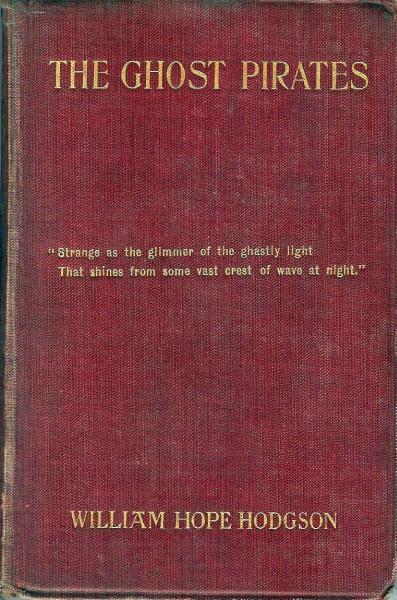
Jessop signs on to the sailing ship Mortzestus despite whispers about her reputation, and it isn't long before he understands why: strange shapes and stranger sounds begin plaguing the vessel, growing bolder and more frequent by the day. Some of the crew write it off as superstition or overwork, but Jessop, the story's sole survivor, recounting events after the fact, comes to suspect something worse than ghosts: a kind of presence that shares the ship's physical space from another dimension entirely, and is slowly forcing its way through. William Hope Hodgson's nautical horror novel builds dread less through incident than through mounting, unresolved wrongness.
- The Golden Age of Weird Fiction Megapack
series13 books1931
completed
similar byhorrorweird fiction+3 more
- Dracula
universe144 books1897
Start hereDracula · Start here
similar byhorror
"Come freely. Go safely. And leave something of the happiness you bring" — so the Count greets his guest at the threshold of the Carpathians, and the great door shuts behind. Bram Stoker's Dracula (1897) is the wellspring of the modern vampire: the account of a centuries-old Transylvanian nobleman who quits his crumbling castle for the crowded lodging-houses of London, and the handful of ordinary people — a young solicitor, a doctor of the mad, a professor of stranger learning — who must piece together what he is before he makes the whole city his fold. It is told wholly in fragments: journal entries, letters, telegrams, ships' logs, phonograph cylinders, each hand recording only its own sliver of the dark. Around that single novel a whole crypt of continuations has grown, raised by many writers across a century. Fred Saberhagen's Dracula Sequence hands the Count the microphone, retelling the old events from his own wry, aggrieved lips and following him into later intrigues. Robert Lory's brisk 1970s Dracula Horror Series revives him as a reluctant weapon turned against fouler things; Peter Tremayne's trilogy reaches back along his bloodline; and further sequels, a Quincey Morris spin-off, and Dracula's Children carry the shadow onward. This is a loose shared world built upon a public-domain figure, not one governed continuity — each author remakes him as villain, antihero, or sympathetic narrator. Begin, always, with Stoker's original; the letters and the mounting dread stand entirely on their own. From there follow whichever door tempts you — Saberhagen's The Dracula Tape for the monster's own confession, Lory or Tremayne for tales that never glance back at the Borgo Pass again.
- Dream Cycle
series26 books1919
similar byhorroreerie+1 more
The Dream Cycle is a series of short stories and novellas by author H. P. Lovecraft (1890–1937). Written between 1918 and 1932, they are about the "Dreamlands", a vast alternate dimension that can only be entered via dreams. The Dreamlands are described as lying deeper than space, matter and time, and are a "limitless vacua beyond all thought and entity".
- The Purple Cloud
M. P. Shielstandalone novel1901
similar byweird fictiondarkeerie+1 more
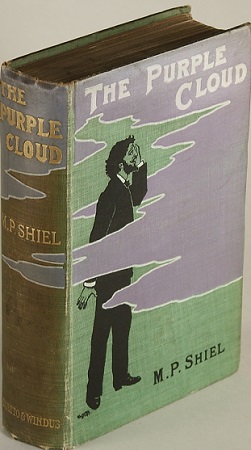
Around 1900, the author receives a packet of writings of a psychic, who recounts her vision of the multi-decade diary of an arctic explorer of the future, the first to reach the north pole; but during his multiyear trek, an unknown eruption temporarily poisons the atmosphere with cyanide, killing all human and animal life, sparing only the arctic latitudes and leaving him the last man on earth.
- The Weird Works of Robert E. Howard
series10 books2004
completed
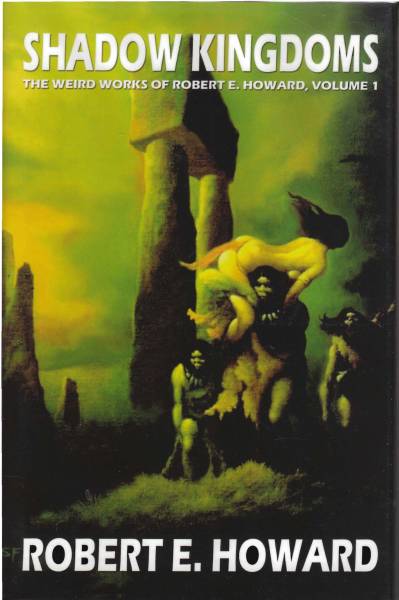
similar byhorrorweird fictiondark+2 more
- Twilight Zone
universe40 books1960
Start hereStories from the Twilight Zone · Start here
similar by+3 more
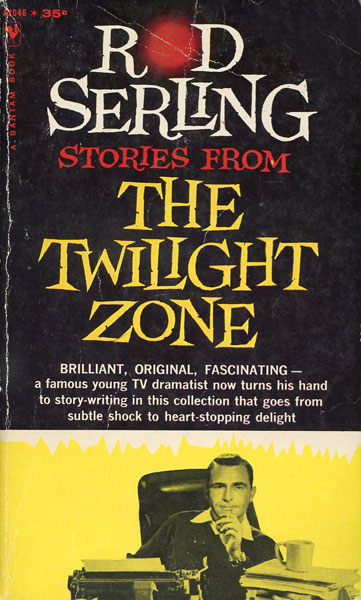
Picture, if you will, an ordinary person on an ordinary afternoon: a tired salesman, a frightened child, a man who wants only to be left alone. Somewhere between the streetlight and the front door, the rules quietly change. This is the Twilight Zone — not a place on any map but a middle ground between light and shadow, science and superstition, the pit of our fears and the summit of our knowledge. There is no continuing saga here, no cast to follow across the years. There is only the door, and the parable waiting on the far side of it. What the shelf holds is Rod Serling's anthology given the permanence of print. Serling turned his own teleplays into prose, the collections that open with Stories from the Twilight Zone, and the scripts survive alongside them — his and Richard Matheson's, the two hands that set the show's pulse. Around that core gather the story-collections of Walter B. Gibson, the volumes of new tales assembled by Carol Serling, standalone novels, and paired reissues: dozens of self-contained pieces, many writers under one banner. Read one or read forty. Each closes its own circle. The machinery is always the same and never predictable — a reasonable premise, a moral squeeze, a final turn that lands like a tap on the shoulder, sometimes cruel, sometimes merciful, always earned. Beneath the twist runs Serling's true subject: ordinary conscience under strain — prejudice, vanity, loneliness, the wish to go back. Begin where he began, with his own Stories from the Twilight Zone, then follow Matheson. There is no order to keep. You unlock this door with the key of imagination.
- Ambergris
series20 books1996
similar byweird fiction+1 more
Ambergris is the fictional, fungus-ridden city Jeff VanderMeer uses as the throughline for a loosely connected cycle of increasingly strange fiction, beginning with the linked stories of City of Saints and Madmen. Shriek: An Afterword recasts the city's history through a historian's biography of her artist brother's disappearance into its underground; Finch turns to a hardboiled detective investigating a murder after the city's balance of power has shifted. Each book changes form and narrator, using the setting itself as the connective tissue rather than a continuing plot.