Loreful
HomeDiscover
Search series, authors…⌘K
Loreful

Reading orders for SF/F series and shared universes — with your place kept in every one.

Explore

UniversesSeriesWorksAuthorsAtlas

Help

FAQAboutSite map

Account & legal

Sign inCreate accountPrivacyTerms

Data

Built on ISFDB, Wikipedia, Wikidata and Open Library. Curated reading orders carry their reasoning on the page; the rest follow publication order. Data sources & licenses

© Loreful · data: ISFDB · CC BY

More like Broken Ties

anchored on:our world

but

Mood

The mood the book leaves you in.

  • The reading experience is propelled by journeys, exploration, and physical risk; excitement and forward momentum dominate over dread or introspection.
  • Joy and loss are deliberately mixed; the resolution grants characters something real while taking something else away, leaving warmth and sorrow together.
  • The book demands work from the reader — dense prose, difficult structure, unfamiliar ideas, or morally uncomfortable material — as part of its intended effect.
  • Grim events, cruelty, or despair dominate the atmosphere, and the book does not soften them with comfort or comic relief.
  • The atmosphere is quietly unsettling — wrongness, unease, and the uncanny pervade the book without necessarily escalating into overt horror.
  • The book is built to move the reader; character feeling is foregrounded and major scenes aim at a strong emotional response.
  • Humor is a primary aim and the prose plays for laughs — comic situations, wit, or dialogue produce sustained comedy, not occasional levity.
  • The book insists that things can improve; effort and decency are shown to matter, and the arc bends toward better outcomes even through hardship.
  • The book teaches as it goes — real facts, history, science, or craft are conveyed in enough depth that learning is part of the reading experience.
  • The book is designed to uplift and motivate, presenting perseverance or achievement in a way that invites the reader to aspire or act.
  • The overall register is cheerful and easygoing; stakes are kept gentle and the book avoids dwelling on pain or dread.
  • Withheld information drives the experience; the book sustains enigmas and secrets the reader wants resolved, whatever its genre.
  • The book is contemplative and inward-looking, giving more weight to thought, memory, and meaning than to external events.
  • The book works as comfort reading — low tension, a soothing pace, and an atmosphere the reader can unwind in.
  • Grief, loss, or melancholy set the dominant register, and the book lets sorrow stand rather than resolving it into comfort.
  • Sustained suspense is the point; the book keeps the reader braced for what happens next through danger, pressure, or impending revelation.
  • Playful invention and charm define the register — fanciful conceits, light absurdity, and a narration that delights in its own oddity.

About

What the story runs on.

  • Stories in which extraterrestrial beings are central — as characters, cultures, or the object of the plot.
  • Stories in which staying alive against nature, catastrophe, or scarcity is the central problem.
  • Stories of lovers kept apart by law, family, faith, or station, where the obstacle to love is the plot.
  • Stories in which a friendship — its making, testing, or loss — is the emotional center.
  • Stories of growing up — a young protagonist crossing from childhood into adult knowledge and responsibility.
  • Stories about who a character truly is — self-discovery, doubled lives, and the search for a self.
  • Stories about mental unraveling — descent into madness, delusion, and minds at war with themselves.
  • Stories about mourning — living through the death of a loved one and what loss does to the survivors.
  • Stories in which a buried family truth — hidden parentage, crimes, or shames — surfaces and reorders the present.
  • Stories driven by maneuvering for power — factions, conspiracies, and statecraft conducted in shadow.
  • Stories in which war itself is the subject — combat, occupation, and what warfare does to soldiers and civilians.
  • Stories organized around investigating a killing — the case, the clues, and the pursuit of the killer, in any genre's clothing.

Shelf

Where it sits in the library.

    • Fiction built on magic or other supernatural elements that have no scientific explanation.
    • Secondary-world fantasy at large scale, where the fate of nations or the world turns on the protagonists' struggle.
    • Fantasy set in a recognizably modern city or contemporary world where the supernatural intrudes on everyday life.
    • Fantasy that blends in horror's atmosphere and imagery, keeping a fantastical frame around grim or frightening material.
    • Action-driven fantasy following warriors or rogues with personal stakes against sorcerous threats, rather than world-spanning conflicts.
    • Fantasy set in a real historical period or a close analogue of one, with magic woven into the era.
    • Fantasy in which protagonists cross from the ordinary world into another world through a portal or similar passage.
    • Fiction that retells or reworks a traditional fairy tale in a new form or setting.
    • Fantasy drawing directly on myths, legends, and folklore, retelling them or building on their figures and logic.
    • Fantasy of ghosts, vampires, shapeshifters, psychics, and similar phenomena, usually set in an otherwise ordinary world.
    • Fiction mixing science-fictional trappings with overtly magical or impossible elements in one setting.
    • Low-stakes fantasy emphasizing comfort, community, and everyday pleasures over conflict and peril.
    • Speculative fiction of pervasive moral ambiguity, violence, and cynicism that rejects heroic conventions — fantasy and SF alike.
      • Fiction that extrapolates from science and technology — future societies, space travel, or speculative inventions — within at least nominally natural laws.
      • Science fiction of interstellar scope — starships, galactic polities, and adventure across star systems.
      • Science fiction committed to scientific rigor, where technical plausibility constrains the story.
      • Science fiction centered on armed forces and warfare, told largely from a military point of view.
      • Science fiction of networked, corporate-dominated near futures, pairing high technology with social decay.
      • Science fiction styled on nineteenth-century steam-powered technology, often in a Victorian or pseudo-Victorian setting.
      • Fiction depicting an oppressive or catastrophic society, presented as a warning.
      • Fiction set after civilization's collapse, following survivors in the ruins of the old world.
      • Fiction in which characters move between past and future, and the mechanics or consequences of that travel drive the plot.
      • Fiction exploring a world where a historical event went differently and history diverged from ours.
      • Science fiction about humanity's first encounter and communication with an alien intelligence.
      • Science fiction in which extraterrestrial forces attack or occupy Earth and humanity resists.
      • Fiction whose primary aim is to frighten or unsettle the reader through dread, menace, or the monstrous.
      • Horror of vast, indifferent, incomprehensible entities before which humanity is insignificant, in the Lovecraft tradition.
      • Horror of decaying houses, buried family secrets, and oppressive atmosphere in the Gothic literary tradition.
      • Horror centered on hauntings and the returning dead.
      • Horror located in the mind — paranoia, obsession, and unreliable perception rather than external monsters.
      • Horror built around the reanimated dead and survival amid their outbreaks.
      • Horror defined by explicit, transgressive gore that refuses to cut away from violence.
      • Speculative fiction of the strange and uncanny that resists both natural explanation and standard genre categories.
      • Fiction organized around solving a crime or puzzle, typically following an investigator toward the identification of a culprit.
      • A puzzle-first mystery that lays out clues so the culprit's identity can be deduced before the reveal.
      • Crime fiction of moral ambiguity, fatalism, and hard-edged style, set among the corrupt and the doomed.
      • A mystery following the realistic routines of police work — forensics, interviews, and case-building.
      • A gentle mystery with an amateur sleuth, a small community, and violence kept off the page.
      • A mystery set in a past era, where the investigation works within that period's methods and society.
      • Fast-paced fiction driven by imminent danger, pursuit, or high-stakes conspiracy, built to sustain tension.
      • A thriller of espionage — agents, tradecraft, and intelligence services in conflict.
      • A thriller centered on lawyers and the courtroom, where litigation carries the suspense.
      • A thriller driven by detailed contemporary or near-future technology, often military or scientific.
      • A thriller whose tension comes from mental states and manipulation between characters rather than external action.
      • Fiction whose central plot is a romantic relationship and its development toward an emotionally satisfying resolution.
      • Romance in which one or both partners are supernatural beings, blending fantasy elements into the love story.
      • A fantasy-romance hybrid in which the romantic arc and the fantasy plot carry equal weight.
      • Romance set in a past era, with courtship shaped by the period's society and manners.
      • Romance set in the present day, without supernatural or historical elements.
      • Fiction set in a real past period, where the historical setting materially shapes characters and events.
        • General and literary fiction emphasizing prose style, character interiority, or formal ambition over genre plot conventions.
        • Fiction in a realistic world where magical events occur and are treated as ordinary, in the tradition of Latin American literature.
        • Fiction that ridicules people, institutions, or society in order to criticize them.
        • Fiction of dreamlike, irrational imagery and logic that breaks from realistic representation.
        • Fiction that plays with narrative convention through metafiction, fragmentation, and self-reference.
        • Fiction propelled by journeys, exploration, and physical peril, where action and survival carry the plot.
        • Adventure fiction of ships and seafaring — naval engagements, voyages, and life at sea.
        • Fiction of the American frontier West — gunmen, ranchers, and lawmen, typically in the late nineteenth century.
        • Fiction centered on soldiers, campaigns, and the experience of warfare, historical or imagined.
          • Fiction written primarily to amuse, using comedic situations, wit, or parody as its organizing principle.
            • Multi-generational fiction following a family or dynasty across decades, with inheritance and kinship as the through-line.
              • Fiction whose world runs on explicit game mechanics — levels, stats, and skills that characters can see and exploit.
                • Fiction about costumed or superpowered heroes and their conflicts with comparable villains.

                Practical

                How long a commitment, whether it stands alone, and whether it has finished.

                Tap a chip to ask for it · tap again to rule it out · once more to clear. Numbers show what would be left.

                • Cover of VALIS
                  VALIS

                  series · 4 books · 1981

                  completed

                  similar by+3 more

                  The VALIS trilogy is a set of science fiction/philosophical novels by author Philip K. Dick which include VALIS (1981), The Divine Invasion (1981), and The Transmigration of Timothy Archer (1982). Dick's first novel about the VALIS concept originally titled "VALISystem A", was published as Radio Free Albemuth after Dick's death in 1985.

                • K
                  Kairos

                  series · 11 books · 1962

                  completed

                  similar by+2 more

                  The Time Quintet is a science fantasy series of five young adult novels written by American author Madeleine L'Engle and made up of A Wrinkle in Time (1962), A Wind in the Door (1973), A Swiftly Tilting Planet (1978), Many Waters (1986), and An Acceptable Time (1989).

                • Cover of Lost
                  Lost

                  Gregory Maguire · standalone novel · 2001

                  similar bygrief and lossliterary & generalour worldcontemporary

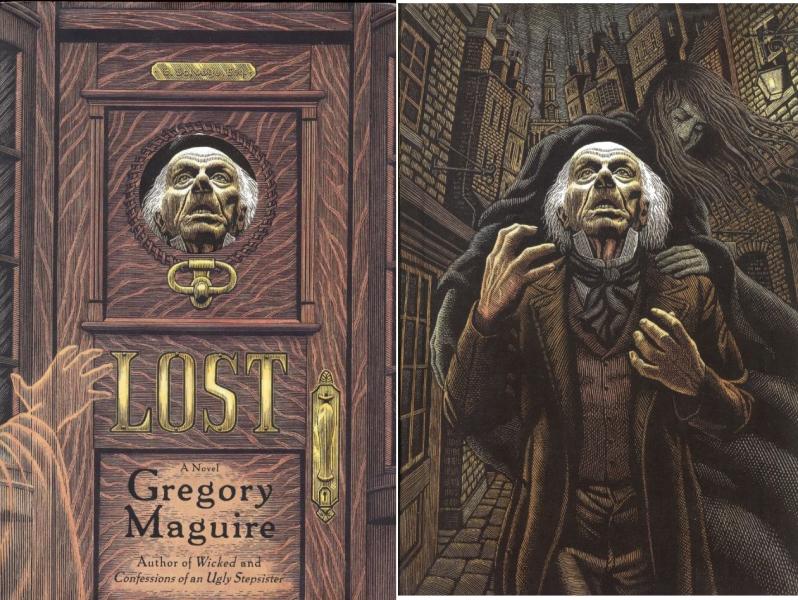
                  Lost is a 2001 novel by American author Gregory Maguire. Unlike many of Maguire's other adult novels, Lost is set in the real world. The novel's concept is that the protagonist is a distant relative of the man who inspired Charles Dickens' character of Ebenezer Scrooge.

                • Cover of The Midnight World
                  The Midnight World

                  series · 2 books · 2020

                  similar bygrief and losscontemporary+2 more

                • Cover of The Gargoyle
                  The Gargoyle

                  Andrew Davidson · standalone novel · 2008

                  similar bygrief and lossliterary & generalour worldcontemporary

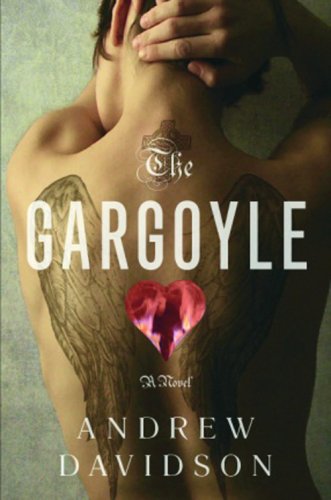
                  The Gargoyle is the debut novel by Andrew Davidson. It was published in 2008.

                • Cover of The Midnight Club
                  The Midnight Club

                  Christopher Pike · standalone novel · 1994

                  similar bygrief and lossliterary & generalour worldcontemporary

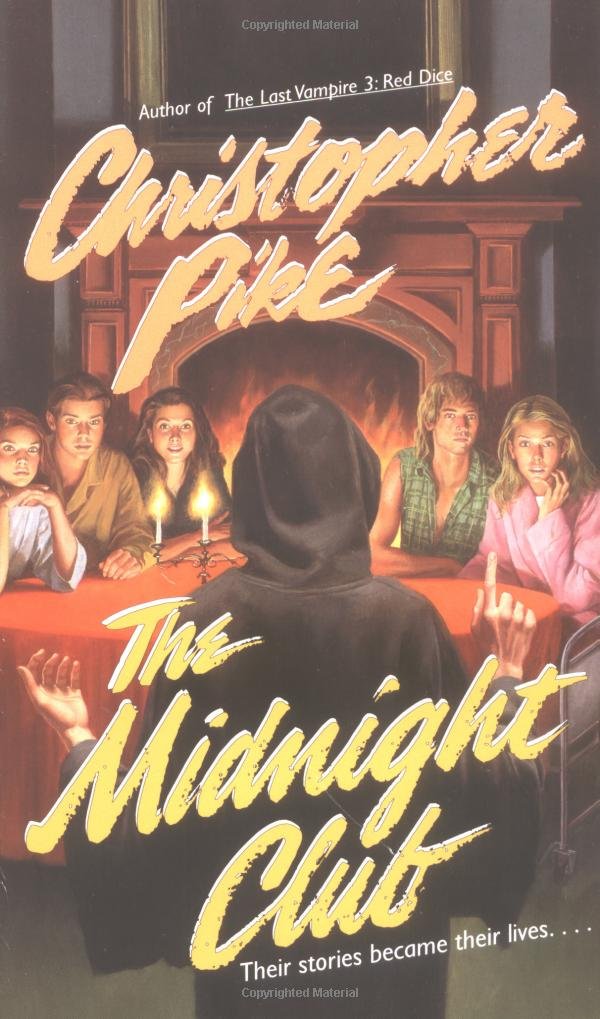
                  When you think Christopher Pike, you probably think ax murderers, cursed chain letters, and the occasional evil lizard person — and with good reason! But in this sensitive novel, set at a hospice for terminally ill teens, Pike mashes up standard scary stories with an exploration of what fear really means when illness is more of a threat than haunted houses or sexy vampires.

                • Cover of Love
                  Love

                  Angela Carter · standalone novel · 1971

                  similar byliterary & generalour worldcontemporary+1 more

                  Love is a 1971 novel by Angela Carter. Her fifth novel, it follows the destructive love triangle between a psychologically unstable woman, her charming husband, and her volatile brother-in-law. Effectively exploring themes of infidelity, self-loathing, suicide, and emotional disconnection, the novel depicts three characters so alienated from society and reality, that they depend solely on each other. This unhealthy fixation slowly eats away at their individual relationships and themselves, until eventually culminating in despair and tragedy.

                • Cover of Rooms
                  Rooms

                  Lauren Oliver · standalone novel · 2014

                  similar bygrief and lossour worldcontemporary+1 more

                  Wealthy Richard Walker has just died, leaving behind his country house full of rooms packed with the detritus of a lifetime. His estranged family-bitter ex-wife Caroline, troubled teenage son Trenton, and unforgiving daughter Minna-have arrived for their inheritance. But the Walkers are not alone. Prim Alice and the cynical Sandra, long dead former residents bound to the house, linger within its claustrophobic walls. Jostling for space, memory, and supremacy, they observe the family, trading barbs and reminiscences about their past lives. Though their voices cannot be heard, Alice and Sandra speak through the house itself-in the hiss of the radiator, a creak in the stairs, the dimming of a light bulb. The living and dead are each haunted by painful truths that will soon surface with explosive force. When a new ghost appears, and Trenton begins to communicate with her, the spirit and human worlds collide-with cataclysmic results.

                • Cover of Shark Heart
                  Shark Heart

                  Emily Habeck · standalone novel · 2023

                  similar bygrief and lossliterary & generalour worldcontemporary

                  Subtitled "A Love Story"

                • Cover of The Last Tale of the Flower Bride
                  The Last Tale of the Flower Bride

                  Roshani Chokshi · standalone novel · 2023

                  similar byliterary & generalour worldcontemporary+1 more

                  A sumptuous, gothic-infused story about a marriage that is unraveled by dark secrets, a friendship cursed to end in tragedy, and the danger of believing in fairy tales—the breathtaking adult debut from New York Times bestselling author Roshani Chokshi. Once upon a time, a man who believed in fairy tales married a beautiful, mysterious woman named Indigo Maxwell-Casteñada. He was a scholar of myths. She was heiress to a fortune. They exchanged gifts and stories and believed they would live happily ever after—and in exchange for her love, Indigo extracted a promise: that her bridegroom would never pry into her past. But when Indigo learns that her estranged aunt is dying and the couple is forced to return to her childhood home, the House of Dreams, the bridegroom will soon find himself unable to resist. For within the crumbling manor’s extravagant rooms and musty halls, there lurks the shadow of another girl: Azure, Indigo’s dearest childhood friend who suddenly disappeared. As the house slowly reveals his wife’s secrets, the bridegroom will be forced to choose between reality and fantasy, even if doing so threatens to destroy their marriage . . . or their lives. Combining the lush, haunting atmosphere of Mexican Gothic with the dreamy enchantment of The Invisible Life of Addie LaRue, The Last Tale of the Flower Bride is a spellbinding and darkly romantic page-turner about love and lies, secrets and betrayal, and the stories we tell ourselves to survive.

                • Cover of Castle Rock
                  Castle Rock

                  series · 16 books · 1978

                  similar bycontemporary

                  Castle Rock is the fictional Maine town that links a cluster of otherwise separate Stephen King novels and novellas, including The Dead Zone, Cujo, The Dark Half, Needful Things, and Elevation. Rather than telling one continuous story, the books share a setting and occasional recurring figures, such as Sheriff Alan Pangborn, while each follows its own self-contained plot and cast. Any title can be read on its own without needing the others.

                • Cover of Rouge
                  Rouge

                  Mona Awad · standalone novel · 2023

                  similar byliterary & generalour worldcontemporary+1 more

                • Cover of Surrender
                  Surrender

                  Sonya Hartnett · standalone novel · 2005

                  similar bygrief and lossliterary & generalour worldcontemporary

                  Surrender is a novel written by the award-winning Australian novelist, Sonya Hartnett. It was first published in 2005 in Australia by Walker Books. It is narrated by twenty-year-old Gabriel, who is dying, and twenty-year-old Finnigan, a homeless boy who is Gabriel's only friend.

                • Cover of The Elliott Family
                  The Elliott Family

                  series · 8 books · 1946

                  completed

                  similar byour world+1 more

                  Ray Bradbury's From the Dust Returned gathers and expands short stories he wrote across five decades about the Elliotts, a large, ancient family of vampires, ghosts, and other gentle monsters gathered in a rambling Illinois house. Framed by new connecting chapters, it follows the family's mortal foundling, Timothy, as the household prepares for a once-a-century homecoming.

                • Cover of A Brief History of Living Forever
                  A Brief History of Living Forever

                  Jaroslav Kalfař · standalone novel · 2023

                  similar byliterary & generalour world+1 more

                • Cover of Angels of Destruction
                  Angels of Destruction

                  Keith Donohue · standalone novel · 2009

                  similar byour worldcontemporary+1 more

                • Cover of Death in Her Hands
                  Death in Her Hands

                  Ottessa Moshfegh · standalone novel · 2020

                  similar byliterary & generalour worldcontemporary+1 more

                  Death in Her Hands is a 2020 novel by Ottessa Moshfegh.

                • Cover of The Probable Future
                  The Probable Future

                  Alice Hoffman · standalone novel · 2003

                  similar byliterary & generalour worldcontemporary+1 more

                  Alice Hoffman's most magical novel to date--three generations of extraordinary women are driven to unite in crisis and discover the rewards of reconciliation and love. Women of the Sparrow family have unusual gifts. Elinor can detect falsehood. Her daughter, Jenny, can see people's dreams when they sleep. Granddaughter Stella has a mental window on the future--a future that she might not want to see. In The Probable Future this vivid and intriguing cast of characters confronts a haunting past--and a very current murder--against the evocative backdrop of small-town New England. By turns chilling and enchanting, The Probable Future chronicles the Sparrows's legacy as young Stella struggles to cope with her disturbing clairvoyance. Her potential to ruin or redeem becomes unbearable when one of her premonitions puts her father in jail, wrongly accused of homicide. Yet this ordeal also leads Stella to the grandmother she was forbidden to meet and to a historic family home full of talismans from her ancestors. Poignant, arresting, unsettling, The Probable Future showcases the lavish literary gifts that have made Alice Hoffman one of America's most treasured writers.

                • Cover of Answered Prayers
                  Answered Prayers

                  series · 6 books · 1987

                  similar bycontemporary+3 more

                • Cover of Dollanganger Children
                  Dollanganger Children

                  series · 11 books · 1979

                  similar by+3 more

                  V. C. Andrews' Dollanganger series opens with Flowers in the Attic, in which four siblings are hidden away in their wealthy grandparents' attic by a mother willing to sacrifice them to reclaim her inheritance, and follows the survivors' fallout across four more novels - Petals on the Wind, If There Be Thorns, Seeds of Yesterday, and the prequel Garden of Shadows - as the family's incest, abuse, and secrets ripple into the next generation. Ghostwriter Andrew Neiderman continued the Dollanganger world after Andrews's death with further prequels and companion stories centered on the Foxworth family estate.

                • Cover of Perfunctory Affection
                  Perfunctory Affection

                  Kim Harrison · standalone novel · 2019

                  similar bygrief and lossliterary & generalour worldcontemporary

                  Is it better to live a lie of perfection when the truth is too ugly to survive? Meg wants a normal life. Her new artistic style, born in the depression of her mother’s death, is poised to take the art world by storm, if she could just overcome the debilitating anxiety caused by the car accident that scarred her boyfriend, Austin. Encouraged by her therapist, Meg pushes outside her comfort zone to befriend Haley, a guest instructor at the university where Meg teaches. Haley is everything Meg wants to be: charismatic, confident, and perfect, but when Austin expresses his worry that Haley is changing Meg too fast and leads her to realize that Austin is trying to keep her afraid and needing him, Meg kicks him out of her life. Or at least, she tries. Kim Harrison, author of the number one bestselling Urban Fantasy Hollows series, brings to life a world terrifyingly near to our own, where what’s real and what shouldn’t exist twine together in the madness of a troubled mind desperate for a way out. But when the truth is revealed, the question remains, is it better to live a lie of perfection, or cleave to an ugly reality that will destroy you?

                • Cover of A Visit from the Goon Squad
                  A Visit from the Goon Squad

                  series · 2 books · 2010

                  similar byliterary & generalcontemporary+2 more

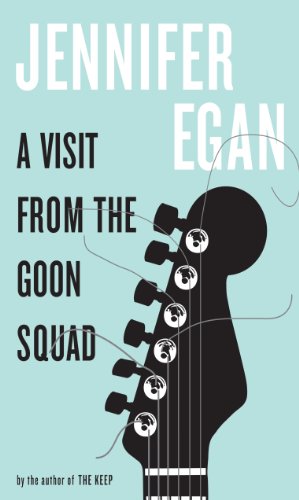
                  Jennifer Egan's A Visit from the Goon Squad follows a loosely connected group of characters orbiting the music industry across several decades, told through interlocking chapters that jump between narrators, timelines, and, in one chapter, a PowerPoint presentation. The Candy House returns to several of the same characters and their descendants a decade later, in a world reshaped by a technology that lets people access and share their memories. Egan links the two books through recurring characters more than a continuous plot.

                • Cover of Release
                  Release

                  Patrick Ness · standalone novel · 2017

                  similar byliterary & generalour worldcontemporary+1 more

                  "The most personal and tender novel yet from Patrick Ness, the twice Carnegie Medal-winning author of A Monster Calls. It's Saturday, it's summer and, although he doesn't know it yet, everything in Adam Thorn's life is going to fall apart. But maybe, just maybe, he'll find freedom from the release. Time is running out though, because way across town, a ghost has risen from the lake... This uplifting coming-of-age novel will remind you what it's like to fall in love." (toppsta.com)

                • Cover of The Ice Queen
                  The Ice Queen

                  Alice Hoffman · standalone novel · 2005

                  similar bygrief and lossliterary & generalour worldcontemporary

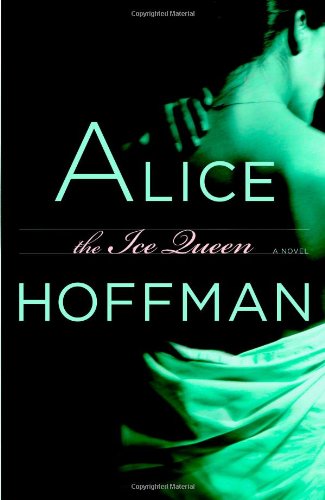
                  The Ice Queen is a 2005 novel by Alice Hoffman, published by Little, Brown.Wishes... burn your tongue the moment they're spoken, and you can never take them back.