More like Brute Orbits
anchored on:science fictionnear futuredystopiaspace colonizationsurvivalclass conflict+3 more
but
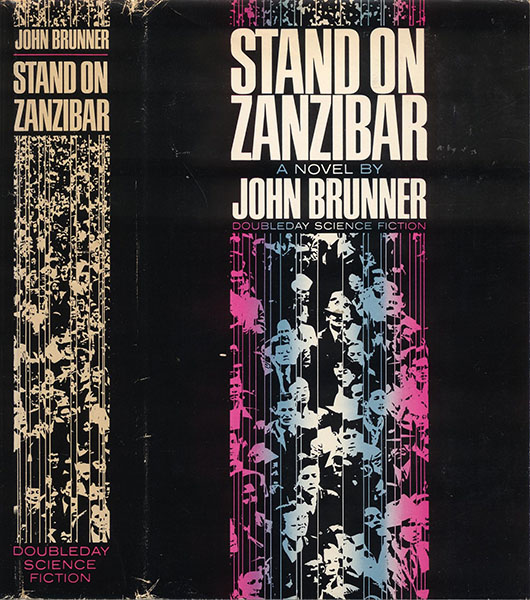
- Stand on Zanzibar
John Brunnerstandalone novel1968
similar bydarknear futurescience fictiondystopiachallenging+2 more
Stand on Zanzibar is a dystopian New Wave science fiction novel written by John Brunner and first in part published in New Worlds magazine in 1967 and in book form in 1968. The book won a Hugo Award for Best Novel at the 27th World Science Fiction Convention in 1969, as well as the 1969 BSFA Award and the 1973 Prix Tour-Apollo Award.
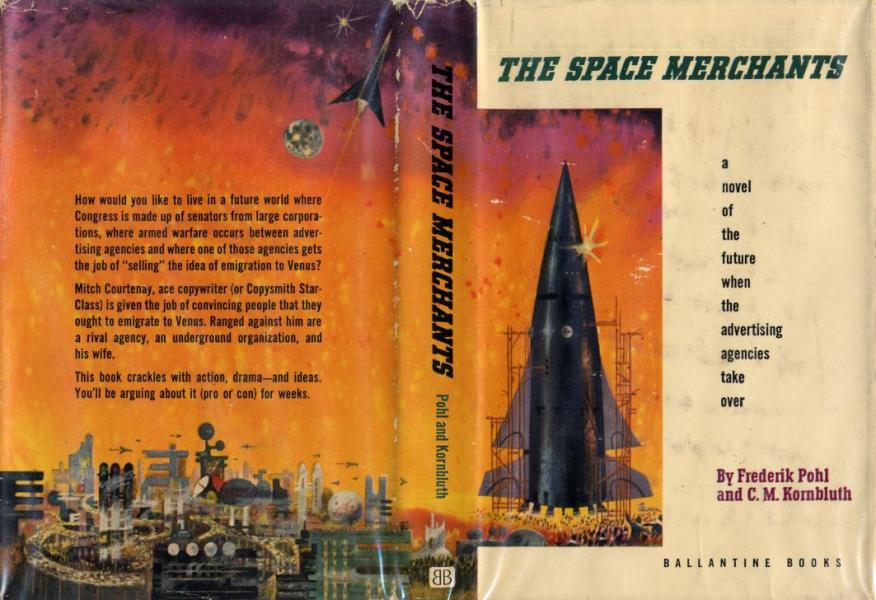
- Space Merchants
series2 books1953
completed
similar bydarknear futurescience fictiondystopiaclass conflict+1 more
The Space Merchants (1953) is a satirical science fiction novel by Frederik Pohl and C. M. Kornbluth that follows an advertising executive navigating a future where aggressive consumer capitalism has swallowed politics and daily life. The authors reunited three decades later for a direct sequel, The Merchants' War (1984), returning to the same satirical world. Together the two books form a compact bookend pair rather than an ongoing series.
- A Clockwork Orange
series4 books1962
completed
similar bydarkscience fictionnear futuredystopiachallengingtotalitarianism
Anthony Burgess's 1962 novel is narrated by Alex, a teenage gang leader in a near-future Britain gripped by a youth subculture of extreme violence, recounting his crimes in Nadsat, an invented slang blending English with Russian-derived words. After his crimes catch up with him, Alex is made the subject of a controversial state program meant to forcibly reform his behavior, and the novel uses his ordeal to question whether imposed goodness is worth the loss of free will. It is a standalone novel.
- Earthseed
series7 books1993
similar bydarknear futurescience fictiondystopiasurvival+1 more
Octavia E. Butler's Earthseed novels, Parable of the Sower and Parable of the Talents, follow Lauren Olamina as she survives the collapse of a climate-ravaged, near-future United States and founds a belief system built on the idea that "God is Change." The two-book series was left unfinished at Butler's death; a planned third novel, Parable of the Trickster, was never completed. Later graphic-novel adaptations retell the same two stories rather than continuing the narrative.
- Make Room! Make Room!
Harry Harrisonstandalone novel1966
similar bydarknear futurescience fictiondystopiasurvivalclass conflict
Make Room! Make Room! is a 1966 science fiction novel written by Harry Harrison exploring the consequences of both unchecked population growth on society and the hoarding of resources by a wealthy minority. It was originally serialized in Impulse magazine.
- Player Piano
Kurt Vonnegut & Jr.standalone novel1952
similar bydarknear futurescience fictiondystopiaclass conflict
In the near future, when cybernetic automation has effectively separated people into two castes, the "engineers and managers", and the remainder of the population who can find work only in "recycling and reclamation" or the largely useless military, an underground movement arises with the intention of rolling back those changes and giving the masses the dignity of owning their own, productive, work once more.
- The Running Man
Stephen Kingstandalone novel1982
similar bydarknear futurescience fictiondystopiasurvivaltotalitarianism+1 more
The Running Man is a dystopian thriller novel by American writer Stephen King, first published under the pseudonym Richard Bachman in 1982 as a paperback original. It was collected in 1985 in the omnibus The Bachman Books. The novel is set in a dystopian United States during the year 2025, in which the nation's economy is in ruins and world violence is rising. The story follows protagonist Ben Richards as he participates in the reality show The Running Man, in which contestants win money by evading a team of hitmen sent to kill them.
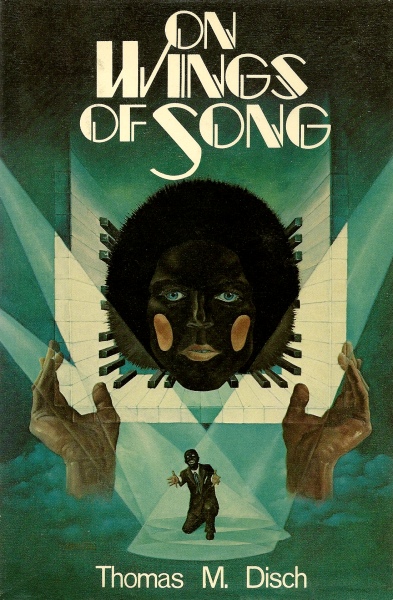
- On Wings of Song
Thomas M. Dischstandalone novel1979
similar bydarknear futurescience fictiondystopiachallengingclass conflict+1 more
On Wings of Song is a 1979 science fiction novel by American writer Thomas M. Disch. It was first published as a serial in The Magazine of Fantasy & Science Fiction in three installments in February to April 1979. Like Disch's previous novel 334, it is a bitter satire that depicts a near-future America falling into worsening economic and social crisis. It was critically well received and is often considered Disch's best work. It was, however, a commercial failure.
- The Jagged Orbit
John Brunnerstandalone novel1969
similar bydarknear futurescience fictiondystopiachallengingtotalitarianism+1 more
The Jagged Orbit is a science fiction novel by British writer John Brunner. It is similar to his earlier novel Stand on Zanzibar in its narrative style and dystopic outlook. It has exactly 100 titled chapters, which vary from several pages to part of one word. It was first published in 1969 with cover art by Leo and Diane Dillon, in the Ace Science Fiction Specials line issued by Ace Books.
- MaddAddam
series3 books2003
similar bydarknear futurescience fictiondystopiasurvival+1 more
Margaret Atwood's MaddAddam trilogy (Oryx and Crake, The Year of the Flood, MaddAddam, 2003-2013) is set around a genetically engineered pandemic unleashed deliberately by the brilliant, disillusioned scientist Crake, who intends the deadly 'BlyssPluss' pill to wipe out humanity and clear the way for the gentler, engineered Crakers he has designed to replace it. Told from the perspectives of survivors including Crake's old friend Jimmy (now calling himself Snowman), the trilogy pieces together the pandemic's causes and its aftermath from multiple, overlapping vantage points.
- The Water Knife
Paolo Bacigalupistandalone novel2015
similar bydarknear futurescience fictiondystopiasurvivalclass conflict
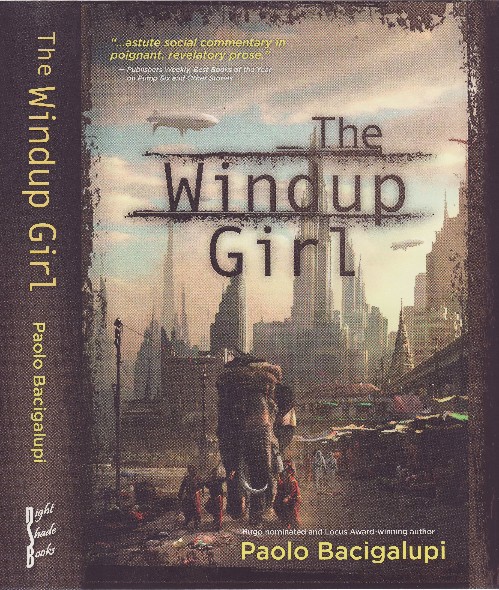
The Water Knife is a 2015 science fiction novel by Paolo Bacigalupi. It is Bacigalupi's sixth novel, and is based on his short story, The Tamarisk Hunter, first published in the news magazine High Country News. It takes place in the near future, where drought brought on by climate change has devastated the Southwestern United States.
- The Power
Naomi Aldermanstandalone novel2016
similar bydarknear futurescience fictiondystopiachallengingclass conflict
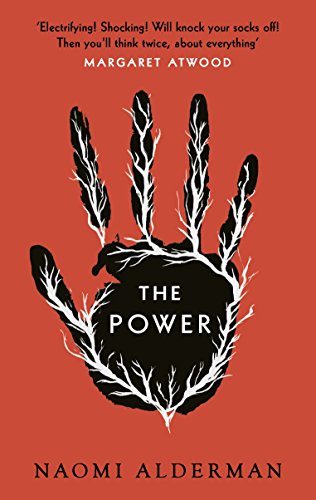
The Power is a 2016 science fiction novel by the British writer Naomi Alderman. Its central premise is of women developing the ability to release electrical jolts from their fingers, which allows them to become the dominant sex. In 2017, it won the Baileys Women's Prize for Fiction.
- The Handmaid's Tale
series3 books1985
similar bydarknear futurescience fictiondystopiatotalitarianism
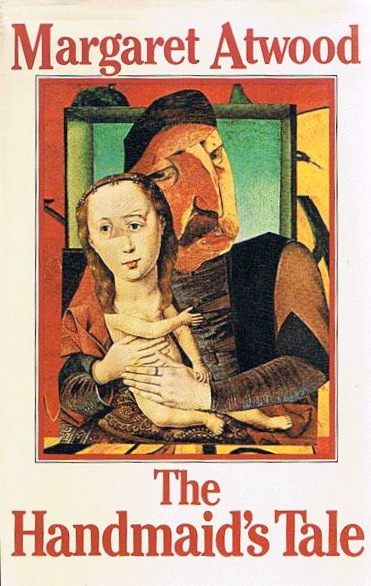
The Handmaid's Tale is Margaret Atwood's 1985 novel set in Gilead, a totalitarian theocracy that has overthrown the United States and forces fertile women into reproductive servitude as Handmaids; it is narrated by one such woman, Offred. Atwood returned to the world in her 2019 sequel The Testaments, set fifteen years later and narrated by three women, including the regime's Aunt Lydia. Together the two novels move from Gilead's grip on power toward the first cracks in it.
- Level 7
Mordecai Roshwaldstandalone novel1959
similar bydarknear futurescience fictiondystopiasurvivaltotalitarianism
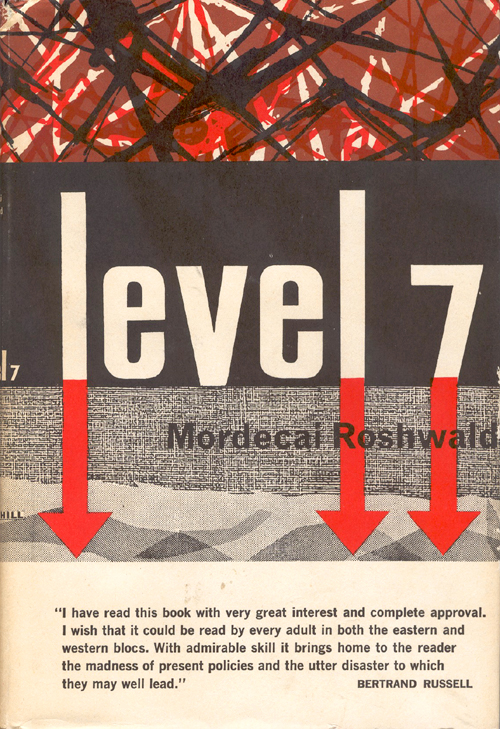
Level 7 is a 1959 science fiction novel by American writer Mordecai Roshwald. It is told from the first-person perspective of a modern soldier, X-127, living in the underground military complex Level 7, where he and several hundred others are expected to reside permanently. X-127 fulfills the role of 'push-button' offensive initiator of his nation's nuclear weapons capacity against an unspecified enemy. X-127 narrates life within a deep shelter before, during and after a nuclear war that wipes out the human species.
- The Wanting Seed
Anthony Burgessstandalone novel1962
similar bydarknear futurescience fictiondystopiachallengingtotalitarianism
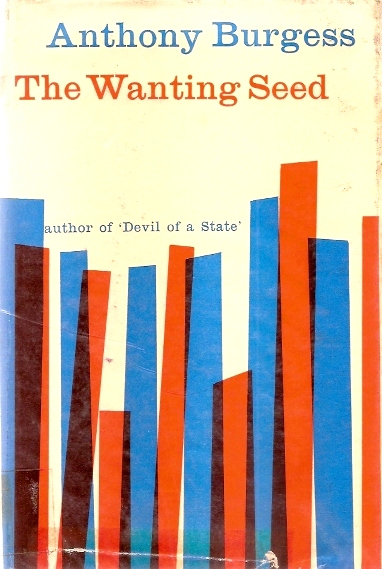
The Wanting Seed is a dystopian novel by the English author Anthony Burgess, written in 1962.
- Brave New World
series8 books1932
similar byscience fictiondystopiaclass conflict+3 more
Aldous Huxley's 1932 novel imagines a future World State where reproduction, social caste, and desire are all engineered before birth, and the population is kept content through conditioning, sleep-hypnosis, and a mood-altering drug called soma. The story follows the disruption this seemingly stable order suffers when an outsider raised beyond its reach is brought into it, exposing what the society traded away for comfort and order. Some editions pair the novel with Huxley's own 1958 nonfiction essay collection, Brave New World Revisited, which reassesses the book's ideas rather than continuing its story.
- The Ministry for the Future
Kim Stanley Robinsonstandalone novel2020
similar bynear futurescience fictiondystopiachallengingsurvival+1 more
The Ministry for the Future is a climate fiction novel by American science fiction writer Kim Stanley Robinson, published in 2020. Set in the near future, the novel follows a subsidiary body, established under the Paris Agreement, whose mission is to act as an advocate for the world's future generations of citizens as if their rights were as valid as the present generation's. While the ministry pursues various ambitious projects, the effects of climate change are determined to be the most consequential. The plot primarily follows Mary Murphy, the head of the titular Ministry for the Future, and Frank May, an American aid worker traumatized by experiencing a deadly heat wave in India. Many chapters are devoted to other characters' accounts of future events, as well as their ideas about ecology, economics, and other subjects.
- The Sheep Look Up
John Brunnerstandalone novel1972
similar bydarknear futurescience fictiondystopia+1 more
The Sheep Look Up is a 1972 dystopian science fiction novel by British author John Brunner, dealing with the deterioration of the environment in the United States. It was nominated for the 1972 Nebula Award for Best Novel.
- The Supernaturalist
Eoin Colferstandalone novel2004
similar bydarknear futurescience fictiondystopiasurvival+1 more
The Supernaturalist is a science fiction cyberpunk novel by Irish author Eoin Colfer. The book was influenced by film noir and other predecessors of the cyberpunk science fiction movement. Colfer has outlined plans for a sequel, Avernus.
- The World Jones Made
Philip K. Dickstandalone novel1956
similar bydarknear futurescience fictiondystopia+2 more
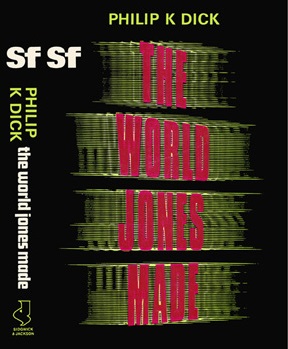
The World Jones Made is a 1956 science fiction novel by American writer Philip K. Dick, examining notions of precognition, humanity, and politics. It was first published by Ace Books as one half of Ace Double D-150, bound dos-à-dos with Agent of the Unknown by Margaret St. Clair.The story takes place after a nuclear war in which society is dominated by relativism, which rejects absolute truths and preaches tolerance as the highest principle. The mutant Floyd Jones, who can see into the future, plans to overthrow the system and colonise space. The story ends with the defeat of Jones, whose plans fail despite his ability to see the future due to the immutability of fate.
- Colony
Ben Bovastandalone novel1978
similar bynear futurescience fictiondystopiaspace colonizationsurvival+1 more
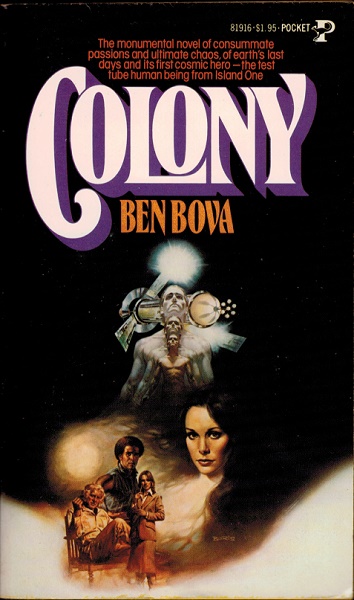
Colony continues the story Ben Bova began in Millennium, following astronaut-turned-administrator Chet Kinsman years later as the head of an orbiting space habitat that has become Earth's only real refuge from a planet buckling under overpopulation, food shortages and unrest. Getting a place in the habitat is a matter of life and death for millions who will never be chosen, and as Earth's governments grow more desperate to control or dismantle the colony outright, Kinsman has to decide how far he'll go to protect the world he's built off-world. Bova later folded both novels together into the omnibus The Kinsman Saga. Part of Ben Bova's Chet Kinsman series.
- Shade's Children milieu
series2 books1997
similar bydarknear futurescience fictiondystopiasurvival
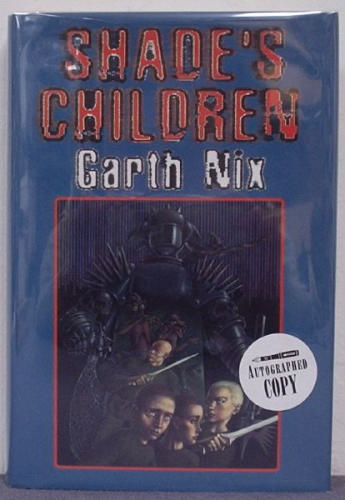
Shade's Children is set on an Earth where all adults vanished overnight fourteen years earlier, leaving children to be harvested at puberty by the machines that now run the world, unless they escape into hiding with Shade, a mysterious AI-like protector. Garth Nix's 1997 novel is a single, self-contained book rather than a series, though its bleak post-apocalyptic premise has drawn comparisons to his other work.
- Final Blackout
L. Ron Hubbardstandalone novel1948
similar bydarknear futurescience fictiondystopia+2 more
Final Blackout is a dystopic science fiction novel by American writer L. Ron Hubbard. The novel is set in the future and follows a man known as "the Lieutenant" as he restores order to England after a world war. First published in serialized format in 1940 in the science fiction magazine Astounding Science Fiction, Final Blackout was published in book form in 1948 by The Hadley Publishing Co. Author Services Inc. published a hardcover edition of the book in 1988, and in 1989 the Church of Scientology-affiliated organization Bridge Publications said that a film director named Christopher Cain had signed a contract to write and direct a movie version based on the book.