Loreful
HomeDiscover
Search series, authors…⌘K
Loreful

Reading orders for SF/F series and shared universes — with your place kept in every one.

Explore

UniversesSeriesWorksAuthorsAtlas

Help

FAQAboutSite map

Account & legal

Sign inCreate accountPrivacyTerms

Data

Built on ISFDB, Wikipedia, Wikidata and Open Library. Curated reading orders carry their reasoning on the page; the rest follow publication order. Data sources & licenses

© Loreful · data: ISFDB · CC BY

More like Bully!

anchored on:alternate historyscience fiction

but

Mood

The mood the book leaves you in.

  • The reading experience is propelled by journeys, exploration, and physical risk; excitement and forward momentum dominate over dread or introspection.
  • Joy and loss are deliberately mixed; the resolution grants characters something real while taking something else away, leaving warmth and sorrow together.
  • The book demands work from the reader — dense prose, difficult structure, unfamiliar ideas, or morally uncomfortable material — as part of its intended effect.
  • Grim events, cruelty, or despair dominate the atmosphere, and the book does not soften them with comfort or comic relief.
  • The atmosphere is quietly unsettling — wrongness, unease, and the uncanny pervade the book without necessarily escalating into overt horror.
  • The book is built to move the reader; character feeling is foregrounded and major scenes aim at a strong emotional response.
  • Humor is a primary aim and the prose plays for laughs — comic situations, wit, or dialogue produce sustained comedy, not occasional levity.
  • The book insists that things can improve; effort and decency are shown to matter, and the arc bends toward better outcomes even through hardship.
  • The book teaches as it goes — real facts, history, science, or craft are conveyed in enough depth that learning is part of the reading experience.
  • The book is designed to uplift and motivate, presenting perseverance or achievement in a way that invites the reader to aspire or act.
  • The overall register is cheerful and easygoing; stakes are kept gentle and the book avoids dwelling on pain or dread.
  • Withheld information drives the experience; the book sustains enigmas and secrets the reader wants resolved, whatever its genre.
  • The book is contemplative and inward-looking, giving more weight to thought, memory, and meaning than to external events.
  • The book works as comfort reading — low tension, a soothing pace, and an atmosphere the reader can unwind in.
  • Grief, loss, or melancholy set the dominant register, and the book lets sorrow stand rather than resolving it into comfort.
  • Sustained suspense is the point; the book keeps the reader braced for what happens next through danger, pressure, or impending revelation.
  • Playful invention and charm define the register — fanciful conceits, light absurdity, and a narration that delights in its own oddity.

About

What the story runs on.

  • Stories in which extraterrestrial beings are central — as characters, cultures, or the object of the plot.
  • Stories about venturing into space to explore — survey missions, astronauts, and the frontier of the unknown beyond Earth.
  • Stories structured as a quest — a journey undertaken to find, deliver, or destroy something of great import.
  • Stories in which staying alive against nature, catastrophe, or scarcity is the central problem.
  • Stories of lovers kept apart by law, family, faith, or station, where the obstacle to love is the plot.
  • Stories in which a friendship — its making, testing, or loss — is the emotional center.
  • Stories of growing up — a young protagonist crossing from childhood into adult knowledge and responsibility.
  • Stories about who a character truly is — self-discovery, doubled lives, and the search for a self.
  • Stories driven by maneuvering for power — factions, conspiracies, and statecraft conducted in shadow.
  • Stories about rising against rulers — uprisings, resistance movements, and revolutions and their aftermaths.
  • Stories in which war itself is the subject — combat, occupation, and what warfare does to soldiers and civilians.
  • Stories organized around investigating a killing — the case, the clues, and the pursuit of the killer, in any genre's clothing.

Shelf

Where it sits in the library.

    • Fiction built on magic or other supernatural elements that have no scientific explanation.
    • Secondary-world fantasy at large scale, where the fate of nations or the world turns on the protagonists' struggle.
    • Fantasy set in a recognizably modern city or contemporary world where the supernatural intrudes on everyday life.
    • Fantasy that blends in horror's atmosphere and imagery, keeping a fantastical frame around grim or frightening material.
    • Action-driven fantasy following warriors or rogues with personal stakes against sorcerous threats, rather than world-spanning conflicts.
    • Fantasy set in a real historical period or a close analogue of one, with magic woven into the era.
    • Fantasy in which protagonists cross from the ordinary world into another world through a portal or similar passage.
    • Fiction that retells or reworks a traditional fairy tale in a new form or setting.
    • Fantasy drawing directly on myths, legends, and folklore, retelling them or building on their figures and logic.
    • Fantasy of ghosts, vampires, shapeshifters, psychics, and similar phenomena, usually set in an otherwise ordinary world.
    • Fiction mixing science-fictional trappings with overtly magical or impossible elements in one setting.
    • Low-stakes fantasy emphasizing comfort, community, and everyday pleasures over conflict and peril.
    • Speculative fiction of pervasive moral ambiguity, violence, and cynicism that rejects heroic conventions — fantasy and SF alike.
      • Fiction that extrapolates from science and technology — future societies, space travel, or speculative inventions — within at least nominally natural laws.
      • Science fiction of interstellar scope — starships, galactic polities, and adventure across star systems.
      • Science fiction committed to scientific rigor, where technical plausibility constrains the story.
      • Science fiction centered on armed forces and warfare, told largely from a military point of view.
      • Science fiction of networked, corporate-dominated near futures, pairing high technology with social decay.
      • Science fiction styled on nineteenth-century steam-powered technology, often in a Victorian or pseudo-Victorian setting.
      • Fiction depicting an oppressive or catastrophic society, presented as a warning.
      • Fiction set after civilization's collapse, following survivors in the ruins of the old world.
      • Fiction in which characters move between past and future, and the mechanics or consequences of that travel drive the plot.
      • Fiction exploring a world where a historical event went differently and history diverged from ours.
      • Science fiction about humanity's first encounter and communication with an alien intelligence.
      • Science fiction in which extraterrestrial forces attack or occupy Earth and humanity resists.
      • Fiction whose primary aim is to frighten or unsettle the reader through dread, menace, or the monstrous.
      • Horror of vast, indifferent, incomprehensible entities before which humanity is insignificant, in the Lovecraft tradition.
      • Horror of decaying houses, buried family secrets, and oppressive atmosphere in the Gothic literary tradition.
      • Horror centered on hauntings and the returning dead.
      • Horror located in the mind — paranoia, obsession, and unreliable perception rather than external monsters.
      • Horror built around the reanimated dead and survival amid their outbreaks.
      • Horror defined by explicit, transgressive gore that refuses to cut away from violence.
      • Speculative fiction of the strange and uncanny that resists both natural explanation and standard genre categories.
      • Fiction organized around solving a crime or puzzle, typically following an investigator toward the identification of a culprit.
      • A puzzle-first mystery that lays out clues so the culprit's identity can be deduced before the reveal.
      • Crime fiction of moral ambiguity, fatalism, and hard-edged style, set among the corrupt and the doomed.
      • A mystery following the realistic routines of police work — forensics, interviews, and case-building.
      • A gentle mystery with an amateur sleuth, a small community, and violence kept off the page.
      • A mystery set in a past era, where the investigation works within that period's methods and society.
      • Fast-paced fiction driven by imminent danger, pursuit, or high-stakes conspiracy, built to sustain tension.
      • A thriller of espionage — agents, tradecraft, and intelligence services in conflict.
      • A thriller centered on lawyers and the courtroom, where litigation carries the suspense.
      • A thriller driven by detailed contemporary or near-future technology, often military or scientific.
      • A thriller whose tension comes from mental states and manipulation between characters rather than external action.
      • Fiction whose central plot is a romantic relationship and its development toward an emotionally satisfying resolution.
      • Romance in which one or both partners are supernatural beings, blending fantasy elements into the love story.
      • A fantasy-romance hybrid in which the romantic arc and the fantasy plot carry equal weight.
      • Romance set in a past era, with courtship shaped by the period's society and manners.
      • Romance set in the present day, without supernatural or historical elements.
      • Fiction set in a real past period, where the historical setting materially shapes characters and events.
        • General and literary fiction emphasizing prose style, character interiority, or formal ambition over genre plot conventions.
        • Fiction in a realistic world where magical events occur and are treated as ordinary, in the tradition of Latin American literature.
        • Fiction that ridicules people, institutions, or society in order to criticize them.
        • Fiction of dreamlike, irrational imagery and logic that breaks from realistic representation.
        • Fiction that plays with narrative convention through metafiction, fragmentation, and self-reference.
        • Fiction propelled by journeys, exploration, and physical peril, where action and survival carry the plot.
        • Adventure fiction of ships and seafaring — naval engagements, voyages, and life at sea.
        • Fiction of the American frontier West — gunmen, ranchers, and lawmen, typically in the late nineteenth century.
        • Fiction centered on soldiers, campaigns, and the experience of warfare, historical or imagined.
          • Fiction written primarily to amuse, using comedic situations, wit, or parody as its organizing principle.
            • Multi-generational fiction following a family or dynasty across decades, with inheritance and kinship as the through-line.
              • Fiction whose world runs on explicit game mechanics — levels, stats, and skills that characters can see and exploit.
                • Fiction about costumed or superpowered heroes and their conflicts with comparable villains.

                Practical

                How long a commitment, whether it stands alone, and whether it has finished.

                Tap a chip to ask for it · tap again to rule it out · once more to clear. Numbers show what would be left.

                • Cover of Teddy Roosevelt
                  Teddy Roosevelt

                  series · 4 books · 1990

                  completed

                  similar byalternate historyscience fiction+3 more

                • Cover of Oswald Bastable
                  Oswald Bastable

                  series · 5 books · 1971

                  part of Moorcock's Multiverse

                  similar byalternate historyscience fictionadventurousalternate earth+1 more

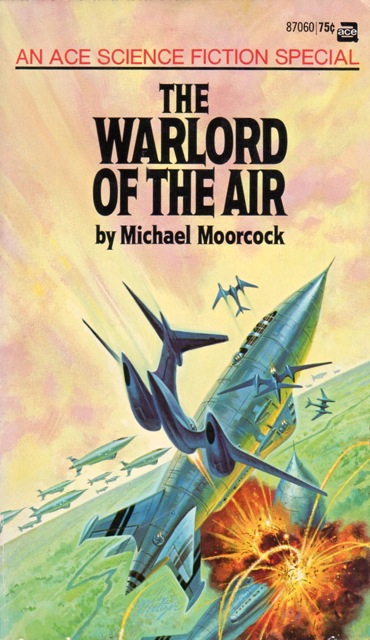
                  Oswald Bastable follows an Edwardian-era British soldier flung into a series of alternate futures where the First World War never happened, opening with The Warlord of the Air (1971). Across the trilogy he drifts between rival empires and airship wars, an early and influential example of what would later be called steampunk. Michael Moorcock's A Nomad of the Time Streams trilogy sits within his wider multiverse of linked worlds and recurring avatars of the Eternal Champion.

                • WU
                  Worldwar Universe

                  series · 8 books · 1994

                  similar byalternate historyscience fiction+2 more

                • Cover of Pandora's Planet
                  Pandora's Planet

                  series · 11 books · 1956

                  completed

                  similar byfunnyscience fiction+2 more

                • Cover of Eden (Harry Harrison)
                  Eden (Harry Harrison)

                  series · 5 books · 1984

                  completed

                  similar byalternate historyscience fictionalternate earth+2 more

                  Harry Harrison's Eden trilogy imagines an Earth where the dinosaurs never died out, evolving instead into the Yilane, a technologically advanced reptilian civilization that shares the planet uneasily with early humans. West of Eden (1984) introduces the clash between the two species; Winter in Eden and Return to Eden carry it forward as a shifting climate forces both sides to adapt or die. It's an alternate-evolution saga more than a conventional dinosaur adventure.

                • Cover of The Years of Rice and Salt
                  The Years of Rice and Salt

                  Kim Stanley Robinson · standalone novel · 2002

                  similar bycolonialismalternate historyscience fiction

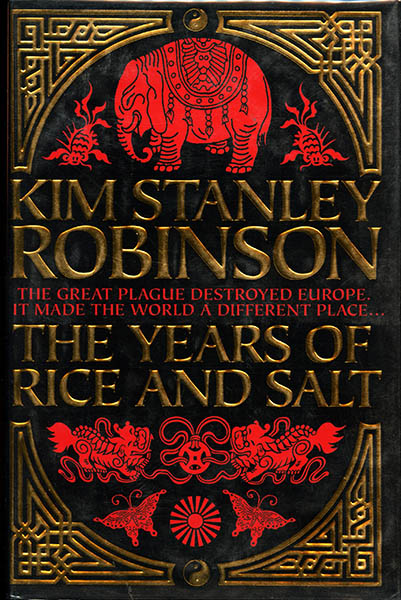
                  What if the Black Death had killed nearly everyone in Europe instead of a third of it? Kim Stanley Robinson opens on that premise with a Mongol scout named Bold, who finds a Hungarian city emptied by plague and only narrowly escapes execution meant to contain the contagion; sold into slavery, he ends up serving aboard a Chinese treasure fleet alongside a young African companion. From there the novel follows a recurring cast of souls, reincarnated across centuries and identifiable book to book by the first letter of their names, through an alternate history in which Islamic and Chinese civilizations, not a devastated Europe, shape the world's future.

                • Cover of Lost Continent of Atlantis
                  Lost Continent of Atlantis

                  series · 5 books · 2005

                  similar byalternate historyalternate earth+1 more

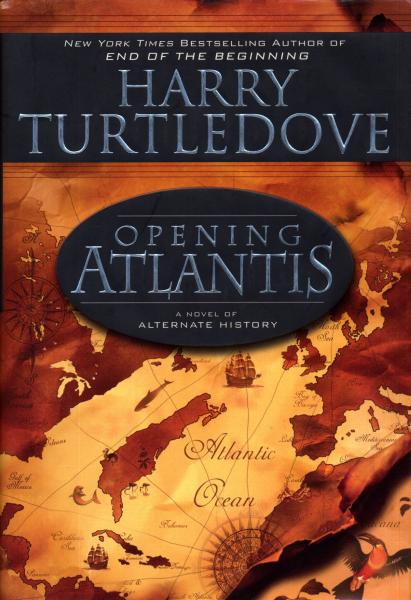
                  Atlantis is an alternate history series written by Harry Turtledove. The point of divergence occurs around 85 million years ago when the eastern portion of the North American continent splits off from the rest of the continent and forms Atlantis, a separate continent farther east in the Atlantic Ocean.

                • Cover of The Crystal Empire
                  The Crystal Empire

                  L. Neil Smith · standalone novel · 1986

                  similar bycolonialismalternate historyscience fictionpolitical intriguealternate earth

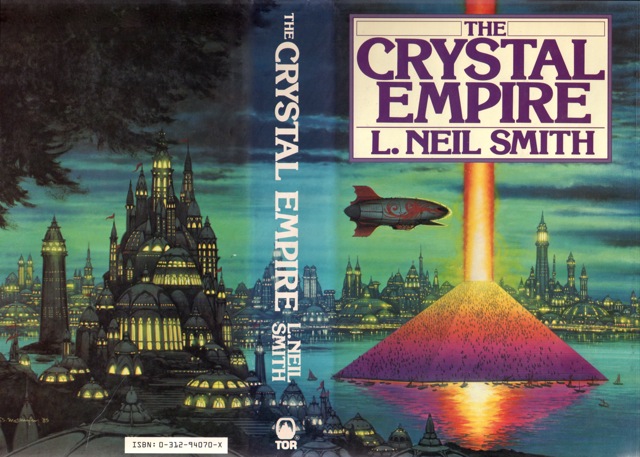
                  The Crystal Empire is a 1986 novel by American science fiction and alternate history writer L. Neil Smith. It is set in an alternate universe that shares with Kim Stanley Robinson's The Years of Rice and Salt, Robert Silverberg's The Gate of Worlds and Harry Turtledove's In High Places a point of divergence where the Black Death kills much more of Europe's population than it did in reality, opening the way for a Muslim conquest of Europe. The plague also decimates the Mongol Empire, allowing a Mughal power to arise in the Far East in its place.

                • Cover of Burton Cole
                  Burton Cole

                  series · 2 books · 2011

                  similar bycolonialismalternate historyafrica

                • Cover of A Specter Is Haunting Texas
                  A Specter Is Haunting Texas

                  Fritz Leiber · standalone novel · 1968

                  similar byfunnyscience fictionpolitical intrigue+1 more

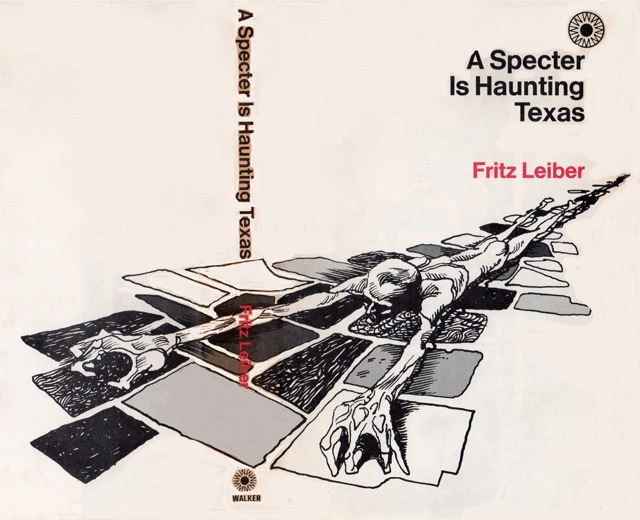
                  A Specter is Haunting Texas is a science fiction novel by American writer Fritz Leiber, first published as a novel in 1969. It was originally published as a three-part serial in the magazine Galaxy Science Fiction in 1968. The title appears to be based on a Karl Marx quote from The Communist Manifesto: "A spectre is haunting Europe...the spectre of communism."

                • Cover of The New World Order
                  The New World Order

                  Ben Jeapes · standalone novel · 2004

                  similar bycolonialismalternate historyscience fictionpolitical intriguealternate earth

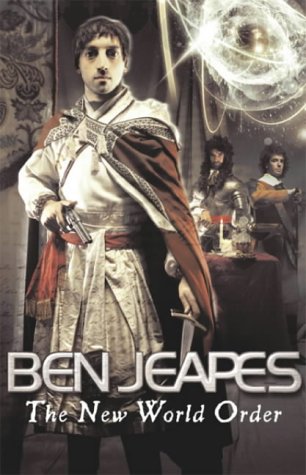
                  Publisher's description: "Having ended England's Civil War between the Roundheads and the Royalists in 1645, the Overlord of the Holekhor, a race from another world, and his half-English son question the decision to colonize the island and convert their beloved English to a faith characterised by witches and myriad gods."

                • Cover of A Planet for Texans
                  A Planet for Texans

                  H. Beam Piper & John J. McGuire · standalone novel · 1958

                  similar byfunnyscience fictionpolitical intrigue+2 more

                  From the first page of the Ace Double: "They moved the Alamo to the stars - and defied all space! - The name of the planet was New Texas; the by-word of the people was independence. s surely as their Lone Star ancestors had fought for their independence, so the citizens of this maverick planet fought against the protective ties of the Solar League. And for Stephen Silk, League ambassador to New Texas, the job was twofold. Getting that pistol-packing populace to admit they needed anyone's protection would have been a tough enough task in itself. But add to it the fact that Silk realized New Texas - as well as the rest of the galaxy - was in danger of a z'Srauff attack, and the job became impossible. It was pretty common knowledge that the z'Srauff were a race evolved from canine-like ancestors - and there wasn't a Texan alive who could be scared by a talkin' dawg! But if Silk couldn't get them to act, and fast, there wasn't going to be a Texan alive, scared or otherwise. The whole universe would be going to the dogs!"

                • Cover of Clash of Eagles / The Hesperian Trilogy
                  Clash of Eagles / The Hesperian Trilogy

                  series · 4 books · 2010

                  similar bycolonialismalternate historyadventurousalternate earth

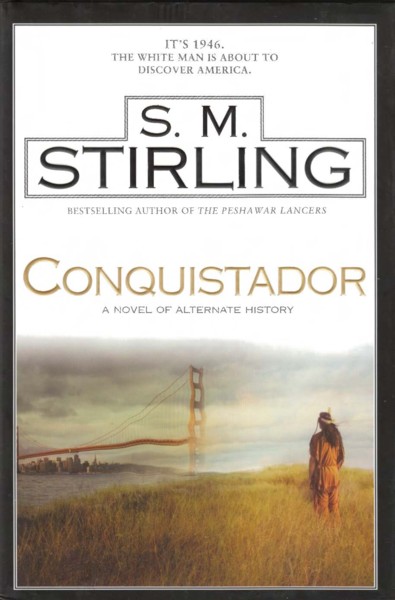
                • Cover of Conquistador
                  Conquistador

                  S. M. Stirling · standalone novel · 2003

                  similar bycolonialismalternate historyscience fictionadventurousalternate earth

                  From the dust jacket flaps of the first edition: Oakland, California, 1946. Ex-soldier John Rolfe, newly back from the Pacific, is about to make a fabulous discovery. It happens with a flip of his shortwave radio switch, a thunder crack of sound, and a blinding light. He blinks his eyes to discover a portal to an alternate world where Europeans have never set foot on the land he knows as America. Able to return a will to the modern world, Rolfe summons the only people with whom he is willing to share his discovery: his war buddies. And tells them to bring their families... What mistakes would you repeat? Los Angeles, twenty-first century. Fish and Game warden Tom Christiansen is involved in the bust of a smuggling operation. What he turns up is something he never anticipated: a photo of authentic Aztec priests decked out in Grateful Dead T-shirts, and a live condor from a gene pool that doesn't correspond to any know in captivity or the wild. These finds soon lead to a woman named Adrienne Rolfe - and a secret that's been hidden for sixty years. As danger brews on both sides, two realities are threatened, and so to are the lives of everyone who crosses the boundary between them...

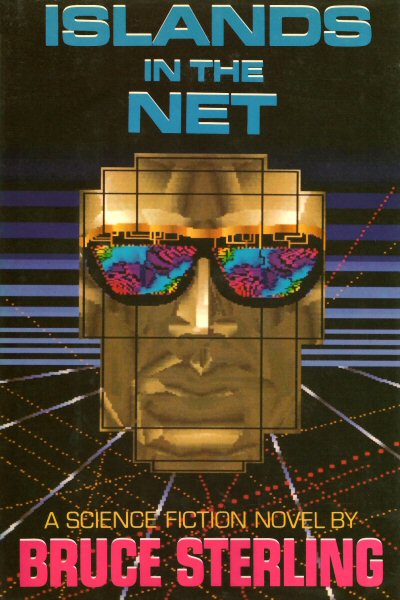
                • Cover of Islands in the Net
                  Islands in the Net

                  Bruce Sterling · standalone novel · 1988

                  similar byafricascience fictionpolitical intrigue+1 more

                  Islands in the Net is a 1988 science fiction novel by American writer Bruce Sterling. It won the John W. Campbell Memorial Award for Best Science Fiction Novel in 1989, and was nominated for both the Hugo and Locus Awards that same year. It offers a view of an early 21st century world, apparently peaceful, with delocalised, networking corporations. The protagonist, swept up in events beyond her control, finds herself in places that are off the net, from a datahaven in Grenada, to a Singapore under terrorist attack, to the poorest and most disaster-struck parts of Africa.

                • Cover of Bilalistan
                  Bilalistan

                  series · 2 books · 2002

                  similar bycolonialismalternate historyscience fictionalternate earth+1 more

                • Cover of Homer Crawford
                  Homer Crawford

                  series · 5 books · 1972

                  completed

                  similar bycolonialismafricascience fictionpolitical intrigue

                • Cover of Draka (S. M. Stirling)
                  Draka (S. M. Stirling)

                  series · 6 books · 1988

                  similar byalternate historyscience fictionalternate earth+1 more

                  The Domination of the Draka is a dystopian science fiction alternate history series by American author S. M. Stirling.

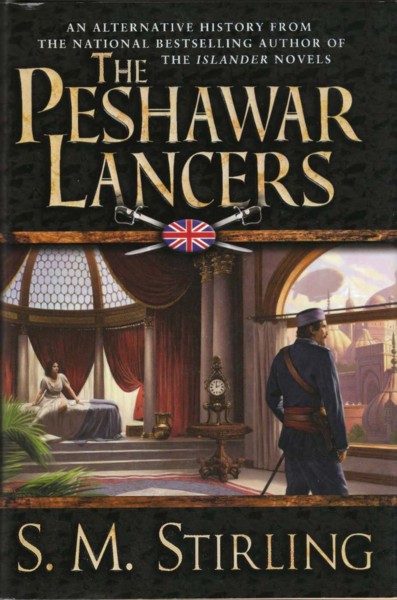
                • Cover of The Peshawar Lancers
                  The Peshawar Lancers

                  series · 2 books · 2002

                  similar byalternate historyadventurousalternate earth+2 more

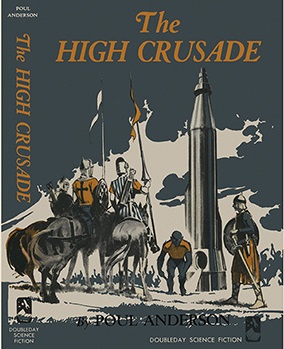
                • Cover of The High Crusade
                  The High Crusade

                  Poul Anderson · standalone novel · 1960

                  similar byfunnyscience fictionalternate historyadventurous

                  The High Crusade is a science fiction novel by American writer Poul Anderson, about the consequences of an extraterrestrial scoutship landing in medieval England. Poul Anderson described the novel as "one of the most popular things I've ever done, going through many book editions in several languages."

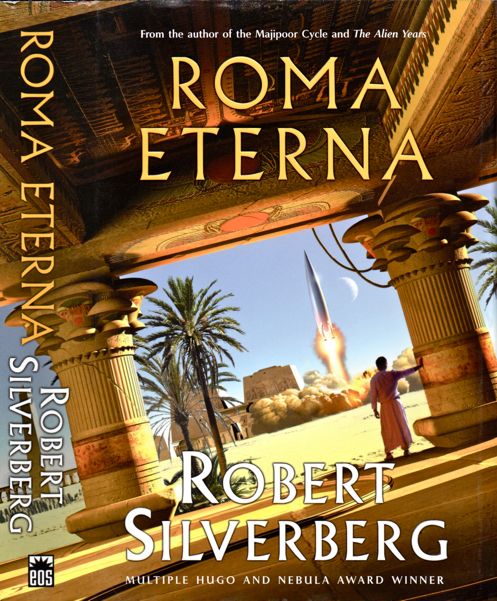
                • Cover of Roma Eterna
                  Roma Eterna

                  series · 11 books · 1989

                  similar byalternate historyalternate earth+3 more

                  Robert Silverberg's Roma Eterna imagines an alternate history in which the Roman Empire never fell and endures into the present day, tracing its long, uneven survival through a sequence of pivotal moments across two millennia. Rather than one continuous plot, the book is a fix-up of ten linked stories, most first published in Asimov's Science Fiction over a fourteen-year span, each set in a different era of this unbroken Rome. It reads as the chronicle of a civilization rather than a story following a single cast of characters.

                • Cover of A Different Flesh
                  A Different Flesh

                  series · 8 books · 1985

                  similar byalternate historyscience fiction+1 more

                  Harry Turtledove's A Different Flesh is a collection of linked alternate-history stories imagining a North America where Homo erectus survived alongside Ice Age megafauna into the modern era, taking the ecological and historical place occupied by Native American civilizations in our own timeline. The linked stories follow European contact, exploitation, and study of these surviving hominids across centuries of altered American history, from early colonization through more recent settings. It's anthropological alternate history more concerned with what contact does to the newly "discovered" species than with conventional adventure plotting.

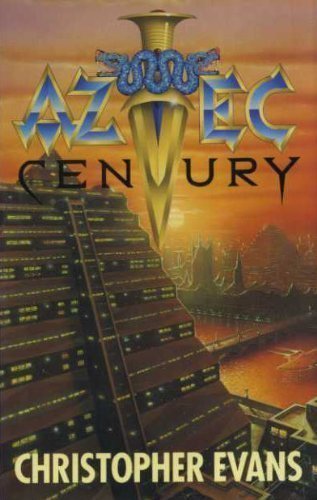
                • Cover of Aztec Century
                  Aztec Century

                  Christopher Evans · standalone novel · 1993

                  similar bycolonialismalternate historyscience fictionpolitical intrigue

                  Aztec Century is a science fiction novel by British writer Christopher Evans. In 1994, Aztec Century won the BSFA Award for Best Novel.

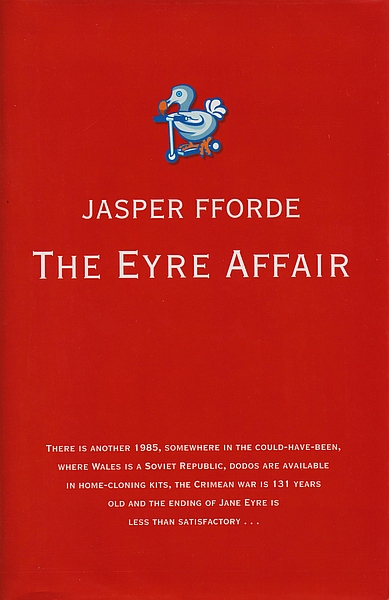
                • Cover of Thursday Next
                  Thursday Next

                  series · 8 books · 2001

                  similar byfunnyscience fiction+2 more

                  Jasper Fforde's Thursday Next novels follow a literary detective in an alternate England who can jump physically into the world of books to solve crimes against literature itself. Beginning with The Eyre Affair, the series mixes metafiction, wordplay and parody across increasingly personal plots as Thursday balances family life with adventures inside classic novels. Fforde has extended the sequence across eight books and several decades, with further installments in the works.