More like C
anchored on:literary & generalour worldearly 20th centurychallengingidentityeurope+1 more
but
- Time's Arrow
Martin Amisstandalone novel1991
similar byidentityliterary & generalchallengingearly 20th centurynonlinear narrativeeurope
From Amazon description: In this icy, knife's-edge story of a life that progresses backward through time, unfolding into one of the darkest episodes of the 20th century, Amis ("at his intriguing, heedful, and powerful best" —Time Out), finds a chillingly original approach to the Holocaust in fiction • From the acclaimed author of Zone of Interest "The narrative moves with irresistible momentum.... [Amis is] a daring, exacting writer willing to defy the odds in pursuit of his art." —Newsday Tod. T. Friendly is living his life in reverse. Doctor Friendly has just died, but he moves "out of blackest sleep" to find himself surrounded by doctors and on the deathbed of a man in whose body he is imprisoned. After weeks of improving in the hospital, he is sent home to his affable, melting-pot, primary-colors existence in suburban America. As Friendly breaks up with his lovers in a prelude to seducing them and mangles his patients before he sends them home, his life races backward toward the one appalling moment in modern history when such reversals make sense. From the fresh-cut lawns of his retirement to the hustle of New York, and then back to the boat which reverses his course to the war-torn Europe Friendly came from, Amis brings the steeliest nerve to the job of realizing the novel's inevitable logic. Trapped in his body from grave to cradle, Friendly's consciousness can only watch as he struggles to make sense of the good doctor's most ambitious project yet—the final solution.
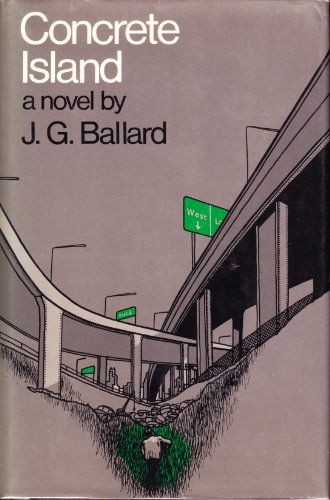
- Concrete Island
J. G. Ballardstandalone novel1974
similar byidentityliterary & generalchallengingour worldeurope
Architect Robert Maitland crashes his car onto a stretch of wasteland trapped between three converging motorways -- visible from thousands of cars, reachable by none of them. Injured and unable to climb back to the road, Maitland adapts to life on what he starts calling the Island, scavenging food thrown from car windows, and discovers he isn't alone: a runaway sex worker hiding in a bunker, and a brain-damaged former circus acrobat, both long past expecting rescue. What begins as a survival story turns into a question of whether Maitland even wants to leave. A J. G. Ballard novel of urban isolation, grouped with Crash and High-Rise.
- Cloud Atlas
David Mitchellstandalone novel2004
similar byidentityliterary & generalchallengingour world
Cloud Atlas, published in 2004, is the third novel by British author David Mitchell. The book combines metafiction, historical fiction, contemporary fiction and science fiction, with interconnected nested stories in different writing styles that take the reader from the remote South Pacific in the 19th century to the island of Hawaii in a distant post-apocalyptic future. Its title references a piece of music by Toshi Ichiyanagi.
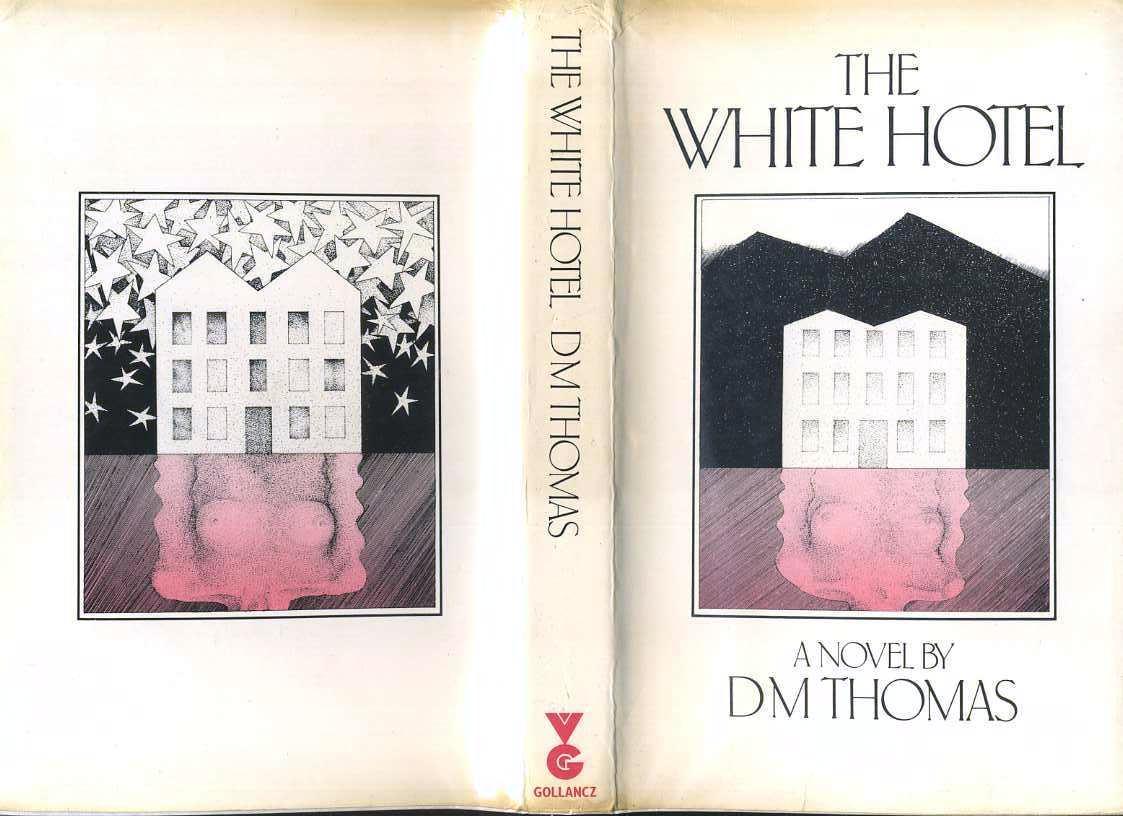
- The White Hotel
D. M. Thomasstandalone novel1981
similar byliterary & generalchallengingearly 20th centurynonlinear narrativeeurope+1 more
The White Hotel is a novel written by the British (Cornish) poet, translator and novelist D. M. Thomas. It was first published in January 1981 by Gollancz in the United Kingdom and in March 1981 by The Viking Press in the United States.
- Red Shift
Alan Garnerstandalone novel1973
similar byidentityliterary & generalchallengingnonlinear narrative
Quoting that 1978 review article by Brian Lee: Red Shift [after The Owl Service] was again about the relationship between two adolescents, but interwoven in their love story were two other strands: one about a group of Roman legionaires 'going tribal' among warring factions of the British (the parallel and the brutal language are obviously those of the Americans among the Viet Cong and the Viet Minh); the other strand is about the massacre of a village on the Welsh border during the Civil War.{{BREAK}} Undoubtedly, Red Shift is a brilliantly written and gripping book. The difficulty about it is that Garner makes no concessions to his readers (and on the book jacket he makes it clear that it is for children). It is told almost entirely in cryptic conversation with minimal clues to the identity of the speakers. He switches from strand to strand of the story without warning. The book cannot be understood and appreciated at one hasty reading. It is worth serious study, but will children persevere? In her introduction to the 1973 edition of Children's Books of the Year, critic and reviewer Elaine Moss says: Spurred on by the publication of Alan Garner's literary crossword puzzle Red Shift ... many of us asked ourselves where children's publishing should end and adult begin? For Children's Books of the Year I have drawn the line below Red Shift and excluded it ... Alan Garner, in deliberately choosing an avant-garde form, is also choosing an advanced, sophisticated audience for his book. Alan Garner himself seems to have come around to this view. This year a television adaptation of Red Shift was screened at peak viewing time with no mention of the fact that it was originally published as a children's novel. [end quotation from the review article; ellipses by Lee]
- The Satanic Verses
Salman Rushdiestandalone novel1988
similar byidentityliterary & generalchallengingour worldnonlinear narrative
The Satanic Verses is the fourth novel by British–Indian writer Salman Rushdie. First published in September 1988, the book was inspired by the life of the Islamic prophet Muhammad. As with his previous books, Rushdie used magical realism and relied on contemporary events and people to create his characters. The title refers to the Satanic Verses, a group of Quranic verses about three pagan Meccan goddesses: Allāt, Al-Uzza, and Manāt. The part of the story that deals with the satanic verses was based on accounts from the historians al-Waqidi and al-Tabari.
- Mother Night
Kurt Vonnegut & Jr.standalone novel1962
similar byidentityliterary & generalour worldeurope+1 more
Howard W. Campbell Jr., an American playwright who grew up in Germany, writes his memoirs from an Israeli prison cell awaiting trial for war crimes. As the Nazis rose to power, Campbell stayed on, married a German actress, and was recruited by an American agent to serve as a double agent, broadcasting Nazi propaganda over the radio while secretly passing coded intelligence to the Allies. The catch, as Campbell tells it, is that he became one of the war's most effective propagandists in the process, whatever his loyalties. Kurt Vonnegut's darkest novel asks what a person becomes when the mask he wears for a cause is indistinguishable from his face.
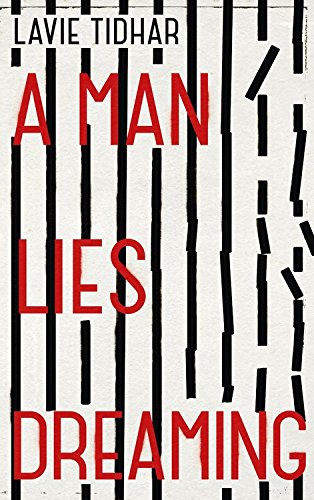
- A Man Lies Dreaming
series3 books2014
similar byidentityliterary & generalchallengingearly 20th centuryeurope
Lavie Tidhar's A Man Lies Dreaming imagines Adolf Hitler as a washed-up private detective working the seedy edges of 1930s London, in a timeline where the Nazi party never took power in Germany, framed by chapters narrated from within a concentration camp. The Lunacy Commission returns to related alternate-history material. The novel uses pulp-noir pastiche to force an uncomfortable historical inversion rather than playing it for straightforward genre fun.
- Gravity's Rainbow
Thomas Pynchonstandalone novel1973
similar byliterary & generalchallengingearly 20th centurynonlinear narrativeeurope
Gravity's Rainbow is a 1973 postmodern novel by Thomas Pynchon. The narrative is set primarily in Europe at the end of World War II and centers on the design, production and dispatch of V-2 rockets by the German military. In particular, it features the quest undertaken by several characters to uncover the secret of a mysterious device, the Schwarzgerät, which is slated to be installed in a rocket with the serial number "00000".
- Briefing for a Descent Into Hell
Doris Lessingstandalone novel1971
similar byidentityliterary & generalchallengingour world
Briefing for a Descent into Hell is a psychological novel by British novelist Doris Lessing. It was first published in 1971 and shortlisted for that year's Booker Prize.
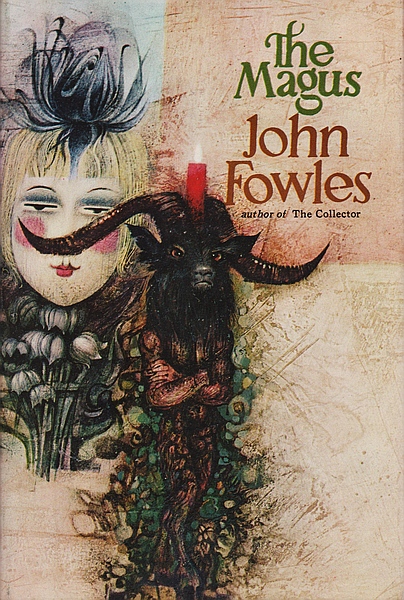
- The Magus
John Fowlesstandalone novel1965
similar byidentityliterary & generalchallengingeurope
The Magus (1965) is a postmodern novel by British author John Fowles, telling the story of Nicholas Urfe, a young British graduate who is teaching English on a small Greek island. Urfe becomes embroiled in the psychological illusions of a master trickster, which become increasingly dark and serious. Considered an example of metafiction, it was the first novel written by Fowles but his third book to be published. A revised edition was published in 1977.
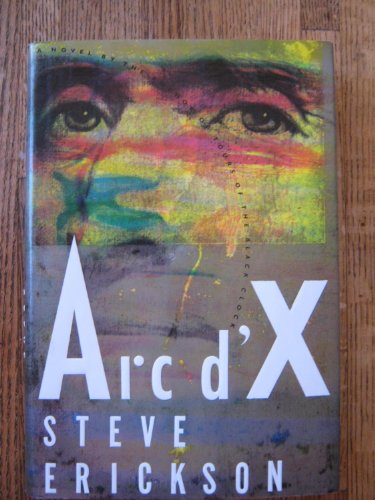
- Arc d'X
Steve Ericksonstandalone novel1993
similar byidentityliterary & generalchallengingour worldnonlinear narrative
Arc d'X (1993), by Steve Erickson, is an avant-pop novel. Upon publication in 1993 it received wide attention particularly from other novelists such as Thomas Pynchon, Tom Robbins and William Gibson, and has been translated into Italian, Japanese and other languages.
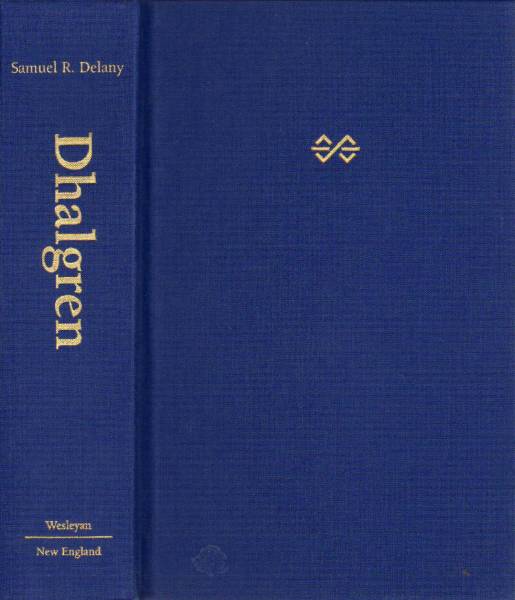
- Dhalgren
Samuel R. Delanystandalone novel1975
similar byidentitychallengingliterary & general
Dhalgren is a 1975 science fiction novel by American writer Samuel R. Delany. It features an extended trip to and through Bellona, a fictional city in the American Midwest cut off from the rest of the world by an unknown catastrophe. It is number 33 on the 20th Century's Greatest Hits: 100 English-Language Books of Fiction list.
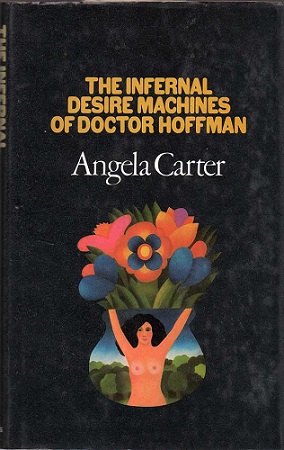
- The Infernal Desire Machines of Doctor Hoffman
Angela Carterstandalone novel1972
similar byidentityliterary & generalchallenging
The Infernal Desire Machines of Doctor Hoffman, published in the United States as The War of Dreams, is a 1972 novel by Angela Carter. This picaresque novel is heavily influenced by surrealism, Romanticism, critical theory, and other branches of Continental philosophy. Its style is an amalgam of magical realism and postmodern pastiche. The novel has been called a theoretical fiction, as it clearly engages in some of the theoretical issues of its time, notably feminism, mass media and the counterculture.
- The Research Magnificent
H. G. Wellsstandalone novel1915
similar byidentityliterary & generalearly 20th centuryeurope+1 more
The Research Magnificent is a 1915 novel by H. G. Wells.
- My Education: A Book of Dreams
William S. Burroughsstandalone novel1995
similar byidentityliterary & generalchallengingour worldnonlinear narrative
My Education: A Book of Dreams (1995) (ISBN 0-14-009454-7) is the final novel by William S. Burroughs to be published before his death in 1997. It is a collection of dreams, taken from various decades, along with a few comments about the war on drugs and paragraphs created with the cut-up technique. The book is dedicated to Michael Emerton.
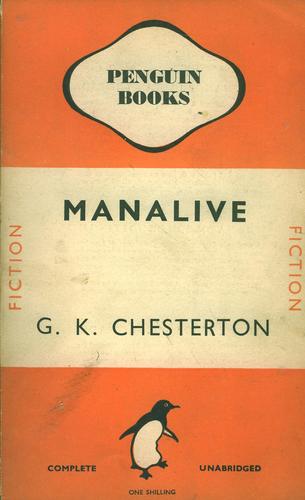
- Manalive
G. K. Chestertonstandalone novel1912
similar byidentityliterary & generalearly 20th centuryour world
Manalive (1912) is a book by G. K. Chesterton detailing a popular theme both in his own philosophy, and in Christianity, of the "holy fool", such as in Dostoevsky's The Idiot and Cervantes' Don Quixote.
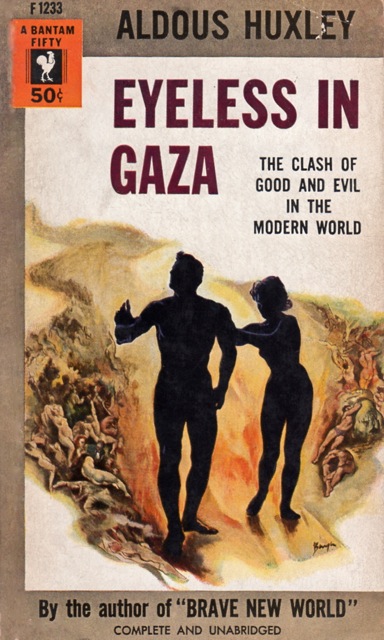
- Eyeless in Gaza
Aldous Huxleystandalone novel1936
similar byidentityliterary & generalchallengingearly 20th centurynonlinear narrativeeurope
The clash of good and evil in the modern world
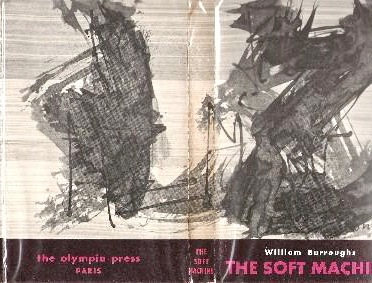
- Nova Trilogy
series3 books1961
completed
similar byliterary & generalchallengingour worldnonlinear narrative+1 more
William S. Burroughs's Nova Trilogy -- The Soft Machine, The Ticket That Exploded, and Nova Express -- extends the fragmented cut-up and fold-in techniques he developed with Brion Gysin into a paranoid, hallucinatory sequence about control itself. Across the three books, the shadowy Nova Mob, personified as viral, parasitic forces of language and image, is opposed by an equally strange Nova Police, in an allegory for how societies are manipulated through media and addiction. It continues directly from the world and method of Naked Lunch rather than telling a conventional linear story.
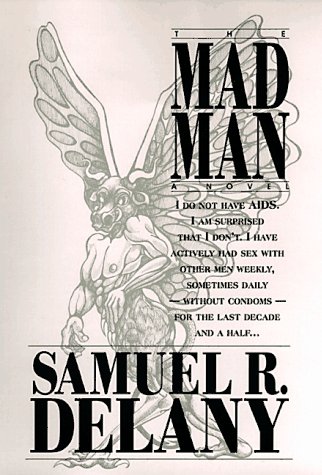
- The Mad Man
Samuel R. Delanystandalone novel1994
similar byidentityliterary & generalchallengingour world
The Mad Man is a literary novel by Samuel R. Delany, first published in 1994 by Richard Kasak. In a disclaimer that appears at the beginning of the book, Delany describes it as a "pornotopic fantasy". It was originally published in 1994, republished and slightly revised in 1996, and republished again with significant changes in 2002 and again in an e-book version with further corrections in 2015. Delany considers the 2015 version the definitive edition.
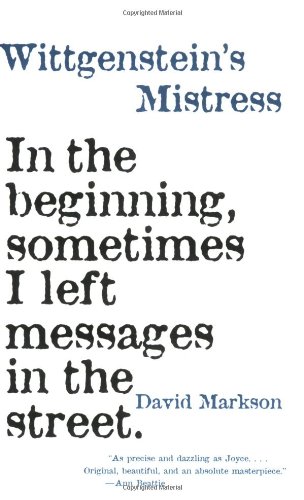
- Wittgenstein's Mistress
David Marksonstandalone novel1988
similar byidentityliterary & generalchallengingour world
Wittgenstein's Mistress is a 1988 experimental novel written by David Markson. A highly stylized work in the tradition of Samuel Beckett, the novel is mainly a series of statements made in the first person. The protagonist is a woman named Kate who believes herself to be the last human on earth; though her statements shift quickly from topic to topic, the topics often recur, and often refer to Western cultural icons, ranging from Zeno to Beethoven to Willem de Kooning. Readers familiar with Ludwig Wittgenstein's Tractatus Logico-Philosophicus will recognize stylistic similarities to that work.
- The Private Memoirs and Confessions of a Justified Sinner
James Hoggstandalone novel1824
similar byidentityliterary & generalchallenging
The Private Memoirs and Confessions of a Justified Sinner: Written by Himself: With a detail of curious traditionary facts and other evidence by the editor is a novel by the Scottish author James Hogg, published anonymously in 1824.
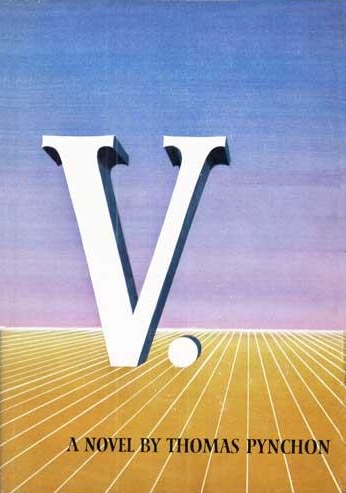
- V.
Thomas Pynchonstandalone novel1963
similar byidentityliterary & generalchallenging
V. is a satirical postmodern novel and the debut novel of Thomas Pynchon, published on March 18, 1963. It describes the exploits of a discharged U.S. Navy sailor named Benny Profane, his reconnection in New York with a group of pseudo-bohemian artists and hangers-on known as the Whole Sick Crew, and the quest of an aging traveler named Herbert Stencil to identify and locate the mysterious entity he knows only as "V." It was nominated for a National Book Award.
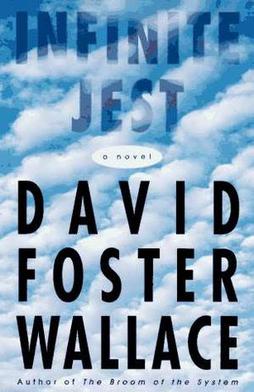
- Infinite Jest
David Foster Wallacestandalone novel1996
similar byidentityliterary & generalchallengingnonlinear narrative
Infinite Jest is a 1996 novel by American writer David Foster Wallace. Often considered Wallace’s magnum opus, the book has been categorized as an encyclopedic novel due to its unconventional narrative structure and hundreds of extensive endnotes, some with footnotes of their own.