More like Calculated Risk
anchored on:science fictiontime travelour worldmid 20th centuryidentitymysterious+2 more
but
- Who?
Algis Budrysstandalone novel1958
similar byidentitymid 20th centuryscience fictionmysterioustense
Who? is a 1958 science fiction novel by American writer Algis Budrys, set during the Cold War. It was originally a short story, inspired, as its author claimed, by a Kelly Freas painting he had seen in the offices of the magazine Fantastic Universe, and published in that magazine in April 1955.
- Flashforward
Robert J. Sawyerstandalone novel1999
similar byidentityscience fictionmysterioustenseour worldtime travel
Flashforward is a science fiction novel by Canadian author Robert J. Sawyer first published in 1999. The novel is set in 2009. At CERN, the Large Hadron Collider accelerator is performing a run to search for the Higgs boson. The experiment has a unique side effect; the entire human race loses their consciousness for about two minutes. During that time, nearly everyone sees themselves roughly twenty-one years and six months in the future. Each individual experiences the future through the senses of their future self. This "flashforward" results in countless deaths and accidents involving vehicles, aircraft, and any other device needing human control at the time of the experiment. The novel was adapted into the 2009 television series FlashForward.
- Quicksand
John Brunnerstandalone novel1967
similar byidentitymid 20th centuryscience fictiontenseour worldbritish isles+1 more
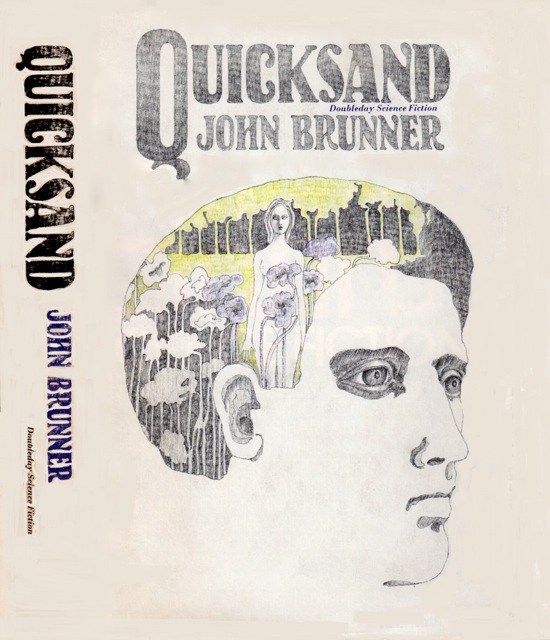
A British psychiatrist in a deadening job and a deadening marriage gets a mysterious patient; a petite young woman who speaks an unrecognizable language and is unfamiliar with the common objects, sights, and behaviors of normal life, yet who is able to quickly and easily cripple or kill a large man with her bare hands when she feels threatened. He feels more than professional concern for the woman, who he believes is not actually mentally ill but is in fact a more unusual case.
- Century Rain
Alastair Reynoldsstandalone novel2004
similar byidentitymid 20th centuryscience fictionmysterious+2 more
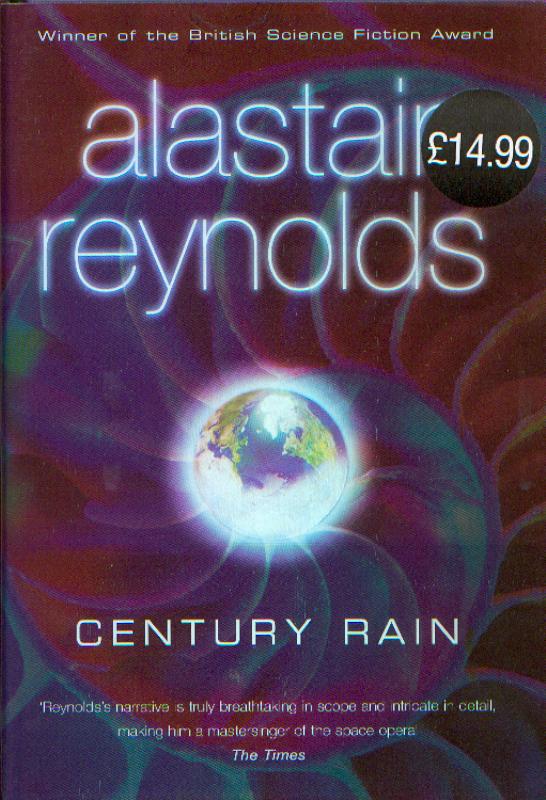
Century Rain is a 2004 noir science fiction alternative history mystery novel by Welsh author Alastair Reynolds (ISBN 0-575-07436-1).
- Beyond the Barrier
Damon Knightstandalone novel1964
similar byidentityscience fictionmysterioustensetime travel+1 more
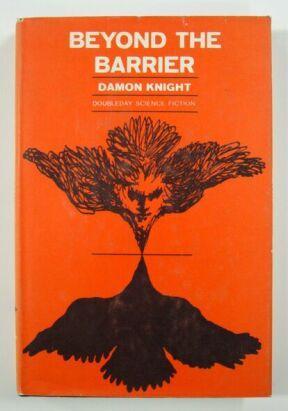
From the front flap of the Doubleday first edition: "Gordon Naismith was a physics professor at a large California university. The year was 1980, and by means of the university's duplicator he could personally teach in nine different classrooms simultaneously. Naismith was an average man in all but two respects: the reflexes were extraordinarily quick, and four years before in a plane crash he had lost all memory of his earlier life. Neither difference seemed important until one day a very unusual student in one of his classes asked a disturbing, extracurricular question: "Professor, what is a zug?" The question triggered a series of violent incidents, and soon Naismith himself, as well as the police, were beginning to wonder if the duplicator had reproduced him a tenth time. The answer lay ten thousand years in the future."
- Sirius: A Fantasy of Love and Discord
Olaf Stapledonstandalone novel1944
similar byidentitymid 20th centuryscience fictionour world+1 more
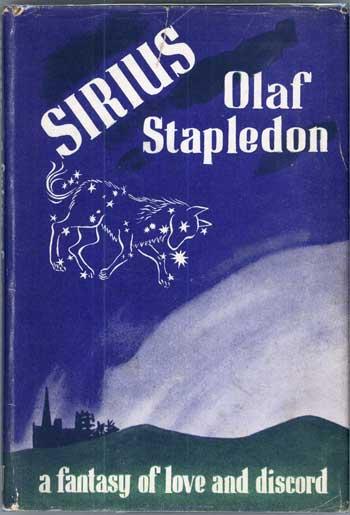
Sirius is a 1944 science fiction novel by the British philosopher and author Olaf Stapledon, whose title character is a dog named Sirius with humanlike intelligence. A sense of existential questioning suffuses the book, as the author delves into aspects of Sirius's psyche. The novel deals with many human issues through Sirius and his experiences, his unusual nature, his ideas and his relationships with humans. The characters go to great lengths to prevent Sirius from becoming a circus-type wonderdog, and instead, they seek to develop Sirius's character much like a family would create and foster that of a human child.
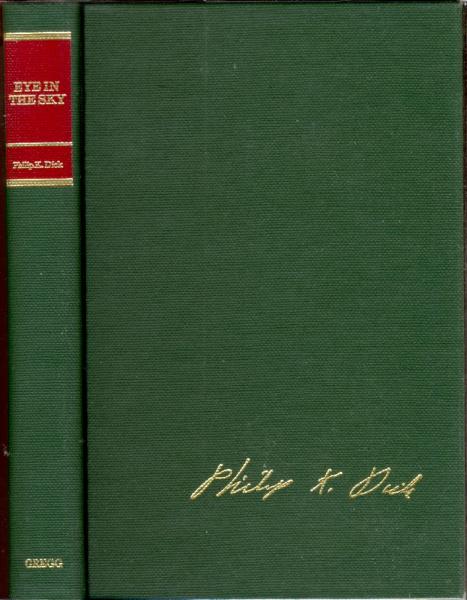
- Eye in the Sky
Philip K. Dickstandalone novel1957
similar byidentitymid 20th centuryscience fictionour world
Eight visitors touring a particle-accelerator facility are caught in a catastrophic malfunction, a collapsing platform, a burst of radiation, that leaves them all unconscious. When protagonist Jack Hamilton, an engineer recently fired over Red Scare-era suspicions about his wife's politics, comes to, the world around him is subtly, then not so subtly, wrong: physics bends to fit one fellow victim's religious convictions, then to another's paranoid fears, as the group cycles through what turn out to be shared hallucinations built from each other's private belief systems. Philip K. Dick's early novel about how differently people actually see the same world.
- Time Out of Joint
Philip K. Dickstandalone novel1959
similar byidentityscience fictionmysteriousour world
Time Out of Joint is a science fiction novel by American writer Philip K. Dick, first published in novel form in the United States in 1959. An abridged version was also serialised in the British science fiction magazine New Worlds Science Fiction in several installments from December 1959 to February 1960.
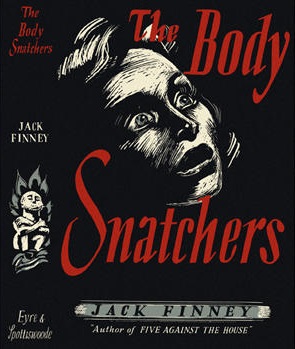
- The Body Snatchers
Jack Finneystandalone novel1955
similar byidentitymid 20th centuryscience fictiontense
The Body Snatchers is a science fiction horror novel by American writer Jack Finney, originally serialized in Collier's magazine in November–December 1954 and published in book form the following year.
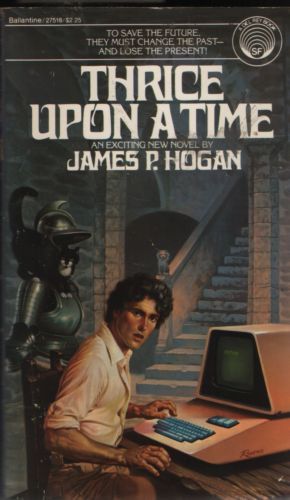
- Thrice Upon a Time
James P. Hoganstandalone novel1980
similar byidentityscience fictiontime travelmysteriousbritish isles
Amazon: When Murdoch was summoned to his grandfather's isolated Scottish castle, he had no idea of the old man's latest discovery -- nor where it would lead him. Sir Charles, a genius in far-out physics, had found a flaw in the law of conservation of energy; in any process, an incredibly tiny increment of energy escaped -- back through time! Using this "tau" radiation, he could send messages into the past. But Murdoch discovered records of messages he knew he had never sent. Were many futures possible? Could a message from Future X alter the past -- and thus wipe out Future X? But who would be foolish enough to send a message that could eliminate his own existence?
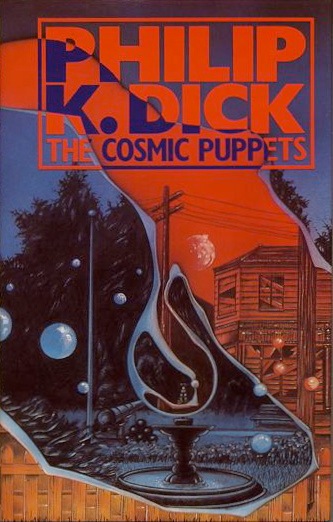
- The Cosmic Puppets
Philip K. Dickstandalone novel1957
similar byidentitymid 20th centuryscience fictionmysterious
The Cosmic Puppets is a science fiction novel by American author Philip K. Dick, published in 1957. It is a novelization of a short story initially published in the December 1956 issue of Satellite Science Fiction. The Cosmic Puppets was first published as a novel by Ace Books as one half of Ace Double D-249, bound dos-à-dos with Sargasso of Space by Andrew North .The story follows Ted Barton, a man who returns to his childhood hometown of Millgate, Virginia, only to discover that it has been erased from all official records and is now a surreal place where the laws of reality are distorted. Barton learns that the town is a battleground in a cosmic struggle between two ancient beings, a conflict that has twisted the fabric of his home and the memories of its inhabitants.
- Legion / Stephen Leeds
series5 books2012
similar byidentityscience fictionmysteriousour world+1 more
Legion, or the Stephen Leeds series, is a series of science fiction novellas created by American author Brandon Sanderson. Sanderson authored the first three stories : Legion, first published on August 31, 2012, Legion: Skin Deep in November 2014, and Legion: Lies of the Beholder in September 2018. Death and Faxes, co-authored by Max Epstein, David Pace, and Michael Harkins, was released in June 2022. The books have received favorable reviews.
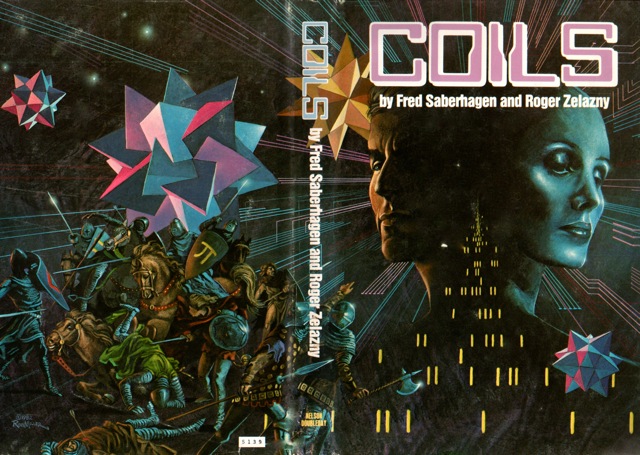
- Coils
Roger Zelazny & Fred Saberhagenstandalone novel1982
similar byidentityscience fictionmysterioustenseour world
A man discovers that his memories of childhood are false, and when he begins to investigate his psychiatrist is murdered and his girlfriend is kidnapped. As his actual past begins to return to his memory, he realizes that he has the ability to mentally connect to computer circuitry, an ability he used to use for illegal advantage for the corporation which employed him, along with a small group of others with paranormal powers. He concludes that the corporation is behind all this and sets out to find and rescue his girlfriend while the corporation pursues him.
- Total Recall
Piers Anthonystandalone novel1989
similar byidentityscience fictionmysterioustenseour world
Douglas Quail is haunted by nightmares of Mars, covert missions and a life more glamorous than his earthbound 2089 AD reality. So he turns to "Recall", manufacturers of synthetic memories. They implant a memory into him but he soon finds that his nightmares are true memories.
- Double, Double
John Brunnerstandalone novel1969
similar byidentityscience fictionmysterioustenseour world
Double, Double is a science fiction novel by John Brunner, first published in the United States as an original paperback by Ballantine Books in 1969 and reprinted in 1979 as a Del Rey paperback. A hardcover edition was released in the British market in 1971 by Sidgwick & Jackson.
- The Multi-Man
John Russell Fearnstandalone novel1954
similar byidentitymid 20th centuryscience fictionmysterioustensebritish isles
'Research biologist Jeffrey Dexter's experiments produce a creature capable of endless reproduction, yet lacking human reserve. Then he's murdered - swept aside by the ruthless Multi-Man. Dexter's wife's claim, that the new Jeffrey Dexter is only a cellular duplicate of her husband, finds her incarcerated in an institution for the mentally unbalanced. Dexter No 2 develops his plans: famous people are duplicated to nominate Dexter's Presidency in a new scientific era. Can Scotland Yard Detective Sergeant Hanbuy hold him back?' from Ulverscroft.Com.
- The Oracle Year
Charles Soulestandalone novel2018
similar byidentityscience fictionmysterioustenseour world
Awakening from a dream with more than one hundred predictions about the future in his head, an unassuming Manhattan bassist becomes one of the world's most powerful men and hides his identity behind an online persona that is targeted by greedy corporations and dangerous enemies.
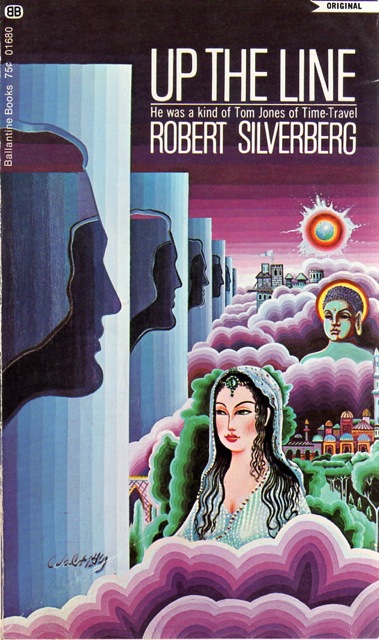
- Up the Line
Robert Silverbergstandalone novel1969
similar byidentityscience fictiontime travelour world
Up the Line (1969) is a time travel novel by American science fiction author Robert Silverberg. The plot revolves mainly around the paradoxes brought about by time travel and is considered an example of the more sexually-permissive era of late 1960s American science-fiction, a reflection of the counterculture of its day. It was nominated for a Nebula Award for Best Novel in 1969 and a Hugo Award for Best Novel in 1970 but lost to Ursula K. Le Guin's The Left Hand of Darkness both times.
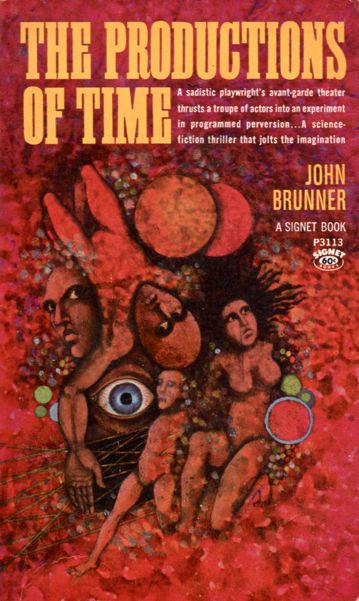
- The Productions of Time
John Brunnerstandalone novel1967
similar byidentityscience fictionmysteriousour worldtime travel
The Productions of Time is a science fiction novel by English writer John Brunner, first published in The Magazine of Fantasy and Science Fiction in 1966. It appeared in book form the following year, published by Signet Books.
- Venus Plus X
Theodore Sturgeonstandalone novel1960
similar byidentitymid 20th centuryscience fiction+1 more
Charlie Johns wakes in a featureless silver room with no memory of how he got there and a watch that's inexplicably running backward. He's been brought, how and by whom is never explained to him, to Ledom, an isolated, technologically advanced society whose members are all both male and female and have done away with fixed sex roles entirely. Guides walk him through Ledom's customs and machinery while making clear he's there to judge them before he can go home. Interwoven with Charlie's tour are chapters following an ordinary mid-century American family, setting the utopia against the world it's implicitly critiquing. Theodore Sturgeon's provocative novel about gender and social design.
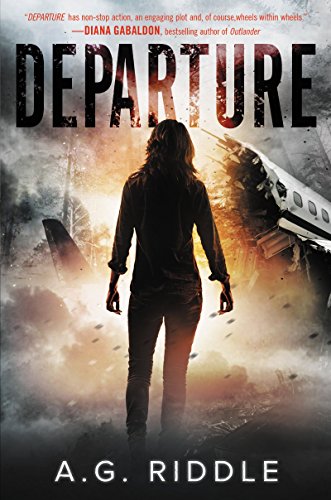
- Departure
A. G. Riddlestandalone novel2014
similar bytime travelmysterioustenseour worldscience fiction+1 more
"The world's past and future rests in the hands of five unwitting strangers in this definitive edition of A. G. Riddle's time-traveling, mind-bending speculative thriller. En route to London from New York, Flight 305 suddenly loses power and crash-lands in the English countryside, plunging a group of strangers into a mysterious adventure that will have repercussions for all of humankind.Struggling to stay alive, the survivors soon realize that the world they've crashed in is very different from the one they left. But where are they? Why are they here? And how will they get back home? Five passengers seem to hold clues about what's really going on: writer Harper Lane, venture capitalist Nick Stone, German genetic researcher Sabrina Schroeder, computer scientist Yul Tan, and Grayson Shaw, the son of a billionaire philanthropist.As more facts about the crash emerge, it becomes clear that some in this group know more than they're letting on--answers that will lead Harper and Nick to uncover a far-reaching conspiracy involving their own lives. As they begin to piece together the truth, they discover they have the power to change the future and the past--to save our world. or end it. A wildly inventive and propulsive adventure full of hairpin twists, Departure is a thrilling tale that weaves together power, ambition, fate, memory, and love, from a bold and visionary talent"--
- The Werewolf Principle
Clifford D. Simakstandalone novel1967
similar byidentityscience fictionmysteriousour world
From the back cover of the first DAW printing: "Andrew Blake, found in a space capsule on a distant planet, was brought back to an unfamiliar Earth, where antigravity devices had replaced the wheel and houses talk and even fly! Yet nothing was as strange as Blake's own feelings. Tormented by eerie sensations and a loss of memory, he didn't know who he really was nor exactly where he came from. His destiny only began to grow frighteningly clear when he met a weird, tassel-eared creature who darkly hinted at the truth about Blake's origins. Slowly Blake became aware of the long hushed-up "Werewolf Principle," a scientific theory buried in the past, which held the key to Blake's own fate - and the future of the human race..."
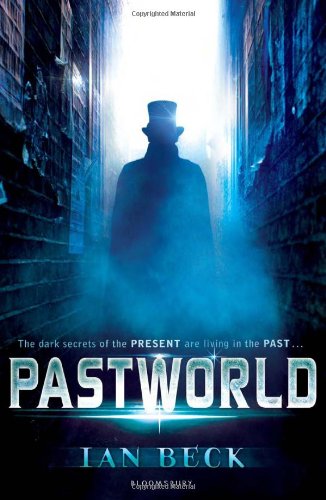
- Pastworld
Ian Beckstandalone novel2009
similar byidentityscience fictionmysterioustensebritish isles
What if all of London were really an amusement park—a whole city returned to Victorian times to entertain visitors from the twenty-first century? That's the wildly original premise of Ian Beck's Pastworld, a high-stakes mystery set in a simulated past. Eve is a lifelong resident of Pastworld who doesn’t know she’s living in a theme park until a mysterious threat forces her to leave home. Caleb is a visiting tourist who finds the lawlessness of the past thrilling—until he suddenly becomes a fugitive from an antiquated justice system. And in the midst of it all, in the thick London fog a dark and deadly figure prowls, claiming victim after victim. He’s the Fantom, a creature both of the past and of the present, in whose dark purpose Caleb and Eve will find their destinies combined. Page-turning, complex, and haunting, Pastworld masterfully exposes the human experience of the past, of violence, of technology, and of entertainment.
- The Light of Other Days
Arthur C. Clarke & Stephen Baxterstandalone novel2000
similar byscience fictiontenseour worldtime travel+2 more
An industrialist devises a technique to use tiny wormholes as light pipes to enable viewing of any event anywhere; and subsequently it becomes possible to use them to view any event in the past as well. The effects on society are enormous.