More like Cankerous
but
- A Song of Ice and Fire
series14 books1996
part of World of Ice and Fire
similar by+1 more
A Song of Ice and Fire is a series of high fantasy novels by the American author George R. R. Martin. Martin began writing the first volume, A Game of Thrones, in 1991, and published it in 1996. Martin, who originally envisioned the series as a trilogy, has released five out of seven planned volumes. The most recent entry in the series, A Dance with Dragons, was published in 2011. Since then, Martin has been working on the sixth novel, titled The Winds of Winter. A seventh novel, A Dream of Spring, is planned to follow.
- Stephen King multiverse
universe46 books1967
Start hereThe Gunslinger · Start here
similar by+1 more
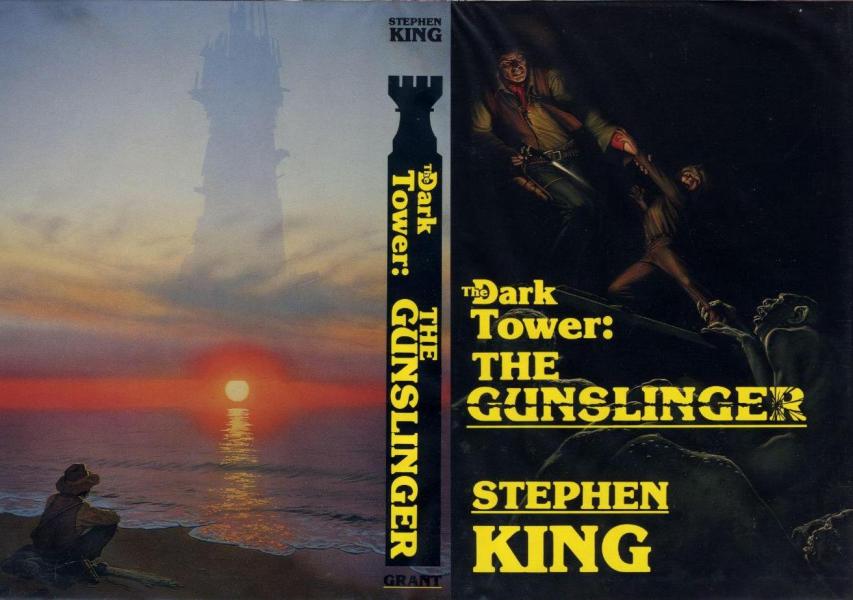
The man in black fled across the desert, and the gunslinger followed. So begins the long walk of Roland Deschain, last of an order of knight-errant pistoleers, across a land that has "moved on" — where the compass points drift, dead machines rot toward sentience, and the weave of what's real wears thin. His quest is the Dark Tower itself: a spire standing at the hub of every world that exists, the linchpin that holds all of them back from ruin. Roland's road runs eight volumes, from The Gunslinger through the closing Dark Tower, with the later, interleaved tale The Wind Through the Keyhole folding a story-within-a-story back into his youth. Along the way he draws a ka-tet — a fellowship bound by fate, not choosing — through doorways between worlds: a heroin-shackled New Yorker, a woman of two minds, a boy who dies twice. The Tower is also the secret axle around which the wider shelf of King's work turns; threads from The Stand, 'Salem's Lot and beyond wind quietly toward it. Expect a mongrel of Western, high fantasy, horror and decayed science fiction, told in a dusty, incantatory dialect all its own — ka, thankee-sai, the world that has moved on. This is King at his most mythic and most personal, a decades-spanning circle that rewards a patient reader. Begin at the beginning: The Gunslinger, then walk forward in publication order. There are other worlds than these — but this door opens first.
- Malazan
universe36 books1999
Start hereMalazan Book of the Fallen · Start here
similar by+1 more
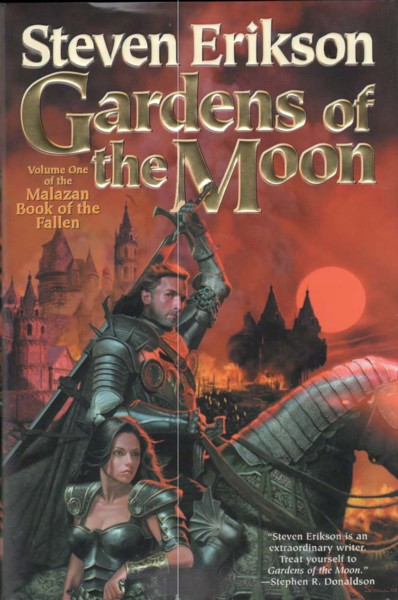
Pity the historian who tries to map this world; pity more the god who thinks he rules it. The Malazan Empire marches across continents on the boots of its common soldiers, and above them move Ascendants — mortals grown into something like gods, and gods worn thin as old coin. Magic is drawn from Warrens, roads of power threaded through reality; the dead keep their grudges; and every empire, however vast, is a wager against time. This is epic fantasy told from the mud, where a sapper cracking a joke weighs as much as an immortal settling a feud older than the human race. The world began as a tabletop campaign two friends built in the 1980s, and it still moves by two hands. Steven Erikson's ten-volume Malazan Book of the Fallen is the spine — Gardens of the Moon, Deadhouse Gates, Memories of Ice, on through The Crippled God — each book a near-standalone campaign that only later reveals how it locks together. Ian C. Esslemont walks the same years from a different vantage in his Novels of the Malazan Empire (Night of Knives, Return of the Crimson Guard onward). Around them stand the prequels: Erikson's Kharkanas Trilogy, archaic and elegiac, chronicling a doomed elder people, and Esslemont's brisker Path to Ascendancy, following two adventurers before they became legends. Erikson's Witness sequence carries the tale forward, and novellas of the genial necromancers Bauchelain and Korbal Broach supply the gallows comedy. Nothing is explained to you; comprehension is earned, and that is the pleasure. The themes run deep — compassion set against cruelty, the toll empires charge, civilizations that fall and are mourned. Begin where the saga does, with Erikson's Gardens of the Moon, and read the ten in publication order; the prequels are for the already-initiated. Trust that confusion is the price of entry.
- After Such Knowledge
series7 books1953
completed
similar by+1 more
After Such Knowledge is James Blish's loosely linked trilogy on the costs of forbidden or dangerous knowledge. It opens with A Case of Conscience, in which a Jesuit scientist studying a seemingly sinless alien race is forced to weigh what he finds against his own faith, continues with the historical novel Doctor Mirabilis about the medieval friar and scientist Roger Bacon, and closes with the two-part Black Easter, in which a magician is hired to loose Hell's demons upon the world for a single day. The three books share a theme rather than a continuous plot or cast.
- Bod Owens
series3 books2007
similar bydark fantasy
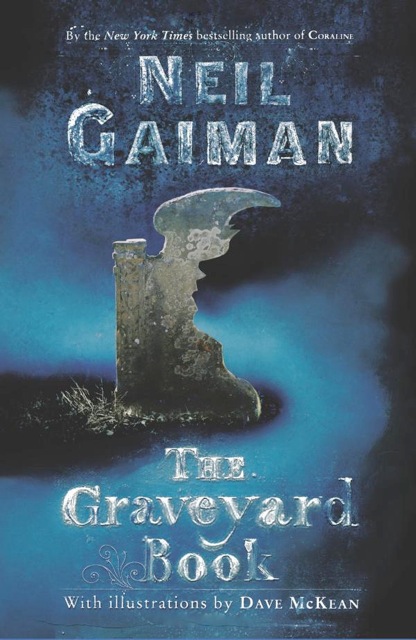
The Graveyard Book follows Nobody "Bod" Owens, a toddler who escapes the murder of his family and is raised among the ghosts of an old English graveyard, absorbing their otherworldly customs while a threat from his past waits beyond the gates. Neil Gaiman's 2008 novel won both the Newbery and Carnegie Medals, and illustrator P. Craig Russell later adapted it into a two-volume graphic novel. Bod's story spans the original novel and that graphic-novel retelling rather than continuing in a prose sequel.
- Inferno
series2 books1976
similar by+1 more
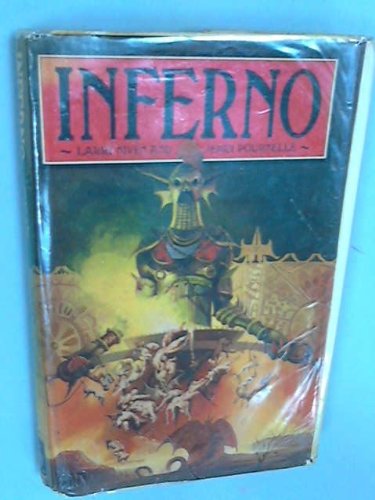
In Inferno, Larry Niven and Jerry Pournelle send a science fiction writer to his death and drop him into a modern-dress version of Dante's nine circles of Hell, where he must reason his way toward understanding why he has been damned. The 1976 novel was nominated for both the Hugo and Nebula awards, and the authors returned to the same character decades later in a sequel, Escape from Hell. Together the two books form a self-contained pair rather than an open-ended series.
- Malazan Book of the Fallen
series20 books1999
part of Malazan
similar bydark fantasy
The Malazan Book of the Fallen is a series of epic fantasy novels written by the Canadian author Steven Erikson. The series, published by Bantam Books in the U.K. and Tor Books in the U.S., consists of ten volumes, beginning with Gardens of the Moon (1999) and concluding with The Crippled God (2011). Erikson's series presents the narratives of a large cast of characters spanning thousands of years across multiple continents.
- The Old Kingdom / Abhorsen milieu
series11 books1995
similar by+1 more
The Old Kingdom, or Abhorsen in North America and the UK, is a fantasy series written by Australian author Garth Nix. It originated in 1995 with the novel Sabriel and has continued in the novels Lirael (2001), Abhorsen (2003), Goldenhand (2016), and Terciel & Elinor (2021), as well as a prequel novel titled Clariel (2014). The Old Kingdom also consists of the novella The Creature in the Case (2005) and various other short fiction.
- The Ocean at the End of the Lane
Neil Gaimanstandalone novel2013
similar bydark fantasy
A seven year old farm boy becomes friends with an eleven year old neighbor girl, who he discovers is ancient and powerful and intervenes when a nonhuman entity attempts to make a home in earthly reality.
- The Green Mile
Stephen Kingstandalone novel1996
similar by+1 more
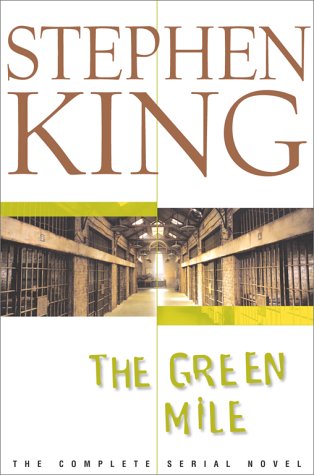
The Green Mile is a 1996 serial novel by American writer Stephen King. It tells the story of death row supervisor Paul Edgecombe's encounter with John Coffey, an unusual inmate who displays inexplicable healing and empathetic abilities. The serial novel was released in six volumes before being republished as a single-volume work. The book is an example of magical realism. The subsequent film adaptation was a critical and commercial success. The Green Mile won the Bram Stoker Award for Best Novel in 1996. In 1997, The Green Mile was nominated as Best Novel for the British Fantasy Award and the Locus Award. In 2003 the book was listed on the BBC's The Big Read poll of the UK's "best-loved novel".
- Weaveworld
Clive Barkerstandalone novel1987
similar bydark fantasy
Weaveworld is a 1987 dark fantasy novel by English writer Clive Barker. It is about a magical world, known as the Fugue, which has been hidden inside a carpet to safeguard it from both inquisitive humans and hostile supernatural foes. Two humans become embroiled in the fate of the Fugue, attempting to save it from those who seek to destroy it. The book was nominated in 1988 for the World Fantasy Award for Best Novel.
- Bag of Bones
Stephen Kingstandalone novel1998
similar by+1 more
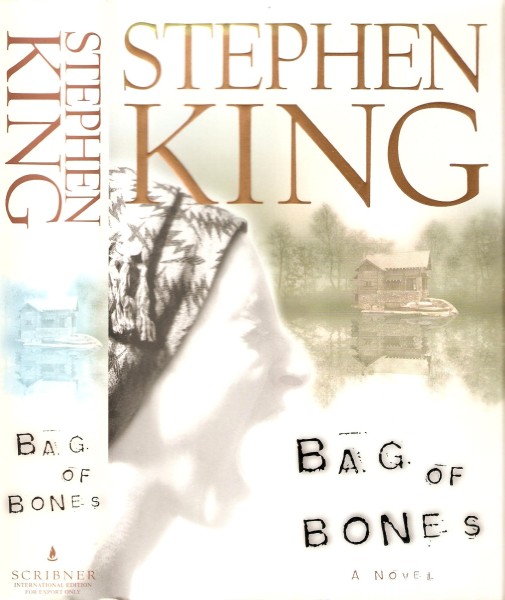
Bag of Bones is a 1998 horror novel by American writer Stephen King. It focuses on an author who suffers severe writer's block and delusions at an isolated lake house four years after the death of his wife. It won the 1999 Bram Stoker Award for Best Novel, the 1999 British Fantasy Award for Best Novel, and the 1999 Locus Award for Best Dark Fantasy/Horror Novel.
- The Elric Saga
series72 books1961
part of Moorcock's Multiverse
similar by+1 more
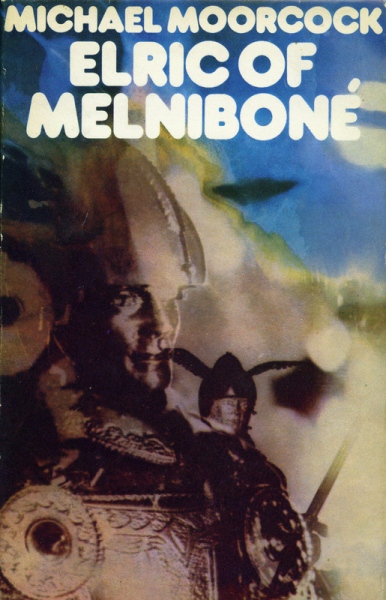
The Elric Saga is Michael Moorcock's sequence of sword-and-sorcery novels about Elric, the frail, sorcery-dependent last emperor of the ancient island empire of Melniboné, who abandons his throne to wander a violent, magic-soaked world carrying a sentient, soul-drinking black sword. Core entries such as Elric of Melniboné, The Sailor on the Seas of Fate, and Stormbringer trace his path toward a self-destructive destiny, and Elric was later folded into Moorcock's wider Eternal Champion multiverse, of which this saga is one strand.
- Talisman
series4 books1984
similar by+1 more
Stephen King and Peter Straub's The Talisman follows twelve-year-old Jack Sawyer as he crosses between our world and the Territories, a parallel realm, on a cross-country quest to save his dying mother. The 2001 sequel Black House catches up with Jack decades later as a retired detective drawn into a serial-murder case in small-town Wisconsin that pulls the Territories back into his life. A third book, Other Worlds Than These, was announced in 2025 to complete the trilogy.
- The Witches
Roald Dahlstandalone novel1983
similar bydark fantasy
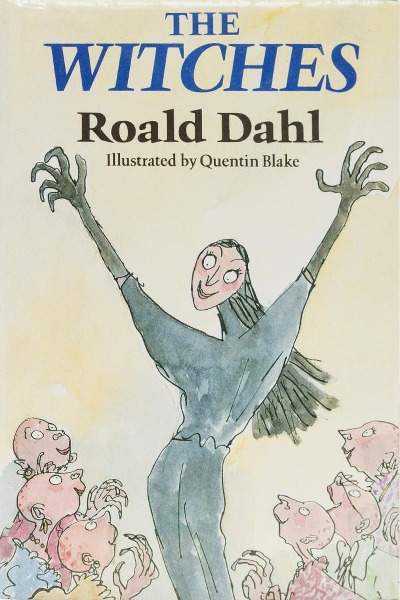
The Witches is a 1983 children's novel by British author Roald Dahl. A dark fantasy, the story is set partly in Norway and partly in England, and features the experiences of a young English boy and his Norwegian grandmother in a world where child-hating societies of witches secretly exist in every country. The witches are ruled by the vicious and powerful Grand High Witch, who arrives in England to organise her plan to turn all of the children there into mice.
- Necroscope
series26 books1982
completed
similar by+1 more
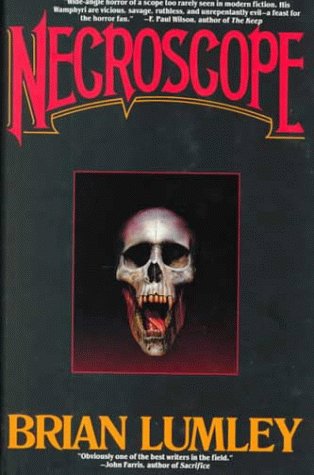
Brian Lumley's Necroscope opens an eighteen-book horror saga (1982-2017) centered on Harry Keogh, a man who can speak with the dead. Harry turns that gift against Thibor Ferenczy, a vampire buried since the Middle Ages, and against Ferenczy's agent Boris Dragosani, a Soviet spy who has learned to tear secrets from corpses in pursuit of world domination. Later volumes follow Harry's descendants and successors through further wars against the vampiric Wamphyri, across sequel trilogies and story collections.
- Tales of the Flat Earth
series14 books1978
completed
similar by+1 more
Tales from the Flat Earth is a fantasy series by British writer Tanith Lee. The novels take inspiration from One Thousand and One Nights and are similarly structured as interconnected stories. The series has been well received, and Death's Master, the second book in the series, won the British Fantasy Award for Best Novel in 1980.
- Word and the Void
series5 books1991
part of Shannara
similar by+1 more
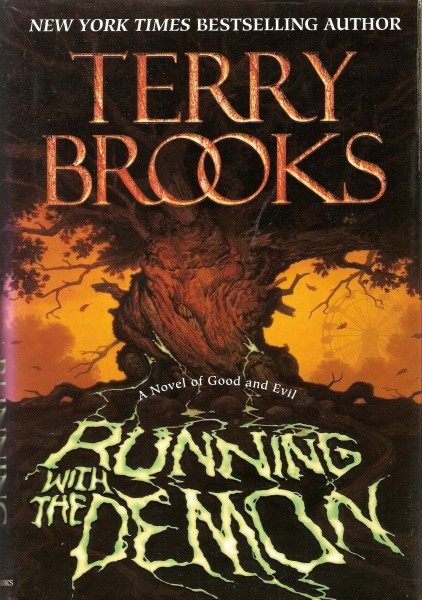
Shannara is a series of high fantasy novels written by Terry Brooks, beginning with The Sword of Shannara in 1977 and concluding with The Last Druid which was released in October 2020; there is also a prequel, First King of Shannara. The series blends magic and primitive technology and is set in the Four Lands, which are identified as Earth long after civilization was destroyed in a chemical and nuclear holocaust called the Great Wars. By the time of the prequel First King of Shannara, the world had reverted to a pre-industrial state and magic had re-emerged to supplement science.
- A Night in the Lonesome October
Roger Zelaznystandalone novel1993
similar bydark fantasy
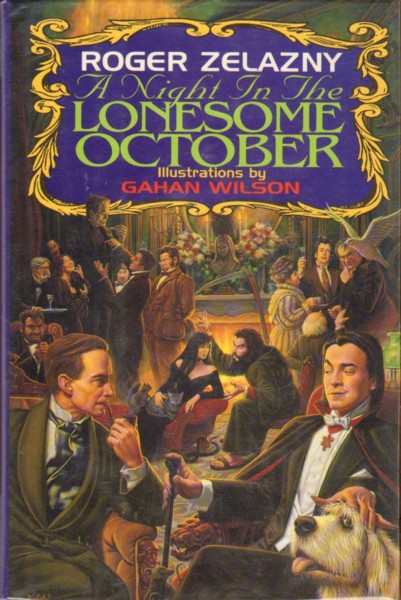
A Night in the Lonesome October is a novel by American writer Roger Zelazny published in 1993, near the end of his life. It was his final book, and one of his five personal favorites.
- Horns
Joe Hillstandalone novel2010
similar bydark fantasy
WorldCat: After his childhood sweetheart is brutally killed and suspicion falls on him, Ig Parrish goes on a drinking binge and wakes up with horns on his head, hate in his heart, and an incredible new power which he uses in the name of vengeance.
- The Thief of Always
Clive Barkerstandalone novel1992
similar bydark fantasy
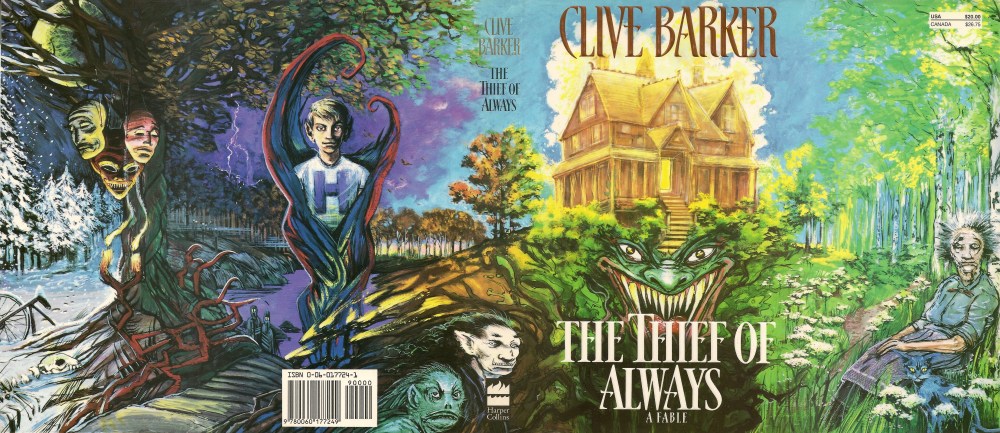
Ten-year-old Harvey Swick is bored out of his mind when a stranger named Rictus offers him a way out: Holiday House, a place where every season of the year -- Christmas, Halloween, summer -- arrives in a single glorious day, one after another. Once inside, Harvey meets fellow children Wendell and Lulu, the elderly caretaker Mrs. Griffin and her cats, and settles into a routine of enchantment that starts to feel too perfect. Their host, the mysterious Mr. Hood, never appears, rumors about a figure called Carna keep surfacing, and something in the nearby lake is very wrong. One of Clive Barker's best-known standalone books, written for younger readers.
- Darwath
series7 books1982
similar by+1 more
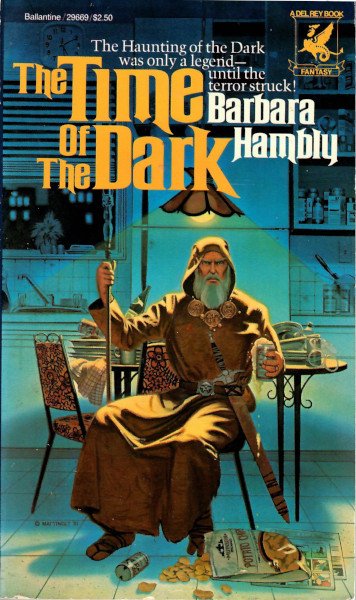
Darwath begins with two modern-day Californians pulled through a portal into a dying medieval world under siege from the Dark, shape-shifting monsters that hunt by night and are driving civilization underground. The Time of the Dark, The Walls of Air, and The Armies of Daylight make up the original trilogy; Barbara Hambly returned to the same characters decades later in Mother of Winter and Icefalcon's Quest. It's portal fantasy built around practical, unglamorous survival rather than chosen-one heroics.
- Book of the Art
series3 books1989
similar bydark fantasy
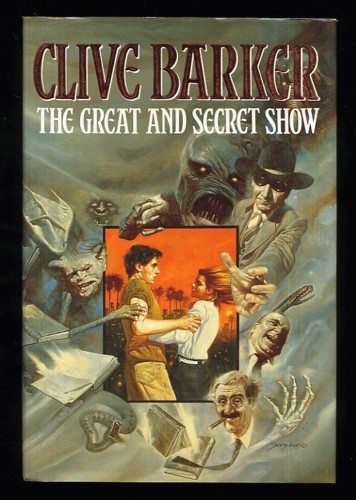
The Art was meant to be a trilogy about a hidden order guarding the boundary between our world and Quiddity, a dream-sea shared by all sleeping minds, but Clive Barker only completed two of its three volumes. The Great and Secret Show follows a decades-long feud between two men who discover Quiddity's power - one seeking to harness it, the other to protect it - with consequences that distort reality itself; Everville continues the story a generation later. The planned third volume was never published.