More like Captive
anchored on:other star systemsfar futurescience fictionromance
but
- Catteni Sequence
series5 books1970
completed
similar byother star systemsfar futureadventurousscience fictionaliens+1 more
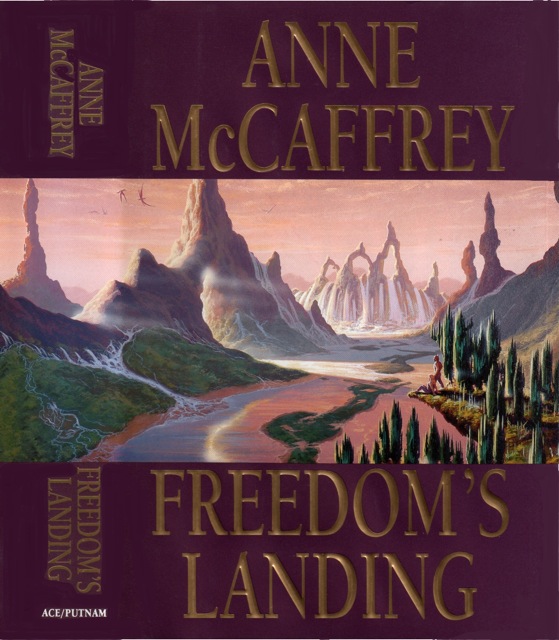
The Catteni series is a tetralogy of science fiction novels by American writer Anne McCaffrey. In this universe, humans are slaves of aliens, the humanoid Catteni. Woven through all four of the books are details of the relationship between Kristin Bjornsen, a former slave, and Zainal, a renegade Catteni.
- Heorot
series4 books1987
similar byother star systemsfar futurescience fiction+3 more
Larry Niven, Jerry Pournelle and Steven Barnes's The Legacy of Heorot strands human colonists on an idyllic-seeming alien world where they discover apex predators -- grendels -- hidden beneath the surface, forcing them to fight for survival. Beowulf's Children continues the colony a generation later as the children born on the planet clash with their parents over how to live alongside the grendels, and a fourth book, Starborn and Godsons, returns to the settlement decades further on. It's hard-SF creature-horror crossed with generational colony drama.
- Tunnel in the Sky
Robert A. Heinleinstandalone novel1955
similar bysurvivalother star systemsfar futureadventurousscience fiction
As the final test of a survivalist/explorer class, teenagers are dumped on an alien planet to use their skills while awaiting pickup. But something has gone wrong, and they find they are on their own.
- Icerigger Trilogy
series3 books1974
part of Humanx Commonwealth
similar bysurvivalother star systemsfar futureadventurousscience fiction+1 more
Alan Dean Foster's Icerigger trilogy, set in his Humanx Commonwealth universe, strands a group of characters on the frozen world of Tran-Ky-Ky, where they get pulled into the local population's fight against a destructive nomadic force. Much of the trilogy follows their overland journey by ice-sailing craft toward the planet's one interstellar outpost, a trek of roughly a year across the ice, as they help the natives survive along the way.
- Brion Brandd
series2 books1962
completed
similar bysurvivalfar futureother star systemsscience fiction+1 more
Harry Harrison's Brion Brandd books are two loosely connected science fiction adventures: Planet of the Damned (1962), a Hugo Award finalist, and its later sequel Planet of No Return. Both follow the same troubleshooting protagonist sent to defuse crises on different alien worlds, but the two stories are self-contained rather than parts of one continuous plot.
- Beast Master
series5 books1959
similar byfar futureother star systemsscience fiction+2 more
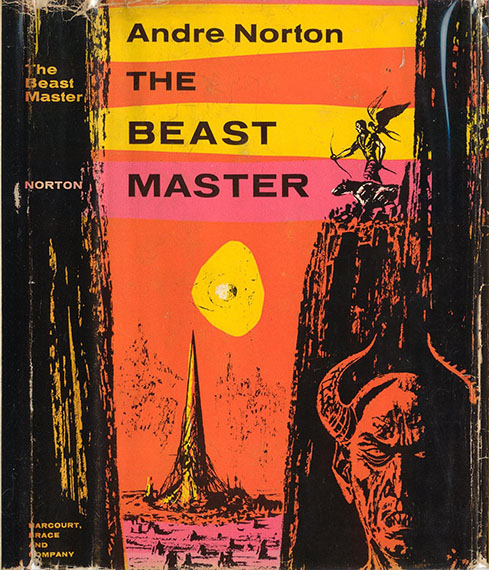
Andre Norton's Beast Master series follows Hosteen Storm, a Navajo veteran of an interstellar war who resettles an alien frontier world with a team of specially trained animals bonded to him by touch-telepathy. The original novels came from Norton in the late 1950s-60s; Lyn McConchie added further installments decades later, extending Storm's story on the frontier planet Arzor. It's frontier-adventure science fiction built around an unusual human-animal partnership.
- Deathworld
series4 books1960
completed
similar bysurvivalfar futureother star systemsadventurousscience fiction
Deathworld is the name of a series of science fiction novels by American writer Harry Harrison, including the books Deathworld, Deathworld 2 and Deathworld 3, plus the short story "The Mothballed Spaceship". The central hero is a gambler who becomes involved with colonists of an extremely hostile planet.
- Of Man and Manta
series3 books1968
similar byother star systemsadventurousscience fictionfar futurealiens+1 more
Of Man and Manta is a trilogy of science fiction novels written by Piers Anthony. It consists of the three books: Omnivore (1968), Orn (1970), and 0X (1975).
- Mesklin
series6 books1954
completed
similar byother star systemsfar futureadventurousscience fictionaliens+1 more
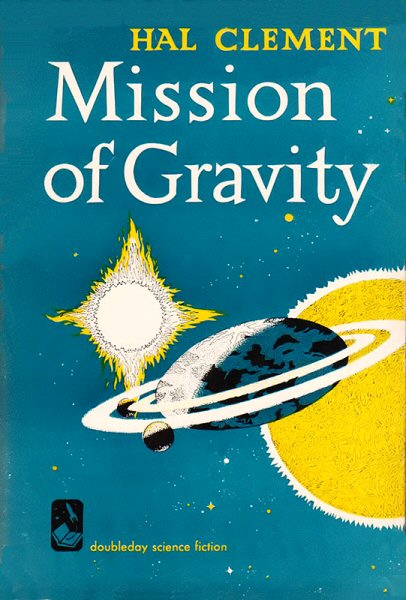
Mesklin is a fictional planet created by Hal Clement and used in a number of his hard science fiction stories, starting with Mission of Gravity (1954). Alongside the novel's original 1953 serialization in Astounding Science Fiction, Clement published an essay titled "Whirligig World" on how he designed the planet to have the properties he wanted. The idea came from an object that was at the time believed to exist in the 61 Cygni system, and which might represent an extrasolar planet.
- The Stars My Destination
Alfred Besterstandalone novel1956
similar bysurvivalfar futureadventurousscience fictionother star systems
When a passing spaceship refuses to rescue the lone survivor from the drifting wreck of another ship, he dedicates his life to discovering who made that decision and exacting his revenge, in the process altering human history and his own character.
- Wolfling
Gordon R. Dicksonstandalone novel1969
similar byother star systemsfar futureadventurousscience fictionaliens+1 more
From the flaps of the Baen/SFBC edition: "Is Earth merely the lost colony of a superior race? - She was well over six feet tall, and beautiful in a sculpted, abstract way. She had skin the color of white onyx, and her eyes... her eyes were large and feline - a startling lemon yellow in color. She was the Princess Afuan, one of the High-born, and she had chosen the Earthman Kim Keil to return to the Throne World with her - for she had decided that his performance in the bull-ring might amuse the Emperor. She didn't know that Jim was a bull-fighter only by virtue of six months' intensive training, nor that the bull was programmed - his behavior following and impressively fierce but unswerving pattern. Jim was just another wolfling to Afuan - a lesser being from a backward colony world. Jim, however, was keenly aware that he was playing a role, one which might prove to be extremely dangerous. Up until 10 years earlier, when their first ship had reached Alpha Centauri, the people of Earth hadn't even known that the vast Empire of human-occupied worlds existed. The discovery had been a profound shock. Had we evolved independently? Or were we merely descendants of the Empire's first space pioneers - a lost colony found at last, perhaps with devastating consequences? That's what Jim Keil had to find out. Chosen from among numerous highly qualified candidates - an anthropologist trained, mentally and physically, beyond the limits of his profession - it was his mission to observe the Throne World and the High-born... to determine whether or not they posed a threat to Earth. One thing was apparent from the start. The High-born were superior beings - physically taller and stronger than other humans, endowed with faster reflexes, superior mental capacity... and extraordinary technological resources. Their contempt for the new wolfling in their midst was open, their intrigues complex. An enormous gulf separated the people of the Throne World from Earthlings. But that gulf was not so wide that Jim couldn't recognize an enemy when he met one. Clearly, if he remained merely a passive observer of the High-born, he'd never survive among them."
- Pax / Astra
series2 books1954
completed
similar bysurvivalfar futureadventurousscience fiction+2 more
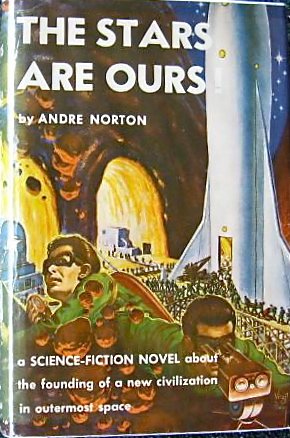
Andre Norton's The Stars Are Ours! (1954) and its sequel Star Born (1957) follow a group of scientists and their families who flee a repressive future Earth to colonize a distant world they name Astra, and then the next generation, who must contend with that world's original inhabitants. Star Flight appears to be a later omnibus or reissue rather than a third original novel.
- Empire of Man
series4 books2001
similar bysurvivalother star systemsfar futureadventurousscience fiction+1 more
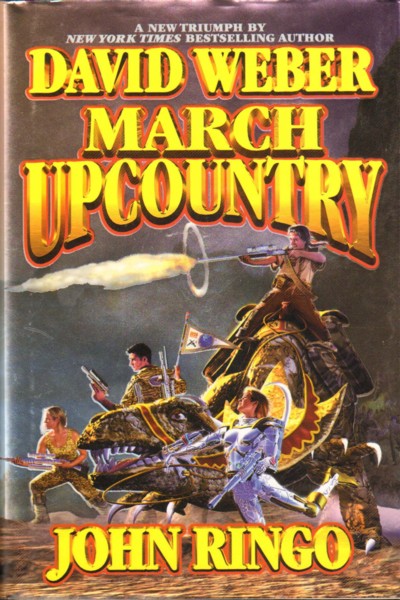
The Empire of Man is a series of science fiction books by David Weber and John Ringo published by Baen Books. It combines elements of space opera and military science fiction.
- West of the Sun
Edgar Pangbornstandalone novel1953
similar bysurvivalother star systemsfar futureadventurousscience fictionaliens
From the back cover of the Dell first paperback printing: "After eleven years in space the Argo landed... West of the Sun ... on the dangerous planet Lucifer. The crew faced and untamed world of huge carnivorous birds with wolverine heads and flashing black teeth; furred, ten-foot tall men; red-skinned man-eating pygmies. They fought for mere survival but - their duty was to colonize and populate the planet - four men and only two women."
- Mindswap
Robert Sheckleystandalone novel1966
similar bysurvivalfar futureadventurousscience fictionother star systemsaliens
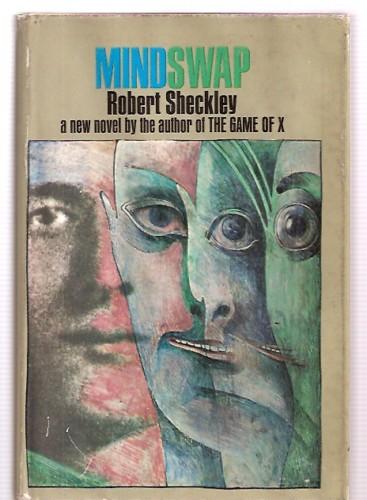
"In the future, interstellar travel to alien worlds will be too expensive for most ordinary people. It certainly is for Marvin, a college student who wants to take a really good vacation. And so he signs up for what he can afford, a mindswap, in which a persons consciousness is swapped into the body of an alien lifeform. But Marvin is unlucky, and finds himself in the body of an interstellar criminal, a body that he has to vacate fast. But that criminal consciousness has stolen Marvins earthly body, and Marvin has to find a body on the black market. Travel from world to world with Marvin, each one crazier than the last, as he keeps finding far-from-ideal bodies in awful situations, just to stay alive"--Cover p. [4].
- Destiny Doll
Clifford D. Simakstandalone novel1971
similar bysurvivalother star systemsfar futureadventurousscience fictionaliens
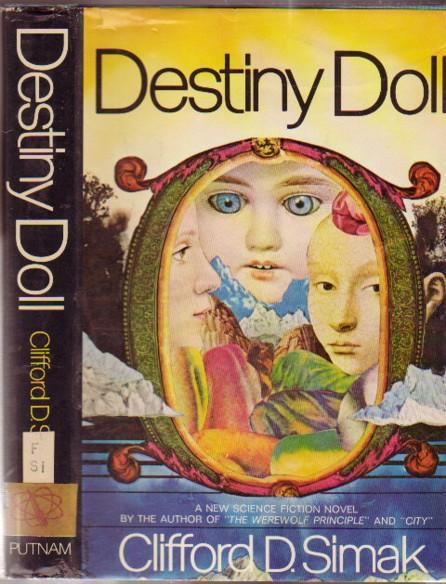
A group of space travelers is trapped on a planet that lured them to land. The story involves their adventures on the planet and the discovery of friendly aliens, robots, and not-so-friendly life forms. There is the alternate reality possibility toward the end of the story.
- The Final Architecture
series6 books2021
similar byfar futureother star systemsadventurousscience fictionaliens+1 more
The Final Architecture is a series of science fiction novels by British writer Adrian Tchaikovsky. It contains the books Shards of Earth, Eyes of the Void, and Lords of Uncreation. The series focuses on a group of humans fighting against the mysterious Architects, who destroy inhabited planets. The series has been well-received critically, with Shards of Earth winning the 2021 BSFA Award for Best Novel. The entire series was a finalist for the 2024 Hugo Award for Best Series.
- Uplift
series5 books1980
part of Uplift Universe
similar byfar futureother star systemsadventurousscience fictionaliens
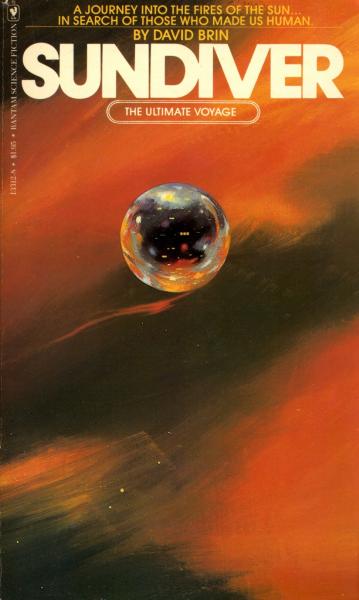
David Brin's Uplift trilogy opens with Sundiver, sending human explorers into the Sun itself, then follows a dolphin-crewed starship on the run from hostile aliens in Startide Rising and a fight over the colony world Garth in The Uplift War. The books sit inside Brin's wider Uplift Universe, built on the idea that spacefaring "patron" species genetically engineer younger "client" species into full sapience, with humanity an anomaly that reached the stars without a patron of its own.
- Hainish
series33 books1964
completed
similar byfar futureother star systemsscience fiction+1 more
The Hainish Cycle consists of a number of science fiction novels and stories by Ursula K. Le Guin. The cycle is set in a future history that features civilizations of human beings on planets orbiting a number of nearby stars, including Terra ("Earth"); these humans are contacting each other for the first time and establishing diplomatic relations, as well as setting up a confederacy under the guidance of the oldest of the human worlds, the peaceful planet Hain. In this history, human beings did not evolve on Earth, but they were instead the result of interstellar colonies planted by Hain in the distant past, after which interstellar travel ceased for an extended period. Some of the human races have new genetic traits, a result of ancient Hainish experiments in genetic engineering; this includes people who can dream while awake, and a world of hermaphroditic people who only enter active sexuality once per month, not knowing which sex will manifest in them. In keeping with Le Guin's narrative approach, she uses varied social and environmental settings to explore the anthropological and sociological outcomes of human evolution in those environments. The author often discounted the characterization of a so-called "Hainish Cycle".
- Forerunner
series5 books1960
completed
similar byother star systemsfar futurescience fiction+2 more
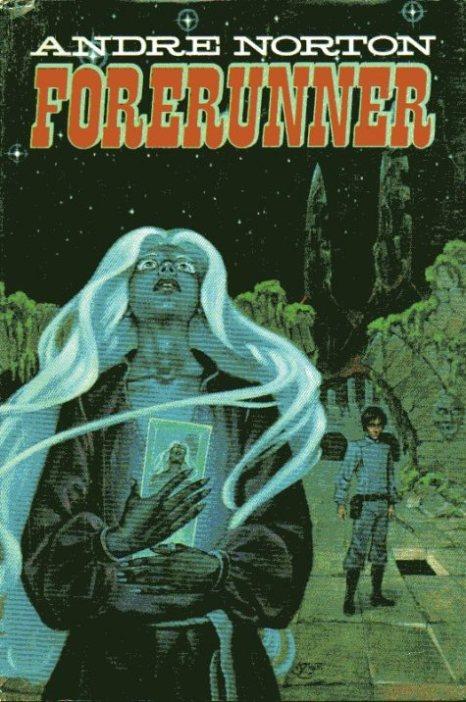
Forerunner and its sequel, Forerunner: The Second Venture, follow a young woman on an alien world who joins forces with an off-world traveler on a dangerous search for relics of a vanished, ancient civilization, hoping to find clues to how civilization itself began. It is a self-contained two-book adventure by Andre Norton rather than part of a longer sequence, later gathered as the omnibus The Forerunner Factor.
- Masters of Everon
Gordon R. Dicksonstandalone novel1979
similar bysurvivalother star systemsfar futureadventurousscience fictionaliens
Jef Robini was heading for Everon with a highly controversial cargo. For eight years on Earth Jef had tried to rear the maolot cub which was the final legacy from his brother. But the maolot had failed to grow into the giant cat that was Everon's largest and most dangerous life-form. And now Jef was returning the creature to its natural home, the colonized planet of Everon. He knew the planet was barren. And that he'd have to fight to survive. But nothing had prepared him for the incomprehensible strangeness, the mind-blasting wonder of the true Masters of Everon.
- Mother of Demons
Eric Flintstandalone novel1997
similar bysurvivalother star systemsfar futureadventurousscience fictionaliens
Mother of Demons is a science-fiction novel by American author Eric Flint. His debut novel, it was published in paperback form in 1997 by Baen Books. It was one of the first books published freely on the web by its author and publisher, as part of an experiment by Eric Flint and Jim Baen which led to more active electronic publishing by both. The story describes the aftermath of the crash of an interstellar starship on a world full of barely biologically compatible primitive but intelligent alien life.
- Chronicle of the Fallers
series2 books2014
part of Commonwealth Universe
similar byfar futureother star systemsscience fictionaliens+2 more
Peter F. Hamilton's Chronicle of the Fallers duology is set within his Commonwealth Saga universe, following physicist Nigel Sheldon as prophetic dreams of a lost civilization lead him into the mysterious Void and onto Bienvenido, a world settled by descendants of Commonwealth colonists under centuries-long siege by the shapeshifting, world-conquering Fallers. It comprises The Abyss Beyond Dreams and Night Without Stars.
- Destiny's Road
Larry Nivenstandalone novel1997
similar bysurvivalother star systemsfar futureadventurousscience fiction
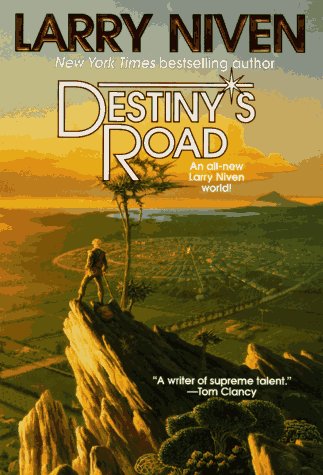
Destiny's Road is a science fiction novel by American writer Larry Niven, first published in 1998. It follows Jemmy Bloocher's exploration of Destiny's Road, a long scar of once-melted rock seared onto the planet's surface by a spaceship's fusion drive. Jemmy is descended from the original Destiny colonists, who were stranded when their landing craft deserted them.