More like Captives
anchored on:science fictionpost-apocalypticfar future
but
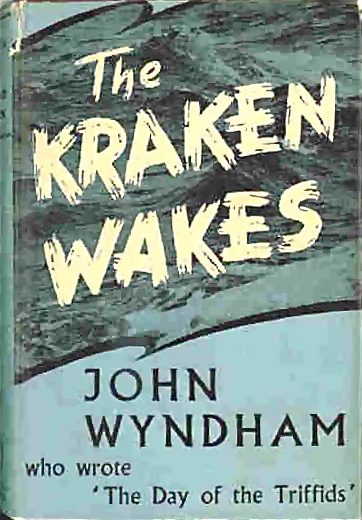
- The Kraken Wakes
John Wyndhamstandalone novel1953
similar bywarour worlddarktensescience fictionpost-apocalypticsurvival
" Behind a spectacular meteor shower actually hides the beginning of an invasion by a mysterious and powerful alien race. Earth's life is disrupted by the attacks of extraterrestrials whose war machines, emerging from the depths of the oceans, seem indestructible. The coalitioned forces of the whole world are worthless, powerless in the face of the indecipherable and deadly plans of a superior intelligence, capable of bringing the entire planet to the brink of catastrophe" Goodreads May 20, 2022
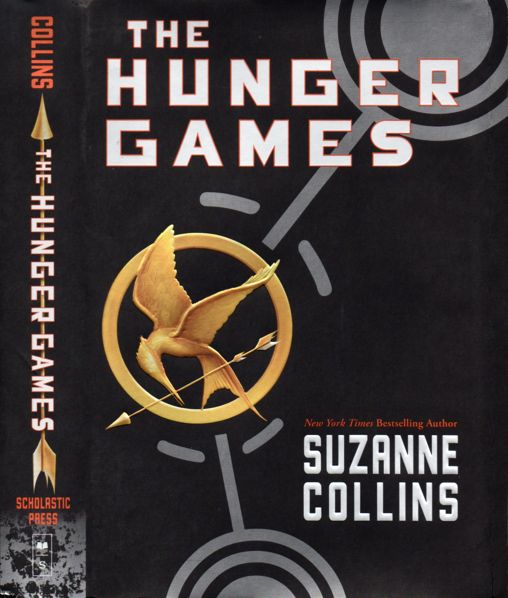
- The Hunger Games
series3 books2008
part of The Hunger Games Universe
similar byfar futuredarktensescience fictionpost-apocalypticsurvival+1 more
The Hunger Games is a series of young adult dystopian novels written by American author Suzanne Collins. The series consists of a trilogy that follows teenage protagonist Katniss Everdeen, as well as two prequels. The Hunger Games universe is a dystopia set in Panem, a post-apocalyptic North American country consisting of the wealthy Capitol and 12 districts in varying states of poverty. As punishment for rebellion, the Capitol hosts an annual battle royale competition called The Hunger Games. Each of the 12 districts must send two children between the ages of 12 and 18 to participate, and the last surviving child is dubbed the victor.
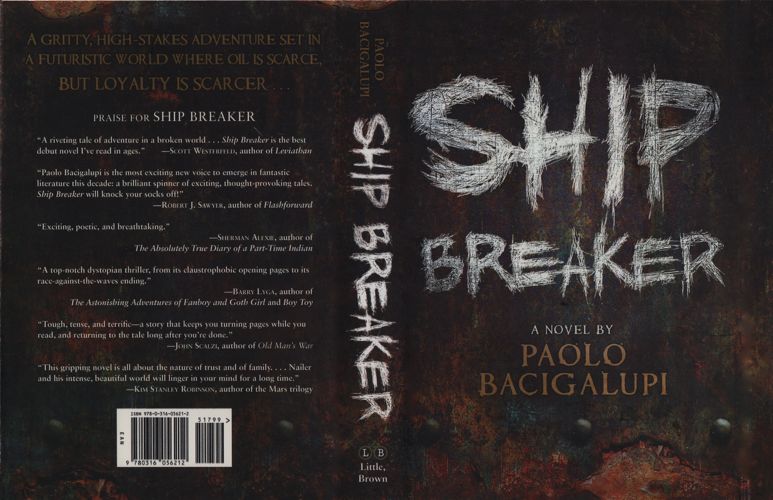
- Ship Breaker
series3 books2010
similar bydarktensescience fictionpost-apocalypticsurvival+3 more
Nailer works a light-crew scavenging copper wire and scrap from beached oil tankers on a Gulf Coast reshaped by rising seas and vanished order, until a wrecked clipper ship washes ashore carrying a half-drowned girl from the wealthy world he'll never belong to. Paolo Bacigalupi's Ship Breaker follows Nailer as helping her pulls him out of his abusive father's orbit and into a much larger, more dangerous game involving her family's fortune. The sequels The Drowned Cities and Tool of War widen the same flooded, resource-scavenging future to new characters and coastlines.
- Hungry City Chronicles / Mortal Engines
series5 books2001
part of Mortal Engines Universe
similar bywarfar futurescience fictionpost-apocalypticsurvival+1 more
The Mortal Engines Quartet, also known as the Predator Cities Quartet, is a series of epic young adult science fiction novels by the English novelist and illustrator Philip Reeve. He began the first volume of the series, Mortal Engines, in the 1980s, and it was published in 2001. Reeve then published three further novels, Predator's Gold (2003), Infernal Devices (2005), and A Darkling Plain (2006).
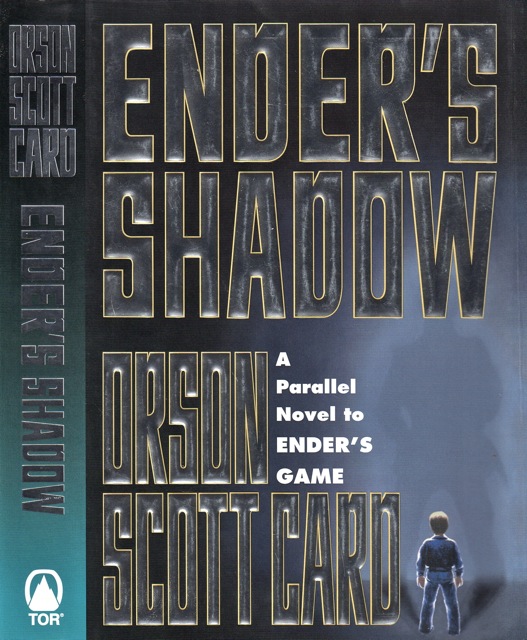
- Ender's Shadow
series5 books1999
part of Ender's Game Universe
similar bywarfar futuretensescience fiction+1 more
Orson Scott Card's Ender's Shadow retells the events of Ender's Game from the perspective of Bean, a physically stunted but ferociously intelligent street child recruited into the same Battle School program as Ender Wiggin. It launches the Shadow series, which follows Bean and other secondary Battle School characters into the political aftermath of the Formic Wars back on Earth, running parallel to and eventually past the timeline of Card's main Ender Quintet.
- H. G. Wells' War of the Worlds
universe65 books1898
Start hereThe War of the Worlds · Start here
similar byscience fiction+2 more
No one would have believed, in the closing years of the nineteenth century, that human affairs were being watched keenly and closely from the timeless worlds of space. And then the cylinders fell. H. G. Wells' War of the Worlds opens in the quiet of the Surrey commons, where a falling star proves to be the first Martian craft — and from the pit rise the towering tripods, the Heat-Ray, the choking Black Smoke and the creeping red weed, wielded by minds that regard mankind much as we regard the creatures we boil for supper. This is invasion rendered as natural disaster: cold, methodical, and vast beyond argument. Wells' 1898 novel is the seed; everything else grows from that Martian soil. The catalogue gathers direct sequels and continuations alongside a wide field of other hands. In War of the Worlds: Global Dispatches the invasion is retold across the whole planet through the eyes of Twain, Verne, Tolstoy, Lowell and Kipling; in the Manly Wade and Wade Wellman crossover, Sherlock Holmes, Watson and Professor Challenger take the field against the machines; and Scott Washburn's Great Martian War stretches the fighting into a decades-long alternate history of steam, artillery and grinding attrition. It is a loose shared world — no single decreed sequence, many voices answering one calamity. What sets this world apart is its refusal of heroics: the invaders fall not to generals but to the smallest things of Earth, humbling and indifferent. Begin, always, with Wells' original novel — it is short, and it is the ground every later book stands upon. From there follow your appetite: Global Dispatches for the panorama, the Holmes campaign for adventure, Washburn for the long war.
- Saint Leibowitz
series6 books1955
completed
similar byfar futurescience fictionpost-apocalyptic+2 more
Walter M. Miller Jr.'s A Canticle for Leibowitz (1959), assembled from three novellas he had published earlier in the decade, follows the monks of a Catholic monastery in the post-nuclear American Southwest as they preserve fragments of scientific knowledge across centuries, watching civilization slowly rebuild itself and edge back toward the mistakes that destroyed it. Miller's posthumous sequel, Saint Leibowitz and the Wild Horse Woman, completed by Terry Bisson from his notes after his death and published in 1997, returns to the same abbey and its world decades later. Together the two novels form a sparse, decades-spanning series about memory, faith, and the cycles of civilization.
- Childe Cycle
series19 books1957
similar bywarfar futurescience fictionmilitary science fiction+1 more
The Childe Cycle is an unfinished series of science fiction novels by American writer Gordon R. Dickson. The name Childe Cycle is an allusion to "Childe Roland to the Dark Tower Came", a poem by Robert Browning, which provided inspiration for elements in the work. The series is sometimes referred to as the Dorsai series, after the Dorsai people who are central to it. The related short stories and novellas all center on the Dorsai, primarily members of the Graeme and Morgan families.
- Forever War
series10 books1972
similar byfar futurescience fictionmilitary science fiction+3 more
Joe Haldeman's The Forever War (1974) follows a soldier conscripted into a centuries-long interstellar war against the alien Taurans, using relativistic space travel so that months spent in transit correspond to years or decades passing back on Earth. Haldeman later returned to the same conflict in Forever Peace (1997), a thematically connected but separate story, and Forever Free (1999), a direct sequel set years after the original war's end. The first novel won the Hugo, Nebula, and Locus awards and is considered a foundational work of military science fiction.
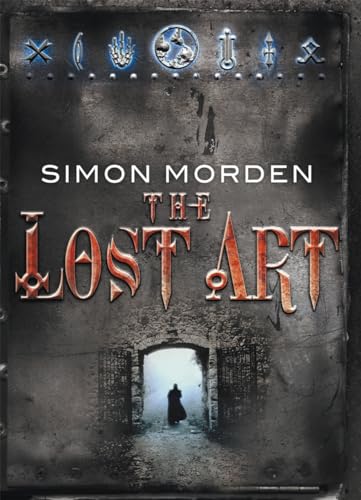
- The Lost Art
Simon Mordenstandalone novel2007
similar byfar futureour worlddarkscience fictionpost-apocalyptic+2 more
A MILLENNIUM AFTER the formidable war machines of the User cultures devoured entire civilizations and rewrote planetary geography, Earth is in the grip of a perpetual Dark Age. Scientific endeavor is strongly discouraged, while remnant technology is locked away--hidden by a Church determined to prevent a new Armageddon.This is the world to which Benzamir Michael Mahmood must return. A descendant of the tribes who fled the planet during those ages old wars, he comes in pursuit of enemies from the far reaches of space. The technology he brings is wondrous beyond the imaginings of those he will meet, but can its potency match that of the Church's most closely guarded treasure?For centuries it has lain dormant, but it is about to be unearthed, and the powers that will be unleashed may be beyond anyone's capacity to control. Even a man as extraordinary as Benzamir . . .From the Hardcover edition.
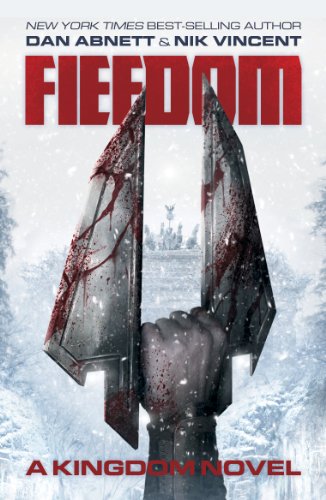
- Kingdom (Dan Abnett and Nik Vincent)
series1 book2014
similar bywarfar futureour worlddarktensescience fictionpost-apocalypticmilitary science fiction+1 more
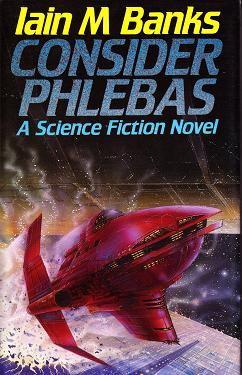
- Culture
series15 books1987
completed
part of The Culture
similar byfar futurescience fiction+1 more
The Culture series is a science fiction series written by Scottish author Iain M. Banks and released from 1987 until 2012. The stories centre on The Culture, a utopian, post-scarcity space society of humanoid aliens and advanced superintelligent artificial intelligences living in artificial habitats spread across the Milky Way galaxy. The main themes of the series are the dilemmas that an idealistic, more-advanced civilization faces in dealing with smaller, less-advanced civilizations that do not share its ideals, and whose behaviour it sometimes finds barbaric. In some of the stories, action takes place mainly in non-Culture environments, and the leading characters are often on the fringes of the Culture, sometimes acting as agents of the Culture in its plans to civilize the galaxy. Each novel is a self-contained story with new characters, although reference is occasionally made to the events of previous novels.
- Maurai
series6 books1959
completed
similar byfar futureour worldscience fictionpost-apocalyptic+2 more
The Maurai series is a series of short stories and a novel by Poul Anderson set in a resource depleted, post-apocalyptic earth several centuries in the future. The series is named after its most frequent protagonists, citizens of the Maurai Federation. The Maurai dominate the Pacific and Indian Oceans. Fearful of the social and ecological implications of a return to large-scale industrial society, they use their considerable might and covert resources to prevent other nations from developing nuclear power.
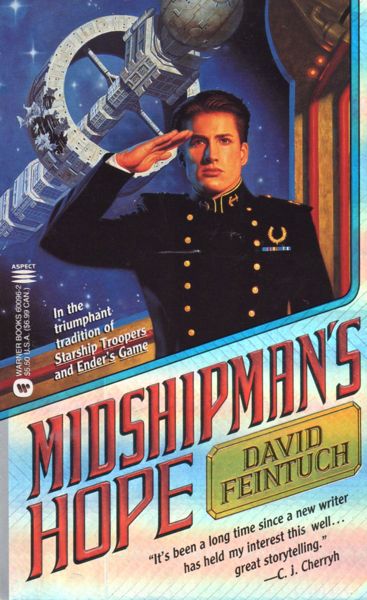
- Nicholas Seafort
series7 books1994
completed
similar bywarfar futuretensescience fictionmilitary science fiction+1 more
The Seafort Saga is a series of science fiction novels written by American author David Feintuch. The novels are set from the late 22nd century to the mid-23rd century and relate the adventures of Nicholas Seafort, an officer in the (fictional) UNNS| United Nations Naval Service. The series is a collection of personal accounts, usually from the perspective of Nicholas Seafort, describing Seafort's adventures, beginning as a lowly midshipman, to the elected leader of earth, and finally to the captain of the UNNS flagship Olympiad. Although most books in the series are told from a single perspective, usually Seafort's, Voices of Hope is a collection of accounts from several sources: Seafort's son, PT, the son of a friend of Seafort's, and a transient boy named Pook. Additionally, Children of Hope is narrated by Randy Carr, the son of a close friend of Seafort.
- Dune Universe
universe78 books1963
Start hereDune · Start here
similar byfar futurescience fiction+2 more
Arrakis. Dune. The desert planet, where empire runs on a single substance: the spice melange, which folds space, prolongs life, and unlocks prescience, and which exists nowhere else in the known universe. Frank Herbert's saga is a meditation dressed as an adventure — feudal houses and a secret sisterhood, engineered messiahs and the patient ecology of a world without water, all turning on the terrible gravity of who commands the spice. It reads like scripture and schemes like a war room, ten thousand years hence, among people who have outlawed the thinking machine and made instruments of themselves instead. At its heart stand Herbert's original six — Dune, Dune Messiah, Children of Dune, God Emperor of Dune, Heretics of Dune, Chapterhouse: Dune — a single deepening arc across millennia, arguing the whole way between prophecy and free will. Around that spine his son Brian Herbert and Kevin J. Anderson have raised a vast prequel architecture: Prelude to Dune, tracing the great houses a generation before Paul; Legends of Dune, reaching back to the crusade that broke the machines; the Schools of Dune cycle on the founding of Bene Gesserit, Mentat, and Navigator; the Caladan Trilogy and Heroes of Dune filling years the originals left in shadow. Many hands, dozens of volumes, one desert. What sets Dune apart is its refusal of the simple: religion is manufactured, heroes are hazards, and the sand itself — worm, water, ecology — acts as a political power. Begin where the universe did, with Frank Herbert's Dune (1965), and read the original six in order; you need nothing else to feel the full weight. The prequels are a country to explore afterward, taken by era. Beginnings are delicate times.
- Dune
series20 books1963
part of Dune Universe
similar byfar futurescience fiction+2 more
Frank Herbert's Dune Chronicles opens with 1965's Dune, set on the desert planet Arrakis where House Atreides takes control of the only source of the vital spice melange and young Paul Atreides is pulled into a struggle over its politics and religion. Herbert carried the story forward across five further novels — Dune Messiah, Children of Dune, God Emperor of Dune, Heretics of Dune, and Chapterhouse: Dune — following Paul's line over the following millennia, before Brian Herbert and Kevin J. Anderson later extended the saga. Many other editions of these six novels are omnibus and box-set repackagings rather than separate stories.
- Survivalist
series41 books1981
similar bywartensescience fictionpost-apocalypticsurvival+1 more
The Survivalist is the generic title of Jerry Ahern's long-lived series of 29 pulp novels centering around John Rourke, an ex-CIA officer turned weapons and survival expert, in the aftermath of a nuclear war.
- The Vampire Earth
series12 books2003
similar bywardarktensescience fictionpost-apocalyptic+4 more
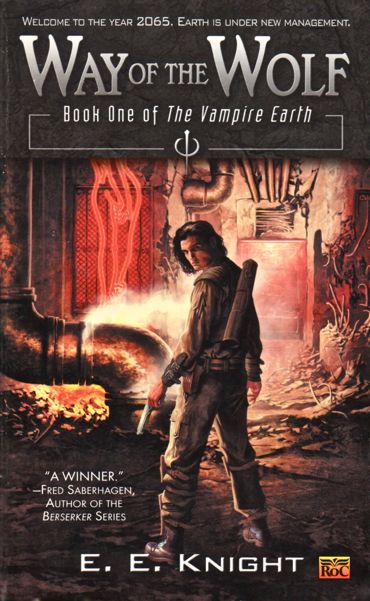
Vampire Earth is a series of science fiction/dark fantasy novels by American writer E. E. Knight.
- Ender Wiggin
series14 books1977
part of Ender's Game Universe
similar byfar futurescience fiction+1 more
Orson Scott Card's Ender's Game (1985, expanded from his 1977 novella) follows child prodigy Andrew "Ender" Wiggin as he is recruited into a military training program built to prepare Earth's defenses for an anticipated third war against an insectoid alien species known as the Formics. The saga continues years later through Speaker for the Dead and Xenocide, following an older Ender as he confronts the moral weight of his role in that earlier conflict, and concludes the core arc in Children of the Mind, with Ender in Exile filling in the years between the first two books. Set within the wider Ender's Game universe, the series shifts from military coming-of-age story to slower, more philosophical science fiction as it progresses.
- Final Blackout
L. Ron Hubbardstandalone novel1948
similar bywarour worlddarktensescience fictionpost-apocalyptic+1 more
Final Blackout is a dystopic science fiction novel by American writer L. Ron Hubbard. The novel is set in the future and follows a man known as "the Lieutenant" as he restores order to England after a world war. First published in serialized format in 1940 in the science fiction magazine Astounding Science Fiction, Final Blackout was published in book form in 1948 by The Hadley Publishing Co. Author Services Inc. published a hardcover edition of the book in 1988, and in 1989 the Church of Scientology-affiliated organization Bridge Publications said that a film director named Christopher Cain had signed a contract to write and direct a movie version based on the book.
- City at World's End
Edmond Hamiltonstandalone novel1951
similar byfar futureour worlddarktensescience fictionpost-apocalypticsurvival
An experimental atomic weapons test in small-town America goes catastrophically wrong, hurling the entire town of Middletown, buildings, streets and all, untold ages into Earth's future, to a time when the sun is dying and humanity's last city struggles on beneath a darkening sky. Cut off from everything and everyone they knew, the townspeople have to find a way to survive in a world that has nothing left to spare for latecomers. Edmond Hamilton's novel strands a slice of mid-century America at the literal end of the world.
- War Against the Chtorr
series7 books1983
similar bywardarktensescience fictionpost-apocalypticsurvival+2 more
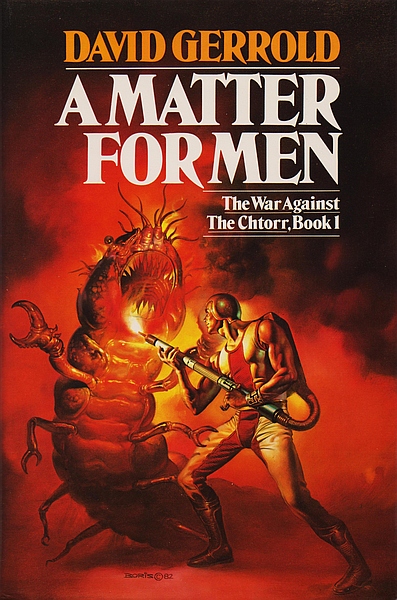
The War Against the Chtorr is a series of science fiction novels by American writer David Gerrold. The Chtorr series was originally planned as a trilogy, but as the story became more intricate, Gerrold realized that three books would not be enough for him to tell the entire story. For a time, he was uncertain how many books there would be in the end but plans on seven. As of 2022, four books have been completed. As of 2017, a fifth and sixth were in the works, 24 years after the publication of the fourth book.
- Ocean / Galactic Center
series12 books1972
similar byscience fictionfar future+4 more
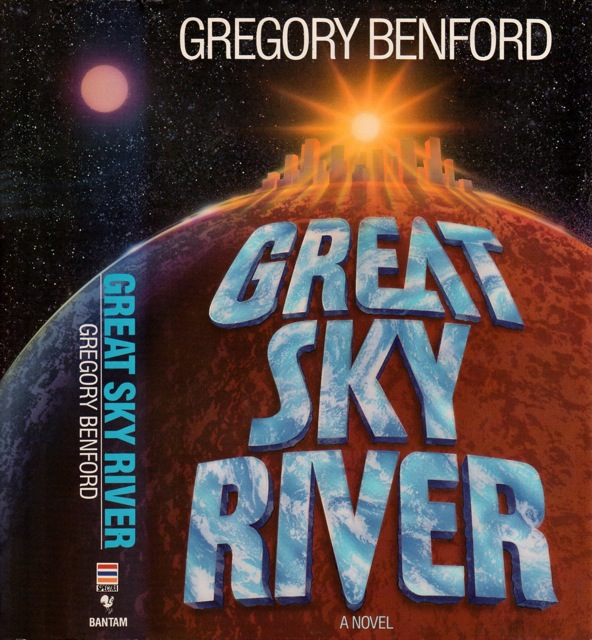
The Galactic Center Saga is a series of books by author Gregory Benford detailing a galactic war between mechanical and biological life.In the Ocean of Night (1977) — 1977 Nebula Award nominee, 1978 Locus Award nominee Across the Sea of Suns (1984) Great Sky River (1987) — 1988 Nebula Nominee Tides of Light (1989) — 1990 Locus Award nominee Furious Gulf (1994) Sailing Bright Eternity (1996) "A Hunger for the Infinite" a novella published in the anthology Far Horizons