More like Captured
but
- Delirium (Lauren Oliver)
series11 books2011
similar byscience fictiondystopia+5 more
Lauren Oliver's dystopian trilogy imagines a near-future America that has classified love as a curable disease, "amor deliria nervosa," and mandates a procedure to remove the capacity for it at adulthood. Delirium follows Lena Haloway in the months before her own scheduled procedure, as falling in love throws her lifelong acceptance of the system into doubt; Pandemonium and Requiem carry her out of the walled city and into the resistance against it. Companion novellas fill in supporting characters' perspectives alongside the main trilogy.
- Matched
series3 books2010
similar byscience fictiondystopiatense+4 more
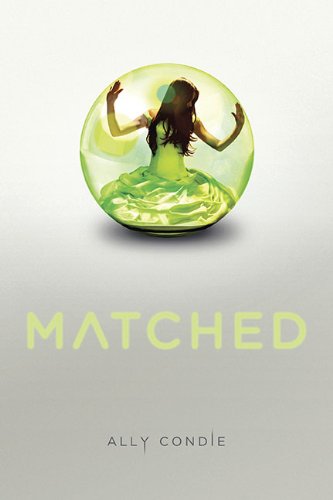
Ally Condie's dystopian trilogy follows Cassia, a teenager in a rigidly controlled Society that assigns citizens' spouses, careers, and even manner of death, after a glitch shows her a second face at her own Matching ceremony. Across Matched, Crossed, and Reached, her quiet doubt about the Society's choices grows into open resistance against the system that shaped her whole life.
- I Am Legend
Richard Mathesonstandalone novel1954
similar bysurvivalour worldscience fictiondystopiadarktense
The last human survivor of the vampire epidemic has to maintain his defences against their onslaught, while attempting to research the cause and possibly solution to the plague. Robert Neville is the last living man on Earth... but he is not alone. Every other man, woman and child on the planet has become a vampire, and they are hungry for Neville's blood. By day he is the hunter, stalking the undead through the ruins of civilization. By night, he barricades himself in his home and prays for the dawn. How long can a man survive like this?
- Lord of the Flies
William Goldingstandalone novel1954
similar bysurvivalour worlddarktense+2 more
Lord of the Flies is the 1954 debut novel of British author William Golding. The plot concerns a group of prepubescent British boys who are stranded on an uninhabited island and their disastrous attempts to govern themselves that lead to a descent into savagery. The novel's themes include morality, leadership, and the tension between civility and chaos.
- Maze Runner
series11 books2009
similar bysurvivalscience fictiondystopiatense+2 more
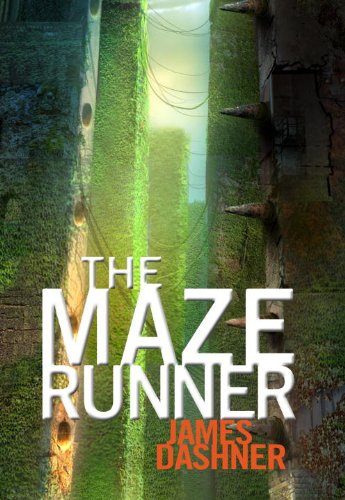
The Maze Runner is a series of young adult dystopian science fiction novels written by American author James Dashner. The series consists of the trilogy The Maze Runner (2009), The Scorch Trials (2010) and The Death Cure (2011), as well as two prequel novels, The Kill Order (2012) and The Fever Code (2016). A novella titled Crank Palace (2020) and a companion book titled The Maze Runner Files (2013) have also been released. A sequel trilogy in the series titled The Maze Cutter takes place 73 years following the events of The Death Cure and consists of the novels The Maze Cutter (2022), The Godhead Complex (2023), and The Infinite Glade (2025).
- Warm Bodies
series3 books2010
similar byemotional+5 more
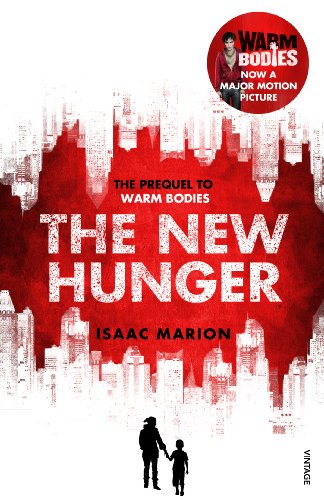
In an abandoned airport where the dead shuffle through half-remembered lives, a zombie known only as R feels something stir when he meets Julie, a survivor he chooses to protect instead of eat. Isaac Marion's Warm Bodies follows R's slow, contagious return to feeling -- reshaping the zombies around him along the way -- and continues through the novella The New Hunger and the sequel The Burning World.
- Make Room! Make Room!
Harry Harrisonstandalone novel1966
similar bysurvivalour worldscience fictiondystopiadarktense
Make Room! Make Room! is a 1966 science fiction novel written by Harry Harrison exploring the consequences of both unchecked population growth on society and the hoarding of resources by a wealthy minority. It was originally serialized in Impulse magazine.
- H. G. Wells' War of the Worlds
universe65 books1898
Start hereThe War of the Worlds · Start here
similar byscience fiction+2 more
No one would have believed, in the closing years of the nineteenth century, that human affairs were being watched keenly and closely from the timeless worlds of space. And then the cylinders fell. H. G. Wells' War of the Worlds opens in the quiet of the Surrey commons, where a falling star proves to be the first Martian craft — and from the pit rise the towering tripods, the Heat-Ray, the choking Black Smoke and the creeping red weed, wielded by minds that regard mankind much as we regard the creatures we boil for supper. This is invasion rendered as natural disaster: cold, methodical, and vast beyond argument. Wells' 1898 novel is the seed; everything else grows from that Martian soil. The catalogue gathers direct sequels and continuations alongside a wide field of other hands. In War of the Worlds: Global Dispatches the invasion is retold across the whole planet through the eyes of Twain, Verne, Tolstoy, Lowell and Kipling; in the Manly Wade and Wade Wellman crossover, Sherlock Holmes, Watson and Professor Challenger take the field against the machines; and Scott Washburn's Great Martian War stretches the fighting into a decades-long alternate history of steam, artillery and grinding attrition. It is a loose shared world — no single decreed sequence, many voices answering one calamity. What sets this world apart is its refusal of heroics: the invaders fall not to generals but to the smallest things of Earth, humbling and indifferent. Begin, always, with Wells' original novel — it is short, and it is the ground every later book stands upon. From there follow your appetite: Global Dispatches for the panorama, the Holmes campaign for adventure, Washburn for the long war.
- Cell
Stephen Kingstandalone novel2006
similar bysurvivalour worldscience fictiondystopiadarktense
In Cell, King taps into readers fears of technological warfare and terrorism. Mobile phones deliver the apocalypse to millions of unsuspecting humans by wiping their brains of any humanity, leaving only aggressive and destructive impulses behind. Those without cell phones, like illustrator Clayton Riddell and his small band of "normies," must fight for survival, and their journey to find Clayton's estranged wife and young son rockets the book toward resolution.
- Hainish
series33 books1964
completed
similar byscience fiction
The Hainish Cycle consists of a number of science fiction novels and stories by Ursula K. Le Guin. The cycle is set in a future history that features civilizations of human beings on planets orbiting a number of nearby stars, including Terra ("Earth"); these humans are contacting each other for the first time and establishing diplomatic relations, as well as setting up a confederacy under the guidance of the oldest of the human worlds, the peaceful planet Hain. In this history, human beings did not evolve on Earth, but they were instead the result of interstellar colonies planted by Hain in the distant past, after which interstellar travel ceased for an extended period. Some of the human races have new genetic traits, a result of ancient Hainish experiments in genetic engineering; this includes people who can dream while awake, and a world of hermaphroditic people who only enter active sexuality once per month, not knowing which sex will manifest in them. In keeping with Le Guin's narrative approach, she uses varied social and environmental settings to explore the anthropological and sociological outcomes of human evolution in those environments. The author often discounted the characterization of a so-called "Hainish Cycle".
- The Host
Stephenie Meyerstandalone novel2008
similar bysurvivalforbidden loveour worldscience fictionemotionaltense
The earth has been invaded by a species that take over the minds of their human hosts while leaving their bodies intact, and most of humanity has succumbed. But Melanie Stryder refuses to fade away. Wanderer, the invading "soul" who has been given Melanie's body, knew about the challenges of living inside a human: the overwhelming emotions, the too vivid memories. But there was one difficulty Wanderer didn't expect: the former tenant of her body refusing to relinquish possession of her mind. Melanie fills Wanderer's thoughts with visions of the man Melanie loves--Jared, a human who still lives in hiding. Unable to separate herself from her body's desires, Wanderer yearns for a man she's never met. As outside forces make Wanderer and Melanie unwilling allies, they set off to search for the man they both love.--From publisher description.
- The Collected Science Fiction and Fantasy of Jack London
series6 books1906
completed
similar byour worldscience fiction+3 more
- The Triffids
series3 books1951
similar bysurvivalour worldscience fictiondark+1 more
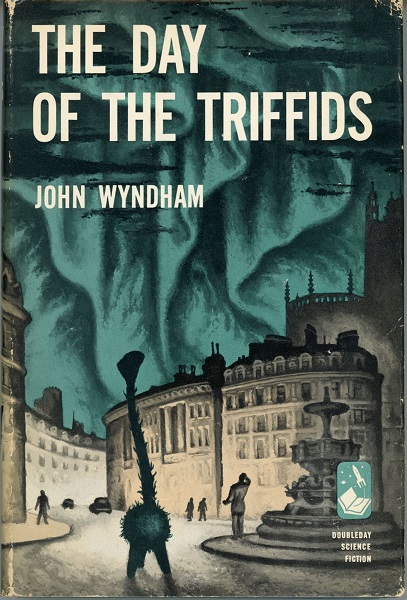
John Wyndham's The Day of the Triffids (1951) opens with a meteor-shower-like event that leaves most of Britain's population blind, throwing civilization into collapse just as triffids, an aggressive and mobile species of poisonous plant, become free to hunt the helpless survivors. Simon Clark's authorized sequel The Night of the Triffids (2001) picks up a generation later, narrated by the original protagonist's son as he confronts a new triffid-dominated world, and John Whitbourn's The Age of the Triffids extends the shared setting further still. Together the three novels form a loose post-apocalyptic trilogy built on Wyndham's original premise rather than a tightly plotted single story.
- Colony
Ben Bovastandalone novel1978
similar bysurvivalscience fictiondystopiatense+2 more
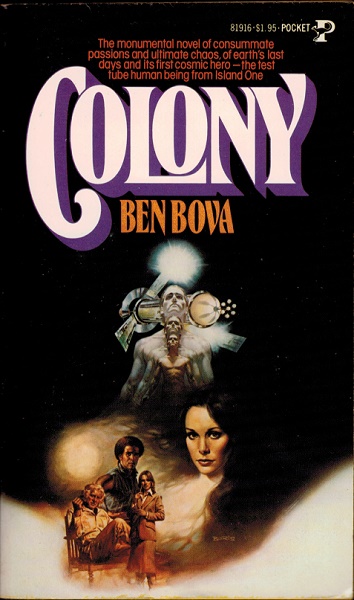
Colony continues the story Ben Bova began in Millennium, following astronaut-turned-administrator Chet Kinsman years later as the head of an orbiting space habitat that has become Earth's only real refuge from a planet buckling under overpopulation, food shortages and unrest. Getting a place in the habitat is a matter of life and death for millions who will never be chosen, and as Earth's governments grow more desperate to control or dismantle the colony outright, Kinsman has to decide how far he'll go to protect the world he's built off-world. Bova later folded both novels together into the omnibus The Kinsman Saga. Part of Ben Bova's Chet Kinsman series.
- Shade's Children milieu
series2 books1997
similar bysurvivalscience fictiondystopiadarktense+1 more
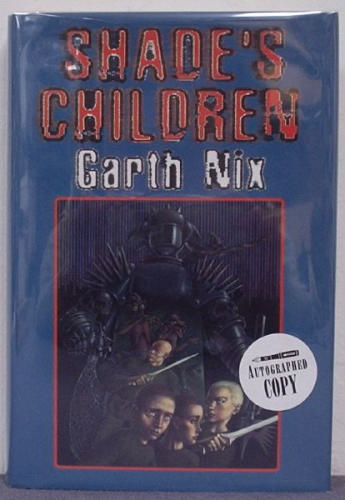
Shade's Children is set on an Earth where all adults vanished overnight fourteen years earlier, leaving children to be harvested at puberty by the machines that now run the world, unless they escape into hiding with Shade, a mysterious AI-like protector. Garth Nix's 1997 novel is a single, self-contained book rather than a series, though its bleak post-apocalyptic premise has drawn comparisons to his other work.
- Gone
series9 books2008
similar bysurvivalscience fictiondarktense
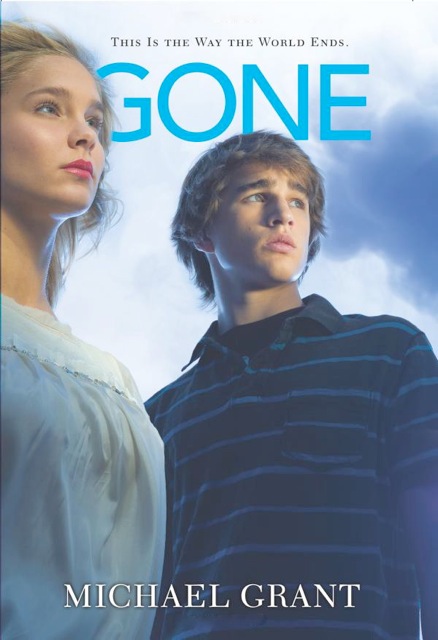
Michael Grant's Gone series begins when everyone aged fifteen and older vanishes without warning from a swath of the California coast, trapping the town of Perdido Beach inside an impenetrable barrier the survivors call the FAYZ. As children develop strange powers and food and order break down, Sam Temple and his rival, his twin brother Caine, become central to the fight for survival against human threats and the monstrous Gaiaphage. Six books (Gone through Light) close the original story; a follow-up Monster trilogy, set years later, follows a new outbreak of mutation-causing powers and a new generation of characters.
- Dayworld
series5 books1971
similar byour worldscience fictiondystopiatense+1 more
Dayworld is a trilogy of science fiction novels by Philip José Farmer, inspired by his own short story "The Sliced-Crosswise Only-On-Tuesday World". They are set in a dystopian future in which people are allowed to live only one day of the week. For the rest of the six days, they are "stoned", kept in a kind of suspended animation. The novels focus on a man, Jeff Caird, who is a daybreaker: someone who lives more than one day a week. As the series progresses, the main character seems to be suffering from dissociative identity disorder. The novels comprising the trilogy are:Dayworld (1985) Dayworld Rebel (1987) Dayworld Breakup (1990)
- Final Blackout
L. Ron Hubbardstandalone novel1948
similar byour worldscience fictiondystopiadarktense+1 more
Final Blackout is a dystopic science fiction novel by American writer L. Ron Hubbard. The novel is set in the future and follows a man known as "the Lieutenant" as he restores order to England after a world war. First published in serialized format in 1940 in the science fiction magazine Astounding Science Fiction, Final Blackout was published in book form in 1948 by The Hadley Publishing Co. Author Services Inc. published a hardcover edition of the book in 1988, and in 1989 the Church of Scientology-affiliated organization Bridge Publications said that a film director named Christopher Cain had signed a contract to write and direct a movie version based on the book.
- Ice
Anna Kavanstandalone novel1967
similar bysurvivalour worldscience fictiondystopiadark
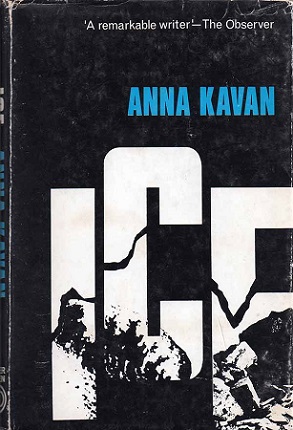
Ice is a novel by British writer Anna Kavan, published in 1967. Ice was Kavan's last work to be published before her death, the first to land her mainstream success, and remains her best-known work. Generally regarded as genre-defying, it has been labelled a work of science fiction, Nouveau roman, and slipstream fiction.