More like Catholics
but
- Stranger in a Strange Land
Robert A. Heinleinstandalone novel1961
similar byfaith and religionscience fictionsatire
Stranger in a Strange Land is a 1961 science fiction novel by the American author Robert A. Heinlein. It tells the story of Valentine Michael Smith, a human who comes to Earth in early adulthood after being born on the planet Mars and raised by Martians, and explores his interaction with and eventual transformation of Terran culture.
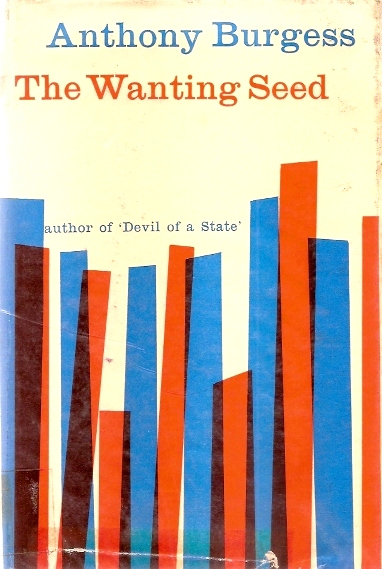
- The Wanting Seed
Anthony Burgessstandalone novel1962
similar byscience fictionsatire+2 more
The Wanting Seed is a dystopian novel by the English author Anthony Burgess, written in 1962.
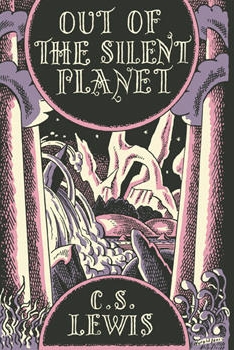
- Cosmic Trilogy (C. S. Lewis)
series4 books1938
completed
similar byfaith and religionscience fiction+1 more
The Space Trilogy is a series of science fiction novels by British writer C. S. Lewis. The trilogy consists of Out of the Silent Planet (1938), Perelandra (1943), and That Hideous Strength (1945). A philologist named Elwin Ransom is the protagonist of the first two novels and an important character in the third.
- Cat's Cradle
Kurt Vonnegut & Jr.standalone novel1963
similar byfaith and religionscience fictionsatire
Cat's Cradle is a satirical postmodern novel, with science fiction elements, by American writer Kurt Vonnegut. Vonnegut's fourth novel, it was first published on March 18, 1963, exploring and satirizing issues of science, technology, the purpose of religion, and the arms race, often through the use of morbid humor. The novel was nominated for the Hugo Award for Best Novel in 1964.
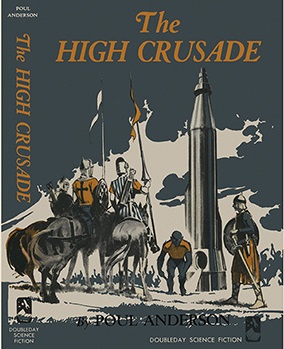
- The High Crusade
Poul Andersonstandalone novel1960
similar bybritish islesscience fiction+1 more
The High Crusade is a science fiction novel by American writer Poul Anderson, about the consequences of an extraterrestrial scoutship landing in medieval England. Poul Anderson described the novel as "one of the most popular things I've ever done, going through many book editions in several languages."
- The Light of Other Days
Arthur C. Clarke & Stephen Baxterstandalone novel2000
similar byscience fiction+2 more
An industrialist devises a technique to use tiny wormholes as light pipes to enable viewing of any event anywhere; and subsequently it becomes possible to use them to view any event in the past as well. The effects on society are enormous.
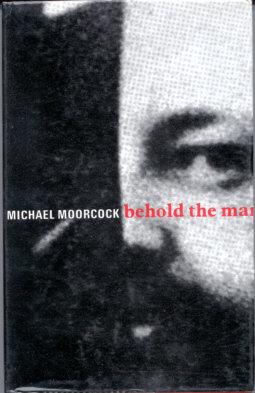
- Karl Glogauer
series2 books1969
similar byscience fiction+2 more
Michael Moorcock's two Karl Glogauer novels share a character rather than a plot. In Behold the Man (1969), Glogauer travels back in time seeking the historical Jesus, discovers the real man is severely disabled, and takes on the role of Christ himself, engineering his own crucifixion to fulfill the story he grew up reading. Breakfast in the Ruins (1972) recasts him across seventeen variant lives spanning 1871 to 1990, each one crueler than the last, framed around a present-day encounter in London -- using the same protagonist for a different formal experiment rather than continuing a single narrative.
- Pavane
series9 books1966
completed
similar byfaith and religionbritish isles+1 more
Keith Roberts' Pavane (1968) is a single fix-up novel built from linked stories rather than a multi-book series: in an alternate 20th century where Elizabeth I was assassinated and Spain conquered England, the Catholic Church suppresses Protestantism and keeps technology frozen at a steam-powered, feudal level. The interconnected stories follow different Dorset families across generations as long-suppressed dissent against Church rule begins to stir.
- His Dark Materials
series8 books1995
part of His Dark Materials Universe
similar by+2 more
His Dark Materials is a trilogy of fantasy novels by Philip Pullman consisting of Northern Lights, The Subtle Knife (1997), and The Amber Spyglass (2000). It follows the coming of age of two children, Lyra Belacqua and Will Parry, as they wander through a series of parallel universes. The novels have won a number of awards, including the Carnegie Medal in 1995 for Northern Lights and the 2001 Whitbread Book of the Year for The Amber Spyglass. In 2003, the trilogy was ranked third on the BBC's The Big Read poll.
- The Water-Babies
Charles Kingsleystandalone novel1863
similar bybritish islessatire+1 more
The Water-Babies: A Fairy Tale for a Land-Baby is a children's novel by Charles Kingsley. Written in 1862–1863 as a serial for Macmillan's Magazine, it was first published in its entirety in 1863. It was written as part satire in support of Charles Darwin's On the Origin of Species. The book was extremely popular in the United Kingdom and was a mainstay of British children's literature for many decades. The book was selected by Julia Eccleshare as one of the 1001 Children's Books You Must Read Before You Grow Up (2009).
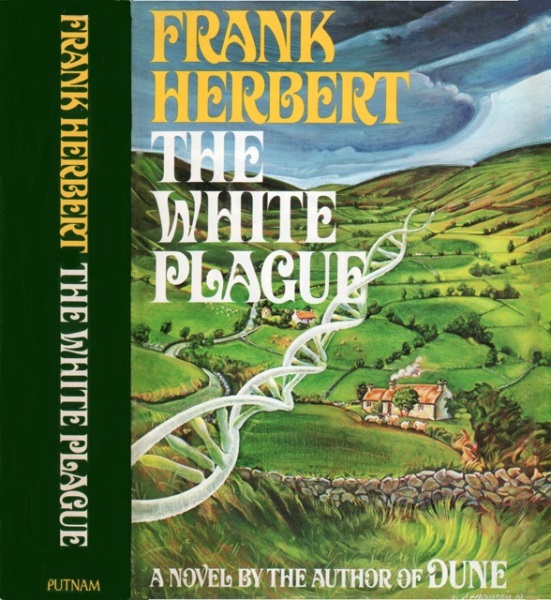
- The White Plague
Frank Herbertstandalone novel1982
similar byscience fiction+2 more
The White Plague is a 1982 science fiction novel by American author Frank Herbert about an engineered disease which kills only women. It was nominated for a best science fiction novel Locus Award in 1983.
- The Alteration
Kingsley Amisstandalone novel1976
similar byfaith and religionscience fiction+1 more
The Reformation does not take place, Martin Luther becomes pope, Italy never unites…
- His Dark Materials Universe
universe13 books1995
Start hereHis Dark Materials · Start here
similar by+1 more
In a world like ours and unlike it, every human soul walks outside the body in the shape of an animal — a daemon, who speaks, who cannot be lied to, and who settles into one fixed form only when childhood ends. This is the country of His Dark Materials: a company of parallel worlds across which an invisible dust of consciousness drifts down upon the waking mind; where a Church that calls itself the Magisterium would sooner sever a child's soul than let that Dust be understood; and where a golden instrument, the alethiometer, answers true questions for anyone with the patience to read it. Philip Pullman's design stands in two trilogies and a scatter of shorter tales. His Dark Materials — Northern Lights (published in America as The Golden Compass), The Subtle Knife, and The Amber Spyglass — carries Lyra Belacqua from the rooftops of a shadow Oxford across the borders between worlds. The Book of Dust returns to that same territory: La Belle Sauvage looks back to Lyra as an infant carried through a great flood, while The Secret Commonwealth follows her grown and less certain into adulthood, with a concluding volume closing the arc. Around them sit slim companion books — Lyra's Oxford, Once Upon a Time in the North, Serpentine — and Nicholas Wright's stage adaptation, made with Pullman's blessing. The register is grave and luminous at once, its title lifted from Milton and its quarrel drawn from Blake: a story that takes the side of curiosity, love, and the physical world against any authority that would forbid them. It reads as adventure — armoured bears, aeronauts, knife-cut windows between skies — yet reasons like philosophy. Begin with Northern Lights / The Golden Compass and read the first trilogy through before turning to The Book of Dust, which deepens everything the first has already made you feel.
- Dune
series20 books1963
part of Dune Universe
similar byfaith and religionscience fiction
Frank Herbert's Dune Chronicles opens with 1965's Dune, set on the desert planet Arrakis where House Atreides takes control of the only source of the vital spice melange and young Paul Atreides is pulled into a struggle over its politics and religion. Herbert carried the story forward across five further novels — Dune Messiah, Children of Dune, God Emperor of Dune, Heretics of Dune, and Chapterhouse: Dune — following Paul's line over the following millennia, before Brian Herbert and Kevin J. Anderson later extended the saga. Many other editions of these six novels are omnibus and box-set repackagings rather than separate stories.
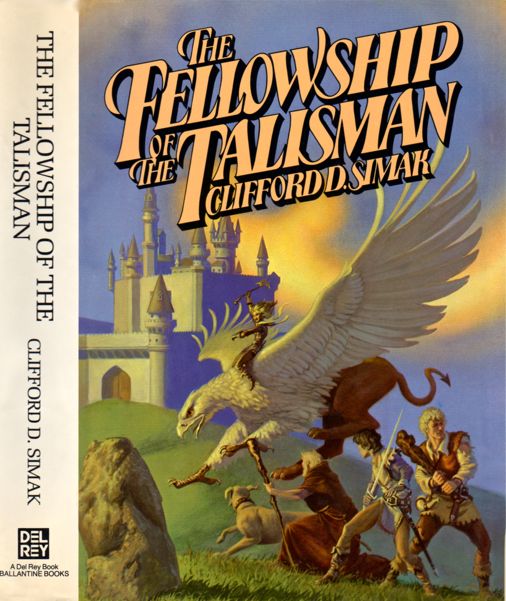
- The Fellowship of the Talisman
Clifford D. Simakstandalone novel1978
similar bybritish isles+2 more
From the flaps of the Del Rey first edition: "Through a wilderness blighted by horror rode Duncan, son of the noble House of Standish. Astride his mighty war horse, he was pursuing a quest vital to the future of civilization. With him went a strange fellowship: a brawny man-at-arms, a banshee, a hermit, a ghost, a turncoat demon, a goblin and a witch. Opposing them came forces of supernatural malignancy. Aiding them was a girl with the blood of enchanters in her veins who was mounted on an ancient griffin. And all this takes place in England in the 1970s... But in the world of The Fellowship of the Talisman, the Dark Ages never ended. There had been no renaissance, no exploration of the lands across the sea; and men lived much as they did a thousand or more years ago. Some historians believed this situation was the result of the terror and devastation called the Evil, which broke out every five centuries, laying waste first to Macedonia, then to Iberia, and finally to a large part of England. Duncan Standish had been sent on a dangerous mission which could give humanity an instrument against this Evil and rekindle the spirit of mankind. It was through a land where the monstrous servants of the Evil held sway that Duncan and his oddly assorted followers had to pass. The ghost, though erratic, was an excellent spy; and Snoopy, the goblin, knew many of the enemy's weak points. And with the aid of an ancient sorcerer's talisman which seemed to guard Duncan and his band from peril, they were safe... for the moment."
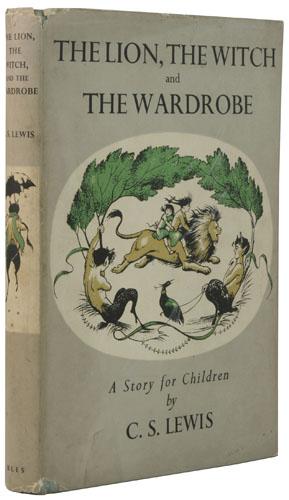
- Narnia
series26 books1950
part of Narnia Universe
similar by+2 more
The Chronicles of Narnia is a series of seven portal fantasy novels by British author C. S. Lewis. Illustrated by Pauline Baynes and originally published between 1950 and 1956, the series is set in the fictional realm of Narnia, a fantasy world of magic, mythical beasts, and talking animals. It narrates the adventures of various children who play central roles in the unfolding history of the Narnian world. Except in The Horse and His Boy, the protagonists are all children from the real world who are magically transported to Narnia, where they are sometimes called upon by the lion Aslan to protect Narnia from evil. The books span the entire history of Narnia, from its creation in The Magician's Nephew to its eventual destruction in The Last Battle.
- A Maggot
John Fowlesstandalone novel1985
similar bybritish isles+2 more
A Maggot (1985) is a novel by British author John Fowles. It is Fowles' sixth major novel, following The Collector, The Magus, The French Lieutenant's Woman, Daniel Martin and Mantissa. Its title, as the author explains in the prologue, is taken from the archaic sense of the word that means "whim", "quirk", "obsession", or even a snatch of music. Another meaning of the word "maggot" becomes apparent later in the novel, used by a character to describe a white, oblong machine that appears to be a spacecraft. Though the author denied that A Maggot is a historical novel, it does take place during a precise historical timeframe, April 1736 to March 1737, in England. It might be variously classified as historical fiction, mystery, or science fiction. Because of the narrative style and various metafictional devices, most critics classify it as a postmodern novel.
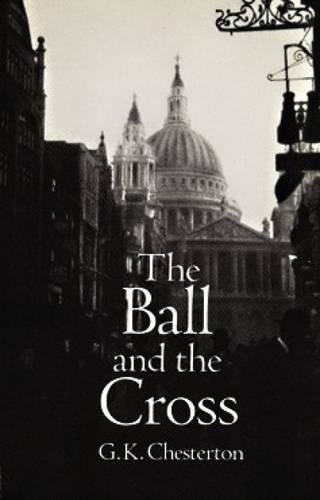
- The Ball and the Cross
G. K. Chestertonstandalone novel1909
similar byfaith and religionbritish islessatire
The Ball and the Cross is a novel by G. K. Chesterton. The title refers to a more worldly and rationalist worldview, represented by a ball or sphere, and the cross representing Christianity. The first chapters of the book were serialized from 1905 to 1906 with the completed work published in 1909.
- The Dream
H. G. Wellsstandalone novel1924
similar bybritish islesscience fiction+1 more
The Dream is a 1924 novel by H. G. Wells about a man from a Utopian future who dreams the entire life of an Englishman from the Victorian and Edwardian eras, Harry Mortimer Smith. As in other novels of this period, in The Dream Wells represents the present as an "Age of Confusion" from which humanity will be able to emerge with the help of science and common sense.
- Saint Leibowitz
series6 books1955
completed
similar byfaith and religionscience fiction
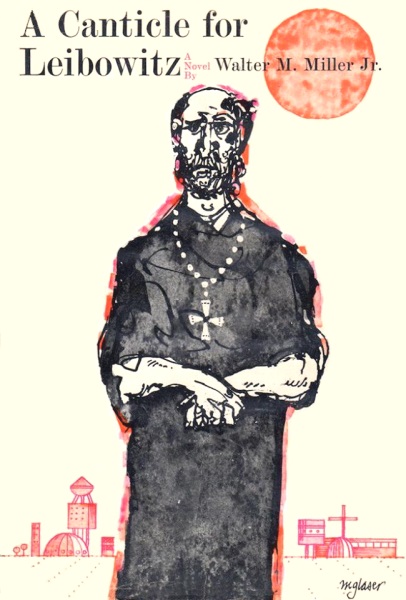
Walter M. Miller Jr.'s A Canticle for Leibowitz (1959), assembled from three novellas he had published earlier in the decade, follows the monks of a Catholic monastery in the post-nuclear American Southwest as they preserve fragments of scientific knowledge across centuries, watching civilization slowly rebuild itself and edge back toward the mistakes that destroyed it. Miller's posthumous sequel, Saint Leibowitz and the Wild Horse Woman, completed by Terry Bisson from his notes after his death and published in 1997, returns to the same abbey and its world decades later. Together the two novels form a sparse, decades-spanning series about memory, faith, and the cycles of civilization.
- A Dusk of Demons
John Christopherstandalone novel1993
similar bybritish islesscience fiction+1 more
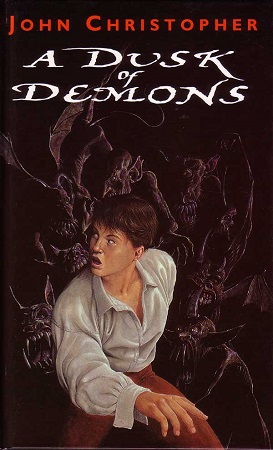
A Dusk of Demons is a young adult science fiction novel written by the British author John Christopher and published in 1993. The story is set in a post-apocalyptic future in England where it is believed that demons rule Earth.
- Kalki
Gore Vidalstandalone novel1978
similar byscience fictionsatire+1 more
A veteran back from Vietnam war claims to be the reincarnation of the Hindu god Kalki and announces the forecoming end of the world.
- Riverworld
series37 books1965
similar byfaith and religionscience fiction
The Riverworld series consists of five science fiction novels (1971–1983) by American author Philip José Farmer (1918–2009). The Riverworld is an artificial, or heavily terraformed, planet where all humans who ever lived throughout history have been resurrected. The novels explore interactions of resurrected individuals from many different cultures and time periods. The underlying theme is quasi-religious. The motivations and ethics of the unknown intelligences that created the Riverworld and its inhabitants are explored.