Loreful
HomeDiscover
Search series, authors…⌘K
Loreful

Reading orders for SF/F series and shared universes — with your place kept in every one.

Explore

UniversesSeriesWorksAuthorsAtlas

Help

FAQAboutSite map

Account & legal

Sign inCreate accountPrivacyTerms

Data

Built on ISFDB, Wikipedia, Wikidata and Open Library. Curated reading orders carry their reasoning on the page; the rest follow publication order. Data sources & licenses

© Loreful · data: ISFDB · CC BY

More like Chainbreaker

anchored on:fantasyhistorical fantasy19th centuryyoung adultsteampunktime travel+3 more

but

Mood

The mood the book leaves you in.

  • The reading experience is propelled by journeys, exploration, and physical risk; excitement and forward momentum dominate over dread or introspection.
  • Joy and loss are deliberately mixed; the resolution grants characters something real while taking something else away, leaving warmth and sorrow together.
  • The book demands work from the reader — dense prose, difficult structure, unfamiliar ideas, or morally uncomfortable material — as part of its intended effect.
  • Grim events, cruelty, or despair dominate the atmosphere, and the book does not soften them with comfort or comic relief.
  • The atmosphere is quietly unsettling — wrongness, unease, and the uncanny pervade the book without necessarily escalating into overt horror.
  • The book is built to move the reader; character feeling is foregrounded and major scenes aim at a strong emotional response.
  • Humor is a primary aim and the prose plays for laughs — comic situations, wit, or dialogue produce sustained comedy, not occasional levity.
  • The book insists that things can improve; effort and decency are shown to matter, and the arc bends toward better outcomes even through hardship.
  • The book teaches as it goes — real facts, history, science, or craft are conveyed in enough depth that learning is part of the reading experience.
  • The book is designed to uplift and motivate, presenting perseverance or achievement in a way that invites the reader to aspire or act.
  • The overall register is cheerful and easygoing; stakes are kept gentle and the book avoids dwelling on pain or dread.
  • Withheld information drives the experience; the book sustains enigmas and secrets the reader wants resolved, whatever its genre.
  • The book is contemplative and inward-looking, giving more weight to thought, memory, and meaning than to external events.
  • The book works as comfort reading — low tension, a soothing pace, and an atmosphere the reader can unwind in.
  • Grief, loss, or melancholy set the dominant register, and the book lets sorrow stand rather than resolving it into comfort.
  • Sustained suspense is the point; the book keeps the reader braced for what happens next through danger, pressure, or impending revelation.
  • Playful invention and charm define the register — fanciful conceits, light absurdity, and a narration that delights in its own oddity.

About

What the story runs on.

  • Stories in which extraterrestrial beings are central — as characters, cultures, or the object of the plot.
  • Stories structured as a quest — a journey undertaken to find, deliver, or destroy something of great import.
  • Stories in which staying alive against nature, catastrophe, or scarcity is the central problem.
  • Stories of lovers kept apart by law, family, faith, or station, where the obstacle to love is the plot.
  • Stories in which a friendship — its making, testing, or loss — is the emotional center.
  • Stories of growing up — a young protagonist crossing from childhood into adult knowledge and responsibility.
  • Stories about who a character truly is — self-discovery, doubled lives, and the search for a self.
  • Stories about mourning — living through the death of a loved one and what loss does to the survivors.
  • Stories in which a buried family truth — hidden parentage, crimes, or shames — surfaces and reorders the present.
  • Stories driven by maneuvering for power — factions, conspiracies, and statecraft conducted in shadow.
  • Stories in which war itself is the subject — combat, occupation, and what warfare does to soldiers and civilians.
  • Stories organized around investigating a killing — the case, the clues, and the pursuit of the killer, in any genre's clothing.

Shelf

Where it sits in the library.

    • Fiction built on magic or other supernatural elements that have no scientific explanation.
    • Secondary-world fantasy at large scale, where the fate of nations or the world turns on the protagonists' struggle.
    • Fantasy set in a recognizably modern city or contemporary world where the supernatural intrudes on everyday life.
    • Fantasy that blends in horror's atmosphere and imagery, keeping a fantastical frame around grim or frightening material.
    • Action-driven fantasy following warriors or rogues with personal stakes against sorcerous threats, rather than world-spanning conflicts.
    • Fantasy set in a real historical period or a close analogue of one, with magic woven into the era.
    • Fantasy in which protagonists cross from the ordinary world into another world through a portal or similar passage.
    • Fiction that retells or reworks a traditional fairy tale in a new form or setting.
    • Fantasy drawing directly on myths, legends, and folklore, retelling them or building on their figures and logic.
    • Fantasy of ghosts, vampires, shapeshifters, psychics, and similar phenomena, usually set in an otherwise ordinary world.
    • Fiction mixing science-fictional trappings with overtly magical or impossible elements in one setting.
    • Low-stakes fantasy emphasizing comfort, community, and everyday pleasures over conflict and peril.
    • Speculative fiction of pervasive moral ambiguity, violence, and cynicism that rejects heroic conventions — fantasy and SF alike.
      • Fiction that extrapolates from science and technology — future societies, space travel, or speculative inventions — within at least nominally natural laws.
      • Science fiction of interstellar scope — starships, galactic polities, and adventure across star systems.
      • Science fiction committed to scientific rigor, where technical plausibility constrains the story.
      • Science fiction centered on armed forces and warfare, told largely from a military point of view.
      • Science fiction of networked, corporate-dominated near futures, pairing high technology with social decay.
      • Science fiction styled on nineteenth-century steam-powered technology, often in a Victorian or pseudo-Victorian setting.
      • Fiction depicting an oppressive or catastrophic society, presented as a warning.
      • Fiction set after civilization's collapse, following survivors in the ruins of the old world.
      • Fiction in which characters move between past and future, and the mechanics or consequences of that travel drive the plot.
      • Fiction exploring a world where a historical event went differently and history diverged from ours.
      • Science fiction about humanity's first encounter and communication with an alien intelligence.
      • Science fiction in which extraterrestrial forces attack or occupy Earth and humanity resists.
      • Fiction whose primary aim is to frighten or unsettle the reader through dread, menace, or the monstrous.
      • Horror of vast, indifferent, incomprehensible entities before which humanity is insignificant, in the Lovecraft tradition.
      • Horror of decaying houses, buried family secrets, and oppressive atmosphere in the Gothic literary tradition.
      • Horror centered on hauntings and the returning dead.
      • Horror located in the mind — paranoia, obsession, and unreliable perception rather than external monsters.
      • Horror built around the reanimated dead and survival amid their outbreaks.
      • Horror defined by explicit, transgressive gore that refuses to cut away from violence.
      • Speculative fiction of the strange and uncanny that resists both natural explanation and standard genre categories.
      • Fiction organized around solving a crime or puzzle, typically following an investigator toward the identification of a culprit.
      • A puzzle-first mystery that lays out clues so the culprit's identity can be deduced before the reveal.
      • Crime fiction of moral ambiguity, fatalism, and hard-edged style, set among the corrupt and the doomed.
      • A mystery following the realistic routines of police work — forensics, interviews, and case-building.
      • A gentle mystery with an amateur sleuth, a small community, and violence kept off the page.
      • A mystery set in a past era, where the investigation works within that period's methods and society.
      • Fast-paced fiction driven by imminent danger, pursuit, or high-stakes conspiracy, built to sustain tension.
      • A thriller of espionage — agents, tradecraft, and intelligence services in conflict.
      • A thriller centered on lawyers and the courtroom, where litigation carries the suspense.
      • A thriller driven by detailed contemporary or near-future technology, often military or scientific.
      • A thriller whose tension comes from mental states and manipulation between characters rather than external action.
      • Fiction whose central plot is a romantic relationship and its development toward an emotionally satisfying resolution.
      • Romance in which one or both partners are supernatural beings, blending fantasy elements into the love story.
      • A fantasy-romance hybrid in which the romantic arc and the fantasy plot carry equal weight.
      • Romance set in a past era, with courtship shaped by the period's society and manners.
      • Romance set in the present day, without supernatural or historical elements.
      • Fiction set in a real past period, where the historical setting materially shapes characters and events.
        • General and literary fiction emphasizing prose style, character interiority, or formal ambition over genre plot conventions.
        • Fiction in a realistic world where magical events occur and are treated as ordinary, in the tradition of Latin American literature.
        • Fiction that ridicules people, institutions, or society in order to criticize them.
        • Fiction of dreamlike, irrational imagery and logic that breaks from realistic representation.
        • Fiction that plays with narrative convention through metafiction, fragmentation, and self-reference.
        • Fiction propelled by journeys, exploration, and physical peril, where action and survival carry the plot.
        • Adventure fiction of ships and seafaring — naval engagements, voyages, and life at sea.
        • Fiction of the American frontier West — gunmen, ranchers, and lawmen, typically in the late nineteenth century.
        • Fiction centered on soldiers, campaigns, and the experience of warfare, historical or imagined.
          • Fiction written primarily to amuse, using comedic situations, wit, or parody as its organizing principle.
            • Multi-generational fiction following a family or dynasty across decades, with inheritance and kinship as the through-line.
              • Fiction whose world runs on explicit game mechanics — levels, stats, and skills that characters can see and exploit.
                • Fiction about costumed or superpowered heroes and their conflicts with comparable villains.

                Practical

                How long a commitment, whether it stands alone, and whether it has finished.

                Tap a chip to ask for it · tap again to rule it out · once more to clear. Numbers show what would be left.

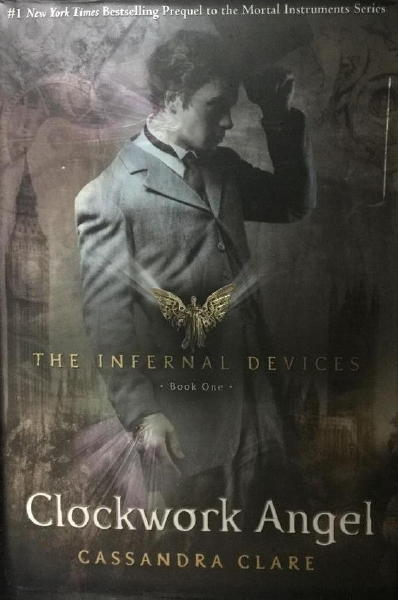
                • Cover of The Infernal Devices
                  The Infernal Devices

                  series · 5 books · 2010

                  part of The Mortal Instruments

                  similar by19th centuryyoung adultfantasyhistorical fantasy+2 more

                  The Infernal Devices is a trilogy by author Cassandra Clare, centring on a race called the Shadowhunters introduced in her The Mortal Instruments series. The trilogy is a prequel series to The Mortal Instruments series. Cassandra Clare has stated that the two series are able to be read in any order, but it is best to read them in publication order.

                • Cover of The Grey Horse
                  The Grey Horse

                  R. A. MacAvoy · standalone novel · 1987

                  similar byforbidden lovecolonialism19th centuryhistorical fantasyfantasy

                  Publisher's description: "Set against the colorful and magical backdrop of Ireland. It chronicles a time when the Irish people suffered under harsh English overlords who sought to destroy their culture and way of life. Into the Irish town of Carraroe, a magnificent, completely grey stallion appears. The horse brings with him the promise of better times and magical happenings, for he is actually the shaped-shifted form of Ruairi MacEibhir, journeyed to such a time of danger in order to win the hand of the woman he loves."

                • Cover of A Thousand Perfect Things
                  A Thousand Perfect Things

                  Kay Kenyon · standalone novel · 2013

                  similar byforbidden lovecolonialismsouth asia19th centuryhistorical fantasy

                  A novel based on an alternate 19th century consisting of two warring continents on an alternate earth : the scientific Anglica (England) and magical Bharata (India). A young Victorian woman and aspiring botanist journeys to Bharata where she faces a choice between two suitors and two irreconcilable realms.

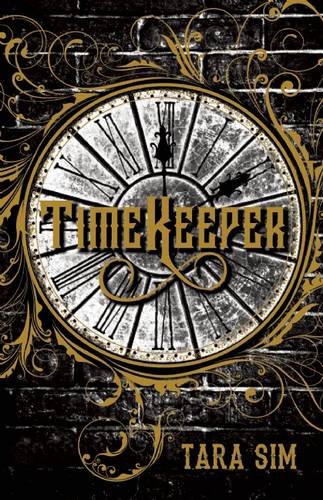
                • Cover of Timekeeper
                  Timekeeper

                  series · 3 books · 2016

                  similar by19th centuryyoung adultfantasyhistorical fantasy+6 more

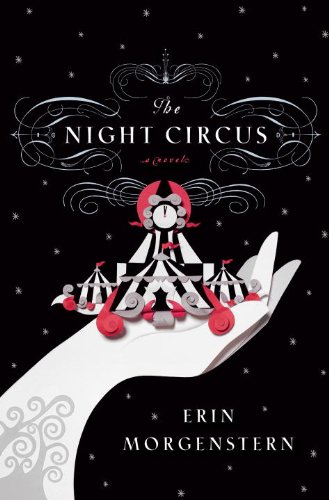
                • Cover of The Night Circus
                  The Night Circus

                  Erin Morgenstern · standalone novel · 2011

                  similar byforbidden lovemysteriousfantasyhistorical fantasy+1 more

                  The Night Circus is a 2011 speculative fiction novel by Erin Morgenstern. It was originally written for the annual writing competition National Novel Writing Month (NaNoWriMo) over the span of three competitions. The novel has a nonlinear narrative written from multiple viewpoints.

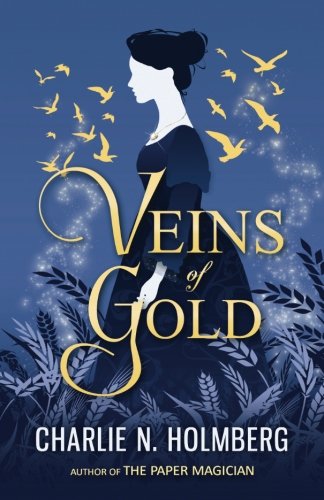
                • Cover of Veins of Gold
                  Veins of Gold

                  Charlie N. Holmberg · standalone novel · 2018

                  similar by19th centurytensefantasyhistorical fantasy+1 more

                  "Abandoned by their father for the gold rush, Gentry and her siblings labor to survive alone in the inhospitable west. When bizarre natural disasters begin wreaking havoc on the land, Gentry discovers a world of magic. Desperate for help, she accepts aid from a mysterious stranger. Winn not only sees the magic, but controls its hunger by feeding it gold--the very thing Gentry's father left to acquire. But the earth's unrest only grows worse, and Gentry's fear leads her to a terrible choice: marry a wealthy man she does not love, or trust in Winn's unpredictable power to save her family."--Amazon.com.

                • Cover of The Midnight Bargain
                  The Midnight Bargain

                  C. L. Polk · standalone novel · 2020

                  similar byforbidden love19th centuryhistorical fantasyyoung adultfantasy+1 more

                  2021 World Fantasy Award Finalist for Best Novel | 2021 Nebula Award Finalist for Best Novel | 2021 FIYAHCON Ignyte Award Finalist for Best Novel | 2021 Canada Reads Finalist | NPR Best Books of 2020 | November 2020 Indie Next Pick | Apple Books: Best Books of October From the bestselling, World Fantasy Award-winning author of Witchmark comes a sweeping, romantic new fantasy set in a world reminiscent of Regency England, where women’s magic is taken from them when they marry. A sorceress must balance her desire to become the first great female magician against her duty to her family. Beatrice Clayborn is a sorceress who practices magic in secret, terrified of the day she will be locked into a marital collar that will cut off her powers to protect her unborn children. She dreams of becoming a full-fledged Magus and pursuing magic as her calling as men do, but her family has staked everything to equip her for Bargaining Season, when young men and women of means descend upon the city to negotiate the best marriages. The Clayborns are in severe debt, and only she can save them, by securing an advantageous match before their creditors come calling. In a stroke of luck, Beatrice finds a grimoire that contains the key to becoming a Magus, but before she can purchase it, a rival sorceress swindles the book right out of her hands. Beatrice summons a spirit to help her get it back, but her new ally exacts a price: Beatrice’s first kiss . . . with her adversary’s brother, the handsome, compassionate, and fabulously wealthy Ianthe Lavan. The more Beatrice is entangled with the Lavan siblings, the harder her decision becomes: If she casts the spell to become a Magus, she will devastate her family and lose the only man to ever see her for who she is; but if she marries—even for love—she will sacrifice her magic, her identity, and her dreams. But how can she choose just one, knowing she will forever regret the path not taken?

                • Cover of The Gilded Wolves
                  The Gilded Wolves

                  series · 3 books · 2019

                  similar by19th centuryyoung adultfantasyhistorical fantasy+2 more

                • Cover of The Land of Hope and Glory
                  The Land of Hope and Glory

                  series · 3 books · 2011

                  similar bycolonialism19th centurytensehistorical fantasy+2 more

                • Cover of Passenger
                  Passenger

                  series · 2 books · 2016

                  similar byforbidden love19th centuryyoung adulttime travel+2 more

                • Cover of The Last Hours
                  The Last Hours

                  series · 4 books · 2019

                  part of The Mortal Instruments

                  similar byyoung adult+6 more

                  Cassandra Clare's The Last Hours opens with Chain of Gold, set in 1903 London among the Shadowhunters of the London Institute, part of the wider Shadowhunter Chronicles that includes The Mortal Instruments. Continuing the saga's tradition of chapter epigraphs drawn from Victorian and Edwardian poetry, the trilogy concludes across Chain of Iron and Chain of Thorns.

                • Cover of The Last Binding
                  The Last Binding

                  series · 3 books · 2021

                  similar by19th centuryhistorical fantasyfantasy+2 more

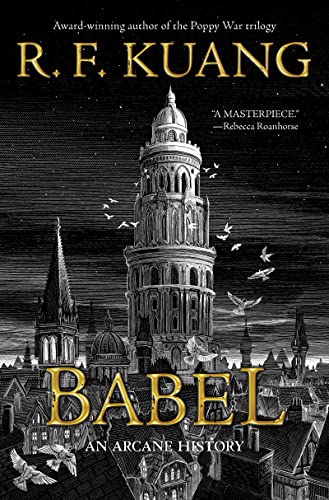
                • Cover of Babel, or, The Necessity of Violence: An Arcane History of the Oxford Translators' Revolution
                  Babel, or, The Necessity of Violence: An Arcane History of the Oxford Translators' Revolution

                  R. F. Kuang · standalone novel · 2022

                  similar bycolonialism19th centuryhistorical fantasyfantasy

                  Babel, or The Necessity of Violence: An Arcane History of the Oxford Translators' Revolution is a 2022 novel of speculative fiction by R. F. Kuang set in a fantastical version of Oxford in 1830s England. Thematically similar to The Poppy War (2018–20), Kuang's first book series, the book criticizes British imperialism, racism and capitalism, and the complicity of academia, knowledge, and language in perpetuating and enabling them.

                • Cover of Gemma Doyle
                  Gemma Doyle

                  series · 4 books · 2003

                  similar by19th centuryyoung adultfantasyhistorical fantasy+1 more

                  The Gemma Doyle Trilogy is a trilogy of fantasy novels by American writer Libba Bray. They are told from the perspective of Gemma Doyle, a girl in the late nineteenth century. The Gemma Doyle Trilogy consists of three books: A Great and Terrible Beauty, Rebel Angels, and The Sweet Far Thing.

                • Cover of The Anubis Gates
                  The Anubis Gates

                  series · 3 books · 1983

                  similar by19th centurymysterioustime travelhistorical fantasyfantasy+1 more

                  The Anubis Gates is a single time-travel fantasy novel by Tim Powers, following a present-day academic who takes part in a time-travel experiment and ends up stranded in early nineteenth-century London. It won the Philip K. Dick Award in 1983 and the Science Fiction Chronicle Award the following year.

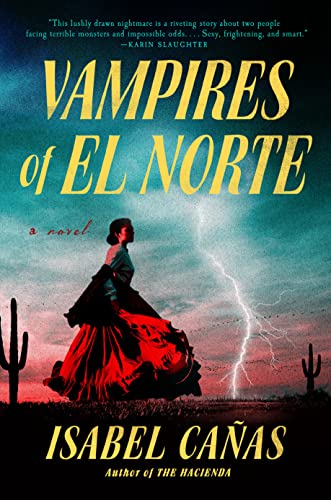
                • Cover of Vampires of El Norte
                  Vampires of El Norte

                  Isabel Cañas · standalone novel · 2023

                  similar byforbidden love19th centurytensehistorical fantasy

                  Vampires of El Norte is a 2023 novel by Isabel Cañas. The novel centers on the romance between Nena, daughter of a ranchero, and the vaquero Néstor. The novel takes place during the Mexican–American War, with the addition of vampires.

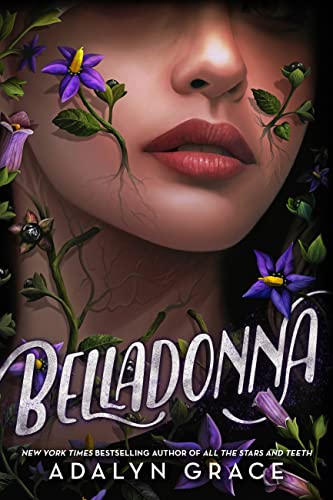
                • Cover of Belladonna
                  Belladonna

                  series · 4 books · 2022

                  similar byyoung adultfantasy+4 more

                  Belladonna is Adalyn Grace's gothic YA fantasy series opening with Belladonna (2022), followed by Foxglove and Wisteria, plus the companion novella Holly. Set in a haunted, death-adjacent version of the era, it follows an orphaned heiress entangled with Death itself as she investigates the murders and mysteries surrounding her inherited estate. It blends romance, ghost story and whodunit within one continuing story.

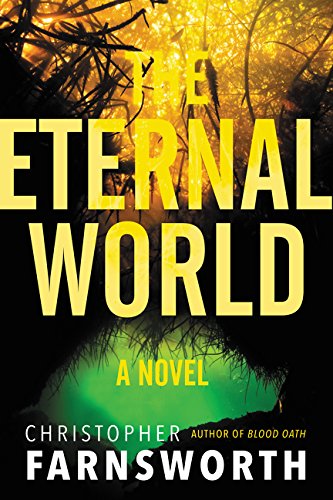
                • Cover of The Eternal World
                  The Eternal World

                  Christopher Farnsworth · standalone novel · 2015

                  similar bycolonialismtensefantasy+1 more

                  Five hundred years ago, a group of Spanish conquistadors land in the New World, searching for gold. What they find is a treasure far more valuable: the Fountain of Youth. The Spaniards slaughter the Native American tribe that guards the precious liquid that will keep the conquistadors young for centuries. But one of them escapes: Shako, the chief's daughter, who swears to avenge her people--a blood oath that spans five centuries. When the source of the fountain is destroyed in our own time, the loss threatens the Spaniards and the powerful, shadowy empire of wealth and influence they have built. For help, they turn to David Robinton, a scientific prodigy who believes he is on the verge of the greatest medical breakthrough of all time. But as the centuries-old war reaches its final stages, David makes a horrifying discovery about his employers and the mysterious and exotic woman he loves. Now the scientist must decide: Is he a pawn in a game of immortals--or will he be its only winner?--Adapted from book jacket.

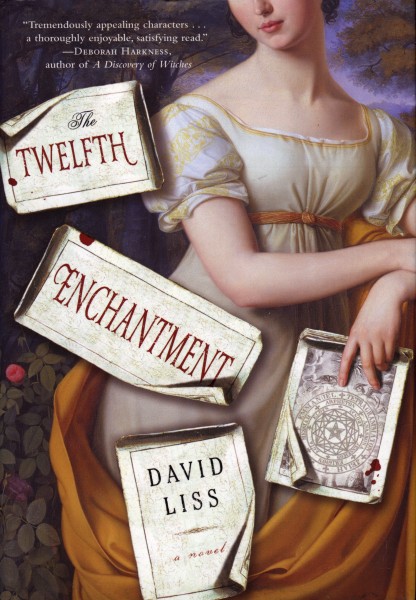
                • Cover of The Twelfth Enchantment
                  The Twelfth Enchantment

                  David Liss · standalone novel · 2011

                  similar by19th centurymysterioushistorical fantasy+1 more

                  From the front flap of the Random House first edition: "Lucy Derrick is a young woman of good breeding and poor finances. After the death of her beloved father, she is forced to maintain a shabby dignity as the unwanted boarder of her tyrannical uncle, fending off marriage to a local mill owner. But just as she is on the cusp of accepting a life of misery, events take a stunning turn when a handsome stranger-the poet and notorious rake Lord Byron-arrives at her house, stricken by what seems to be a curse, and with a cryptic message for Lucy. Suddenly her unfortunate circumstances are transformed in ways at once astonishing and seemingly impossible. With the world undergoing an industrial transformation, and with England on the cusp of revolution, Lucy is drawn into a dangerous conspiracy in which her life, and her country's future, are in the balance. Inexplicably finding herself at the center of cataclysmic events, Lucy is awakened to a world once unknown to her: where magic and mortals collide, and the forces of ancient nature and modern progress are at war for the soul of England ... and the world. The key to victory may be connected to a cryptic volume whose powers of enchantment are unbounded. Now, challenged by ruthless enemies with ancient powers at their command, Lucy must harness newfound mystical skills to prevent catastrophe and preserve humanity's future. And enthralled by two exceptional men with designs on her heart, she must master her own desires to claim the destiny she deserves."

                • J
                  Jess

                  H. Rider Haggard · standalone novel · 1887

                  similar bycolonialism19th century+1 more

                  Jess is a novel by British writer H. Rider Haggard, set in South Africa.

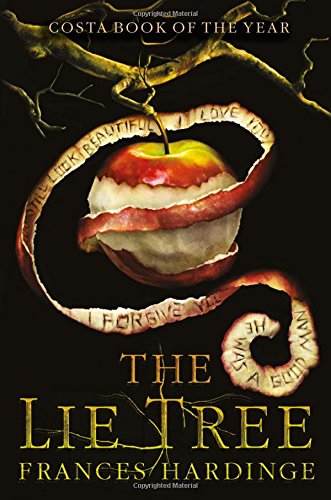
                • Cover of The Lie Tree
                  The Lie Tree

                  Frances Hardinge · standalone novel · 2015

                  similar by19th centurymysteriousfantasyhistorical fantasy

                  The Lie Tree is the seventh children's historical fantasy novel by Frances Hardinge, published in 2015 by Macmillan Publishers. The book won the 2015 Costa Book of the Year.

                • Cover of Fire, Burn!
                  Fire, Burn!

                  John Dickson Carr · standalone novel · 1957

                  similar by19th centurymysterioustense

                  Fire, Burn! is a 1957 historical mystery novel by John Dickson Carr. Carr considered this one of his best impossible crime novels.

                • Cover of The Mystery of the Sea
                  The Mystery of the Sea

                  Bram Stoker · standalone novel · 1902

                  similar by19th centurymysterioustense

                  "When Archibald Hunter comes to Cruden Bay, Aberdeenshire, for his annual holiday, he looks forward to a tranquil few days by the sea. But as he sits by the bridge he is disturbed by a strange vision of a couple he had seen earlier, the man now carrying a small black coffin. Shortly afterwards he discovers their child has drowned. The following day, speaking to a fisherman, he is again confronted by a portent of doom. As he sets out to sea, the other men speak his name - Lauchlane Macleod: the very same whose death Gormala had foretold. But how can this gaunt old woman know such things? Where are these terrible visions, whose force he seems unable to counter, taking him? What is the significance of the pages of cipher which once belonged to Don de Escoban? Can he solve the Mystery of the Sea?" --quoted from this book's product page at Amazon UK as of 2017-08-29 --found 2019-05-10 as "From the Back Cover" at {{ASIN|B079558GC5}}, 2018 Jovian Press ebook --Google Books 2019-05-10 quotes the same description for its display of the 1902 Doubleday, Page edition (as W. Heinemann, 1902) "What is the significance of the pages of cipher which once belonged to Don de Escoban? The cipher used is a Bacon biliteral cipher. Appendices to the novel contain an explanation of the Bacon biliteral cipher and of the solution process used. The main purpose of the novel seems to be not the plot, but the exposition of the cipher system and the solution of the cipher messages." --Original Crypto Fiction #120 (faculty.knox.edu/jdooley/Crypto/Crypto1.htm)

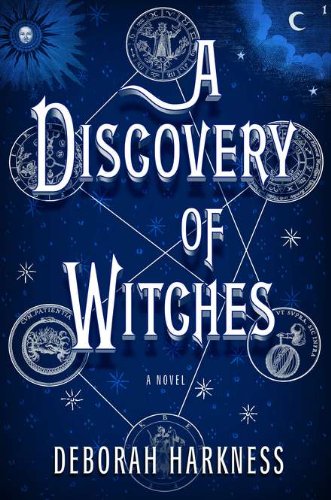
                • Cover of All Souls
                  All Souls

                  series · 5 books · 2011

                  similar byforbidden lovehistorical fantasyfantasy+1 more

                  A Discovery of Witches is a 2011 historical-fantasy novel and the debut novel by American scholar Deborah Harkness. It follows Diana Bishop, a history of science professor at Yale University, as she embraces her magical blood after finding a long-thought-lost manuscript and engages in a forbidden romance with a charming vampire, Matthew Clairmont.