Loreful
HomeDiscover
Search series, authors…⌘K
Loreful

Reading orders for SF/F series and shared universes — with your place kept in every one.

Explore

UniversesSeriesWorksAuthorsAtlas

Help

FAQAboutSite map

Account & legal

Sign inCreate accountPrivacyTerms

Data

Built on ISFDB, Wikipedia, Wikidata and Open Library. Curated reading orders carry their reasoning on the page; the rest follow publication order. Data sources & licenses

© Loreful · data: ISFDB · CC BY

More like Chasing Shadows

anchored on:thriller & suspense

but

Mood

The mood the book leaves you in.

  • The reading experience is propelled by journeys, exploration, and physical risk; excitement and forward momentum dominate over dread or introspection.
  • Joy and loss are deliberately mixed; the resolution grants characters something real while taking something else away, leaving warmth and sorrow together.
  • The book demands work from the reader — dense prose, difficult structure, unfamiliar ideas, or morally uncomfortable material — as part of its intended effect.
  • Grim events, cruelty, or despair dominate the atmosphere, and the book does not soften them with comfort or comic relief.
  • The atmosphere is quietly unsettling — wrongness, unease, and the uncanny pervade the book without necessarily escalating into overt horror.
  • The book is built to move the reader; character feeling is foregrounded and major scenes aim at a strong emotional response.
  • Humor is a primary aim and the prose plays for laughs — comic situations, wit, or dialogue produce sustained comedy, not occasional levity.
  • The book insists that things can improve; effort and decency are shown to matter, and the arc bends toward better outcomes even through hardship.
  • The book teaches as it goes — real facts, history, science, or craft are conveyed in enough depth that learning is part of the reading experience.
  • The book is designed to uplift and motivate, presenting perseverance or achievement in a way that invites the reader to aspire or act.
  • The overall register is cheerful and easygoing; stakes are kept gentle and the book avoids dwelling on pain or dread.
  • Withheld information drives the experience; the book sustains enigmas and secrets the reader wants resolved, whatever its genre.
  • The book is contemplative and inward-looking, giving more weight to thought, memory, and meaning than to external events.
  • The book works as comfort reading — low tension, a soothing pace, and an atmosphere the reader can unwind in.
  • Grief, loss, or melancholy set the dominant register, and the book lets sorrow stand rather than resolving it into comfort.
  • Sustained suspense is the point; the book keeps the reader braced for what happens next through danger, pressure, or impending revelation.
  • Playful invention and charm define the register — fanciful conceits, light absurdity, and a narration that delights in its own oddity.

About

What the story runs on.

  • Stories in which extraterrestrial beings are central — as characters, cultures, or the object of the plot.
  • Stories structured as a quest — a journey undertaken to find, deliver, or destroy something of great import.
  • Stories in which staying alive against nature, catastrophe, or scarcity is the central problem.
  • Stories of lovers kept apart by law, family, faith, or station, where the obstacle to love is the plot.
  • Stories in which a friendship — its making, testing, or loss — is the emotional center.
  • Stories of growing up — a young protagonist crossing from childhood into adult knowledge and responsibility.
  • Stories about who a character truly is — self-discovery, doubled lives, and the search for a self.
  • Stories about mourning — living through the death of a loved one and what loss does to the survivors.
  • Stories in which a buried family truth — hidden parentage, crimes, or shames — surfaces and reorders the present.
  • Stories driven by maneuvering for power — factions, conspiracies, and statecraft conducted in shadow.
  • Stories in which war itself is the subject — combat, occupation, and what warfare does to soldiers and civilians.
  • Stories organized around investigating a killing — the case, the clues, and the pursuit of the killer, in any genre's clothing.

Shelf

Where it sits in the library.

    • Fiction built on magic or other supernatural elements that have no scientific explanation.
    • Secondary-world fantasy at large scale, where the fate of nations or the world turns on the protagonists' struggle.
    • Fantasy set in a recognizably modern city or contemporary world where the supernatural intrudes on everyday life.
    • Fantasy that blends in horror's atmosphere and imagery, keeping a fantastical frame around grim or frightening material.
    • Action-driven fantasy following warriors or rogues with personal stakes against sorcerous threats, rather than world-spanning conflicts.
    • Fantasy set in a real historical period or a close analogue of one, with magic woven into the era.
    • Fantasy in which protagonists cross from the ordinary world into another world through a portal or similar passage.
    • Fiction that retells or reworks a traditional fairy tale in a new form or setting.
    • Fantasy drawing directly on myths, legends, and folklore, retelling them or building on their figures and logic.
    • Fantasy of ghosts, vampires, shapeshifters, psychics, and similar phenomena, usually set in an otherwise ordinary world.
    • Fiction mixing science-fictional trappings with overtly magical or impossible elements in one setting.
    • Low-stakes fantasy emphasizing comfort, community, and everyday pleasures over conflict and peril.
    • Speculative fiction of pervasive moral ambiguity, violence, and cynicism that rejects heroic conventions — fantasy and SF alike.
      • Fiction that extrapolates from science and technology — future societies, space travel, or speculative inventions — within at least nominally natural laws.
      • Science fiction of interstellar scope — starships, galactic polities, and adventure across star systems.
      • Science fiction committed to scientific rigor, where technical plausibility constrains the story.
      • Science fiction centered on armed forces and warfare, told largely from a military point of view.
      • Science fiction of networked, corporate-dominated near futures, pairing high technology with social decay.
      • Science fiction styled on nineteenth-century steam-powered technology, often in a Victorian or pseudo-Victorian setting.
      • Fiction depicting an oppressive or catastrophic society, presented as a warning.
      • Fiction set after civilization's collapse, following survivors in the ruins of the old world.
      • Fiction in which characters move between past and future, and the mechanics or consequences of that travel drive the plot.
      • Fiction exploring a world where a historical event went differently and history diverged from ours.
      • Science fiction about humanity's first encounter and communication with an alien intelligence.
      • Science fiction in which extraterrestrial forces attack or occupy Earth and humanity resists.
      • Fiction whose primary aim is to frighten or unsettle the reader through dread, menace, or the monstrous.
      • Horror of vast, indifferent, incomprehensible entities before which humanity is insignificant, in the Lovecraft tradition.
      • Horror of decaying houses, buried family secrets, and oppressive atmosphere in the Gothic literary tradition.
      • Horror centered on hauntings and the returning dead.
      • Horror located in the mind — paranoia, obsession, and unreliable perception rather than external monsters.
      • Horror built around the reanimated dead and survival amid their outbreaks.
      • Horror defined by explicit, transgressive gore that refuses to cut away from violence.
      • Speculative fiction of the strange and uncanny that resists both natural explanation and standard genre categories.
      • Fiction organized around solving a crime or puzzle, typically following an investigator toward the identification of a culprit.
      • A puzzle-first mystery that lays out clues so the culprit's identity can be deduced before the reveal.
      • Crime fiction of moral ambiguity, fatalism, and hard-edged style, set among the corrupt and the doomed.
      • A mystery following the realistic routines of police work — forensics, interviews, and case-building.
      • A gentle mystery with an amateur sleuth, a small community, and violence kept off the page.
      • A mystery set in a past era, where the investigation works within that period's methods and society.
      • Fast-paced fiction driven by imminent danger, pursuit, or high-stakes conspiracy, built to sustain tension.
      • A thriller of espionage — agents, tradecraft, and intelligence services in conflict.
      • A thriller centered on lawyers and the courtroom, where litigation carries the suspense.
      • A thriller driven by detailed contemporary or near-future technology, often military or scientific.
      • A thriller whose tension comes from mental states and manipulation between characters rather than external action.
      • Fiction whose central plot is a romantic relationship and its development toward an emotionally satisfying resolution.
      • Romance in which one or both partners are supernatural beings, blending fantasy elements into the love story.
      • A fantasy-romance hybrid in which the romantic arc and the fantasy plot carry equal weight.
      • Romance set in a past era, with courtship shaped by the period's society and manners.
      • Romance set in the present day, without supernatural or historical elements.
      • Fiction set in a real past period, where the historical setting materially shapes characters and events.
        • General and literary fiction emphasizing prose style, character interiority, or formal ambition over genre plot conventions.
        • Fiction in a realistic world where magical events occur and are treated as ordinary, in the tradition of Latin American literature.
        • Fiction that ridicules people, institutions, or society in order to criticize them.
        • Fiction of dreamlike, irrational imagery and logic that breaks from realistic representation.
        • Fiction that plays with narrative convention through metafiction, fragmentation, and self-reference.
        • Fiction propelled by journeys, exploration, and physical peril, where action and survival carry the plot.
        • Adventure fiction of ships and seafaring — naval engagements, voyages, and life at sea.
        • Fiction of the American frontier West — gunmen, ranchers, and lawmen, typically in the late nineteenth century.
        • Fiction centered on soldiers, campaigns, and the experience of warfare, historical or imagined.
          • Fiction written primarily to amuse, using comedic situations, wit, or parody as its organizing principle.
            • Multi-generational fiction following a family or dynasty across decades, with inheritance and kinship as the through-line.
              • Fiction whose world runs on explicit game mechanics — levels, stats, and skills that characters can see and exploit.
                • Fiction about costumed or superpowered heroes and their conflicts with comparable villains.

                Practical

                How long a commitment, whether it stands alone, and whether it has finished.

                Tap a chip to ask for it · tap again to rule it out · once more to clear. Numbers show what would be left.

                • Cover of Robert Langdon
                  Robert Langdon

                  series · 6 books · 2000

                  similar bythriller & suspensecontemporarymysterioustense

                  The Robert Langdon novel series is named after Robert Langdon, the protagonist of the novels by American author Dan Brown. Langdon is portrayed as a Harvard University professor of religious iconology and symbology, a fictional field related to the study of historic symbols, which is not methodologically connected to the actual discipline of semiotics. Brown's novels that feature the lead character also include historical themes and Christianity as motifs, and as a result have generated controversy. Brown states on his website that his novels are not anti-Christian, and that he is on a "constant spiritual journey" himself.

                • Cover of Deception Point
                  Deception Point

                  Dan Brown · standalone novel · 2001

                  similar bythriller & suspenseour worldcontemporarymysterioustense

                  Deception Point is a 2001 mystery-thriller novel by American author Dan Brown. It is Brown's third novel. It was published by Simon & Schuster.

                • Cover of Effective Engineering Solutions
                  Effective Engineering Solutions

                  series · 37 books · 1995

                  similar bythriller & suspensecontemporarytense+2 more

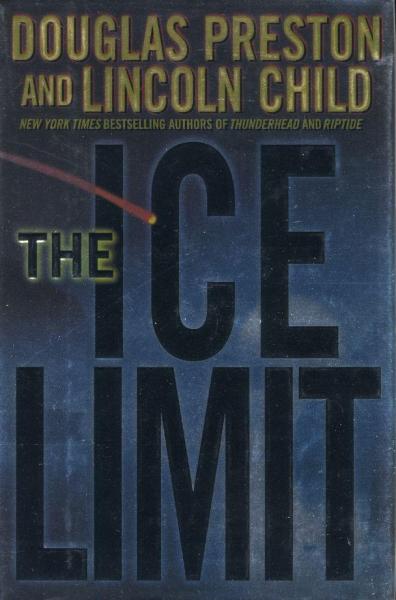
                  The Ice Limit follows a team hired by an eccentric billionaire to recover what looks like the largest meteorite ever found, off a remote island near Cape Horn, only to discover, as they flee across the Antarctic seas aboard a retrofitted tanker, that they've actually excavated something alive. Douglas Preston and Lincoln Child wrote it as a standalone techno-thriller in 2000; it later fed into their separate Gideon Crew series rather than getting a direct sequel of its own.

                • Cover of The Fear Index
                  The Fear Index

                  Robert Harris · standalone novel · 2011

                  similar bythriller & suspenseour worldcontemporarymysterioustense

                  A computer designed for stock trading becomes sentient.

                • Cover of The Blue Ant Trilogy
                  The Blue Ant Trilogy

                  series · 3 books · 2003

                  similar bythriller & suspensecontemporarymysterious+2 more

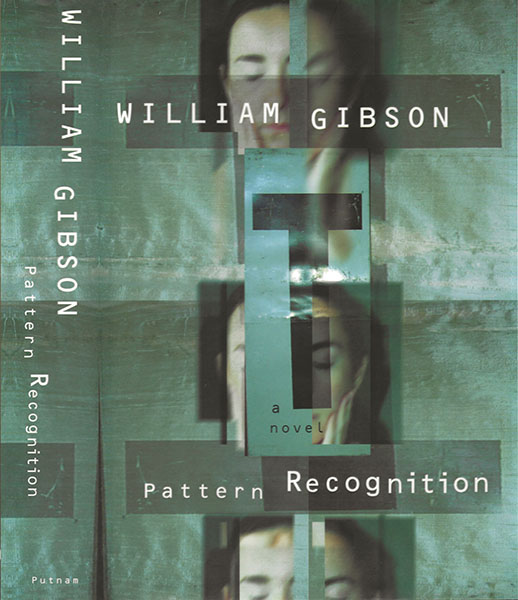
                  Hubertus Bigend is a fictional character appearing in the third trilogy of novels of science fiction and literary author William Gibson. Bigend is the antihero of Gibson's Pattern Recognition (2003), Spook Country (2007) and Zero History (2010). In an interview Gibson says "I've always had a sense of Bigend as someone who presents himself as though he knows what's going on, but who in fact doesn't. It's just my sense of the subtext of the character: he's bullshitting himself, at the same time as he's bullshitting all of us."

                • Cover of Jeremy Logan
                  Jeremy Logan

                  series · 6 books · 2007

                  similar bythriller & suspensecontemporarytense+1 more

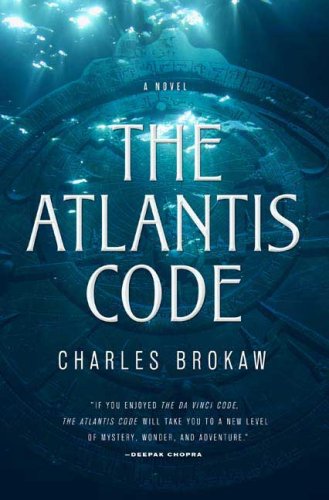
                  Lincoln Child's Jeremy Logan series follows an investigator through cases where science and the seemingly supernatural collide, opening with Deep Storm, set at a deep-sea drilling platform that may have uncovered the lost city of Atlantis. The series continues across six novels blending techno-thriller and horror elements.

                • Cover of Tom Broadbent / Wyman Ford
                  Tom Broadbent / Wyman Ford

                  series · 6 books · 2003

                  similar bythriller & suspenseour worldcontemporarytense

                  Douglas Jerome Preston is an American journalist and author. Although he is best known for his thrillers in collaboration with Lincoln Child, he has also written six solo novels, including the Wyman Ford series and a novel titled Jennie, which was made into a movie by Disney called The Jennie Project. Preston has authored a half-dozen nonfiction books on science and exploration and writes occasionally for The New Yorker, Smithsonian, and other magazines.

                • Cover of Departure
                  Departure

                  A. G. Riddle · standalone novel · 2014

                  similar bythriller & suspenseour worldcontemporarymysterioustense

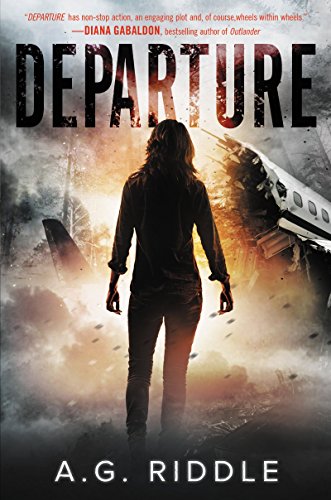
                  "The world's past and future rests in the hands of five unwitting strangers in this definitive edition of A. G. Riddle's time-traveling, mind-bending speculative thriller. En route to London from New York, Flight 305 suddenly loses power and crash-lands in the English countryside, plunging a group of strangers into a mysterious adventure that will have repercussions for all of humankind.Struggling to stay alive, the survivors soon realize that the world they've crashed in is very different from the one they left. But where are they? Why are they here? And how will they get back home? Five passengers seem to hold clues about what's really going on: writer Harper Lane, venture capitalist Nick Stone, German genetic researcher Sabrina Schroeder, computer scientist Yul Tan, and Grayson Shaw, the son of a billionaire philanthropist.As more facts about the crash emerge, it becomes clear that some in this group know more than they're letting on--answers that will lead Harper and Nick to uncover a far-reaching conspiracy involving their own lives. As they begin to piece together the truth, they discover they have the power to change the future and the past--to save our world. or end it. A wildly inventive and propulsive adventure full of hairpin twists, Departure is a thrilling tale that weaves together power, ambition, fate, memory, and love, from a bold and visionary talent"--

                • Cover of Atlantis (Thomas Greanias)
                  Atlantis (Thomas Greanias)

                  series · 3 books · 2005

                  similar bythriller & suspenseour worldcontemporarymysterioustense

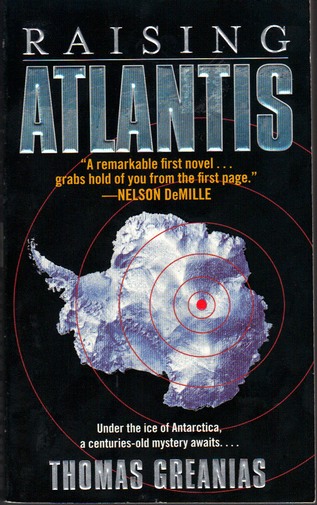
                  Archaeologist Conrad Yeats teams up with Vatican linguist Serena Serghetti to chase the truth behind Atlantis and the origins of the human race in Raising Atlantis, a globe-trotting thriller that Thomas Greanias followed with The Atlantis Prophecy and The Atlantis Revelation. Greanias originally planned a longer series; this trilogy stands as the completed core of a larger Atlantis mythology he later expanded through prequels and spin-offs.

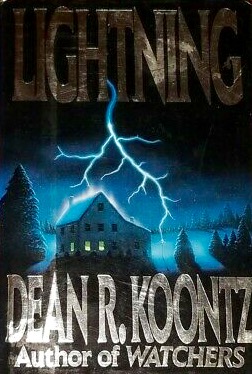
                • Cover of Lightning
                  Lightning

                  Dean R. Koontz · standalone novel · 1988

                  similar bythriller & suspenseour worldmysterioustense+1 more

                  A young woman repeatedly experiences her life being saved by a mysterious stranger...

                • Cover of Cotton Malone
                  Cotton Malone

                  series · 5 books · 2006

                  similar bythriller & suspenseour worldcontemporarytense+1 more

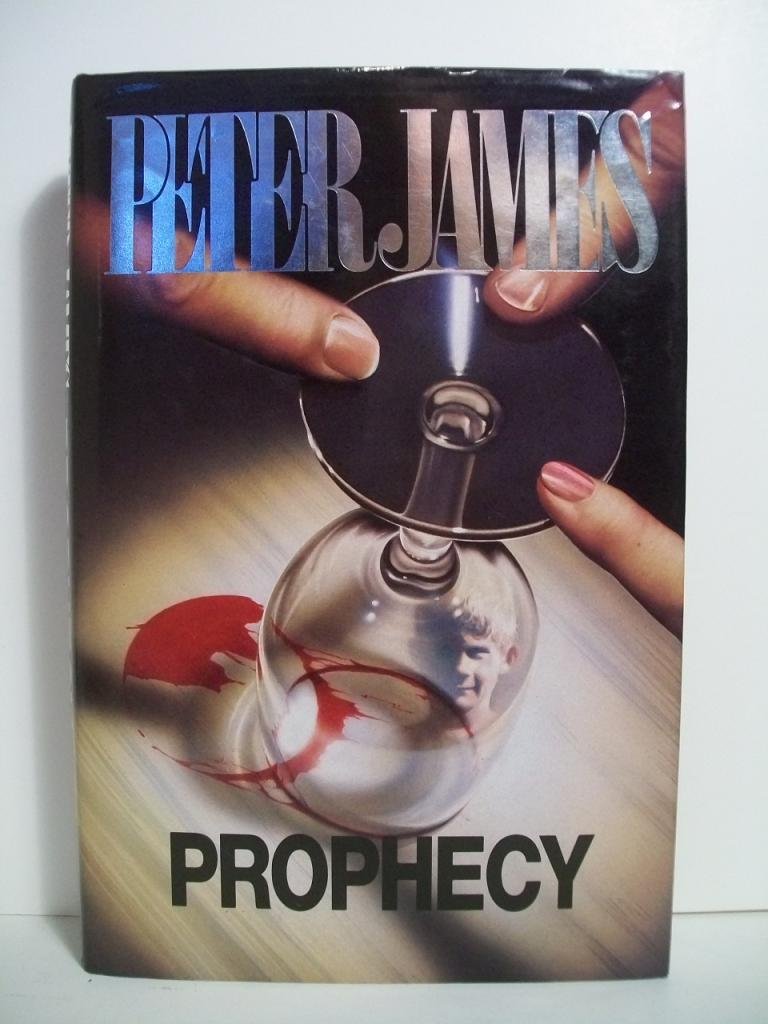
                • Cover of Prophecy
                  Prophecy

                  Peter James · standalone novel · 1992

                  similar bythriller & suspense

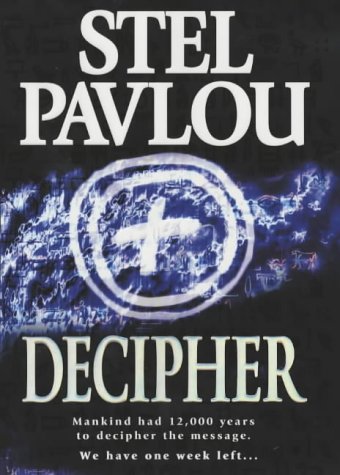
                • Cover of Decipher
                  Decipher

                  Stel Pavlou · standalone novel · 2001

                  similar bythriller & suspenseour worldcontemporarymysterioustense

                  Decipher is a speculative fiction novel by British author Stel Pavlou, published in 2001 in England by Simon & Schuster and 2002 in the United States by St. Martin's Press. The novel is about a fictional linguist, Richard Scott, and an assembled team of specialists who are in a race against time to crack a code found on ancient monuments around the world before an impending cataclysm predicted in mythology can strike. The story centers on the ancient city of Atlantis and features other mythical sites such as the Hall of Records.

                • Cover of The 22 Murders of Madison May
                  The 22 Murders of Madison May

                  Max Barry · standalone novel · 2021

                  similar bythriller & suspenseour worldcontemporary

                • Cover of Jack Howard
                  Jack Howard

                  series · 8 books · 2005

                  similar bythriller & suspenseour worldcontemporarytense

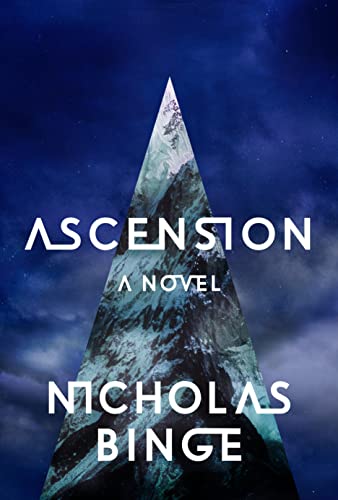
                • Cover of Ascension
                  Ascension

                  Nicholas Binge · standalone novel · 2023

                  similar bythriller & suspenseour worldcontemporarymysterioustense

                  Ascension is a 2023 novel by Nicholas Binge, published in the UK by Harper Voyager, and in the US by Riverhead Books. It is published or forthcoming in twelve languages, and a film adaptation is in development. The novel tells the story of Harold Tunmore, a physicist, who joins a team to climb a mountain that has appeared in the middle of the Pacific Ocean.

                • Cover of Thomas Lourds
                  Thomas Lourds

                  series · 3 books · 2009

                  similar bythriller & suspensecontemporarytense+2 more

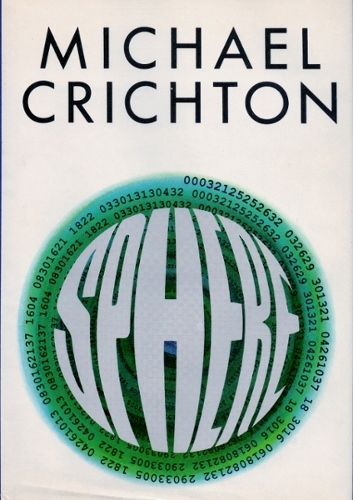
                • Cover of Sphere
                  Sphere

                  Michael Crichton · standalone novel · 1987

                  similar bythriller & suspensecontemporarymysterioustense

                  Keeping Top Secret, the US Navy is guarding a gigantic spaceship that has been lying on the Pacific ocean floor for centuries, overgrown with corals. A group of highly qualified scientists is assembled to investigate this mysterious discovery. When the team boards the ship via an underwater station, they come into confrontation with the evil.

                • Cover of The Book of Blood and Shadow
                  The Book of Blood and Shadow

                  Robin Wasserman · standalone novel · 2012

                  similar bythriller & suspenseour worldcontemporarymysterioustense

                  It was like a nightmare, but there was no waking up. When the night began, Nora had two best friends and a boyfriend she adored. When it ended, she had nothing but blood on her hands. Chris was dead. Adriane couldn't speak. And Max, Nora's sweet, smart, soft-spoken Prince Charming, was gone. He was also-according to the police, according to her parents, according to everyone-a murderer. Desperate to prove his innocence, Nora's determined to follow the trail of blood, no matter where it leads. But Chris's murder is just one piece in a puzzle that spans continents and centuries. Solving it may be the only way she can save her own life.

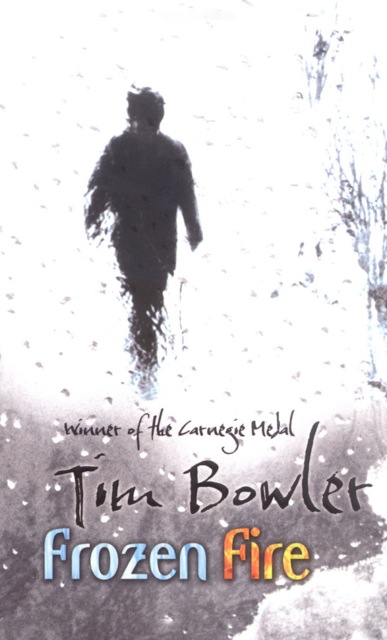
                • Cover of Frozen Fire
                  Frozen Fire

                  Tim Bowler · standalone novel · 2006

                  similar bythriller & suspenseour worldcontemporarymysterioustense

                  Frozen Fire is a philosophical thriller about the nature of reality by Tim Bowler. The novel was first published in 2006. It introduces a mysterious boy who wants to escape his unhappy life through suicide, and a fifteen-year-old girl who only wants her brother back from wherever he has disappeared to. Frozen Fire has won several awards.

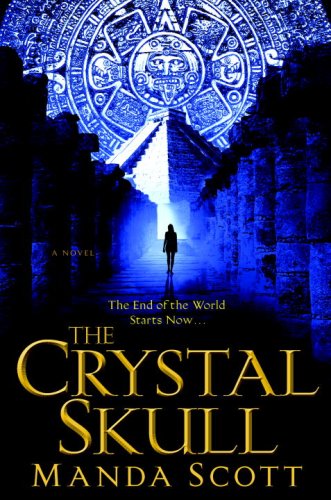
                • Cover of The Crystal Skull
                  The Crystal Skull

                  Manda Scott · standalone novel · 2008

                  similar bythriller & suspenseour worldcontemporarymysterioustense

                  In a spellbinding blend of history, myth, and science, bestselling novelist Manda Scott unleashes a thriller that sweeps from the secrets of the Mayans to the court of a sixteenth-century queen to a shattering end-times prophecy. "It's a lump of rock, Stella; nothing more. No stone is worth dying for." Except it's not just a lump of rock. It's a blue crystal skull made by the Maya to save the world from ruin; a sapphire so perfect, so powerful that for centuries men have killed to own or destroy it.Ancient prophecies say that if the thirteen skulls already in existence are not reunited, the world will end on December 21, 2012. Cedric Owen, the skull's last Keeper, died so that it might keep its secret for the next four centuries. Now Stella Cody has found it, and someone has already tried to kill her. Like Owen, she's being hunted--but by whom?Desperate to unravel the mystery of the crystal skull, Stella must decode Cedric Owen's coded writings, sketches and ciphers no scholar has been able to unravel. What she discovers is astounding: a shocking secret prophecy...and the staggering puzzle of four terrifying creatures, thirteen precious stones, and what will happen if Cedric Owen's crystal skull falls into the wrong hands. But time is against Stella. She has only days--hours--left to uncover the only secret that may yet save the world.12.21.12The date is set. Time is running out.The end of the world starts now.From the Hardcover edition.

                • Cover of Dracula
                  Dracula

                  universe · 144 books · 1897

                  Start hereDracula · Start here

                  "Come freely. Go safely. And leave something of the happiness you bring" — so the Count greets his guest at the threshold of the Carpathians, and the great door shuts behind. Bram Stoker's Dracula (1897) is the wellspring of the modern vampire: the account of a centuries-old Transylvanian nobleman who quits his crumbling castle for the crowded lodging-houses of London, and the handful of ordinary people — a young solicitor, a doctor of the mad, a professor of stranger learning — who must piece together what he is before he makes the whole city his fold. It is told wholly in fragments: journal entries, letters, telegrams, ships' logs, phonograph cylinders, each hand recording only its own sliver of the dark. Around that single novel a whole crypt of continuations has grown, raised by many writers across a century. Fred Saberhagen's Dracula Sequence hands the Count the microphone, retelling the old events from his own wry, aggrieved lips and following him into later intrigues. Robert Lory's brisk 1970s Dracula Horror Series revives him as a reluctant weapon turned against fouler things; Peter Tremayne's trilogy reaches back along his bloodline; and further sequels, a Quincey Morris spin-off, and Dracula's Children carry the shadow onward. This is a loose shared world built upon a public-domain figure, not one governed continuity — each author remakes him as villain, antihero, or sympathetic narrator. Begin, always, with Stoker's original; the letters and the mounting dread stand entirely on their own. From there follow whichever door tempts you — Saberhagen's The Dracula Tape for the monster's own confession, Lory or Tremayne for tales that never glance back at the Borgo Pass again.

                • Cover of Christopher Family Chronicles
                  Christopher Family Chronicles

                  series · 8 books · 1973

                  completed

                  similar bythriller & suspensetense+1 more

                • Cover of Denial
                  Denial

                  Peter James · standalone novel · 1998

                  similar bythriller & suspense