Loreful
HomeDiscover
Search series, authors…⌘K
Loreful

Reading orders for SF/F series and shared universes — with your place kept in every one.

Explore

UniversesSeriesWorksAuthorsAtlas

Help

FAQAboutSite map

Account & legal

Sign inCreate accountPrivacyTerms

Data

Built on ISFDB, Wikipedia, Wikidata and Open Library. Curated reading orders carry their reasoning on the page; the rest follow publication order. Data sources & licenses

© Loreful · data: ISFDB · CC BY

More like Checkmate

anchored on:alternate historyrace and racismbritish islescontemporaryyoung adultscience fiction+5 more

but

Mood

The mood the book leaves you in.

  • The reading experience is propelled by journeys, exploration, and physical risk; excitement and forward momentum dominate over dread or introspection.
  • Joy and loss are deliberately mixed; the resolution grants characters something real while taking something else away, leaving warmth and sorrow together.
  • The book demands work from the reader — dense prose, difficult structure, unfamiliar ideas, or morally uncomfortable material — as part of its intended effect.
  • Grim events, cruelty, or despair dominate the atmosphere, and the book does not soften them with comfort or comic relief.
  • The atmosphere is quietly unsettling — wrongness, unease, and the uncanny pervade the book without necessarily escalating into overt horror.
  • The book is built to move the reader; character feeling is foregrounded and major scenes aim at a strong emotional response.
  • Humor is a primary aim and the prose plays for laughs — comic situations, wit, or dialogue produce sustained comedy, not occasional levity.
  • The book insists that things can improve; effort and decency are shown to matter, and the arc bends toward better outcomes even through hardship.
  • The book teaches as it goes — real facts, history, science, or craft are conveyed in enough depth that learning is part of the reading experience.
  • The book is designed to uplift and motivate, presenting perseverance or achievement in a way that invites the reader to aspire or act.
  • The overall register is cheerful and easygoing; stakes are kept gentle and the book avoids dwelling on pain or dread.
  • Withheld information drives the experience; the book sustains enigmas and secrets the reader wants resolved, whatever its genre.
  • The book is contemplative and inward-looking, giving more weight to thought, memory, and meaning than to external events.
  • The book works as comfort reading — low tension, a soothing pace, and an atmosphere the reader can unwind in.
  • Grief, loss, or melancholy set the dominant register, and the book lets sorrow stand rather than resolving it into comfort.
  • Sustained suspense is the point; the book keeps the reader braced for what happens next through danger, pressure, or impending revelation.
  • Playful invention and charm define the register — fanciful conceits, light absurdity, and a narration that delights in its own oddity.

About

What the story runs on.

  • Stories in which extraterrestrial beings are central — as characters, cultures, or the object of the plot.
  • Stories structured as a quest — a journey undertaken to find, deliver, or destroy something of great import.
  • Stories in which staying alive against nature, catastrophe, or scarcity is the central problem.
  • Stories of lovers kept apart by law, family, faith, or station, where the obstacle to love is the plot.
  • Stories in which a friendship — its making, testing, or loss — is the emotional center.
  • Stories of growing up — a young protagonist crossing from childhood into adult knowledge and responsibility.
  • Stories about who a character truly is — self-discovery, doubled lives, and the search for a self.
  • Stories about mourning — living through the death of a loved one and what loss does to the survivors.
  • Stories in which a buried family truth — hidden parentage, crimes, or shames — surfaces and reorders the present.
  • Stories driven by maneuvering for power — factions, conspiracies, and statecraft conducted in shadow.
  • Stories in which war itself is the subject — combat, occupation, and what warfare does to soldiers and civilians.
  • Stories organized around investigating a killing — the case, the clues, and the pursuit of the killer, in any genre's clothing.

Shelf

Where it sits in the library.

    • Fiction built on magic or other supernatural elements that have no scientific explanation.
    • Secondary-world fantasy at large scale, where the fate of nations or the world turns on the protagonists' struggle.
    • Fantasy set in a recognizably modern city or contemporary world where the supernatural intrudes on everyday life.
    • Fantasy that blends in horror's atmosphere and imagery, keeping a fantastical frame around grim or frightening material.
    • Action-driven fantasy following warriors or rogues with personal stakes against sorcerous threats, rather than world-spanning conflicts.
    • Fantasy set in a real historical period or a close analogue of one, with magic woven into the era.
    • Fantasy in which protagonists cross from the ordinary world into another world through a portal or similar passage.
    • Fiction that retells or reworks a traditional fairy tale in a new form or setting.
    • Fantasy drawing directly on myths, legends, and folklore, retelling them or building on their figures and logic.
    • Fantasy of ghosts, vampires, shapeshifters, psychics, and similar phenomena, usually set in an otherwise ordinary world.
    • Fiction mixing science-fictional trappings with overtly magical or impossible elements in one setting.
    • Low-stakes fantasy emphasizing comfort, community, and everyday pleasures over conflict and peril.
    • Speculative fiction of pervasive moral ambiguity, violence, and cynicism that rejects heroic conventions — fantasy and SF alike.
      • Fiction that extrapolates from science and technology — future societies, space travel, or speculative inventions — within at least nominally natural laws.
      • Science fiction of interstellar scope — starships, galactic polities, and adventure across star systems.
      • Science fiction committed to scientific rigor, where technical plausibility constrains the story.
      • Science fiction centered on armed forces and warfare, told largely from a military point of view.
      • Science fiction of networked, corporate-dominated near futures, pairing high technology with social decay.
      • Science fiction styled on nineteenth-century steam-powered technology, often in a Victorian or pseudo-Victorian setting.
      • Fiction depicting an oppressive or catastrophic society, presented as a warning.
      • Fiction set after civilization's collapse, following survivors in the ruins of the old world.
      • Fiction in which characters move between past and future, and the mechanics or consequences of that travel drive the plot.
      • Fiction exploring a world where a historical event went differently and history diverged from ours.
      • Science fiction about humanity's first encounter and communication with an alien intelligence.
      • Science fiction in which extraterrestrial forces attack or occupy Earth and humanity resists.
      • Fiction whose primary aim is to frighten or unsettle the reader through dread, menace, or the monstrous.
      • Horror of vast, indifferent, incomprehensible entities before which humanity is insignificant, in the Lovecraft tradition.
      • Horror of decaying houses, buried family secrets, and oppressive atmosphere in the Gothic literary tradition.
      • Horror centered on hauntings and the returning dead.
      • Horror located in the mind — paranoia, obsession, and unreliable perception rather than external monsters.
      • Horror built around the reanimated dead and survival amid their outbreaks.
      • Horror defined by explicit, transgressive gore that refuses to cut away from violence.
      • Speculative fiction of the strange and uncanny that resists both natural explanation and standard genre categories.
      • Fiction organized around solving a crime or puzzle, typically following an investigator toward the identification of a culprit.
      • A puzzle-first mystery that lays out clues so the culprit's identity can be deduced before the reveal.
      • Crime fiction of moral ambiguity, fatalism, and hard-edged style, set among the corrupt and the doomed.
      • A mystery following the realistic routines of police work — forensics, interviews, and case-building.
      • A gentle mystery with an amateur sleuth, a small community, and violence kept off the page.
      • A mystery set in a past era, where the investigation works within that period's methods and society.
      • Fast-paced fiction driven by imminent danger, pursuit, or high-stakes conspiracy, built to sustain tension.
      • A thriller of espionage — agents, tradecraft, and intelligence services in conflict.
      • A thriller centered on lawyers and the courtroom, where litigation carries the suspense.
      • A thriller driven by detailed contemporary or near-future technology, often military or scientific.
      • A thriller whose tension comes from mental states and manipulation between characters rather than external action.
      • Fiction whose central plot is a romantic relationship and its development toward an emotionally satisfying resolution.
      • Romance in which one or both partners are supernatural beings, blending fantasy elements into the love story.
      • A fantasy-romance hybrid in which the romantic arc and the fantasy plot carry equal weight.
      • Romance set in a past era, with courtship shaped by the period's society and manners.
      • Romance set in the present day, without supernatural or historical elements.
      • Fiction set in a real past period, where the historical setting materially shapes characters and events.
        • General and literary fiction emphasizing prose style, character interiority, or formal ambition over genre plot conventions.
        • Fiction in a realistic world where magical events occur and are treated as ordinary, in the tradition of Latin American literature.
        • Fiction that ridicules people, institutions, or society in order to criticize them.
        • Fiction of dreamlike, irrational imagery and logic that breaks from realistic representation.
        • Fiction that plays with narrative convention through metafiction, fragmentation, and self-reference.
        • Fiction propelled by journeys, exploration, and physical peril, where action and survival carry the plot.
        • Adventure fiction of ships and seafaring — naval engagements, voyages, and life at sea.
        • Fiction of the American frontier West — gunmen, ranchers, and lawmen, typically in the late nineteenth century.
        • Fiction centered on soldiers, campaigns, and the experience of warfare, historical or imagined.
          • Fiction written primarily to amuse, using comedic situations, wit, or parody as its organizing principle.
            • Multi-generational fiction following a family or dynasty across decades, with inheritance and kinship as the through-line.
              • Fiction whose world runs on explicit game mechanics — levels, stats, and skills that characters can see and exploit.
                • Fiction about costumed or superpowered heroes and their conflicts with comparable villains.

                Practical

                How long a commitment, whether it stands alone, and whether it has finished.

                Tap a chip to ask for it · tap again to rule it out · once more to clear. Numbers show what would be left.

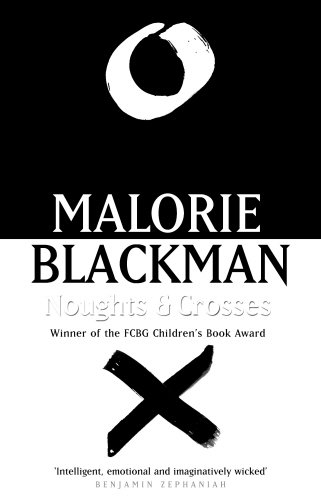
                • Cover of Noughts & Crosses
                  Noughts & Crosses

                  series · 10 books · 2001

                  similar byalternate historybritish islescontemporarytensescience fictionrace and racismyoung adultclass conflict+3 more

                  Noughts & Crosses is a series of young adult novels by British author Malorie Blackman, with six novels and three novellas. The series is speculative fiction describing an alternative history. The series takes place in an alternative 21st-century Britain.

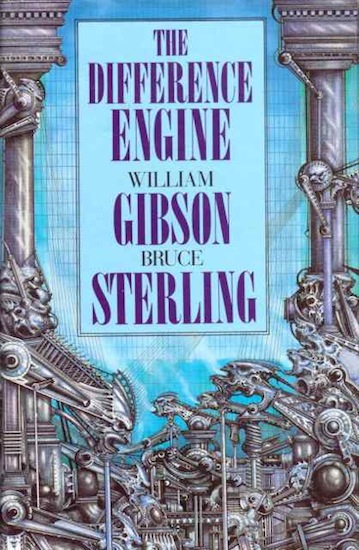
                • Cover of The Difference Engine
                  The Difference Engine

                  William Gibson & Bruce Sterling · standalone novel · 1990

                  similar bybritish islesalternate historyscience fictionpolitical intrigue+3 more

                  The computer age arrives a century early with Babbage's perfection of his 'analytical engine'. The industrial revolution is accelerated by the development of steam-driven cybernetic 'Engines'. An advanced Great Britain prepares to better the world's lot. An example of the 'steampunk' sub-genre of the cyberpunk movement.

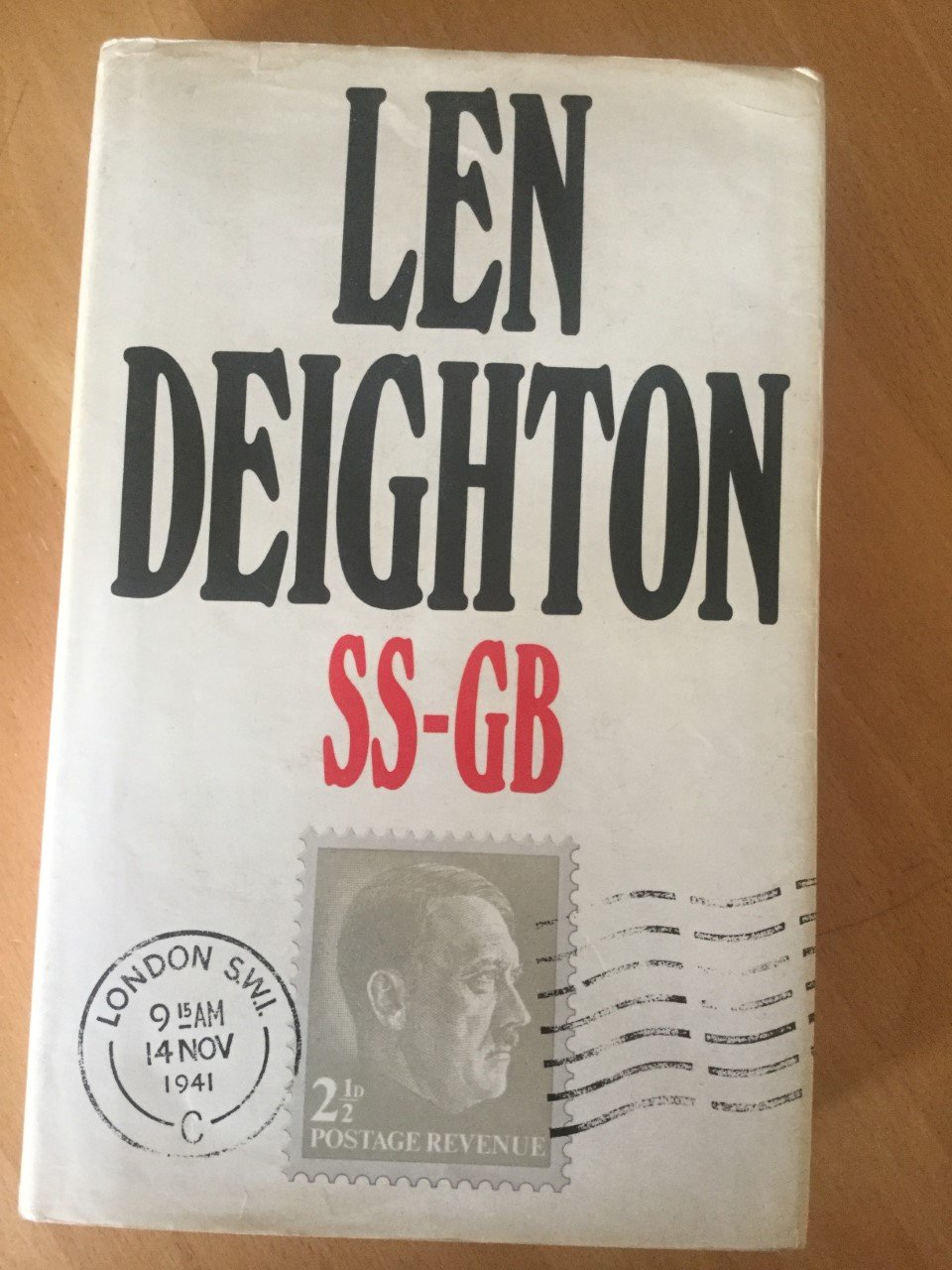
                • Cover of SS-GB
                  SS-GB

                  Len Deighton · standalone novel · 1978

                  similar bybritish islesalternate historytensescience fictionpolitical intrigue
                  It's November 1941 in a Britain that lost the war: Operation Sea Lion succeeded, Churchill was executed, and the King is a prisoner in his own Tower of London. Detective Superintendent Douglas Archer, still working homicide for the Metropolitan Police under German occupation, catches what looks like a routine case, a well-dressed man murdered above an antiques shop, until the body's oddities point toward something far more dangerous than burglary gone wrong. Archer's investigation collides with occupation politics, the British resistance, and rival factions of the SS and the German Army, each wanting the case to go a different way. Len Deighton's alternate-history spy thriller.

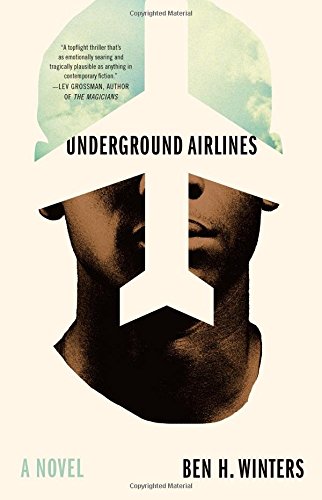
                • Cover of Underground Airlines
                  Underground Airlines

                  Ben H. Winters · standalone novel · 2016

                  similar bycontemporaryalternate historytensescience fictionrace and racism

                  Underground Airlines is a 2016 science fiction novel by American writer Ben Winters, set in a contemporary alternate-history United States where the American Civil War never occurred because Abraham Lincoln was assassinated prior to his 1861 inauguration and a version of the Crittenden Compromise was adopted instead. As a result, slavery has remained legal in a group of Southern states known as the "Hard Four": Alabama, Louisiana, Mississippi and a unified Carolina. Its name evokes the Underground Railroad in relations to its setting. The novel attracted praise for exploring racism through the alternate-history mechanism.

                • Cover of The Merchant Princes
                  The Merchant Princes

                  series · 14 books · 2004

                  similar bycontemporarytensealternate historyscience fictionpolitical intrigue

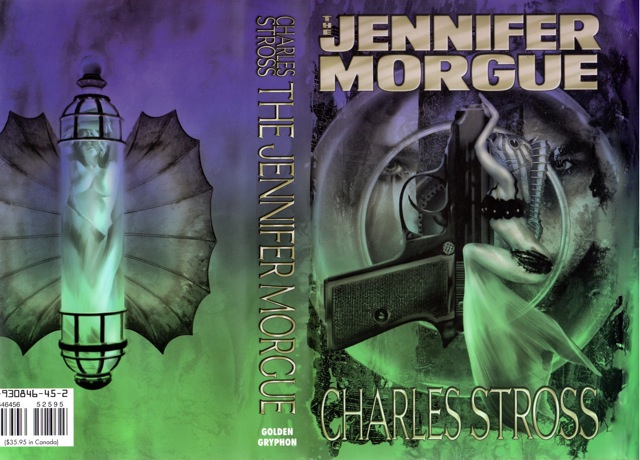
                  The Merchant Princes is a science fantasy and alternate history series of nine novels by British writer Charles Stross. In the series, there exist a number of parallel worlds, all of which are on the same geographical Earth but with different societies at different points of development. Members of a certain bloodline can travel between these worlds along with their immediate possessions. The series largely follows Miriam Beckstein, a technology journalist raised in a familiar "normal" Earth, who discovers she was born in a parallel world and is a member of this bloodline. She quickly becomes entangled in political maneuvering and assassination plots with her estranged family. Miriam uses modern technology and investigative journalism to attempt to stay a step ahead.

                • Cover of Small Change
                  Small Change

                  series · 4 books · 2006

                  similar byalternate historybritish islestensescience fictionpolitical intrigue
                  The Small Change trilogy is a series of alternate history thriller novels by the author Jo Walton that were published from 2006 to 2008. The series are set in a Europe in which the United Kingdom exits World War II in 1941. As the series begins, Britain itself slides toward fascism. The series has three books:Farthing Tor Books August 8, 2006, ISBN 0-7653-1421-5, ISBN 978-0-7653-1421-5 Ha'penny, Tor Books; Reprint edition July 1, 2008, ISBN 0-7653-5808-5, ISBN 978-0-7653-5808-0 Half a Crown, Tor Books; September 30, 2008, ISBN 0-7653-1621-8, ISBN 978-0-7653-1621-9

                • Cover of Dark Gifts
                  Dark Gifts

                  series · 3 books · 2016

                  similar bybritish islescontemporarytenseclass conflictpolitical intriguerebellion and revolution+1 more

                • Cover of Daz 4 Zoe
                  Daz 4 Zoe

                  Robert Swindells · standalone novel · 1990

                  similar bybritish islesemotionaltensescience fictionyoung adultforbidden loveclass conflict

                  Daz 4 Zoe is a young-adult novel by Robert Swindells. It explores themes of social division, class conflict, and forbidden love in a dystopian future Britain. The story follows two protagonists Zoe, a 'subbie' and Daz a 'chippy' from opposite sides of a segregated society. The novel is written in a dual narrative style, alternating between Zoe and Daz's first-person perspectives. Swindells uses phonetic spelling and poor grammar for Daz's chapters to reflect his lack of education, contrasting with Zoe's more formal narration. The novel discusses the microcosm of the 'chippies' and the 'subbies' in order to discuss the ridge between the bourgeoisie and the proletariat in a dystopian future where those living in cities do not have suffrage, and the elite suburb-dwellers control the nation.

                • Cover of Ruled Britannia
                  Ruled Britannia

                  Harry Turtledove · standalone novel · 2002

                  similar bybritish islesalternate historytensescience fictionpolitical intriguerebellion and revolution

                  Ruled Britannia is an alternate history novel by Harry Turtledove, first published in hardcover by New American Library in 2002.

                • Cover of American Royals
                  American Royals

                  Katharine McGee · standalone novel · 2019

                  similar bycontemporaryalternate historyemotionalyoung adultpolitical intrigue+2 more

                  In an alternate America, princesses Beatrice and Samantha Washington and the two girls wooing their brother, Prince Jeffrey, become embroiled in high drama in the most glorious court in the world. When America won the Revolutionary War, its people offered General George Washington a crown. Two and a half centuries later, the House of Washington still sits on the throne. As Princess Beatrice gets closer to becoming America's first queen regnant, the duty she has embraced her entire life suddenly feels stifling. Princess Samantha doesn't care much about anything-- except the one boy who is distinctly off-limits to her. And Samantha's twin, Prince Jefferson, has two very different girls vying to capture his heart. -- adapted from jacket

                • Cover of The Dark Artifices
                  The Dark Artifices

                  series · 4 books · 2016

                  part of The Mortal Instruments

                  similar bycontemporaryemotionalyoung adultforbidden love+2 more

                  The Dark Artifices is a trilogy written by Cassandra Clare. The series is chronologically the fourth series in The Shadowhunter Chronicles and a sequel to The Mortal Instruments. It is set in Los Angeles. The series consists of three books: Lady Midnight, Lord of Shadows and Queen of Air and Darkness, in that particular order. Centered around the protagonist, Emma Carstairs, the series follows her journey as a Shadowhunter at the Los Angeles Institute, and her life with her best-friend and parabatai, Julian Blackthorn, and his family. The series is about a sacred bond of "parabatai", two bonded Shadowhunters, and it is more valuable than any bond in this world. This bond makes the two more powerful and strong, but there is only one drawback - it is forbidden to fall in love with your parabatai. It so happens that Emma and Julian, two parabatai, have fallen in love. The Dark Artifices is a trilogy about their struggle against their enemies and how the two protagonists deal with their forbidden love and the resulting consequences. The series is told from the point-of-view of the various different characters in the story.

                • Cover of Slam
                  Slam

                  Nick Hornby · standalone novel · 2007

                  similar bybritish islescontemporaryemotionalyoung adult

                  Slam is a novel written by British author Nick Hornby, published in 2007. The book's main theme is teenage pregnancy and it is written from the perspective of a teenager, Sam.

                • Cover of Laundry Files
                  Laundry Files

                  series · 22 books · 2004

                  similar bybritish islescontemporaryscience fiction+2 more

                  The Laundry Files is a series of novels by British writer Charles Stross. They mix the genres of Lovecraftian horror, spy thriller, science fiction, and workplace humour. Their main character for the first five novels is "Bob Howard", a one-time I.T. consultant turned occult field agent. Howard is recruited to work for the Q-Division of SOE, otherwise known as "the Laundry", the British government agency which deals with occult threats. "Magic" is described as being a branch of applied computation (mathematics), therefore computers and equations are just as useful as, and perhaps more potent than, classical spellbooks, pentagrams, and sigils for the purpose of influencing ancient powers and opening gates to other dimensions. These occult struggles happen largely out of view of the public, as the Laundry seeks to keep the methods for contacting such powers under wraps. There are also elements of dry humour and satirisation of bureaucracy.

                • Cover of When the Sleeper Wakes
                  When the Sleeper Wakes

                  H. G. Wells · standalone novel · 1899

                  similar bytensebritish islesscience fictionpolitical intriguerebellion and revolution+1 more

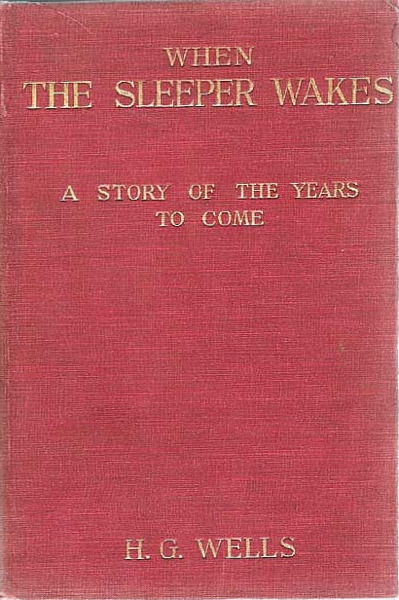
                  Graham, an insomniac Englishman in 1890s London, takes a course of sleep-inducing drugs and falls into a coma that lasts two centuries. He wakes in the year 2100 to find his investments have compounded, through a ruling body called the White Council, into effective ownership of most of the world's wealth and power, making him, on paper, humanity's master, and in practice, its prisoner, held under guard while the Council governs in his name. A rebel faction led by a man named Ostrog frees him, hoping to use his symbolic authority to spark an uprising against the Council. An early H. G. Wells dystopia about inherited power and manufactured consent.

                • Cover of The New World Order
                  The New World Order

                  Ben Jeapes · standalone novel · 2004

                  similar bybritish islesalternate historytensescience fictionpolitical intrigue

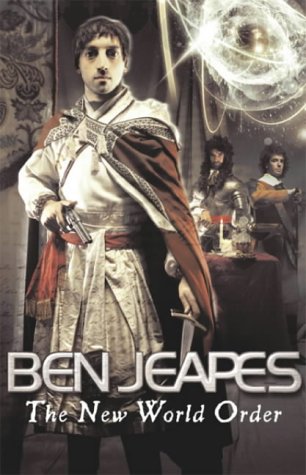
                  Publisher's description: "Having ended England's Civil War between the Roundheads and the Royalists in 1645, the Overlord of the Holekhor, a race from another world, and his half-English son question the decision to colonize the island and convert their beloved English to a faith characterised by witches and myriad gods."

                • Cover of The Psychology of Time Travel
                  The Psychology of Time Travel

                  Kate Mascarenhas · standalone novel · 2018

                  similar bybritish islescontemporarytensescience fiction+1 more

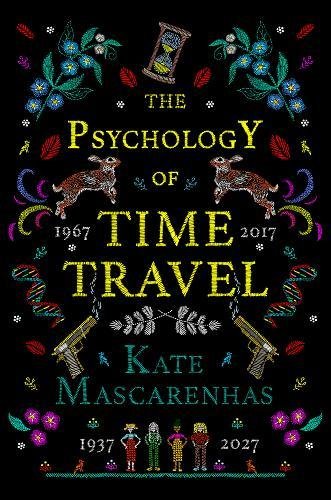
                  Four women in England invent time travel in 1967. One suffers a breakdown and the other three establish "the Conclave" to control the technology. Fifty years later a murder is forewarned and uncovered.

                • Cover of How I Spent My Last Night on Earth
                  How I Spent My Last Night on Earth

                  Todd Strasser · standalone novel · 2000

                  similar bycontemporaryemotionaltensescience fictionyoung adult

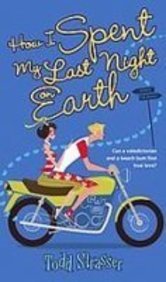
                  When a rumor appears on the Internet that a giant asteroid is about to destroy Earth, Legs Hanover scrambles to meet the boy of her dreams, elusive Andros Bliss.

                • Cover of Rule Britannia
                  Rule Britannia

                  Daphne du Maurier · standalone novel · 1972

                  similar bybritish islesalternate historytensescience fictionrebellion and revolution

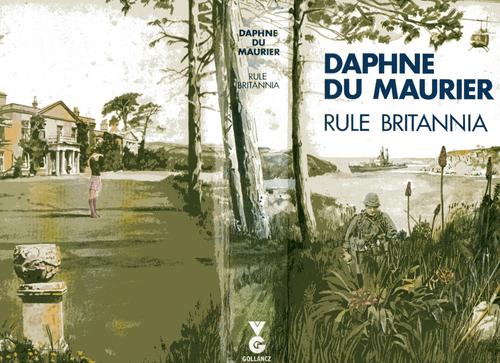
                  In the late 1970s, the US invades Britain.

                • Cover of Skellig
                  Skellig

                  David Almond · standalone novel · 1998

                  similar bybritish islescontemporaryemotional+1 more

                  Skellig is a children's novel by the British author David Almond, published by Hodder in 1998. It was the Whitbread Children's Book of the Year and it won the Carnegie Medal from the Library Association, recognising the year's outstanding children's book by a British author. In 2007, it placed third in the "Carnegie of Carnegies", after Northern Lights and Tom's Midnight Garden. In the U.S., it was a runner up for the Michael L. Printz Award, which recognises one work of young adult fiction annually. Since publication, it has also been adapted into a play, an opera, and a film. In December of 2011, a prequel, My Name is Mina was published. William Blake's poems feature in the book, the play and the film.

                • Cover of The Time Traveler's Wife
                  The Time Traveler's Wife

                  Audrey Niffenegger · standalone novel · 2003

                  similar bycontemporaryemotionalscience fictionforbidden love

                  The Time Traveler's Wife is the debut novel by American author Audrey Niffenegger, published in 2003. It is a love story about Henry, a man with a genetic disorder that causes him to time travel unpredictably, and about Clare, his wife, an artist who has to cope with his frequent absences. Niffenegger, who was frustrated with love when she began the novel, wrote the story as a metaphor for her failed relationships. The tale's central relationship came to Niffenegger suddenly and subsequently supplied the novel's title. The novel has been classified as both science fiction and romance.

                • Cover of The Children of Men
                  The Children of Men

                  P. D. James · standalone novel · 1992

                  similar bybritish islestensescience fictionpolitical intriguerebellion and revolution

                  "The human race has become infertile, and under the despotic rule of Xan Lyppiatt, the Warden of England the old are despairing and the young cruel. Theo Faren, a cousin of the Warden, lives a solitary life in this ominous atmosphere. That is, until a chance encounter with a young woman leads him into contact with a group of dissenters. Suddenly his life is changed irrevocably, as he faces agonising choices which could affect the future of mankind." (pdjames.co.uk)

                • Cover of Tempest (Julie Cross)
                  Tempest (Julie Cross)

                  series · 4 books · 2011

                  similar bycontemporarytensescience fictionyoung adult+2 more

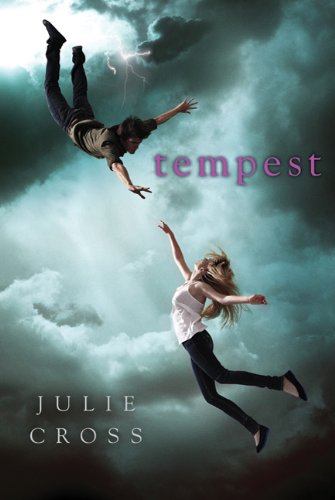
                  Julie Cross' Tempest trilogy opens with Tempest (2012), a young-adult science-fiction novel published by St. Martin's Press that was nominated for a 2012 RT Book Reviews award and received a starred Kirkus review. It continues across Vortex and Timestorm, published through 2014.

                • Cover of The Mirage
                  The Mirage

                  Matt Ruff · standalone novel · 2012

                  similar bycontemporaryalternate historytensescience fictionpolitical intrigue

                  The Mirage is an alternate history novel by American writer Matt Ruff, published in 2012 by Harper. The book centers on Mustafa, Samir, and Amal, who are agents of Halal, an organization of the United Arab States, a Middle Eastern version of the United States. The agents discover artifacts of our world and begin a quest to discover the truth.

                • Cover of Johan Eschbach
                  Johan Eschbach

                  series · 3 books · 1994

                  similar byalternate historytensescience fictioncontemporarypolitical intrigue