More like Childless
anchored on:dystopiaparenthoodour worldnear futurescience fictiontotalitarianism+1 more
but
- A Clockwork Orange
series4 books1962
completed
similar bydarkdystopianear futureour worldscience fictiontotalitarianismchallenging
Anthony Burgess's 1962 novel is narrated by Alex, a teenage gang leader in a near-future Britain gripped by a youth subculture of extreme violence, recounting his crimes in Nadsat, an invented slang blending English with Russian-derived words. After his crimes catch up with him, Alex is made the subject of a controversial state program meant to forcibly reform his behavior, and the novel uses his ordeal to question whether imposed goodness is worth the loss of free will. It is a standalone novel.
- Stand on Zanzibar
John Brunnerstandalone novel1968
similar bydarkour worldnear futuredystopiascience fictionchallenging+1 more
Stand on Zanzibar is a dystopian New Wave science fiction novel written by John Brunner and first in part published in New Worlds magazine in 1967 and in book form in 1968. The book won a Hugo Award for Best Novel at the 27th World Science Fiction Convention in 1969, as well as the 1969 BSFA Award and the 1973 Prix Tour-Apollo Award.
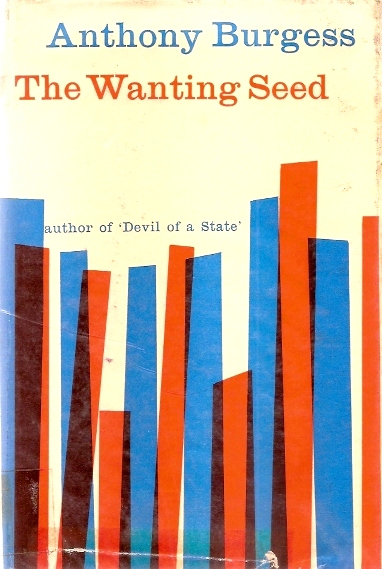
- The Wanting Seed
Anthony Burgessstandalone novel1962
similar bydarkour worldnear futuredystopiascience fictiontotalitarianismchallenging+1 more
The Wanting Seed is a dystopian novel by the English author Anthony Burgess, written in 1962.
- The Children of Men
P. D. Jamesstandalone novel1992
similar bydarkour worldnear futuredystopiascience fictiontotalitarianism+1 more
"The human race has become infertile, and under the despotic rule of Xan Lyppiatt, the Warden of England the old are despairing and the young cruel. Theo Faren, a cousin of the Warden, lives a solitary life in this ominous atmosphere. That is, until a chance encounter with a young woman leads him into contact with a group of dissenters. Suddenly his life is changed irrevocably, as he faces agonising choices which could affect the future of mankind." (pdjames.co.uk)
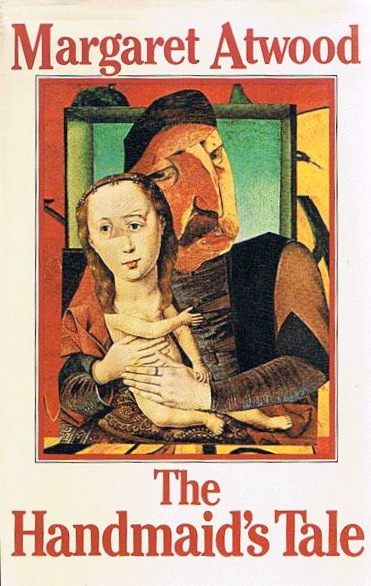
- The Handmaid's Tale
series3 books1985
similar bydarknear futuredystopiascience fictiontotalitarianism+1 more
The Handmaid's Tale is Margaret Atwood's 1985 novel set in Gilead, a totalitarian theocracy that has overthrown the United States and forces fertile women into reproductive servitude as Handmaids; it is narrated by one such woman, Offred. Atwood returned to the world in her 2019 sequel The Testaments, set fifteen years later and narrated by three women, including the regime's Aunt Lydia. Together the two novels move from Gilead's grip on power toward the first cracks in it.
- The Future
Naomi Aldermanstandalone novel2023
similar bydarkour worldnear futuredystopiascience fictiontotalitarianismecological collapse
The Future is a 2023 science fiction novel by English writer Naomi Alderman, published by Simon & Schuster. The novel is set in a future dystopia where the world has been altered by environmental crisis and a powerful technocracy.
- Make Room! Make Room!
Harry Harrisonstandalone novel1966
similar bydarkour worldnear futuredystopiascience fictionecological collapse
Make Room! Make Room! is a 1966 science fiction novel written by Harry Harrison exploring the consequences of both unchecked population growth on society and the hoarding of resources by a wealthy minority. It was originally serialized in Impulse magazine.
- The Stone Gods
Jeanette Wintersonstandalone novel2007
similar bydarkour worldnear futuredystopiascience fictionchallengingecological collapse
The Stone Gods is a novel written by Jeanette Winterson. Published in the year 2007, the novel is a post-apocalyptic, postmodern, dystopian love story, with themes of corporate government control, the harshness of war, artificial intelligence, and technology. The novel is self-referential as characters make inter-textual references, while certain characters’ story arcs repeat. The novel aims to warn against history's tendency to repeat itself, as well as humanity's inability to learn from past mistakes.
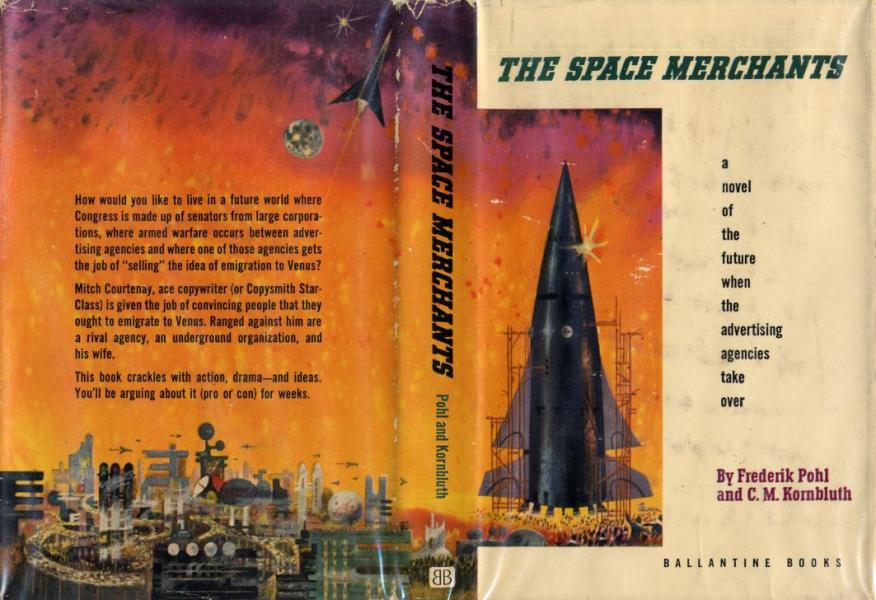
- Space Merchants
series2 books1953
completed
similar bydarknear futuredystopiascience fiction+1 more
The Space Merchants (1953) is a satirical science fiction novel by Frederik Pohl and C. M. Kornbluth that follows an advertising executive navigating a future where aggressive consumer capitalism has swallowed politics and daily life. The authors reunited three decades later for a direct sequel, The Merchants' War (1984), returning to the same satirical world. Together the two books form a compact bookend pair rather than an ongoing series.
- The Simulacra
Philip K. Dickstandalone novel1964
similar bydarkour worldnear futurescience fictiondystopiatotalitarianism
The Simulacra is a 1964 science fiction novel by American writer Philip K. Dick. The novel portrays a future totalitarian society apparently dominated by a matriarch, Nicole Thibodeaux. It revolves around the themes of reality and illusionary beliefs, as do many of Dick's works. Additionally, it touches on Nazi ideology.
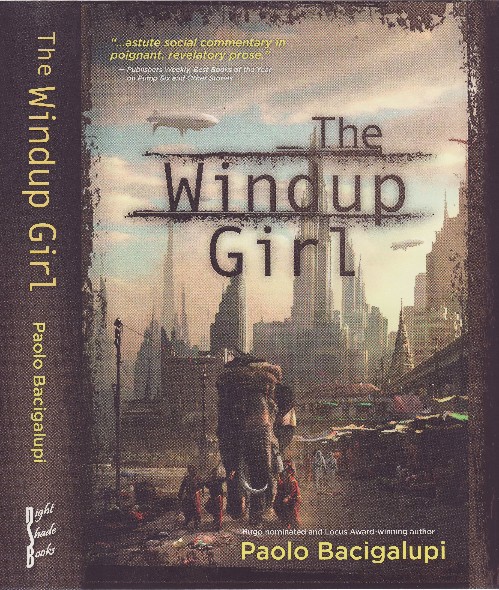
- The Windup Universe
series3 books2005
similar bydarknear futuredystopiaour worldscience fictionecological collapse
- Earthworks
Brian W. Aldissstandalone novel1965
similar bydarkour worldnear futuredystopiascience fictionecological collapse
Earthworks is a 1965 dystopian science fiction novel by British science fiction author Brian Aldiss. The novel draws its premise from prevalent fears about population growth and overcrowding of the Earth.
- Killing Time
Caleb Carrstandalone novel2000
similar bydarkour worldnear futuredystopiascience fictiontotalitarianism+1 more
Killing Time is a dystopian novel by Caleb Carr set in the mid-21st century. Its first 22 chapters were initially serialized in five special issues of TIME and the complete work was later published in 2000 by Random House. It includes criticisms of the Information Age. The book was a departure for Carr, whose previous two novels were crime thrillers set in the Victorian era.
- The Ministry for the Future
Kim Stanley Robinsonstandalone novel2020
similar byour worldnear futurescience fictiondystopiachallengingecological collapse+1 more
The Ministry for the Future is a climate fiction novel by American science fiction writer Kim Stanley Robinson, published in 2020. Set in the near future, the novel follows a subsidiary body, established under the Paris Agreement, whose mission is to act as an advocate for the world's future generations of citizens as if their rights were as valid as the present generation's. While the ministry pursues various ambitious projects, the effects of climate change are determined to be the most consequential. The plot primarily follows Mary Murphy, the head of the titular Ministry for the Future, and Frank May, an American aid worker traumatized by experiencing a deadly heat wave in India. Many chapters are devoted to other characters' accounts of future events, as well as their ideas about ecology, economics, and other subjects.
- Shadrach in the Furnace
Robert Silverbergstandalone novel1976
similar bydarknear futureour worldscience fictiondystopiatotalitarianism
Shadrach in the Furnace is a science fiction novel by American writer Robert Silverberg, first published as a serial in Analog Science Fiction and Fact magazine in the August, September, and October 1976 issues. It was subsequently published by Bobbs Merrill in 1976. The novel was nominated in 1976 for the Nebula Award, and in 1977 for the Hugo Award.
- Facial Justice
L. P. Hartleystandalone novel1960
similar bydarkour worldnear futuredystopiascience fictiontotalitarianism
Post World War III novel with underground population again coming to live on the surface.
- Earthseed
series7 books1993
similar bydarknear futuredystopiascience fictionfaith and religion+2 more
Octavia E. Butler's Earthseed novels, Parable of the Sower and Parable of the Talents, follow Lauren Olamina as she survives the collapse of a climate-ravaged, near-future United States and founds a belief system built on the idea that "God is Change." The two-book series was left unfinished at Butler's death; a planned third novel, Parable of the Trickster, was never completed. Later graphic-novel adaptations retell the same two stories rather than continuing the narrative.
- Ape and Essence
Aldous Huxleystandalone novel1948
similar bydarkour worlddystopiascience fictiontotalitarianismchallenging
Ape and Essence (1948) is a novel by Aldous Huxley, first published in August 1948 by Harper & Brothers in the US, and then in 1949 by Chatto & Windus in the UK. It is set in a dystopia, as is Brave New World, Huxley's more famous work. It is largely a satire of the rise of large-scale warfare and warmongering in the 20th century, and presents a pessimistic view of the politics of mutually assured destruction. The book makes extensive use of surreal imagery, depicting humans as apes who, as a whole, will inevitably kill themselves.
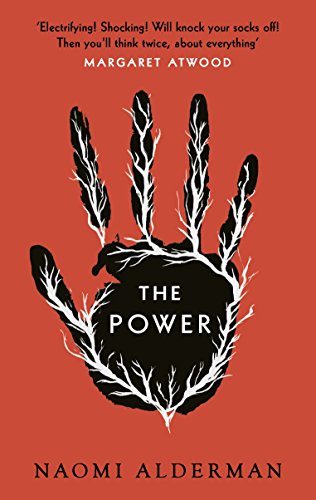
- The Power
Naomi Aldermanstandalone novel2016
similar bydarkour worldnear futurescience fictiondystopiachallenging
The Power is a 2016 science fiction novel by the British writer Naomi Alderman. Its central premise is of women developing the ability to release electrical jolts from their fingers, which allows them to become the dominant sex. In 2017, it won the Baileys Women's Prize for Fiction.
- The Divers' Game
Jesse Ballstandalone novel2019
similar bydarkour worldnear futuredystopiascience fictiontotalitarianismchallenging
The Divers' Game is a 2019 dystopian novel by American author Jesse Ball.
- The World Set Free
H. G. Wellsstandalone novel1914
similar bydarkour worldnear futurescience fictiondystopia
The World Set Free is a novel written in 1913 and published in 1914 by H. G. Wells. The book is based on a prediction of a more destructive and uncontrollable sort of weapon than the world has yet seen. It had appeared first in serialised form with a different ending as A Prophetic Trilogy, consisting of three books: A Trap to Catch the Sun, The Last War in the World and The World Set Free.
- Blood Music
Greg Bearstandalone novel1985
similar bydarkour worldnear futurescience fiction+1 more
Blood Music is a 1985 science fiction novel by American writer Greg Bear. It is an expanded version of a short story of the same title, originally published in the June 1983 issue of Analog and the winner of both the 1983 Nebula and 1984 Hugo awards for Best Novelette. The novel won the 1986 Prix Apollo Award, given to the best science fiction novel published in France during the preceding year, under the title La Musique du sang.
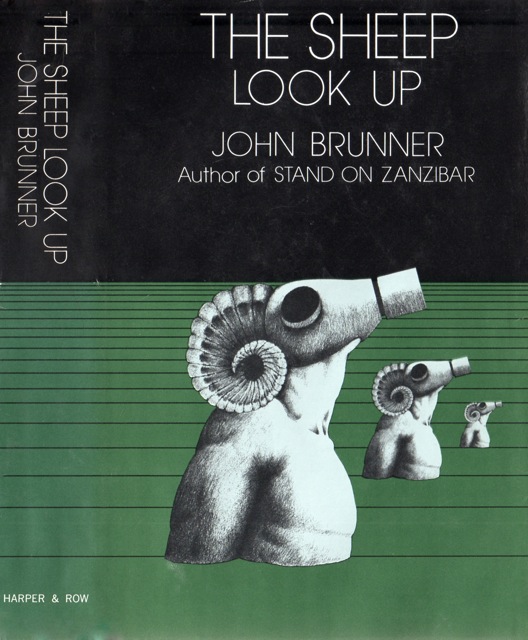
- The Sheep Look Up
John Brunnerstandalone novel1972
similar bydarknear futuredystopiascience fictionecological collapse+1 more
The Sheep Look Up is a 1972 dystopian science fiction novel by British author John Brunner, dealing with the deterioration of the environment in the United States. It was nominated for the 1972 Nebula Award for Best Novel.
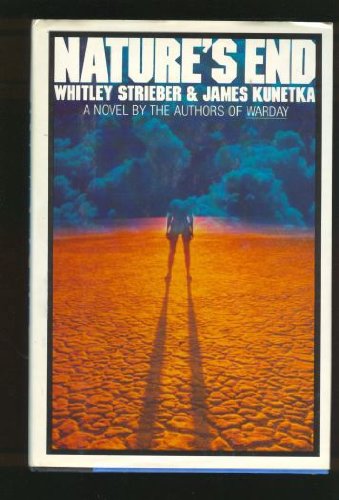
- Nature's End
Whitley Strieber & James Kunetkastandalone novel1986
similar bydarkour worldnear futurescience fictiondystopiatotalitarianismfaith and religionecological collapse
It is 2025 and the planet is rapidly approaching environmental death. Dr. Gupta Singh, a Hindu guru with a Jim Jones-like following, has proposed the suicide, by lottery, of one-third of the world's population. His followers have elected a Depopulationist majority in Congress. Led by journalist John Sinclair, a small group hopes to prove that Singh is a fraud. Singh is a formidable enemy: he cancels the medical-cosmetological treatment that the 72-year-old Sinclair (who looks 46 due to the treatment) receives, causing Sinclair to age rapidly. Singh sets the feared tax police after Sinclair, alters his records, and wipes out his wealth. Tension mounts as Sinclair stalks Singh and gains access to his "conviction"an electronic document into Singh's true identity and character.