More like Chill
anchored on:science fictionsurvivalspaceshipgeneration shipfar futurespace opera+3 more
but
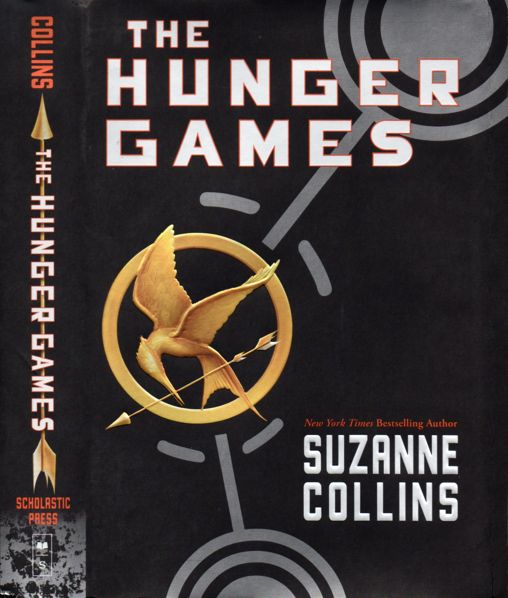
- The Hunger Games
series3 books2008
part of The Hunger Games Universe
similar byfar futurescience fictiondarktenserebellion and revolutionsurvival
The Hunger Games is a series of young adult dystopian novels written by American author Suzanne Collins. The series consists of a trilogy that follows teenage protagonist Katniss Everdeen, as well as two prequels. The Hunger Games universe is a dystopia set in Panem, a post-apocalyptic North American country consisting of the wealthy Capitol and 12 districts in varying states of poverty. As punishment for rebellion, the Capitol hosts an annual battle royale competition called The Hunger Games. Each of the 12 districts must send two children between the ages of 12 and 18 to participate, and the last surviving child is dubbed the victor.
- The Hunger Games Universe
universe5 books2008
Start hereThe Hunger Games · Start here
similar byfar futurescience fictiondarktenserebellion and revolutionsurvival
Panem, they call it now — a nation raised on the drowned bones of North America, a glittering Capitol ringed by twelve districts it once starved into obedience. Every year the Capitol collects its debt in children: two tributes from each district, drawn by lottery, dropped into an engineered arena, and made to kill one another on live television while the whole country is required to watch. This is the Hunger Games — entertainment, punishment, and government at once. Suzanne Collins tells it in a compact, unified body of work. The founding trilogy — The Hunger Games, Catching Fire, and Mockingjay — follows Katniss Everdeen, a girl from the coal-mining District 12 who volunteers in her sister's place and becomes something the Capitol never scripted. Two prequels reach back into the same machinery: The Ballad of Songbirds and Snakes traces a young Coriolanus Snow long before he is President, and Sunrise on the Reaping returns to District 12 a generation ahead of Katniss. Begin with the trilogy, in order — it is Katniss's voice, close and present-tense, that makes Panem breathe, and the prequels land hardest once you know how her story ends. Beneath the spectacle sits one steady, uncomfortable question: who profits when we agree to look away.
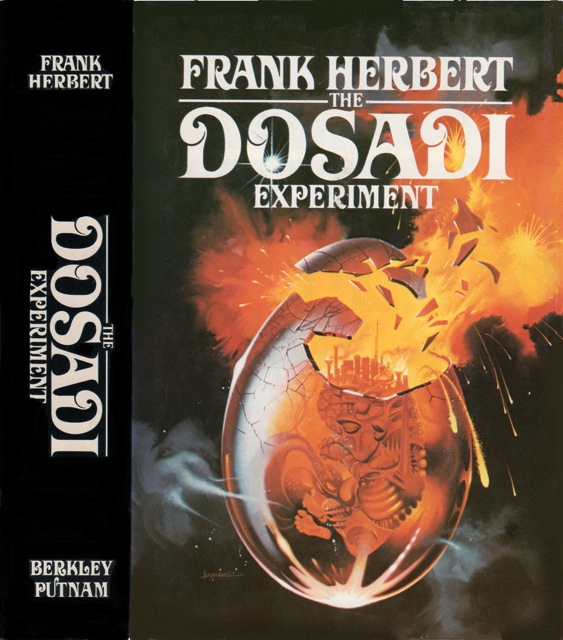
- The Dosadi Experiment
Frank Herbertstandalone novel1977
similar byfar futurescience fictiontensespace operasurvival+2 more
From the flaps of the Berkley Putnam first edition: "In his first new work of science fiction since the best-selling Children of Dune, Frank Herbert returns to his world of Whipping Star, and involves Jorj X. McKie, Saboteur Extraordinary, in a new intrigue. In Whipping Star, McKie discovered that some of the stars in the universe are actually intelligent, super-powerful beings, and was able to befriend one of them, the star Alcyone - affectionately known as Fannie Mae. As The Dosadi Experiment opens, McKie is assigned to investigate the planet Dosadi, which is isolated from the rest of the galaxy by a "god-wall," a barrier set up by one of the intelligent stars. Dosadi is rumored to be an experimental planet, and the experimenters are the froglike Gowachin, whose culture is founded upon a strange legal system in which McKie is the only human ever trained. He learns that humans and Gowachin have been placed on Dosadi, without their consent, for an experiment that could last centuries: an experiment in extreme overcrowding. But this monstrous plot is apparently out of control, and it seems the Gowachin may be prepared to destroy Dosadi rather than expose its secret, thus breaking the peace among the races, and starting the first interstellar war. But this is just the beginning. When McKie finally reaches Dosadi he discovers that the Dosadis have taken control of their own evolution and produced a competitive, highly evolved elite, of both humans and Gowachin, who have been able to extrapolate the existence of a universe beyond the god-wall and hate whoever has imprisoned them like this. They plan to break out and avenge themselves on the galaxy."
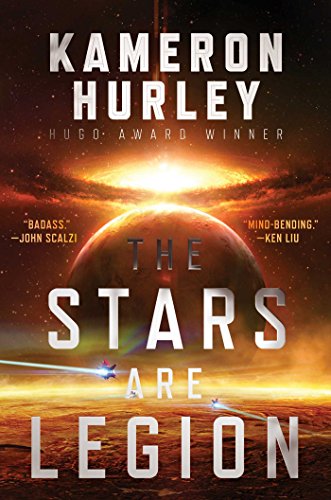
- The Stars Are Legion
Kameron Hurleystandalone novel2017
similar byfar futurescience fictiondarktensespace operasurvivalspaceship
396 pages ; 20 cm
- Dune Universe
universe78 books1963
Start hereDune · Start here
similar byfar futurescience fictionspace opera+2 more
Arrakis. Dune. The desert planet, where empire runs on a single substance: the spice melange, which folds space, prolongs life, and unlocks prescience, and which exists nowhere else in the known universe. Frank Herbert's saga is a meditation dressed as an adventure — feudal houses and a secret sisterhood, engineered messiahs and the patient ecology of a world without water, all turning on the terrible gravity of who commands the spice. It reads like scripture and schemes like a war room, ten thousand years hence, among people who have outlawed the thinking machine and made instruments of themselves instead. At its heart stand Herbert's original six — Dune, Dune Messiah, Children of Dune, God Emperor of Dune, Heretics of Dune, Chapterhouse: Dune — a single deepening arc across millennia, arguing the whole way between prophecy and free will. Around that spine his son Brian Herbert and Kevin J. Anderson have raised a vast prequel architecture: Prelude to Dune, tracing the great houses a generation before Paul; Legends of Dune, reaching back to the crusade that broke the machines; the Schools of Dune cycle on the founding of Bene Gesserit, Mentat, and Navigator; the Caladan Trilogy and Heroes of Dune filling years the originals left in shadow. Many hands, dozens of volumes, one desert. What sets Dune apart is its refusal of the simple: religion is manufactured, heroes are hazards, and the sand itself — worm, water, ecology — acts as a political power. Begin where the universe did, with Frank Herbert's Dune (1965), and read the original six in order; you need nothing else to feel the full weight. The prequels are a country to explore afterward, taken by era. Beginnings are delicate times.
- Dune
series20 books1963
part of Dune Universe
similar byfar futurescience fictionspace opera+2 more
Frank Herbert's Dune Chronicles opens with 1965's Dune, set on the desert planet Arrakis where House Atreides takes control of the only source of the vital spice melange and young Paul Atreides is pulled into a struggle over its politics and religion. Herbert carried the story forward across five further novels — Dune Messiah, Children of Dune, God Emperor of Dune, Heretics of Dune, and Chapterhouse: Dune — following Paul's line over the following millennia, before Brian Herbert and Kevin J. Anderson later extended the saga. Many other editions of these six novels are omnibus and box-set repackagings rather than separate stories.
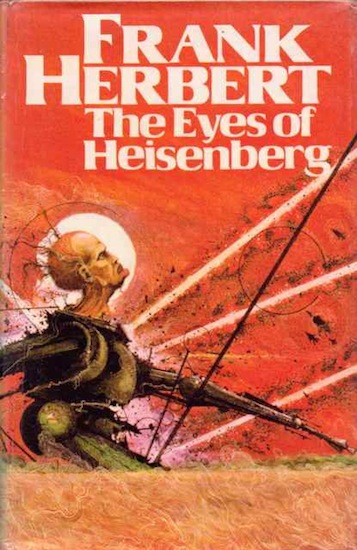
- The Eyes of Heisenberg
Frank Herbertstandalone novel1966
similar byfar futurescience fictiondarktenserebellion and revolution+1 more
Tens of thousands of years in the future, Earth is ruled by the Optimen, a genetically engineered aristocracy that has made itself functionally immortal, while ordinary people, the Folk, live under strict reproductive control. When Harvey and Lizbeth Durant arrive to have their embryo genetically screened, the examining doctor finds something in the child no one has seen in a very long time: real potential for both fertility and life span, traits the Optimen have arrogated to themselves. Rather than destroy the embryo as policy demands, the doctor hesitates, setting off a chain of surveillance, suspicion and resistance. A tightly wound Frank Herbert thriller about genetic caste and rebellion.
- The Sardonyx Net
Elizabeth A. Lynnstandalone novel1981
similar byfar futurescience fictiondarktensespace operarebellion and revolutionspaceship
From the flaps of the Putnam first edition: "The Sardonyx Net, also known as the Yago Net: a vast starship owned and operated by the Family Yago, captained by Zed Yago. It visits all planets in the Sardonyx Sector of space, picking up special cargo - convicted felons who will serve our their terms as dorazine-drugged slaves to the wealthy land and factory owners on the planet Chabad. But often their ordeal begins even before the are sold, for Zed Yago is a man with a taste for sadism. The slave trade is the most lucrative business on Chabad. It is controlled totally by the Family Yago, headed by Zed's older sister Rhani, who is the only woman Zed has truly loved. Rhani is a shrewd businesswoman with only one weakness: a heart as compassionate as her brother's is perverse. While the authorities of the Sector's other planets look away, the Families of Chabad purchase dorazine from representatives of a secret, unlocatable source known as The Pharmacy, and use it to keep their slave-based economy healthy. Not one protests, for Chabad's illegal and inhumane activities keep prisons empty, criminals under control, and Chabad's valuable exports flowing. Despite constant underground revolutionary activity, the situation has maintained. But he long-lived stability of this sanctioned trade in illegal drugs and human beings is now threatened by two unexpected events: a worsening shortage of dorazine which is sparking more rebellion, and the arrival of Starcaptain Dana Ikoro. Dana, as drug smuggler, is captured by the Net and delivered from Zed's hands to Rhani. He is to be her bodyguard, but becomes much more. Against this incredible background, Lynn tells an irresistible story of adventure, intrigue, revolution and romance. It is a story of people snared in a net of warring passions, a net which will prove to be even stronger than the power of the Sardonyx Net."
- The Gap
series5 books1990
similar byfar futurescience fictiondarktensespace operaspaceship+1 more
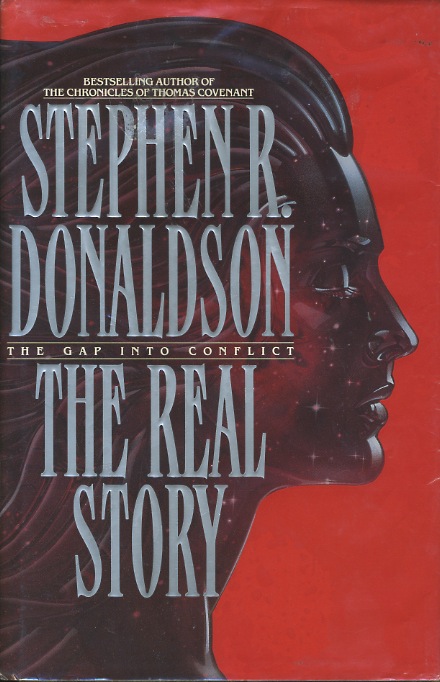
The Gap Cycle is a series of science fiction novels by Stephen R. Donaldson, more usually known for his works of epic fantasy. The series was originally published between 1991 and 1996 by Bantam Books and was reprinted by Gollancz in 2008 in the UK. Here, Donaldson gave a loose retelling of Wagner's Ring cycle.
- Red Rising
series13 books2014
similar byfar futurescience fictiontensedarkspace operarebellion and revolution
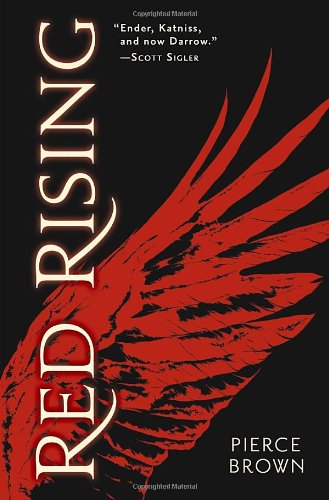
Pierce Brown's Red Rising follows Darrow, a lowborn 'Red' miner on a colonized Mars who discovers his caste's suffering is a lie sustained by the ruling Gold elite, and infiltrates their ranks to destroy the system from within. The series expands from a single-protagonist revenge story into a sprawling multi-book war across the solar system, eventually following an ensemble cast beyond Darrow alone, and combines Roman-inspired factional politics with brutal, competition-driven action set pieces.
- Hull Zero Three
Greg Bearstandalone novel2010
similar byfar futurescience fictiontensesurvivalspaceshipgeneration ship+1 more
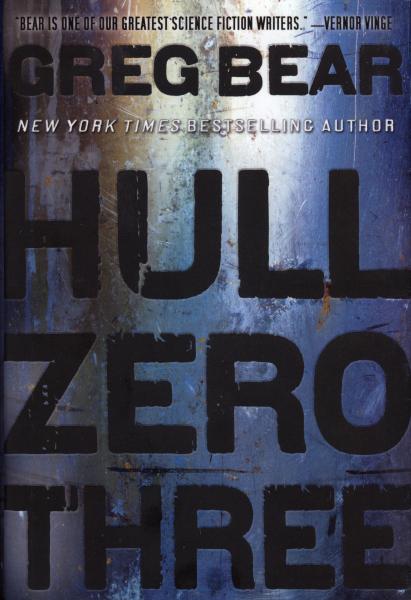
Hull Zero Three is a science fiction novel by American author Greg Bear. It was published on November 22, 2010. It is set on a generation ship that has lost its way under mysterious circumstances.
- City at World's End
Edmond Hamiltonstandalone novel1951
similar byfar futurescience fictionsurvivaldarktense
An experimental atomic weapons test in small-town America goes catastrophically wrong, hurling the entire town of Middletown, buildings, streets and all, untold ages into Earth's future, to a time when the sun is dying and humanity's last city struggles on beneath a darkening sky. Cut off from everything and everyone they knew, the townspeople have to find a way to survive in a world that has nothing left to spare for latecomers. Edmond Hamilton's novel strands a slice of mid-century America at the literal end of the world.
- The Stars My Destination
Alfred Besterstandalone novel1956
similar byfar futurescience fictiondarkspace operasurvival
When a passing spaceship refuses to rescue the lone survivor from the drifting wreck of another ship, he dedicates his life to discovering who made that decision and exacting his revenge, in the process altering human history and his own character.
- Sky Chasers
series3 books2011
similar byfar futurescience fictiontensespace operasurvivalspaceship+2 more
- The Kindom Trilogy
series3 books2023
similar byfar futurescience fictiondarktensespace operarebellion and revolution+1 more
- Space Beagle
series5 books1939
completed
similar byfar futurescience fictiontensespace operaspaceship+1 more
The Voyage of the Space Beagle is a 1950 fix-up novel by A. E. van Vogt, stitched together from four previously published pulp stories into a single continuous account of the exploration ship Space Beagle's encounters with a series of dangerous alien life forms. Its episodic, crew-versus-monster structure reads as a loose sequence of adventures rather than one continuous plot.
- When the Sleeper Wakes
H. G. Wellsstandalone novel1899
similar byfar futurescience fictiondarktenserebellion and revolution
Graham, an insomniac Englishman in 1890s London, takes a course of sleep-inducing drugs and falls into a coma that lasts two centuries. He wakes in the year 2100 to find his investments have compounded, through a ruling body called the White Council, into effective ownership of most of the world's wealth and power, making him, on paper, humanity's master, and in practice, its prisoner, held under guard while the Council governs in his name. A rebel faction led by a man named Ostrog frees him, hoping to use his symbolic authority to spark an uprising against the Council. An early H. G. Wells dystopia about inherited power and manufactured consent.
- Company Wars
series7 books1981
part of Alliance-Union Universe
similar byfar futurescience fictiontensespace opera+2 more
Company Wars gathers the novels C. J. Cherryh set during the breakaway conflict between Earth's colonial Company and the newly independent Union, within her wider Alliance-Union future history. Anchored by the Hugo Award-winning Downbelow Station, the books follow different ships, stations, and crews caught on either side, from merchanter traders to military spacers, rather than a single continuing cast. Read in any order, they build up a picture of the political and economic pressure that reshapes Cherryh's larger Alliance-Union universe.
- An Unkindness of Ghosts
Rivers Solomonstandalone novel2017
similar byfar futurescience fictiondarktenserebellion and revolutiongeneration ship+1 more
An Unkindness of Ghosts is a 2017 science fiction novel by Rivers Solomon, exploring the conjunction between structural racism and generation ships. Solomon's first book, it was published by Akashic Books.
- Berserker (Fred Saberhagen)
series59 books1963
similar byfar futurescience fictiontensespace opera+2 more
The Berserker series is a series of space opera science fiction short stories and novels by Fred Saberhagen, in which robotic self-replicating machines strive to destroy all life.
- Providence
Max Barrystandalone novel2020
similar byfar futurescience fictiontensespace operasurvivalspaceship+1 more
Providence is the sixth novel by Australian science fiction author Max Barry. It was published in March 2020 by Putnam.
- Pushing Ice
Alastair Reynoldsstandalone novel2005
similar byfar futurescience fictiontensesurvivalspaceship+1 more
When Saturn's moon Janus suddenly takes off into interstellar space, an ice mining spaceship sent to investigate finds itself swept along into distant space until it ends up trapped in a gigantic alien structure, wherein the crew must prepare to reside for the foreseeable future.
- Undertow
Elizabeth Bearstandalone novel2007
similar byfar futurescience fictiondarktensespace operarebellion and revolution
A frontier world on the back end of nowhere is the sort of place people go to get lost. And some of those people have secrets worth hiding, secrets that can change the future--assuming there is one. . . .Andre Deschenes is a hired assassin, but he wants to be so much more. If only he can find a teacher who will forgive his murderous past--and train him to manipulate odds and control probability. It's called the art of conjuring, and it's Andre's only route to freedom. For the world he lives on is run by the ruthless Charter Trade Company, and his floating city, Novo Haven, is little more than a company town where humans and aliens alike either work for one tyrannical family--or are destroyed by it. But beneath Novo Haven's murky waters, within its tangled bayous, reedy banks, and back alleys, revolution is stirring. And one more death may be all it takes to shift the balance. . . .From the Paperback edition.