Loreful
HomeDiscover
Search series, authors…⌘K
Loreful

Reading orders for SF/F series and shared universes — with your place kept in every one.

Explore

UniversesSeriesWorksAuthorsAtlas

Help

FAQAboutSite map

Account & legal

Sign inCreate accountPrivacyTerms

Data

Built on ISFDB, Wikipedia, Wikidata and Open Library. Curated reading orders carry their reasoning on the page; the rest follow publication order. Data sources & licenses

© Loreful · data: ISFDB · CC BY

More like Citadel

anchored on:historical fictioneuropeearly 20th centurytensethriller & suspensefamily secrets+3 more

but

Mood

The mood the book leaves you in.

  • The reading experience is propelled by journeys, exploration, and physical risk; excitement and forward momentum dominate over dread or introspection.
  • Joy and loss are deliberately mixed; the resolution grants characters something real while taking something else away, leaving warmth and sorrow together.
  • The book demands work from the reader — dense prose, difficult structure, unfamiliar ideas, or morally uncomfortable material — as part of its intended effect.
  • Grim events, cruelty, or despair dominate the atmosphere, and the book does not soften them with comfort or comic relief.
  • The atmosphere is quietly unsettling — wrongness, unease, and the uncanny pervade the book without necessarily escalating into overt horror.
  • The book is built to move the reader; character feeling is foregrounded and major scenes aim at a strong emotional response.
  • Humor is a primary aim and the prose plays for laughs — comic situations, wit, or dialogue produce sustained comedy, not occasional levity.
  • The book insists that things can improve; effort and decency are shown to matter, and the arc bends toward better outcomes even through hardship.
  • The book teaches as it goes — real facts, history, science, or craft are conveyed in enough depth that learning is part of the reading experience.
  • The book is designed to uplift and motivate, presenting perseverance or achievement in a way that invites the reader to aspire or act.
  • The overall register is cheerful and easygoing; stakes are kept gentle and the book avoids dwelling on pain or dread.
  • Withheld information drives the experience; the book sustains enigmas and secrets the reader wants resolved, whatever its genre.
  • The book is contemplative and inward-looking, giving more weight to thought, memory, and meaning than to external events.
  • The book works as comfort reading — low tension, a soothing pace, and an atmosphere the reader can unwind in.
  • Grief, loss, or melancholy set the dominant register, and the book lets sorrow stand rather than resolving it into comfort.
  • Sustained suspense is the point; the book keeps the reader braced for what happens next through danger, pressure, or impending revelation.
  • Playful invention and charm define the register — fanciful conceits, light absurdity, and a narration that delights in its own oddity.

About

What the story runs on.

  • Stories in which extraterrestrial beings are central — as characters, cultures, or the object of the plot.
  • Stories structured as a quest — a journey undertaken to find, deliver, or destroy something of great import.
  • Stories in which staying alive against nature, catastrophe, or scarcity is the central problem.
  • Stories of lovers kept apart by law, family, faith, or station, where the obstacle to love is the plot.
  • Stories of growing up — a young protagonist crossing from childhood into adult knowledge and responsibility.
  • Stories about who a character truly is — self-discovery, doubled lives, and the search for a self.
  • Stories about mourning — living through the death of a loved one and what loss does to the survivors.
  • Stories in which a buried family truth — hidden parentage, crimes, or shames — surfaces and reorders the present.
  • Stories driven by maneuvering for power — factions, conspiracies, and statecraft conducted in shadow.
  • Stories about rising against rulers — uprisings, resistance movements, and revolutions and their aftermaths.
  • Stories in which war itself is the subject — combat, occupation, and what warfare does to soldiers and civilians.
  • Stories organized around investigating a killing — the case, the clues, and the pursuit of the killer, in any genre's clothing.

Shelf

Where it sits in the library.

    • Fiction built on magic or other supernatural elements that have no scientific explanation.
    • Secondary-world fantasy at large scale, where the fate of nations or the world turns on the protagonists' struggle.
    • Fantasy set in a recognizably modern city or contemporary world where the supernatural intrudes on everyday life.
    • Fantasy that blends in horror's atmosphere and imagery, keeping a fantastical frame around grim or frightening material.
    • Action-driven fantasy following warriors or rogues with personal stakes against sorcerous threats, rather than world-spanning conflicts.
    • Fantasy set in a real historical period or a close analogue of one, with magic woven into the era.
    • Fantasy in which protagonists cross from the ordinary world into another world through a portal or similar passage.
    • Fiction that retells or reworks a traditional fairy tale in a new form or setting.
    • Fantasy drawing directly on myths, legends, and folklore, retelling them or building on their figures and logic.
    • Fantasy of ghosts, vampires, shapeshifters, psychics, and similar phenomena, usually set in an otherwise ordinary world.
    • Fiction mixing science-fictional trappings with overtly magical or impossible elements in one setting.
    • Low-stakes fantasy emphasizing comfort, community, and everyday pleasures over conflict and peril.
    • Speculative fiction of pervasive moral ambiguity, violence, and cynicism that rejects heroic conventions — fantasy and SF alike.
      • Fiction that extrapolates from science and technology — future societies, space travel, or speculative inventions — within at least nominally natural laws.
      • Science fiction of interstellar scope — starships, galactic polities, and adventure across star systems.
      • Science fiction committed to scientific rigor, where technical plausibility constrains the story.
      • Science fiction centered on armed forces and warfare, told largely from a military point of view.
      • Science fiction of networked, corporate-dominated near futures, pairing high technology with social decay.
      • Science fiction styled on nineteenth-century steam-powered technology, often in a Victorian or pseudo-Victorian setting.
      • Fiction depicting an oppressive or catastrophic society, presented as a warning.
      • Fiction set after civilization's collapse, following survivors in the ruins of the old world.
      • Fiction in which characters move between past and future, and the mechanics or consequences of that travel drive the plot.
      • Fiction exploring a world where a historical event went differently and history diverged from ours.
      • Science fiction about humanity's first encounter and communication with an alien intelligence.
      • Science fiction in which extraterrestrial forces attack or occupy Earth and humanity resists.
      • Fiction whose primary aim is to frighten or unsettle the reader through dread, menace, or the monstrous.
      • Horror of vast, indifferent, incomprehensible entities before which humanity is insignificant, in the Lovecraft tradition.
      • Horror of decaying houses, buried family secrets, and oppressive atmosphere in the Gothic literary tradition.
      • Horror centered on hauntings and the returning dead.
      • Horror located in the mind — paranoia, obsession, and unreliable perception rather than external monsters.
      • Horror built around the reanimated dead and survival amid their outbreaks.
      • Horror defined by explicit, transgressive gore that refuses to cut away from violence.
      • Speculative fiction of the strange and uncanny that resists both natural explanation and standard genre categories.
      • Fiction organized around solving a crime or puzzle, typically following an investigator toward the identification of a culprit.
      • A puzzle-first mystery that lays out clues so the culprit's identity can be deduced before the reveal.
      • Crime fiction of moral ambiguity, fatalism, and hard-edged style, set among the corrupt and the doomed.
      • A mystery following the realistic routines of police work — forensics, interviews, and case-building.
      • A gentle mystery with an amateur sleuth, a small community, and violence kept off the page.
      • A mystery set in a past era, where the investigation works within that period's methods and society.
      • Fast-paced fiction driven by imminent danger, pursuit, or high-stakes conspiracy, built to sustain tension.
      • A thriller of espionage — agents, tradecraft, and intelligence services in conflict.
      • A thriller centered on lawyers and the courtroom, where litigation carries the suspense.
      • A thriller driven by detailed contemporary or near-future technology, often military or scientific.
      • A thriller whose tension comes from mental states and manipulation between characters rather than external action.
      • Fiction whose central plot is a romantic relationship and its development toward an emotionally satisfying resolution.
      • Romance in which one or both partners are supernatural beings, blending fantasy elements into the love story.
      • A fantasy-romance hybrid in which the romantic arc and the fantasy plot carry equal weight.
      • Romance set in a past era, with courtship shaped by the period's society and manners.
      • Romance set in the present day, without supernatural or historical elements.
      • Fiction set in a real past period, where the historical setting materially shapes characters and events.
        • General and literary fiction emphasizing prose style, character interiority, or formal ambition over genre plot conventions.
        • Fiction in a realistic world where magical events occur and are treated as ordinary, in the tradition of Latin American literature.
        • Fiction that ridicules people, institutions, or society in order to criticize them.
        • Fiction of dreamlike, irrational imagery and logic that breaks from realistic representation.
        • Fiction that plays with narrative convention through metafiction, fragmentation, and self-reference.
        • Fiction propelled by journeys, exploration, and physical peril, where action and survival carry the plot.
        • Adventure fiction of ships and seafaring — naval engagements, voyages, and life at sea.
        • Fiction of the American frontier West — gunmen, ranchers, and lawmen, typically in the late nineteenth century.
        • Fiction centered on soldiers, campaigns, and the experience of warfare, historical or imagined.
          • Fiction written primarily to amuse, using comedic situations, wit, or parody as its organizing principle.
            • Multi-generational fiction following a family or dynasty across decades, with inheritance and kinship as the through-line.
              • Fiction whose world runs on explicit game mechanics — levels, stats, and skills that characters can see and exploit.
                • Fiction about costumed or superpowered heroes and their conflicts with comparable villains.

                Practical

                How long a commitment, whether it stands alone, and whether it has finished.

                Tap a chip to ask for it · tap again to rule it out · once more to clear. Numbers show what would be left.

                • Cover of Cryptonomicon
                  Cryptonomicon

                  Neal Stephenson · standalone novel · 1999

                  similar byearly 20th centurythriller & suspensehistorical fictionfamily secretswareurope

                  There are two main timelines in this novel. This first is during World War II, and follows the lives of three cryptologists: Lawrence Pritchard Waterhouse (American), Alan Turing (British), and Rudolf von Hacklheber (German), as well as the strange exploits of Detachment 2702. The second timeline takes place during the present, filled with the offspring of the main characters in the first timeline. They are preoccupied with the construction of a data haven.

                • Cover of Languedoc Trilogy
                  Languedoc Trilogy

                  series · 3 books · 2005

                  similar byeuropehistorical fictionfamily secretstense+6 more

                  Kate Mosse's Languedoc Trilogy opens with Labyrinth, alternating between a present-day archaeologist in southern France and a woman living through the Cathar crusades eight centuries earlier, both entangled with the same hidden, grail-like relic. Sepulchre and Citadel repeat the dual-timeline structure with different centuries and protagonists, all tied to the same Languedoc region. The books share setting and structural device rather than a continuous cast.

                • Cover of Tamar
                  Tamar

                  Ann Chamberlin · standalone novel · 1994

                  similar byearly 20th centuryhistorical fictiontenseeuropeemotionalwar+1 more

                  Tamar: A Novel of Espionage, Passion, and Betrayal is a young-adult novel by Mal Peet, published by Walker Books in 2005. Within a 1995 frame story, where a 15-year-old girl inherits papers and other mementos from her deceased grandfather, it is set in the occupied Netherlands near the end of the Second World War; there it features two British-trained Dutch agents and the resistance to German occupation of the Netherlands. The novel interweaves past and present to show the lasting effects of war and the passions it arouses.

                • Cover of The Book Thief
                  The Book Thief

                  Markus Zusak · standalone novel · 2005

                  similar byearly 20th centuryhistorical fictioneuropeemotionalwar

                  The Book Thief is a historical fiction novel by the Australian author Markus Zusak, set in Nazi Germany during World War II. Published in 2005, The Book Thief became an international bestseller and was translated into 63 languages and sold 17 million copies. It was adapted into the 2013 feature film, The Book Thief.

                • Cover of Barney Custer
                  Barney Custer

                  series · 3 books · 1914

                  completed

                  similar byearly 20th centuryeuropethriller & suspensetense+2 more

                  Barney Custer is an American farmer from Nebraska who travels to the small European kingdom of Lutha only to discover he's the spitting image of its unstable ruler, King Leopold. Edgar Rice Burroughs's The Mad King drops him into court intrigue on the eve of World War I, as a scheming uncle's plot for the throne and a budding romance with a princess force Barney to impersonate the king he resembles. It's a standalone Ruritanian adventure rather than an ongoing series.

                • Cover of The Beardless Warriors
                  The Beardless Warriors

                  Richard Matheson · standalone novel · 1960

                  similar byearly 20th centuryhistorical fictioneuropewar+2 more

                  The Beardless Warriors is a 1960 World War II novel by American writer Richard Matheson. It was based on his experiences as a young infantryman in the 87th Division in France and Germany.

                • Cover of The Devil's Arithmetic
                  The Devil's Arithmetic

                  Jane Yolen · standalone novel · 1988

                  similar byearly 20th centuryhistorical fictioneuropeemotionalfaith and religion

                  Hannah resents the traditions of her Jewish heritage until time travel places her in the middle of a small Jewish village in Nazi-occupied Poland.

                • Cover of The Kingdom of Shadows
                  The Kingdom of Shadows

                  K. W. Jeter · standalone novel · 2011

                  similar byearly 20th centuryhistorical fictioneuropethriller & suspensetensefamily secretswar

                  In the sinister and glamorous world of the film industry in the Third Reich and in Hollywood, a young actress struggles not just to survive, but to unravel her own mysterious heritage. As war begins, dark conspiracies tighten around her; to escape them will require a journey through the apocalyptic landscape of Berlin's last days...

                • Cover of Todd Family
                  Todd Family

                  series · 2 books · 2013

                  similar byearly 20th centuryhistorical fictionwarfamily secrets+2 more

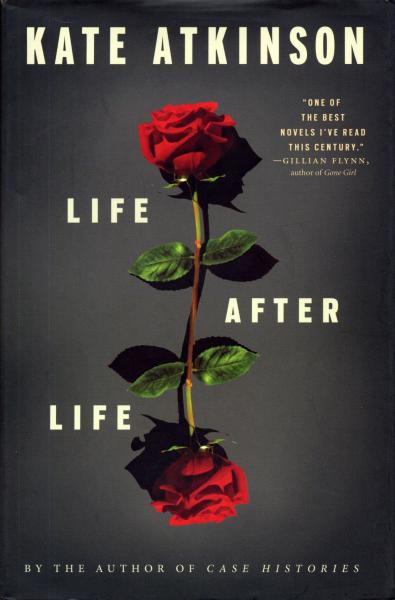
                  Kate Atkinson's Life After Life gives Ursula Todd, born on a snowy night in 1910, a strange gift: whenever she dies, she's born again into a slightly altered version of the same life, gradually piecing together enough intuition across her many deaths to try to change the course of the twentieth century's worst events. The companion novel A God in Ruins turns to Ursula's brother Teddy, a bomber pilot, following his one, single life forward from the war through old age. The two books share a family and a set of preoccupations -- memory, war, chance -- without forming a conventional sequential series.

                • Cover of The Jesus Factor
                  The Jesus Factor

                  Edwin Corley · standalone novel · 1970

                  similar byearly 20th centurytensethriller & suspensehistorical fictionwar

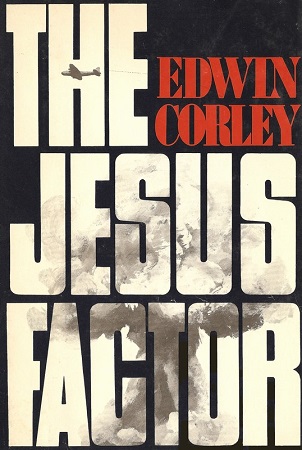
                  The Jesus Factor is a 1970 conspiracy theory thriller novel by Edwin Corley based on the Manhattan Project of World War II and the bombing of Hiroshima and Nagasaki. It concerns issues relating to the "arms race" and the collective guilt of those involved with the bombings.

                • Cover of Angel Down
                  Angel Down

                  Daniel Kraus · standalone novel · 2025

                  similar byearly 20th centuryhistorical fictioneuropewar+2 more

                  Angel Down is a World War I novel, written as a single unbroken sentence, by American author Daniel Kraus. The protagonist is a draft dodger and then an army private who encounters an angel on the battlefield. It was published by Atria Books, an imprint of Simon & Schuster, in July 2025. The book won the 2026 Pulitzer Prize for Fiction.

                • Cover of The Winter Ghosts
                  The Winter Ghosts

                  Kate Mosse · standalone novel · 2009

                  similar byearly 20th centuryhistorical fictioneuropefamily secretsmountains

                  The Winter Ghosts is a 2009 historical fiction novel by English author Kate Mosse based on The Cave, a novella she wrote earlier that year as part of the Quick Reads initiative.

                • Cover of Volk
                  Volk

                  Piers Anthony · standalone novel · 1996

                  similar byearly 20th centuryhistorical fictionemotionalwareurope

                  Set During World War II, Volk is the story of friendship that transcends politics and war. Lane is an American fighter pilot; Quality, an American pacifist Quaker; and Ernst, a Nazi.

                • Cover of The Crook Factory
                  The Crook Factory

                  Dan Simmons · standalone novel · 1999

                  similar byearly 20th centurythriller & suspensehistorical fictiontensewar

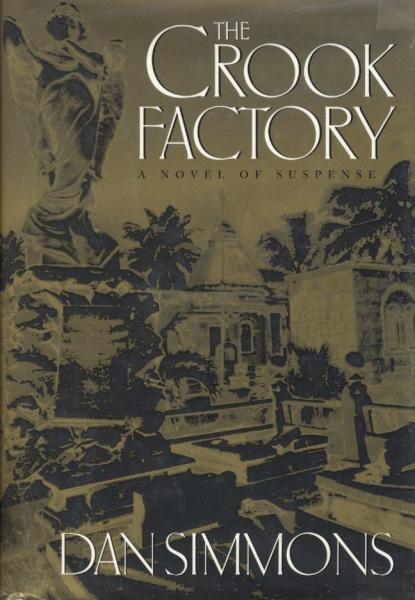
                  The Crook Factory is a thriller novel by American author Dan Simmons. The book was initially published by William Morrow on March 1, 1999. The novel tells a fictionalized version of the real life counter-espionage and spy ring, known as the Crook Factory, that was set up by Ernest Hemingway in Cuba during World War II.

                • Cover of Fateful
                  Fateful

                  Claudia Gray · standalone novel · 2011

                  similar byearly 20th centuryhistorical fictionemotionaltense+1 more

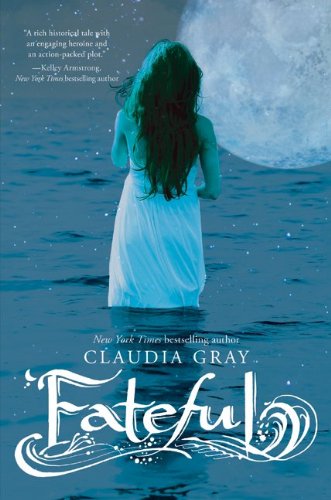
                  When seventeen-year-old Tess Davies, a ladies' maid, meets handsome Alec Marlow aboard the RMS Titanic, she quickly becomes entangled in the dark secrets of his past, but her growing love puts her in mortal peril even before fate steps in.

                • Cover of Oxford Time Travel
                  Oxford Time Travel

                  series · 6 books · 1982

                  similar bytenseeurope+4 more

                  Connie Willis's Oxford Time Travel novels are set at a near-future Oxford University where historians travel into the past as observers, constrained by a version of history that resists any change large enough to alter real events. Doomsday Book sends a medieval historian to what should be 1320 but turns out to be the Black Death year of 1348, intercut with a present-day epidemic at Oxford; To Say Nothing of the Dog returns to the same time-travel program for a lighter, Victorian-set story with different characters. The two novels share their setting and rules rather than a directly continuing plot.

                • Cover of Perfect Fire Trilogy
                  Perfect Fire Trilogy

                  series · 3 books · 2008

                  similar byhistorical fictioneuropetensewarfaith and religion+2 more

                • Cover of Lovely War
                  Lovely War

                  Julie Berry · standalone novel · 2019

                  similar byearly 20th centuryeuropehistorical fictionemotionalwar

                  Lovely War is a young adult romance novel by Julie Berry, published March 5, 2019 by Viking Books for Young Readers. The book is a New York Times Bestseller and was well-received by critics.

                • Cover of The Dancing Floor
                  The Dancing Floor

                  John Buchan · standalone novel · 1926

                  similar byearly 20th centurytenseeuropethriller & suspense

                  The Dancing Floor is a 1926 novel by the Scottish author John Buchan featuring Edward Leithen. It is the third of Buchan's five Leithen novels.

                • Cover of Glide Path
                  Glide Path

                  Arthur C. Clarke · standalone novel · 1963

                  similar byearly 20th centuryhistorical fictionwar+1 more

                  Glide Path is a novel by the English writer Arthur C. Clarke, published in 1963. Clarke's only non-science fiction novel, it is set during World War II and relates a fictionalized version of the development of the radar-based ground-controlled approach aircraft landing system, and includes a character modeled on Luis Alvarez, who developed this system. It is based on Clarke's own wartime service with the Royal Air Force, during which he worked on the GCA project.

                • Cover of Triumph
                  Triumph

                  Ben Bova · standalone novel · 1993

                  similar byearly 20th centurytenseeuropethriller & suspensewar

                  In the tradition of Fatherland and SS-GB, Hugo Award-winning author Ben Bova unveils a fascinating tale of an alternate history - in which one bold, top secret plan changes forever the shape of the world. 1945: As the War in Europe winds to its bloody close, and a crazed Adolf Hitler awaits the end in an underground bunker in Berlin, the Allied forces - led by FDR, Churchill, and Stalin - look warily at the post-war world - and at each other. Once the war is over, who. Will control Berlin, as well as the future of Eastern Europe? In the world we know, the Red Army marched on Berlin and the Cold War began. In Triumph, however, Bova imagines another possible twist of fate, whose consequences result in both a new world order and gripping human drama that will keep you turning pages until the powerful conclusion. Convinced that Stalin poses a threat to democracy as great as Hitler, Churchill launches a risky, covert operation involving a. Ceremonial sword, future cosmonaut Yuri Gagarin, and a small dose of lethal plutonium. Mixing startling fictional surprises with genuine historical figures such as General George S. Patton and British spy Kim Philby, Triumph is an irresistible and compelling peek at a world that might been.

                • Cover of Resistance
                  Resistance

                  Jennifer A. Nielsen · standalone novel · 2018

                  similar byearly 20th centuryhistorical fictiontenseeuroperebellion and revolutionwar

                  Chaya Lindner is a teenager living in Nazi-occupied Poland. Simply being Jewish places her in danger of being killed or sent to the camps. After her little sister is taken away, her younger brother disappears, and her parents all but give up hope, Chaya is determined to make a difference.

                • Cover of Blood Red, Snow White
                  Blood Red, Snow White

                  Marcus Sedgwick · standalone novel · 2007

                  similar byearly 20th centuryhistorical fictiontenserebellion and revolutionwar

                  Blood Red, Snow White is a historical novel by Marcus Sedgwick published in 2007. It is a novel set during the Russian Revolution, a fictionalised account of the time the author Arthur Ransome spent in Russia. It was shortlisted for the 2007 Costa Children's Book Award.

                • Cover of Dawn of Fear
                  Dawn of Fear

                  Susan Cooper · standalone novel · 1970

                  similar byearly 20th centuryhistorical fictioneuropewar

                  "A study not a story, really, demonstrating--decisively--just what the title says." --Kirkus Reviews 1970-09-01 "Dawn of Fear (1970) is a[n] effective though nonfantastic Young Adult novel set during World War Two." --SFE3