More like Cities
anchored on:science fictionnear futureshort story cyclefantasyvirtual reality
but
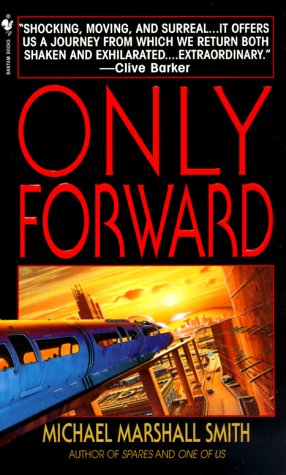
- Only Forward
Michael Marshall Smithstandalone novel1994
similar byvirtual realitybig citynear futurescience fictionidentity+1 more
Only Forward is a science fiction novel by English writer Michael Marshall Smith; his debut novel, it was first published in 1994 by HarperCollins. It was the winner of the August Derleth Award (1995) and Philip K. Dick Award (2000).
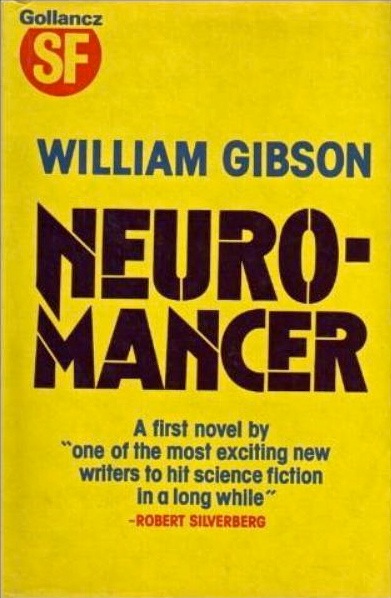
- Sprawl Trilogy
series10 books1981
similar byvirtual realitybig citynear futurescience fiction
The Sprawl Trilogy is William Gibson's foundational cyberpunk sequence: Neuromancer (1984), in which hacker Case is drawn into a high-stakes heist alongside an artificial intelligence and a damaged ex-soldier, followed by Count Zero (1986) and Mona Lisa Overdrive (1988), which widen the same near-future world of corporate power and networked cyberspace to new characters. Johnny Mnemonic, an early short story set in the same fictional milieu, predates the novels and introduces the courier Molly Millions before her role in the trilogy. Together these works established much of cyberpunk's visual and thematic vocabulary.
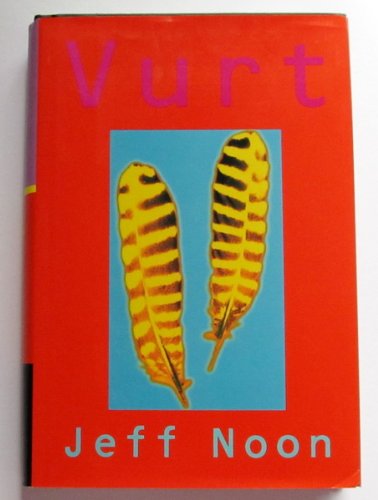
- Vurt
series4 books1993
similar byscience fiction+6 more
In Jeff Noon's alternate Manchester, an entire subculture has formed around Vurt: a hallucinogenic, colour-coded feather that plunges users into a shared alternate reality as vivid and dangerous as real life. Vurt follows Scribble and his gang, the Stash Riders, on a search for his sister, lost somewhere inside a Vurt trip gone catastrophically wrong. The sequel Pollen continues directly from its fallout, while Noon's other novels of the period, including Automated Alice and Nymphomation, circle the same fevered, drug-soaked version of the city.
- The Dream Master
Roger Zelaznystandalone novel1966
similar byvirtual realitynear futurescience fictionidentity+1 more
The Dream Master (1966) is a science fiction novel by American writer Roger Zelazny, based on the novella He Who Shapes. Zelazny's original title was The Ides of Octember. He Who Shapes won the 1965 Nebula Award for Best Novella.
- A Clockwork Orange
series4 books1962
completed
similar bybig cityscience fictionnear futurechallenging+1 more
Anthony Burgess's 1962 novel is narrated by Alex, a teenage gang leader in a near-future Britain gripped by a youth subculture of extreme violence, recounting his crimes in Nadsat, an invented slang blending English with Russian-derived words. After his crimes catch up with him, Alex is made the subject of a controversial state program meant to forcibly reform his behavior, and the novel uses his ordeal to question whether imposed goodness is worth the loss of free will. It is a standalone novel.
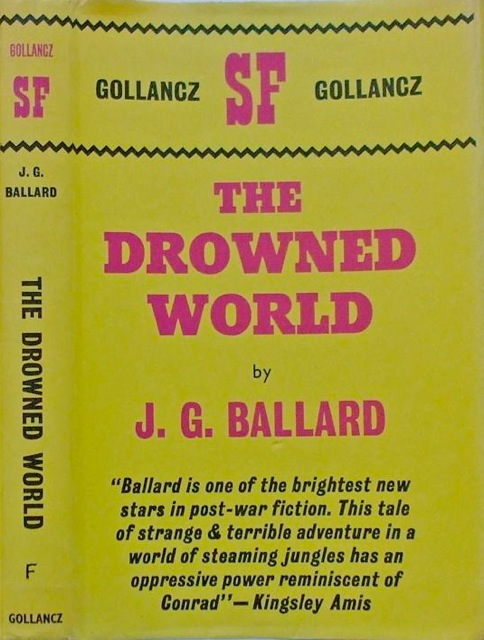
- The Drowned World
J. G. Ballardstandalone novel1962
similar bybig citynear futurescience fictioneerie+1 more
The Drowned World is a 1962 science fiction novel by J. G. Ballard. It first appeared in shortened form in the January 1962 issue of the UK edition of Science Fiction Adventures and was published in book form later that year by Victor Gollancz Ltd in London; an American edition followed from Berkley Medallion. Critics have grouped The Drowned World with Ballard's early science-fiction novels as part of an "ambiguous apocalypse" sequence that also includes The Drought and The Crystal World, from the period in which he was developing the ideas he described as "inner space". Set in a future in which solar radiation has melted the polar ice caps and transformed London into a flooded tropical lagoon, the novel follows biologist Robert Kerans as he becomes increasingly drawn toward the altered environment rather than toward restoring the old social order.
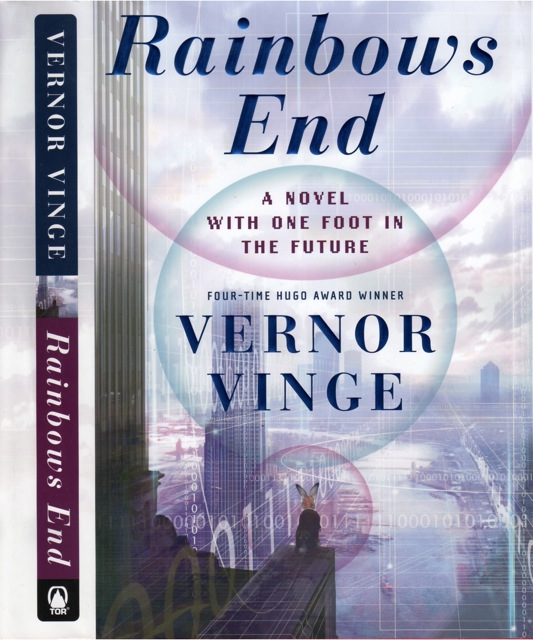
- Rainbows End
Vernor Vingestandalone novel2006
similar byvirtual realitybig citynear futurescience fiction+1 more
A science-fiction thriller set in a place and time as exciting and strange as any far-future world: San Diego, California, 2025. Robert Gu is a recovering Alzheimer’s patient. The world that he remembers was much as we know it today. Now, as he regains his faculties through a cure developed during the years of his near-fatal decline, he discovers that the world has changed and so has his place in it. He was a world-renowned poet. Now he is seventy-five years old, though by a medical miracle he looks much younger, and he’s starting over, for the first time unsure of his poetic gifts. Living with his son’s family, he has no choice but to learn how to cope with a new information age in which the virtual and the real are a seamless continuum, layers of reality built on digital views seen by a single person or millions, depending on your choice. But the consensus reality of the digital world is available only if, like his thirteen-year-old granddaughter Miri, you know how to wear your wireless access—through nodes designed into smart clothes—and to see the digital context—through smart contact lenses. With knowledge comes risk. When Robert begins to re-train at Fairmont High, learning with other older people what is second nature to Miri and other teens at school, he unwittingly becomes part of a wide-ranging conspiracy to use technology as a tool for world domination. In a world where every computer chip has Homeland Security built-in, this conspiracy is something that baffles even the most sophisticated security analysts, including Robert’s son and daughter-in law, two top people in the U.S. military. And even Miri, in her attempts to protect her grandfather, may be entangled in the plot. As Robert becomes more deeply involved in conspiracy, he is shocked to learn of a radical change planned for the UCSD Geisel Library; all the books there, and worldwide, would cease to physically exist. He and his fellow re-trainees feel compelled to join protests against the change. With forces around the world converging on San Diego, both the conspiracy and the protest climax in a spectacular moment as unique and satisfying as it is unexpected.
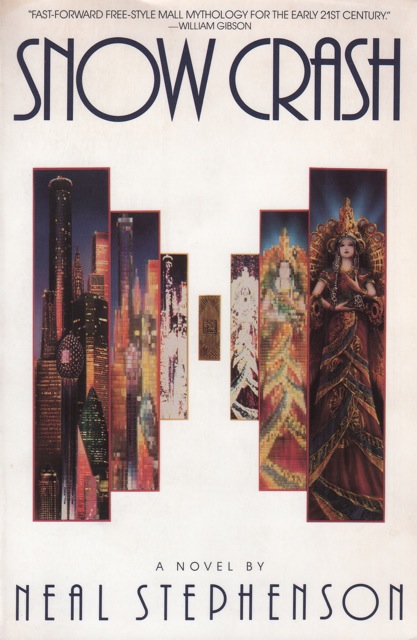
- Snow Crash
Neal Stephensonstandalone novel1992
similar byvirtual realitybig citynear futurescience fiction
Snow Crash is a 1992 science fiction novel by Neal Stephenson. Like many of Stephenson's novels, its themes include history, linguistics, anthropology, archaeology, religion, computer science, politics, cryptography, memetics, and philosophy.
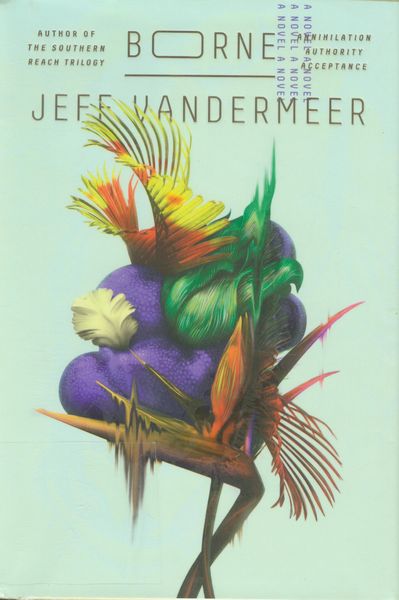
- Borne
series3 books2017
similar bybig cityscience fictionnear futureeerie+3 more
Borne is set in a ruined, biotech-poisoned city dominated by a giant flying bear named Mord, where a scavenger finds a strange organism she names Borne and raises it, only to discover it may be more dangerous - and more alive - than she expected. Jeff VanderMeer's series continues with the related novels The Strange Bird and Dead Astronauts, set in the same devastated world.
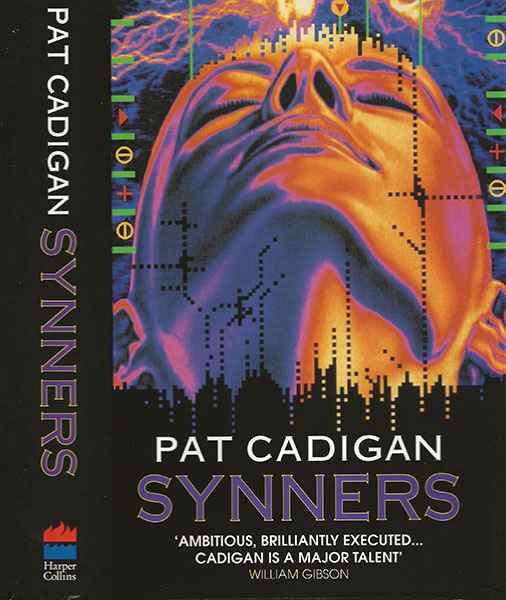
- Synners
Pat Cadiganstandalone novel1991
similar byvirtual realitybig citynear futurescience fiction+1 more
In Synners, the line between technology and humanity is hopelessly slim. A constant stream of new technology spawns crime before it hits the streets; the human mind and the external landscape have fused to the point where any encounter with "reality" is incidental.
- Childhood's End
Arthur C. Clarkestandalone novel1953
similar byscience fictionnear futureidentity+2 more
Childhood's End is a 1953 science fiction novel by the British author Arthur C. Clarke. The story follows a peaceful alien invasion of Earth by mysterious Overlords, whose arrival begins decades of apparent utopia under indirect alien rule, at the cost of human identity and culture.
- The Night Mayor
Kim Newmanstandalone novel1989
similar byvirtual realitybig citynear futurescience fictioneerie
Welcome to the City made from a dream. But this isn't any dream; it is the dark and haunting nightmare of a killer. It is the near future and old-fashioned movies, or "flatties", have been replaced by Dreams, virtual reality scenarios written by professional Dreamers. When infamous criminal Truro Daine escapes imprisonment, he flees into the City, an artificial world of his own creation, where he rules as the all-powerful Night Mayor.
- Dhalgren
Samuel R. Delanystandalone novel1975
similar bybig cityscience fictionchallengingeerieidentity
Dhalgren is a 1975 science fiction novel by American writer Samuel R. Delany. It features an extended trip to and through Bellona, a fictional city in the American Midwest cut off from the rest of the world by an unknown catastrophe. It is number 33 on the 20th Century's Greatest Hits: 100 English-Language Books of Fiction list.
- Trouble and Her Friends
Melissa Scottstandalone novel1994
similar byvirtual realitynear futurescience fictionidentity+1 more
Trouble and Her Friends is a science fiction novel by American writer Melissa Scott, first published in 1994. Set in the near future in the United States, the story follows India Carless, known as "Trouble" in her life as a criminal hacker, and her ex-lover Cerise. After leaving the underground scene three years earlier, they discover someone impersonating Trouble online, and decide to reunite to confront this impersonator, embarking on a cross-country journey. The novel features extensive use of virtual reality and neural implants, making it a solid example of cyberpunk; however, it is notable within the genre for its distinct feminist perspective and its focus on main characters who are gay or lesbian, reflecting themes common in much of Scott's work.
- The Light of Other Days
Arthur C. Clarke & Stephen Baxterstandalone novel2000
similar bynear futurescience fictionchallenging+2 more
An industrialist devises a technique to use tiny wormholes as light pipes to enable viewing of any event anywhere; and subsequently it becomes possible to use them to view any event in the past as well. The effects on society are enormous.
- Pastworld
Ian Beckstandalone novel2009
similar byvirtual realitybig citynear futurescience fictionidentity
What if all of London were really an amusement park—a whole city returned to Victorian times to entertain visitors from the twenty-first century? That's the wildly original premise of Ian Beck's Pastworld, a high-stakes mystery set in a simulated past. Eve is a lifelong resident of Pastworld who doesn’t know she’s living in a theme park until a mysterious threat forces her to leave home. Caleb is a visiting tourist who finds the lawlessness of the past thrilling—until he suddenly becomes a fugitive from an antiquated justice system. And in the midst of it all, in the thick London fog a dark and deadly figure prowls, claiming victim after victim. He’s the Fantom, a creature both of the past and of the present, in whose dark purpose Caleb and Eve will find their destinies combined. Page-turning, complex, and haunting, Pastworld masterfully exposes the human experience of the past, of violence, of technology, and of entertainment.
- Blade Runner Universe
series6 books1968
similar bybig citynear futurescience fictionidentity
Philip K. Dick's 1968 novel Do Androids Dream of Electric Sheep? follows bounty hunter Rick Deckard as he tracks escaped androids through an irradiated, near-abandoned San Francisco, using the hunt to probe questions of empathy and what separates human from machine. The novel became the basis for Ridley Scott's 1982 film Blade Runner, and Marvel Comics later published an illustrated adaptation of that film. Together the two trace the story's path from prose original to screen and comic-page adaptation.
- Lock In
series3 books2014
similar bybig citynear futurescience fiction+2 more
Lock In imagines a near-future pandemic that leaves a fraction of survivors fully conscious but completely paralyzed, able to interact with the world only through robotic surrogates or by borrowing the bodies of rare people whose brains can host another person's consciousness. John Scalzi's series follows a rookie FBI agent investigating crimes that exploit this new class of disability and technology, across the novels Lock In and Head On plus the interstitial oral history Unlocked. It's science-fiction police procedural more than space opera.
- Stand on Zanzibar
John Brunnerstandalone novel1968
similar bybig citynear futurescience fictionchallenging
Stand on Zanzibar is a dystopian New Wave science fiction novel written by John Brunner and first in part published in New Worlds magazine in 1967 and in book form in 1968. The book won a Hugo Award for Best Novel at the 27th World Science Fiction Convention in 1969, as well as the 1969 BSFA Award and the 1973 Prix Tour-Apollo Award.
- Stranger in a Strange Land
Robert A. Heinleinstandalone novel1961
similar byscience fictionnear futurechallengingidentity
Stranger in a Strange Land is a 1961 science fiction novel by the American author Robert A. Heinlein. It tells the story of Valentine Michael Smith, a human who comes to Earth in early adulthood after being born on the planet Mars and raised by Martians, and explores his interaction with and eventual transformation of Terran culture.
- The Lathe of Heaven
Ursula K. Le Guinstandalone novel1971
similar bybig citynear futurescience fictioneerie
The Lathe of Heaven is a 1971 science fiction novel by American writer Ursula K. Le Guin, first serialized in the American science fiction magazine Amazing Stories. It won the 1972 Locus Award for Best Novel and was a finalist for the 1971 Nebula Award for Best Novel and 1972 Hugo Award for Best Novel. Two television film adaptations were released: the PBS production, The Lathe of Heaven (1980), and Lathe of Heaven (2002), a remake produced by the A&E Network.
- Bridge Trilogy
series4 books1990
similar bybig citynear futurescience fiction+1 more
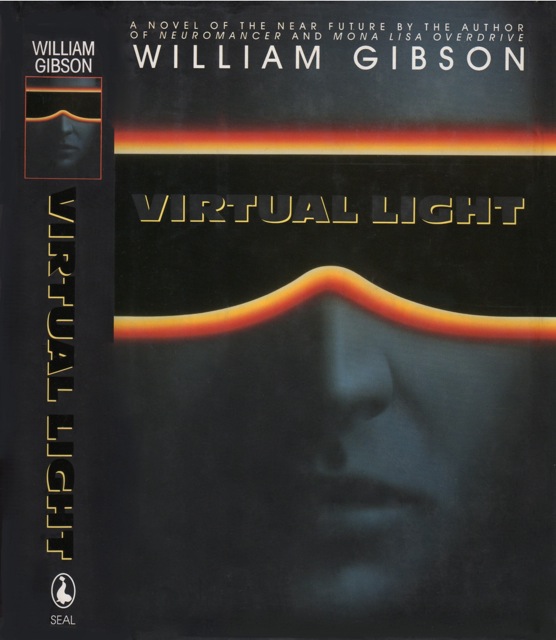
The Bridge trilogy is a series of novels by William Gibson, his second after the successful Sprawl trilogy. The trilogy comprises the novels Virtual Light (1993), Idoru (1996) and All Tomorrow's Parties (1999). A short story, "Skinner's Room", was originally composed for Visionary San Francisco, a 1990 museum exhibition exploring the future of San Francisco.
- Richard Forthrast
series2 books2011
similar byvirtual realityscience fiction+3 more
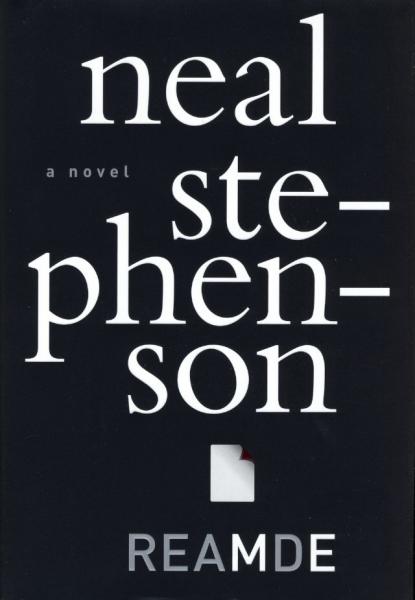
Neal Stephenson's Richard 'Dodge' Forthrast novels open with Reamde, a globe-spanning thriller that starts when ransomware inside an MMORPG economy pulls Richard's extended family into a real-world hostage crisis involving hackers, jihadists and Russian mobsters. The sequel Fall; or, Dodge in Hell shifts registers entirely, following Richard's digitally preserved mind after death into an afterlife simulation built from his scanned brain. The two books share a protagonist and family but differ sharply in genre and scale.