Loreful
HomeDiscover
Search series, authors…⌘K
Loreful

Reading orders for SF/F series and shared universes — with your place kept in every one.

Explore

UniversesSeriesWorksAuthorsAtlas

Help

FAQAboutSite map

Account & legal

Sign inCreate accountPrivacyTerms

Data

Built on ISFDB, Wikipedia, Wikidata and Open Library. Curated reading orders carry their reasoning on the page; the rest follow publication order. Data sources & licenses

© Loreful · data: ISFDB · CC BY

More like Clockwork Chaos

anchored on:steampunkfantasyscience fiction19th centurymysterious

but

Mood

The mood the book leaves you in.

  • The reading experience is propelled by journeys, exploration, and physical risk; excitement and forward momentum dominate over dread or introspection.
  • Joy and loss are deliberately mixed; the resolution grants characters something real while taking something else away, leaving warmth and sorrow together.
  • The book demands work from the reader — dense prose, difficult structure, unfamiliar ideas, or morally uncomfortable material — as part of its intended effect.
  • Grim events, cruelty, or despair dominate the atmosphere, and the book does not soften them with comfort or comic relief.
  • The atmosphere is quietly unsettling — wrongness, unease, and the uncanny pervade the book without necessarily escalating into overt horror.
  • The book is built to move the reader; character feeling is foregrounded and major scenes aim at a strong emotional response.
  • Humor is a primary aim and the prose plays for laughs — comic situations, wit, or dialogue produce sustained comedy, not occasional levity.
  • The book insists that things can improve; effort and decency are shown to matter, and the arc bends toward better outcomes even through hardship.
  • The book teaches as it goes — real facts, history, science, or craft are conveyed in enough depth that learning is part of the reading experience.
  • The book is designed to uplift and motivate, presenting perseverance or achievement in a way that invites the reader to aspire or act.
  • The overall register is cheerful and easygoing; stakes are kept gentle and the book avoids dwelling on pain or dread.
  • Withheld information drives the experience; the book sustains enigmas and secrets the reader wants resolved, whatever its genre.
  • The book is contemplative and inward-looking, giving more weight to thought, memory, and meaning than to external events.
  • The book works as comfort reading — low tension, a soothing pace, and an atmosphere the reader can unwind in.
  • Grief, loss, or melancholy set the dominant register, and the book lets sorrow stand rather than resolving it into comfort.
  • Sustained suspense is the point; the book keeps the reader braced for what happens next through danger, pressure, or impending revelation.
  • Playful invention and charm define the register — fanciful conceits, light absurdity, and a narration that delights in its own oddity.

About

What the story runs on.

  • Stories in which extraterrestrial beings are central — as characters, cultures, or the object of the plot.
  • Stories about venturing into space to explore — survey missions, astronauts, and the frontier of the unknown beyond Earth.
  • Stories structured as a quest — a journey undertaken to find, deliver, or destroy something of great import.
  • Stories in which staying alive against nature, catastrophe, or scarcity is the central problem.
  • Stories of lovers kept apart by law, family, faith, or station, where the obstacle to love is the plot.
  • Stories in which a friendship — its making, testing, or loss — is the emotional center.
  • Stories of growing up — a young protagonist crossing from childhood into adult knowledge and responsibility.
  • Stories about who a character truly is — self-discovery, doubled lives, and the search for a self.
  • Stories in which a buried family truth — hidden parentage, crimes, or shames — surfaces and reorders the present.
  • Stories driven by maneuvering for power — factions, conspiracies, and statecraft conducted in shadow.
  • Stories in which war itself is the subject — combat, occupation, and what warfare does to soldiers and civilians.
  • Stories organized around investigating a killing — the case, the clues, and the pursuit of the killer, in any genre's clothing.

Shelf

Where it sits in the library.

    • Fiction built on magic or other supernatural elements that have no scientific explanation.
    • Secondary-world fantasy at large scale, where the fate of nations or the world turns on the protagonists' struggle.
    • Fantasy set in a recognizably modern city or contemporary world where the supernatural intrudes on everyday life.
    • Fantasy that blends in horror's atmosphere and imagery, keeping a fantastical frame around grim or frightening material.
    • Action-driven fantasy following warriors or rogues with personal stakes against sorcerous threats, rather than world-spanning conflicts.
    • Fantasy set in a real historical period or a close analogue of one, with magic woven into the era.
    • Fantasy in which protagonists cross from the ordinary world into another world through a portal or similar passage.
    • Fiction that retells or reworks a traditional fairy tale in a new form or setting.
    • Fantasy drawing directly on myths, legends, and folklore, retelling them or building on their figures and logic.
    • Fantasy of ghosts, vampires, shapeshifters, psychics, and similar phenomena, usually set in an otherwise ordinary world.
    • Fiction mixing science-fictional trappings with overtly magical or impossible elements in one setting.
    • Low-stakes fantasy emphasizing comfort, community, and everyday pleasures over conflict and peril.
    • Speculative fiction of pervasive moral ambiguity, violence, and cynicism that rejects heroic conventions — fantasy and SF alike.
      • Fiction that extrapolates from science and technology — future societies, space travel, or speculative inventions — within at least nominally natural laws.
      • Science fiction of interstellar scope — starships, galactic polities, and adventure across star systems.
      • Science fiction committed to scientific rigor, where technical plausibility constrains the story.
      • Science fiction centered on armed forces and warfare, told largely from a military point of view.
      • Science fiction of networked, corporate-dominated near futures, pairing high technology with social decay.
      • Science fiction styled on nineteenth-century steam-powered technology, often in a Victorian or pseudo-Victorian setting.
      • Fiction depicting an oppressive or catastrophic society, presented as a warning.
      • Fiction set after civilization's collapse, following survivors in the ruins of the old world.
      • Fiction in which characters move between past and future, and the mechanics or consequences of that travel drive the plot.
      • Fiction exploring a world where a historical event went differently and history diverged from ours.
      • Science fiction about humanity's first encounter and communication with an alien intelligence.
      • Science fiction in which extraterrestrial forces attack or occupy Earth and humanity resists.
      • Fiction whose primary aim is to frighten or unsettle the reader through dread, menace, or the monstrous.
      • Horror of vast, indifferent, incomprehensible entities before which humanity is insignificant, in the Lovecraft tradition.
      • Horror of decaying houses, buried family secrets, and oppressive atmosphere in the Gothic literary tradition.
      • Horror centered on hauntings and the returning dead.
      • Horror located in the mind — paranoia, obsession, and unreliable perception rather than external monsters.
      • Horror built around the reanimated dead and survival amid their outbreaks.
      • Horror defined by explicit, transgressive gore that refuses to cut away from violence.
      • Speculative fiction of the strange and uncanny that resists both natural explanation and standard genre categories.
      • Fiction organized around solving a crime or puzzle, typically following an investigator toward the identification of a culprit.
      • A puzzle-first mystery that lays out clues so the culprit's identity can be deduced before the reveal.
      • Crime fiction of moral ambiguity, fatalism, and hard-edged style, set among the corrupt and the doomed.
      • A mystery following the realistic routines of police work — forensics, interviews, and case-building.
      • A gentle mystery with an amateur sleuth, a small community, and violence kept off the page.
      • A mystery set in a past era, where the investigation works within that period's methods and society.
      • Fast-paced fiction driven by imminent danger, pursuit, or high-stakes conspiracy, built to sustain tension.
      • A thriller of espionage — agents, tradecraft, and intelligence services in conflict.
      • A thriller centered on lawyers and the courtroom, where litigation carries the suspense.
      • A thriller driven by detailed contemporary or near-future technology, often military or scientific.
      • A thriller whose tension comes from mental states and manipulation between characters rather than external action.
      • Fiction whose central plot is a romantic relationship and its development toward an emotionally satisfying resolution.
      • Romance in which one or both partners are supernatural beings, blending fantasy elements into the love story.
      • A fantasy-romance hybrid in which the romantic arc and the fantasy plot carry equal weight.
      • Romance set in a past era, with courtship shaped by the period's society and manners.
      • Romance set in the present day, without supernatural or historical elements.
      • Fiction set in a real past period, where the historical setting materially shapes characters and events.
        • General and literary fiction emphasizing prose style, character interiority, or formal ambition over genre plot conventions.
        • Fiction in a realistic world where magical events occur and are treated as ordinary, in the tradition of Latin American literature.
        • Fiction that ridicules people, institutions, or society in order to criticize them.
        • Fiction of dreamlike, irrational imagery and logic that breaks from realistic representation.
        • Fiction that plays with narrative convention through metafiction, fragmentation, and self-reference.
        • Fiction propelled by journeys, exploration, and physical peril, where action and survival carry the plot.
        • Adventure fiction of ships and seafaring — naval engagements, voyages, and life at sea.
        • Fiction of the American frontier West — gunmen, ranchers, and lawmen, typically in the late nineteenth century.
        • Fiction centered on soldiers, campaigns, and the experience of warfare, historical or imagined.
          • Fiction written primarily to amuse, using comedic situations, wit, or parody as its organizing principle.
            • Multi-generational fiction following a family or dynasty across decades, with inheritance and kinship as the through-line.
              • Fiction whose world runs on explicit game mechanics — levels, stats, and skills that characters can see and exploit.
                • Fiction about costumed or superpowered heroes and their conflicts with comparable villains.

                Practical

                How long a commitment, whether it stands alone, and whether it has finished.

                Tap a chip to ask for it · tap again to rule it out · once more to clear. Numbers show what would be left.

                • TB
                  The Bookman Universe

                  series · 6 books · 2010

                  similar bymysterious19th centurypolitical intriguesteampunk+1 more

                • Cover of George Dower / Infernal Devices
                  George Dower / Infernal Devices

                  series · 3 books · 1987

                  similar by19th centurysteampunk+3 more

                  K. W. Jeter's trilogy, whose 1987 original helped coin the term 'steampunk,' follows clockmaker George Dower as he's dragged into escalating Victorian conspiracies involving mechanical devices, secret societies, and inventions that shouldn't work but do. Infernal Devices, Fiendish Schemes, and Grim Expectations mix dark comedy with the gears-and-brass aesthetic the series helped establish before it had a name.

                • Cover of The Anubis Gates
                  The Anubis Gates

                  series · 3 books · 1983

                  similar by19th centurymysteriousadventurousfantasy+2 more

                  The Anubis Gates is a single time-travel fantasy novel by Tim Powers, following a present-day academic who takes part in a time-travel experiment and ends up stranded in early nineteenth-century London. It won the Philip K. Dick Award in 1983 and the Science Fiction Chronicle Award the following year.

                • Cover of Burton & Swinburne
                  Burton & Swinburne

                  series · 35 books · 2010

                  similar by19th centurysteampunk+3 more

                • Cover of The Glass Books of the Dream Eaters
                  The Glass Books of the Dream Eaters

                  series · 3 books · 2006

                  similar by19th centurysteampunk+5 more

                • Cover of Ministry of Alchemy
                  Ministry of Alchemy

                  series · 5 books · 2016

                  similar bypolitical intriguemysteriousadventurousfantasy+1 more

                • Cover of The Difference Engine
                  The Difference Engine

                  William Gibson & Bruce Sterling · standalone novel · 1990

                  similar by19th centurypolitical intriguesteampunkscience fiction

                  The computer age arrives a century early with Babbage's perfection of his 'analytical engine'. The industrial revolution is accelerated by the development of steam-driven cybernetic 'Engines'. An advanced Great Britain prepares to better the world's lot. An example of the 'steampunk' sub-genre of the cyberpunk movement.

                • Cover of Mordant's Need
                  Mordant's Need

                  series · 2 books · 1986

                  similar bypolitical intrigueadventurousfantasy+2 more

                  Mordant's Need is a fantasy two-part book series by American writer Stephen R. Donaldson, comprising the novels The Mirror of Her Dreams (1986) and A Man Rides Through (1987).

                • Cover of The Black Magician Trilogy
                  The Black Magician Trilogy

                  series · 3 books · 2001

                  part of Kyralia series

                  similar bymagic schoolsfantasy+2 more

                  Trudi Canavan's Black Magician Trilogy (The Magicians' Guild, The Novice, The High Lord, 2001-2003) opens in the city of Imardin, where the ruling magicians' guild's annual purge of the slums goes wrong when a street girl named Sonea unknowingly shatters their protective shield with raw, untrained power. The guild must hunt her down and decide whether to control her or train her, and the trilogy follows Sonea's forced initiation into magical society and the guild's internal politics. It's Canavan's best-known trilogy and the founding story of her Kyralia setting.

                • Cover of The Last Binding
                  The Last Binding

                  series · 3 books · 2021

                  similar by19th centuryfantasy+3 more

                • Cover of Spiritwalker
                  Spiritwalker

                  series · 14 books · 2010

                  similar by19th centuryfantasy+2 more

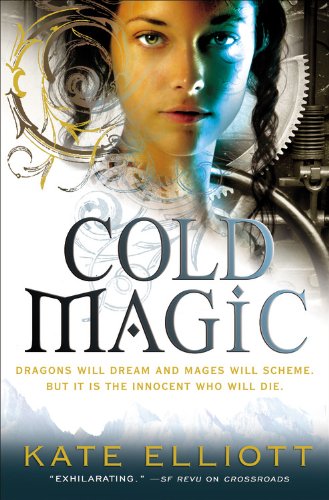
                  Kate Elliott's Spiritwalker trilogy — Cold Magic, Cold Fire, Cold Steel — is an epic fantasy following two cousins navigating a world of dragons and cold magic. The series was later collected under the title The History of the World Begins in Ice.

                • Cover of A Strange Manuscript Found in a Copper Cylinder
                  A Strange Manuscript Found in a Copper Cylinder

                  James De Mille · standalone novel · 1888

                  similar bymysterious19th centuryadventurousfantasy

                  A fantasy novel about the discovery of a civilization hidden near Antarctica.

                • Cover of Noctis Magicae
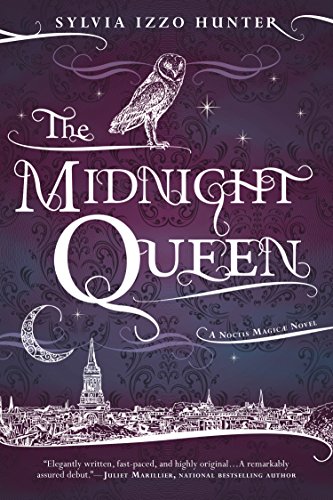
                  Noctis Magicae

                  series · 3 books · 2014

                  similar by19th centurymagic schoolsfantasy+3 more

                • Cover of Queen Sheba's Ring
                  Queen Sheba's Ring

                  H. Rider Haggard · standalone novel · 1910

                  similar by19th centuryadventurous+2 more

                  Queen Sheba's Ring is a 1910 adventure novel by H. Rider Haggard set in central Africa. It resembles the author's earlier works King Solomon's Mines and She, featuring plotting priests, beautiful women, and daring British adventurers.

                • Cover of The Avatar
                  The Avatar

                  Poul Anderson · standalone novel · 1978

                  similar bymysteriouspolitical intrigueadventurousscience fiction

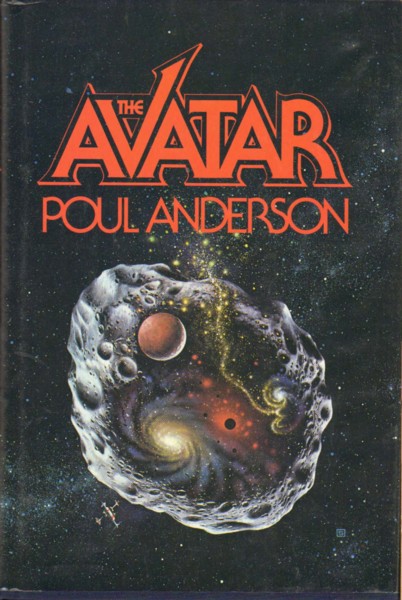
                  After humanity discovers portals that transport a space vessel through time and space, a crew which has visited the planet of another species returns to Earth, only to find a political faction in power which seeks to conceal this knowledge in the name of social stability. With the aid of the political opposition, they escape and journey through the portal in search of knowledge, and perhaps even to meet those who created the portal system.

                • Cover of Gemma Doyle
                  Gemma Doyle

                  series · 4 books · 2003

                  similar by19th centuryfantasy+2 more

                  The Gemma Doyle Trilogy is a trilogy of fantasy novels by American writer Libba Bray. They are told from the perspective of Gemma Doyle, a girl in the late nineteenth century. The Gemma Doyle Trilogy consists of three books: A Great and Terrible Beauty, Rebel Angels, and The Sweet Far Thing.

                • Cover of The Licanius Trilogy
                  The Licanius Trilogy

                  series · 3 books · 2014

                  similar bypolitical intrigue+4 more

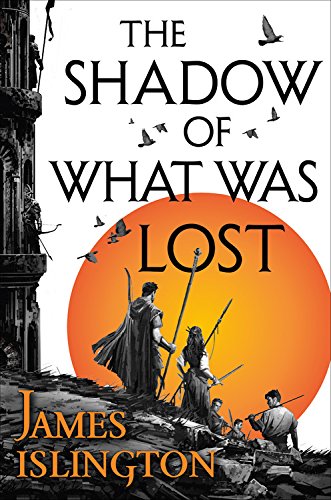
                  Twenty years after a war that toppled the god-like Augurs and stripped magic from the world, James Islington's Licanius Trilogy follows Davian, a young man bound by laws written to suppress the powers the Augurs once had, who discovers he can still reach forbidden abilities. His awakening coincides with the stirring of an ancient enemy and the appearance of an amnesiac stranger whose fate is bound to his. The three books trace how the old war's cover-up starts to unravel.

                • Cover of The Drawing of the Dark
                  The Drawing of the Dark

                  Tim Powers · standalone novel · 1979

                  similar bymysteriousadventurousfantasy+1 more

                  Brian Duffy is a weary, aging Irish mercenary hired in Venice, for reasons he isn't given, to work as a bouncer at a Vienna inn that also happens to be Europe's oldest brewery -- one that produces a legendary dark beer only once every seven hundred years. He arrives just as the Ottoman army under Suleiman the Magnificent marches on Vienna, and just as strange visions and stranger company start converging on the inn: an old flame, her father's uncanny unfinished painting, and Duffy's mysterious employer, who has plans for him well beyond keeping the peace at closing time. Tim Powers's historical fantasy set during the 1529 siege of Vienna.

                • GE
                  Gas-Lit Empire Universe

                  series · 6 books · 2014

                  similar by19th centurysteampunk+3 more

                • Cover of Atlas (Olivie Blake)
                  Atlas (Olivie Blake)

                  series · 3 books · 2020

                  similar bymagic schoolspolitical intriguefantasy+1 more

                  Olivie Blake's Atlas trilogy follows six magical scholars recruited into a secretive society that grants near-limitless magical resources in exchange for a mortal cost only revealed after they've already committed. The Atlas Paradox and The Atlas Complex escalate the group's rivalries and the price of the power they've been given. The series began as a self-published web serial before its traditional re-release.

                • Cover of Rithmatist
                  Rithmatist

                  series · 1 book · 2013

                  similar bymysteriousmagic schoolsadventurousfantasy

                  The Rithmatist series is a young adult fantasy series written by American author Brandon Sanderson. At least two books are planned in the series: The Rithmatist (2013) and a second volume, titled The Aztlanian, is planned.

                • Cover of Weapon Shops of Isher
                  Weapon Shops of Isher

                  series · 5 books · 1941

                  completed

                  similar bypolitical intriguescience fiction+3 more

                  A.E. van Vogt's Weapon Shops of Isher novels (The Weapon Shops of Isher, The Weapon Makers, 1941-1951 magazine-to-book) are set in a far-future empire ruled by the Isher dynasty, where the mysterious, technologically superior Weapon Shops sell defensive arms directly to citizens outside government control. The books follow the immortal Robert Hedrock, secretly the Shops' founder, as he works to keep the balance between the crown and the Shops intact -- not to overthrow the government, but to guarantee ordinary people always retain the means to resist it.

                • Cover of The Secret Order
                  The Secret Order

                  series · 3 books · 2013

                  similar by19th centurymysterioussteampunkadventurous+2 more

                • Cover of The Twelfth Enchantment
                  The Twelfth Enchantment

                  David Liss · standalone novel · 2011

                  similar bymysterious19th centurypolitical intrigue+1 more

                  From the front flap of the Random House first edition: "Lucy Derrick is a young woman of good breeding and poor finances. After the death of her beloved father, she is forced to maintain a shabby dignity as the unwanted boarder of her tyrannical uncle, fending off marriage to a local mill owner. But just as she is on the cusp of accepting a life of misery, events take a stunning turn when a handsome stranger-the poet and notorious rake Lord Byron-arrives at her house, stricken by what seems to be a curse, and with a cryptic message for Lucy. Suddenly her unfortunate circumstances are transformed in ways at once astonishing and seemingly impossible. With the world undergoing an industrial transformation, and with England on the cusp of revolution, Lucy is drawn into a dangerous conspiracy in which her life, and her country's future, are in the balance. Inexplicably finding herself at the center of cataclysmic events, Lucy is awakened to a world once unknown to her: where magic and mortals collide, and the forces of ancient nature and modern progress are at war for the soul of England ... and the world. The key to victory may be connected to a cryptic volume whose powers of enchantment are unbounded. Now, challenged by ruthless enemies with ancient powers at their command, Lucy must harness newfound mystical skills to prevent catastrophe and preserve humanity's future. And enthralled by two exceptional men with designs on her heart, she must master her own desires to claim the destiny she deserves."