More like Cloneworld
anchored on:science fictioncloningother star systemsfar futuremilitary science fictiongenetic engineering+4 more
but
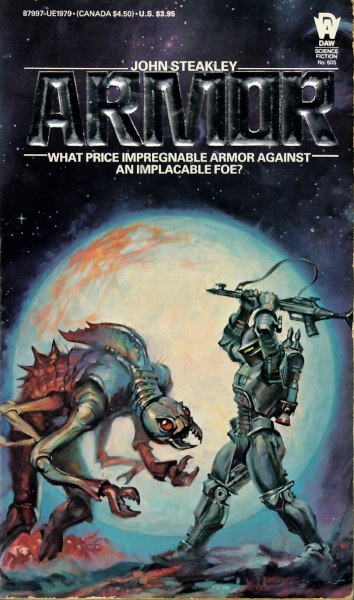
- Armor
John Steakleystandalone novel1984
similar byfar futurescience fictiondarktensemilitary science fictionwarother star systems
Armor is a military science fiction novel by John Steakley. It features the military use of exoskeletons and insect-like alien enemies but concentrates on the psychological effects of violence on human beings.
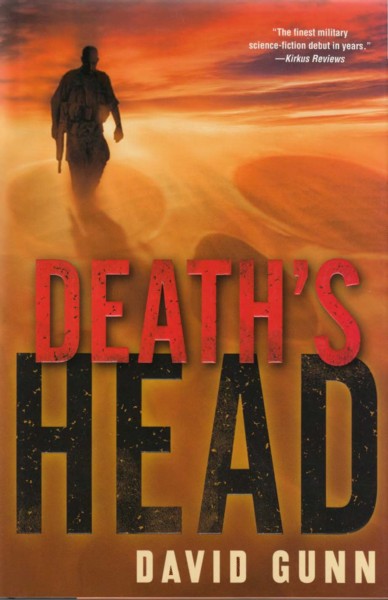
- Death's Head (David Gunn)
series3 books2007
similar byfar futurescience fictiondarktensemilitary science fictionwarspace+1 more
Death's Head is a noir military science fiction series written by David Gunn. The series follows the antihero Sven Tveskoeg, an ex-sergeant of The Legion, in service to the Octovian Empire.
- Old Man's War
series16 books2005
similar byfar futurescience fictionmilitary science fictionwarother star systemsspace+1 more
The Old Man's War series is a series of science fiction novels by John Scalzi. The first book in the series, Old Man's War, was first published in 2005 by Tor Books, and was nominated for the Hugo Award for Best Novel in 2006. In 2026 it was a finalist for the Hugo Award for Best Series.
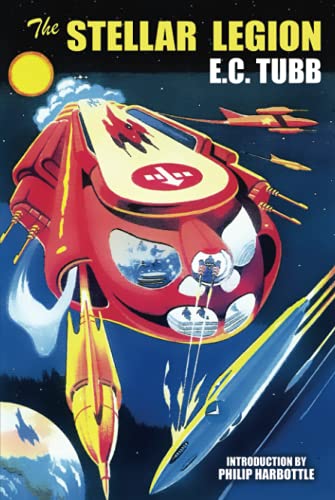
- The Stellar Legion
E. C. Tubbstandalone novel1954
similar byfar futurescience fictiondarktensemilitary science fictionwarother star systemsspace
"Wilson, a waif of the war of unity, spends his boyhood in forced labour. When he is sent to the penal world of Stellar, he survives, winning promotion in the Stellar Legion, a brutal military system. Laurance, Director of the Federation of Man, wants to dissolve the Legion. He pits his wits against its commander, Hogarth. He's terrified lest the human wolves, trained and hardened in blood and terror, should ravage the defenceless galaxy ..."--Publisher description.
- Dune
series20 books1963
part of Dune Universe
similar byfar futurescience fictionother star systems+3 more
Frank Herbert's Dune Chronicles opens with 1965's Dune, set on the desert planet Arrakis where House Atreides takes control of the only source of the vital spice melange and young Paul Atreides is pulled into a struggle over its politics and religion. Herbert carried the story forward across five further novels — Dune Messiah, Children of Dune, God Emperor of Dune, Heretics of Dune, and Chapterhouse: Dune — following Paul's line over the following millennia, before Brian Herbert and Kevin J. Anderson later extended the saga. Many other editions of these six novels are omnibus and box-set repackagings rather than separate stories.
- Honor Harrington
series14 books1993
part of Honorverse
similar byfar futurescience fictiontensemilitary science fictionwarspaceother star systems
David Weber's Honor Harrington novels follow the title character's rise through the Manticoran navy in the 'Honorverse,' a space-opera setting built around Age-of-Sail-style naval combat, interstellar politics and a decades-long war between rival star nations. Beginning with On Basilisk Station, the core series runs to fourteen books, alongside spin-off subseries, prequels and shared-world anthologies also set in the Honorverse. It's one of the longest-running modern military science fiction series, published by Baen.
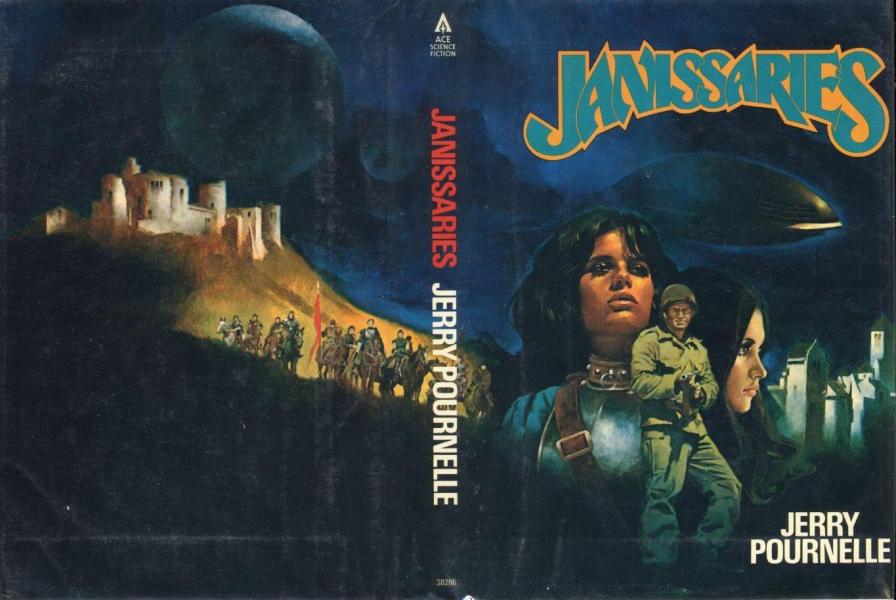
- Janissaries
series4 books1979
similar byfar futurescience fictiontensemilitary science fictionwarother star systems+1 more
Janissaries are an American series of military and political-based science fiction novels are set in an interstellar confederation of races, in which humans are a slave race entrusted with military affairs and law enforcement. They were written by Jerry Pournelle, with Roland J. Green co-authoring the second two books.
- Vatta's War
series6 books2003
part of Vatta
similar byfar futurescience fictiontensemilitary science fictionwarother star systemsspace
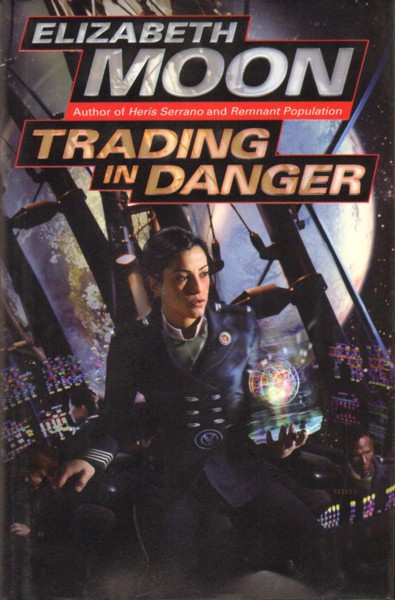
Vatta's War is a science fiction series by American writer Elizabeth Moon, comprising five books: Trading in Danger (2003), Marque and Reprisal, Engaging the Enemy (2006), Command Decision (2007), and Victory Conditions (2008). They have been characterized as military science fiction similar in style to the works of Lois McMaster Bujold, David Weber and Walter Jon Williams.
- Takeshi Kovacs
series3 books2002
similar byfar futurescience fictiondarktenseother star systems+3 more
Takeshi Kovacs is a former elite soldier turned freelance troubleshooter in a future where human consciousness can be digitized and transferred between bodies, or sleeves, making death an inconvenience for those who can afford new ones. Richard Morgan's trilogy - Altered Carbon, Broken Angels, Woken Furies - moves Kovacs through noir-inflected mysteries on different worlds, using the resleeving premise to interrogate class, violence, and what, if anything, survives a person's original body. It became the basis for a Netflix series.
- The Eternity Brigade
Stephen Goldinstandalone novel1980
similar byfar futurescience fictioncloningdarktensemilitary science fictionwar
WorldCat: Hundreds of human bodies have been placed in coffins in a military warehouse. But they are not dead, merely frozen in a cryogenic process meant to preserve an army of men to be restored to life if ever they are needed. The Earth they arise to inhabit is a world completely different from any they have known or imagined. Their only task is to fight and kill in the wars that plague the planet. They are not treated as men, but as fighting machines to be endlessly duplicated and used up. By having had their genetic patterns programmed into a computer, they are doomed to live over and over again, as part of an army that will not die and cannot escape. Yet one man is determined to break the pattern and free himself, truly believing that there must be a way out ... of eternity.
- Xan-Sskarn War
series1 book2010
similar byfar futurescience fictiondarktensemilitary science fictionwarspaceother star systems
- Berserker (Fred Saberhagen)
series59 books1963
similar byfar futurescience fictiontensewarspaceother star systems+2 more
The Berserker series is a series of space opera science fiction short stories and novels by Fred Saberhagen, in which robotic self-replicating machines strive to destroy all life.
- Man-Kzin Wars
series84 books1986
part of Known Space
similar byfar futurescience fictiontensemilitary science fictionwarspaceother star systems
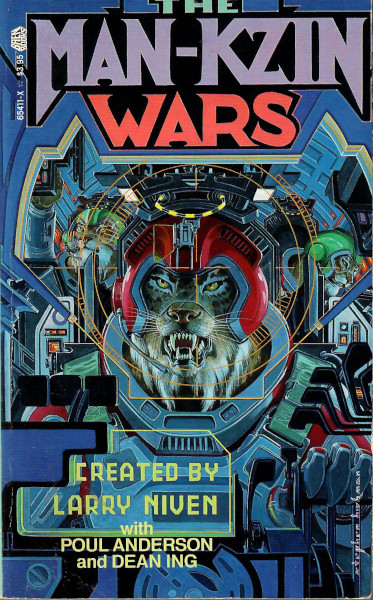
The Man–Kzin Wars is the name of a series of military science fiction anthologies as well as the name of the first book in the series. The short stories detail the eponymous conflicts between mankind and the Kzinti, set in Larry Niven's Known Space universe. However, Niven himself has written only a small number of the stories; most were written by other science fiction writers, as Niven opened this part of the Known Space to collaboration in the form of a shared universe. The cover art for the books in the series is created by Stephen Hickman.
- Forbidden Borders
series3 books1991
similar byfar futurescience fictiontensemilitary science fictionwarother star systemsspace+1 more
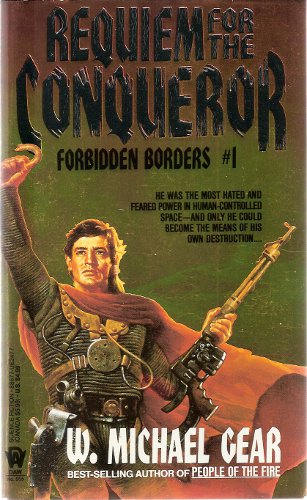
William Michael Gear, better known as W. Michael Gear, is an American writer and archaeologist. He is the author of North America's Forgotten Past series, co-written with his wife Kathleen O'Neal Gear. His novels have been published in 29 languages.
- Heritage of Flight
Susan Shwartzstandalone novel1989
similar byfar futurescience fictiondarktensemilitary science fictionwarother star systemsspace
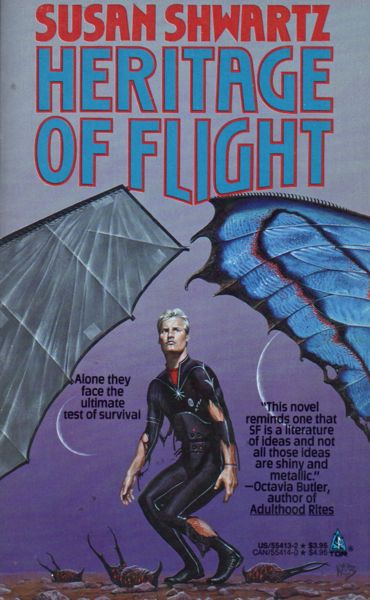
From the back cover of the Tor first edition: "Pauli Yeager knew how to survive in deep space; as senior fighter pilot for the battleship Amherst she had logged years of combat experience. But she knew she wasn't prepared for the new command. Project Seedcorn was the last hope of an ambitious race. Humanity was embroiled in a planet-slagging war that promised a fast and final death. The small group of refugees hidden on the fringe of human-occupied space was ordered to live and be human. THe initial survey had shown no life on Cynthia, but there was life, intelligent life... huge graceful creatures with iridescent wings. They filled the sky with splendor and covered the ground with a legacy of horror. The simple command, live and be human, became an epitaph. Survival depended on the children - human and Cynthian - and Paul had to convince her people to commit a heinous crime or watch their children die..."
- Forever War
series10 books1972
similar byscience fictionfar futuremilitary science fictionspace+4 more
Joe Haldeman's The Forever War (1974) follows a soldier conscripted into a centuries-long interstellar war against the alien Taurans, using relativistic space travel so that months spent in transit correspond to years or decades passing back on Earth. Haldeman later returned to the same conflict in Forever Peace (1997), a thematically connected but separate story, and Forever Free (1999), a direct sequel set years after the original war's end. The first novel won the Hugo, Nebula, and Locus awards and is considered a foundational work of military science fiction.
- Conquerors
series3 books1994
similar byfar futurescience fictiontensemilitary science fictionwarother star systemsspace
Conquerors is Timothy Zahn's military science-fiction trilogy following human fighter pilots and their commanders through an interstellar war that neither side fully understands, told across Conquerors' Pride, Conquerors' Heritage, and Conquerors' Legacy. Zahn alternates perspective between the human and alien chains of command, using the shifting viewpoints to slowly unpick why the conflict started in the first place. It's contact-and-conflict SF built around miscommunication rather than straightforward invasion.
- Dune Universe
universe78 books1963
Start hereDune · Start here
similar byfar futurescience fictionother star systems+2 more
Arrakis. Dune. The desert planet, where empire runs on a single substance: the spice melange, which folds space, prolongs life, and unlocks prescience, and which exists nowhere else in the known universe. Frank Herbert's saga is a meditation dressed as an adventure — feudal houses and a secret sisterhood, engineered messiahs and the patient ecology of a world without water, all turning on the terrible gravity of who commands the spice. It reads like scripture and schemes like a war room, ten thousand years hence, among people who have outlawed the thinking machine and made instruments of themselves instead. At its heart stand Herbert's original six — Dune, Dune Messiah, Children of Dune, God Emperor of Dune, Heretics of Dune, Chapterhouse: Dune — a single deepening arc across millennia, arguing the whole way between prophecy and free will. Around that spine his son Brian Herbert and Kevin J. Anderson have raised a vast prequel architecture: Prelude to Dune, tracing the great houses a generation before Paul; Legends of Dune, reaching back to the crusade that broke the machines; the Schools of Dune cycle on the founding of Bene Gesserit, Mentat, and Navigator; the Caladan Trilogy and Heroes of Dune filling years the originals left in shadow. Many hands, dozens of volumes, one desert. What sets Dune apart is its refusal of the simple: religion is manufactured, heroes are hazards, and the sand itself — worm, water, ecology — acts as a political power. Begin where the universe did, with Frank Herbert's Dune (1965), and read the original six in order; you need nothing else to feel the full weight. The prequels are a country to explore afterward, taken by era. Beginnings are delicate times.
- Embedded
Dan Abnettstandalone novel2011
similar byfar futurescience fictiontensemilitary science fictionwarother star systems+1 more
The colony planet of Eighty-Six looks as dull as all its fellow new worlds to veteran journalist Lex Falk. But when a local squabble turns violent, and the media get the runaround from the military high command, his interest is seriously piqued. Forbidden from approaching the battlezone, Falk gets himself chipped inside the head of a combat veteran - and uncovers the story of a lifetime.
- The Eyes of Heisenberg
Frank Herbertstandalone novel1966
similar byfar futurescience fictiondarktensegenetic engineering+1 more
Tens of thousands of years in the future, Earth is ruled by the Optimen, a genetically engineered aristocracy that has made itself functionally immortal, while ordinary people, the Folk, live under strict reproductive control. When Harvey and Lizbeth Durant arrive to have their embryo genetically screened, the examining doctor finds something in the child no one has seen in a very long time: real potential for both fertility and life span, traits the Optimen have arrogated to themselves. Rather than destroy the embryo as policy demands, the doctor hesitates, setting off a chain of surveillance, suspicion and resistance. A tightly wound Frank Herbert thriller about genetic caste and rebellion.
- Parafaith
series2 books1996
similar byfar futurescience fictiontensemilitary science fictionwarother star systemsspace
- Vatta
universe10 books2003
Start hereVatta's War · Start here
similar byfar futurescience fictiontensemilitary science fictionspaceother star systems+1 more
Get kicked out of the Academy and the family still hands you a ship. That is the arithmetic Kylara Vatta lives by. Born into Vatta Transport, Ltd. — a dynasty of interstellar traders who reckon their honor in delivered cargo and honored contracts — Ky wants a soldier's commission and gets a merchant hull instead. Then someone starts murdering her relatives and burning the ledgers, and the daughter learns that a trade fleet, armed and angry, is its own kind of war. This is military science fiction run on a merchant's books. The core cycle, Vatta's War, moves in five volumes — Trading in Danger, Marque and Reprisal, Engaging the Enemy, Command Decision, Victory Conditions — as piracy, a sabotaged faster-than-light communications network, and a scattered family push Ky from cautious captain to fleet commander. The later duology Vatta's Peace (Cold Welcome, Into the Fire) drops her, older and decorated, into a colder survival ordeal on her own homeworld. Moon writes clean, competent, procedural: supply lines and boarding actions, chains of command, the cost of a signature on a bad contract. Expect capable women, hard decisions costed to the last credit, and space combat that respects physics and paperwork alike. Begin at the beginning — Trading in Danger — and read straight through in publication order; the arc is chronological and cumulative, no side doors required.
- Azean Empire
series2 books1987
similar byfar futurescience fictiontensedarkwar+3 more
C. S. Friedman's Azean Empire novels are set in a distant-future conflict between two competing human societies, the Azeans and the Braxins, contesting interstellar dominance. In Conquest Born, her debut, works as space opera and military SF with an anthropological bent, using the two societies' opposed cultures and reproductive philosophies as the real engine of the conflict rather than just the battles themselves. The Wilding continues the same interstellar rivalry.
- Star Virus
Michael Colestandalone novel2021
similar byfar futurescience fictiondarktensemilitary science fictiongenetic engineeringwarother star systems+1 more
● A galactic civil war between the United Galactic Systems and the totalitarian Tarkadon Union has ravaged the galaxy. Deep in space, lightyears behind enemy lines, a U.G.S. special forces unit infiltrates the Tarkadon planets on the outer rim where civilian prisoners are being transported. After securing an enemy database, Captain Trent Livingston, discovers that the prisoners have been shipped to a mysterious lab on the dark planet of Glorric. The team travels to the Tarkadon stronghold, ready to fight a bloody battle against a small army of enemy soldiers. Instead, they find abandoned outposts, strange bio-readings, and heavily decayed bodies. They discover the results of genetic research gone awry, as the Tarkadon experiments in biological warfare have backfired, and now the planet is swarming with the reanimated corpses of various species from across the galaxy." ― edited from this book's Amazon product page as of 2021-10-09.