More like Cloud Magic
anchored on:fantasymiddle grade
but
- Peter Pan Universe
universe112 books1902
Start herePeter Pan · Start here
similar byfantasy+2 more
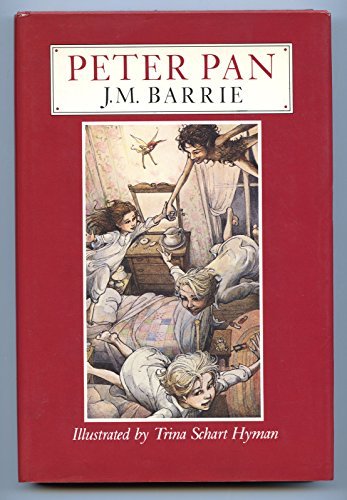
Second star to the right, and straight on till morning — and there it is, the island that every child dreams once and then, growing up, contrives to forget. Neverland: mermaids in the lagoon, a ticking crocodile with a clock in its belly, a pirate nursing his severed hand, and above it all the boy who will not grow up, forever flying, forever heartless in the lovely careless way that only children are. It begins with J. M. Barrie — the 1904 stage play, the chapters of Kensington Gardens, and the novel Peter and Wendy that fixed Peter, Wendy, Tinker Bell, Hook and the Lost Boys in place. From that small window a wide world has flown. Dave Barry and Ridley Pearson supply the how-it-all-began in their Starcatchers books, chasing falling starstuff aboard a doomed ship to explain why one orphan came to fly and never age. A whole bright shelf tends Tinker Bell's Pixie Hollow — the Disney Fairies and Fairy Haven tales, Kiki Thorpe's Never Girls — while Heidi Schulz hands the wheel to Hook's own daughter, and stranger, dimmer corners carry the island into far darker weather. Many hands, one archipelago; no single map governs them all. What sets it apart is the sweetness with a blade in it — wonder shadowed always by the ache of leaving, of mothers who keep the window open and children who fly home too late. Newcomers should begin where it began, with Barrie's Peter and Wendy, then, for the origin, take the Starcatchers books in their own order. The rest of Neverland waits, as it always does, for whoever still remembers how to reach it.
- Five Children Universe
series27 books1902
completed
similar byfantasy+3 more
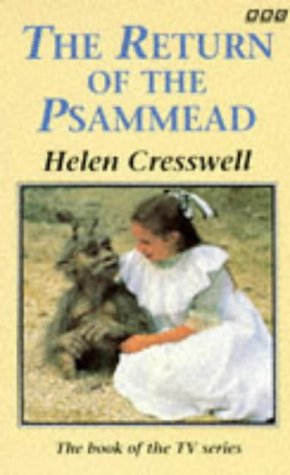
Two separate modern continuations of E. Nesbit's Psammead stories were written decades apart by different authors: Helen Cresswell's The Return of the Psammead (1992) brings the wish-granting sand fairy back for a new set of children, while Kate Saunders's Five Children on the Western Front (2014) follows the now-grown Lamb and his siblings as the First World War arrives, in a more somber sequel to Nesbit's original trilogy. Neither book is by Nesbit herself, and the two have no direct connection to each other beyond both drawing on her creation. Later writers have kept returning to Nesbit's premise long after her own trilogy ended.
- Chrestomanci
series12 books1977
completed
similar byfantasycontemporarymiddle grade+2 more
Chrestomanci, sometimes branded The Worlds of Chrestomanci, is a heptalogy of children's fantasy books written by British author Diana Wynne Jones, published from 1977 to 2006. In the context of the parallel universe setting of the books, Chrestomanci refers to both the British government office that is responsible for supervising the use of magic and Chrestomanci Castle in southern England, which is both residence and headquarters.
- Tales of Magic
series7 books1954
completed
similar byfantasycontemporaryfriendship+3 more
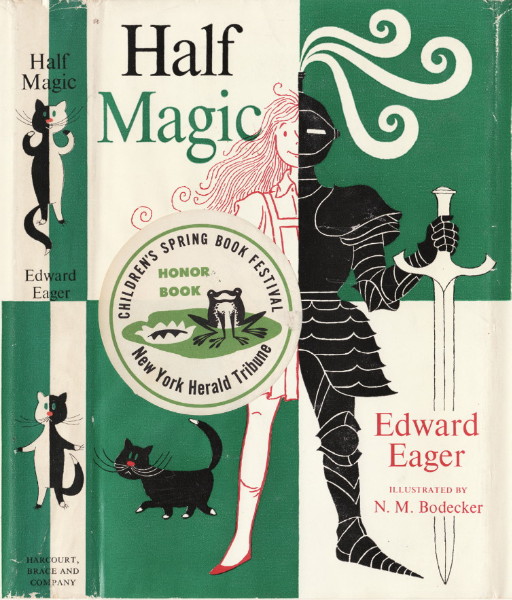
Tales of Magic collects Edward Eager's seven loosely connected children's novels about ordinary kids who stumble into magic in everyday American settings, starting with Half Magic, in which four siblings find a coin that grants exactly half of any wish. Each book follows a different, sometimes overlapping set of children and a different magical object or rule, from Knight's Castle to the deliberately ambiguous Magic or Not? and its sequel The Well-Wishers. Eager wrote them as a direct homage to E. Nesbit, sometimes having his own child characters read her books.
- Upside-Down Magic
series8 books2015
similar byfantasylightheartedmagic schoolsmiddle gradefriendshipcoming of age+1 more
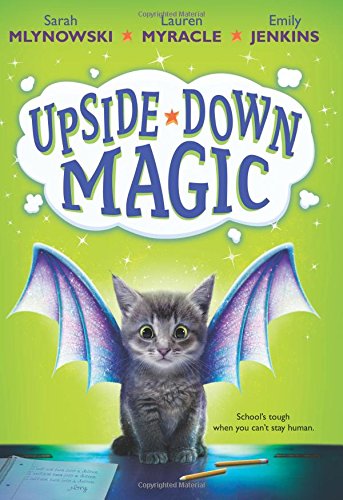
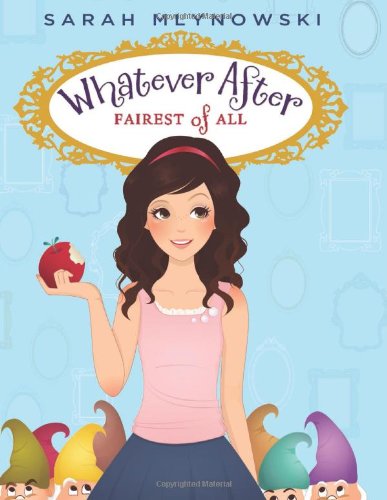
Upside-Down Magic is a Scholastic book series by Sarah Mlynowski, Lauren Myracle, and Emily Jenkins. The series follows eight kids in a world with magical abilities: Elinor "Nory" Boxwood Horace, Elliott Cohen, Bax Kapoor, Andres Padillo, Pepper Phan, Marigold Ramos, Willa Ingeborg, and Sebastian Boondoggle.
- Angels Unlimited
series12 books2001
similar byfantasylightheartedcoming of age+2 more
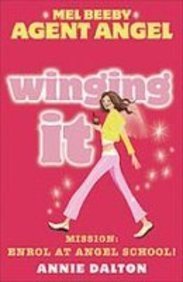
Angels Unlimited is the title of a series of novels written for teenagers by the British author Annie Dalton. The protagonist is Melanie Beeby, who died on the day after her thirteenth birthday and soon found herself at the Angel Academy in heaven. As of July 2013, there are twelve novels, three omnibus books, and now twelve updated and revised ebooks. The overall title of the series has also been changed to Angel Academy.
- Princess Academy
series3 books2005
similar byfantasymagic schoolscoming of age+2 more
Shannon Hale's Princess Academy trilogy (Princess Academy, 2005; Palace of Stone, 2009; The Forgotten Sisters, 2015) begins with Miri, a mountain quarry girl sent to a school built to prepare local girls for the chance that the prince will choose one of them as his bride. The sequels follow Miri to the capital, where she navigates court intrigue while studying, and then out to a remote swamp kingdom as tutor to three sisters caught up in a succession crisis.
- Magic Shop
series7 books1982
similar byfantasycontemporarymiddle gradecoming of age
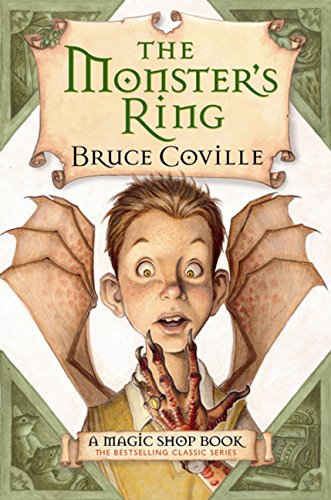
Bruce Coville's Magic Shop books each send a different kid into Mr. Elives's strange antique shop, where an ordinary-looking item turns out to carry real magic and consequences. The Monster's Ring opens the series with a boy who buys a ring to scare a bully on Halloween, only to find he can genuinely transform into a monster. Later entries repeat the pattern with new objects and new children, tied together by the shop and its owner rather than a continuing plot.
- Young Wizards
series24 books1983
similar byfantasycontemporarycoming of age+2 more
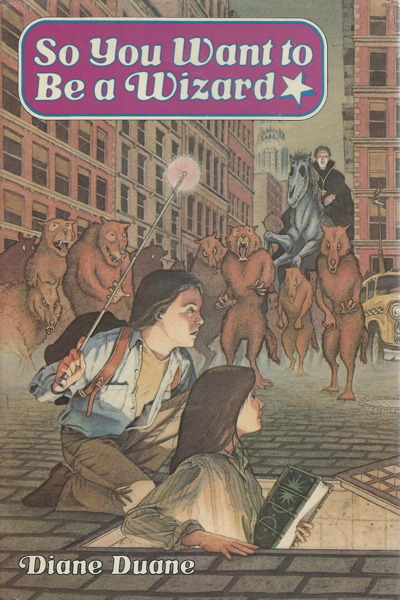
Diane Duane's Young Wizards series begins with thirteen-year-old Nita, bullied and friendless, who borrows a library book on wizardry and discovers it's the real thing: an apprenticeship into a covert order that fights entropy, alongside a classmate named Kit. Across fifteen books published between 1983 and 2019, the two age forward in something close to real time as their missions escalate from New York streets to alien worlds and beyond. The series centers on the wizard's Oath and the idea that magic is a responsibility taken on to slow the universe's decay, not a power to be enjoyed for its own sake.