Loreful
HomeDiscover
Search series, authors…⌘K
Loreful

Reading orders for SF/F series and shared universes — with your place kept in every one.

Explore

UniversesSeriesWorksAuthorsAtlas

Help

FAQAboutSite map

Account & legal

Sign inCreate accountPrivacyTerms

Data

Built on ISFDB, Wikipedia, Wikidata and Open Library. Curated reading orders carry their reasoning on the page; the rest follow publication order. Data sources & licenses

© Loreful · data: ISFDB · CC BY

More like Cloud Nine

but

Mood

The mood the book leaves you in.

  • The reading experience is propelled by journeys, exploration, and physical risk; excitement and forward momentum dominate over dread or introspection.
  • Joy and loss are deliberately mixed; the resolution grants characters something real while taking something else away, leaving warmth and sorrow together.
  • The book demands work from the reader — dense prose, difficult structure, unfamiliar ideas, or morally uncomfortable material — as part of its intended effect.
  • Grim events, cruelty, or despair dominate the atmosphere, and the book does not soften them with comfort or comic relief.
  • The atmosphere is quietly unsettling — wrongness, unease, and the uncanny pervade the book without necessarily escalating into overt horror.
  • The book is built to move the reader; character feeling is foregrounded and major scenes aim at a strong emotional response.
  • Humor is a primary aim and the prose plays for laughs — comic situations, wit, or dialogue produce sustained comedy, not occasional levity.
  • The book insists that things can improve; effort and decency are shown to matter, and the arc bends toward better outcomes even through hardship.
  • The book teaches as it goes — real facts, history, science, or craft are conveyed in enough depth that learning is part of the reading experience.
  • The book is designed to uplift and motivate, presenting perseverance or achievement in a way that invites the reader to aspire or act.
  • The overall register is cheerful and easygoing; stakes are kept gentle and the book avoids dwelling on pain or dread.
  • Withheld information drives the experience; the book sustains enigmas and secrets the reader wants resolved, whatever its genre.
  • The book is contemplative and inward-looking, giving more weight to thought, memory, and meaning than to external events.
  • The book works as comfort reading — low tension, a soothing pace, and an atmosphere the reader can unwind in.
  • Grief, loss, or melancholy set the dominant register, and the book lets sorrow stand rather than resolving it into comfort.
  • Sustained suspense is the point; the book keeps the reader braced for what happens next through danger, pressure, or impending revelation.
  • Playful invention and charm define the register — fanciful conceits, light absurdity, and a narration that delights in its own oddity.

About

What the story runs on.

  • Stories about minds with paranormal abilities — telepathy, telekinesis, precognition, empathy — and how societies handle those who have them.
  • Stories centered on vampires — blood-drinking undead — whether as predators, love interests, or protagonists.
  • Stories in which staying alive against nature, catastrophe, or scarcity is the central problem.
  • Stories of lovers kept apart by law, family, faith, or station, where the obstacle to love is the plot.
  • Stories in which a friendship — its making, testing, or loss — is the emotional center.
  • Stories of growing up — a young protagonist crossing from childhood into adult knowledge and responsibility.
  • Stories about who a character truly is — self-discovery, doubled lives, and the search for a self.
  • Stories about mental unraveling — descent into madness, delusion, and minds at war with themselves.
  • Stories about mourning — living through the death of a loved one and what loss does to the survivors.
  • Stories in which a buried family truth — hidden parentage, crimes, or shames — surfaces and reorders the present.
  • Stories driven by maneuvering for power — factions, conspiracies, and statecraft conducted in shadow.
  • Stories organized around investigating a killing — the case, the clues, and the pursuit of the killer, in any genre's clothing.

Shelf

Where it sits in the library.

    • Fiction built on magic or other supernatural elements that have no scientific explanation.
    • Secondary-world fantasy at large scale, where the fate of nations or the world turns on the protagonists' struggle.
    • Fantasy set in a recognizably modern city or contemporary world where the supernatural intrudes on everyday life.
    • Fantasy that blends in horror's atmosphere and imagery, keeping a fantastical frame around grim or frightening material.
    • Action-driven fantasy following warriors or rogues with personal stakes against sorcerous threats, rather than world-spanning conflicts.
    • Fantasy set in a real historical period or a close analogue of one, with magic woven into the era.
    • Fantasy in which protagonists cross from the ordinary world into another world through a portal or similar passage.
    • Fiction that retells or reworks a traditional fairy tale in a new form or setting.
    • Fantasy drawing directly on myths, legends, and folklore, retelling them or building on their figures and logic.
    • Fantasy of ghosts, vampires, shapeshifters, psychics, and similar phenomena, usually set in an otherwise ordinary world.
    • Fiction mixing science-fictional trappings with overtly magical or impossible elements in one setting.
    • Low-stakes fantasy emphasizing comfort, community, and everyday pleasures over conflict and peril.
    • Speculative fiction of pervasive moral ambiguity, violence, and cynicism that rejects heroic conventions — fantasy and SF alike.
      • Fiction that extrapolates from science and technology — future societies, space travel, or speculative inventions — within at least nominally natural laws.
      • Science fiction of interstellar scope — starships, galactic polities, and adventure across star systems.
      • Science fiction committed to scientific rigor, where technical plausibility constrains the story.
      • Science fiction centered on armed forces and warfare, told largely from a military point of view.
      • Science fiction of networked, corporate-dominated near futures, pairing high technology with social decay.
      • Science fiction styled on nineteenth-century steam-powered technology, often in a Victorian or pseudo-Victorian setting.
      • Fiction depicting an oppressive or catastrophic society, presented as a warning.
      • Fiction set after civilization's collapse, following survivors in the ruins of the old world.
      • Fiction in which characters move between past and future, and the mechanics or consequences of that travel drive the plot.
      • Fiction exploring a world where a historical event went differently and history diverged from ours.
      • Science fiction about humanity's first encounter and communication with an alien intelligence.
      • Science fiction in which extraterrestrial forces attack or occupy Earth and humanity resists.
      • Fiction whose primary aim is to frighten or unsettle the reader through dread, menace, or the monstrous.
      • Horror of vast, indifferent, incomprehensible entities before which humanity is insignificant, in the Lovecraft tradition.
      • Horror of decaying houses, buried family secrets, and oppressive atmosphere in the Gothic literary tradition.
      • Horror centered on hauntings and the returning dead.
      • Horror located in the mind — paranoia, obsession, and unreliable perception rather than external monsters.
      • Horror built around the reanimated dead and survival amid their outbreaks.
      • Horror defined by explicit, transgressive gore that refuses to cut away from violence.
      • Speculative fiction of the strange and uncanny that resists both natural explanation and standard genre categories.
      • Fiction organized around solving a crime or puzzle, typically following an investigator toward the identification of a culprit.
      • A puzzle-first mystery that lays out clues so the culprit's identity can be deduced before the reveal.
      • Crime fiction of moral ambiguity, fatalism, and hard-edged style, set among the corrupt and the doomed.
      • A mystery following the realistic routines of police work — forensics, interviews, and case-building.
      • A gentle mystery with an amateur sleuth, a small community, and violence kept off the page.
      • A mystery set in a past era, where the investigation works within that period's methods and society.
      • Fast-paced fiction driven by imminent danger, pursuit, or high-stakes conspiracy, built to sustain tension.
      • A thriller of espionage — agents, tradecraft, and intelligence services in conflict.
      • A thriller centered on lawyers and the courtroom, where litigation carries the suspense.
      • A thriller driven by detailed contemporary or near-future technology, often military or scientific.
      • A thriller whose tension comes from mental states and manipulation between characters rather than external action.
      • Fiction whose central plot is a romantic relationship and its development toward an emotionally satisfying resolution.
      • Romance in which one or both partners are supernatural beings, blending fantasy elements into the love story.
      • A fantasy-romance hybrid in which the romantic arc and the fantasy plot carry equal weight.
      • Romance set in a past era, with courtship shaped by the period's society and manners.
      • Romance set in the present day, without supernatural or historical elements.
      • Fiction set in a real past period, where the historical setting materially shapes characters and events.
        • General and literary fiction emphasizing prose style, character interiority, or formal ambition over genre plot conventions.
        • Fiction in a realistic world where magical events occur and are treated as ordinary, in the tradition of Latin American literature.
        • Fiction that ridicules people, institutions, or society in order to criticize them.
        • Fiction of dreamlike, irrational imagery and logic that breaks from realistic representation.
        • Fiction that plays with narrative convention through metafiction, fragmentation, and self-reference.
        • Fiction propelled by journeys, exploration, and physical peril, where action and survival carry the plot.
        • Adventure fiction of ships and seafaring — naval engagements, voyages, and life at sea.
        • Fiction of the American frontier West — gunmen, ranchers, and lawmen, typically in the late nineteenth century.
        • Fiction centered on soldiers, campaigns, and the experience of warfare, historical or imagined.
          • Fiction written primarily to amuse, using comedic situations, wit, or parody as its organizing principle.
            • Multi-generational fiction following a family or dynasty across decades, with inheritance and kinship as the through-line.
              • Fiction whose world runs on explicit game mechanics — levels, stats, and skills that characters can see and exploit.
                • Fiction about costumed or superpowered heroes and their conflicts with comparable villains.

                Practical

                How long a commitment, whether it stands alone, and whether it has finished.

                Tap a chip to ask for it · tap again to rule it out · once more to clear. Numbers show what would be left.

                • Cover of The Inn Boonsboro Trilogy
                  The Inn Boonsboro Trilogy

                  series · 3 books · 2011

                  similar bycontemporary romancenorth americacontemporary

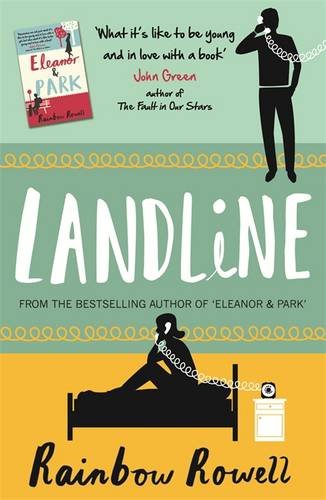
                • Cover of Landline
                  Landline

                  Rainbow Rowell · standalone novel · 2014

                  similar bycontemporary romancenorth americacontemporary

                  Landline is a 2014 American sci-fi novel by Rainbow Rowell. It tells the story of 37-year-old Georgie McCool who discovers that she is able to call her husband's 22-year-old self through his landline. Rowell stated that aspects from the novel are loosely based on her own life such as the fact that Georgie is incredibly career-driven while her husband is a stay-at-home dad. The character of Georgie McCool was named after the song Georgy Girl and the village of McCool Junction.

                • SH
                  Sea Haven

                  series · 23 books · 2003

                  similar bynorth americacontemporary

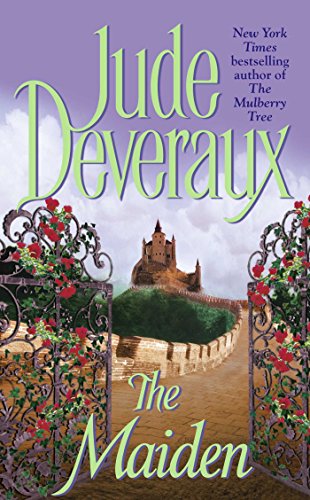
                • Cover of Montgomery / Taggert
                  Montgomery / Taggert

                  series · 10 books · 1988

                  similar bycontemporary+1 more

                  These Jude Deveraux romances are linked less by one continuing plot than by recurring family surnames — Montgomery and Taggert — that Deveraux threads through much of her historical and contemporary romance writing. A Knight in Shining Armor, her best-known novel, is a standalone time-travel romance whose heroine, Dougless Montgomery, falls for a sixteenth-century English lord pulled forward into her present; The Maiden instead belongs to her more tightly connected medieval Montgomery-brothers sequence. Readers should expect a loose family of stories connected by name and world rather than one continuous saga.

                • Cover of Airhead
                  Airhead

                  series · 3 books · 2008

                  similar bynorth americacontemporary+1 more

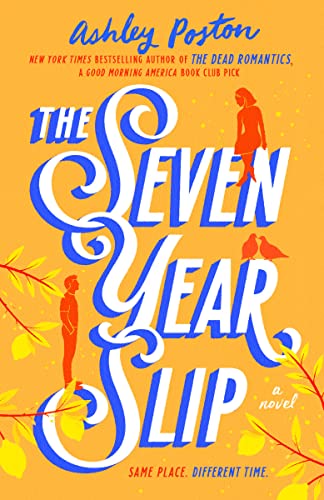
                • Cover of The Seven Year Slip
                  The Seven Year Slip

                  Ashley Poston · standalone novel · 2023

                  similar bycontemporary romancenorth americacontemporary

                  Sometimes, the worst day of your life happens, and you have to figure out how to live after it. So Clementine forms a plan to keep her heart safe: work hard, find someone decent to love, and try to remember to chase the moon. The last one is silly and obviously metaphorical, but her aunt always told her that you needed at least one big dream to keep going. And for the last year, that plan has gone off without a hitch. Mostly. The love part is hard because she doesn’t want to get too close to anyone—she isn’t sure her heart can take it. And then she finds a strange man standing in the kitchen of her late aunt’s apartment. A man with kind eyes and a Southern drawl and a taste for lemon pies. The kind of man that, before it all, she would’ve fallen head-over-heels for. And she might again. Except, he exists in the past. Seven years ago, to be exact. And she, quite literally, lives seven years in his future. Her aunt always said the apartment was a pinch in time, a place where moments blended together like watercolors. And Clementine knows that if she lets her heart fall, she’ll be doomed. After all, love is never a matter of time—but a matter of timing.

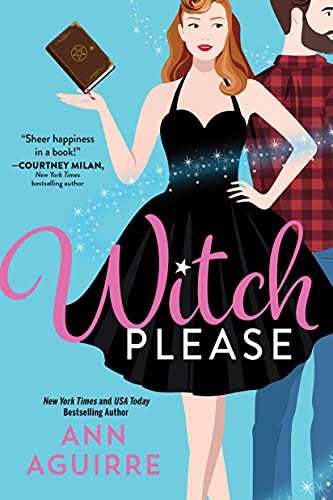
                • Cover of Fix-It Witches
                  Fix-It Witches

                  series · 4 books · 2021

                  similar bycontemporary+1 more

                • Cover of Washington Witches / Jane Madison
                  Washington Witches / Jane Madison

                  series · 6 books · 2006

                  part of Magical Washington

                  similar bynorth americacontemporary

                • Cover of Sounds Like Love
                  Sounds Like Love

                  Ashley Poston · standalone novel · 2025

                  similar bycontemporary romancenorth americacontemporary

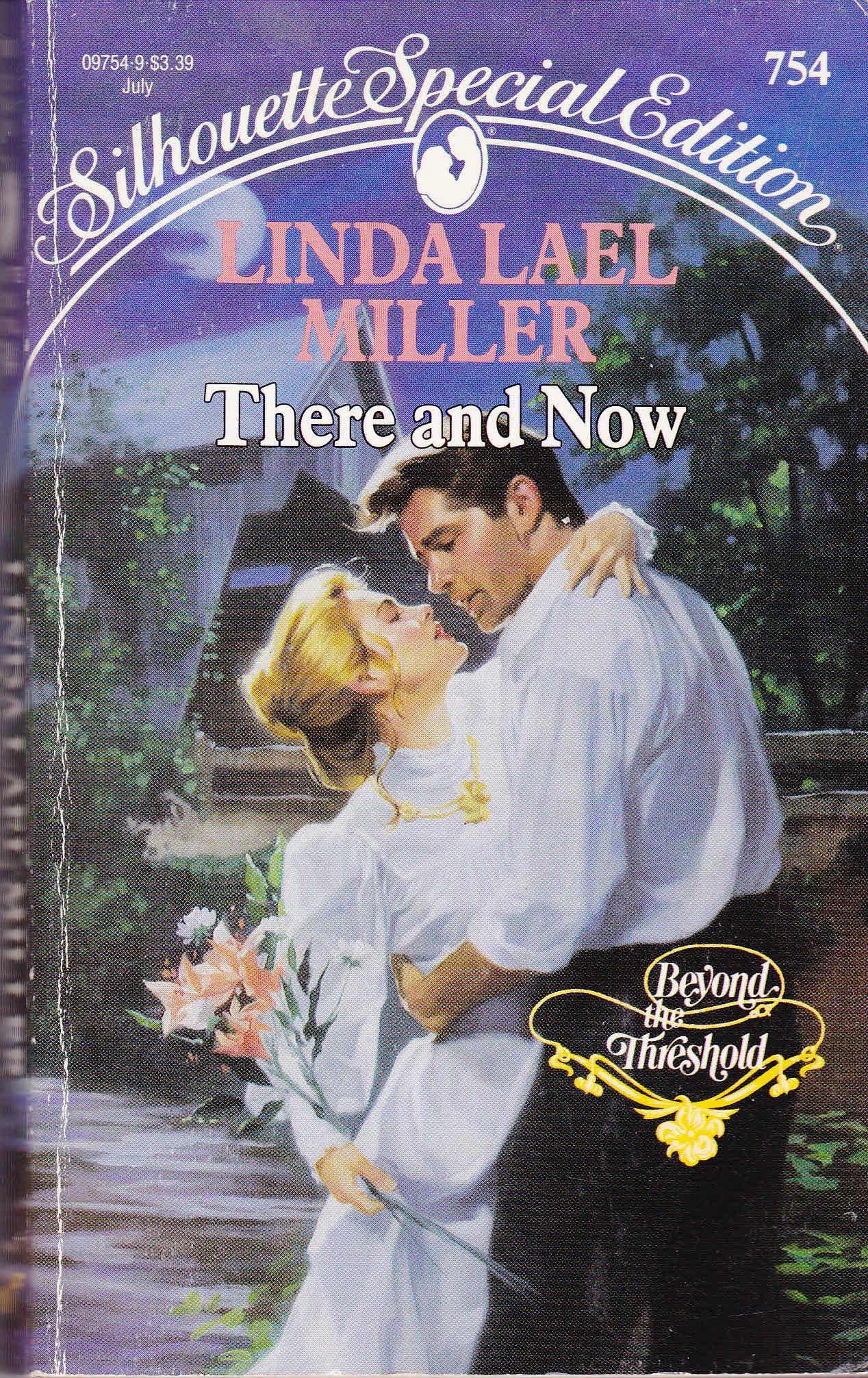
                • Cover of Beyond the Threshold
                  Beyond the Threshold

                  series · 2 books · 1992

                  similar bynorth america+2 more

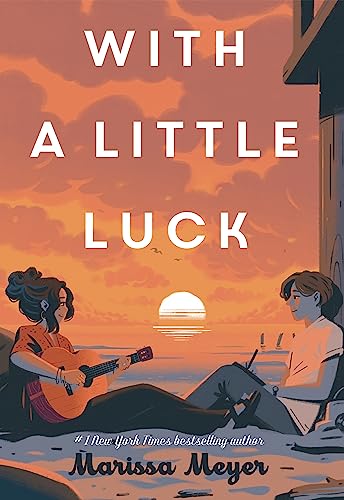
                • Cover of With a Little Luck
                  With a Little Luck

                  Marissa Meyer · standalone novel · 2024

                  similar bycontemporary romancenorth americacontemporary

                  Jude is determined to fly under the radar. He just wants to draw his comics, host regular D&D night with his friends, work at his parents’ vinyl record store, and escape high school as unscathed as possible. That is, until the night he comes across a mysterious twenty-sided dice and finds himself inexplicably gifted with a bout of supernatural good luck. Suddenly, everything Jude has ever wanted is within reach. His first art submission is accepted to his favorite fanzine. He helps his friend’s song become a finalist in a songwriting competition. And he’s the 100th caller to a local radio contest, winning him a pair of coveted concert tickets, which he uses to ask out the popular girl he’s been crushing on since elementary school. For a few blissful weeks, he feels invincible. But when he loses the magic dice at a local music festival, his luck takes a turn for the worse. He struggles to reclaim his good fortune while fighting off long-buried feelings for his best friend―who is definitely not the girl he’s supposed to be in love with. Can Jude risk stepping into the spotlight long enough to win the true girl of his dreams? Or is he doomed to be unlucky in love forever?

                • Cover of One Last Stop
                  One Last Stop

                  Casey McQuiston · standalone novel · 2021

                  similar bycontemporary romancenorth americacontemporary

                  One Last Stop is a 2021 LGBTQ romance novel written by American author Casey McQuiston. The novel is about a woman named August Landry, a cynical pseudo detective, who finds love in a woman named Jane Su she meets on a subway, a punk butch lesbian from the 1970s who has been misplaced in time and is trapped on the subway.

                • Cover of The Jane Austen Book Club
                  The Jane Austen Book Club

                  Karen Joy Fowler · standalone novel · 2004

                  similar bycontemporary romancenorth americacontemporary

                  The Jane Austen Book Club is a 2004 novel by American author Karen Joy Fowler. The story, which takes place near Sacramento, California, centers around a book club consisting of five women and one man who meet once a month to discuss Jane Austen's six novels. The novel was a critical success and became a national bestseller.

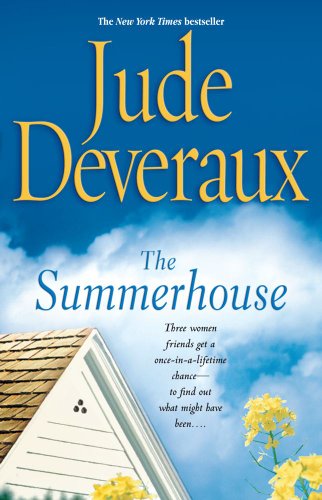
                • Cover of The Summerhouse
                  The Summerhouse

                  series · 3 books · 2001

                  similar bycontemporary romancenorth americacontemporary

                • Cover of Hearts Unbroken
                  Hearts Unbroken

                  series · 2 books · 2018

                  similar bynorth americacontemporary+1 more

                • Cover of Wild About You
                  Wild About You

                  series · 6 books · 2011

                  similar bynorth americacontemporary

                • Cover of The Highlander
                  The Highlander

                  series · 8 books · 2003

                  completed

                  similar by+2 more

                • Cover of Boy Meets Boy
                  Boy Meets Boy

                  David Levithan · standalone novel · 2003

                  similar bycontemporary romancenorth americacontemporary

                  Boy Meets Boy is a young adult novel by David Levithan, published in 2003. Set in a gay-friendly small town in America, it describes a few weeks in the lives of a group of high school students. The story follows the standard romantic trope usually known as "boy meets girl, boy loses girl, boy gets girl" except that the main characters are both boys, the narrator Paul and newcomer Noah. The novel won a Lambda Literary Award in 2003.

                • Cover of Brotherhood of Warriors
                  Brotherhood of Warriors

                  series · 5 books · 2007

                  completed

                  similar bynorth americacontemporary

                • Cover of The Klone and I
                  The Klone and I

                  Danielle Steel · standalone novel · 1998

                  similar bycontemporary romancenorth americacontemporary

                  "She met him on the Left Bank of Paris. Peter Baker was a marvelously handsome high-tech entrepreneur also visiting the city. Stephanie was certain it couldn't possibly work. Peter was just too perfect. But much to her amazement, he contacted her when they returned to New York. And at the Long Island rental cottage she shared with her kids, Stephanie embarked on a bizarre and hilarious adventure beyond her wildest dreams. Then shy, serious Peter, chairman of a bionic enterprise, was supposed to be away on business. Instead, he's standing at her door, wearing day-glo satin and rhinestones. Naturally, Stephanie thinks it's a joke—until the truth suddenly dawns: this isn't Peter playing a role. This is his double! Calling himself Paul Klone, this wild, uninhibited creature isn't even remotely like Peter except for his identically sexy good looks. This uproarious novel explores the outrageous love triangle that develops between Stephanie, Peter...and the Klone. — quoted from the product description that is found on this book's page on Amazon.com. as of 2012-11-29.

                • Cover of The Welcoming
                  The Welcoming

                  Nora Roberts · standalone novel · 2002

                  similar bycontemporary romancenorth americacontemporary

                  Roman DeWinter came to the charming seaside inn with only the clothes on his back and a loaded .38 revolver. His orders: expose a criminal organization based at a quaint vacation hideaway, and all the evidence pointed to the innkeeper, Charity Ford. It was just another assignment for him. Routing, simple, uncomplicated. But he had never known the warmth of a home until he found his way to Charity. He didn't expect he would learn to care for his key suspect, and want something more with her. Charity knew Roman was different. His gaze smoldered with angry passion, arousing a dangerous fascination. His mere presence made her most forbidden desires come alive. Still, Charity knew so little about him, and it put her on edge. Was this stranger a threat to her happiness, or the man she'd been waiting a lifetime to welcome? They both have fallen in love. Has Roman made a mistake by not telling Charity the truth?

                • Cover of Rolling Thunder Motorcycle Club
                  Rolling Thunder Motorcycle Club

                  series · 13 books · 2015

                  part of The Kirsten O'Shea

                  similar bycontemporary romancenorth americacontemporary

                • Cover of Dove Pond
                  Dove Pond

                  series · 4 books · 2019

                  similar bycontemporary+2 more

                • Cover of Instant Karma
                  Instant Karma

                  Marissa Meyer · standalone novel · 2020

                  similar bycontemporary romancenorth americacontemporary

                  Chronic overachiever Prudence Barnett is always quick to cast judgment on the lazy, rude, and arrogant residents of her coastal town. Her dreams of karmic justice are fulfilled when, after a night out with her friends, she wakes up with the sudden ability to cast instant karma on those around her. Pru giddily makes use of the power, punishing everyone from public vandals to mean gossips, but there is one person on whom her powers consistently Quint Erickson, her slacker of a lab partner. Quint is annoyingly cute and impressively noble, especially when it comes to his work with the rescue center for local sea animals. When Pru resigns herself to working at the rescue centre for extra credit, she begins to uncover truths about baby otters, environmental upheaval, and romantic crossed signals - not necessarily in that order. Her newfound karmic insights reveal how thin the line is between virtue and vanity, generosity and greed . . . love and hate . . . and fate.