Loreful
HomeDiscover
Search series, authors…⌘K
Loreful

Reading orders for SF/F series and shared universes — with your place kept in every one.

Explore

UniversesSeriesWorksAuthorsAtlas

Help

FAQAboutSite map

Account & legal

Sign inCreate accountPrivacyTerms

Data

Built on ISFDB, Wikipedia, Wikidata and Open Library. Curated reading orders carry their reasoning on the page; the rest follow publication order. Data sources & licenses

© Loreful · data: ISFDB · CC BY

More like Cloudburst

anchored on:contemporary

but

Mood

The mood the book leaves you in.

  • The reading experience is propelled by journeys, exploration, and physical risk; excitement and forward momentum dominate over dread or introspection.
  • Joy and loss are deliberately mixed; the resolution grants characters something real while taking something else away, leaving warmth and sorrow together.
  • The book demands work from the reader — dense prose, difficult structure, unfamiliar ideas, or morally uncomfortable material — as part of its intended effect.
  • Grim events, cruelty, or despair dominate the atmosphere, and the book does not soften them with comfort or comic relief.
  • The atmosphere is quietly unsettling — wrongness, unease, and the uncanny pervade the book without necessarily escalating into overt horror.
  • The book is built to move the reader; character feeling is foregrounded and major scenes aim at a strong emotional response.
  • Humor is a primary aim and the prose plays for laughs — comic situations, wit, or dialogue produce sustained comedy, not occasional levity.
  • The book insists that things can improve; effort and decency are shown to matter, and the arc bends toward better outcomes even through hardship.
  • The book teaches as it goes — real facts, history, science, or craft are conveyed in enough depth that learning is part of the reading experience.
  • The book is designed to uplift and motivate, presenting perseverance or achievement in a way that invites the reader to aspire or act.
  • The overall register is cheerful and easygoing; stakes are kept gentle and the book avoids dwelling on pain or dread.
  • Withheld information drives the experience; the book sustains enigmas and secrets the reader wants resolved, whatever its genre.
  • The book is contemplative and inward-looking, giving more weight to thought, memory, and meaning than to external events.
  • The book works as comfort reading — low tension, a soothing pace, and an atmosphere the reader can unwind in.
  • Grief, loss, or melancholy set the dominant register, and the book lets sorrow stand rather than resolving it into comfort.
  • Sustained suspense is the point; the book keeps the reader braced for what happens next through danger, pressure, or impending revelation.
  • Playful invention and charm define the register — fanciful conceits, light absurdity, and a narration that delights in its own oddity.

About

What the story runs on.

  • Stories in which extraterrestrial beings are central — as characters, cultures, or the object of the plot.
  • Stories structured as a quest — a journey undertaken to find, deliver, or destroy something of great import.
  • Stories in which staying alive against nature, catastrophe, or scarcity is the central problem.
  • Stories of lovers kept apart by law, family, faith, or station, where the obstacle to love is the plot.
  • Stories in which a friendship — its making, testing, or loss — is the emotional center.
  • Stories of growing up — a young protagonist crossing from childhood into adult knowledge and responsibility.
  • Stories about who a character truly is — self-discovery, doubled lives, and the search for a self.
  • Stories about mourning — living through the death of a loved one and what loss does to the survivors.
  • Stories in which a buried family truth — hidden parentage, crimes, or shames — surfaces and reorders the present.
  • Stories driven by maneuvering for power — factions, conspiracies, and statecraft conducted in shadow.
  • Stories in which war itself is the subject — combat, occupation, and what warfare does to soldiers and civilians.
  • Stories organized around investigating a killing — the case, the clues, and the pursuit of the killer, in any genre's clothing.

Shelf

Where it sits in the library.

    • Fiction built on magic or other supernatural elements that have no scientific explanation.
    • Secondary-world fantasy at large scale, where the fate of nations or the world turns on the protagonists' struggle.
    • Fantasy set in a recognizably modern city or contemporary world where the supernatural intrudes on everyday life.
    • Fantasy that blends in horror's atmosphere and imagery, keeping a fantastical frame around grim or frightening material.
    • Action-driven fantasy following warriors or rogues with personal stakes against sorcerous threats, rather than world-spanning conflicts.
    • Fantasy set in a real historical period or a close analogue of one, with magic woven into the era.
    • Fantasy in which protagonists cross from the ordinary world into another world through a portal or similar passage.
    • Fiction that retells or reworks a traditional fairy tale in a new form or setting.
    • Fantasy drawing directly on myths, legends, and folklore, retelling them or building on their figures and logic.
    • Fantasy of ghosts, vampires, shapeshifters, psychics, and similar phenomena, usually set in an otherwise ordinary world.
    • Fiction mixing science-fictional trappings with overtly magical or impossible elements in one setting.
    • Low-stakes fantasy emphasizing comfort, community, and everyday pleasures over conflict and peril.
    • Speculative fiction of pervasive moral ambiguity, violence, and cynicism that rejects heroic conventions — fantasy and SF alike.
      • Fiction that extrapolates from science and technology — future societies, space travel, or speculative inventions — within at least nominally natural laws.
      • Science fiction of interstellar scope — starships, galactic polities, and adventure across star systems.
      • Science fiction committed to scientific rigor, where technical plausibility constrains the story.
      • Science fiction centered on armed forces and warfare, told largely from a military point of view.
      • Science fiction of networked, corporate-dominated near futures, pairing high technology with social decay.
      • Science fiction styled on nineteenth-century steam-powered technology, often in a Victorian or pseudo-Victorian setting.
      • Fiction depicting an oppressive or catastrophic society, presented as a warning.
      • Fiction set after civilization's collapse, following survivors in the ruins of the old world.
      • Fiction in which characters move between past and future, and the mechanics or consequences of that travel drive the plot.
      • Fiction exploring a world where a historical event went differently and history diverged from ours.
      • Science fiction about humanity's first encounter and communication with an alien intelligence.
      • Science fiction in which extraterrestrial forces attack or occupy Earth and humanity resists.
      • Fiction whose primary aim is to frighten or unsettle the reader through dread, menace, or the monstrous.
      • Horror of vast, indifferent, incomprehensible entities before which humanity is insignificant, in the Lovecraft tradition.
      • Horror of decaying houses, buried family secrets, and oppressive atmosphere in the Gothic literary tradition.
      • Horror centered on hauntings and the returning dead.
      • Horror located in the mind — paranoia, obsession, and unreliable perception rather than external monsters.
      • Horror built around the reanimated dead and survival amid their outbreaks.
      • Horror defined by explicit, transgressive gore that refuses to cut away from violence.
      • Speculative fiction of the strange and uncanny that resists both natural explanation and standard genre categories.
      • Fiction organized around solving a crime or puzzle, typically following an investigator toward the identification of a culprit.
      • A puzzle-first mystery that lays out clues so the culprit's identity can be deduced before the reveal.
      • Crime fiction of moral ambiguity, fatalism, and hard-edged style, set among the corrupt and the doomed.
      • A mystery following the realistic routines of police work — forensics, interviews, and case-building.
      • A gentle mystery with an amateur sleuth, a small community, and violence kept off the page.
      • A mystery set in a past era, where the investigation works within that period's methods and society.
      • Fast-paced fiction driven by imminent danger, pursuit, or high-stakes conspiracy, built to sustain tension.
      • A thriller of espionage — agents, tradecraft, and intelligence services in conflict.
      • A thriller centered on lawyers and the courtroom, where litigation carries the suspense.
      • A thriller driven by detailed contemporary or near-future technology, often military or scientific.
      • A thriller whose tension comes from mental states and manipulation between characters rather than external action.
      • Fiction whose central plot is a romantic relationship and its development toward an emotionally satisfying resolution.
      • Romance in which one or both partners are supernatural beings, blending fantasy elements into the love story.
      • A fantasy-romance hybrid in which the romantic arc and the fantasy plot carry equal weight.
      • Romance set in a past era, with courtship shaped by the period's society and manners.
      • Romance set in the present day, without supernatural or historical elements.
      • Fiction set in a real past period, where the historical setting materially shapes characters and events.
        • General and literary fiction emphasizing prose style, character interiority, or formal ambition over genre plot conventions.
        • Fiction in a realistic world where magical events occur and are treated as ordinary, in the tradition of Latin American literature.
        • Fiction that ridicules people, institutions, or society in order to criticize them.
        • Fiction of dreamlike, irrational imagery and logic that breaks from realistic representation.
        • Fiction that plays with narrative convention through metafiction, fragmentation, and self-reference.
        • Fiction propelled by journeys, exploration, and physical peril, where action and survival carry the plot.
        • Adventure fiction of ships and seafaring — naval engagements, voyages, and life at sea.
        • Fiction of the American frontier West — gunmen, ranchers, and lawmen, typically in the late nineteenth century.
        • Fiction centered on soldiers, campaigns, and the experience of warfare, historical or imagined.
          • Fiction written primarily to amuse, using comedic situations, wit, or parody as its organizing principle.
            • Multi-generational fiction following a family or dynasty across decades, with inheritance and kinship as the through-line.
              • Fiction whose world runs on explicit game mechanics — levels, stats, and skills that characters can see and exploit.
                • Fiction about costumed or superpowered heroes and their conflicts with comparable villains.

                Practical

                How long a commitment, whether it stands alone, and whether it has finished.

                Tap a chip to ask for it · tap again to rule it out · once more to clear. Numbers show what would be left.

                • K
                  Kairos

                  series · 11 books · 1962

                  completed

                  similar by+3 more

                  The Time Quintet is a science fantasy series of five young adult novels written by American author Madeleine L'Engle and made up of A Wrinkle in Time (1962), A Wind in the Door (1973), A Swiftly Tilting Planet (1978), Many Waters (1986), and An Acceptable Time (1989).

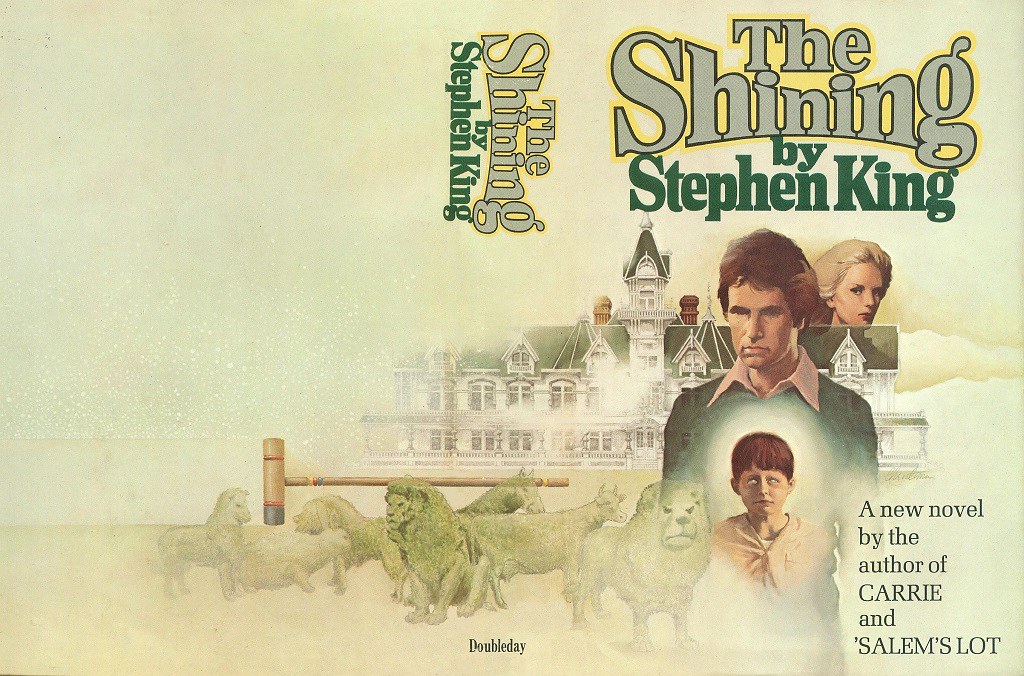
                • Cover of The Shining
                  The Shining

                  series · 5 books · 1977

                  similar bytensecontemporarynorth america+1 more

                  Stephen King's 1977 novel The Shining follows the Torrance family as winter caretakers of the isolated, malevolent Overlook Hotel, where father Jack is gradually consumed by the hotel's influence while his young son Danny's psychic "shining" draws its attention. Doctor Sleep (2013) picks up the story decades later, following Danny as an adult still marked by that childhood ordeal. Together the two form a horror duology spanning nearly forty years of real-world publication.

                • Cover of Little Tall Island / In the Path of the Eclipse
                  Little Tall Island / In the Path of the Eclipse

                  series · 4 books · 1989

                  similar bytensecontemporarynorth america+3 more

                  Stephen King set three otherwise separate books on or near the fictional Little Tall Island off the coast of Maine: Gerald's Game, about a woman handcuffed to a bed after her husband's fatal heart attack; Dolores Claiborne, a housekeeper's decades-spanning confession narrated in a single unbroken monologue; and Storm of the Century, a novelization of King's own miniseries about a stranger who arrives during a historic blizzard demanding a terrible price from the town. The first two novels share a real total solar eclipse as a pivotal, connecting event despite having otherwise unrelated plots and characters.

                • Cover of The Merchant Princes
                  The Merchant Princes

                  series · 14 books · 2004

                  similar bytensecontemporaryour world+2 more

                  The Merchant Princes is a science fantasy and alternate history series of nine novels by British writer Charles Stross. In the series, there exist a number of parallel worlds, all of which are on the same geographical Earth but with different societies at different points of development. Members of a certain bloodline can travel between these worlds along with their immediate possessions. The series largely follows Miriam Beckstein, a technology journalist raised in a familiar "normal" Earth, who discovers she was born in a parallel world and is a member of this bloodline. She quickly becomes entangled in political maneuvering and assassination plots with her estranged family. Miriam uses modern technology and investigative journalism to attempt to stay a step ahead.

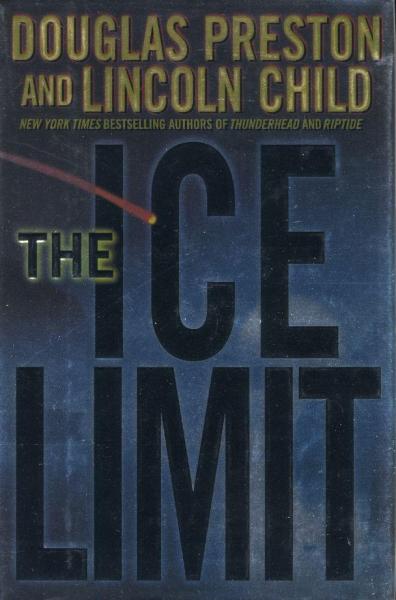
                • Cover of Effective Engineering Solutions
                  Effective Engineering Solutions

                  series · 37 books · 1995

                  similar bytensecontemporarythriller & suspensenorth america+1 more

                  The Ice Limit follows a team hired by an eccentric billionaire to recover what looks like the largest meteorite ever found, off a remote island near Cape Horn, only to discover, as they flee across the Antarctic seas aboard a retrofitted tanker, that they've actually excavated something alive. Douglas Preston and Lincoln Child wrote it as a standalone techno-thriller in 2000; it later fed into their separate Gideon Crew series rather than getting a direct sequel of its own.

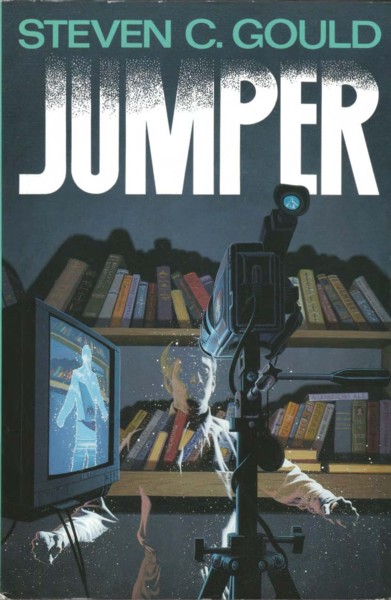
                • Cover of Jumper
                  Jumper

                  series · 6 books · 1992

                  similar bytensecontemporary+2 more

                  Jumper follows David Rice, a teenager who discovers he can teleport anywhere he's been and uses the power to escape an abusive home, only to find that ability alone doesn't solve the harder problems of finding his absent mother, building an honest relationship, or staying off the radar of people who'd exploit him. Steven Gould's series continues across Reflex, Impulse, and Exo, later following his and his wife's daughter as a second-generation jumper. A 2008 film loosely adapted the first novel.

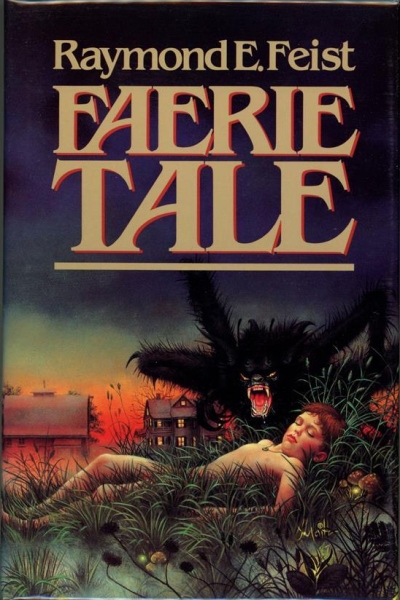
                • Cover of Faerie Tale
                  Faerie Tale

                  Raymond E. Feist · standalone novel · 1988

                  similar byfamily secretstensecontemporarythriller & suspensenorth america

                  Faerie Tale is a supernatural thriller, falling within the subgenre of contemporary fantasy, by American writer Raymond E. Feist, first published in 1988.

                • Cover of Charlie Parker
                  Charlie Parker

                  series · 22 books · 1999

                  similar bycontemporarynorth america+2 more

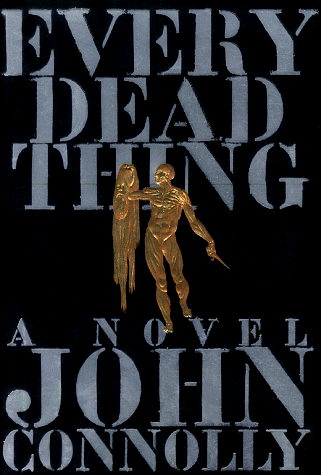
                  John Connolly's long-running crime series follows Charlie Parker, a former New York police detective turned private investigator in Maine, whose cases repeatedly brush against the genuinely supernatural alongside conventional violence and grief. Every Dead Thing (1999) opens with Parker hunting his own wife and daughter's killer, establishing the series' recurring blend of hardboiled procedural and horror; later novels widen into recurring antagonists and a broader mythology of evil working through human agents. Now well over twenty books, the series has grown Parker's two associates, Louis and Angel, into major recurring characters.

                • Cover of Robert Langdon
                  Robert Langdon

                  series · 6 books · 2000

                  similar bytensecontemporarythriller & suspense

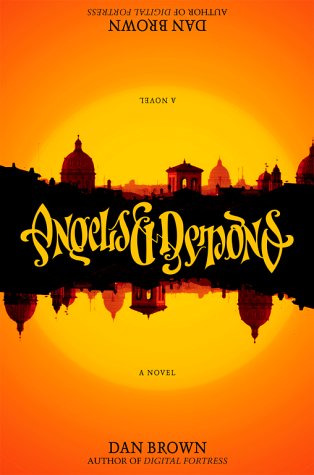
                  The Robert Langdon novel series is named after Robert Langdon, the protagonist of the novels by American author Dan Brown. Langdon is portrayed as a Harvard University professor of religious iconology and symbology, a fictional field related to the study of historic symbols, which is not methodologically connected to the actual discipline of semiotics. Brown's novels that feature the lead character also include historical themes and Christianity as motifs, and as a result have generated controversy. Brown states on his website that his novels are not anti-Christian, and that he is on a "constant spiritual journey" himself.

                • Cover of Tempest (Julie Cross)
                  Tempest (Julie Cross)

                  series · 4 books · 2011

                  similar bytensecontemporaryour world+3 more

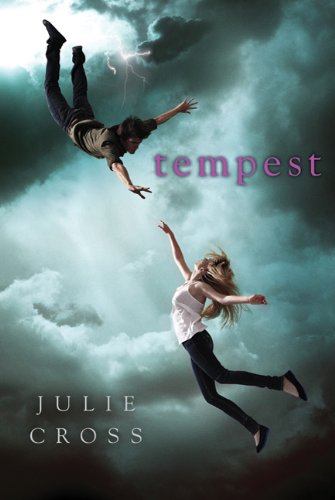
                  Julie Cross' Tempest trilogy opens with Tempest (2012), a young-adult science-fiction novel published by St. Martin's Press that was nominated for a 2012 RT Book Reviews award and received a starred Kirkus review. It continues across Vortex and Timestorm, published through 2014.

                • Cover of Spiderwick
                  Spiderwick

                  universe · 17 books · 2003

                  Start hereSpiderwick Chronicles · Start here

                  similar bycontemporary+1 more

                  Do not read this book. So warns the note bound into Arthur Spiderwick's Field Guide to the Fantastical World Around You — which is exactly why Jared Grace opens it, and why the hidden world opens onto him. Move into a crumbling family estate with your mother, your twin brother, and your fencing-champion sister, and you may find the walls already occupied: a testy house brownie, goblins with a taste for cats, and an ogre named Mulgarath who wants the Guide for himself. Holly Black writes and Tony DiTerlizzi draws this small, densely illustrated world across two linked cycles. The Spiderwick Chronicles runs five slim volumes — The Field Guide, The Seeing Stone, Lucinda's Secret, The Ironwood Tree, and The Wrath of Mulgarath — a single mounting emergency told at a breathless clip. Beyond the Spiderwick Chronicles carries the danger south to swampy Florida across three more books, where new children meet giants, nixies, and a wyrm stirring underground. The companion Field Guide itself catalogues every sprite and troll in loving naturalist detail. The pleasure here is the specimen-collector's: faerie treated as a taxonomy to be sketched, labelled, and survived, cozy domestic scale shot through with real teeth. Begin with The Field Guide and read straight through in publication order — the five originals first, then the Beyond trilogy. Slender enough to finish in an afternoon, sharp enough to send you checking the cupboard afterward.

                • Cover of Spiderwick Chronicles
                  Spiderwick Chronicles

                  series · 14 books · 2003

                  part of Spiderwick

                  similar bycontemporary+3 more

                  Holly Black and Tony DiTerlizzi's Spiderwick Chronicles follow the three Grace children after they move into the run-down Spiderwick Estate and discover a hidden field guide to the fantastical creatures living around them. Their new knowledge draws them into escalating conflicts with dangerous faeries, building to a confrontation with the shapeshifting ogre Mulgarath, who wants the guide's secrets to conquer both the human and faerie worlds.

                • JD
                  John Decker Universe

                  series · 19 books · 2015

                  similar bycontemporary+3 more

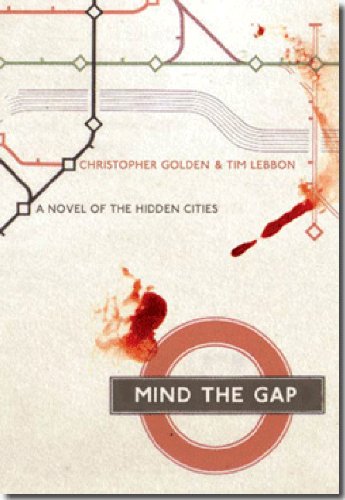
                • Cover of Hidden Cities
                  Hidden Cities

                  series · 4 books · 2008

                  similar bycontemporary+3 more

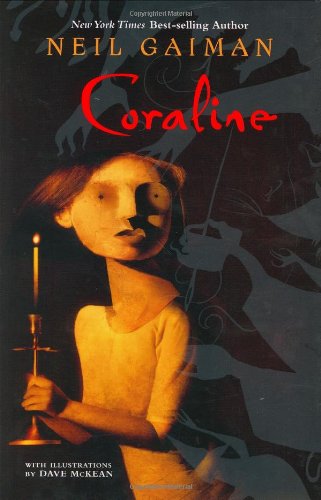
                • Cover of Coraline
                  Coraline

                  series · 2 books · 2002

                  similar bytensecontemporarynorth america+1 more

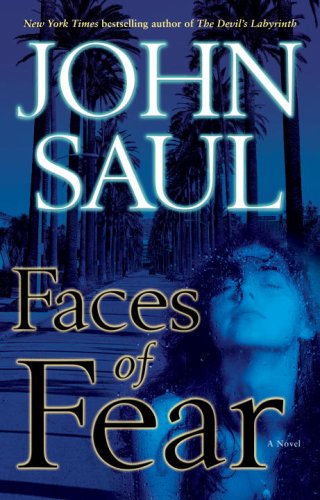
                • Cover of Faces of Fear
                  Faces of Fear

                  John Saul · standalone novel · 2007

                  similar byfamily secretstensecontemporarythriller & suspenseour worldnorth america

                  Faces of Fear is a thriller horror novel by John Saul, published by Ballantine Books on August 12, 2008. The novel follows the story of teenage Alison Shaw, who finds a shocking background behind her mother's new husband, who is a plastic surgeon.

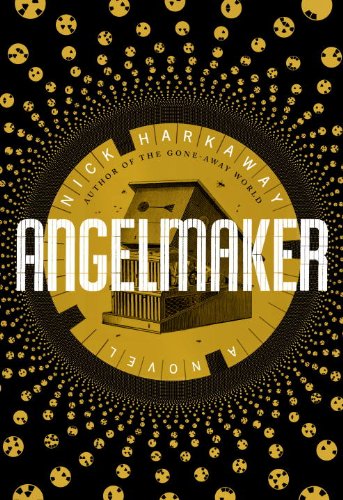
                • Cover of Angelmaker
                  Angelmaker

                  Nick Harkaway · standalone novel · 2012

                  similar bycontemporary+1 more

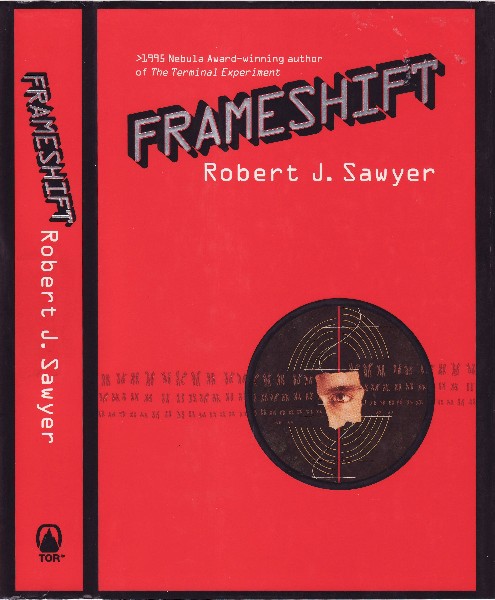
                • Cover of Frameshift
                  Frameshift

                  Robert J. Sawyer · standalone novel · 1997

                  similar byfamily secretstensecontemporarythriller & suspensenorth america

                  Winner of Japan's Seiun Award and Hugo Award finalist Pierre Tardivel is a scientist working on the Human Genome Project with the Nobel Prize winner, Dr. Burian Klimus. A driven man, Pierre works with the awareness that he may not have long to live: he has a fifty-fifty chance of dying from Huntington's disease, an incurable hereditary disorder of the central nervous system. While he still has his health, Pierre and his wife decide to have a child, and they search for a sperm donor. When Pierre informs Dr. Klimus of their plan, Klimus makes an odd but generous offer: to be the sperm donor as well as to pay for the expensive in vitro fertilization. Shortly thereafter it transpires that Klimus might be hiding a grim past: he may be Ivan Marchenko, the notorious Treblinka death-camp guard known as Ivan the Terrible. While digging into Klimus's past with the help of Nazi hunter Avi Meyer, Pierre and his wife discover that Pierre's insurance company has been illegally screening clients for genetic defects. The two lines of investigation begin to coverage in a sinister manner, while they worry about the possibility of bearing the child of an evil, sadistic killer.

                • AB
                  Allie Beckstrom Universe

                  series · 14 books · 2008

                  similar bycontemporary+3 more

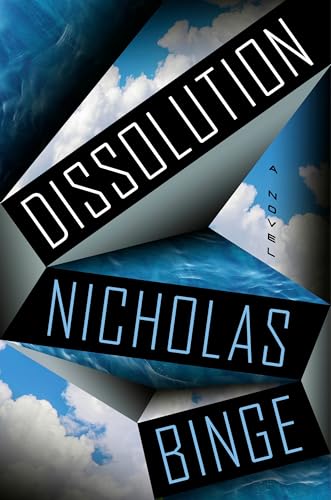
                • Cover of Dissolution
                  Dissolution

                  Nicholas Binge · standalone novel · 2025

                  similar byfamily secretstensecontemporarythriller & suspenseour world

                  Dissolution is a 2025 science fiction novel by Nicholas Binge, published in the UK by Harper Voyager, and in the US by Riverhead Books. It is published or forthcoming in multiple languages, including Spanish, German, Hungarian, and Arabic. The novel tells the story of Margaret (Maggie) Webb, who discovers that her husband Stanley’s Alzheimer’s is a false cover for the fact that his memories are being purposefully erased to keep something he did in his past hidden. The book alternates between Maggie and Stanley’s perspectives as they move through multiple decades of their relationship.

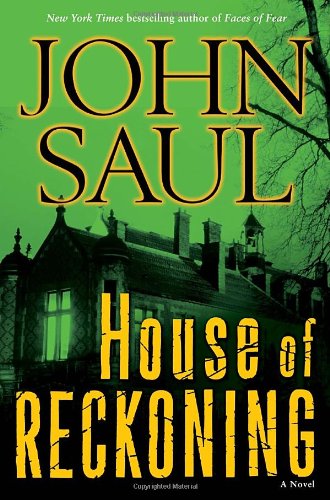
                • Cover of House of Reckoning
                  House of Reckoning

                  John Saul · standalone novel · 2009

                  similar byfamily secretstensecontemporarythriller & suspense+2 more

                  House of Reckoning is a thriller horror novel by John Saul, published by Ballantine Books on October 13, 2009. The novel follows the story of teenage Sarah Crane, who along with her friends unravels the shocking story behind an old mansion upon arriving in a new town.

                • Cover of The Colony (Jackson & Bush)
                  The Colony (Jackson & Bush)

                  series · 5 books · 2009

                  similar bytensecontemporarythriller & suspensenorth america+2 more

                • Cover of The Price of Silence
                  The Price of Silence

                  Kate Wilhelm · standalone novel · 2005

                  similar byfamily secretstensecontemporarythriller & suspenseour worldnorth america

                  In dire need of a job, Todd Fielding accepts the offer to work at The Brindle Times-even if she has to move to the lackluster town of Brindle. As she settles into her new home, Todd is fully prepared to adapt to the boredom of small-town life, but her preconceptions of Brindle are completely shattered when a local girl disappears. Even more shocking to Todd is the town's sheer indifference to the incident. No one-not even the police-appears particularly concerned. When Todd looks deeper into the story, she discovers that five other girls have "run away" from Brindle under strange circumstances over the past twenty years. As she sets out to uncover the history of a town that has cloaked itself in secrecy for far too long, evidence of manipulation and cold-blooded murder begin to unravel. And Todd may be the next victim to pay the deadly price of silence.

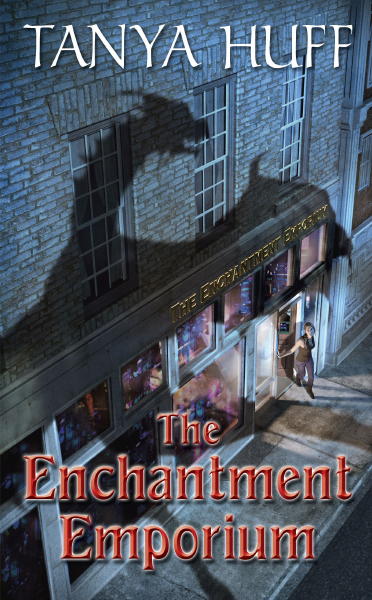
                • Cover of Gale Family
                  Gale Family

                  series · 3 books · 2009

                  similar bycontemporaryour worldnorth america+1 more

                  Tanya Huff's urban fantasy trilogy follows Alysha Gale, a member of a Canadian family whose charms can reshape reality, after she inherits her grandmother's junk shop in Calgary and discovers it doubles as a gateway into the fae world. Across The Enchantment Emporium, The Wild Ways, and The Future Falls, different Gale women take the lead as the family is repeatedly called on to contain magical trouble the ordinary world can't handle.