Loreful
HomeDiscover
Search series, authors…⌘K
Loreful

Reading orders for SF/F series and shared universes — with your place kept in every one.

Explore

UniversesSeriesWorksAuthorsAtlas

Help

FAQAboutSite map

Account & legal

Sign inCreate accountPrivacyTerms

Data

Built on ISFDB, Wikipedia, Wikidata and Open Library. Curated reading orders carry their reasoning on the page; the rest follow publication order. Data sources & licenses

© Loreful · data: ISFDB · CC BY

More like Code to Zero

anchored on:thriller & suspenseamnesiaour worldnorth americamid 20th centurytense+3 more

but

Mood

The mood the book leaves you in.

  • The reading experience is propelled by journeys, exploration, and physical risk; excitement and forward momentum dominate over dread or introspection.
  • Joy and loss are deliberately mixed; the resolution grants characters something real while taking something else away, leaving warmth and sorrow together.
  • The book demands work from the reader — dense prose, difficult structure, unfamiliar ideas, or morally uncomfortable material — as part of its intended effect.
  • Grim events, cruelty, or despair dominate the atmosphere, and the book does not soften them with comfort or comic relief.
  • The atmosphere is quietly unsettling — wrongness, unease, and the uncanny pervade the book without necessarily escalating into overt horror.
  • The book is built to move the reader; character feeling is foregrounded and major scenes aim at a strong emotional response.
  • Humor is a primary aim and the prose plays for laughs — comic situations, wit, or dialogue produce sustained comedy, not occasional levity.
  • The book insists that things can improve; effort and decency are shown to matter, and the arc bends toward better outcomes even through hardship.
  • The book teaches as it goes — real facts, history, science, or craft are conveyed in enough depth that learning is part of the reading experience.
  • The book is designed to uplift and motivate, presenting perseverance or achievement in a way that invites the reader to aspire or act.
  • The overall register is cheerful and easygoing; stakes are kept gentle and the book avoids dwelling on pain or dread.
  • Withheld information drives the experience; the book sustains enigmas and secrets the reader wants resolved, whatever its genre.
  • The book is contemplative and inward-looking, giving more weight to thought, memory, and meaning than to external events.
  • The book works as comfort reading — low tension, a soothing pace, and an atmosphere the reader can unwind in.
  • Grief, loss, or melancholy set the dominant register, and the book lets sorrow stand rather than resolving it into comfort.
  • Sustained suspense is the point; the book keeps the reader braced for what happens next through danger, pressure, or impending revelation.
  • Playful invention and charm define the register — fanciful conceits, light absurdity, and a narration that delights in its own oddity.

About

What the story runs on.

  • Stories in which extraterrestrial beings are central — as characters, cultures, or the object of the plot.
  • Stories structured as a quest — a journey undertaken to find, deliver, or destroy something of great import.
  • Stories in which staying alive against nature, catastrophe, or scarcity is the central problem.
  • Stories of lovers kept apart by law, family, faith, or station, where the obstacle to love is the plot.
  • Stories in which a friendship — its making, testing, or loss — is the emotional center.
  • Stories of growing up — a young protagonist crossing from childhood into adult knowledge and responsibility.
  • Stories about who a character truly is — self-discovery, doubled lives, and the search for a self.
  • Stories about mourning — living through the death of a loved one and what loss does to the survivors.
  • Stories in which a buried family truth — hidden parentage, crimes, or shames — surfaces and reorders the present.
  • Stories driven by maneuvering for power — factions, conspiracies, and statecraft conducted in shadow.
  • Stories in which war itself is the subject — combat, occupation, and what warfare does to soldiers and civilians.
  • Stories organized around investigating a killing — the case, the clues, and the pursuit of the killer, in any genre's clothing.

Shelf

Where it sits in the library.

    • Fiction built on magic or other supernatural elements that have no scientific explanation.
    • Secondary-world fantasy at large scale, where the fate of nations or the world turns on the protagonists' struggle.
    • Fantasy set in a recognizably modern city or contemporary world where the supernatural intrudes on everyday life.
    • Fantasy that blends in horror's atmosphere and imagery, keeping a fantastical frame around grim or frightening material.
    • Action-driven fantasy following warriors or rogues with personal stakes against sorcerous threats, rather than world-spanning conflicts.
    • Fantasy set in a real historical period or a close analogue of one, with magic woven into the era.
    • Fantasy in which protagonists cross from the ordinary world into another world through a portal or similar passage.
    • Fiction that retells or reworks a traditional fairy tale in a new form or setting.
    • Fantasy drawing directly on myths, legends, and folklore, retelling them or building on their figures and logic.
    • Fantasy of ghosts, vampires, shapeshifters, psychics, and similar phenomena, usually set in an otherwise ordinary world.
    • Fiction mixing science-fictional trappings with overtly magical or impossible elements in one setting.
    • Low-stakes fantasy emphasizing comfort, community, and everyday pleasures over conflict and peril.
    • Speculative fiction of pervasive moral ambiguity, violence, and cynicism that rejects heroic conventions — fantasy and SF alike.
      • Fiction that extrapolates from science and technology — future societies, space travel, or speculative inventions — within at least nominally natural laws.
      • Science fiction of interstellar scope — starships, galactic polities, and adventure across star systems.
      • Science fiction committed to scientific rigor, where technical plausibility constrains the story.
      • Science fiction centered on armed forces and warfare, told largely from a military point of view.
      • Science fiction of networked, corporate-dominated near futures, pairing high technology with social decay.
      • Science fiction styled on nineteenth-century steam-powered technology, often in a Victorian or pseudo-Victorian setting.
      • Fiction depicting an oppressive or catastrophic society, presented as a warning.
      • Fiction set after civilization's collapse, following survivors in the ruins of the old world.
      • Fiction in which characters move between past and future, and the mechanics or consequences of that travel drive the plot.
      • Fiction exploring a world where a historical event went differently and history diverged from ours.
      • Science fiction about humanity's first encounter and communication with an alien intelligence.
      • Science fiction in which extraterrestrial forces attack or occupy Earth and humanity resists.
      • Fiction whose primary aim is to frighten or unsettle the reader through dread, menace, or the monstrous.
      • Horror of vast, indifferent, incomprehensible entities before which humanity is insignificant, in the Lovecraft tradition.
      • Horror of decaying houses, buried family secrets, and oppressive atmosphere in the Gothic literary tradition.
      • Horror centered on hauntings and the returning dead.
      • Horror located in the mind — paranoia, obsession, and unreliable perception rather than external monsters.
      • Horror built around the reanimated dead and survival amid their outbreaks.
      • Horror defined by explicit, transgressive gore that refuses to cut away from violence.
      • Speculative fiction of the strange and uncanny that resists both natural explanation and standard genre categories.
      • Fiction organized around solving a crime or puzzle, typically following an investigator toward the identification of a culprit.
      • A puzzle-first mystery that lays out clues so the culprit's identity can be deduced before the reveal.
      • Crime fiction of moral ambiguity, fatalism, and hard-edged style, set among the corrupt and the doomed.
      • A mystery following the realistic routines of police work — forensics, interviews, and case-building.
      • A gentle mystery with an amateur sleuth, a small community, and violence kept off the page.
      • A mystery set in a past era, where the investigation works within that period's methods and society.
      • Fast-paced fiction driven by imminent danger, pursuit, or high-stakes conspiracy, built to sustain tension.
      • A thriller of espionage — agents, tradecraft, and intelligence services in conflict.
      • A thriller centered on lawyers and the courtroom, where litigation carries the suspense.
      • A thriller driven by detailed contemporary or near-future technology, often military or scientific.
      • A thriller whose tension comes from mental states and manipulation between characters rather than external action.
      • Fiction whose central plot is a romantic relationship and its development toward an emotionally satisfying resolution.
      • Romance in which one or both partners are supernatural beings, blending fantasy elements into the love story.
      • A fantasy-romance hybrid in which the romantic arc and the fantasy plot carry equal weight.
      • Romance set in a past era, with courtship shaped by the period's society and manners.
      • Romance set in the present day, without supernatural or historical elements.
      • Fiction set in a real past period, where the historical setting materially shapes characters and events.
        • General and literary fiction emphasizing prose style, character interiority, or formal ambition over genre plot conventions.
        • Fiction in a realistic world where magical events occur and are treated as ordinary, in the tradition of Latin American literature.
        • Fiction that ridicules people, institutions, or society in order to criticize them.
        • Fiction of dreamlike, irrational imagery and logic that breaks from realistic representation.
        • Fiction that plays with narrative convention through metafiction, fragmentation, and self-reference.
        • Fiction propelled by journeys, exploration, and physical peril, where action and survival carry the plot.
        • Adventure fiction of ships and seafaring — naval engagements, voyages, and life at sea.
        • Fiction of the American frontier West — gunmen, ranchers, and lawmen, typically in the late nineteenth century.
        • Fiction centered on soldiers, campaigns, and the experience of warfare, historical or imagined.
          • Fiction written primarily to amuse, using comedic situations, wit, or parody as its organizing principle.
            • Multi-generational fiction following a family or dynasty across decades, with inheritance and kinship as the through-line.
              • Fiction whose world runs on explicit game mechanics — levels, stats, and skills that characters can see and exploit.
                • Fiction about costumed or superpowered heroes and their conflicts with comparable villains.

                Practical

                How long a commitment, whether it stands alone, and whether it has finished.

                Tap a chip to ask for it · tap again to rule it out · once more to clear. Numbers show what would be left.

                • Cover of The Spook Who Sat by the Door
                  The Spook Who Sat by the Door

                  Sam Greenlee · standalone novel · 1969

                  similar bymid 20th centurypolitical intriguethriller & suspensespy thrillertensenorth america

                  The Spook Who Sat by the Door (1969), by Sam Greenlee, is the fictional story of Dan Freeman, the first black CIA officer, and of the CIA's history of training persons and political groups who later used their specialised training in gathering intelligence, political subversion, and guerrilla warfare against the CIA. The novel has been characterised as "part thriller, part satire and part social commentary". As described by The New Yorker, the title "alludes to the conspicuous deployment of the agency's one black officer to display its phony integration".

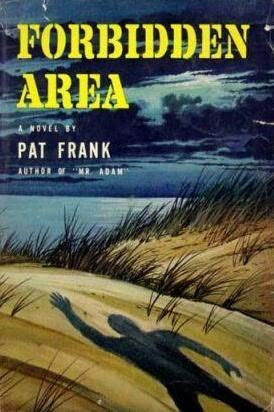
                • Cover of Forbidden Area
                  Forbidden Area

                  Pat Frank · standalone novel · 1956

                  similar bymid 20th centurythriller & suspensetensepolitical intriguespy thrillernorth america

                  Forbidden Area is a 1956 Cold War thriller novel by Pat Frank. Its plot involves Soviet sleeper agents intended to sabotage the U.S. war effort, who have been trained by classical conditioning to have an American "cover identity" that they can remember as well as their own.

                • Cover of Tad Anders
                  Tad Anders

                  series · 1 book · 1975

                  similar bymid 20th centurythriller & suspensetensepolitical intriguespy thrillerour world

                • Cover of The Manchurian Candidate
                  The Manchurian Candidate

                  Richard Condon · standalone novel · 1959

                  similar bymid 20th centurythriller & suspensetensepolitical intriguespy thrillernorth america

                  The Manchurian Candidate (1959), by Richard Condon, is a political thriller about the son of a prominent U.S. political family who is brainwashed into being an unwitting assassin for a Communist conspiracy. The novel has been adapted into a feature film twice; the first is The Manchurian Candidate (1962), which deals with anti-communist hysteria in U.S. politics, and the second is The Manchurian Candidate (2004), which deals with corporate interference in the U.S. government.

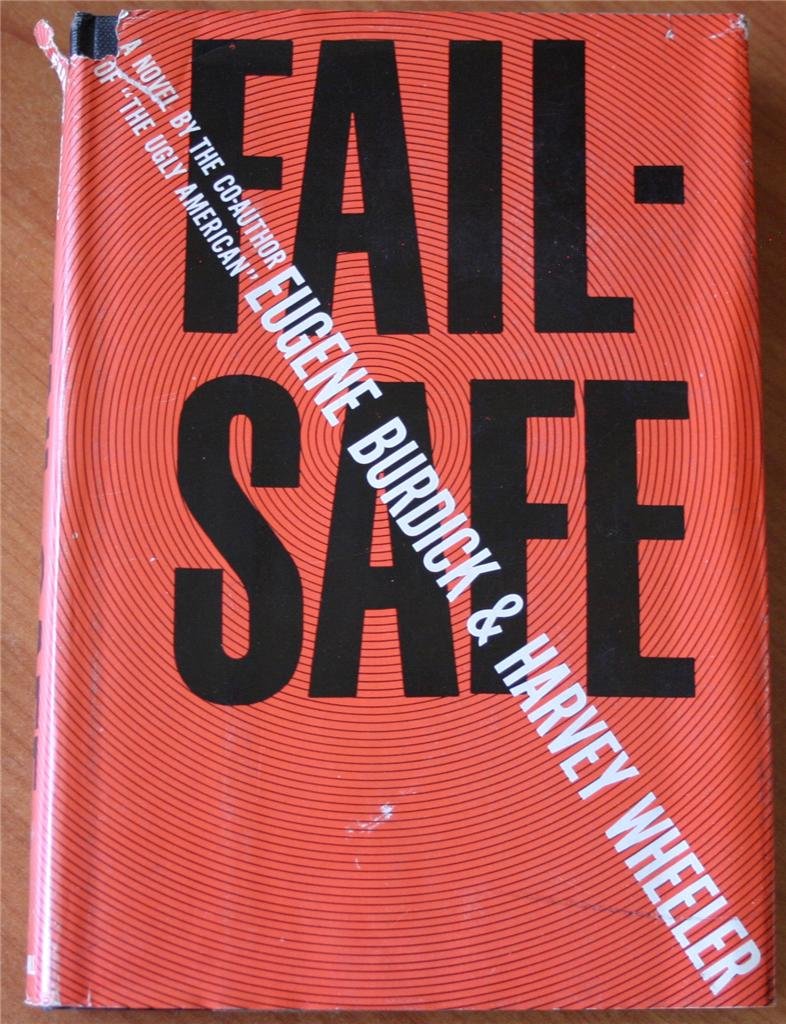
                • Cover of Fail-Safe
                  Fail-Safe

                  Harvey Wheeler & Eugene Burdick · standalone novel · 1962

                  similar bymid 20th centurythriller & suspensetensenorth america+1 more

                  Fail-Safe is a bestselling American novel by Eugene Burdick and Harvey Wheeler. Expanded from Wheeler's short story "Abraham '59", it was initially serialized in three installments in the Saturday Evening Post on October 13, 20, and 27, 1962, during the Cuban Missile Crisis.

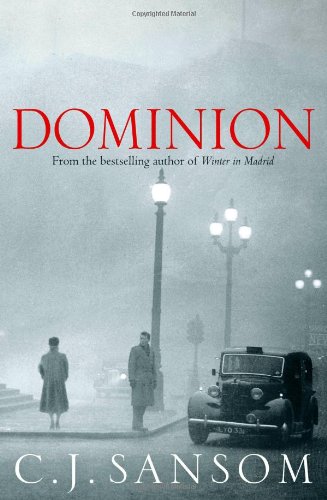
                • Cover of Dominion
                  Dominion

                  C. J. Sansom · standalone novel · 2012

                  similar bymid 20th centurythriller & suspensetensepolitical intriguespy thriller

                  Dominion is a 2012 alternative history novel by British author C. J. Sansom. It is a political thriller set in the early 1950s against the backdrop of a Britain that has become a satellite state of Nazi Germany. The point of divergence from actual history is that Lord Halifax, rather than Winston Churchill, succeeded Neville Chamberlain as Prime Minister in May 1940 leading to an armistice with Germany.

                • Cover of Deception Point
                  Deception Point

                  Dan Brown · standalone novel · 2001

                  similar bythriller & suspensetensepolitical intriguemysteriousour world

                  Deception Point is a 2001 mystery-thriller novel by American author Dan Brown. It is Brown's third novel. It was published by Simon & Schuster.

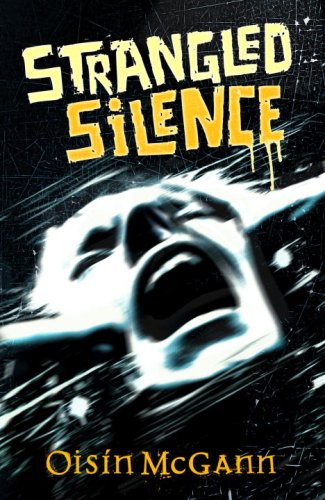
                • Cover of Strangled Silence
                  Strangled Silence

                  Oisin McGann · standalone novel · 2008

                  similar bythriller & suspensetenseamnesiapolitical intriguemysteriousour world

                  Another brilliant story from the bestselling Oisin McGann, author of the critically acclaimed Small-Minded Giants and Ancient Appetites.When pretty, talented and very ambitious Amina Mir manages to land a newspaper work experience placement she thinks it might just be making coffee and following-up tame stories. But then, when by chance she's sent to interview Ivor MacMorris, a veteran of the war in Sinnostan who's just won millions on the lottery, but bizarrely hasn't spent a penny, things start to get interesting . . . and dangerous. Ivor thinks he's been made to forget what happened in Sinnostan. He believes false memories of how and why he lost an eye have been planted in his brain and that he's being followed by threatening faceless people. At first Amina thinks Ivor's suffering from some sort of post-traumatic stress disorder, but soon Ivor, conspiracy theorist Chi Sandwith and events persuade Amina that she could have stumbled into one of the biggest and most terrifying cover-ups ever.

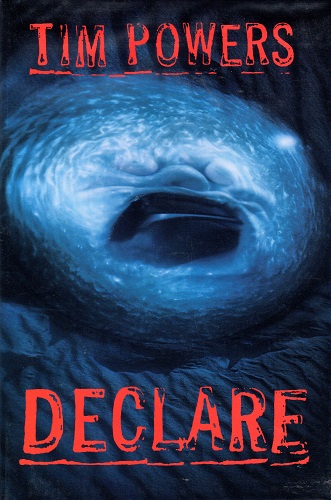
                • Cover of Declare
                  Declare

                  Tim Powers · standalone novel · 2000

                  similar bymid 20th centurypolitical intriguespy thrillermysterioustense

                  Declare (2000) is a supernatural spy novel by American author Tim Powers. The novel presents a secret history of the Cold War, and earned several major fantasy fiction awards.

                • Cover of Mitchell Gant
                  Mitchell Gant

                  series · 3 books · 1977

                  similar bymid 20th centurythriller & suspensetensespy thrillerour world

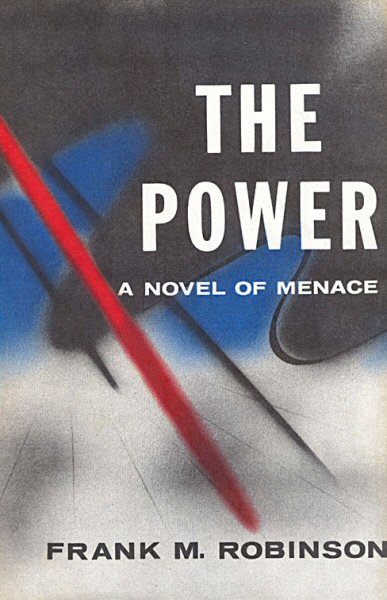
                • Cover of The Power
                  The Power

                  Frank M. Robinson · standalone novel · 1956

                  similar bymid 20th centurytensethriller & suspensemysteriousnorth america

                  The Power is a 1956 science fiction novel by American writer Frank M. Robinson. It first appeared in the March 1956 edition of Blue Book magazine and then in a standalone book published by J. B. Lippincott in May that year. Its protagonist, a researcher named Tanner, discovers evidence of a person with psychic abilities among his coworkers. As he tries to uncover the superhuman, his existence is erased and his associates murdered, until he faces a showdown with an apparently invincible opponent.

                • Cover of Christopher Family Chronicles
                  Christopher Family Chronicles

                  series · 8 books · 1973

                  completed

                  similar bytensethriller & suspensepolitical intriguespy thriller+3 more

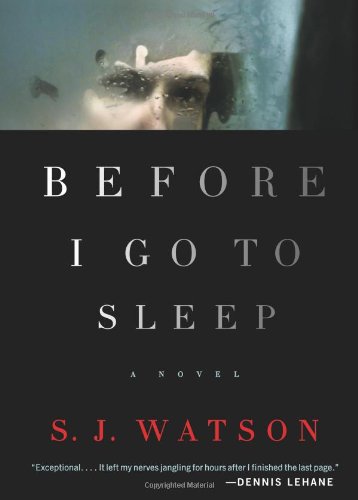
                • Cover of Before I Go to Sleep
                  Before I Go to Sleep

                  S. J. Watson · standalone novel · 2011

                  similar byamnesiathriller & suspensetensemysterious

                  Before I Go to Sleep is the first novel by S. J. Watson, published in the spring of 2011. It became both a Sunday Times and The New York Times bestseller and has been translated into over 40 languages. It has become a bestseller in France, Canada, Bulgaria and the Netherlands. It reached number 7 on the U.S. bestseller list, the highest position for a debut novel by a British author since J. K. Rowling. The New York Times described the author as an "out-of-nowhere literary sensation". He wrote the novel between shifts whilst working as a National Health Service (NHS) audiologist.

                • Cover of The Apollo Murders
                  The Apollo Murders

                  Chris Hadfield · standalone novel · 2021

                  similar bymid 20th centurythriller & suspensetensepolitical intriguespace exploration

                  The Apollo Murders is a 2021 alternate history, thriller novel by Canadian retired astronaut and writer Chris Hadfield. It was first published in October 2021 in the United States by Little, Brown and Company, and in the United Kingdom by Quercus. The book is Hadfield's debut novel, and is the first in his Apollo Murders series, followed later by The Defector in 2023 and Final Orbit in 2025. Hadfield had previously published three non-fiction books, his first being his autobiography, An Astronaut's Guide to Life on Earth (2013).

                • Cover of The Cobweb
                  The Cobweb

                  Neal Stephenson & J. Frederick George · standalone novel · 1996

                  similar bythriller & suspensetensepolitical intriguemysteriousour worldnorth america

                  The Cobweb is a 1996 novel written by Neal Stephenson with J. Frederick George, a pseudonym for Stephenson's uncle, historian George Jewsbury. It was originally published under the collective pseudonym "Stephen Bury", as was their earlier novel Interface (1994).

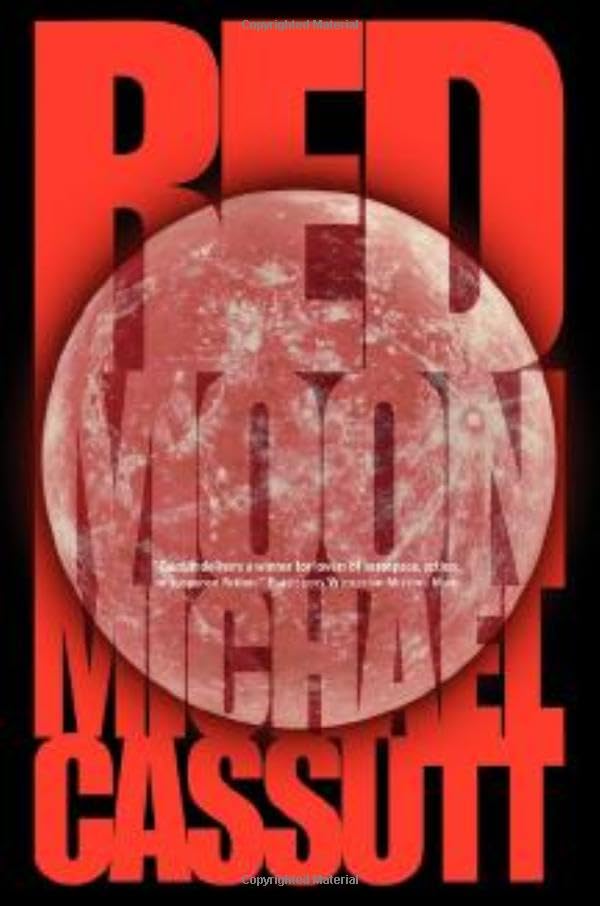
                • Cover of Red Moon
                  Red Moon

                  Michael Cassutt · standalone novel · 2001

                  similar bymid 20th centurytensepolitical intriguethriller & suspensespy thriller+1 more

                  "It begins in 1964 with what may be a murder, the sudden and unexpected death of Sergei Korolev, the man who ran the Soviet Space program. Young Yuri Ribko, an engineering student working for one of Korolev's bureaus, is either fortunate or unfortunate to have an uncle who is a high-ranking member of state security. Yuri's uncle recruits himt to spy within the bureau so as to assist in identifying possible threats to the Space Program."--Cover.

                • Cover of Colonel Charles Russell
                  Colonel Charles Russell

                  series · 2 books · 1958

                  completed

                  similar bymid 20th centurythriller & suspensepolitical intriguespy thrillertense

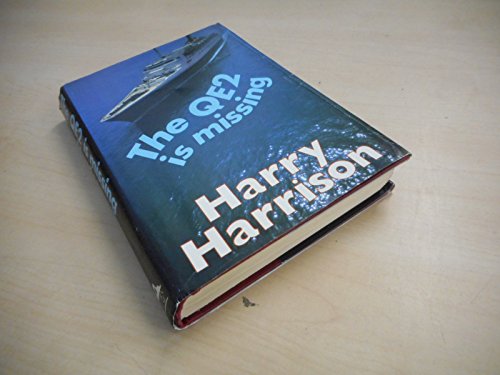
                • Cover of The QE2 Is Missing
                  The QE2 Is Missing

                  Harry Harrison · standalone novel · 1980

                  similar bythriller & suspensetensepolitical intriguespy thrillerour world+1 more

                  A political thriller about South American politics, Nazis and arms dealers set on a cruise ship.

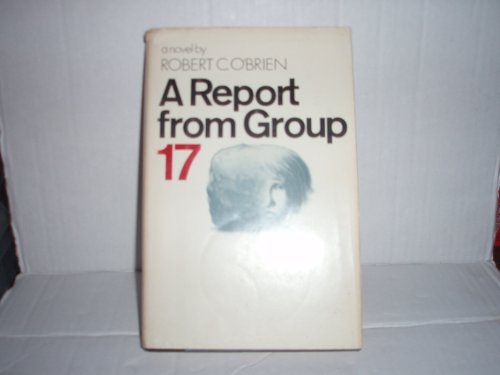
                • Cover of A Report from Group 17
                  A Report from Group 17

                  Robert C. O'Brien · standalone novel · 1972

                  similar bymid 20th centurythriller & suspensetensepolitical intriguenorth america

                  A Report from Group 17, published in 1972, is a science-fiction thriller written by Robert Leslie Conly under his pen name Robert C. O'Brien. Set in Washington, D.C., during the Cold War, the story deals particularly with the danger of developing bioweapons. The potential cause of conflict is a resurgence of Nazism in Europe. A 12-year-old girl who lives near a Soviet estate in Maryland becomes a victim of intrigue when she is kidnapped for use as an experimental subject. Themes include the threat of modern war to human survival, the moral responsibility of scientists, and the importance of both individual freedom and sympathetic instincts. Following two novels for children, A Report from Group 17 was the first of two dystopian novels that O'Brien wrote for adults. His last novel, Z for Zachariah (1974), depicts a conflict between two survivors of a nuclear war and deals with similar themes.

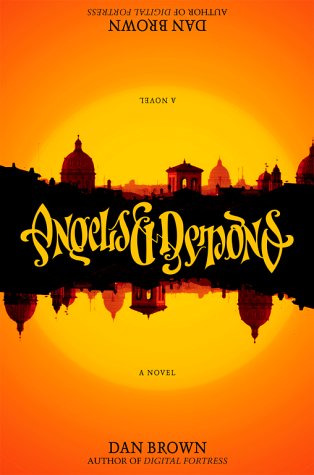
                • Cover of Robert Langdon
                  Robert Langdon

                  series · 6 books · 2000

                  similar bythriller & suspensetensemysterious+1 more

                  The Robert Langdon novel series is named after Robert Langdon, the protagonist of the novels by American author Dan Brown. Langdon is portrayed as a Harvard University professor of religious iconology and symbology, a fictional field related to the study of historic symbols, which is not methodologically connected to the actual discipline of semiotics. Brown's novels that feature the lead character also include historical themes and Christianity as motifs, and as a result have generated controversy. Brown states on his website that his novels are not anti-Christian, and that he is on a "constant spiritual journey" himself.

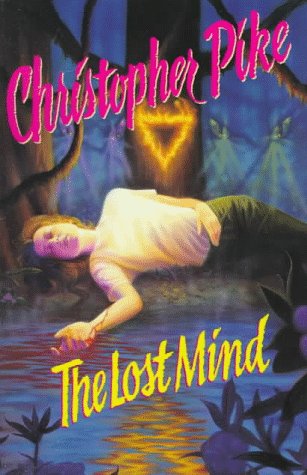
                • Cover of The Lost Mind
                  The Lost Mind

                  Christopher Pike · standalone novel · 1995

                  similar byamnesiathriller & suspensetensemysteriousnorth america

                  She awoke in the woods beside a dead body. There was a knife in her hand, blood on her clothes. Had she killed the young woman who lay beside her? She couldn’t remember. She couldn’t remember anything. Not even her own name. It was as if someone had stolen her mind. Stolen her soul.

                • Cover of The Satanist
                  The Satanist

                  Dennis Wheatley · standalone novel · 1960

                  similar bymid 20th centuryspy thrillertenseour world+1 more

                  The Satanist is a black magic/horror novel by Dennis Wheatley. Published in 1960, it is characterized by an anti-communist spy theme. The novel was one of the popular novels of the 1960s, popularizing the tabloid notion of a black mass.

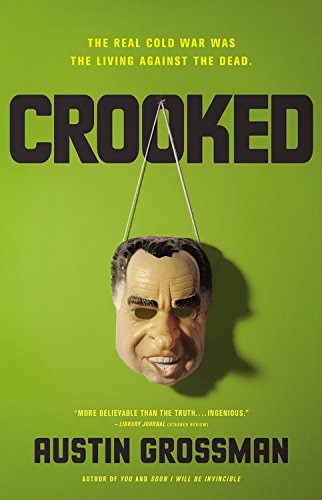
                • Cover of Crooked
                  Crooked

                  Austin Grossman · standalone novel · 2015

                  similar bymid 20th centurypolitical intriguethriller & suspenseour worldnorth america+1 more

                  Crooked is a novel by author Austin Grossman, published in 2015 by Mulholland Books. It is a cosmic horror fantasy and secret history of the Cold War and the Watergate scandal, narrated by a fictional version of Richard Nixon.

                • Cover of Tremor of Intent
                  Tremor of Intent

                  Anthony Burgess · standalone novel · 1966

                  similar bymid 20th centurythriller & suspensepolitical intriguespy thrillertense

                  Tremor of Intent: An Eschatological Spy Novel (1966), by Anthony Burgess, is an English espionage novel.