More like Code: Veronica
anchored on:horrorcontemporarydarktensescience fictiongenetic engineering+2 more
but
- Cell
Stephen Kingstandalone novel2006
similar bycontemporaryhorrordarktensesurvivalscience fiction
In Cell, King taps into readers fears of technological warfare and terrorism. Mobile phones deliver the apocalypse to millions of unsuspecting humans by wiping their brains of any humanity, leaving only aggressive and destructive impulses behind. Those without cell phones, like illustrator Clayton Riddell and his small band of "normies," must fight for survival, and their journey to find Clayton's estranged wife and young son rockets the book toward resolution.
- Midnight
Dean R. Koontzstandalone novel1989
similar bycontemporarytensegenetic engineeringsurvivalscience fictionhorrordark
A wealthy tech entrepreneur, intending to create superhumans by infecting them with nanotech to assist their physical and mental abilities, picks a California town as his secret pilot project, but things go terribly wrong.
- Dreamcatcher
Stephen Kingstandalone novel2001
similar bycontemporaryhorrortensesurvivalscience fictiondark
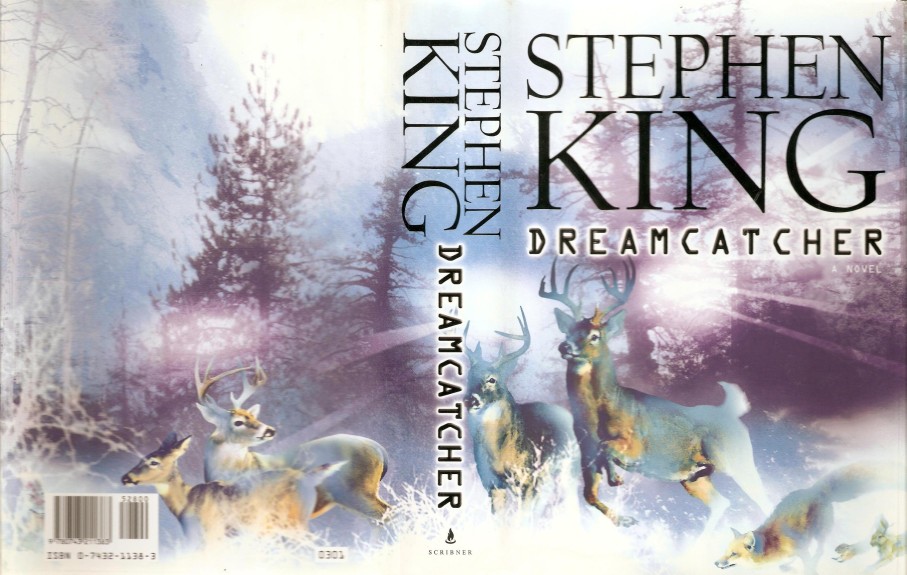
Dreamcatcher is a 2001 science fiction horror novel by American writer Stephen King, featuring elements of body horror, suspense and alien invasion. The book, written in longhand, helped the author recuperate from a 1999 car crash, and was completed in half a year. According to the author in his afterword, the working title was Cancer. His wife, Tabitha King, persuaded him to change the title. A film adaptation was released in 2003.
- Intercepts
T. J. Paynestandalone novel2019
similar bycontemporaryhorrortensegenetic engineeringsurvivalscience fictiondark
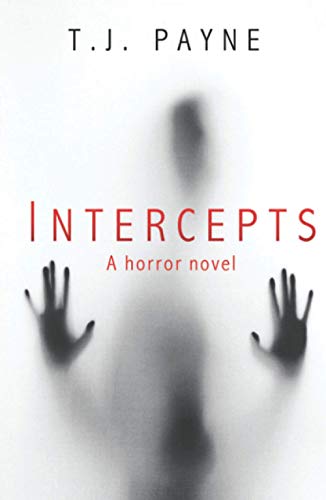
• Joe works at a facility that performs human experimentation. His work just followed him home.
- Sleeping Beauties
Stephen King & Owen Kingstandalone novel2017
similar bycontemporaryhorrordarksurvivalscience fictiontense
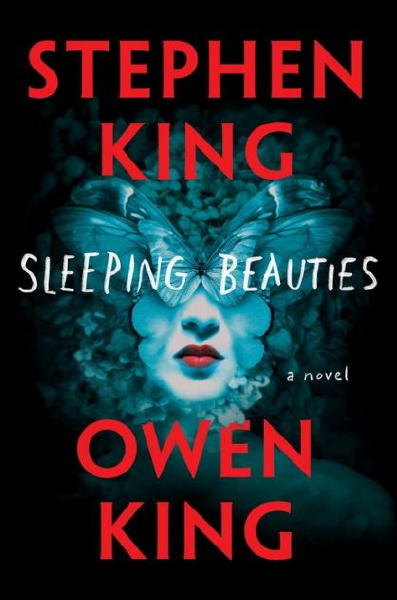
Sleeping Beauties is a novel by Stephen King and his son Owen King, released on September 26, 2017. The book was first mentioned during a promotional appearance on the CBC radio program q. Of the novel, Stephen King stated, "Owen brought me this dynamite idea and I've collaborated a couple of times with Joe. I'm not going to say what the idea is because it's too good."
- Wilder Girls
Rory Powerstandalone novel2019
similar bycontemporaryislandshorrordarksurvivaltense
Wilder Girls is a young adult horror novel by Rory Power, published July 9, 2019 by Delacorte Press. The book is a New York Times best seller.
- Rats
series4 books1974
completed
similar bycontemporaryhorrorsurvivaldarktense+1 more
The Rats, James Herbert's 1974 debut novel, imagines a plague of giant mutant rats overrunning London, told through a rotating cast of victims and survivors in the tradition of British disaster horror. It was followed by two sequels, Lair and Domain, which widen the outbreak first to the countryside and then to a besieged, apocalyptic city, completing a three-book trilogy.
- Firestarter
Stephen Kingstandalone novel1980
similar bycontemporarytensescience fictiondark+3 more
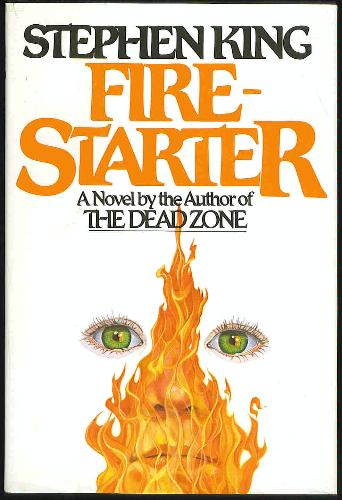
WorldCat: Innocence and beauty ignite with evil and terror... First, a man and a woman are subjects of a top-secret government experiment designed to produce extraordinary psychic powers. Then, they are married and have a child. A daughter. Early on the daughter shows signs of a wild and horrifying force growing within her. Desperately, her parents try to train her to keep that force in check, to 'act normal'. Now the government wants its brainchild back for its own insane ends.
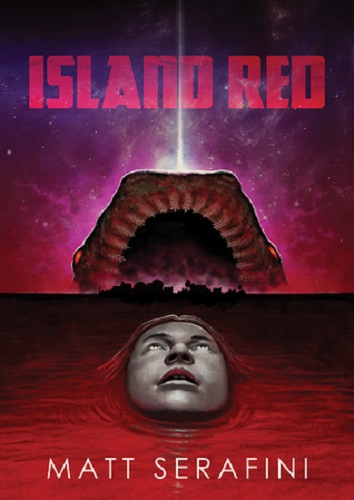
- Island Red
Matt Serafinistandalone novel2016
similar bycontemporaryislandstensesurvivalscience fictionhorrordark
●"Crystal Key is the perfect island getaway...until a frilled shark turns the waters around it into a feeding ground. That's just the start of the carnage, because a bloodthirsty predator is also out to get the island's residents. An alien parasite that will transform friends and family into mindless, murderous husks. Then when a hurricane descends, a teenage boy, his estranged father, and a low-level gangster must band together to escape the extraterrestrial onslaught." ― paraphrased from this book's product page on Amazon.com as of 2022-12-20.
- The Fog
James Herbertstandalone novel1975
similar bycontemporaryhorrortensesurvivaldark+1 more
The Fog is a horror novel by English writer James Herbert, published in 1975. It is about a deadly fog that drives its victims insane when they come into contact with it.
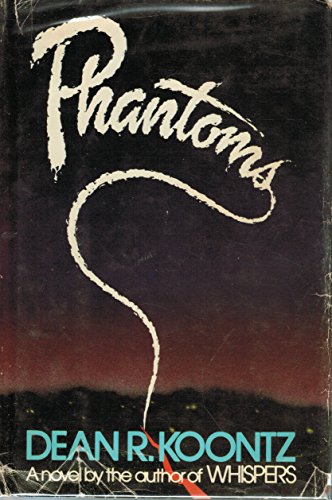
- Phantoms
Dean R. Koontzstandalone novel1983
similar bycontemporaryhorrortensesurvivalscience fictiondark
A doctor and her young sister find all the residents of their town have been brutally slaughtered by a giant intelligent synctial organism millions of years old, whose periodic emergences from its underground lair to feed cause events ranging from mass disappearances to mass extinctions. In order to defeat it and save humanity, they must outwit it.
- Under the Dome
Stephen Kingstandalone novel2009
similar bycontemporarytensesurvivalscience fictionhorrordark
A small town in Maine finds itself suddenly cut off from the outside world by an impenetrable barrier, and the clash of personalities of the trapped people takes its inexorable devastating course.
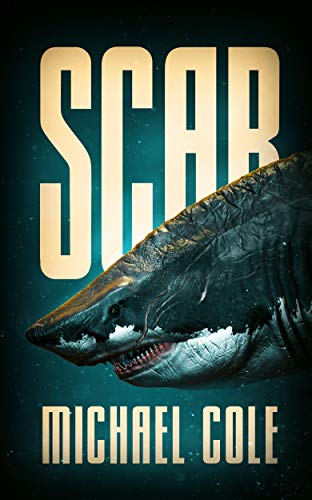
- Scar
Michael Colestandalone novel2020
similar bycontemporaryislandshorrortensegenetic engineeringsurvivaldark
● "Scar is a killing machine. Born from DNA spliced between the extinct Megalodon and modern-day Great White, he has a viciousness that transcends time. His evil is reflected in his eyes, his savagery in his two-inch serrated teeth, his ruthlessness in his trail of death. After escaping captivity, the killer shark travels to the island community Cross Point, where prey is in abundance. With an insatiable appetite, heightened senses, and skin impervious to bullets, Scar kills everything that crosses his path." ― quoted from this book's Amazon product page as of 2021-10-06.
- Bury Me Deep
Christopher Pikestandalone novel1991
similar bycontemporaryislandshorrortensedark+1 more
THE DEAD BOY WOULD NOT GO AWAY. Jean is on her way to Hawaii for a week of fun in the sun. But the vacation gets off to a gruesome start. The boy sitting beside her on the plane suddenly chokes and dies. Jean tries to push the incident out of her mind when she arrives on the island, but that's impossible. Part of the reason is because Mike keeps coming back to her in her dreams. Horrible dreams filled with cold blood. Two of Jean's friends are waiting for her in Hawaii -- Mandy and Michele. They have already made friends with two young men who teach scuba diving at the hotel -- Dave and Johnny. Jean and Johnny quickly become friends. But there are problems in paradise. Dave and Johnny have recently lost a partner in the ocean. No one knows how he died. No one can find his body. But then Jean finds Mike's body. It isn't where it's supposed to be, and it seems as if it's still got some life in it.
- Jerusalem's Lot
series3 books1975
similar bycontemporaryhorrordarktense+1 more
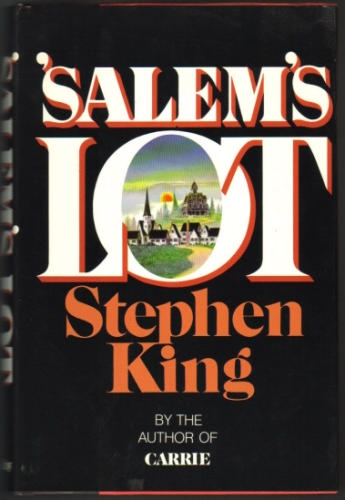
Stephen King's 1975 novel 'Salem's Lot follows writer Ben Mears as he returns to his childhood town of Jerusalem's Lot, Maine, only to discover that its residents are being turned into vampires by a newly arrived stranger. It transplants Gothic vampire horror into a small New England community, tracking that community's collapse under a supernatural siege. It is a single, self-contained novel.
- The Andromeda Strain
series2 books1969
similar bycontemporarytensesurvivalscience fiction+2 more
Michael Crichton's 1969 novel The Andromeda Strain follows a team of scientists racing to contain a lethal extraterrestrial microorganism that crash-lands in Arizona, told in the clinical, document-driven style that helped establish the techno-thriller genre. Daniel H. Wilson's authorized 2019 sequel The Andromeda Evolution revisits the same threat five decades later. Together the two books form a two-part outbreak story separated by a fifty-year gap in publication.
- The Pilot
Michael Colestandalone novel2019
similar bycontemporaryislandstensesurvivalscience fictionhorrordark
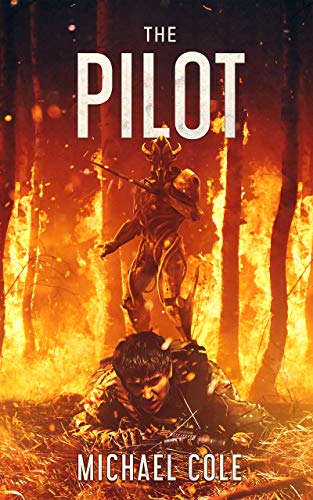
●"Led by former Navy SEAL Victor Seymour, an elite team of mercenaries are sent by the CIA to rescue hostages, and secure data from an under siege top-secret island facility. But upon arrival, they discover ravaged military equipment, a mass grave, and a platoon of hostile forces already in retreat. As the team investigates, they uncover the secret that the island has contained for centuries. For the first time, modern man will come face-to-face with a being from beyond the stars. A member of a deadly intergalactic invasive species, the beast is ravenous, cunning, lacking emotion or empathy." ― quoted from this book's Amazon product page as of 2021-10-09.
- Teranesia
Greg Eganstandalone novel1999
similar bycontemporaryislandsgenetic engineeringsurvivalscience fiction+1 more
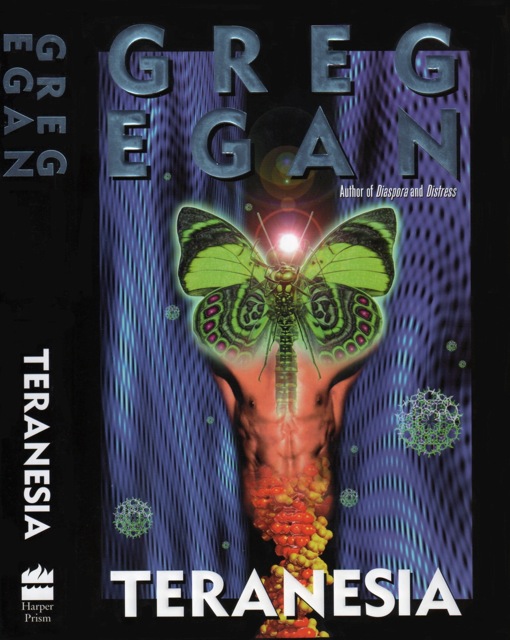
from the flaps of the HarperPrism first printing: "Welcome to Teranesia, the island of butterflies, where evolution has stopped making sense. Prabir Suresh lives in paradise, a nine-year-old boy with an island all his own to name, to explore, and to populate with imaginary monsters stranger than any tropical wildlife. Teranesia is his kingdom, shared only by his biologist parents and baby sister, Madhusree. The unexplained genetic mutation of the island's butterflies that brought his family to the remote South Moluccas barely touches Prabir; his own life revolves around the beaches, the jungle, and the schooling and friendship made possible by the net. When civil war breaks out across Indonesia, this paradise comes to a violent end and his family is broken apart, leaving Prabir with nagging feelings of guilt and an overwhelming, almost irrational sense of responsibility for his sister. The mystery of the butterflies remains unsolved but nearly twenty years later reports begin to appear of strange new species of plants and animals appearing throughout the region - species separated from their known cousins by recent, dramatic mutations that seem far too efficient and functional to have arisen by chance from pollution, disease, or any other random catastrophe. Madhusree is now a biology student; proud of her parents' unacknowledged work, and with no memories of the trauma of the war to discourage her, she decides to join a multinational expedition being mounted to investigate the new phenomenon. Unable to cast off his fears for her safety, Prabir reluctantly follows her. But travel between the scattered islands is difficult, and Madhusree's expedition is out of contact. In the hope of finding her, Prabir joins up with an independent scientist, Martha Grant, who has come to search for clues to the evolutionary mystery and whatever commercial benefits it might bring to her sponsor. As Prabir and Martha begin to untangle the secret of Teranesia, Prabir is forced to confront his past, and to face the painful realities that have shaped his life while also dealing with the implications of an unprecedented biological revolution. A Scientific mystery, an adventure story, and a meditation on the origins of love, Teranesia is Greg Egan's most ambitious and accessible novel yet."
- Invasive
Chuck Wendigstandalone novel2016
similar bycontemporaryislandstensegenetic engineeringsurvivalscience fictiondark
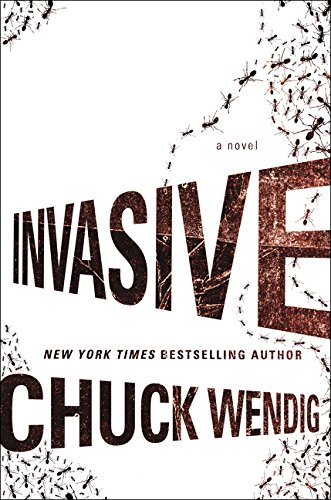
On the isolated Kolohe Atoll in the middle of the Pacific ocean, a charismatic billionaire employs a team of scientists to conduct cutting-edge research that he hopes will change the world. In a cabin on a remote lake in the Adirondacks, FBI futurist Hannah Stander finds a barely recognizable human body, which appears to have been skinned alive by thousands of genetically engineered ants. Hannah's investigation leads to Kolohe, where the scientists vehemently deny any connection to the body. But the more Hannah studies the group, the more she suspects their research has sinister applications, and the more she realizes no one may get off the island alive. --
- I Am Legend
Richard Mathesonstandalone novel1954
similar byhorrordarksurvivalscience fictiontense
The last human survivor of the vampire epidemic has to maintain his defences against their onslaught, while attempting to research the cause and possibly solution to the plague. Robert Neville is the last living man on Earth... but he is not alone. Every other man, woman and child on the planet has become a vampire, and they are hungry for Neville's blood. By day he is the hunter, stalking the undead through the ruins of civilization. By night, he barricades himself in his home and prays for the dawn. How long can a man survive like this?
- White Shark
Peter Benchleystandalone novel1994
similar bycontemporarytensegenetic engineeringsurvivalscience fictiondark+1 more
White Shark is a 1994 novel by author Peter Benchley, famous for Jaws, The Island, Beast, and The Deep. White Shark is similar to Jaws but does not feature a shark, let alone a white shark, despite what the title suggests; the phrase is the codename of a weapon. To avoid confusion and to capitalize on the miniseries adaptation, the book was republished as Creature in 1997.
- The Institute
Stephen Kingstandalone novel2019
similar bycontemporarytensesurvivalscience fictionhorrordark
The Institute is a 2019 American science fiction-horror novel by Stephen King, published by Scribner. The book follows twelve-year-old genius Luke Ellis. When his parents are murdered, he is kidnapped by intruders and awakens in the Institute, a facility that houses other abducted children who have telepathy or telekinesis. The Institute was published on September 10, 2019, and met with generally positive reviews.
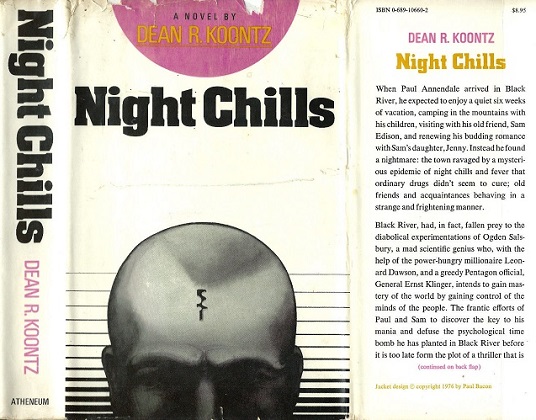
- Night Chills
Dean R. Koontzstandalone novel1976
similar bycontemporarytensesurvivalscience fictiondark+1 more
A single father and his 2 children, along with the father's love interest and her father, stumble upon a plot to perfect mind control via scientific means and must stop it before it is extended to everyone in the world.
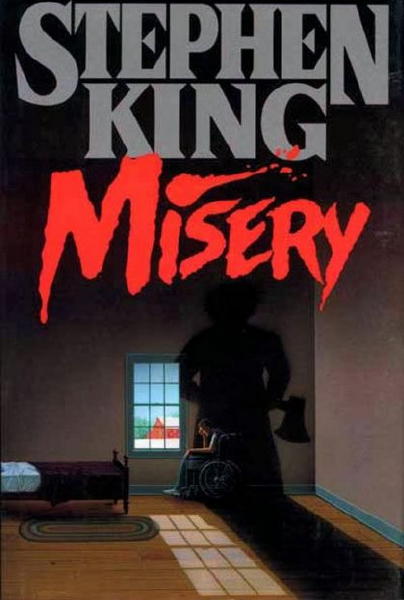
- Misery
Stephen Kingstandalone novel1987
similar bycontemporarytensesurvivalhorrordark
Novelist Paul Sheldon finishes the manuscript that will finally kill off Misery Chastain, the heroine who made his career, when a snowstorm sends his car off a Colorado road. He wakes with both legs shattered, in the care of Annie Wilkes, a former nurse and 'number one fan' with no intention of taking him to a hospital. Annie manages his pain with drugs he comes to depend on, and her moods swing between doting and violent. When she learns Misery doesn't survive his new manuscript, her reaction makes clear Paul isn't just her patient, he's her hostage. A Stephen King novel about a writer at his most devoted fan's mercy.