More like Code Zero
anchored on:thriller & suspenseplague and pandemicour worldnorth americacontemporarytense+5 more
but
- The Andromeda Strain
series2 books1969
similar bycontemporarytenseplague and pandemicsurvivalscience fiction+3 more
Michael Crichton's 1969 novel The Andromeda Strain follows a team of scientists racing to contain a lethal extraterrestrial microorganism that crash-lands in Arizona, told in the clinical, document-driven style that helped establish the techno-thriller genre. Daniel H. Wilson's authorized 2019 sequel The Andromeda Evolution revisits the same threat five decades later. Together the two books form a two-part outbreak story separated by a fifty-year gap in publication.
- Cell
Stephen Kingstandalone novel2006
similar bycontemporarytensedarksurvivalplague and pandemicour worldscience fictionnorth america
In Cell, King taps into readers fears of technological warfare and terrorism. Mobile phones deliver the apocalypse to millions of unsuspecting humans by wiping their brains of any humanity, leaving only aggressive and destructive impulses behind. Those without cell phones, like illustrator Clayton Riddell and his small band of "normies," must fight for survival, and their journey to find Clayton's estranged wife and young son rockets the book toward resolution.
- Firestarter
Stephen Kingstandalone novel1980
similar bycontemporarytensedarknorth americascience fictionthriller & suspense+2 more
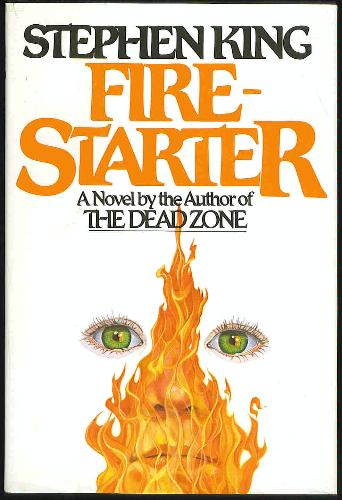
WorldCat: Innocence and beauty ignite with evil and terror... First, a man and a woman are subjects of a top-secret government experiment designed to produce extraordinary psychic powers. Then, they are married and have a child. A daughter. Early on the daughter shows signs of a wild and horrifying force growing within her. Desperately, her parents try to train her to keep that force in check, to 'act normal'. Now the government wants its brainchild back for its own insane ends.
- Invasion
Robin Cookstandalone novel1997
similar bycontemporarytensegenetic engineeringour worldscience fictionthriller & suspensenorth america+3 more
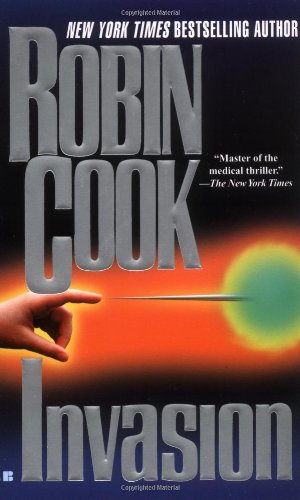
Earth is bombarded from space by small disks which, in addition to having powerful physical armaments, when handled activate latent viral DNA which causes humans to mutate into alien beings; a small group recognize the danger and attempt to develop a biological counterweapon.
- Burn
Bill Ransomstandalone novel1995
similar bycontemporarytenseplague and pandemicdarkgenetic engineeringsurvivalscience fictionthriller & suspense+1 more
From the front flap of the Ace first edition: "It is called GenoVax. The death it brings is terrifying. Quarantine and isolations are futile - the infection rate is nearly one hundred percent. It is the most frightening weapon man has ever created. And when it is unleashed, the human race will know what it is like to burn... It started in Mexico City disguised as a vaccine. Now it is out, and spreading. Virologist Marte Chang is determined to isolate and destroy the virus, but first she must unlock the secret of its origins - and uncover the brilliant and fanatical intelligence behind it. As a scientist she understands the necessary dangers of her work, to herself and to those who have been exposed. But can one woman halt a genocidal plan specifically designed to wipe out the entire human race? And even if she can... will there be anyone left to save?"
- The Swarm
Arthur Herzogstandalone novel1974
similar bycontemporarytensedarksurvivalplague and pandemicnorth americascience fictionthriller & suspense
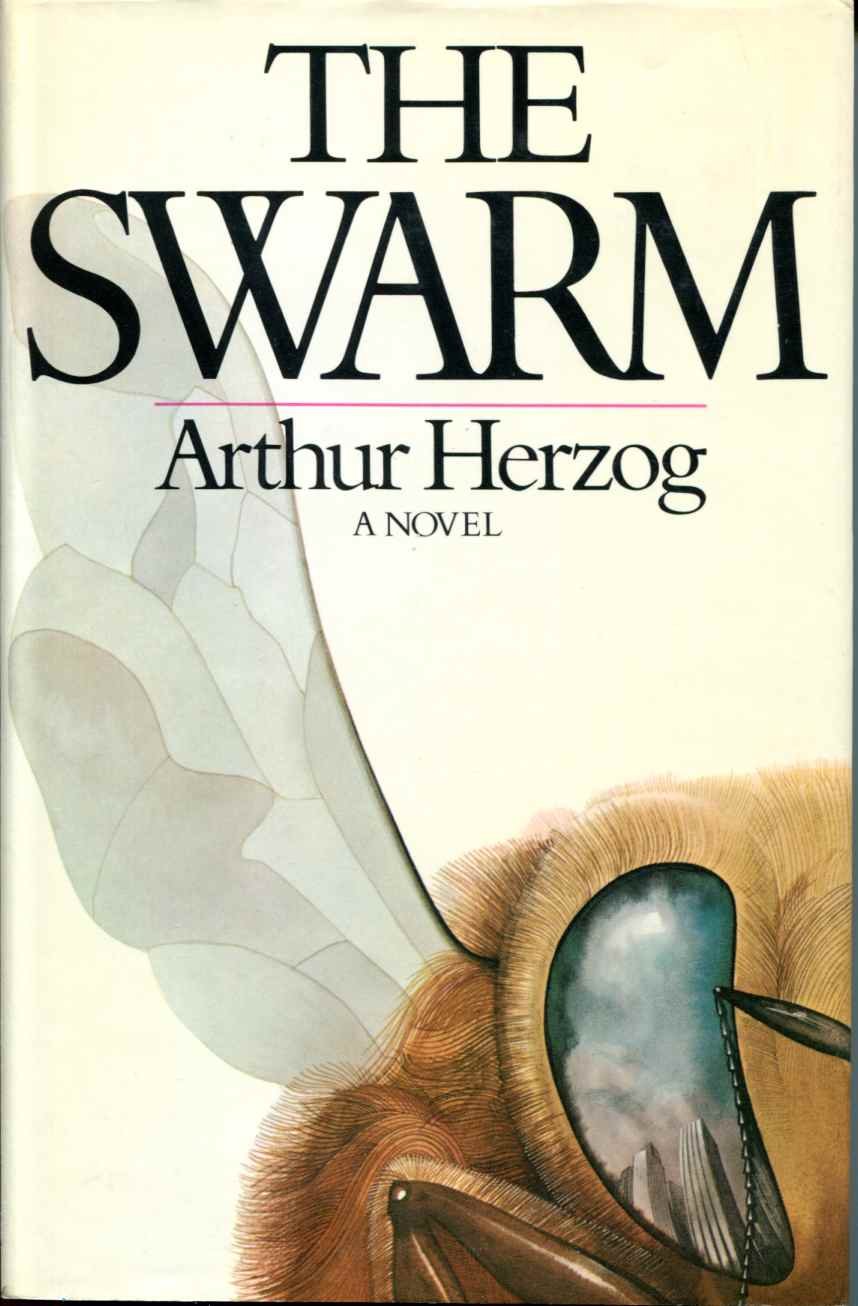
The United States faces an outbreak of offspring of Africanized honeybees, mutated so as to enhance their rapid spread as well as their aggressiveness and lethality.
- Night Chills
Dean R. Koontzstandalone novel1976
similar bycontemporarytensedarkthriller & suspensesurvivalnorth americascience fiction
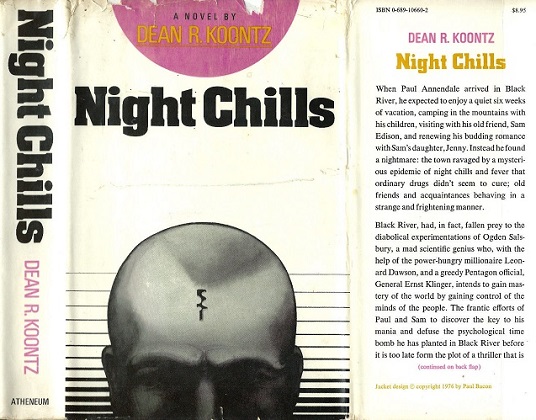
A single father and his 2 children, along with the father's love interest and her father, stumble upon a plot to perfect mind control via scientific means and must stop it before it is extended to everyone in the world.
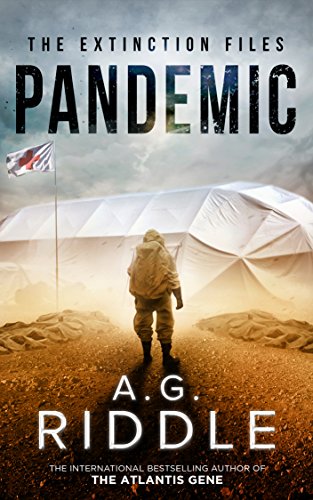
- The Extinction Files
series2 books2017
similar bycontemporarytenseplague and pandemicgenetic engineeringour worldscience fictionthriller & suspense+1 more
- Ancestor
Scott Siglerstandalone novel2007
similar bycontemporarytensedarkgenetic engineeringsurvivalour worldscience fictionthriller & suspense
Ancestor is a science fiction thriller novel by American writer Scott Sigler. The novel was released in podcast format in 2006, with it also being released in print via Dragon Moon Press in 2007. Ancestor was later re-released by Crown Publishing in 2010.
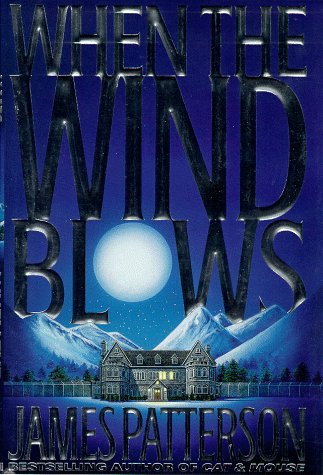
- When the Wind Blows
series2 books1998
similar bycontemporarytensegenetic engineeringsurvivalthriller & suspensescience fictionnorth america+2 more
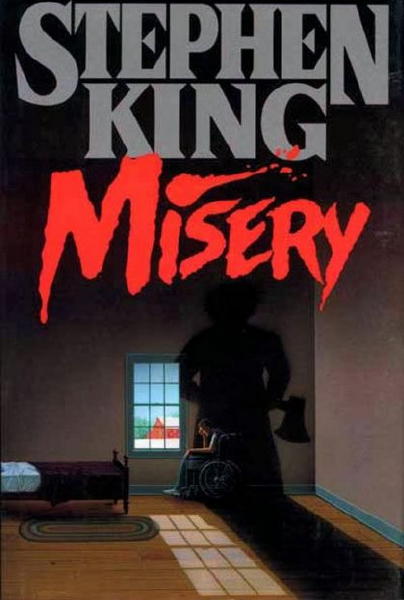
- Misery
Stephen Kingstandalone novel1987
similar bycontemporarytensedarksurvivalnorth americathriller & suspense
Novelist Paul Sheldon finishes the manuscript that will finally kill off Misery Chastain, the heroine who made his career, when a snowstorm sends his car off a Colorado road. He wakes with both legs shattered, in the care of Annie Wilkes, a former nurse and 'number one fan' with no intention of taking him to a hospital. Annie manages his pain with drugs he comes to depend on, and her moods swing between doting and violent. When she learns Misery doesn't survive his new manuscript, her reaction makes clear Paul isn't just her patient, he's her hostage. A Stephen King novel about a writer at his most devoted fan's mercy.
- White Shark
Peter Benchleystandalone novel1994
similar bycontemporarytensedarkthriller & suspensegenetic engineeringsurvivalour worldscience fiction
White Shark is a 1994 novel by author Peter Benchley, famous for Jaws, The Island, Beast, and The Deep. White Shark is similar to Jaws but does not feature a shark, let alone a white shark, despite what the title suggests; the phrase is the codename of a weapon. To avoid confusion and to capitalize on the miniseries adaptation, the book was republished as Creature in 1997.
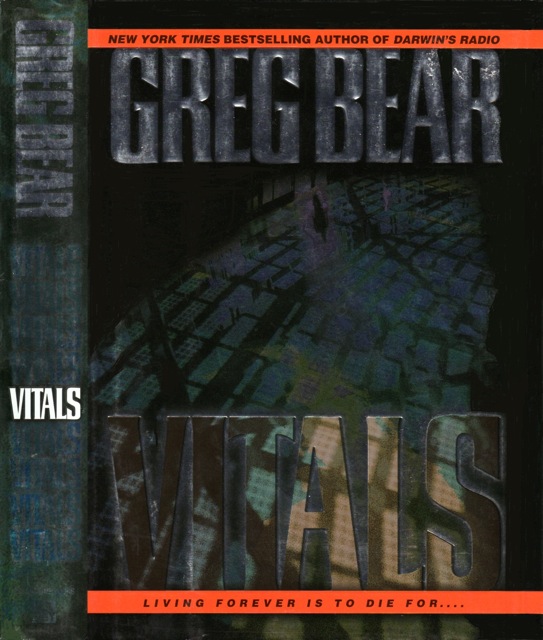
- Vitals
Greg Bearstandalone novel2002
similar bycontemporarytensegenetic engineeringour worldscience fictionthriller & suspensenorth america+1 more
From the flaps of the Del Rey first edition: "Hal Cousins is one of a handful of scientists nearing the most sought after discovery in human history: the key to short-circuiting the aging process. Fueled by a wealth of research, an overdose of self-confidence, and the money of influential patrons to whom he makes outrageous promises, Hal experiments with organisms living in the hot thermal plumes in the ocean depths. But as he journeys beneath the sea, his other world is falling apart. Across the country, scientists are being inexplicably murdered - including Hal's identical twin brother, who is also working to unlock the key to immortality. Hal himself barely eludes a cold-blooded attack at sea, and when he returns home to Seattle, he finds himself walking into an eerie realm where voices speak to him from the dead ... where a once-brilliant historian turned crackpot is leading him on a deadly game of hide-and-seek ... and where the beautiful, rich widow of his twin is more than willing to pick up the pieces of Hal's life-and take him places he's never been before. Suddenly Hal is trapped inside an ever-twisting maze of shocking revelations. For he is not the first person to come close to ending aging forever - and those who came before him will stop at nothing to keep the secret to themselves. Now every person on earth is at risk of being made an unsuspecting player in one man's spectacular and horrifying master plan. From the bottom of Russia's Lake Baikal to a billionaire's bionic house built into the cliffs of the Washington seashore, from the darkest days of World War II and the reign of Josef Stalin to the capitalist free-for-all that is the United States, Vitals tells an astounding tale of the most unimaginable scientific secret of all - exposed by the quest for immortality itself..."
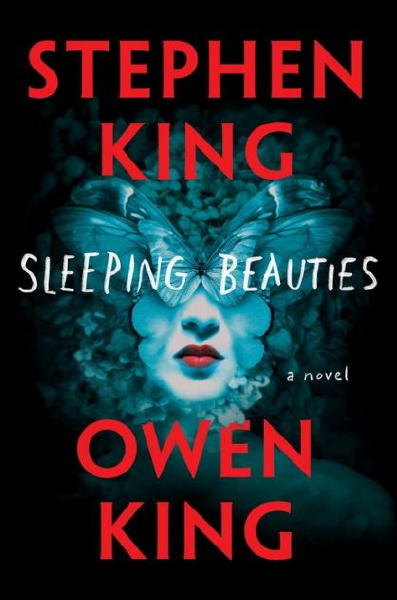
- Sleeping Beauties
Stephen King & Owen Kingstandalone novel2017
similar bycontemporaryplague and pandemicdarktensesurvivalscience fictionnorth america
Sleeping Beauties is a novel by Stephen King and his son Owen King, released on September 26, 2017. The book was first mentioned during a promotional appearance on the CBC radio program q. Of the novel, Stephen King stated, "Owen brought me this dynamite idea and I've collaborated a couple of times with Joe. I'm not going to say what the idea is because it's too good."
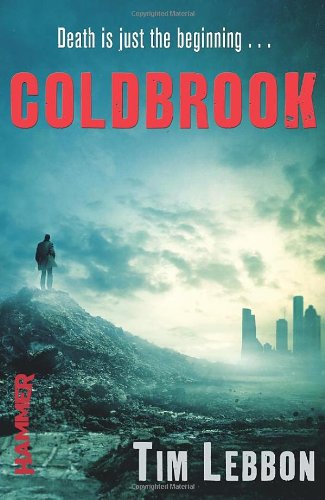
- Coldbrook
Tim Lebbonstandalone novel2012
similar bycontemporarytensedarksurvivalplague and pandemicour worldscience fictionnorth america
The world as we know it has changed forever. The reason is Coldbrook. The facility lay deep in Appalachian Mountains, a secret laboratory called Coldbrook. Its scientists had achieved the impossible: a gateway to a new world. Theirs was to be the greatest discovery in the history of mankind, but they had no idea what they were unleashing.
- Midnight
Dean R. Koontzstandalone novel1989
similar bycontemporarytensedarkgenetic engineeringsurvivalnorth americascience fiction
A wealthy tech entrepreneur, intending to create superhumans by infecting them with nanotech to assist their physical and mental abilities, picks a California town as his secret pilot project, but things go terribly wrong.
- Taji's Syndrome
Chelsea Quinn Yarbrostandalone novel1988
similar bycontemporarytenseplague and pandemicdarkgenetic engineeringsurvivalour worldscience fiction+1 more
"A human error, an unreported lab accident. Six pregnant women, six unknown children spreading a plague far deadlier than any doctors have ever seen before—a horror that splits lovers and friends, parents and children. The bravest and the brightest men and women in medicine are fighting to stem the deadly tide. Their only hope for a cure lies with the precious few who have lived through the onslaught. But the survivors of Taji's Syndrome have mysteriously disappeared—and the tasks facing the champions of humanity are far greater than anyone could have ever imagined ... " – quoted from this novel's first Popular Book's printing.
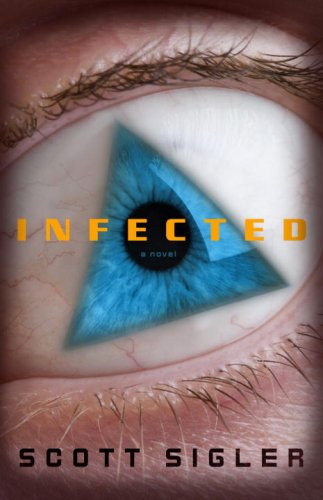
- Infected
series3 books2008
similar bycontemporarytenseplague and pandemicdarksurvivalscience fictionnorth america
- The Institute
Stephen Kingstandalone novel2019
similar bycontemporarytensedarksurvivalnorth americascience fictionthriller & suspense
The Institute is a 2019 American science fiction-horror novel by Stephen King, published by Scribner. The book follows twelve-year-old genius Luke Ellis. When his parents are murdered, he is kidnapped by intruders and awakens in the Institute, a facility that houses other abducted children who have telepathy or telekinesis. The Institute was published on September 10, 2019, and met with generally positive reviews.
- I Am Legend
Richard Mathesonstandalone novel1954
similar bydarktensesurvivalplague and pandemicour worldscience fictionnorth america
The last human survivor of the vampire epidemic has to maintain his defences against their onslaught, while attempting to research the cause and possibly solution to the plague. Robert Neville is the last living man on Earth... but he is not alone. Every other man, woman and child on the planet has become a vampire, and they are hungry for Neville's blood. By day he is the hunter, stalking the undead through the ruins of civilization. By night, he barricades himself in his home and prays for the dawn. How long can a man survive like this?
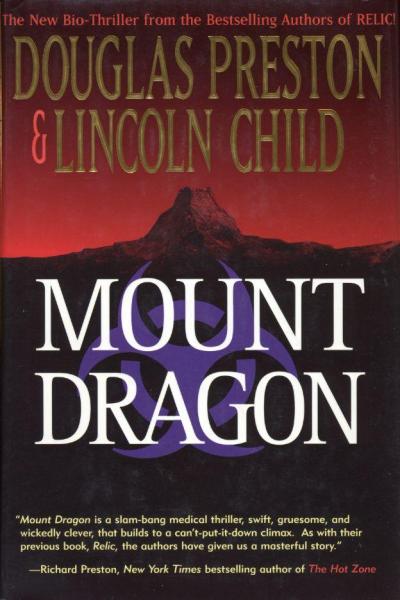
- Mount Dragon
Lincoln Child & Douglas Prestonstandalone novel1996
similar bycontemporarytensegenetic engineeringplague and pandemicour worldscience fictionthriller & suspense+1 more
A tech tycoon recruits a scientist to perfect a genetically engineered vaccine against all strains of influenza, but when he discovers a disastrous flaw he becomes the target of multiple attacks.
- Prey
Michael Crichtonstandalone novel2002
similar bycontemporarytensegenetic engineeringsurvivalour worldscience fiction+1 more
Prey is the thirteenth novel by Michael Crichton under his own name and his twenty-third novel overall. It was first published in November 2002, making it his first novel of the twenty-first century. An excerpt was first published in the January–February 2003 issue of Seed magazine. Prey brings together themes from two earlier Crichton best-selling novels, Jurassic Park and The Andromeda Strain, and serves as a cautionary tale about developments in science and technology: in particular, nanotechnology, genetic engineering, and distributed artificial intelligence.
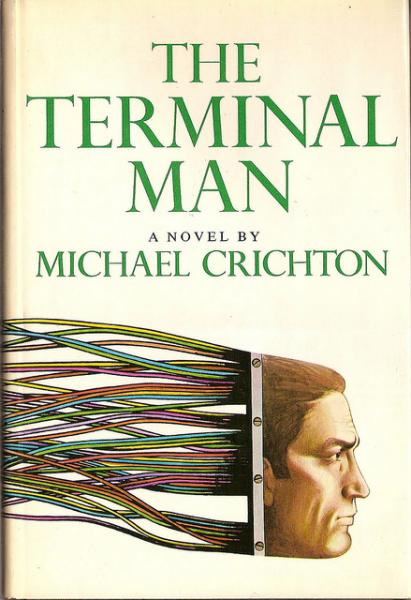
- The Terminal Man
Michael Crichtonstandalone novel1972
similar bycontemporarytensedarknorth americascience fictionthriller & suspense
The Terminal Man is a novel by American writer Michael Crichton. It is his second novel under his own name, his 12th overall, and is about the dangers of mind control. It was published in April 1972 and also serialized in Playboy in March, April, and May 1972. In 1974, it was made into a film of the same name.
- The Fireman
Joe Hillstandalone novel2016
similar byplague and pandemicdarktensesurvivalour worldnorth americascience fiction
The Fireman is a novel set in a post-apocalyptic time by American author Joe Hill. The novel, Hill's fourth, tells the tale of a deadly spore that has infected most of the world's population. Hill first spoke of the novel in 2013 in promotional interviews for his then-new novel NOS4A2. The novel was released on May 17, 2016.