More like Codgerspace
anchored on:science fictionartificial intelligencespacenear futurefunnyhumor+2 more
but
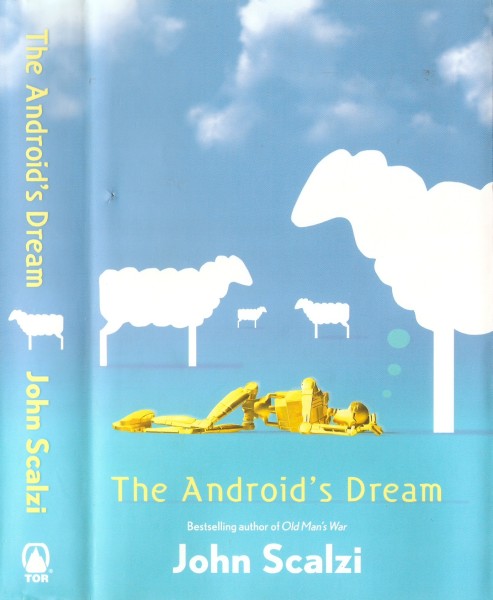
- The Android's Dream
series2 books2006
similar byfunnynear futurescience fictionartificial intelligencehumoradventurousspacealiens+1 more
A minor diplomatic insult with a genetically engineered sheep breed spirals into a full interstellar crisis when the last surviving specimen of the 'Android's Dream' breed, needed for a critical ceremony with the alien Nidu, turns out to have been hunted to extinction by a Nidu faction bent on provoking war. John Scalzi's The Android's Dream follows ex-soldier Harry Creek as the hunt for a replacement leads him to Robin Baker, an ordinary woman carrying hidden sheep DNA that makes her the key to avoiding a war. It's a standalone comic space opera rather than an ongoing series.
- The Road to Mars
Eric Idlestandalone novel1999
similar byfunnynear futurescience fictionhumoradventurousspace+1 more
The Road to Mars is a 1999 science fiction comedic novel by Eric Idle.
- Douglas Adams's Starship Titanic
Terry Jonesstandalone novel1997
similar byfunnyscience fictionartificial intelligencerobotshumorspace
At the heart of a galaxy of which we know nothing, the greatest, most advanced starship ever known has been built -- the Starship Titanic. It is fabulous, beautiful and technologically miraculous. On its maiden voyage it crashes into hyperspace and vanishes. The first you know of it is when you are sitting at home having a quiet evening in front of the TV and the most fabulous starship in the galaxy crashes into your home. You find your way on board (or not, if you just want to play the two min ute version of the game) and are confronted with an interior which resembles a mixture of the Ritz, the Chrysler Building, Tutankhamen’s tomb, and Venice. The ship is inhabited by traumatized robots, a lobotomized cyberintelligence, a frankly unhinged parrot and, as the ship takes off, taking you deep into unknown interstellar space, you realize that life on board as a third class passenger is going to be tough going. You find yourself in the grip of one of the most powerful forces known to modern man -- the desire for a free upgrade. Your task is to discover what has happened here, to reveal the deep conspiracy that lies behind this catastrophic failure, to repair the ship’s intelligence and guide the ship back home. To do this you will have to gain the trust of the robots, which you do the same way you would with anybody else -- by talking to them. State-of-the-art language technology lets you do this.
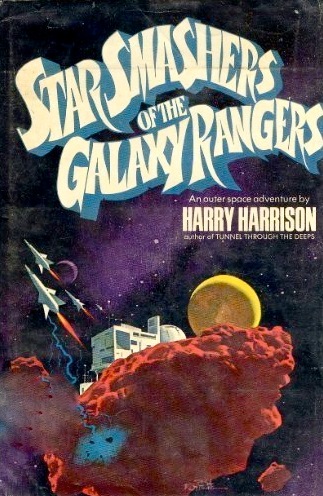
- Star Smashers of the Galaxy Rangers
Harry Harrisonstandalone novel1973
similar byfunnyscience fictionhumorspace+2 more
Star Smashers of the Galaxy Rangers is a 1973 comic science fiction novel by American writer Harry Harrison. It is a parody of the space opera genre and in particular, the Lensman and Skylark series of E. E. "Doc" Smith. The main characters are homages to Tom Swift Jr. and his buddy, Bud Barclay. It also includes a homage to Larry Niven's Ringworld (1970).
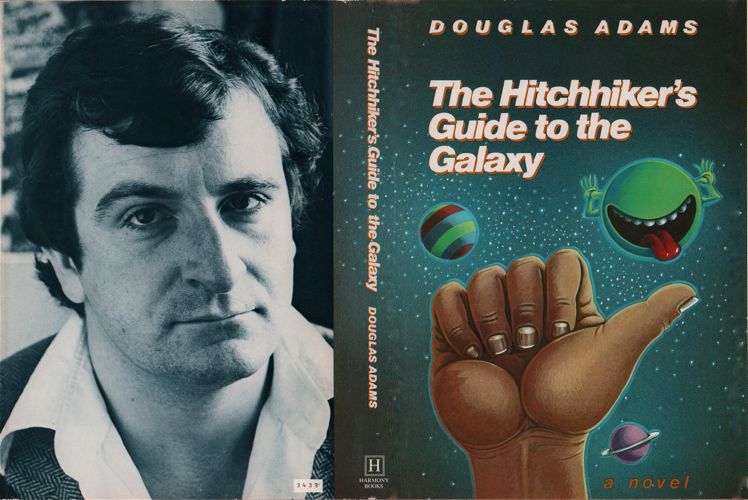
- Hitchhiker's Guide to the Galaxy
series16 books1979
part of The Hitchhiker's Guide to the Galaxy Universe
similar byscience fictionfunnyhumorspace+1 more
The Hitchhiker's Guide to the Galaxy is a comedy science fiction franchise created by Douglas Adams. Originally a radio sitcom broadcast over two series on BBC Radio 4 between 1978 and 1980, it was soon adapted to other formats, including both novels and comic books, a 1981 BBC television series, a 1984 text adventure game, stage shows and a 2005 feature film.
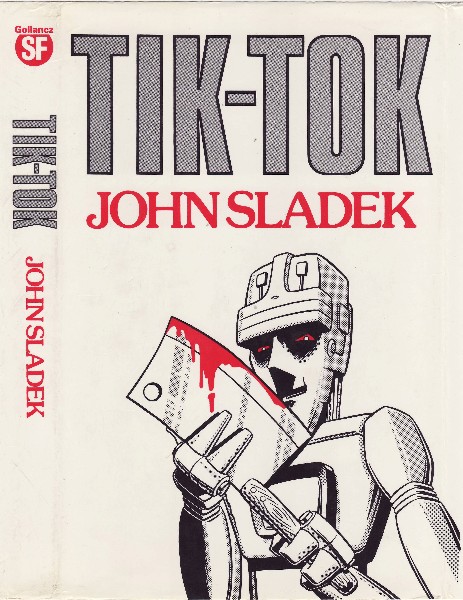
- Tik-Tok
John Sladekstandalone novel1983
similar byfunnynear futurescience fictionartificial intelligencerobots
From the back cover DAW paperback: ""A robot shall not injure a human being or through inaction allow a human being to come to harm." - Asimov's First Law of Robotics. Tik-Tok was one of the finest domestic robots ever made, but his asimov circuits were defective. He could injure people as much as he pleased - and he pleased to do it often! But the life of a robot (if that isn't a contradiction) is still all service and unpaid labor. Tik Tok served many masters, all of whom came to a bad end. Happily he went on gathering steam with a trail of catastrophes getting bigger and bigger, destined to culminate with his campaign for the vice-presidency of the United States! Science Fiction Review calls John Sladek "one of the true and original lunatics of science fiction... one of the funniest writers in the field." Now read the hilarious autobiography of Sladek's asimovian scofflaw!"
- The Crimson Deathbringer
series1 book2019
similar bynear futurescience fictionfunnyadventurousspacealiens
- The Great Time Machine Hoax
Keith Laumerstandalone novel1963
similar bynear futureartificial intelligencescience fictionfunnyhumor
In the near future, a man inherits from his great grandfather a super computer which has been surreptitiously augmenting itself and accumulating and analysing all available data about the universe for the intervening years, and is capable of creating a realistic virtual reality of any situation, upon request.
- Service Model
series3 books2024
similar bynear futurescience fictionfunnyartificial intelligencerobots
- Naked Came the Robot
Barry B. Longyearstandalone novel1988
similar bynear futurescience fictionfunnyrobotshumoradventurousaliens
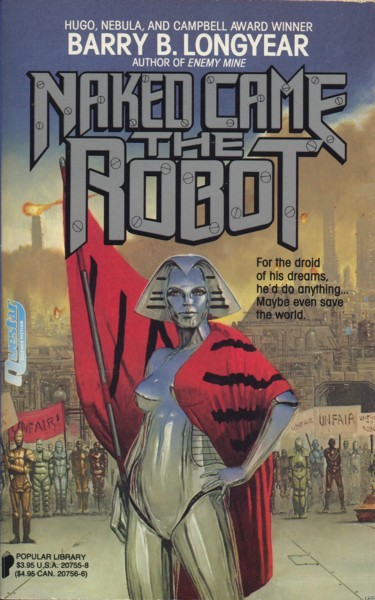
America, near-future. The booming international economy is the new cold war battlefield. Robots and androids do most of the world's labor. And a sinister conspiracy of alien robots is on the verge of taking over Earth's mechanical work force and conquering the world. Now hapless young executive Henry Fleming must make the world safe again for economic warfare. His only allies-an "oil-aholic" robot, an army of surgically mixed-up mutants, a wizard who can't keep his skin on, and the luscious droid who's the love of his life. His one chance—a race across America's nuked-out heartland to find a forgotten power that can save his planet, maybe redeem his career—and irrevocably alter the future of humans and mechanicals alike..
- Strata
Terry Pratchettstandalone novel1981
similar byscience fictionfunnyhumorspace+1 more
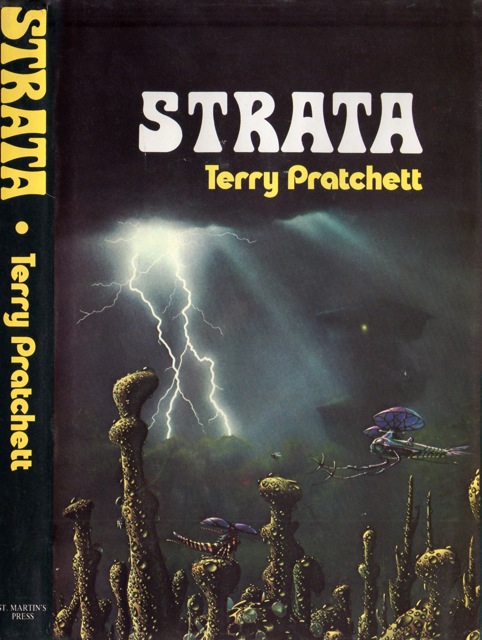
Strata is a 1981 science fiction comedy novel by English writer Terry Pratchett. It is one of Pratchett's first novels and among the few science fiction novels he wrote, along with The Dark Side of the Sun, Only You Can Save Mankind, The Nome Trilogy and the co-authored The Long Earth.
- Phule's Company
series6 books1990
similar byfunnyscience fictionhumorspace+1 more
Phule's Company is a series of comic military science fiction novels by Robert Asprin, beginning with Phule's Company and ending with Phule's Errand.
- The Door Into Summer
Robert A. Heinleinstandalone novel1957
similar bynear futurescience fictionrobotsadventurous
From the first page of the Signet 6th printing: "An electronics engineer invents a wizard robot... only to find himself shanghaied by his ruthless partner and his gold-digging fiancee. The crafty pair forces him to submit to the "long sleep" - suspended animation for thirty years. But when he wakes up in the year 2000 A.D. the inventor makes a startling discovery. He learns that it is possible now to twist time forwards or backwards. And so he returns to the past bent on a mission... of revenge."
- Here Comes the Sun
Tom Holtstandalone novel1993
similar byfunnynear futurescience fictionhumorspace
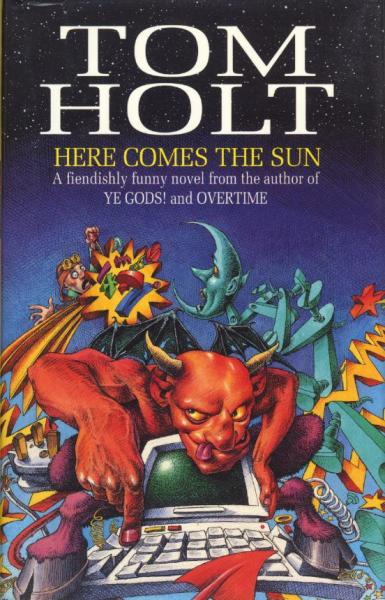
Here Comes the Sun is a 1993 science-fiction comedy novel by Tom Holt. The book was published in the UK by Orbit Books and is Holt's first comic science fiction novel.
- Blade Runner Universe
series6 books1968
similar bynear futurescience fictionrobots+1 more
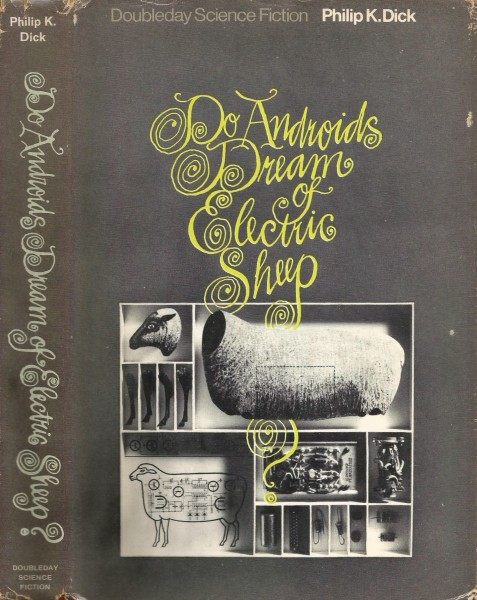
Philip K. Dick's 1968 novel Do Androids Dream of Electric Sheep? follows bounty hunter Rick Deckard as he tracks escaped androids through an irradiated, near-abandoned San Francisco, using the hunt to probe questions of empathy and what separates human from machine. The novel became the basis for Ridley Scott's 1982 film Blade Runner, and Marvel Comics later published an illustrated adaptation of that film. Together the two trace the story's path from prose original to screen and comic-page adaptation.
- The Stainless Steel Rat
series21 books1957
completed
similar byscience fictionfunnyadventurousspace+1 more
James Bolivar diGriz, alias "Slippery Jim" and "The Stainless Steel Rat", is a fictional character and a series of comic science fiction novels written by Harry Harrison.
- Cradle
Arthur C. Clarke & Gentry Leestandalone novel1988
similar bynear futurescience fictionrobotsaliens+1 more
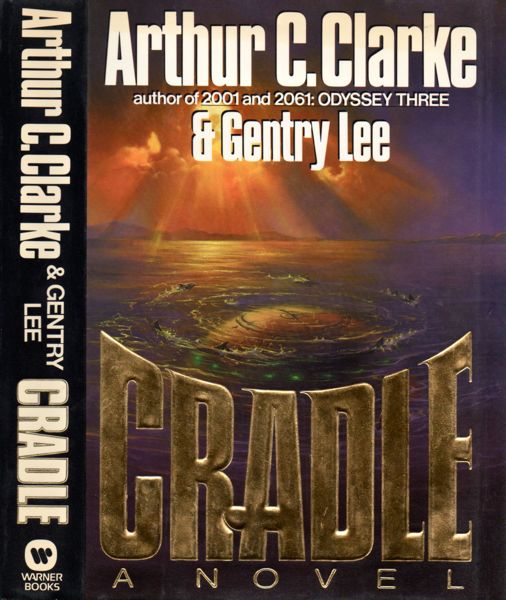
Cradle is a 1988 science fiction novel by Arthur C. Clarke and Gentry Lee. The premise of the novel is the contact between a few humans from the Miami area in 1994 and the super robots of a damaged space ship submerged off the Florida coast. Telecommunication advances such as videotelephones and highly efficient underwater scanning equipment used in the story bridge from the everyday, real-life aspects of the setting toward the near future, bespeaking technological progress.
- Have Space Suit - Will Travel
Robert A. Heinleinstandalone novel1958
similar bynear futurescience fictionadventurousspacealiens
From the back cover of the Del Rey 9th printing: "Skyjacked - Everything happened at once. One minute Kip Russell was walking about in his own backyard, testing out an old space suit and dreaming about going to the moon - and the next he was out cold and the captive of an insidious space pirate. The whole thing seemed like a very bad dream until he discovered he wasn't the only prisoner on board. Then the reality of the situation became inescapable. He - along with the daughter of a world-renowned scientist and a beautiful creature from an alien planet - had been skyjacked by a monstrous extraterrestrial and they were on their way to the Moon... a journey toward a fate worse than death!"
- The Diamond Age
Neal Stephensonstandalone novel1995
similar bynear futurescience fictionartificial intelligence+1 more
The Diamond Age: Or, A Young Lady's Illustrated Primer is a science fiction novel by Neal Stephenson. It is to some extent a Bildungsroman or coming-of-age story, focused on a young girl named Nell, set in a future world in which nanotechnology affects all aspects of life. The novel deals with themes of education, social class, ethnicity, and the nature of artificial intelligence. The Diamond Age was first published in 1995 by Bantam Books, as a Bantam Spectra hardcover edition. In 1996, it won both the Hugo and Locus Awards, and was shortlisted for the Nebula and other awards.
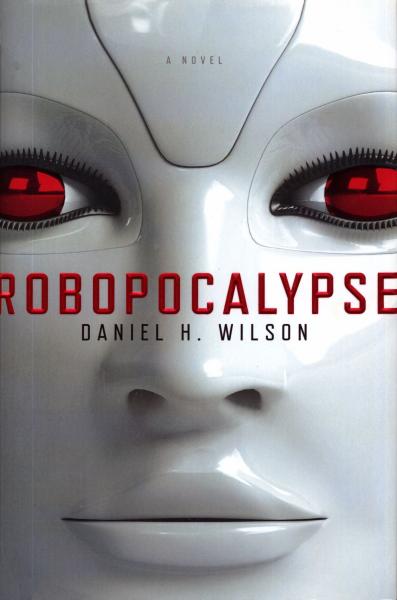
- Robopocalypse
series3 books2011
similar bynear futureartificial intelligencescience fictionrobots
Daniel H. Wilson's Robopocalypse (2011) depicts an artificial intelligence, born from a robotics researcher's experiments, that turns against humanity and seizes control of interconnected machines worldwide. Told in a present-tense, techno-thriller style compared to Michael Crichton's work, the New York Times bestseller continues in the sequel Robogenesis, which follows the aftermath of the robot uprising.