More like Cold Hall
anchored on:science fantasyother star systemsfar futurepsychic powerseerie
but
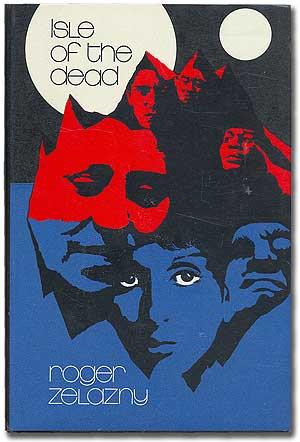
- Creatures of Light and Darkness
Roger Zelaznystandalone novel1969
similar byscience fantasyeeriefar futureother star systems
Creatures of Light and Darkness is a 1969 science fiction novel by American writer Roger Zelazny. Long out of print, it was reissued in April 2010. The novel is set in the far future, with humans on many worlds. Some humans have god-like powers or perhaps are actually gods—the names and aspects of various Egyptian gods are used. Elements of horror and technology are mixed, and the novel shares elements with cyberpunk.
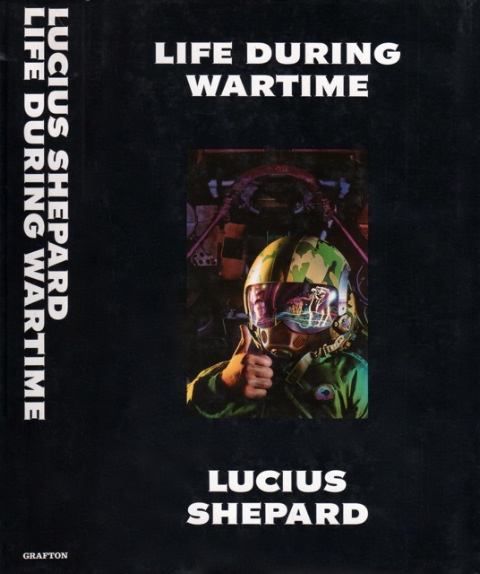
- Life During Wartime
Lucius Shepardstandalone novel1987
similar byscience fantasypsychic powersfar futureother star systems
Life during Wartime is a science fantasy novel written by American author Lucius Shepard. His second novel, it was published by Bantam Books in 1987, in which year it was nominated for the Philip K Dick Award. In 1990, it won the Kurd-Laßwitz-Preis for Foreign Work.
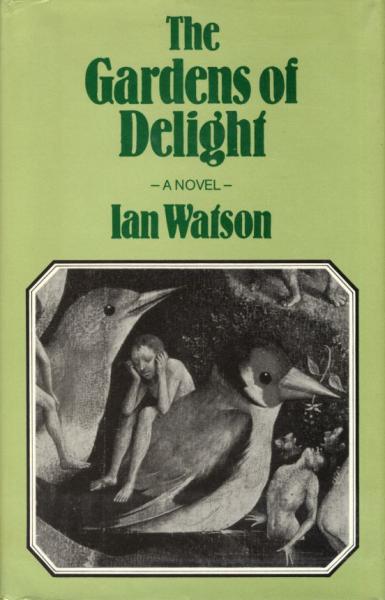
- The Gardens of Delight
Ian Watsonstandalone novel1980
similar byeeriescience fantasyother star systemsfar future
Amazon: In The Gardens of Delight Ian Watson boldly lands a starship within the hallucinatory terrain of Hieronymus Bosch's painting The Garden of Earthly Delights, a medieval masterpiece which enchants and horrifies all who see it, for the picture shows what looks to be a paradise of pleasure yet it also displays a terrible hell of torments. And so the ship's psychologist, Sean Athlone, and two women companions explore the luxurious landscape of giant fruits and birds and strange towers and naked celebrating people, in quest of the godlike alien intelligence that has transformed a planet according to Bosch's vision, populating it with the colonists from a previous starship.
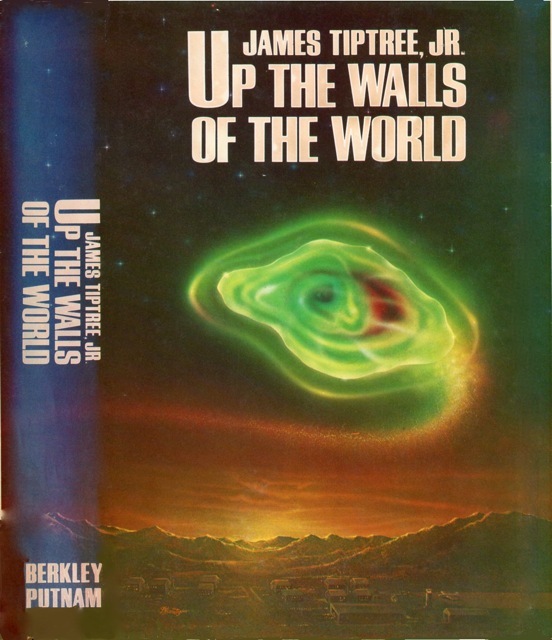
- Up the Walls of the World
James Tiptree & Jr.standalone novel1978
similar bypsychic powersother star systemsfar future+1 more
Up the Walls of the World is a 1978 science fiction novel by American author Alice Sheldon, who wrote under the pen name of James Tiptree, Jr. It was the first novel she published, having until then worked and built a reputation only in the field of short stories.
- Forge of the Titans
Steve Whitestandalone novel2003
similar bypsychic powersscience fantasyfar futureother star systems
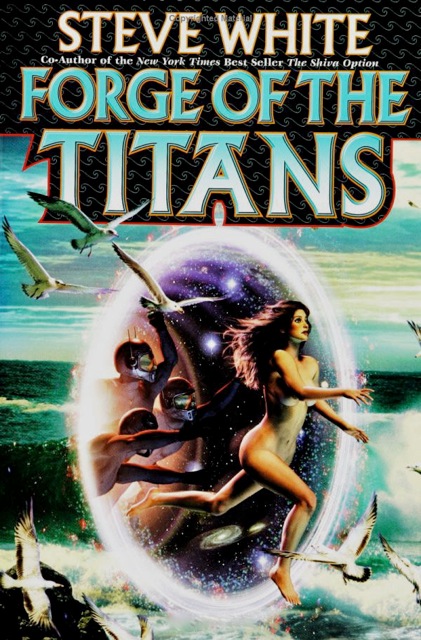
Aspiring naval aviator Derek Secrest is drafted into this war because he is a telepath (it's a family trait), and human telepaths may be indispensable to the victory of the Olympians and the salvation of not only Earth but other planets too. With other human telepaths, one human traitor, and the advice and counsel of the goddess Secrest battles the Titans and their human allies.
- Lord of Light
series5 books1967
similar byscience fantasyfar futureother star systems
Lord of Light is Roger Zelazny's 1967 science fantasy novel about the surviving crew of a colonizing starship who use salvaged technology and mind-transfer to make themselves effectively immortal, then rule their colony for a thousand years under the guises of Hindu gods. One of their own, called Sam, breaks with the pantheon to return forbidden knowledge to the ordinary people they rule, touching off a war among the self-styled gods. A standalone novel, it won the 1968 Hugo Award for Best Novel.
- The Einstein Intersection
Samuel R. Delanystandalone novel1967
similar byeeriefar future+1 more
The Einstein Intersection is a 1967 science fiction novel by Samuel R. Delany. The title is a reference to Einstein's Theory of Relativity connecting to Kurt Gödel's Constructible universe, which is an analogy to science meeting philosophy. The original publisher, Ace Books, changed Delany's originally intended title from A Fabulous, Formless Darkness for commercial reasons.
- The Locked Tomb
series6 books2019
similar byscience fantasyother star systemsfar future
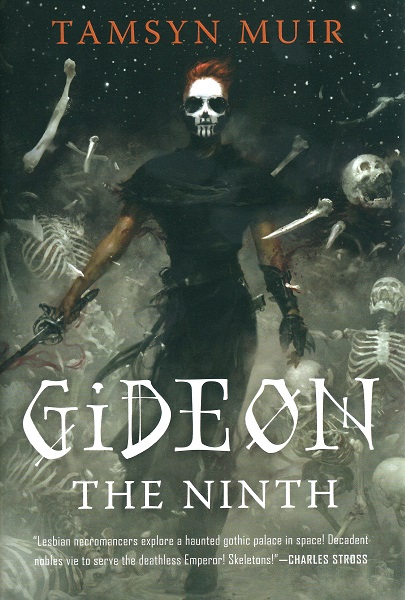
Tamsyn Muir's Gideon the Ninth follows Gideon Nav, an indentured swordswoman raised among nuns and skeletons in the Ninth House, who is drafted into a deadly imperial trial by Harrowhark, the necromancer she can't stand. Competing against heirs from the Emperor's other necromantic Houses, the two must survive a decaying, secret-filled fortress where old powers are best left undisturbed. Harrow the Ninth and Nona the Ninth continue the Locked Tomb series.
- Stations of the Tide
Michael Swanwickstandalone novel1991
similar byeerieother star systemsfar future
Stations of the Tide is a science fiction novel by American author Michael Swanwick. Prior to being published in book form in 1991, it was serialized in Isaac Asimov's Science Fiction Magazine in two parts, starting in mid-December 1990.
- Dune
series20 books1963
part of Dune Universe
similar byfar futureother star systems+1 more
Frank Herbert's Dune Chronicles opens with 1965's Dune, set on the desert planet Arrakis where House Atreides takes control of the only source of the vital spice melange and young Paul Atreides is pulled into a struggle over its politics and religion. Herbert carried the story forward across five further novels — Dune Messiah, Children of Dune, God Emperor of Dune, Heretics of Dune, and Chapterhouse: Dune — following Paul's line over the following millennia, before Brian Herbert and Kevin J. Anderson later extended the saga. Many other editions of these six novels are omnibus and box-set repackagings rather than separate stories.
- The Man in the Maze
Robert Silverbergstandalone novel1969
similar bypsychic powersother star systemsfar future
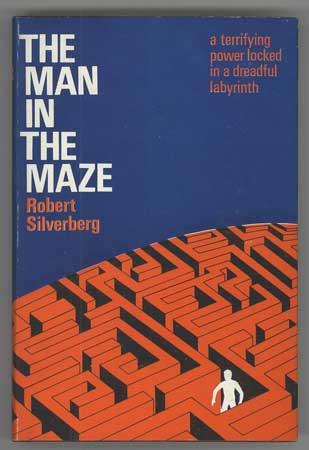
The Man in the Maze is a science fiction novel by American writer Robert Silverberg, originally serialized in the magazine Worlds of If in April and May 1968, and published in bookstores the following year. It tells the tale of a man rendered incapable of interacting normally with other human beings by his uncontrollable psychic abilities. The novel is inspired by Sophocles' play Philoctetes, with the roles of Odysseus, Neoptolemus and Philoctetes played by Boardman, Rawlins, and Muller, respectively.
- Tower and the Hive
series7 books1959
completed
part of The Talents
similar bypsychic powersfar futureother star systems
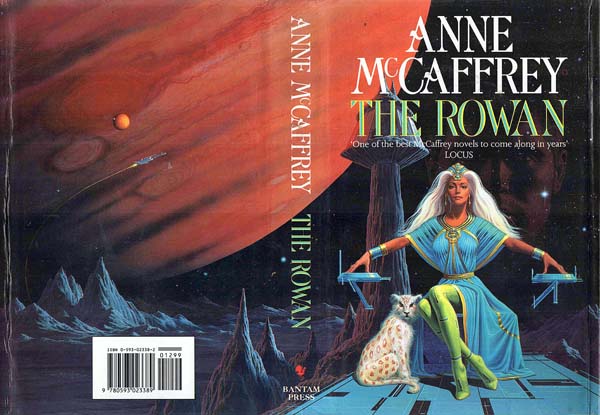
The Tower and the Hive series opens with The Rowan (1990), following an isolated but powerful telepath who is drawn out of her loneliness by a psychic call for help from a distant Talent facing an alien threat. Anne McCaffrey continued the story across four more novels, Damia, Damia's Children, Lyon's Pride, and the concluding The Tower and the Hive (1999), following later generations of a telepathic family staffing the Prime Towers that give a starfaring human civilization instant communication. The series is set later in the same Talents universe as McCaffrey's earlier Pegasus books.
- The Lathe of Heaven
Ursula K. Le Guinstandalone novel1971
similar byeeriepsychic powers
The Lathe of Heaven is a 1971 science fiction novel by American writer Ursula K. Le Guin, first serialized in the American science fiction magazine Amazing Stories. It won the 1972 Locus Award for Best Novel and was a finalist for the 1971 Nebula Award for Best Novel and 1972 Hugo Award for Best Novel. Two television film adaptations were released: the PBS production, The Lathe of Heaven (1980), and Lathe of Heaven (2002), a remake produced by the A&E Network.
- The Witling
Vernor Vingestandalone novel1976
similar bypsychic powersother star systemsfar future
The Witling is a 1976 science fiction novel by American writer Vernor Vinge, about the planet Giri, whose humanoid inhabitants, the Azhiri, are able to teleport. This ability varies from person to person: those without the talent at all are called witlings and are the lowest class of person in Azhiri society.
- Rider at the Gate
C. J. Cherryhstandalone novel1995
similar bypsychic powersother star systemsfar future+1 more
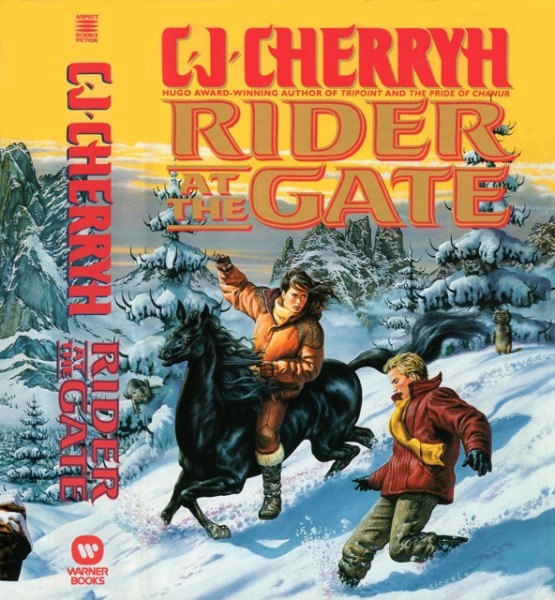
Rider at the Gate is a science fiction novel by American writer C. J. Cherryh, first published by Warner Books in August 1995. It is the first of a series of two novels written by Cherryh and is set in the author's Finisterre universe. The second book in the series, Cloud's Rider, was published in September 1996. The series is about the descendants of lost colonists stranded many generations ago on the hostile planet of Finisterre.
- Black Light
Patrick Melton, Marcus Dunstan & Stephen Romanostandalone novel2011
similar byeeriepsychic powers+1 more
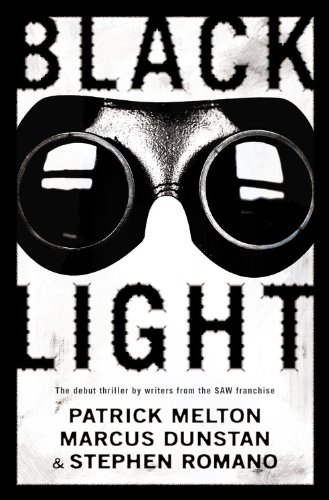
A psychic for hire, who disposes of malignant ghosts by absorbing them then excreting them, in the process experiences enhanced spiritual vision, the "Black light". He is hired by an enormously wealthy and powerful industrialist to defend the trial run of a bullet train from Los Angeles to Las Vegas, which passes through an area of the desert particularly notorious for powerfully evil ghost presences; the same area which took the lives of his father and mother when he was a child.
- Solaris
Stanisław Lemstandalone novel1961
similar byeerieother star systemsfar future
Solaris is a 1961 science fiction novel by Polish writer Stanisław Lem. It follows a crew of scientists on a hovering near-surface research facility as they attempt to understand an extraterrestrial intelligence, which takes the form of a vast ocean on the titular alien planet. The novel is one of Lem's best-known works.
- Demon Moon
Jack Williamsonstandalone novel1994
similar byscience fantasyother star systemsfar future
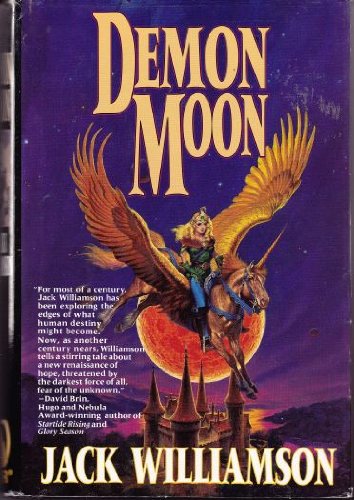
A planet colonized by earth long ago is home to werewolves, wyverns, and intelligent unicorns. On top of everything else, it must suffer through the third invasion of the devils from the blood-red demon moon that returns every thousand years. Two young men and a young woman are the keys to finding the secret of the demon moon, and the terror it brings. An interesting mixture of fantasy and science fiction. Williamson's 50th novel.
- A Stir of Echoes
Richard Mathesonstandalone novel1958
similar byeeriepsychic powers
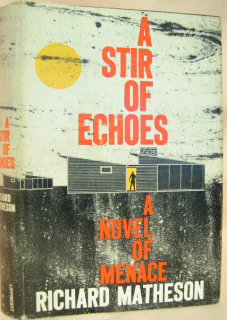
A Stir of Echoes is a supernatural novel by American writer Richard Matheson, published in 1958. It served as the inspiration for the 1999 film Stir of Echoes.
- Kefahuchi Tract Trilogy
series3 books2002
similar byfar futureother star systems+1 more
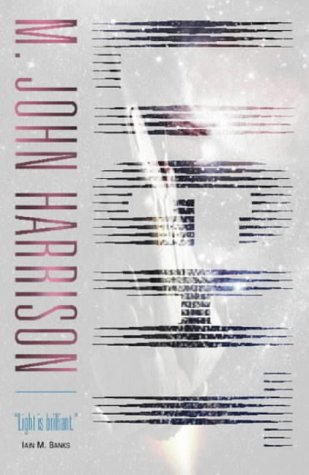
M. John Harrison's Kefahuchi Tract trilogy circles a strange, physics-breaking anomaly in deep space that draws scientists, smugglers, and drifters into its pull across different eras. Light moves between a near-future timeline and a far-future one drawn to the Tract itself; its sequel Nova Swing stays within one future period, where a fragment of the anomaly's altered space bleeds into the run-down port city of Saudade, giving the book a noir, Roadside-Picnic-like atmosphere; Empty Space concludes the sequence. The three novels share a setting and mood more than a continuous plot or cast.