More like Cold Night
but
- Jerusalem's Lot
series3 books1975
similar byhorrordarkcontemporaryour worldnorth americatense
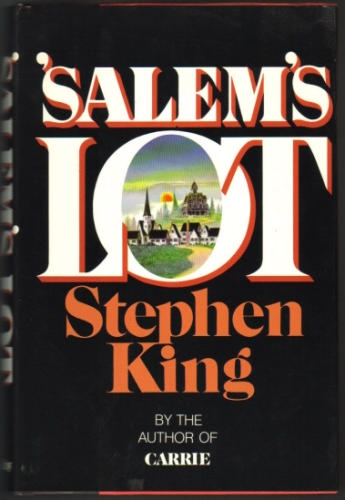
Stephen King's 1975 novel 'Salem's Lot follows writer Ben Mears as he returns to his childhood town of Jerusalem's Lot, Maine, only to discover that its residents are being turned into vampires by a newly arrived stranger. It transplants Gothic vampire horror into a small New England community, tracking that community's collapse under a supernatural siege. It is a single, self-contained novel.
- The Shining
series5 books1977
similar byhorrordarkcontemporarynorth americatense
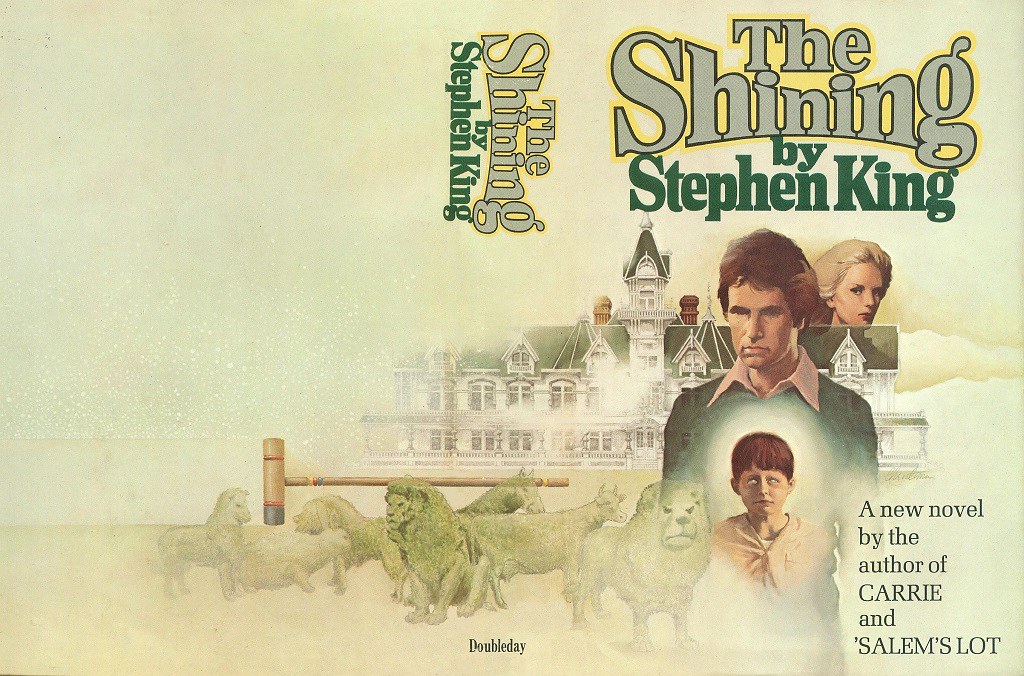
Stephen King's 1977 novel The Shining follows the Torrance family as winter caretakers of the isolated, malevolent Overlook Hotel, where father Jack is gradually consumed by the hotel's influence while his young son Danny's psychic "shining" draws its attention. Doctor Sleep (2013) picks up the story decades later, following Danny as an adult still marked by that childhood ordeal. Together the two form a horror duology spanning nearly forty years of real-world publication.
- The Andromeda Strain
series2 books1969
similar bycontemporarytense+4 more
Michael Crichton's 1969 novel The Andromeda Strain follows a team of scientists racing to contain a lethal extraterrestrial microorganism that crash-lands in Arizona, told in the clinical, document-driven style that helped establish the techno-thriller genre. Daniel H. Wilson's authorized 2019 sequel The Andromeda Evolution revisits the same threat five decades later. Together the two books form a two-part outbreak story separated by a fifty-year gap in publication.
- Stephen King multiverse
universe46 books1967
Start hereThe Gunslinger · Start here
similar bydark+4 more
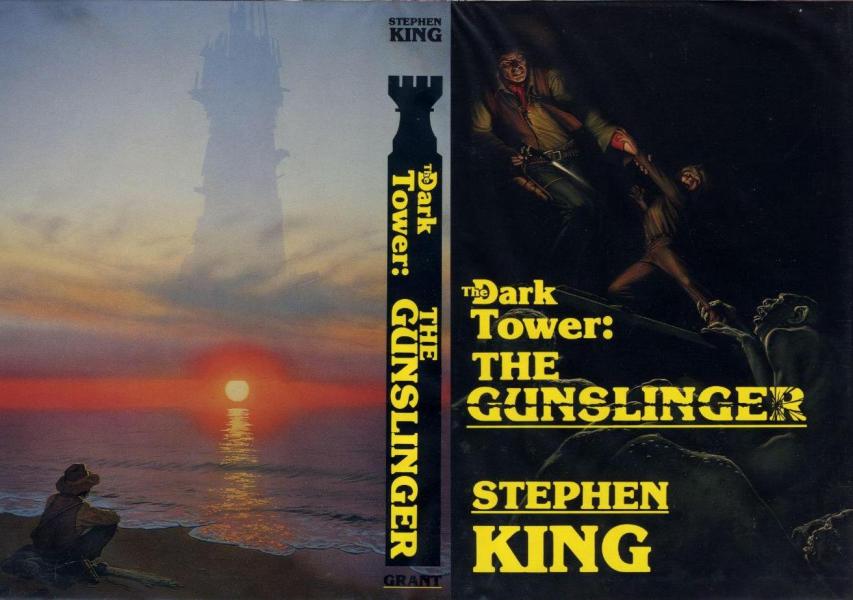
The man in black fled across the desert, and the gunslinger followed. So begins the long walk of Roland Deschain, last of an order of knight-errant pistoleers, across a land that has "moved on" — where the compass points drift, dead machines rot toward sentience, and the weave of what's real wears thin. His quest is the Dark Tower itself: a spire standing at the hub of every world that exists, the linchpin that holds all of them back from ruin. Roland's road runs eight volumes, from The Gunslinger through the closing Dark Tower, with the later, interleaved tale The Wind Through the Keyhole folding a story-within-a-story back into his youth. Along the way he draws a ka-tet — a fellowship bound by fate, not choosing — through doorways between worlds: a heroin-shackled New Yorker, a woman of two minds, a boy who dies twice. The Tower is also the secret axle around which the wider shelf of King's work turns; threads from The Stand, 'Salem's Lot and beyond wind quietly toward it. Expect a mongrel of Western, high fantasy, horror and decayed science fiction, told in a dusty, incantatory dialect all its own — ka, thankee-sai, the world that has moved on. This is King at his most mythic and most personal, a decades-spanning circle that rewards a patient reader. Begin at the beginning: The Gunslinger, then walk forward in publication order. There are other worlds than these — but this door opens first.
- Dracula
universe144 books1897
Start hereDracula · Start here
similar byhorror
"Come freely. Go safely. And leave something of the happiness you bring" — so the Count greets his guest at the threshold of the Carpathians, and the great door shuts behind. Bram Stoker's Dracula (1897) is the wellspring of the modern vampire: the account of a centuries-old Transylvanian nobleman who quits his crumbling castle for the crowded lodging-houses of London, and the handful of ordinary people — a young solicitor, a doctor of the mad, a professor of stranger learning — who must piece together what he is before he makes the whole city his fold. It is told wholly in fragments: journal entries, letters, telegrams, ships' logs, phonograph cylinders, each hand recording only its own sliver of the dark. Around that single novel a whole crypt of continuations has grown, raised by many writers across a century. Fred Saberhagen's Dracula Sequence hands the Count the microphone, retelling the old events from his own wry, aggrieved lips and following him into later intrigues. Robert Lory's brisk 1970s Dracula Horror Series revives him as a reluctant weapon turned against fouler things; Peter Tremayne's trilogy reaches back along his bloodline; and further sequels, a Quincey Morris spin-off, and Dracula's Children carry the shadow onward. This is a loose shared world built upon a public-domain figure, not one governed continuity — each author remakes him as villain, antihero, or sympathetic narrator. Begin, always, with Stoker's original; the letters and the mounting dread stand entirely on their own. From there follow whichever door tempts you — Saberhagen's The Dracula Tape for the monster's own confession, Lory or Tremayne for tales that never glance back at the Borgo Pass again.
- Rosemary Reilly
series2 books1967
completed
similar byhorrornorth americatense+3 more
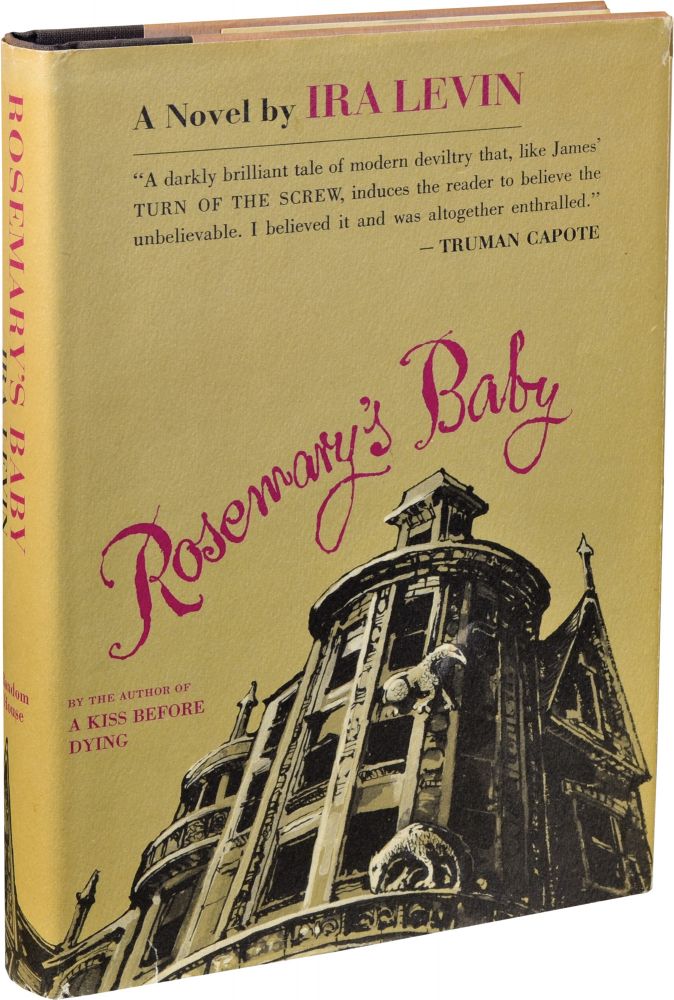
Rosemary's Baby follows a young wife in a Gothic Manhattan apartment building who grows increasingly convinced that her elderly neighbors, and even her own husband, are part of a conspiracy surrounding her pregnancy. Ira Levin returned to the character thirty years later in the 1997 sequel Son of Rosemary. Together the two novels form a short, self-contained horror series about faith, control, and motherhood.
- Carrie
Stephen Kingstandalone novel1974
similar byhorrordarkcontemporarynorth americatense
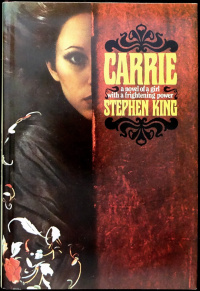
In one way or another, everybody abused Carrie. This sixteen-year-old misfit was forbidden everything that was young and fun by her fanatical mother. She was teased and taunted by her classmates, misunderstood by her teachers, and given up as hopeless by almost everyone. But Carrie had a secret: She possessed terrifying telekinetic powers that could make inanimate objects move, a lighted candle fall, or a door lock. Carrie could make all kinds of startling bizarre, and malevolent things happen. (WorldCat)
- Anita Blake
series42 books1993
similar bydarkcontemporarynorth americatense+2 more
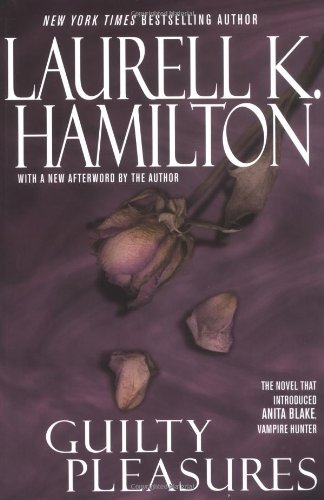
Anita Blake: Vampire Hunter is a series of urban fantasy novels, short stories, and comic books by Laurell K. Hamilton. The books have sold more than six million copies; many have made The New York Times Best Seller list.
- Cell
Stephen Kingstandalone novel2006
similar byhorrordarkcontemporaryour worldnorth americatense
In Cell, King taps into readers fears of technological warfare and terrorism. Mobile phones deliver the apocalypse to millions of unsuspecting humans by wiping their brains of any humanity, leaving only aggressive and destructive impulses behind. Those without cell phones, like illustrator Clayton Riddell and his small band of "normies," must fight for survival, and their journey to find Clayton's estranged wife and young son rockets the book toward resolution.
- The Vampire Chronicles
series15 books1976
completed
similar byhorrordarkcontemporaryour world
The Vampire Chronicles is a series of Gothic vampire novels and a media franchise, created by American author Anne Rice, that revolves around the fictional character Lestat de Lioncourt, a French nobleman turned into a vampire in the 18th century.
- Little Tall Island / In the Path of the Eclipse
series4 books1989
similar byhorrordarkcontemporarynorth americatense+1 more
Stephen King set three otherwise separate books on or near the fictional Little Tall Island off the coast of Maine: Gerald's Game, about a woman handcuffed to a bed after her husband's fatal heart attack; Dolores Claiborne, a housekeeper's decades-spanning confession narrated in a single unbroken monologue; and Storm of the Century, a novelization of King's own miniseries about a stranger who arrives during a historic blizzard demanding a terrible price from the town. The first two novels share a real total solar eclipse as a pivotal, connecting event despite having otherwise unrelated plots and characters.
- Exorcist
series6 books1971
similar byhorrordarkcontemporarynorth america+1 more
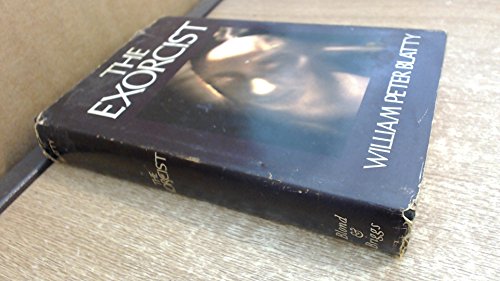
William Peter Blatty's The Exorcist (1971) follows two Catholic priests trying to save a twelve-year-old girl from a violent demonic possession, and became the basis of the acclaimed 1973 film. Blatty returned to the story in 1983 with Legion, in which police detective Bill Kinderman's investigation of a string of ritual murders leads him back to the aftermath of that exorcism and the fate of Father Karras; Legion was later filmed as The Exorcist III. Other Exorcist books are tie-in and franchise material rather than further novels by Blatty himself.
- Rose Madder
Stephen Kingstandalone novel1995
similar byhorrordarkcontemporaryour worldnorth americatense
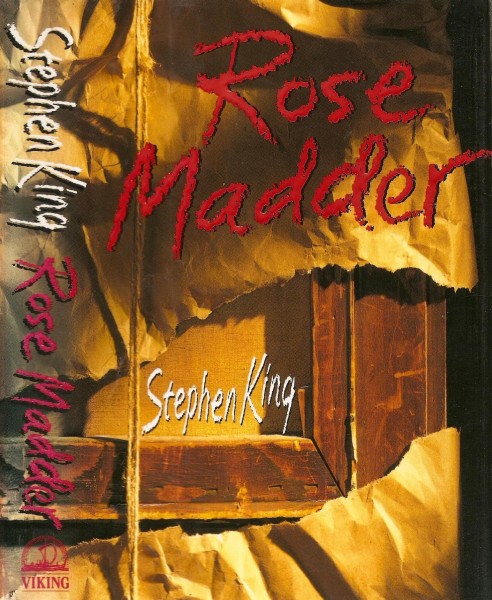
Rose Madder is a horror/fantasy novel by American writer Stephen King, published in 1995. It deals with the effects of domestic violence and, unusually for a King novel, relies for its fantastic element on Greek mythology. In his memoir, On Writing, King states that Rose Madder and Insomnia are "stiff, trying-too-hard novels."
- Meredith Gentry
series10 books2000
similar bycontemporaryour world+4 more
The Merry Gentry series is a series of urban fantasy novels by New York Times bestselling author Laurell K. Hamilton. The series is told through the lens of the titular character Meredith "Merry" Gentry, a faerie princess turned private investigator in a world where faeries exist and are known to the general public. The first book in the series, A Kiss of Shadows, was released by Del Rey on October 3, 2000. There are currently nine books in the series.
- Blue Rose (Peter Straub)
series9 books1985
completed
similar byhorrordarknorth america+3 more
The Blue Rose novels are only loosely a series: Peter Straub's Koko, Mystery, and The Throat are separate suspense novels connected by recurring characters, a shared Midwestern town, and the shadow of a Vietnam-era program called Blue Rose that haunts several of the men at their centers. Koko follows a group of Vietnam veterans hunting a former comrade turned serial killer decades after the war. The 1985 novella Blue Rose and later story collections explore the same program's darker origins.
- Patternist
series6 books1976
completed
similar bydark+3 more
The Patternist series is a group of science fiction novels by Octavia E. Butler that detail a secret history continuing from the Ancient Egyptian period to the far future that involves telepathic mind control and an extraterrestrial plague. A profile of Butler in Black Women in America notes that the themes of the series include "racial and gender-based animosity, the ethical implications of biological engineering, the question of what it means to be human, ethical and unethical uses of power, and how the assumption of power changes people."
- Alex Stern
series4 books2019
similar bycontemporary+5 more
Leigh Bardugo's Alex Stern series follows Galaxy 'Alex' Stern, a survivor and college dropout offered a scholarship to Yale in exchange for policing the eight secret societies that practice occult magic on campus, as a member of the shadowy organization Lethe. The opening novel, Ninth House, establishes her as an outsider gifted with the ability to see ghosts; the sequels continue her investigation into the societies' abuses and the murder that first drew her into Lethe's world. It is a dark fantasy series blending campus intrigue with horror.
- Firestarter
Stephen Kingstandalone novel1980
similar bydarkcontemporarynorth americatense+1 more
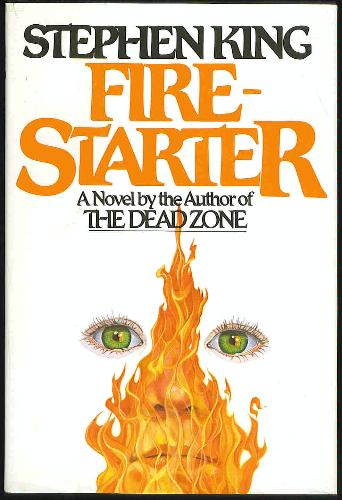
WorldCat: Innocence and beauty ignite with evil and terror... First, a man and a woman are subjects of a top-secret government experiment designed to produce extraordinary psychic powers. Then, they are married and have a child. A daughter. Early on the daughter shows signs of a wild and horrifying force growing within her. Desperately, her parents try to train her to keep that force in check, to 'act normal'. Now the government wants its brainchild back for its own insane ends.
- Finders Keepers (Stephen King)
series7 books2014
similar bycontemporarynorth americatense+2 more
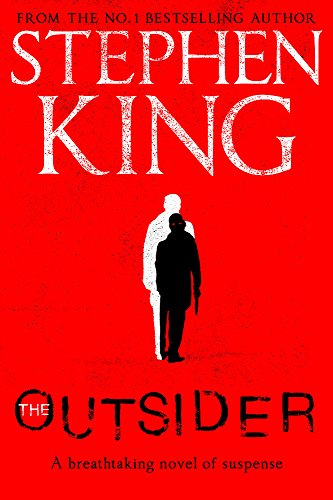
The books gathered here follow Holly Gibney, who first appeared as a supporting character in Stephen King's Bill Hodges trilogy (Mr. Mercedes, Finders Keepers, End of Watch) before graduating into her own strand of stories: a major role in The Outsider, then top billing in the novella If It Bleeds and the novels Holly and Never Flinch, where she works as a private investigator taking on cases with a supernatural edge. The mix of true-crime procedural instincts and creeping horror is a hallmark of King's later work with the character.
- The Fury
series4 books1976
similar bycontemporarytense+4 more
John Farris's The Fury centers on a teenage girl and boy with escalating psychic and telekinetic powers who become targets of a covert government program trying to weaponize them. The 1976 novel, adapted into Brian De Palma's 1978 film, gave rise to a string of later sequels following the same family's psychic bloodline across decades. Farris writes it as paranoid conspiracy thriller as much as horror, with the powers themselves treated as a violent, destabilizing force.
- Misery
Stephen Kingstandalone novel1987
similar byhorrordarkcontemporarynorth americatense
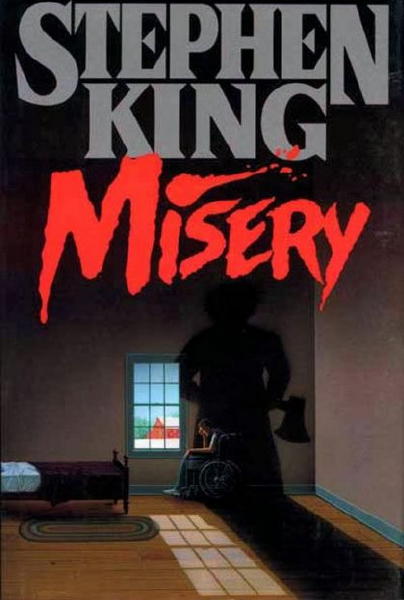
Novelist Paul Sheldon finishes the manuscript that will finally kill off Misery Chastain, the heroine who made his career, when a snowstorm sends his car off a Colorado road. He wakes with both legs shattered, in the care of Annie Wilkes, a former nurse and 'number one fan' with no intention of taking him to a hospital. Annie manages his pain with drugs he comes to depend on, and her moods swing between doting and violent. When she learns Misery doesn't survive his new manuscript, her reaction makes clear Paul isn't just her patient, he's her hostage. A Stephen King novel about a writer at his most devoted fan's mercy.
- The Howling
series3 books1977
completed
similar byhorrordarkcontemporaryour worldtense+1 more
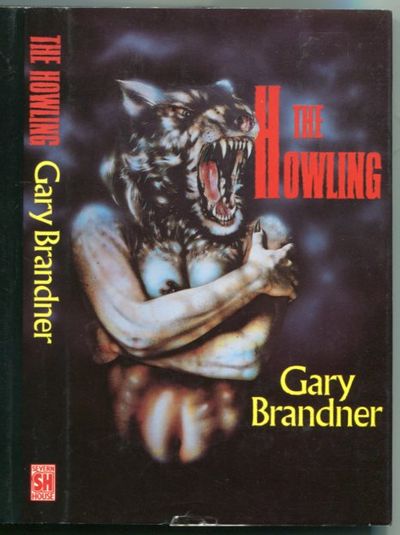
The Howling, Gary Brandner's 1977 novel, sets a woman recovering from trauma against a small California town that turns out to be sheltering a colony of werewolves. Brandner wrote two further novels under the same title banner, The Howling II and The Howling III, but by the author's own account they're only loosely connected sequels rather than a continuous story, and neither maps onto the better-known film series the first book inspired.
- Frankenstein
universe128 books1818
Start hereFrankenstein, or, The Modern Prometheus · Start here
similar byhorror
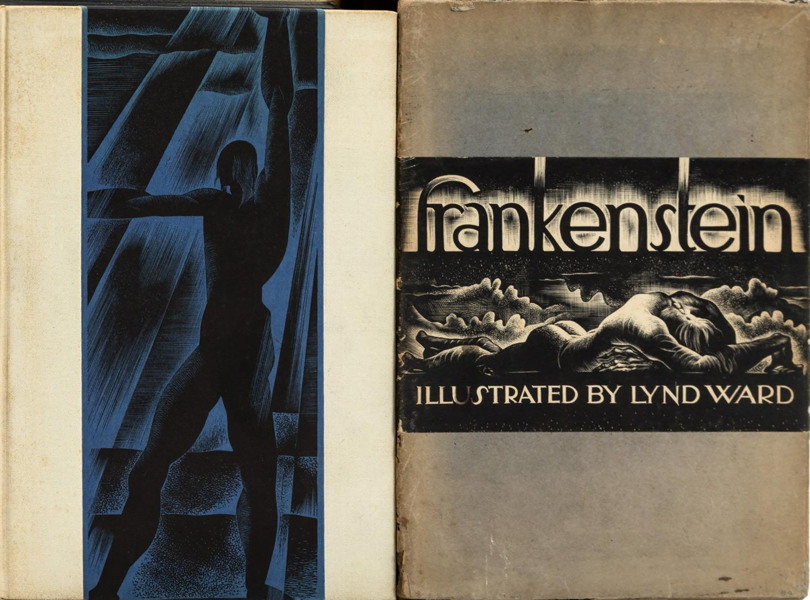
Light a candle against the November dark and consider what a single spark, rightly applied to dead matter, might wake. In a laboratory at Ingolstadt a student named Victor Frankenstein learns the secret of animating lifeless flesh, assembles a being from the harvest of charnel houses and graves, and, at the moment it draws breath, flees the thing he has made. What he abandons does not stay abandoned. This is the world Mary Shelley opened in 1818 with Frankenstein; or, The Modern Prometheus: the story of a maker and his unmothered creation, and the long ruin each works upon the other. Shelley's novel arrives as a nest of confessions, an explorer's letters from the frozen north enclosing Victor's account, which in turn encloses the Creature's own, an articulate and wounded voice that has read Milton and wants only not to be alone. From that single volume two centuries of other hands have built outward, not as one continuity but as a gathering of independent returns to the same fire. Dean Koontz transplants the myth to modern New Orleans across a five-book cycle, Prodigal Son through The Dead Town, where the original Creature, now called Deucalion, hunts a Victor who never died. Donald F. Glut's New Adventures and Frank Schildiner's Quest of Frankenstein run the monster through pulp adventure; the mid-century French novels published as Benoit Becker chase him across a ruined Europe; Scott Sonneborn's Frankenstein Journals and the comic Frankenstein's Aunt turn the legend toward younger and lighter readers. What binds them is the question the book asks and never settles: which is the monster, the forsaken creature who kills, or the man whose ambition and cowardice made and abandoned him? Expect little comfort and few clean villains; the abiding note is grief, sublime and articulate, set against Alpine ice and candlelit hubris. Begin where it began, with Shelley's own novel; the later cycles reward you only once you have heard the Creature speak for himself.