More like Collaborator
anchored on:alternate historyour worldbritish islesearly 20th centuryhistorical fictionwar+2 more
but
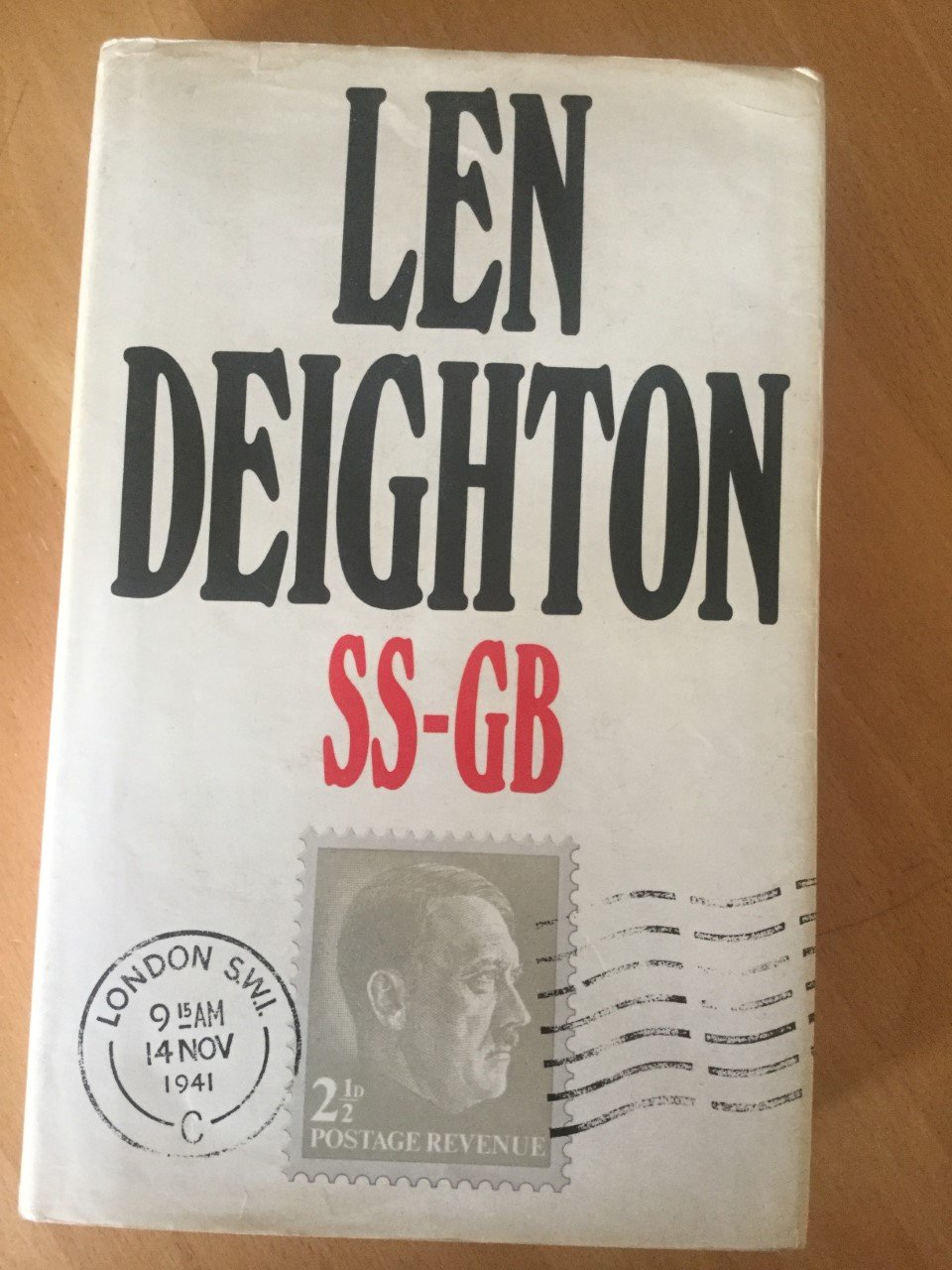
- SS-GB
Len Deightonstandalone novel1978
similar bydarkearly 20th centuryalternate historytensebritish isles+2 more
It's November 1941 in a Britain that lost the war: Operation Sea Lion succeeded, Churchill was executed, and the King is a prisoner in his own Tower of London. Detective Superintendent Douglas Archer, still working homicide for the Metropolitan Police under German occupation, catches what looks like a routine case, a well-dressed man murdered above an antiques shop, until the body's oddities point toward something far more dangerous than burglary gone wrong. Archer's investigation collides with occupation politics, the British resistance, and rival factions of the SS and the German Army, each wanting the case to go a different way. Len Deighton's alternate-history spy thriller.
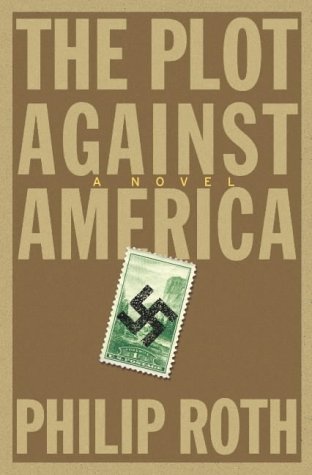
- The Plot Against America
Philip Rothstandalone novel2004
similar bydarkearly 20th centuryalternate historytotalitarianismhistorical fictiontense
Roosevelt is defeated in 1940 by Charles Lindbergh, who guides the US towards fascism and anti-Semitism.
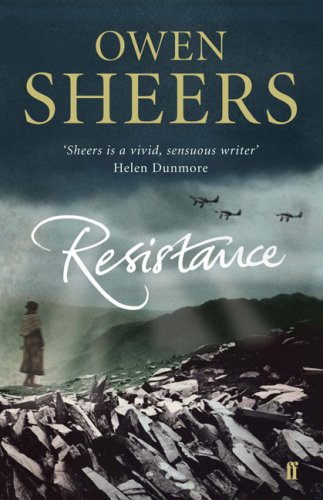
- Resistance
Owen Sheersstandalone novel2007
similar byearly 20th centuryalternate historywarhistorical fictiontensebritish isles
Resistance is a 2007 alternative history novel by Welsh poet and author Owen Sheers. The plot centers on the inhabitants of a valley near Abergavenny in Wales in 1944–45, shortly after the failure of Operation Overlord and a successful German counterinvasion of Great Britain. A group of German Wehrmacht soldiers stay there after men leave to serve in the covert British Resistance. The novel follows abandoned farmer's wife Sarah Lewis and German commanding officer Albrecht Wolfram, as they form an unlikely relationship in spite of their backgrounds and political standings.
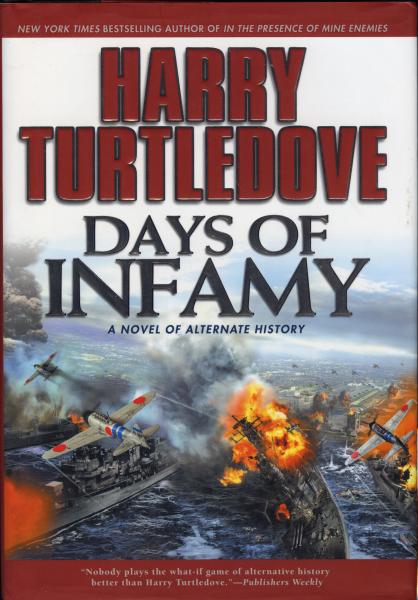
- Days of Infamy
series2 books2004
similar bydarkearly 20th centuryalternate historywartense
Harry Turtledove's Days of Infamy duology reimagines the Pacific theater of World War II with an alternate outcome at Pearl Harbor: a Japanese invasion and occupation of Hawaii rather than a single carrier strike. Days of Infamy covers the invasion itself, while End of the Beginning follows the ensuing occupation and eventual counter-invasion. As in his other alternate-history work, Turtledove follows the changed war through a wide, rotating cast of civilian and military viewpoints.
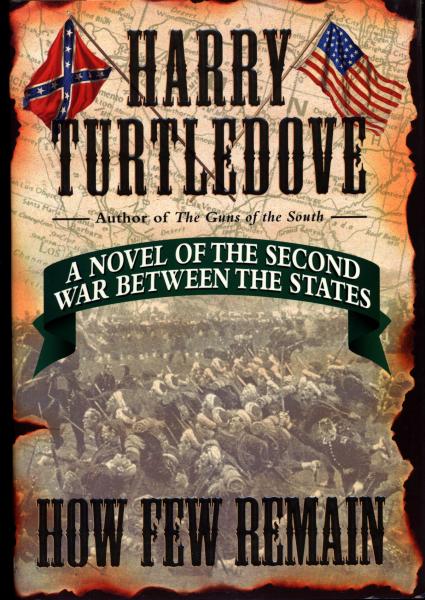
- How Few Remain Universe
series11 books1997
similar byalternate historyearly 20th centurywartense+1 more
How Few Remain opens Harry Turtledove's Southern Victory timeline, imagining a North America where the Confederacy won the Civil War. Set mostly in 1881-1882, it follows political and military figures on both sides of a divided continent as old grievances resurface into a new war. It's a single novel here, but the starting point for a much longer alternate-history sequence Turtledove extended across both twentieth-century world wars.
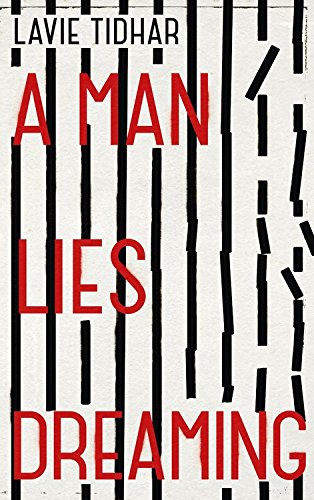
- A Man Lies Dreaming
series3 books2014
similar bydarkearly 20th centuryalternate historytotalitarianismidentity+1 more
Lavie Tidhar's A Man Lies Dreaming imagines Adolf Hitler as a washed-up private detective working the seedy edges of 1930s London, in a timeline where the Nazi party never took power in Germany, framed by chapters narrated from within a concentration camp. The Lunacy Commission returns to related alternate-history material. The novel uses pulp-noir pastiche to force an uncomfortable historical inversion rather than playing it for straightforward genre fun.
- The Beardless Warriors
Richard Mathesonstandalone novel1960
similar bydarkearly 20th centurywarhistorical fiction+1 more
The Beardless Warriors is a 1960 World War II novel by American writer Richard Matheson. It was based on his experiences as a young infantryman in the 87th Division in France and Germany.
- North Reich
Robert Conroystandalone novel2012
similar bydarkearly 20th centuryalternate historywartotalitarianismtense
Joseph Robert Conroy was an American author of alternate history novels.
- All Our Tomorrows
Ted Allbeurystandalone novel1982
similar bydarkalternate historywartotalitarianismtensebritish isles
Britain descends into chaos and is occupied by the USSR.
- Gravity's Rainbow
Thomas Pynchonstandalone novel1973
similar bydarkearly 20th centurywarbritish isles+1 more
Gravity's Rainbow is a 1973 postmodern novel by Thomas Pynchon. The narrative is set primarily in Europe at the end of World War II and centers on the design, production and dispatch of V-2 rockets by the German military. In particular, it features the quest undertaken by several characters to uncover the secret of a mysterious device, the Schwarzgerät, which is slated to be installed in a rocket with the serial number "00000".
- It Can't Happen Here
Sinclair Lewisstandalone novel1935
similar bydarkearly 20th centurytotalitarianismtense+1 more
It Can't Happen Here is a 1935 dystopian political novel by the American author Sinclair Lewis. Set in a fictionalized version of the 1930s United States, it follows an American politician, Berzelius "Buzz" Windrip, who quickly rises to power to become the country's first outright dictator, and Doremus Jessup, a newspaper editor who sees Windrip's fascist policies for what they are ahead of time and who becomes Windrip's most ardent critic.
- Time's Arrow
Martin Amisstandalone novel1991
similar bydarkearly 20th centurywarhistorical fictionidentity
From Amazon description: In this icy, knife's-edge story of a life that progresses backward through time, unfolding into one of the darkest episodes of the 20th century, Amis ("at his intriguing, heedful, and powerful best" —Time Out), finds a chillingly original approach to the Holocaust in fiction • From the acclaimed author of Zone of Interest "The narrative moves with irresistible momentum.... [Amis is] a daring, exacting writer willing to defy the odds in pursuit of his art." —Newsday Tod. T. Friendly is living his life in reverse. Doctor Friendly has just died, but he moves "out of blackest sleep" to find himself surrounded by doctors and on the deathbed of a man in whose body he is imprisoned. After weeks of improving in the hospital, he is sent home to his affable, melting-pot, primary-colors existence in suburban America. As Friendly breaks up with his lovers in a prelude to seducing them and mangles his patients before he sends them home, his life races backward toward the one appalling moment in modern history when such reversals make sense. From the fresh-cut lawns of his retirement to the hustle of New York, and then back to the boat which reverses his course to the war-torn Europe Friendly came from, Amis brings the steeliest nerve to the job of realizing the novel's inevitable logic. Trapped in his body from grave to cradle, Friendly's consciousness can only watch as he struggles to make sense of the good doctor's most ambitious project yet—the final solution.
- The Milkweed Triptych
series3 books2010
similar bydarkalternate historywarearly 20th centurytensebritish isles
- The Burning Mountain
Alfred Coppelstandalone novel1983
similar bydarkearly 20th centuryalternate historywartense
America's first atom bomb test fails and the US is forced to invade Japan in 1946.
- Small Change
series4 books2006
similar byalternate historydarktotalitarianismtensebritish isles+1 more
The Small Change trilogy is a series of alternate history thriller novels by the author Jo Walton that were published from 2006 to 2008. The series are set in a Europe in which the United Kingdom exits World War II in 1941. As the series begins, Britain itself slides toward fascism. The series has three books:Farthing Tor Books August 8, 2006, ISBN 0-7653-1421-5, ISBN 978-0-7653-1421-5 Ha'penny, Tor Books; Reprint edition July 1, 2008, ISBN 0-7653-5808-5, ISBN 978-0-7653-5808-0 Half a Crown, Tor Books; September 30, 2008, ISBN 0-7653-1621-8, ISBN 978-0-7653-1621-9
- Final Blackout
L. Ron Hubbardstandalone novel1948
similar bydarkwartensebritish islesour world+1 more
Final Blackout is a dystopic science fiction novel by American writer L. Ron Hubbard. The novel is set in the future and follows a man known as "the Lieutenant" as he restores order to England after a world war. First published in serialized format in 1940 in the science fiction magazine Astounding Science Fiction, Final Blackout was published in book form in 1948 by The Hadley Publishing Co. Author Services Inc. published a hardcover edition of the book in 1988, and in 1989 the Church of Scientology-affiliated organization Bridge Publications said that a film director named Christopher Cain had signed a contract to write and direct a movie version based on the book.
- The War in the Air
H. G. Wellsstandalone novel1908
similar byearly 20th centurywartenseour world+2 more
The War in the Air: And Particularly How Mr. Bert Smallways Fared While It Lasted is a military science fiction novel written by H. G. Wells and published in 1908.
- The Air Trust
George Allan Englandstandalone novel1915
similar bydarkearly 20th centurytotalitarianismtenseour world
From the foreword to the 1915 edition: "This book is the result of an attempt to carry the monopolistic principle to its logical conclusion." Publisher's description (2006): "Isaac Flint, a greedy billionaire businessmen plots to extract oxygen from the air and then sell it back to people if they want to live. Through bribes, blackmail and threats, he forces a group of scientists to develop a means of extracting the oxygen and forces politicians to cooperate with his plan. Soon, surrounded by a private army of guards to prevent the outraged populace from stopping him, Flint has "cornered" the oxygen market, and people everywhere have no choice but to pay for the air they breathe--or see themselves and their families die for lack of oxygen."
- Blood Red, Snow White
Marcus Sedgwickstandalone novel2007
similar bydarkearly 20th centurywarhistorical fictiontenseour world
Blood Red, Snow White is a historical novel by Marcus Sedgwick published in 2007. It is a novel set during the Russian Revolution, a fictionalised account of the time the author Arthur Ransome spent in Russia. It was shortlisted for the 2007 Costa Children's Book Award.
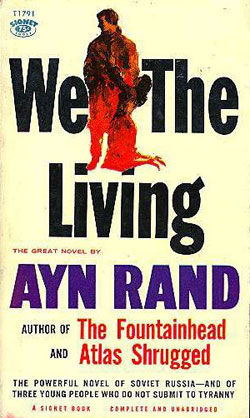
- We the Living
Ayn Randstandalone novel1936
similar bydarkearly 20th centurytotalitarianismhistorical fiction+1 more
Semi-autobiographical story of an independent-minded girl living in poverty, hunger and oppression of early 1920s Communist Russia.
- The Violent Century
Lavie Tidharstandalone novel2013
similar byearly 20th centurywaralternate historyidentitybritish isles+1 more
"They never meant to be heroes. For seventy years they guarded the British Empire. Oblivion and Fogg, inseparable friends, bound together by a shared fate. Until one night in Berlin, in the aftermath of the Second World War, and a secret that tore them apart. But there must always be an account...and the past has a habit of catching up to the present. Now, recalled to the Retirement Bureau from which no one can retire, Fogg and Oblivion must face up to a past of terrible war and unacknowledged heroism, - a life of dusty corridors and secret rooms, of furtive meetings and blood-stained fields - to answer one last, impossible question: What makes a hero?"--
- Draka (S. M. Stirling)
series6 books1988
similar bydarkalternate historytotalitarianismwar+1 more
The Domination of the Draka is a dystopian science fiction alternate history series by American author S. M. Stirling.
- The Iron Dream
Norman Spinradstandalone novel1972
similar bydarkalternate historywartotalitarianism
Contains "The Lord of the Swastika", a Science Fiction Novel by Adolf Hitler, plus an afterword by Homer Whipple. In this universe, Adolf Hitler (1889-1953) emigrated to the US in 1919 and became a popular science fiction author, fan and illustrator. "The Lord of the Swastika" won a posthumous Hugo in 1955.
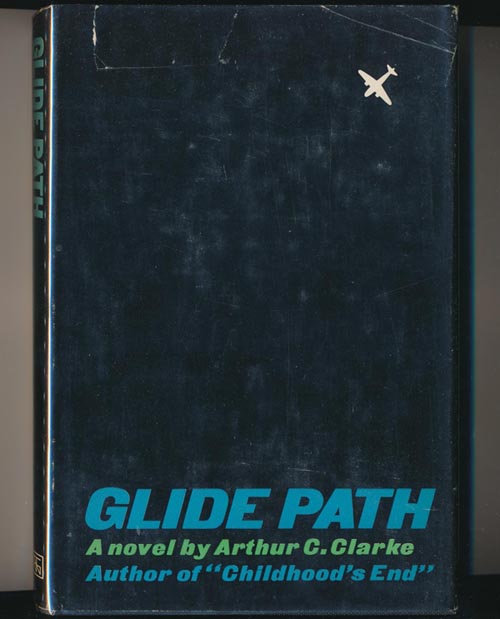
- Glide Path
Arthur C. Clarkestandalone novel1963
similar byearly 20th centurywarhistorical fictionbritish isles+1 more
Glide Path is a novel by the English writer Arthur C. Clarke, published in 1963. Clarke's only non-science fiction novel, it is set during World War II and relates a fictionalized version of the development of the radar-based ground-controlled approach aircraft landing system, and includes a character modeled on Luis Alvarez, who developed this system. It is based on Clarke's own wartime service with the Royal Air Force, during which he worked on the GCA project.