More like Collapse
anchored on:science fiction
but
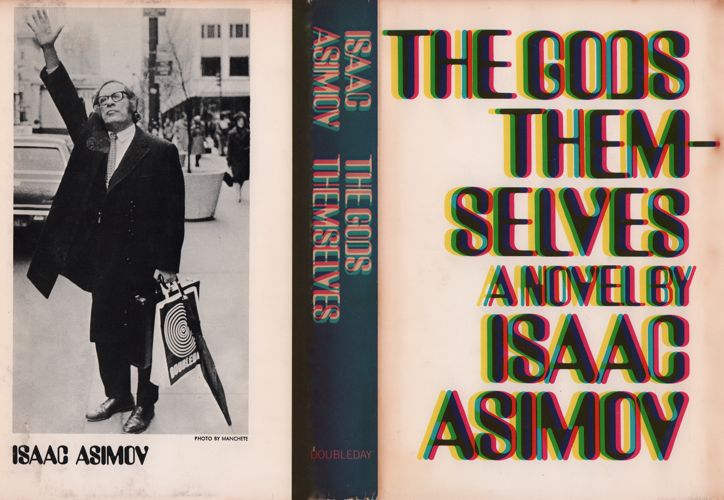
- The Gods Themselves
Isaac Asimovstandalone novel1972
similar byscience fictionparallel universe
The Gods Themselves is a 1972 science fiction novel written by Isaac Asimov, and his first original novel in fifteen years. It won the Nebula Award for Best Novel in 1972, and the Hugo Award for Best Novel in 1973.
- Future History
series42 books1939
completed
similar byscience fiction
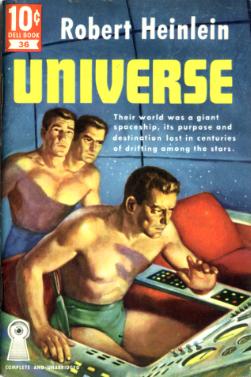
The Future History is a series of science fiction stories written by American author Robert A. Heinlein (1907–1988). It describes a projected future of the human race from the middle of the 20th century through the early 23rd century. The term Future History was coined by John W. Campbell Jr. in the February 1941 issue of Astounding Science Fiction. Campbell published an early draft of Heinlein's chart of the series in the May 1941 issue.
- Ring Around the Sun
Clifford D. Simakstandalone novel1953
similar byscience fictionparallel universe
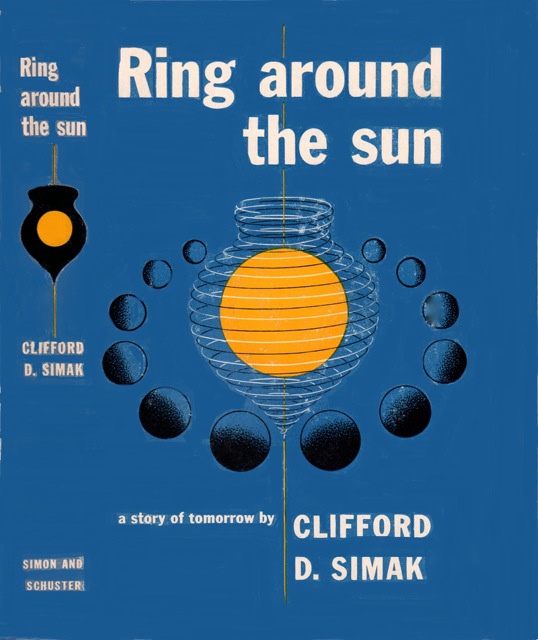
Ring Around the Sun is a science fiction novel by American writer Clifford D. Simak. Its anti-urban and pro-agrarian sentiments are typical of much of Simak's work.
- Men Like Gods
H. G. Wellsstandalone novel1923
similar byscience fictionparallel universe
Men Like Gods is a 1923 novel, referred to by the author as a "scientific fantasy", by English writer H. G. Wells. It features a utopia located in a parallel universe.
- Of Man and Manta
series3 books1968
similar byscience fiction
Of Man and Manta is a trilogy of science fiction novels written by Piers Anthony. It consists of the three books: Omnivore (1968), Orn (1970), and 0X (1975).
- Eye in the Sky
Philip K. Dickstandalone novel1957
similar byscience fiction+1 more
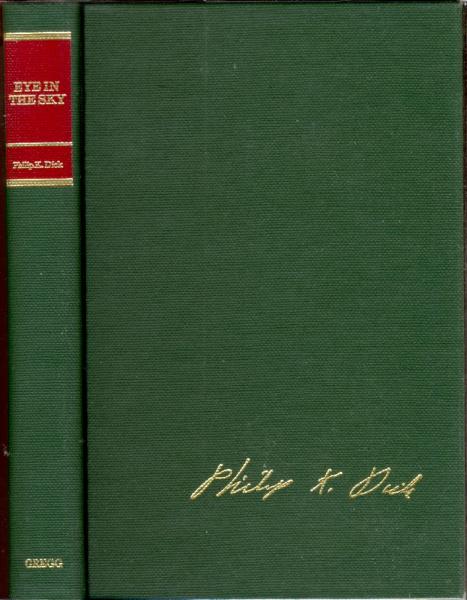
Eight visitors touring a particle-accelerator facility are caught in a catastrophic malfunction, a collapsing platform, a burst of radiation, that leaves them all unconscious. When protagonist Jack Hamilton, an engineer recently fired over Red Scare-era suspicions about his wife's politics, comes to, the world around him is subtly, then not so subtly, wrong: physics bends to fit one fellow victim's religious convictions, then to another's paranoid fears, as the group cycles through what turn out to be shared hallucinations built from each other's private belief systems. Philip K. Dick's early novel about how differently people actually see the same world.
- Whileaway
series4 books1972
completed
similar byscience fiction+1 more
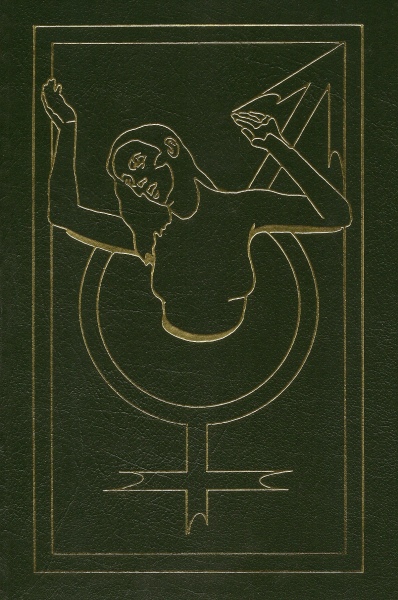
Joanna Russ's The Female Man (1975) is a single feminist science fiction novel, not a multi-book series, built around four women from parallel timelines with very different gender arrangements. One of them, Janet, comes from Whileaway, an all-female utopian Earth ten centuries in the future where men died out in a plague; the other three come from realities closer to Russ's own, and their collisions are used to interrogate what womanhood and equality could mean under different social rules.
- The Long Earth
series7 books2012
similar byscience fictionparallel universe
Terry Pratchett and Stephen Baxter's Long Earth series (five novels, 2012-2016) begins when a cheap, simple device called a Stepper lets people step sideways into a vast, possibly infinite chain of parallel Earths, none of which developed human civilization. The books follow a natural stepper and an AI that believes itself the reincarnation of a Tibetan repairman as they travel millions of steps out along the chain, encountering other hominid species and the dangers, ecological and social, of an endless open frontier.
- All Flesh Is Grass
Clifford D. Simakstandalone novel1965
similar byscience fiction+1 more
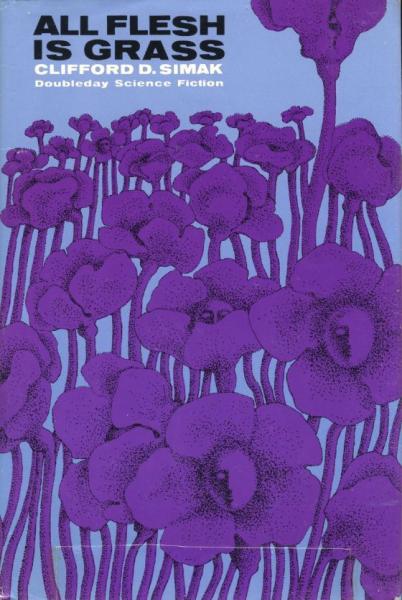
All Flesh is Grass is a science fiction novel by American author Clifford D. Simak, published in 1965. The book follows a small town in Wisconsin that is closed off from the outside world by a mysterious barrier, placed by extraterrestrial beings.
- Anathem
Neal Stephensonstandalone novel2008
similar byscience fiction+1 more
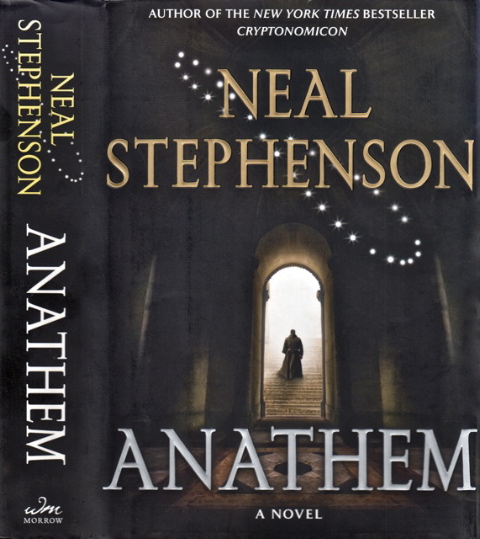
On a planet where quasi-monastic academic institutions have existed alongside the secular world for thousands of years, a young scholar from one such institution becomes part of a planetwide effort to muster an appropriate reaction to a shocking discovery.
- The World of Tiers
series9 books1965
similar byscience fiction
The World of Tiers is a series of science fiction novels by American writer Philip José Farmer. They are set within a series of artificially constructed universes, created and ruled by decadent beings who are genetically identical to humans, but regard themselves as superior, and are the inheritors of an advanced technology they no longer understand. This technology enables the "Lords" to create novel lifeforms, and also to prevent aging or disease, making them effectively immortal. Their technology also allows them to create small artificial universes, and the planets and stars within them, and modify the physical laws to create unusual or interesting phenomena within these universes. Instantaneous travel within and between these universes is achieved by the use of "gates" which seem to function as teleportation devices, or as a means of creating wormholes between different regions of spacetime.
- Dark Matter
Blake Crouchstandalone novel2016
similar byscience fictionparallel universe
Jason Dessen, college physics professor, husband and father, is kidnapped and taken to a parallel universe where his counterpart had dedicated his life to inventing a method of traveling between an infinity of parallel universes.
- The Disappearance
Philip Wyliestandalone novel1951
similar byscience fictionparallel universe
One ordinary moment, the world splits in two: every man on Earth finds every woman gone without a trace, and at the same instant every woman finds herself in a world emptied of men -- two parallel realities on the same planet, each population convinced the other has vanished. Philip Wylie follows both worlds afterward, one sliding into authoritarian collapse without women to share or restrain power, the other building something more equal and freer, using the split to interrogate mid-century assumptions about sex, marriage and the double standards separating what men and women were each allowed to be. A speculative novel years ahead of the feminist movement it anticipates.
- The Heads of Cerberus
Francis Stevensstandalone novel1919
similar byscience fiction+1 more
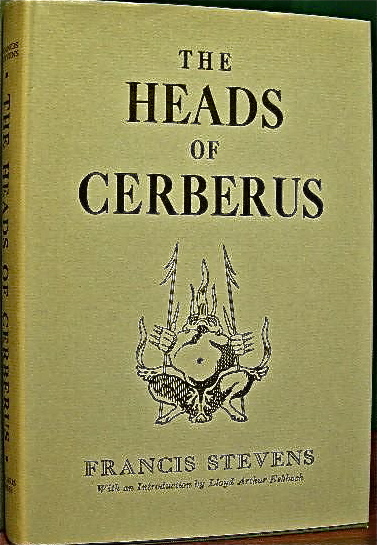
The Heads of Cerberus is a science fiction novel by American writer Francis Stevens. The novel was originally serialized in the pulp magazine The Thrill Book in 1919, and it was first published in book form in 1952 by Polaris Press in an edition of 1,563 copies. It was the first book published by Polaris Press. A scholarly reprint edition was issued by Arno Press in 1978, and a mass market paperback by Carroll & Graf in 1984.
- A Modern Utopia
H. G. Wellsstandalone novel1905
similar byscience fictionparallel universe
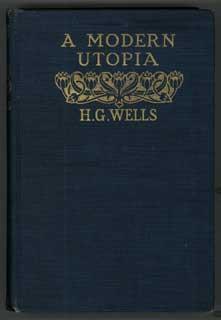
Two travelers, an unnamed narrator and his skeptical companion, find themselves transported to a parallel world: a planet identical to Earth in geography and even population, down to duplicates of everyone they know, but shaped by a different history. There they examine a global order run by a voluntary elite called the Samurai, who try to hold together progress and stability without the coercion Wells thought inevitable in the utopias that came before his. Framed less as a story than as a philosophical travelogue, it is Wells's own argument with the utopian tradition, tested through the world he invents to make it.
- The Jackpot Trilogy
series2 books2014
similar byscience fiction+1 more
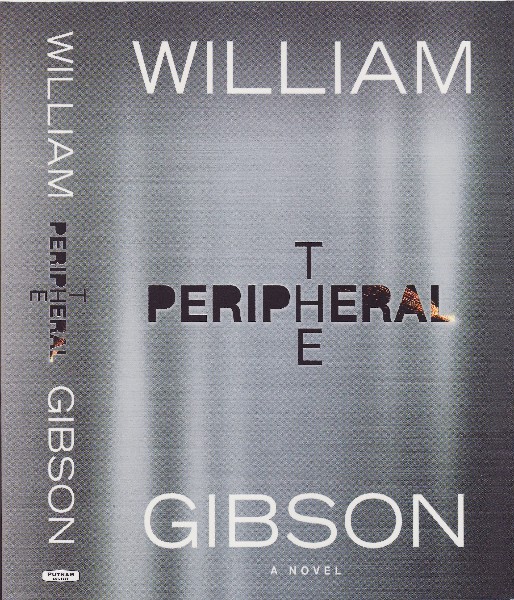
William Gibson's Jackpot sequence begins with The Peripheral (2014), a science-fiction thriller cross-cutting between a near-future American town and a devastated London seventy years on. Gibson continued the same world in Agency (2020), set slightly later in the near-future timeline.
- The Crack in Space
Philip K. Dickstandalone novel1966
similar byscience fictionparallel universe
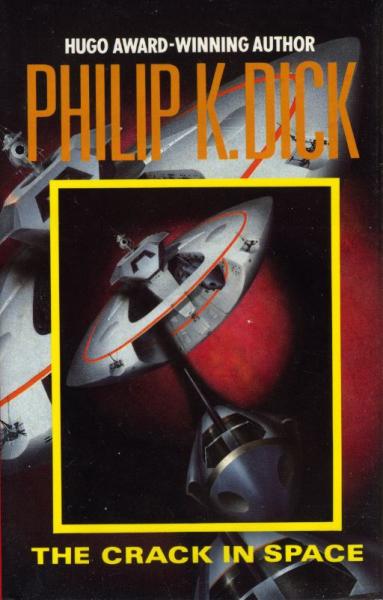
The Crack in Space is a 1966 science fiction novel by American writer Philip K. Dick. In the United Kingdom, it has been published under the title of the original novella, Cantata 140, published in the July 1964 issue of The Magazine of Fantasy & Science Fiction. This original title refers to the short title in English, Sleepers Awake, of J.S. Bach's Cantata BWV 140 and the novel's 'bibs', the millions sleeping in suspended animation. Both are based on the short story Prominent Author. The common elements are the Jiffi-scuttler transport device, the company, Terran Development, that manufactures it, and a summary of Prominent Author as an event of the past in chapter 2. The "crack in space" is a defect in Jiffi-scuttler operation that allows access to the Earth and to parallel Earths at various times and locations, beyond its intended use of providing near-instant transport between specific locations on the Earth in the present.
- Job: A Comedy of Justice
Robert A. Heinleinstandalone novel1984
similar byscience fictionparallel universe
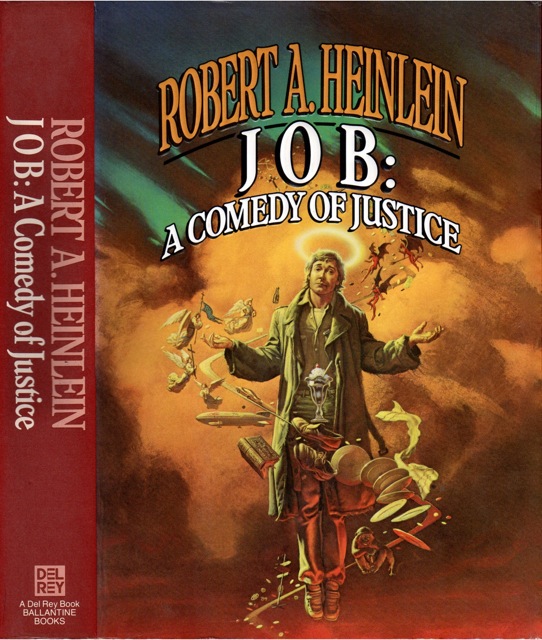
Job: A Comedy of Justice is a science fiction novel by American writer Robert A. Heinlein published in 1984. The title is a reference to the biblical Book of Job and James Branch Cabell's book Jurgen, A Comedy of Justice. It won the Locus Award for Best Fantasy Novel in 1985 and was nominated for the Nebula Award for Best Novel in 1984, and the Hugo Award for Best Novel in 1985.
- Mode
series4 books1991
similar byscience fictionparallel universe
The Mode series is a quartet of novels by Piers Anthony. Like many of Anthony's other fictional works, it explores many themes and ideas. This series has themes of violence, the abuse of power, sexism and male dominance, gender roles, the environment, integrity and personal honor, sapient animal life, parallel and alternative evolution, space travel, alternate dimensions, paradox, obscure concepts in physics and mathematics, sexual assault and abuse, child and adolescent sexuality, and suicide.
- Brasyl
Ian McDonaldstandalone novel2007
similar byscience fictionparallel universe
Brasyl is a 2007 novel by British author Ian McDonald. It was nominated for the 2008 Hugo Awards in the best novel category. In 2008 it was nominated for, and made the longlist of, the £50,000 Warwick Prize for Writing. It was also nominated for the Locus Award and John W. Campbell Memorial Award for Best Novel, and in 2009, it was nominated for the Nebula Award for Best Novel. It won the British Science Fiction Award for best novel in 2008.
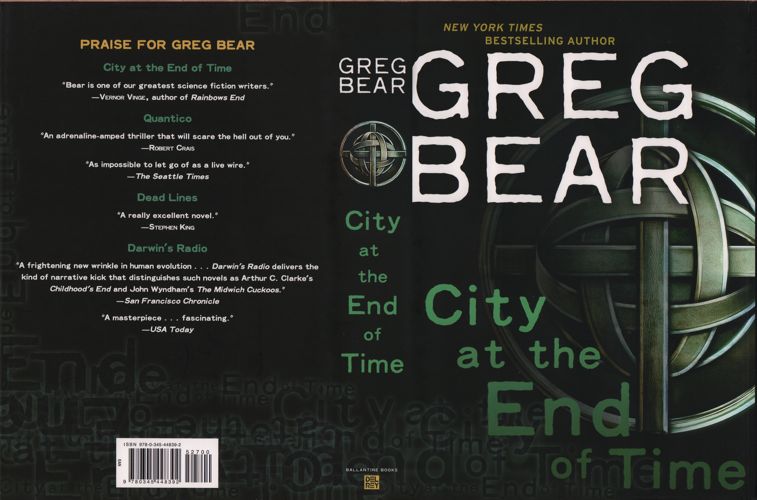
- City at the End of Time
Greg Bearstandalone novel2008
similar byscience fictionparallel universe
City at the End of Time is a 2008 science fiction novel by American writer Greg Bear. It was published in August 2008 by Del Rey in the United States, and Gollancz in the United Kingdom. The story follows three drifters in present-day Seattle who are tormented by strange dreams of the Kalpa, a city one hundred trillion years in the future. The Kalpa is attempting to ward off the Typhon, an inexplicable entity that has consumed the rest of the ancient universe and broken down the laws of physics.
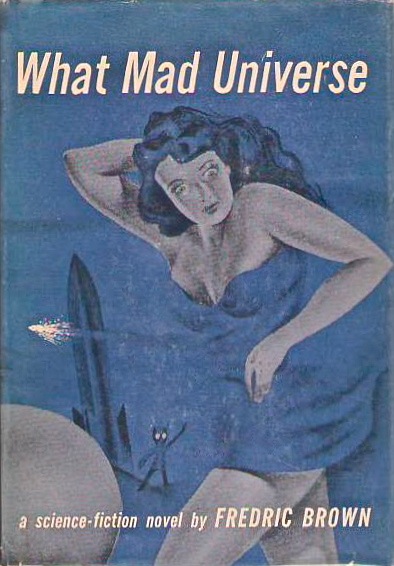
- What Mad Universe
Fredric Brownstandalone novel1949
similar byscience fictionparallel universe
What Mad Universe is a science fiction novel, written in 1949 by the American author Fredric Brown. It satirizes many of the conventions of American "pulp" magazine science-fiction of the 1940s, while incorporating such stereotyped elements into a coherent alternate universe, valid on its own terms.