More like Collision Course
anchored on:science fictionthe moonnear future
but
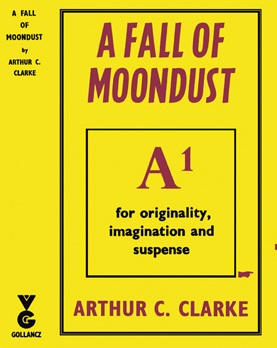
- A Fall of Moondust
Arthur C. Clarkestandalone novel1961
similar bysurvivalscience fictiontensenear futurethe moon
From the back cover of the Harbrace paperback: "The action of A Fall of Moondust takes place almost a century from now when tours on the moon are a common occurrence. One of the high points of each tour is a cruise around the Sea of Thirst, a body of volcanic dust, in a specially designed vessel called the Selene On a perfectly routine voyage one day the Selene suddenly disappears. How do you locate a small tourist "cruiser" buried beneath fifty feet of dust? If you find it, how do you rescue the passengers and crew? If you are on board, how do you feel and what do you do while brave men and expert technicians join forces in a race against time? Sustained excitement, lively humor, and an engaging cast of characters make this one of Arthur C. Clarke's most intriguing novels."
- Have Space Suit - Will Travel
Robert A. Heinleinstandalone novel1958
similar bysurvivalscience fictiontensenear futurethe moonspace
From the back cover of the Del Rey 9th printing: "Skyjacked - Everything happened at once. One minute Kip Russell was walking about in his own backyard, testing out an old space suit and dreaming about going to the moon - and the next he was out cold and the captive of an insidious space pirate. The whole thing seemed like a very bad dream until he discovered he wasn't the only prisoner on board. Then the reality of the situation became inescapable. He - along with the daughter of a world-renowned scientist and a beautiful creature from an alien planet - had been skyjacked by a monstrous extraterrestrial and they were on their way to the Moon... a journey toward a fate worse than death!"
- Rogue Moon
Algis Budrysstandalone novel1960
similar bysurvivalscience fictiontensenear futurethe moon
A project to transport humans by matter transmission becomes the means to send explorers to the Moon when the US discovers an alien artifact on the dark side, but anyone who enters dies, so a hardened adventurer is given the job.
- H. G. Wells' War of the Worlds
universe65 books1898
Start hereThe War of the Worlds · Start here
similar byscience fiction+1 more
No one would have believed, in the closing years of the nineteenth century, that human affairs were being watched keenly and closely from the timeless worlds of space. And then the cylinders fell. H. G. Wells' War of the Worlds opens in the quiet of the Surrey commons, where a falling star proves to be the first Martian craft — and from the pit rise the towering tripods, the Heat-Ray, the choking Black Smoke and the creeping red weed, wielded by minds that regard mankind much as we regard the creatures we boil for supper. This is invasion rendered as natural disaster: cold, methodical, and vast beyond argument. Wells' 1898 novel is the seed; everything else grows from that Martian soil. The catalogue gathers direct sequels and continuations alongside a wide field of other hands. In War of the Worlds: Global Dispatches the invasion is retold across the whole planet through the eyes of Twain, Verne, Tolstoy, Lowell and Kipling; in the Manly Wade and Wade Wellman crossover, Sherlock Holmes, Watson and Professor Challenger take the field against the machines; and Scott Washburn's Great Martian War stretches the fighting into a decades-long alternate history of steam, artillery and grinding attrition. It is a loose shared world — no single decreed sequence, many voices answering one calamity. What sets this world apart is its refusal of heroics: the invaders fall not to generals but to the smallest things of Earth, humbling and indifferent. Begin, always, with Wells' original novel — it is short, and it is the ground every later book stands upon. From there follow your appetite: Global Dispatches for the panorama, the Holmes campaign for adventure, Washburn for the long war.
- The Martian
series2 books2012
similar bysurvivalscience fictiontensenear future
Andy Weir's novel The Martian, first self-published in 2011 before a commercial re-release, follows astronaut Mark Watney after he is stranded alone on Mars when his crew presumes him dead and departs. Using scientific improvisation and dark humor, Watney works to keep himself alive long enough for a rescue to reach him. It is a single, self-contained survival story.
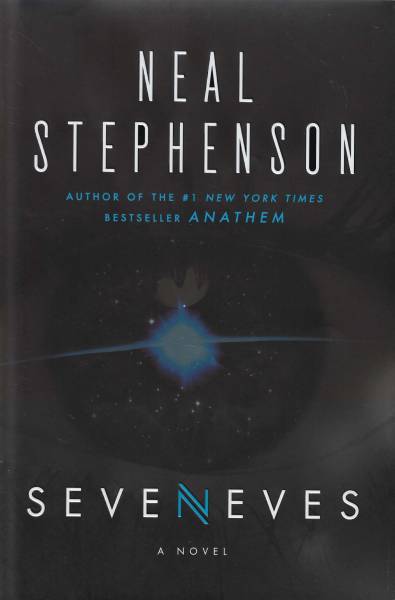
- Seveneves
Neal Stephensonstandalone novel2015
similar bysurvivalscience fictiontensenear futurethe moonspace
Seveneves is a science fiction novel by Neal Stephenson published in 2015. The story tells of the desperate efforts to preserve Homo sapiens in the wake of apocalyptic events on Earth after the unexplained disintegration of the Moon and the remaking of human society as a space-based civilization after a severe genetic bottleneck.
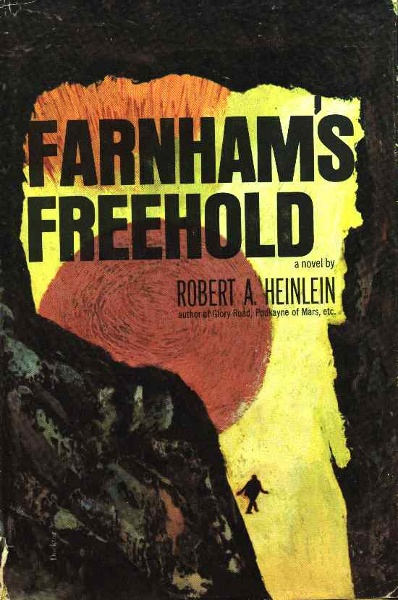
- Farnham's Freehold
Robert A. Heinleinstandalone novel1964
similar bysurvivalscience fictiontensenear future
Farnham's Freehold is a science fiction novel by American writer Robert A. Heinlein. A serialized version, edited by Frederik Pohl, appeared in Worlds of If magazine. The complete version was published in novel form by G. P. Putnam later in 1964.
- Future History
series42 books1939
completed
similar byscience fiction+3 more
The Future History is a series of science fiction stories written by American author Robert A. Heinlein (1907–1988). It describes a projected future of the human race from the middle of the 20th century through the early 23rd century. The term Future History was coined by John W. Campbell Jr. in the February 1941 issue of Astounding Science Fiction. Campbell published an early draft of Heinlein's chart of the series in the May 1941 issue.
- Dune
series20 books1963
part of Dune Universe
similar byscience fiction+1 more
Frank Herbert's Dune Chronicles opens with 1965's Dune, set on the desert planet Arrakis where House Atreides takes control of the only source of the vital spice melange and young Paul Atreides is pulled into a struggle over its politics and religion. Herbert carried the story forward across five further novels — Dune Messiah, Children of Dune, God Emperor of Dune, Heretics of Dune, and Chapterhouse: Dune — following Paul's line over the following millennia, before Brian Herbert and Kevin J. Anderson later extended the saga. Many other editions of these six novels are omnibus and box-set repackagings rather than separate stories.
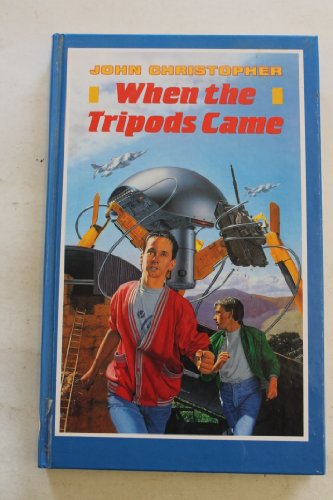
- Tripods
series4 books1967
completed
similar byscience fictiontensenear future+1 more
The Tripods is a series of young adult science fiction novels by John Christopher. The series takes place in a post-apocalyptic world where humanity is enslaved by "Tripods"—gigantic three-legged walking machines piloted by an alien race later identified as the "Masters". The first two books were the basis of a science fiction TV series, produced in the United Kingdom in the 1980s.
- Library of America P. K. Dick Collection
series9 books1962
completed
similar byscience fictionnear future
- The Postman
series3 books1982
similar bysurvivalscience fictionnear future+1 more
The Postman (1985) is David Brin's post-apocalyptic novel about a wandering survivor who, after taking a dead mail carrier's uniform for warmth, is mistaken for a representative of a restored United States government and is drawn into rebuilding trust and order among scattered, wary settlements. It stands as a self-contained story, later adapted into a 1997 film.
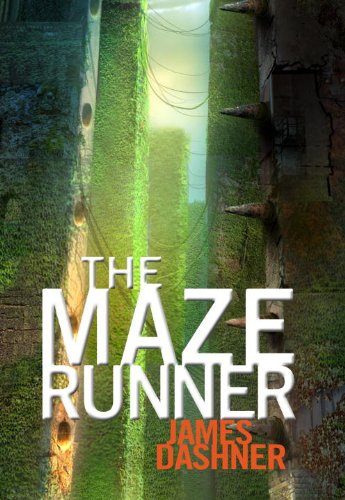
- Maze Runner
series11 books2009
similar bysurvivalscience fictiontensenear future
The Maze Runner is a series of young adult dystopian science fiction novels written by American author James Dashner. The series consists of the trilogy The Maze Runner (2009), The Scorch Trials (2010) and The Death Cure (2011), as well as two prequel novels, The Kill Order (2012) and The Fever Code (2016). A novella titled Crank Palace (2020) and a companion book titled The Maze Runner Files (2013) have also been released. A sequel trilogy in the series titled The Maze Cutter takes place 73 years following the events of The Death Cure and consists of the novels The Maze Cutter (2022), The Godhead Complex (2023), and The Infinite Glade (2025).
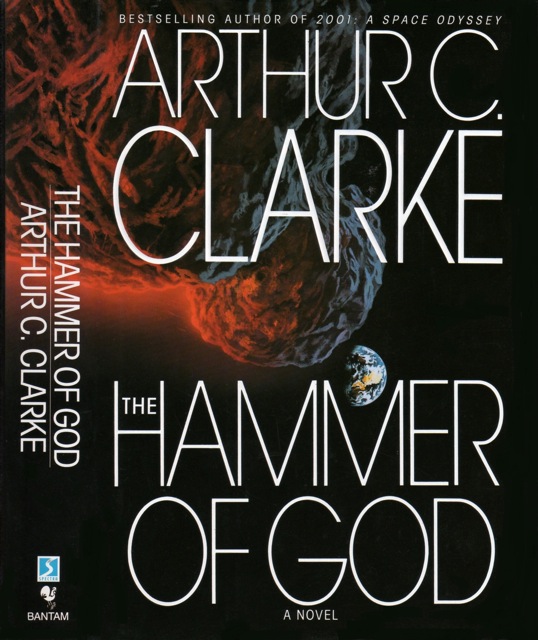
- The Hammer of God
Arthur C. Clarkestandalone novel1993
similar bysurvivalscience fictiontensenear futurespace+1 more
The Hammer of God is a science fiction novel by Arthur C. Clarke originally published in 1993. Set in the year 2109, it deals with the discovery of an asteroid to be on course to collide with Earth and depicts the mission for deflecting the asteroid by using fusion thermal rockets.
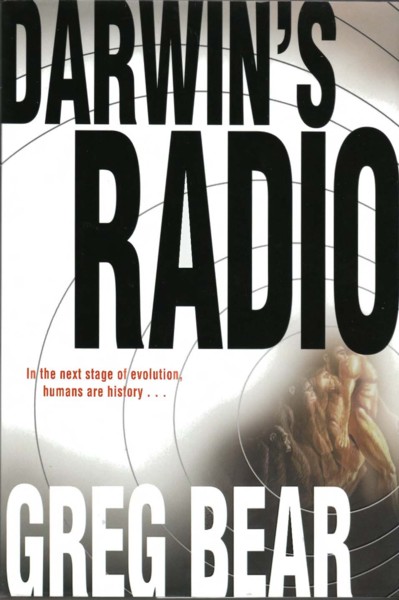
- Darwin
series2 books1999
completed
similar byscience fictiontensenear future+1 more
Greg Bear's Darwin's Radio imagines a dormant retrovirus in human DNA activating worldwide, triggering an accelerated leap in human evolution that governments respond to as a plague. The 1999 novel won the Nebula Award; its sequel Darwin's Children follows the first generation of changed children as society decides what to do with them. Together they're speculative near-future science fiction grounded in genetics rather than space opera.
- Make Room! Make Room!
Harry Harrisonstandalone novel1966
similar bysurvivalscience fictiontensenear future
Make Room! Make Room! is a 1966 science fiction novel written by Harry Harrison exploring the consequences of both unchecked population growth on society and the hoarding of resources by a wealthy minority. It was originally serialized in Impulse magazine.
- Forge of God
series2 books1987
completed
similar bysurvivalscience fictiontense+2 more
The Forge of God (1987) is Greg Bear's science fiction novel about Earth's discovery that it is the target of an incomprehensible, overwhelming alien attack, following scientists and ordinary people as they try to understand what is destroying the planet. Its 1992 sequel, Anvil of Stars, follows a group of young survivors sent on a mission of interstellar retaliation, continuing directly from the first book's ending.
- Z for Zachariah
Robert C. O'Brienstandalone novel1975
similar bysurvivalscience fictiontensenear future
Sixteen-year-old Ann Burden, on an Amish family farm in an isolated valley, believes she is the only survivor of nuclear war and nerve gas. One day a man arrives in a "safe-suit" that he and others have recently developed.
- Dune Universe
universe78 books1963
Start hereDune · Start here
similar byscience fiction+1 more
Arrakis. Dune. The desert planet, where empire runs on a single substance: the spice melange, which folds space, prolongs life, and unlocks prescience, and which exists nowhere else in the known universe. Frank Herbert's saga is a meditation dressed as an adventure — feudal houses and a secret sisterhood, engineered messiahs and the patient ecology of a world without water, all turning on the terrible gravity of who commands the spice. It reads like scripture and schemes like a war room, ten thousand years hence, among people who have outlawed the thinking machine and made instruments of themselves instead. At its heart stand Herbert's original six — Dune, Dune Messiah, Children of Dune, God Emperor of Dune, Heretics of Dune, Chapterhouse: Dune — a single deepening arc across millennia, arguing the whole way between prophecy and free will. Around that spine his son Brian Herbert and Kevin J. Anderson have raised a vast prequel architecture: Prelude to Dune, tracing the great houses a generation before Paul; Legends of Dune, reaching back to the crusade that broke the machines; the Schools of Dune cycle on the founding of Bene Gesserit, Mentat, and Navigator; the Caladan Trilogy and Heroes of Dune filling years the originals left in shadow. Many hands, dozens of volumes, one desert. What sets Dune apart is its refusal of the simple: religion is manufactured, heroes are hazards, and the sand itself — worm, water, ecology — acts as a political power. Begin where the universe did, with Frank Herbert's Dune (1965), and read the original six in order; you need nothing else to feel the full weight. The prequels are a country to explore afterward, taken by era. Beginnings are delicate times.
- The 5th Wave
series4 books2013
similar bysurvivalscience fictiontensenear future
Rick Yancey's The 5th Wave opens after a series of escalating alien attacks has already devastated Earth's population and infrastructure, following sixteen-year-old survivor Cassie Sullivan as she searches for her younger brother while trying to work out who, among the remaining humans, can still be trusted. The trilogy is young-adult science fiction that treats its alien-invasion premise as a survival and paranoia story more than a war story.
- Moonfall
Jack McDevittstandalone novel1998
similar bysurvivalscience fictiontensenear futurethe moon
Moonfall is a 1998 hard science fiction novel by American writer Jack McDevitt. The book depicts the impact of an interstellar comet on the Moon and how the catastrophic effects are handled. The novel was nominated for the Nebula Award for Best Novel in 1998.
- Heart of the Comet
David Brin & Gregory Benfordstandalone novel1986
similar bysurvivalscience fictionnear futurespace+1 more
Heart of the Comet is a novel by David Brin and Gregory Benford about human space travel to Halley's Comet published in 1986. Its publication coincided with the comet's 1986 approach to the Earth.
- Mother of Storms
John Barnesstandalone novel1994
similar bysurvivalscience fictiontensenear future+1 more
From the flaps of the Tor first edition: "It is 2028. A strike to destroy an illegal Arctic weapons cache has a catastrophic side effect. Massive amounts of energy are liberated from the polar ice, suddenly warming the Earth's climate. In the middle of the Pacific, a gigantic hurricane thousands of miles across is forming, larger than any in human history. A storm with winds of supersonic speed. A storm that changes direction at whim. A storm that refuses to die. A storm so vast it spawns dozens more in its wake... Blinded by intrigue, expedience, and greed, the world's politicians and power brokers have ignored the killer storms threat until it is too late. Already the death toll is in the tens of millions, as it savages the Pacific coast, while its devil's brood of smaller storms are wreaking havoc across the face of the planet. While the survivors scramble for advantage, a handful of courageous men and women undertake a daring, desperate plan to save humanity from total destruction - a plan so visionary it may alter forever the future of the human race."
- Adventures of Viktor & Julia
series2 books1999
similar bysurvivalscience fictiontensenear future+1 more