More like Colour
but
- Stephen King multiverse
universe46 books1967
Start hereThe Gunslinger · Start here
similar by+2 more
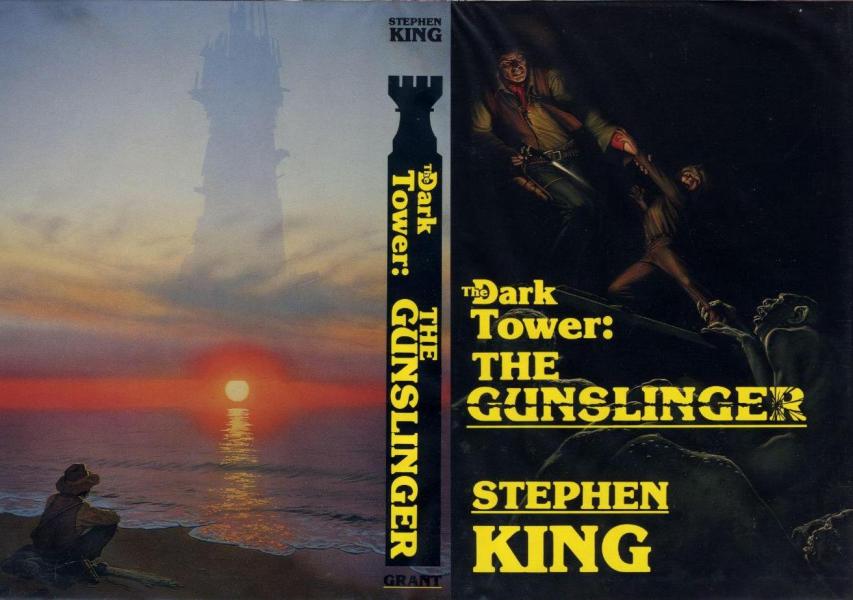
The man in black fled across the desert, and the gunslinger followed. So begins the long walk of Roland Deschain, last of an order of knight-errant pistoleers, across a land that has "moved on" — where the compass points drift, dead machines rot toward sentience, and the weave of what's real wears thin. His quest is the Dark Tower itself: a spire standing at the hub of every world that exists, the linchpin that holds all of them back from ruin. Roland's road runs eight volumes, from The Gunslinger through the closing Dark Tower, with the later, interleaved tale The Wind Through the Keyhole folding a story-within-a-story back into his youth. Along the way he draws a ka-tet — a fellowship bound by fate, not choosing — through doorways between worlds: a heroin-shackled New Yorker, a woman of two minds, a boy who dies twice. The Tower is also the secret axle around which the wider shelf of King's work turns; threads from The Stand, 'Salem's Lot and beyond wind quietly toward it. Expect a mongrel of Western, high fantasy, horror and decayed science fiction, told in a dusty, incantatory dialect all its own — ka, thankee-sai, the world that has moved on. This is King at his most mythic and most personal, a decades-spanning circle that rewards a patient reader. Begin at the beginning: The Gunslinger, then walk forward in publication order. There are other worlds than these — but this door opens first.
- Talisman
series4 books1984
similar by+2 more
Stephen King and Peter Straub's The Talisman follows twelve-year-old Jack Sawyer as he crosses between our world and the Territories, a parallel realm, on a cross-country quest to save his dying mother. The 2001 sequel Black House catches up with Jack decades later as a retired detective drawn into a serial-murder case in small-town Wisconsin that pulls the Territories back into his life. A third book, Other Worlds Than These, was announced in 2025 to complete the trilogy.
- Insomnia
Stephen Kingstandalone novel1994
similar byhorror+1 more
When an elderly widower in Maine finds himself with sleep maintenance insomnia, awakening early every morning, this state of exhaustion allows him to perceive a higher state of reality, where he learns of an impending disaster which will shake not just the Earthly reality. but all the higher realities, and which he has been recruited to prevent.
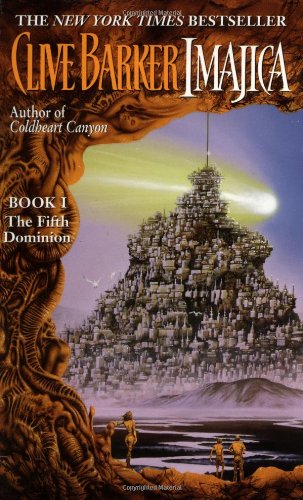
- Book of the Art
series3 books1989
similar byhorror+1 more
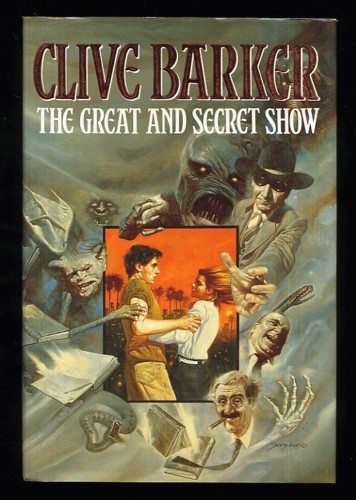
The Art was meant to be a trilogy about a hidden order guarding the boundary between our world and Quiddity, a dream-sea shared by all sleeping minds, but Clive Barker only completed two of its three volumes. The Great and Secret Show follows a decades-long feud between two men who discover Quiddity's power - one seeking to harness it, the other to protect it - with consequences that distort reality itself; Everville continues the story a generation later. The planned third volume was never published.
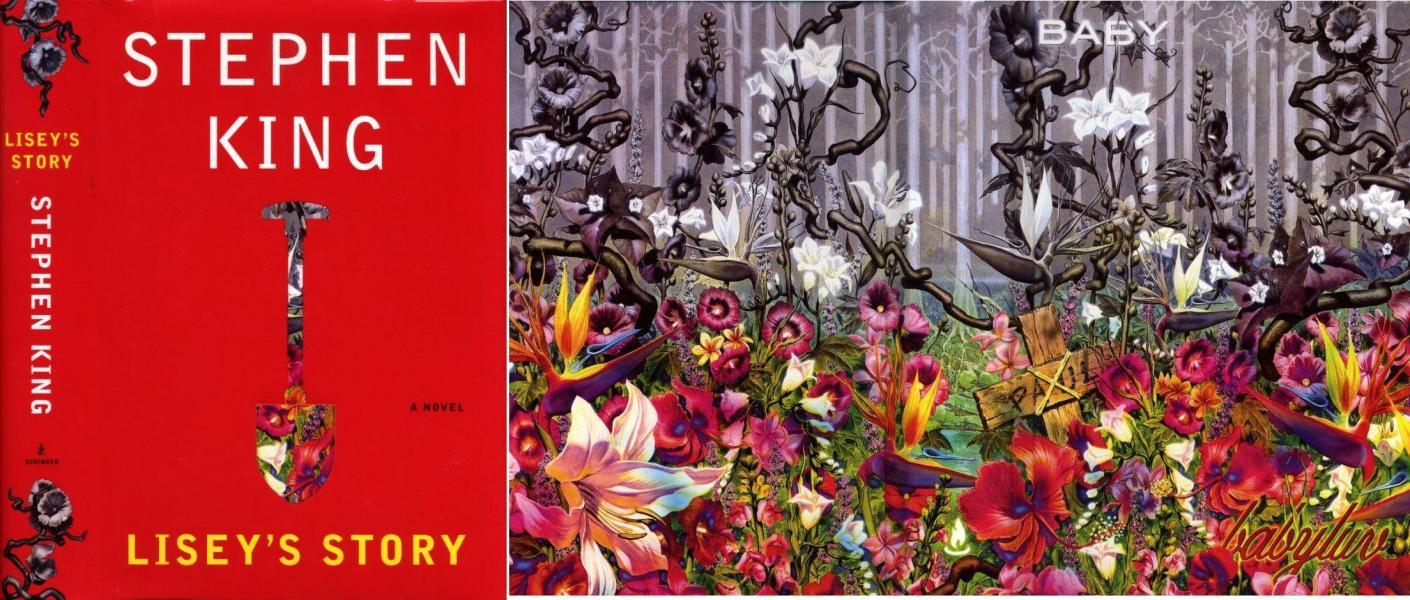
- Lisey's Story
Stephen Kingstandalone novel2006
similar byhorrorparallel universe
When the widow of a successful author is targeted by a psychopath, she must make use of the ability to shift to a parallel world, which she learned from her husband.
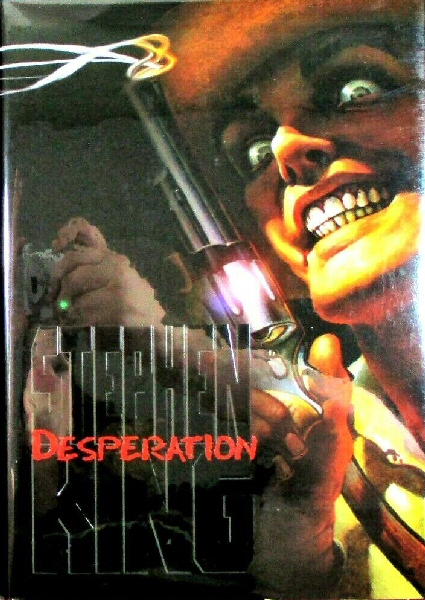
- Desperation/Regulators
series2 books1996
similar byhorror
Stephen King published Desperation and The Regulators simultaneously in 1996, the first under his own name and the second under his Richard Bachman pseudonym. The two novels are mirror-universe companions: largely the same cast of characters appears in both, recast into different roles and circumstances, with each book's story driven by the same malevolent supernatural entity, Tak.
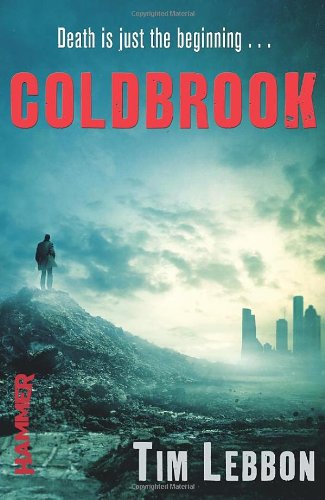
- Coldbrook
Tim Lebbonstandalone novel2012
similar byhorror+1 more
The world as we know it has changed forever. The reason is Coldbrook. The facility lay deep in Appalachian Mountains, a secret laboratory called Coldbrook. Its scientists had achieved the impossible: a gateway to a new world. Theirs was to be the greatest discovery in the history of mankind, but they had no idea what they were unleashing.
- Dracula
universe144 books1897
Start hereDracula · Start here
similar byhorror
"Come freely. Go safely. And leave something of the happiness you bring" — so the Count greets his guest at the threshold of the Carpathians, and the great door shuts behind. Bram Stoker's Dracula (1897) is the wellspring of the modern vampire: the account of a centuries-old Transylvanian nobleman who quits his crumbling castle for the crowded lodging-houses of London, and the handful of ordinary people — a young solicitor, a doctor of the mad, a professor of stranger learning — who must piece together what he is before he makes the whole city his fold. It is told wholly in fragments: journal entries, letters, telegrams, ships' logs, phonograph cylinders, each hand recording only its own sliver of the dark. Around that single novel a whole crypt of continuations has grown, raised by many writers across a century. Fred Saberhagen's Dracula Sequence hands the Count the microphone, retelling the old events from his own wry, aggrieved lips and following him into later intrigues. Robert Lory's brisk 1970s Dracula Horror Series revives him as a reluctant weapon turned against fouler things; Peter Tremayne's trilogy reaches back along his bloodline; and further sequels, a Quincey Morris spin-off, and Dracula's Children carry the shadow onward. This is a loose shared world built upon a public-domain figure, not one governed continuity — each author remakes him as villain, antihero, or sympathetic narrator. Begin, always, with Stoker's original; the letters and the mounting dread stand entirely on their own. From there follow whichever door tempts you — Saberhagen's The Dracula Tape for the monster's own confession, Lory or Tremayne for tales that never glance back at the Borgo Pass again.
- The Spinner
Doris Piserchiastandalone novel1980
similar byhorrorparallel universe
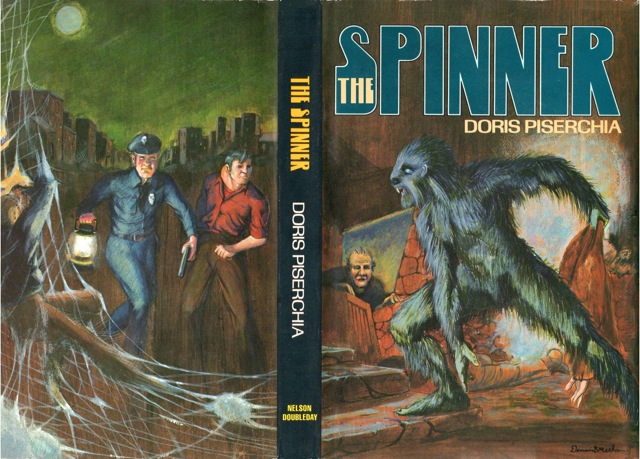
Amazon: The search for new sources of energy led one man to an accidental breakthrough into a strange parallel world. It was apparently deserted and might have been a good place to prospect until the finder panicked. He tried to shut the dimensional crack that led into that other place. But the breakthrough had prematurely awakened that world's most predatory inhabitant from hibernation - and in raging fury THE SPINNER slipped through to find itself alone and hungry in an American city loaded with good things to eat - people!
- Ice and Iron
Wilson Tuckerstandalone novel1974
similar byhorrorparallel universe
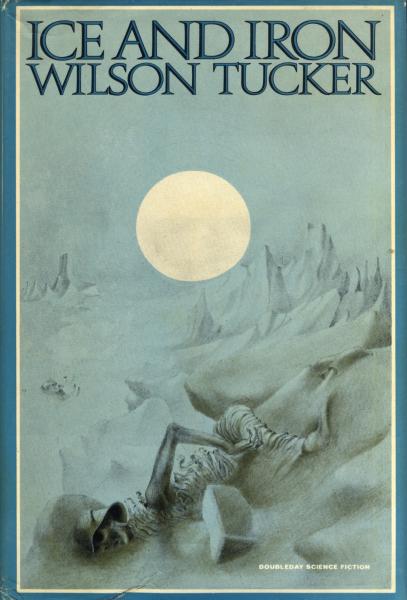
Publisher's description: Fisher Yann Highsmith is a scientist stationed, with a few colleagues, on the edge of an ice field, recording its relentless growth and the destruction of life in its path. In the midst of this frozen and abandoned landscape the team recovers a weird assortment of artifacts that seem to appear out of thin air, and Highsmith fits them together into a fantastic theory of another dimension. Then the search parties begin to find bodies out of time and place and Highsmith's history of parallel worlds becomes a chilling reality.
- The Invisible Man
series6 books1897
similar by+1 more
The Invisible Man is H. G. Wells's 1897 science fiction novel about Griffin, a scientist who works out how to make living tissue invisible and tests the process on himself, only to discover he has no way to reverse it. Unseen and increasingly cut off from other people, he turns to theft and violence while trying to survive and find a cure, making the book as much about his moral collapse as about the invisibility premise itself. It's a single self-contained novel; the two listed titles here are duplicate editions rather than separate books.
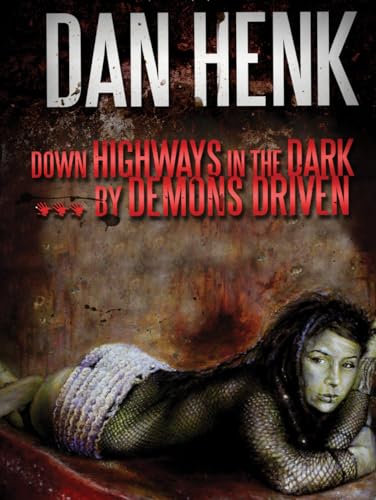
- Down Highways in the Dark...By Demons Driven
Dan Henkstandalone novel2018
similar byhorrorparallel universe
Strange worlds and creatures lie all around us. Humanity was once a slave, and is still the prey of creatures no one dreamed existed. The universe is much darker and stranger than we can ever imagine. Our world borders a multiverse and the walls are dangerously thin. Now, it is collapsing, a seething abyss is swarming in, and nothing will ever be the same again. Some children are adepts–mutants that have developed powers even they don't understand. But there is precious little time for them to learn the truth. No one is your friend, there is no help and there is no way out.
- Frankenstein
universe128 books1818
Start hereFrankenstein, or, The Modern Prometheus · Start here
similar byhorror
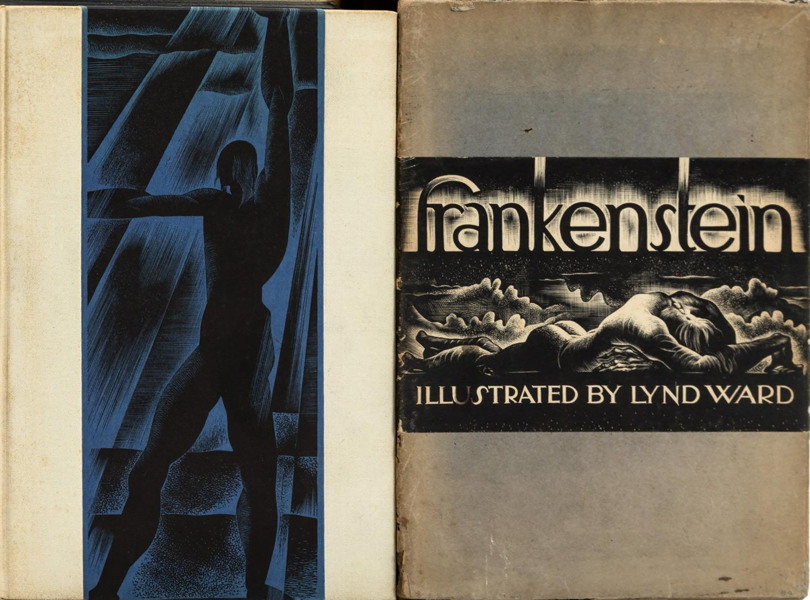
Light a candle against the November dark and consider what a single spark, rightly applied to dead matter, might wake. In a laboratory at Ingolstadt a student named Victor Frankenstein learns the secret of animating lifeless flesh, assembles a being from the harvest of charnel houses and graves, and, at the moment it draws breath, flees the thing he has made. What he abandons does not stay abandoned. This is the world Mary Shelley opened in 1818 with Frankenstein; or, The Modern Prometheus: the story of a maker and his unmothered creation, and the long ruin each works upon the other. Shelley's novel arrives as a nest of confessions, an explorer's letters from the frozen north enclosing Victor's account, which in turn encloses the Creature's own, an articulate and wounded voice that has read Milton and wants only not to be alone. From that single volume two centuries of other hands have built outward, not as one continuity but as a gathering of independent returns to the same fire. Dean Koontz transplants the myth to modern New Orleans across a five-book cycle, Prodigal Son through The Dead Town, where the original Creature, now called Deucalion, hunts a Victor who never died. Donald F. Glut's New Adventures and Frank Schildiner's Quest of Frankenstein run the monster through pulp adventure; the mid-century French novels published as Benoit Becker chase him across a ruined Europe; Scott Sonneborn's Frankenstein Journals and the comic Frankenstein's Aunt turn the legend toward younger and lighter readers. What binds them is the question the book asks and never settles: which is the monster, the forsaken creature who kills, or the man whose ambition and cowardice made and abandoned him? Expect little comfort and few clean villains; the abiding note is grief, sublime and articulate, set against Alpine ice and candlelit hubris. Begin where it began, with Shelley's own novel; the later cycles reward you only once you have heard the Creature speak for himself.
- John and Dave
series4 books2007
similar byhorror
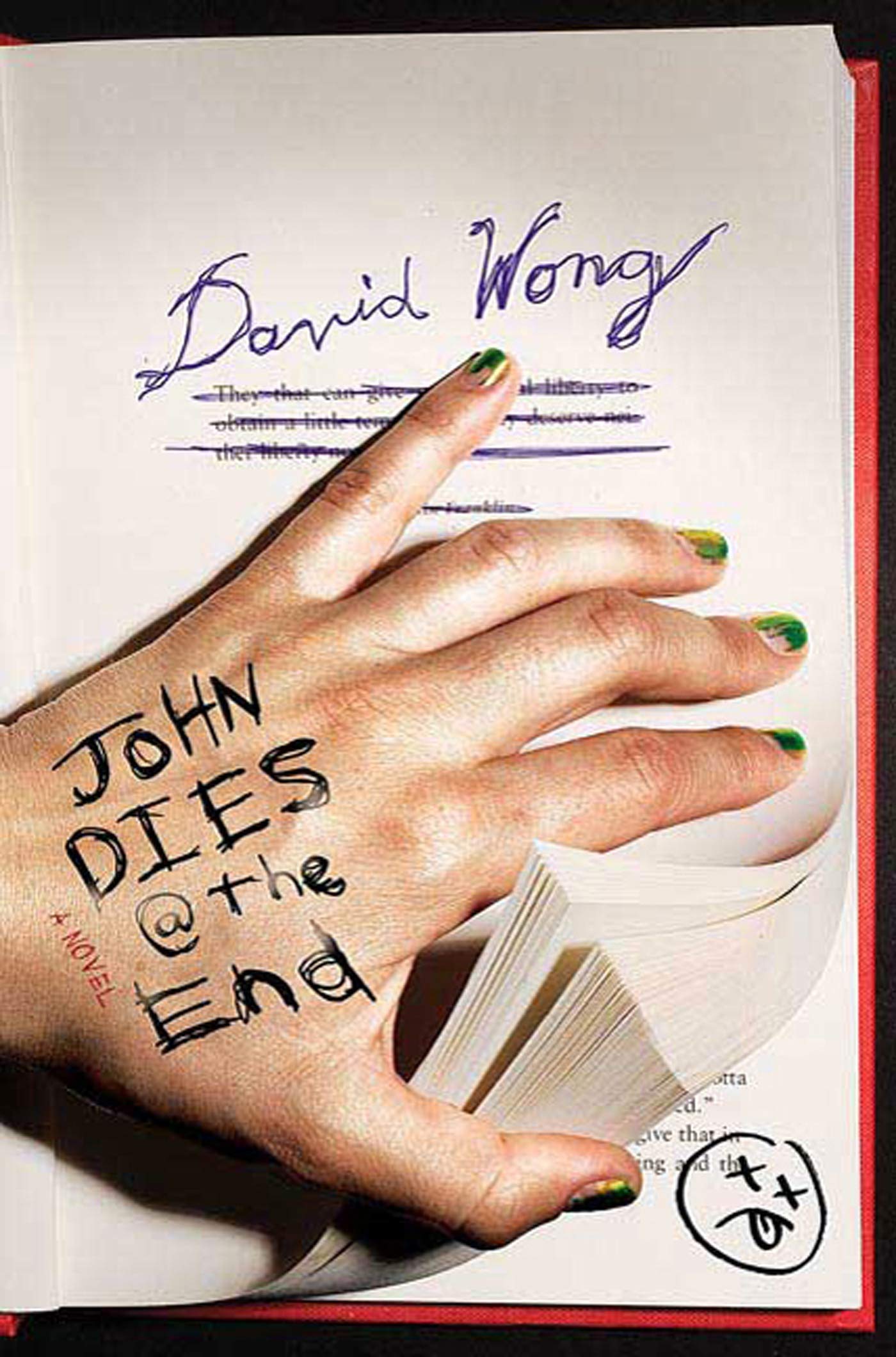
Jason Pargin, writing as David Wong, began the John Dies at the End series as a free horror-comedy webserial in 2001 before print publication turned it into a franchise. The Lovecraftian adventures of narrator John and his friend Dave continue across This Book Is Full of Spiders, What the Hell Did I Just Read, and If This Book Exists, You're in the Wrong Universe, and the original novel was adapted into a 2012 film.
- Carrie
Stephen Kingstandalone novel1974
similar byhorror
In one way or another, everybody abused Carrie. This sixteen-year-old misfit was forbidden everything that was young and fun by her fanatical mother. She was teased and taunted by her classmates, misunderstood by her teachers, and given up as hopeless by almost everyone. But Carrie had a secret: She possessed terrifying telekinetic powers that could make inanimate objects move, a lighted candle fall, or a door lock. Carrie could make all kinds of startling bizarre, and malevolent things happen. (WorldCat)
- The Island of Dr. Moreau
series12 books1896
similar by+1 more
H. G. Wells's 1896 novel The Island of Doctor Moreau follows a shipwrecked man stranded on a remote island where a reclusive scientist creates human-animal hybrids through vivisection, using the scenario to probe questions of cruelty, control, and what separates humanity from the beasts it experiments on. The premise has drawn later reimaginings gathered alongside it here, including Brian Aldiss's Moreau's Other Island and Silvia Moreno-Garcia's The Daughter of Doctor Moreau, each transplanting Wells's central idea into a new setting and voice. Taken together, the group traces one unsettling premise across more than a century of speculative fiction rather than forming a single ongoing story.