Loreful
HomeDiscover
Search series, authors…⌘K
Loreful

Reading orders for SF/F series and shared universes — with your place kept in every one.

Explore

UniversesSeriesWorksAuthorsAtlas

Help

FAQAboutSite map

Account & legal

Sign inCreate accountPrivacyTerms

Data

Built on ISFDB, Wikipedia, Wikidata and Open Library. Curated reading orders carry their reasoning on the page; the rest follow publication order. Data sources & licenses

© Loreful · data: ISFDB · CC BY

More like Command Performance

but

Mood

The mood the book leaves you in.

  • The reading experience is propelled by journeys, exploration, and physical risk; excitement and forward momentum dominate over dread or introspection.
  • Joy and loss are deliberately mixed; the resolution grants characters something real while taking something else away, leaving warmth and sorrow together.
  • The book demands work from the reader — dense prose, difficult structure, unfamiliar ideas, or morally uncomfortable material — as part of its intended effect.
  • Grim events, cruelty, or despair dominate the atmosphere, and the book does not soften them with comfort or comic relief.
  • The atmosphere is quietly unsettling — wrongness, unease, and the uncanny pervade the book without necessarily escalating into overt horror.
  • The book is built to move the reader; character feeling is foregrounded and major scenes aim at a strong emotional response.
  • Humor is a primary aim and the prose plays for laughs — comic situations, wit, or dialogue produce sustained comedy, not occasional levity.
  • The book insists that things can improve; effort and decency are shown to matter, and the arc bends toward better outcomes even through hardship.
  • The book teaches as it goes — real facts, history, science, or craft are conveyed in enough depth that learning is part of the reading experience.
  • The book is designed to uplift and motivate, presenting perseverance or achievement in a way that invites the reader to aspire or act.
  • The overall register is cheerful and easygoing; stakes are kept gentle and the book avoids dwelling on pain or dread.
  • Withheld information drives the experience; the book sustains enigmas and secrets the reader wants resolved, whatever its genre.
  • The book is contemplative and inward-looking, giving more weight to thought, memory, and meaning than to external events.
  • The book works as comfort reading — low tension, a soothing pace, and an atmosphere the reader can unwind in.
  • Grief, loss, or melancholy set the dominant register, and the book lets sorrow stand rather than resolving it into comfort.
  • Sustained suspense is the point; the book keeps the reader braced for what happens next through danger, pressure, or impending revelation.
  • Playful invention and charm define the register — fanciful conceits, light absurdity, and a narration that delights in its own oddity.

About

What the story runs on.

  • Stories in which extraterrestrial beings are central — as characters, cultures, or the object of the plot.
  • Stories about minds with paranormal abilities — telepathy, telekinesis, precognition, empathy — and how societies handle those who have them.
  • Stories in which staying alive against nature, catastrophe, or scarcity is the central problem.
  • Stories of lovers kept apart by law, family, faith, or station, where the obstacle to love is the plot.
  • Stories in which a friendship — its making, testing, or loss — is the emotional center.
  • Stories of growing up — a young protagonist crossing from childhood into adult knowledge and responsibility.
  • Stories about who a character truly is — self-discovery, doubled lives, and the search for a self.
  • Stories about mental unraveling — descent into madness, delusion, and minds at war with themselves.
  • Stories about mourning — living through the death of a loved one and what loss does to the survivors.
  • Stories in which a buried family truth — hidden parentage, crimes, or shames — surfaces and reorders the present.
  • Stories driven by maneuvering for power — factions, conspiracies, and statecraft conducted in shadow.
  • Stories organized around investigating a killing — the case, the clues, and the pursuit of the killer, in any genre's clothing.

Shelf

Where it sits in the library.

    • Fiction built on magic or other supernatural elements that have no scientific explanation.
    • Secondary-world fantasy at large scale, where the fate of nations or the world turns on the protagonists' struggle.
    • Fantasy set in a recognizably modern city or contemporary world where the supernatural intrudes on everyday life.
    • Fantasy that blends in horror's atmosphere and imagery, keeping a fantastical frame around grim or frightening material.
    • Action-driven fantasy following warriors or rogues with personal stakes against sorcerous threats, rather than world-spanning conflicts.
    • Fantasy set in a real historical period or a close analogue of one, with magic woven into the era.
    • Fantasy in which protagonists cross from the ordinary world into another world through a portal or similar passage.
    • Fiction that retells or reworks a traditional fairy tale in a new form or setting.
    • Fantasy drawing directly on myths, legends, and folklore, retelling them or building on their figures and logic.
    • Fantasy of ghosts, vampires, shapeshifters, psychics, and similar phenomena, usually set in an otherwise ordinary world.
    • Fiction mixing science-fictional trappings with overtly magical or impossible elements in one setting.
    • Low-stakes fantasy emphasizing comfort, community, and everyday pleasures over conflict and peril.
    • Speculative fiction of pervasive moral ambiguity, violence, and cynicism that rejects heroic conventions — fantasy and SF alike.
      • Fiction that extrapolates from science and technology — future societies, space travel, or speculative inventions — within at least nominally natural laws.
      • Science fiction of interstellar scope — starships, galactic polities, and adventure across star systems.
      • Science fiction committed to scientific rigor, where technical plausibility constrains the story.
      • Science fiction centered on armed forces and warfare, told largely from a military point of view.
      • Science fiction of networked, corporate-dominated near futures, pairing high technology with social decay.
      • Science fiction styled on nineteenth-century steam-powered technology, often in a Victorian or pseudo-Victorian setting.
      • Fiction depicting an oppressive or catastrophic society, presented as a warning.
      • Fiction set after civilization's collapse, following survivors in the ruins of the old world.
      • Fiction in which characters move between past and future, and the mechanics or consequences of that travel drive the plot.
      • Fiction exploring a world where a historical event went differently and history diverged from ours.
      • Science fiction about humanity's first encounter and communication with an alien intelligence.
      • Science fiction in which extraterrestrial forces attack or occupy Earth and humanity resists.
      • Fiction whose primary aim is to frighten or unsettle the reader through dread, menace, or the monstrous.
      • Horror of vast, indifferent, incomprehensible entities before which humanity is insignificant, in the Lovecraft tradition.
      • Horror of decaying houses, buried family secrets, and oppressive atmosphere in the Gothic literary tradition.
      • Horror centered on hauntings and the returning dead.
      • Horror located in the mind — paranoia, obsession, and unreliable perception rather than external monsters.
      • Horror built around the reanimated dead and survival amid their outbreaks.
      • Horror defined by explicit, transgressive gore that refuses to cut away from violence.
      • Speculative fiction of the strange and uncanny that resists both natural explanation and standard genre categories.
      • Fiction organized around solving a crime or puzzle, typically following an investigator toward the identification of a culprit.
      • A puzzle-first mystery that lays out clues so the culprit's identity can be deduced before the reveal.
      • Crime fiction of moral ambiguity, fatalism, and hard-edged style, set among the corrupt and the doomed.
      • A mystery following the realistic routines of police work — forensics, interviews, and case-building.
      • A gentle mystery with an amateur sleuth, a small community, and violence kept off the page.
      • A mystery set in a past era, where the investigation works within that period's methods and society.
      • Fast-paced fiction driven by imminent danger, pursuit, or high-stakes conspiracy, built to sustain tension.
      • A thriller of espionage — agents, tradecraft, and intelligence services in conflict.
      • A thriller centered on lawyers and the courtroom, where litigation carries the suspense.
      • A thriller driven by detailed contemporary or near-future technology, often military or scientific.
      • A thriller whose tension comes from mental states and manipulation between characters rather than external action.
      • Fiction whose central plot is a romantic relationship and its development toward an emotionally satisfying resolution.
      • Romance in which one or both partners are supernatural beings, blending fantasy elements into the love story.
      • A fantasy-romance hybrid in which the romantic arc and the fantasy plot carry equal weight.
      • Romance set in a past era, with courtship shaped by the period's society and manners.
      • Romance set in the present day, without supernatural or historical elements.
      • Fiction set in a real past period, where the historical setting materially shapes characters and events.
        • General and literary fiction emphasizing prose style, character interiority, or formal ambition over genre plot conventions.
        • Fiction in a realistic world where magical events occur and are treated as ordinary, in the tradition of Latin American literature.
        • Fiction that ridicules people, institutions, or society in order to criticize them.
        • Fiction of dreamlike, irrational imagery and logic that breaks from realistic representation.
        • Fiction that plays with narrative convention through metafiction, fragmentation, and self-reference.
        • Fiction propelled by journeys, exploration, and physical peril, where action and survival carry the plot.
        • Adventure fiction of ships and seafaring — naval engagements, voyages, and life at sea.
        • Fiction of the American frontier West — gunmen, ranchers, and lawmen, typically in the late nineteenth century.
        • Fiction centered on soldiers, campaigns, and the experience of warfare, historical or imagined.
          • Fiction written primarily to amuse, using comedic situations, wit, or parody as its organizing principle.
            • Multi-generational fiction following a family or dynasty across decades, with inheritance and kinship as the through-line.
              • Fiction whose world runs on explicit game mechanics — levels, stats, and skills that characters can see and exploit.
                • Fiction about costumed or superpowered heroes and their conflicts with comparable villains.

                Practical

                How long a commitment, whether it stands alone, and whether it has finished.

                Tap a chip to ask for it · tap again to rule it out · once more to clear. Numbers show what would be left.

                • Cover of Dying Inside
                  Dying Inside

                  Robert Silverberg · standalone novel · 1972

                  similar bycontemporarypsychic powersloneliness

                  Dying Inside is a 1972 science fiction novel by American writer Robert Silverberg. It was first serialized in Galaxy in 1972 and published in book form by Charles Scribner's Sons later that year. The novel follows David Selig, a middle-aged telepath in contemporary New York City, as the mind-reading ability that has shaped his life begins to disappear.

                • Cover of Crosstalk
                  Crosstalk

                  Connie Willis · standalone novel · 2016

                  similar bycontemporarypsychic powers+1 more

                  Crosstalk is a science fiction novel by Connie Willis, published in 2016. It is a romantic comedy that explores the intersection of telephones and telepathy. In a similar situation to Bellwether and Passage, the main character, Briddey Flannigan, is part of a larger institution who gets caught up in series of escalating events. Additionally, Crosstalk like Bellwether and Passage feature themes of neuroscience, communication and technology.

                • Cover of Sinister Barrier
                  Sinister Barrier

                  Eric Frank Russell · standalone novel · 1939

                  similar bycontemporarysurveillance+1 more

                  Sinister Barrier is an English-language science fiction novel by British writer Eric Frank Russell. The novel originally appeared in the magazine Unknown in 1939, the first novel to appear in its pages. It was first published in book form in 1943 by The World's Work, Ltd. Russell revised and expanded the book for its first US publication by Fantasy Press in 1948. Most subsequent editions were based on the Fantasy Press version.

                • Cover of The Hollow Man
                  The Hollow Man

                  Dan Simmons · standalone novel · 1992

                  similar bycontemporarypsychic powers+1 more

                  The Hollow Man is a novel by American author Dan Simmons. The book was initially published by Bantam Books on September 1, 1992. It narrates the story of a university lecturer who has the ability to "hear" the thoughts of others, an ability he shares with his dying wife.

                • Cover of City of Cain
                  City of Cain

                  Kate Wilhelm · standalone novel · 1974

                  similar bycontemporarypsychic powerssurveillance

                  Publisher: "Peter Roos cannot help knowing the thoughts of those around him. A rare physical condition has given him that power. Now he has ''heard'' about the government's secret plan to give up control of America to the military - to build an underground city for themselves in the event of a nuclear attack. Unfortunately for Roos, the government knows he knows. And the project's sponsors - including his senator brother - have no choice."

                • Cover of Carrie
                  Carrie

                  Stephen King · standalone novel · 1974

                  similar bycontemporarypsychic powers

                  In one way or another, everybody abused Carrie. This sixteen-year-old misfit was forbidden everything that was young and fun by her fanatical mother. She was teased and taunted by her classmates, misunderstood by her teachers, and given up as hopeless by almost everyone. But Carrie had a secret: She possessed terrifying telekinetic powers that could make inanimate objects move, a lighted candle fall, or a door lock. Carrie could make all kinds of startling bizarre, and malevolent things happen. (WorldCat)

                • Cover of Flowers for Algernon
                  Flowers for Algernon

                  Daniel Keyes · standalone novel · 1966

                  similar bycontemporaryloneliness

                  A man with a low IQ becomes the subject of an experimental medical procedure which raises his IQ well over genius level.

                • Cover of Very
                  Very

                  series · 2 books · 2004

                  similar bycontemporarypsychic powers

                • Cover of The Shining
                  The Shining

                  series · 5 books · 1977

                  similar bycontemporarypsychic powers

                  Stephen King's 1977 novel The Shining follows the Torrance family as winter caretakers of the isolated, malevolent Overlook Hotel, where father Jack is gradually consumed by the hotel's influence while his young son Danny's psychic "shining" draws its attention. Doctor Sleep (2013) picks up the story decades later, following Danny as an adult still marked by that childhood ordeal. Together the two form a horror duology spanning nearly forty years of real-world publication.

                • Cover of The Hidden Senses Trilogy
                  The Hidden Senses Trilogy

                  series · 2 books · 2010

                  similar bycontemporarypsychic powers+1 more

                • Cover of The Healer
                  The Healer

                  Sharon Sala · standalone novel · 2008

                  similar bycontemporarypsychic powersloneliness

                  All his life, Jonah Gray Wolf has had an uncanny connection to animals and the power to heal the sick and wounded. Driven from the only home he's ever known by those who wish to harness his gift for profit, he becomes a drifter, working in out-of-the-way towns, never staying long. It's a lonely life, but Jonah knows he's still being hunted--he can't afford to get close to anyone who might learn his secret. In West Virginia he finds Luce, a tough but beautiful loner who knows all about keeping people at a distance--a kindred soul with whom he might dare to make a life. But the hunters have caught Jonah's scent again. Danger is coming to their mountain refuge--a confrontation that will be decided only by a force of nature.

                • Cover of Chocky
                  Chocky

                  series · 2 books · 1968

                  similar bycontemporary+1 more

                  Chocky (1968) is John Wyndham's science fiction novel about an eleven-year-old boy, Matthew, whose parents grow alarmed by his conversations with an unseen presence that feeds him unsettling insights into mathematics and human progress, building toward the reveal of what, or who, Chocky really is. Mark Daniel's Chocky's Challenge (1986), published after Wyndham's death, is an authorized continuation that carries the story forward.

                • Cover of Firestarter
                  Firestarter

                  Stephen King · standalone novel · 1980

                  similar bycontemporarypsychic powers

                  WorldCat: Innocence and beauty ignite with evil and terror... First, a man and a woman are subjects of a top-secret government experiment designed to produce extraordinary psychic powers. Then, they are married and have a child. A daughter. Early on the daughter shows signs of a wild and horrifying force growing within her. Desperately, her parents try to train her to keep that force in check, to 'act normal'. Now the government wants its brainchild back for its own insane ends.

                • Cover of Nobody
                  Nobody

                  Jennifer Lynn Barnes · standalone novel · 2013

                  similar bycontemporarypsychic powers+1 more

                  Fifteen-year-old Claire Ryan has always felt invisible, always lived beyond people's notice, which causes trouble when she instantly connects with seventeen-year-old Nix, who really can become invisible and has been sent to assassinate her.

                • Cover of The Reach
                  The Reach

                  Nate Kenyon · standalone novel · 2008

                  similar bycontemporarypsychic powers+1 more

                  A young girl who has the psychic ability of telekinesis is being held against her will in an institution while a shadowy research firm studies her and develops her abilities for their own ends. But now the girl's abilities have grown too strong and her doctor needs to keep her alive and out of the company's clutches.

                • Cover of Misery
                  Misery

                  Stephen King · standalone novel · 1987

                  similar bycontemporary+1 more

                  Novelist Paul Sheldon finishes the manuscript that will finally kill off Misery Chastain, the heroine who made his career, when a snowstorm sends his car off a Colorado road. He wakes with both legs shattered, in the care of Annie Wilkes, a former nurse and 'number one fan' with no intention of taking him to a hospital. Annie manages his pain with drugs he comes to depend on, and her moods swing between doting and violent. When she learns Misery doesn't survive his new manuscript, her reaction makes clear Paul isn't just her patient, he's her hostage. A Stephen King novel about a writer at his most devoted fan's mercy.

                • Cover of Dhalgren
                  Dhalgren

                  Samuel R. Delany · standalone novel · 1975

                  similar bycontemporaryloneliness

                  Dhalgren is a 1975 science fiction novel by American writer Samuel R. Delany. It features an extended trip to and through Bellona, a fictional city in the American Midwest cut off from the rest of the world by an unknown catastrophe. It is number 33 on the 20th Century's Greatest Hits: 100 English-Language Books of Fiction list.

                • Cover of A Fine and Private Place
                  A Fine and Private Place

                  Peter S. Beagle · standalone novel · 1960

                  similar bycontemporaryloneliness

                  A Fine and Private Place is a fantasy novel by American writer Peter S. Beagle, the first of his major fantasies. It was first published in hardcover by Viking Press on May 23, 1960, followed by a trade paperback from Delta the same year. Frederick Muller Ltd. published the first United Kingdom hardcover in 1960, and a regular paperback followed from Corgi in 1963. The first U.S. mass market paperback publication was by Ballantine Books in 1969. The Ballantine edition was reprinted numerous times through 1988. More recently it has appeared in trade paperback editions from Souvenir Press (1997), Roc (1999), and Tachyon Publications (2007). The work has also appeared with other works by Beagle in the omnibus collections The Fantasy Worlds of Peter S. Beagle (1978) and The Last Unicorn / A Fine and Private Place (1991). It has also been translated into Japanese, German, Russian, Czech, Hungarian, Portuguese, Korean, Spanish, Italian, and Romanian.

                • Cover of Hellstrom's Hive
                  Hellstrom's Hive

                  Frank Herbert · standalone novel · 1973

                  similar bycontemporarysurveillance

                  Hellstrom's Hive is a 1973 science fiction novel by Frank Herbert. It is about a secret group of humans who model their lives upon social insects and the unsettling events that unfold after they are discovered by a deep undercover agency of the U.S. government.

                • Cover of The Boat of a Million Years
                  The Boat of a Million Years

                  Poul Anderson · standalone novel · 1989

                  similar byloneliness+1 more

                  The Boat of a Million Years is a science fiction novel by American writer Poul Anderson, first published in 1989 and nominated for the Nebula Award for Best Novel that same year. It was also nominated for the Hugo Award for Best Novel and the Prometheus Award in 1990.

                • Cover of If There Be Dragons
                  If There Be Dragons

                  Kay Hooper · standalone novel · 1984

                  similar bycontemporarypsychic powers+1 more

                  New York Times bestselling author Kay Hooper weaves seduction, suspense, and the paranormal into a spellbinding romance centered on an enigmatic woman--and the man whose touch threatened to expose her most intimate vulnerabilities.What was a woman like Brooke Kennedy doing running a guest lodge alone in the Montana wilderness? And why was her best friend so worried about her? Those were the questions Cody Nash asked himself after agreeing to cancel his tropical vacation to go on a mission of mercy into blizzard country. For the strong and self-assured woman he found didn't need or want his help--but she was in trouble. Brooke had isolated herself from the world for reasons she wouldn't or couldn't say. But Cody didn't need to be a psychic to sense that Brooke was afraid. Even more, her fear had intensified from the moment he arrived. Now, as a dangerous storm strands them together, Cody must learn the well-guarded secret of this beautiful, gifted woman--if he can convince her to give him the one thing he needs to save her from a self-imposed exile: her trust.From the Paperback edition.

                • Cover of Black Dragon
                  Black Dragon

                  series · 2 books · 1983

                  similar bycontemporary+1 more

                  R. A. MacAvoy's Tea with the Black Dragon pairs Martha Macnamara, a folk musician searching for her missing daughter, with Mayland Long, a courtly stranger who reveals himself to be a dragon living in human form, as they investigate a computer-fraud scheme in 1980s San Francisco. Its low-key blend of contemporary mystery and gentle fantasy proved popular enough to spawn a sequel, Twisting the Rope, following the same pair into a new case years later.

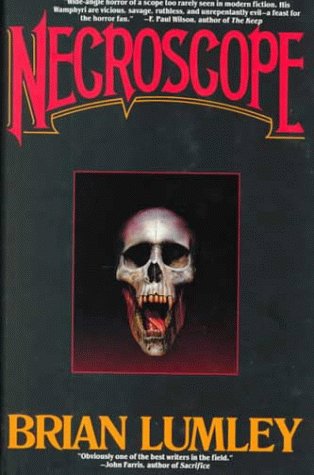
                • Cover of Necroscope
                  Necroscope

                  series · 26 books · 1982

                  completed

                  similar bycontemporary+1 more

                  Brian Lumley's Necroscope opens an eighteen-book horror saga (1982-2017) centered on Harry Keogh, a man who can speak with the dead. Harry turns that gift against Thibor Ferenczy, a vampire buried since the Middle Ages, and against Ferenczy's agent Boris Dragosani, a Soviet spy who has learned to tear secrets from corpses in pursuit of world domination. Later volumes follow Harry's descendants and successors through further wars against the vampiric Wamphyri, across sequel trilogies and story collections.

                • Cover of The City & the City
                  The City & the City

                  China Miéville · standalone novel · 2009

                  similar bycontemporarysurveillance

                  Inspector Tyador Borlú must travel to Ul Qoma to search for answers in the murder of a woman found in the city of Besźel. (Source: OCLC record)