More like Commander-1
anchored on:science fictionpost-apocalypticour worldnear futuredarksurvival+3 more
but
- Down to a Sunless Sea
David Grahamstandalone novel1979
similar bysurvivalwardarkscience fictionpost-apocalypticnear futuretenseour world+1 more
David Graham's Down to a Sunless Sea (1979) is a post-apocalyptic novel about a planeload of people during and after a short nuclear war, set in a near-future world where the USA is critically short of oil. The title of the book is taken from a line of the poem Kubla Khan by Samuel Taylor Coleridge.
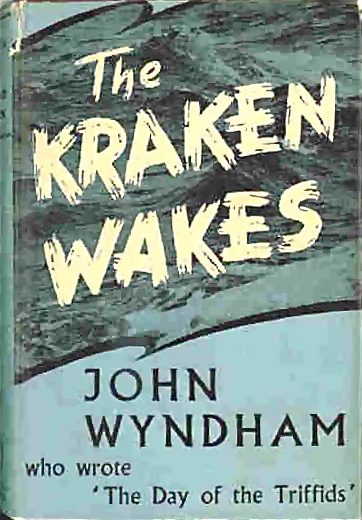
- The Kraken Wakes
John Wyndhamstandalone novel1953
similar bysurvivalwarscience fictiondarktenseour worldpost-apocalypticmid 20th century
" Behind a spectacular meteor shower actually hides the beginning of an invasion by a mysterious and powerful alien race. Earth's life is disrupted by the attacks of extraterrestrials whose war machines, emerging from the depths of the oceans, seem indestructible. The coalitioned forces of the whole world are worthless, powerless in the face of the indecipherable and deadly plans of a superior intelligence, capable of bringing the entire planet to the brink of catastrophe" Goodreads May 20, 2022
- I Am Legend
Richard Mathesonstandalone novel1954
similar bysurvivaldarkpost-apocalyptictenseour worldscience fictionnorth americamid 20th century
The last human survivor of the vampire epidemic has to maintain his defences against their onslaught, while attempting to research the cause and possibly solution to the plague. Robert Neville is the last living man on Earth... but he is not alone. Every other man, woman and child on the planet has become a vampire, and they are hungry for Neville's blood. By day he is the hunter, stalking the undead through the ruins of civilization. By night, he barricades himself in his home and prays for the dawn. How long can a man survive like this?
- The Fireman
Joe Hillstandalone novel2016
similar bysurvivalscience fictionpost-apocalypticnear futuredarktenseour worldnorth america
The Fireman is a novel set in a post-apocalyptic time by American author Joe Hill. The novel, Hill's fourth, tells the tale of a deadly spore that has infected most of the world's population. Hill first spoke of the novel in 2013 in promotional interviews for his then-new novel NOS4A2. The novel was released on May 17, 2016.
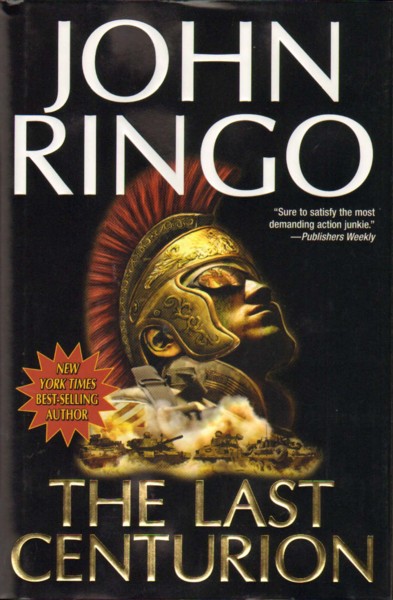
- The Last Centurion
John Ringostandalone novel2008
similar bysurvivalwarscience fictionpost-apocalypticnear futuredarktensenorth america
The Last Centurion is a 2008 stand-alone novel by John Ringo. It is written in "blog style" from the point of view of a U.S. Army officer known as "Bandit Six". The novel is set in a post apocalyptic world that has been ravaged by a brief ice age and disease.
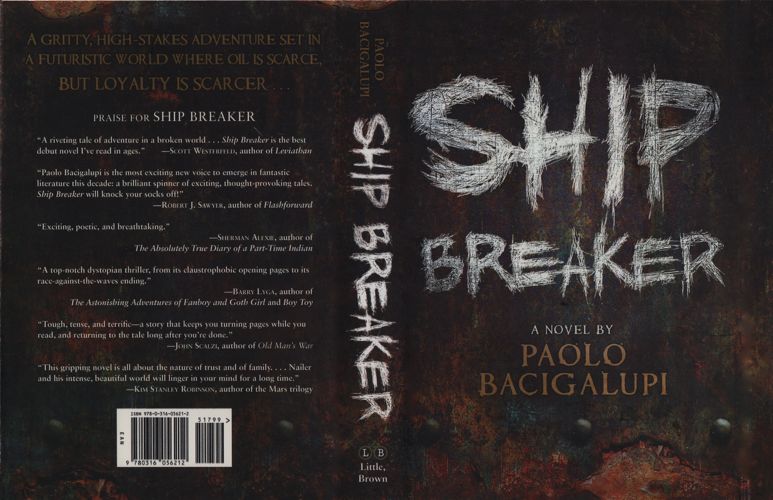
- Ship Breaker
series3 books2010
similar bydarksurvivalscience fictionpost-apocalyptictensenear futurenorth america+2 more
Nailer works a light-crew scavenging copper wire and scrap from beached oil tankers on a Gulf Coast reshaped by rising seas and vanished order, until a wrecked clipper ship washes ashore carrying a half-drowned girl from the wealthy world he'll never belong to. Paolo Bacigalupi's Ship Breaker follows Nailer as helping her pulls him out of his abusive father's orbit and into a much larger, more dangerous game involving her family's fortune. The sequels The Drowned Cities and Tool of War widen the same flooded, resource-scavenging future to new characters and coastlines.
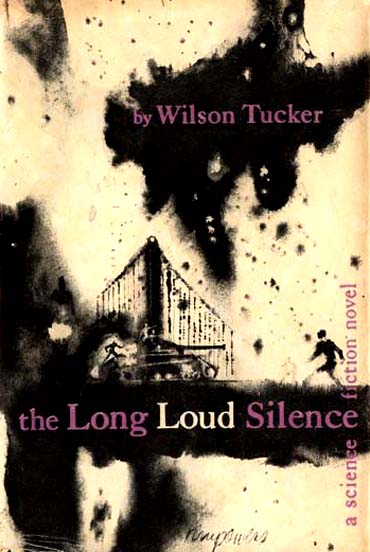
- The Long Loud Silence
Wilson Tuckerstandalone novel1952
similar bysurvivalwardarkscience fictionpost-apocalypticnear futuretensenorth america
Publisher's description: Tomorrow's war -- the war that could not be. The army of the United States was stationed along the length of the Mississippi River, guns pointed east -- with orders to shoot anyone attempting to cross. For the Final War was not a war of the ultimate bomb, of atomic hell. It was a war of the tiny germ, the filterable virus, the disease that came to conquer a nation -- and stayed to damn a world."
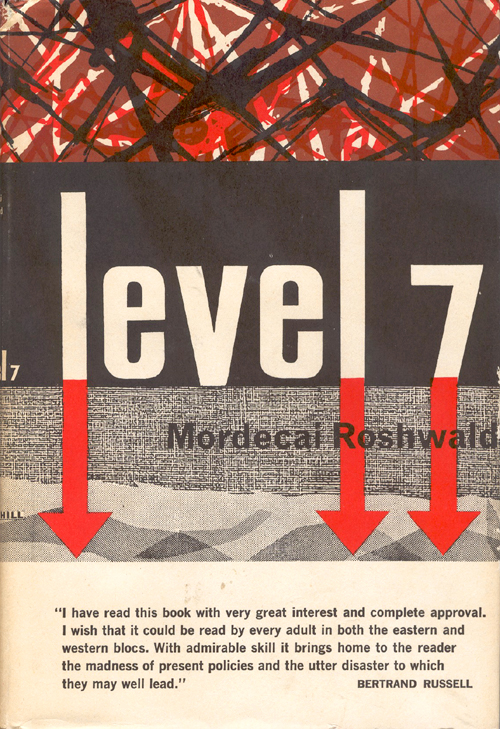
- Level 7
Mordecai Roshwaldstandalone novel1959
similar bysurvivalwardarkscience fictionnear futuretensepost-apocalyptic
Level 7 is a 1959 science fiction novel by American writer Mordecai Roshwald. It is told from the first-person perspective of a modern soldier, X-127, living in the underground military complex Level 7, where he and several hundred others are expected to reside permanently. X-127 fulfills the role of 'push-button' offensive initiator of his nation's nuclear weapons capacity against an unspecified enemy. X-127 narrates life within a deep shelter before, during and after a nuclear war that wipes out the human species.
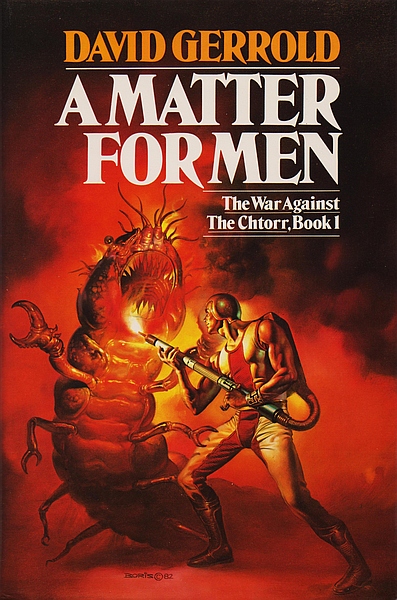
- War Against the Chtorr
series7 books1983
similar bysurvivalwarscience fictionpost-apocalypticnear futuretensedarknorth america+1 more
The War Against the Chtorr is a series of science fiction novels by American writer David Gerrold. The Chtorr series was originally planned as a trilogy, but as the story became more intricate, Gerrold realized that three books would not be enough for him to tell the entire story. For a time, he was uncertain how many books there would be in the end but plans on seven. As of 2022, four books have been completed. As of 2017, a fifth and sixth were in the works, 24 years after the publication of the fourth book.
- Survivalist
series41 books1981
similar bysurvivalwarscience fictionpost-apocalyptictensenear futurenorth america+1 more
The Survivalist is the generic title of Jerry Ahern's long-lived series of 29 pulp novels centering around John Rourke, an ex-CIA officer turned weapons and survival expert, in the aftermath of a nuclear war.
- Z for Zachariah
Robert C. O'Brienstandalone novel1975
similar bysurvivalscience fictionpost-apocalypticnear futuretenseour worldnorth america+1 more
Sixteen-year-old Ann Burden, on an Amish family farm in an isolated valley, believes she is the only survivor of nuclear war and nerve gas. One day a man arrives in a "safe-suit" that he and others have recently developed.
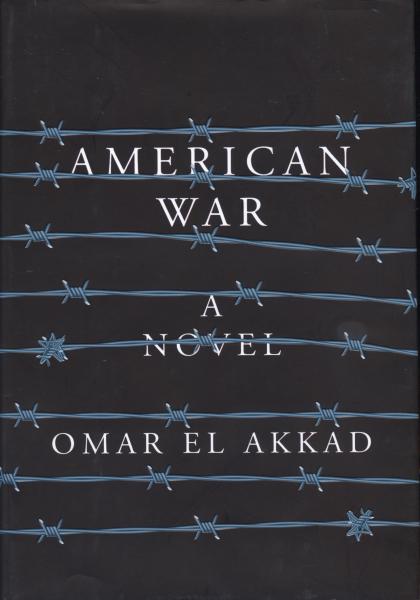
- American War
Omar El Akkadstandalone novel2017
similar bysurvivalwardarkscience fictionnear futurepost-apocalypticnorth america+1 more
American War is the first novel by the Egyptian-Canadian journalist Omar El Akkad. It is set in the United States in the near future, ravaged by climate change and disease, in which the Second Civil War has broken out over the use of fossil fuels.
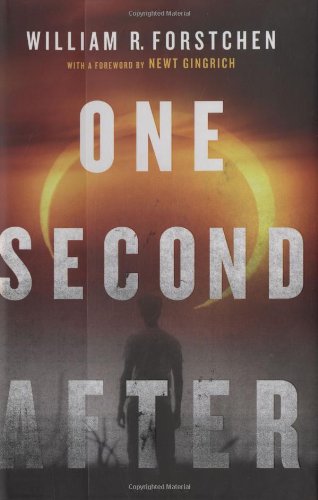
- One Second After / John Matherson
series4 books2009
similar bysurvivalpost-apocalypticwardarktensescience fictionnear futurenorth america
Retired army colonel and college professor John Matherson is living an ordinary life in a small North Carolina town when every piece of modern electronics around him dies at once -- the opening move of an electromagnetic pulse attack on the United States. William R. Forstchen's One Second After follows Matherson and his neighbors as they try to hold their community together with no power, no vehicles, and no outside help, and the sequels track the same slow, grinding rebuilding over the following years. The series leans hard into plausible, granular detail about what actually happens to a country when its grid goes down.
- Tomorrow!
Philip Wyliestandalone novel1954
similar bysurvivalwardarkscience fictionnear futuretensenorth america
Conjecture of a tomorrow which brings an attack by the enemy and the destruction of all major cities across an unprepared country.
- The Hunger Games
series3 books2008
part of The Hunger Games Universe
similar bysurvivalscience fictiondarktensepost-apocalypticnorth america+1 more
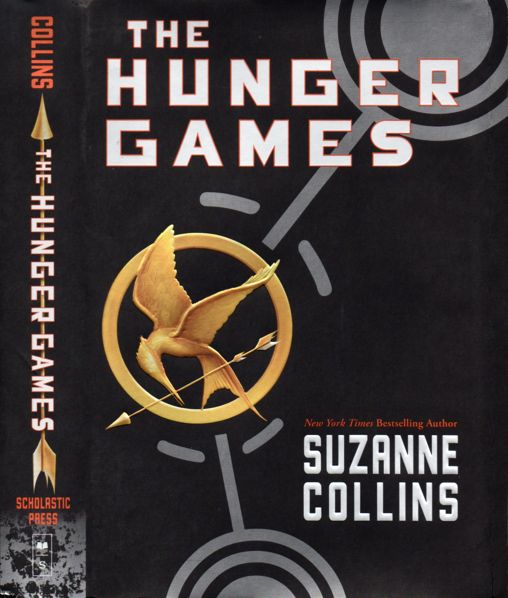
The Hunger Games is a series of young adult dystopian novels written by American author Suzanne Collins. The series consists of a trilogy that follows teenage protagonist Katniss Everdeen, as well as two prequels. The Hunger Games universe is a dystopia set in Panem, a post-apocalyptic North American country consisting of the wealthy Capitol and 12 districts in varying states of poverty. As punishment for rebellion, the Capitol hosts an annual battle royale competition called The Hunger Games. Each of the 12 districts must send two children between the ages of 12 and 18 to participate, and the last surviving child is dubbed the victor.
- The Passage
series3 books2010
similar bysurvivaldarkpost-apocalypticnear futuretensescience fictionnorth america
The Passage is a novel series by Justin Cronin. There are three published books in the series. The film rights were acquired by Fox Entertainment Group in 2007 for adaptation into a film trilogy, but after 12 years of development and planning, it was changed to a television series, which premiered in January 2019 and was canceled after the first season.
- Final Blackout
L. Ron Hubbardstandalone novel1948
similar bywarscience fictionnear futuredarktensepost-apocalypticour world+1 more
Final Blackout is a dystopic science fiction novel by American writer L. Ron Hubbard. The novel is set in the future and follows a man known as "the Lieutenant" as he restores order to England after a world war. First published in serialized format in 1940 in the science fiction magazine Astounding Science Fiction, Final Blackout was published in book form in 1948 by The Hadley Publishing Co. Author Services Inc. published a hardcover edition of the book in 1988, and in 1989 the Church of Scientology-affiliated organization Bridge Publications said that a film director named Christopher Cain had signed a contract to write and direct a movie version based on the book.
- Cell
Stephen Kingstandalone novel2006
similar bysurvivaldarkpost-apocalyptictenseour worldscience fictionnorth america
In Cell, King taps into readers fears of technological warfare and terrorism. Mobile phones deliver the apocalypse to millions of unsuspecting humans by wiping their brains of any humanity, leaving only aggressive and destructive impulses behind. Those without cell phones, like illustrator Clayton Riddell and his small band of "normies," must fight for survival, and their journey to find Clayton's estranged wife and young son rockets the book toward resolution.
- Swan Song
Robert R. McCammonstandalone novel1987
similar bysurvivaldarkpost-apocalypticnear futuretensescience fictionnorth america+1 more
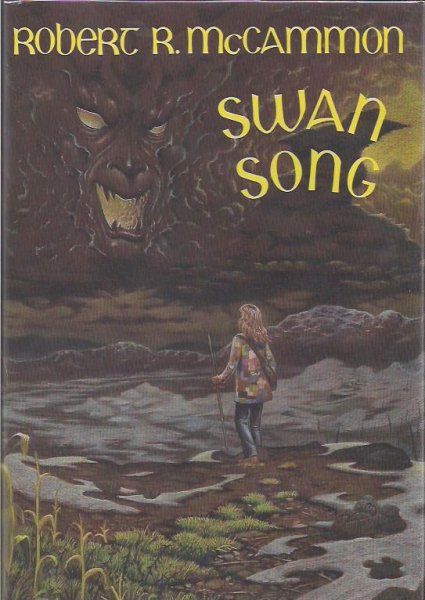
Swan Song is a 1987 post-apocalyptic horror novel by American novelist Robert R. McCammon. Published June 1, 1987, the novel describes the aftermath of a nuclear war that provokes an evolution in humankind. Swan Song won the 1987 Bram Stoker award, tying with Stephen King's Misery.
- The Vampire Earth
series12 books2003
similar bywardarkscience fictionpost-apocalyptictensenorth america+3 more
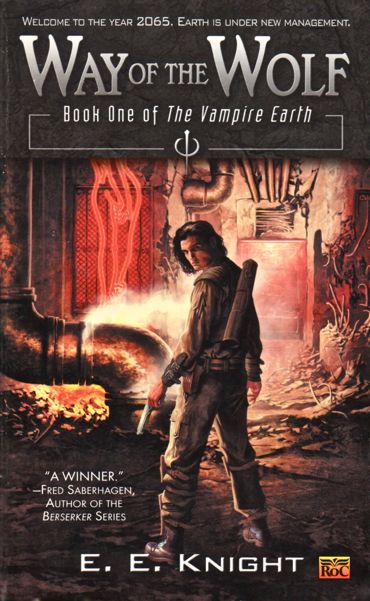
Vampire Earth is a series of science fiction/dark fantasy novels by American writer E. E. Knight.
- City at World's End
Edmond Hamiltonstandalone novel1951
similar bysurvivalscience fictionpost-apocalypticdarktenseour worldnorth america
An experimental atomic weapons test in small-town America goes catastrophically wrong, hurling the entire town of Middletown, buildings, streets and all, untold ages into Earth's future, to a time when the sun is dying and humanity's last city struggles on beneath a darkening sky. Cut off from everything and everyone they knew, the townspeople have to find a way to survive in a world that has nothing left to spare for latecomers. Edmond Hamilton's novel strands a slice of mid-century America at the literal end of the world.
- Make Room! Make Room!
Harry Harrisonstandalone novel1966
similar bysurvivalscience fictionnear futuredarktenseour worldnorth america
Make Room! Make Room! is a 1966 science fiction novel written by Harry Harrison exploring the consequences of both unchecked population growth on society and the hoarding of resources by a wealthy minority. It was originally serialized in Impulse magazine.
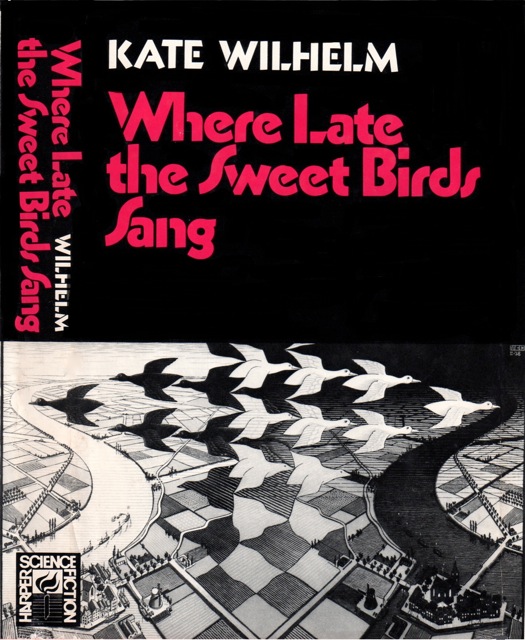
- Where Late the Sweet Birds Sang
Kate Wilhelmstandalone novel1976
similar bysurvivalscience fictionpost-apocalypticnear futuredarkour worldnorth america
Where Late the Sweet Birds Sang is a science fiction novel by American writer Kate Wilhelm, published in 1976. The novel is composed of three parts, "Where Late the Sweet Birds Sang," "Shenandoah," and "At the Still Point," and is set in a post-apocalyptic era, a concept popular among authors who took part in the New Wave Science Fiction movement in the 1960s.
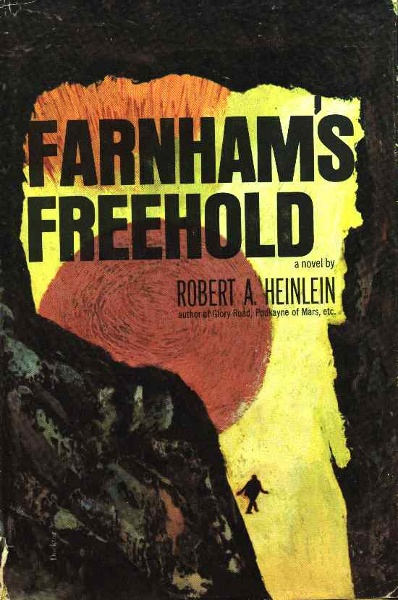
- Farnham's Freehold
Robert A. Heinleinstandalone novel1964
similar bysurvivalscience fictionnear futuretensepost-apocalypticnorth america+1 more
Farnham's Freehold is a science fiction novel by American writer Robert A. Heinlein. A serialized version, edited by Frederik Pohl, appeared in Worlds of If magazine. The complete version was published in novel form by G. P. Putnam later in 1964.