Loreful
HomeDiscover
Search series, authors…⌘K
Loreful

Reading orders for SF/F series and shared universes — with your place kept in every one.

Explore

UniversesSeriesWorksAuthorsAtlas

Help

FAQAboutSite map

Account & legal

Sign inCreate accountPrivacyTerms

Data

Built on ISFDB, Wikipedia, Wikidata and Open Library. Curated reading orders carry their reasoning on the page; the rest follow publication order. Data sources & licenses

© Loreful · data: ISFDB · CC BY

More like Complicity

anchored on:thriller & suspensemurder investigationour worldlate 20th centurydarkmystery & detective+5 more

but

Mood

The mood the book leaves you in.

  • The reading experience is propelled by journeys, exploration, and physical risk; excitement and forward momentum dominate over dread or introspection.
  • Joy and loss are deliberately mixed; the resolution grants characters something real while taking something else away, leaving warmth and sorrow together.
  • The book demands work from the reader — dense prose, difficult structure, unfamiliar ideas, or morally uncomfortable material — as part of its intended effect.
  • Grim events, cruelty, or despair dominate the atmosphere, and the book does not soften them with comfort or comic relief.
  • The atmosphere is quietly unsettling — wrongness, unease, and the uncanny pervade the book without necessarily escalating into overt horror.
  • The book is built to move the reader; character feeling is foregrounded and major scenes aim at a strong emotional response.
  • Humor is a primary aim and the prose plays for laughs — comic situations, wit, or dialogue produce sustained comedy, not occasional levity.
  • The book insists that things can improve; effort and decency are shown to matter, and the arc bends toward better outcomes even through hardship.
  • The book teaches as it goes — real facts, history, science, or craft are conveyed in enough depth that learning is part of the reading experience.
  • The book is designed to uplift and motivate, presenting perseverance or achievement in a way that invites the reader to aspire or act.
  • The overall register is cheerful and easygoing; stakes are kept gentle and the book avoids dwelling on pain or dread.
  • Withheld information drives the experience; the book sustains enigmas and secrets the reader wants resolved, whatever its genre.
  • The book is contemplative and inward-looking, giving more weight to thought, memory, and meaning than to external events.
  • The book works as comfort reading — low tension, a soothing pace, and an atmosphere the reader can unwind in.
  • Grief, loss, or melancholy set the dominant register, and the book lets sorrow stand rather than resolving it into comfort.
  • Sustained suspense is the point; the book keeps the reader braced for what happens next through danger, pressure, or impending revelation.
  • Playful invention and charm define the register — fanciful conceits, light absurdity, and a narration that delights in its own oddity.

About

What the story runs on.

  • Stories in which extraterrestrial beings are central — as characters, cultures, or the object of the plot.
  • Stories structured as a quest — a journey undertaken to find, deliver, or destroy something of great import.
  • Stories in which staying alive against nature, catastrophe, or scarcity is the central problem.
  • Stories of lovers kept apart by law, family, faith, or station, where the obstacle to love is the plot.
  • Stories in which a friendship — its making, testing, or loss — is the emotional center.
  • Stories of growing up — a young protagonist crossing from childhood into adult knowledge and responsibility.
  • Stories about who a character truly is — self-discovery, doubled lives, and the search for a self.
  • Stories about mourning — living through the death of a loved one and what loss does to the survivors.
  • Stories in which a buried family truth — hidden parentage, crimes, or shames — surfaces and reorders the present.
  • Stories driven by maneuvering for power — factions, conspiracies, and statecraft conducted in shadow.
  • Stories in which war itself is the subject — combat, occupation, and what warfare does to soldiers and civilians.
  • Stories organized around investigating a killing — the case, the clues, and the pursuit of the killer, in any genre's clothing.

Shelf

Where it sits in the library.

    • Fiction built on magic or other supernatural elements that have no scientific explanation.
    • Secondary-world fantasy at large scale, where the fate of nations or the world turns on the protagonists' struggle.
    • Fantasy set in a recognizably modern city or contemporary world where the supernatural intrudes on everyday life.
    • Fantasy that blends in horror's atmosphere and imagery, keeping a fantastical frame around grim or frightening material.
    • Action-driven fantasy following warriors or rogues with personal stakes against sorcerous threats, rather than world-spanning conflicts.
    • Fantasy set in a real historical period or a close analogue of one, with magic woven into the era.
    • Fantasy in which protagonists cross from the ordinary world into another world through a portal or similar passage.
    • Fiction that retells or reworks a traditional fairy tale in a new form or setting.
    • Fantasy drawing directly on myths, legends, and folklore, retelling them or building on their figures and logic.
    • Fantasy of ghosts, vampires, shapeshifters, psychics, and similar phenomena, usually set in an otherwise ordinary world.
    • Fiction mixing science-fictional trappings with overtly magical or impossible elements in one setting.
    • Low-stakes fantasy emphasizing comfort, community, and everyday pleasures over conflict and peril.
    • Speculative fiction of pervasive moral ambiguity, violence, and cynicism that rejects heroic conventions — fantasy and SF alike.
      • Fiction that extrapolates from science and technology — future societies, space travel, or speculative inventions — within at least nominally natural laws.
      • Science fiction of interstellar scope — starships, galactic polities, and adventure across star systems.
      • Science fiction committed to scientific rigor, where technical plausibility constrains the story.
      • Science fiction centered on armed forces and warfare, told largely from a military point of view.
      • Science fiction of networked, corporate-dominated near futures, pairing high technology with social decay.
      • Science fiction styled on nineteenth-century steam-powered technology, often in a Victorian or pseudo-Victorian setting.
      • Fiction depicting an oppressive or catastrophic society, presented as a warning.
      • Fiction set after civilization's collapse, following survivors in the ruins of the old world.
      • Fiction in which characters move between past and future, and the mechanics or consequences of that travel drive the plot.
      • Fiction exploring a world where a historical event went differently and history diverged from ours.
      • Science fiction about humanity's first encounter and communication with an alien intelligence.
      • Science fiction in which extraterrestrial forces attack or occupy Earth and humanity resists.
      • Fiction whose primary aim is to frighten or unsettle the reader through dread, menace, or the monstrous.
      • Horror of vast, indifferent, incomprehensible entities before which humanity is insignificant, in the Lovecraft tradition.
      • Horror of decaying houses, buried family secrets, and oppressive atmosphere in the Gothic literary tradition.
      • Horror centered on hauntings and the returning dead.
      • Horror located in the mind — paranoia, obsession, and unreliable perception rather than external monsters.
      • Horror built around the reanimated dead and survival amid their outbreaks.
      • Horror defined by explicit, transgressive gore that refuses to cut away from violence.
      • Speculative fiction of the strange and uncanny that resists both natural explanation and standard genre categories.
      • Fiction organized around solving a crime or puzzle, typically following an investigator toward the identification of a culprit.
      • A puzzle-first mystery that lays out clues so the culprit's identity can be deduced before the reveal.
      • Crime fiction of moral ambiguity, fatalism, and hard-edged style, set among the corrupt and the doomed.
      • A mystery following the realistic routines of police work — forensics, interviews, and case-building.
      • A gentle mystery with an amateur sleuth, a small community, and violence kept off the page.
      • A mystery set in a past era, where the investigation works within that period's methods and society.
      • Fast-paced fiction driven by imminent danger, pursuit, or high-stakes conspiracy, built to sustain tension.
      • A thriller of espionage — agents, tradecraft, and intelligence services in conflict.
      • A thriller centered on lawyers and the courtroom, where litigation carries the suspense.
      • A thriller driven by detailed contemporary or near-future technology, often military or scientific.
      • A thriller whose tension comes from mental states and manipulation between characters rather than external action.
      • Fiction whose central plot is a romantic relationship and its development toward an emotionally satisfying resolution.
      • Romance in which one or both partners are supernatural beings, blending fantasy elements into the love story.
      • A fantasy-romance hybrid in which the romantic arc and the fantasy plot carry equal weight.
      • Romance set in a past era, with courtship shaped by the period's society and manners.
      • Romance set in the present day, without supernatural or historical elements.
      • Fiction set in a real past period, where the historical setting materially shapes characters and events.
        • General and literary fiction emphasizing prose style, character interiority, or formal ambition over genre plot conventions.
        • Fiction in a realistic world where magical events occur and are treated as ordinary, in the tradition of Latin American literature.
        • Fiction that ridicules people, institutions, or society in order to criticize them.
        • Fiction of dreamlike, irrational imagery and logic that breaks from realistic representation.
        • Fiction that plays with narrative convention through metafiction, fragmentation, and self-reference.
        • Fiction propelled by journeys, exploration, and physical peril, where action and survival carry the plot.
        • Adventure fiction of ships and seafaring — naval engagements, voyages, and life at sea.
        • Fiction of the American frontier West — gunmen, ranchers, and lawmen, typically in the late nineteenth century.
        • Fiction centered on soldiers, campaigns, and the experience of warfare, historical or imagined.
          • Fiction written primarily to amuse, using comedic situations, wit, or parody as its organizing principle.
            • Multi-generational fiction following a family or dynasty across decades, with inheritance and kinship as the through-line.
              • Fiction whose world runs on explicit game mechanics — levels, stats, and skills that characters can see and exploit.
                • Fiction about costumed or superpowered heroes and their conflicts with comparable villains.

                Practical

                How long a commitment, whether it stands alone, and whether it has finished.

                Tap a chip to ask for it · tap again to rule it out · once more to clear. Numbers show what would be left.

                • Cover of The Shining Girls
                  The Shining Girls

                  Lauren Beukes · standalone novel · 2013

                  similar bylate 20th centurymurder investigationthriller & suspenserevengedarktenseour worldmultiple pov

                  The Shining Girls is a science fiction thriller novel by South African author Lauren Beukes. The book centers on a mysterious drifter who murders the titular "shining girls" and one victim's attempts to expose him.

                • Cover of Dark Places
                  Dark Places

                  Gillian Flynn · standalone novel · 2009

                  similar bylate 20th centurymurder investigationdarktensemystery & detectivethriller & suspense

                  Dark Places is a mystery novel by Gillian Flynn published in 2009. The novel deals with class issues in rural America, intense poverty and the Satanic cult hysteria that swept the United States in the 1980s. Dark Places was shortlisted for the Crime Writers' Association Ian Fleming Steel Dagger Award and won Dark Scribe Magazine's Black Quill Award for Dark Genre Novel of the Year. It was also listed on The New York Times Best Seller list for hardcover fiction for two consecutive weeks. A film adaptation of the novel starring Charlize Theron was released on August 7, 2015.

                • Cover of London Fields
                  London Fields

                  Martin Amis · standalone novel · 1989

                  similar bylate 20th centurymurder investigationdarktensemystery & detectivebritish islesliterary & general

                  London Fields is a black comedy murder mystery novel by the British writer Martin Amis, published in 1989. The tone gradually shifts from high comedy, interspersed with deep personal introspections, to a dark sense of foreboding and eventually panic at the approach of the deadline, or "horrorday", the climactic scene alluded to on the very first page.

                • Cover of Cold in July
                  Cold in July

                  Joe R. Lansdale · standalone novel · 1989

                  similar bylate 20th centuryrevengedarktensemystery & detectivethriller & suspense+1 more

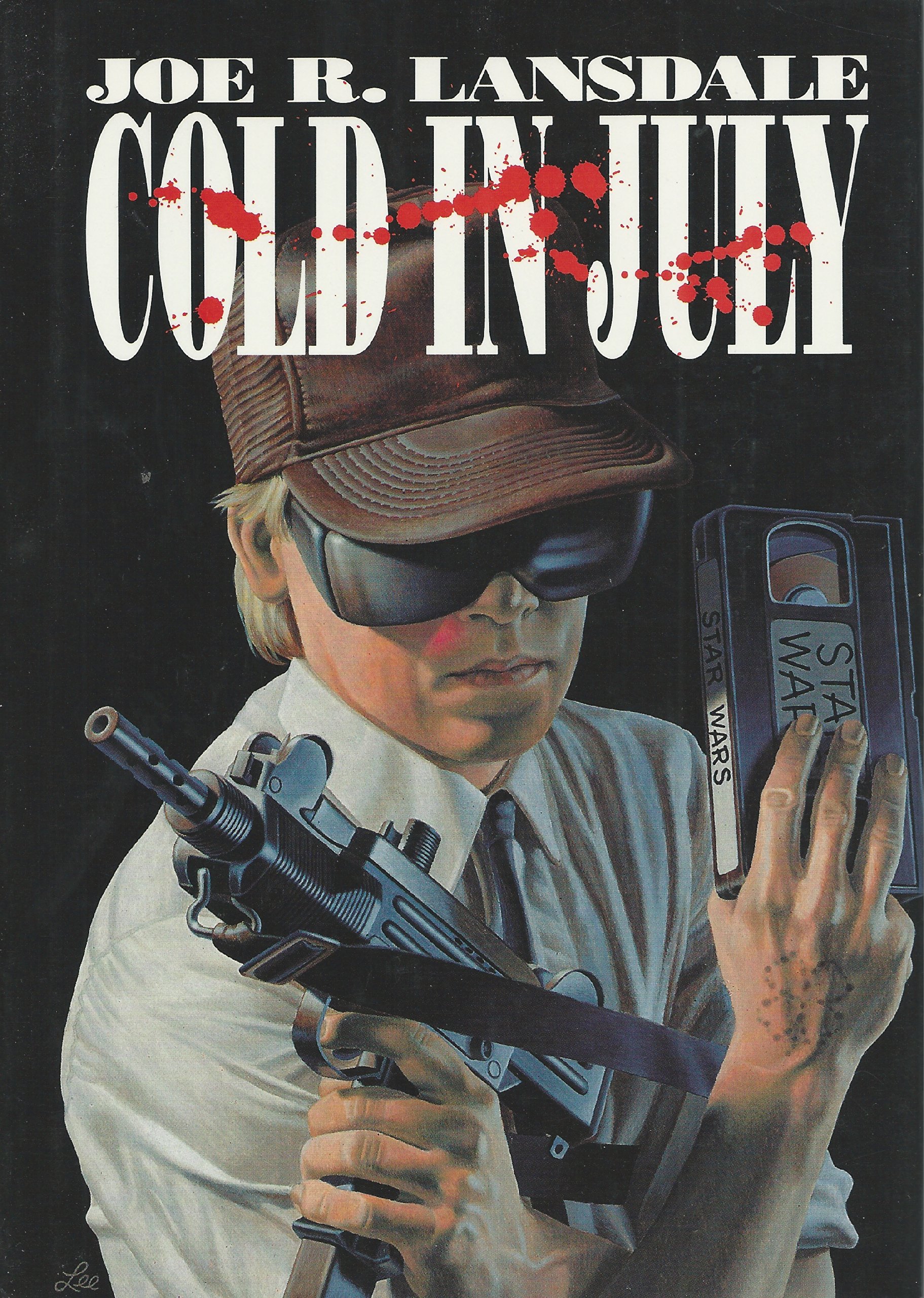
                  Cold in July is a 1989 American crime novel written by Joe R. Lansdale.

                • Cover of The Brigade
                  The Brigade

                  John Shirley · standalone novel · 1981

                  similar bylate 20th centurymurder investigationthriller & suspenserevengedarktenseour world

                  In the shadows the Saturday Night Killer is waiting. He's struck thirteen times, each knife murder sicker than the last. The Brigade was formed to clean up the town of Salton and run the killer off the streets. But the vigilantes' drunken shotgun rule is hiding something. It's Saturday night and the lights are going out one by one. Out there in the dark the killer is ready..........

                • Cover of Assassin
                  Assassin

                  Shaun Hutson · standalone novel · 1988

                  similar bylate 20th centurydarkthriller & suspenserevengetensebritish isles

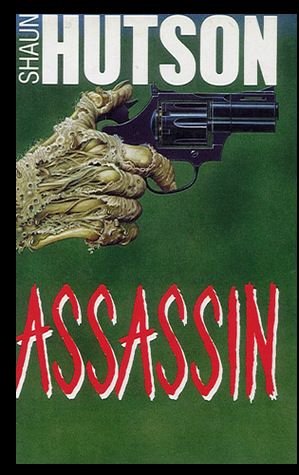
                  London was in the grip of its bloodiest bout of gang warfare for two years. Shootings in the street. Car chases and torture. Into this world of corruption, violence, madness and death came the Assassin. A force more powerful than vengeance, more lethal than a lorry full of high-velocity weapons and more terryfying than any nightmare..... Shock horror at its best.

                • Cover of Crusader
                  Crusader

                  Edward Bloor · standalone novel · 1999

                  similar bylate 20th centurymurder investigationthriller & suspensetensemystery & detective+1 more

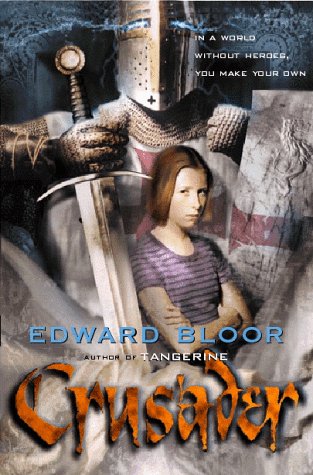
                  There¹s a dark secret in fifteen-year-old Roberta Ritter¹s past. Her mother was murdered years ago by an unknown killer. Now, Roberta must separate the real from the virtual as she begins her own crusade to discover the cause of a new rash of hate crimes and the truth behind her mother¹s death.

                • Cover of The Bad Place
                  The Bad Place

                  Dean R. Koontz · standalone novel · 1990

                  similar bylate 20th centurydarktensemystery & detectivethriller & suspense+1 more

                  The Bad Place is a horror novel by American writer Dean Koontz, released in 1990. It includes elements of horror, suspense, and mystery, and is presented partially as a twist on the private eye drama. The story follows Frank Pollard, a man who wakes up each night with no memory of where he has been or what he has done, only to find himself covered in injuries or in possession of strange items. As his condition worsens, private investigators Bobby and Julie Dakota are hired to track him and uncover the truth behind his blackouts. Their investigation leads them into a disturbing web of genetic experimentation, family secrets, and a hidden force manipulating human lives from the shadows. As the plot unfolds, the novel reveals that Frank and others are being pursued by powerful, almost inhuman figures connected to a twisted experiment involving selective breeding and enhanced abilities. The Dakotas become entangled in a struggle not only to save Frank but also to survive against forces that seem to operate beyond normal human limits. Themes in the novel include identity, memory loss, the abuse of science, and the nature of evil. Koontz blends psychological horror with fast-paced action, creating a narrative that shifts between detective fiction and supernatural thriller. The book received generally positive reception from readers who enjoyed Koontz’s signature suspense style, though some critics noted its complex and sometimes chaotic plot structure. Over time, it has remained one of his more memorable early-1990s works due to its unusual blend of genres and its dark, unsettling tone.

                • Cover of The Majorettes
                  The Majorettes

                  John Russo · standalone novel · 1979

                  similar bylate 20th centurymurder investigationdarkrevengetensemystery & detectivethriller & suspense

                  One by one, the pretty majorettes are found dead, raped and horribly mutilated. The police can't seem to find a pattern or a motive for such depraved crimes, but blame the crimes on the gang of black-leather-clad bikers that hang out on the edge of town. If the police won't do anything, the kids are going to have to take things into their own hands.

                • Cover of The Sweetman Curve
                  The Sweetman Curve

                  Graham Masterton · standalone novel · 1979

                  similar bylate 20th centurythriller & suspensemurder investigationdarktenseour world

                  A serial killer apparently runs over people at random on the motorway.

                • Cover of Ghost Story
                  Ghost Story

                  Peter Straub · standalone novel · 1979

                  similar bylate 20th centurydarkrevengetense

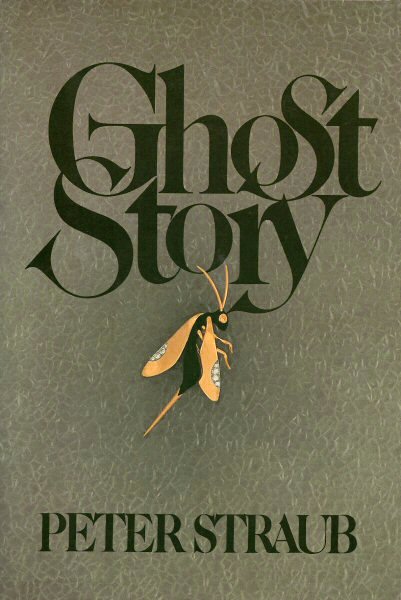
                  Four prominent citizens of a small town in upstate New York who share guilt over something that happened in their youth are revisited late in life by a destructive evil force which uses their guilt as an opportunity to destroy them as well as the entire town.

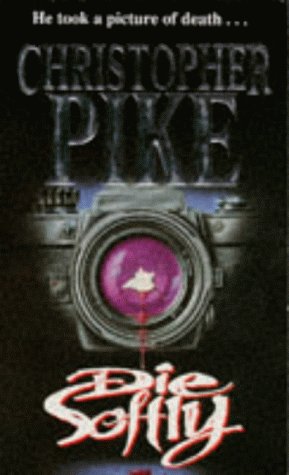
                • Cover of Die Softly
                  Die Softly

                  Christopher Pike · standalone novel · 1991

                  similar bylate 20th centurymurder investigationtenseour worldmystery & detectivethriller & suspense

                  HE MAY HAVE PHOTOGRAPHED A MURDER. Herb just wanted to photograph the cheerleaders in the school showers. He planted his camera high in the corner where no one could see it, and rigged it to a special homemade timer. He did that Thursday night, and he hoped that by Friday night he would have an exciting roll of film to develop. But a girl dies Friday afternoon. On the surface it appears to be nothing more than a tragic car accident. But when Herb finally does collect his roll of film, he develops a picture that shows a shadowy figure sneaking up on the girl who has died -- sneaking up on her with a baseball bat. It makes Herb wonder if the girl was dead long before the car accident. But unfortunately for Herb, he doesn't wonder if the murderer knows he took the picture.

                • Cover of The Boneyard
                  The Boneyard

                  series · 3 books · 2006

                  similar bylate 20th centurymurder investigationdarktenseour worldmystery & detective

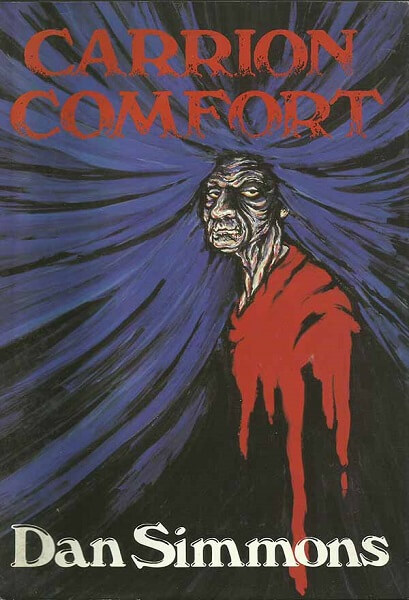
                • Cover of Carrion Comfort
                  Carrion Comfort

                  Dan Simmons · standalone novel · 1989

                  similar bylate 20th centurydarktenseour worldmultiple pov

                  Carrion Comfort is a science fiction/horror novel by American writer Dan Simmons, published in 1989 in hardcover by Dark Harvest and in 1990 in paperback by Warner Books. It won the Bram Stoker Award, the Locus Poll Award for Best Horror Novel, and the August Derleth Award for Best Novel. It is based on a novelette of the same title, published in 1983 in the magazine Omni. The first half of the novelette makes up chapter 1 of the novel, while the second half forms chapter 3.

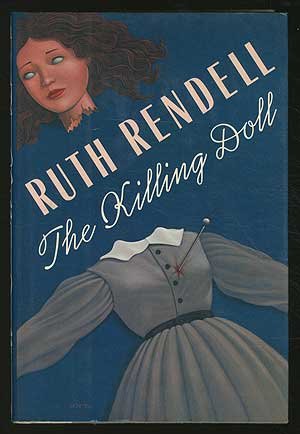
                • Cover of The Killing Doll
                  The Killing Doll

                  Ruth Rendell · standalone novel · 1984

                  similar bylate 20th centurymurder investigationdarktensemystery & detectivebritish isles

                  The Killing Doll is a novel by British writer Ruth Rendell, published in 1984.

                • Cover of Running Dog
                  Running Dog

                  Don DeLillo · standalone novel · 1978

                  similar bylate 20th centurymurder investigationtenseour worldthriller & suspenseliterary & general+1 more

                  Running Dog is a 1978 novel by Don DeLillo. The book concerns Moll Robbins, a reporter for the eponymous magazine – a fictional underground, once-radical magazine which satirizes Rolling Stone – whose investigation into the suspicious activities of a member of the U.S. Senate uncover the possible existence of a pornographic film of Adolf Hitler, purportedly filmed in his bunker in the climactic days of Berlin's fall. As Robbins digs deeper into the film's existence and whereabouts, more and more individuals become obsessed with finding it, including underground art collectors and the Mafia, leading to a surreal and violent series of events.

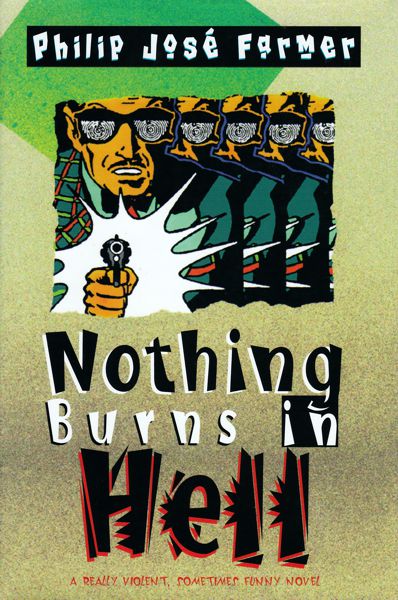
                • Cover of Nothing Burns in Hell
                  Nothing Burns in Hell

                  Philip José Farmer · standalone novel · 1998

                  similar bylate 20th centurymurder investigationrevengedarkour worldmystery & detective

                  This one is for fans of Quentin Tarantino and of the ever-present gratuitous violence of Robert Altman. A self-obsessed private detective married to a sincere wiccan is hired to witness an illegal transfer of money in a rainy cemetery, a transaction that goes bloody wrong. Chasing the bad guys, he ends up the prisoner of a gruesome threesome in their Dogpatchy cabin in the woods. His escape involves nudity, blood, death, and a terrible snapping turtle. That's how the mystery begins. Then it leads the private eye through all the levels of Peoria society, geography, and history. Absurdly funny things happen continually in the peripheral vision of the story. No violence is left out. Greed, venality, and hatred are unleashed. Unpleasant family history is brought to light. All the sex is offstage. The body count mounts steadily, with occasional mutilations.

                • Cover of After the First Death
                  After the First Death

                  Robert Cormier · standalone novel · 1979

                  similar bylate 20th centurythriller & suspensedarktenseour worldmultiple pov+1 more

                  After the First Death is a 1979 suspense novel for young adults by American author Robert Cormier. The focus is on the complex relationships that develop between the various characters. The novel takes the name from the poem, "A Refusal to Mourn the Death, by Fire, of a Child in London" by Dylan Thomas. It originates from the last line: "After the first death, there is no other."

                • Cover of The Price of Silence
                  The Price of Silence

                  Kate Wilhelm · standalone novel · 2005

                  similar bymurder investigationdarktenseour worldmystery & detectivethriller & suspense

                  In dire need of a job, Todd Fielding accepts the offer to work at The Brindle Times-even if she has to move to the lackluster town of Brindle. As she settles into her new home, Todd is fully prepared to adapt to the boredom of small-town life, but her preconceptions of Brindle are completely shattered when a local girl disappears. Even more shocking to Todd is the town's sheer indifference to the incident. No one-not even the police-appears particularly concerned. When Todd looks deeper into the story, she discovers that five other girls have "run away" from Brindle under strange circumstances over the past twenty years. As she sets out to uncover the history of a town that has cloaked itself in secrecy for far too long, evidence of manipulation and cold-blooded murder begin to unravel. And Todd may be the next victim to pay the deadly price of silence.

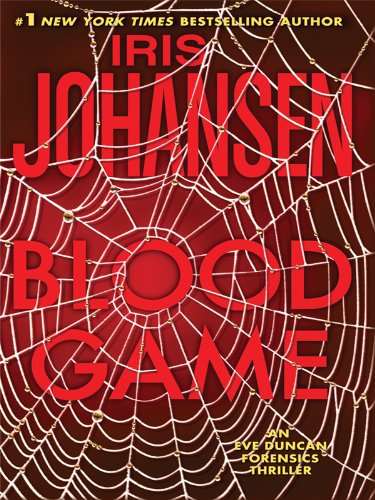
                • Cover of Eve Duncan Forensics Thrillers
                  Eve Duncan Forensics Thrillers

                  series · 2 books · 2009

                  similar bymurder investigationthriller & suspensedarktensemystery & detective+1 more

                • TS
                  The Silence of the Lambs

                  Thomas Harris · standalone novel · 1988

                  similar bylate 20th centurymurder investigationdarkthriller & suspensetensemystery & detective

                  The Silence of the Lambs is a 1988 psychological horror crime thriller novel by Thomas Harris. Published August 29, it is the sequel to Harris's 1981 novel Red Dragon, and both novels feature the cannibalistic serial killer and brilliant psychiatrist Dr. Hannibal Lecter. This time, however, he is pitted against FBI trainee Clarice Starling as she works to solve the case of the "Buffalo Bill" serial killer. St. Martin’s Press also issued uncorrected proof copies in 1988, which are considered scarce by collectors. It is the most well-known installment of Harris's Hannibal Lecter series, selling over 10 million copies.

                • Cover of Deception Point
                  Deception Point

                  Dan Brown · standalone novel · 2001

                  similar bythriller & suspensemurder investigationtenseour worldmystery & detective

                  Deception Point is a 2001 mystery-thriller novel by American author Dan Brown. It is Brown's third novel. It was published by Simon & Schuster.

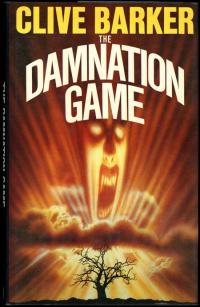
                • Cover of The Damnation Game
                  The Damnation Game

                  Clive Barker · standalone novel · 1985

                  similar bydarkrevengetenseour worldbritish isles

                  Marty Strauss is a compulsive gambler fresh out of prison when he's hired as bodyguard for Joseph Whitehead, a reclusive tycoon whose fortune and continued existence trace back to a bargain struck decades earlier, during World War II, with a man named Mamoulian. That bargain is coming due: Mamoulian, who commands powers reaching well past death, wants what he's owed, and Whitehead's household -- his wife, his daughter Carys, his previous bodyguard -- is caught in the middle of a decades-old debt finally being called in. Marty, out of his depth from the start, finds himself the only one willing to stand against Mamoulian. Clive Barker's first novel.

                • Cover of The Lifeguard
                  The Lifeguard

                  Richie Tankersley Cusick · standalone novel · 1988

                  similar bylate 20th centurythriller & suspensemurder investigationtensemystery & detective+1 more

                  A summer of sun, sand and murder. Kelsey's summer should have been paradise: An invitation to rich and famous Beverly Island, complete with sun-drenched beaches and three gorgeous lifeguards on duty. But Kelsey's summer is the opposite of paradise. It starts with the note under her pillow from a girl who's missing. Then there's the crazy man in the lighthouse who won't leave Kelsey alone. And there have been a number of suspicious drownings.... At least she has the lifeguards around to protect her.... Poor Kelsey. Someone forgot to tell her that lifeguards don't always like to save lives.