More like Compounded Interests
anchored on:science fictionnear futurepsychic powersour worldfunny
but
- Stranger in a Strange Land
Robert A. Heinleinstandalone novel1961
similar byscience fictionpsychic powersnear futureour world
Stranger in a Strange Land is a 1961 science fiction novel by the American author Robert A. Heinlein. It tells the story of Valentine Michael Smith, a human who comes to Earth in early adulthood after being born on the planet Mars and raised by Martians, and explores his interaction with and eventual transformation of Terran culture.
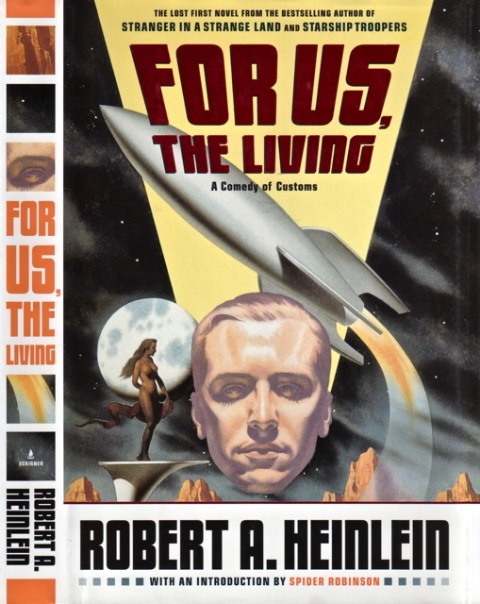
- For Us, the Living: A Comedy of Customs
Robert A. Heinleinstandalone novel2004
similar byfunnyscience fictionnear futurepolitical intriguetime travel
For Us, the Living: A Comedy of Customs is a science fiction novel by American writer Robert A. Heinlein. It was written in 1938 and published for the first time in 2003. Heinlein admirer and science fiction author Spider Robinson titled his introductory essay "RAH DNA", as he believes this first, unpublished novel formed the DNA of Heinlein's later works.
- Crosstalk
Connie Willisstandalone novel2016
similar byfunnyscience fictionour worldpsychic powers
Crosstalk is a science fiction novel by Connie Willis, published in 2016. It is a romantic comedy that explores the intersection of telephones and telepathy. In a similar situation to Bellwether and Passage, the main character, Briddey Flannigan, is part of a larger institution who gets caught up in series of escalating events. Additionally, Crosstalk like Bellwether and Passage feature themes of neuroscience, communication and technology.
- Time Is the Simplest Thing
Clifford D. Simakstandalone novel1961
similar byscience fictionnear futureour worldpsychic powerstime travel
Time Is the Simplest Thing is a science fiction novel by American writer Clifford D. Simak, first published in 1961. The story combines paranormal abilities with themes of space and time travel. The underlying theme is intolerance of ordinary people towards those with unusual abilities.
- The Lathe of Heaven
Ursula K. Le Guinstandalone novel1971
similar byscience fictionnear futureour worldpsychic powers
The Lathe of Heaven is a 1971 science fiction novel by American writer Ursula K. Le Guin, first serialized in the American science fiction magazine Amazing Stories. It won the 1972 Locus Award for Best Novel and was a finalist for the 1971 Nebula Award for Best Novel and 1972 Hugo Award for Best Novel. Two television film adaptations were released: the PBS production, The Lathe of Heaven (1980), and Lathe of Heaven (2002), a remake produced by the A&E Network.
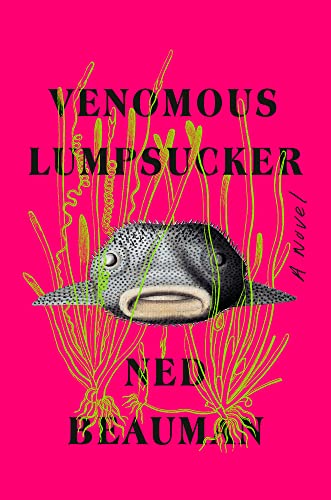
- Venomous Lumpsucker
Ned Beaumanstandalone novel2022
similar byfunnyscience fictionnear futureour world
She is studying the venomous lumpsucker. It might be intelligent. It might also be threatened by extinction. He has invested in extinction credits. It would cost money if an intelligent species went extinct because of him and his company.
- The Great Time Machine Hoax
Keith Laumerstandalone novel1963
similar byfunnyscience fictionnear futureour world+1 more
In the near future, a man inherits from his great grandfather a super computer which has been surreptitiously augmenting itself and accumulating and analysing all available data about the universe for the intervening years, and is capable of creating a realistic virtual reality of any situation, upon request.
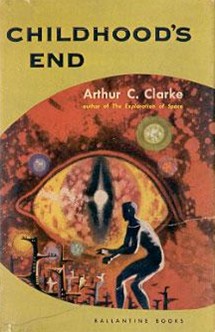
- Childhood's End
Arthur C. Clarkestandalone novel1953
similar byscience fictionour worldnear future+1 more
Childhood's End is a 1953 science fiction novel by the British author Arthur C. Clarke. The story follows a peaceful alien invasion of Earth by mysterious Overlords, whose arrival begins decades of apparent utopia under indirect alien rule, at the cost of human identity and culture.
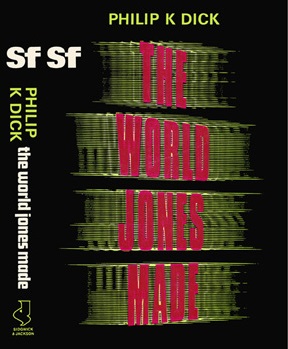
- The World Jones Made
Philip K. Dickstandalone novel1956
similar byscience fictionnear futurepsychic powerspolitical intrigue+2 more
The World Jones Made is a 1956 science fiction novel by American writer Philip K. Dick, examining notions of precognition, humanity, and politics. It was first published by Ace Books as one half of Ace Double D-150, bound dos-à-dos with Agent of the Unknown by Margaret St. Clair.The story takes place after a nuclear war in which society is dominated by relativism, which rejects absolute truths and preaches tolerance as the highest principle. The mutant Floyd Jones, who can see into the future, plans to overthrow the system and colonise space. The story ends with the defeat of Jones, whose plans fail despite his ability to see the future due to the immutability of fate.
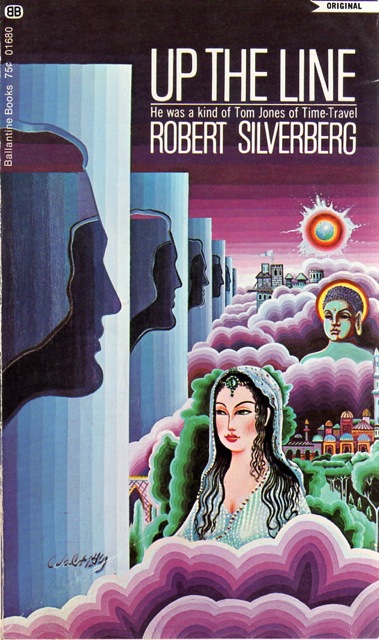
- Up the Line
Robert Silverbergstandalone novel1969
similar byfunnyscience fictionour worldtime travel
Up the Line (1969) is a time travel novel by American science fiction author Robert Silverberg. The plot revolves mainly around the paradoxes brought about by time travel and is considered an example of the more sexually-permissive era of late 1960s American science-fiction, a reflection of the counterculture of its day. It was nominated for a Nebula Award for Best Novel in 1969 and a Hugo Award for Best Novel in 1970 but lost to Ursula K. Le Guin's The Left Hand of Darkness both times.
- Greg Mandel
series5 books1993
similar byscience fictionnear futureour worldpsychic powers+1 more
Greg Mandel is a former special-forces soldier with a psychic 'gland' implant for reading emotions, working as a private investigator in a near-future Britain recovering from an authoritarian climate-crisis government. Peter F. Hamilton's original trilogy - Mindstar Rising, A Quantum Murder, The Nano Flower - follows his cases as ordinary detective work keeps sliding into conspiracies with much bigger stakes; The Suspect Genome revisits an older Mandel decades later. It was Hamilton's first fiction, blending noir detective plotting with hard SF.
- The Dream Master
Roger Zelaznystandalone novel1966
similar byscience fictionnear futureour worldpsychic powers
The Dream Master (1966) is a science fiction novel by American writer Roger Zelazny, based on the novella He Who Shapes. Zelazny's original title was The Ides of Octember. He Who Shapes won the 1965 Nebula Award for Best Novella.
- Jennifer Government
Max Barrystandalone novel2003
similar byfunnyscience fictionnear futurepolitical intrigue+1 more
In the near future, where most of the English-speaking world is part of the United States, whose government has become vestigial, police departments are for hire, and corporations and their customer loyalty alliances possess almost unlimited power; a sundry cast of characters are caught up in various levels of a power struggle.
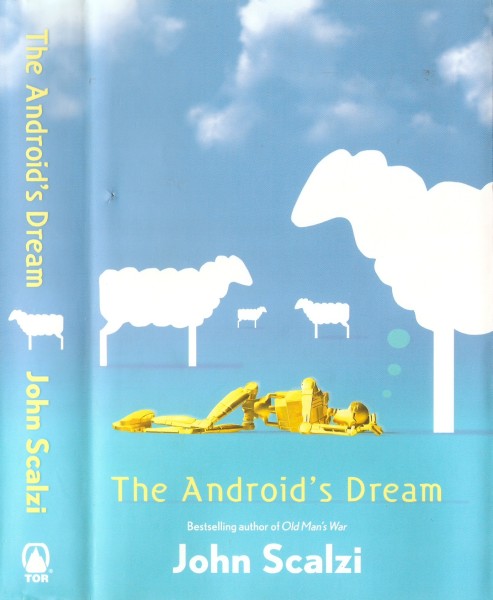
- The Android's Dream
series2 books2006
similar byfunnyscience fictionnear futurepolitical intrigue
A minor diplomatic insult with a genetically engineered sheep breed spirals into a full interstellar crisis when the last surviving specimen of the 'Android's Dream' breed, needed for a critical ceremony with the alien Nidu, turns out to have been hunted to extinction by a Nidu faction bent on provoking war. John Scalzi's The Android's Dream follows ex-soldier Harry Creek as the hunt for a replacement leads him to Robin Baker, an ordinary woman carrying hidden sheep DNA that makes her the key to avoiding a war. It's a standalone comic space opera rather than an ongoing series.
- The Mind Cage
A. E. van Vogtstandalone novel1957
similar byscience fictionnear futureour worldpsychic powers
The Mind Cage is a 1957 science fiction novel by American writer A. E. van Vogt, adapted from the short story "The Great Judge" (1948).
- The Zap Gun
Philip K. Dickstandalone novel1967
similar byscience fictionnear futureour world+2 more
The Zap Gun is a 1967 science fiction novel by American writer Philip K. Dick. It was first published as the two-part serial Project Plowshare in Worlds of Tomorrow in 1965 and 1966, before Pyramid Books issued it in paperback under its present title. The novel originated in a title-first commission devised by Pyramid editor Don Bensen and was written in 1964 during a period of rapid production in Dick's career.
- The Asylum World
John Jakesstandalone novel1969
similar byfunnyscience fictionnear futureour world
Synopsis - Take a trip to the asylum world, a mind blowing science fiction satire of our times-and times to come! Gears ground and the mechanical voice started describing Newyork. “....such noted tourist attractions as the Mailer Obelisk, the Streisand Catafalque, the ever popular Wax Museum of the Performing Arts...charming ethnic dining spots, prices beginning at 70 credits. Recommended are Nedick’s Flaming Filet, Mother’s Hot Chicken Soup Eatateria...” But the visitors from Mars couldn’t get to Newyork after all-it was closed except to official personnel. Juts then a trainload of lunatics passed the barrier. Official personnel? What on earth was wrong with earth
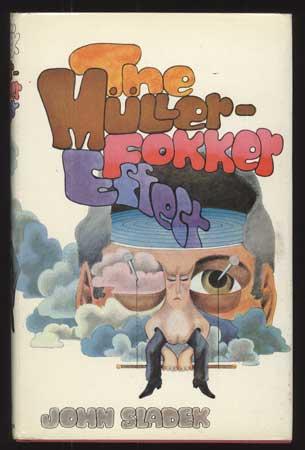
- The Müller-Fokker Effect
John Sladekstandalone novel1970
similar byfunnyscience fictionnear futureour world
The Müller-Fokker Effect is a satirical science fiction novel written by John Sladek in 1970. The first UK edition was published by Hutchinson with cover design by Bill Botten. It has long been out of print in the United States, having come out in a Pocket Books edition in 1973. A reprint was done in 1990 by Carroll & Graf. The title is a pun with the insult motherfucker, and the book itself is suffused with wordplay of all stripes.
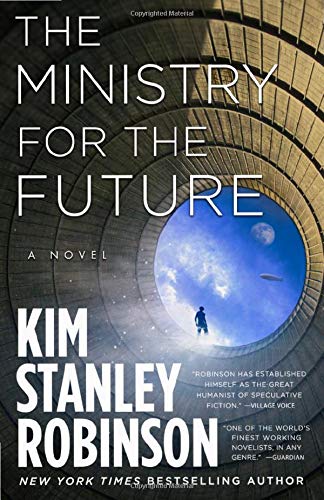
- The Ministry for the Future
Kim Stanley Robinsonstandalone novel2020
similar byscience fictionnear futureour worldpolitical intrigue+1 more
The Ministry for the Future is a climate fiction novel by American science fiction writer Kim Stanley Robinson, published in 2020. Set in the near future, the novel follows a subsidiary body, established under the Paris Agreement, whose mission is to act as an advocate for the world's future generations of citizens as if their rights were as valid as the present generation's. While the ministry pursues various ambitious projects, the effects of climate change are determined to be the most consequential. The plot primarily follows Mary Murphy, the head of the titular Ministry for the Future, and Frank May, an American aid worker traumatized by experiencing a deadly heat wave in India. Many chapters are devoted to other characters' accounts of future events, as well as their ideas about ecology, economics, and other subjects.
- The Oracle Year
Charles Soulestandalone novel2018
similar byscience fictionnear futureour worldpsychic powerspolitical intrigue
Awakening from a dream with more than one hundred predictions about the future in his head, an unassuming Manhattan bassist becomes one of the world's most powerful men and hides his identity behind an online persona that is targeted by greedy corporations and dangerous enemies.
- Galactic Milieu
series10 books1981
completed
similar byscience fictionpsychic powers+3 more
Galactic Milieu is a series of science fiction novels by Julian May. It is linked to her previously published series, the Saga of Pliocene Exile; and through the fantastical device of time-travel, acts as both a prequel and a sequel to this earlier series. The "Galactic Milieu" of the title is an interplanetary federation, and Earth's membership of it is a central plot concern.
- The Simulacra
Philip K. Dickstandalone novel1964
similar byscience fictionnear futureour worldpolitical intrigue+1 more
The Simulacra is a 1964 science fiction novel by American writer Philip K. Dick. The novel portrays a future totalitarian society apparently dominated by a matriarch, Nicole Thibodeaux. It revolves around the themes of reality and illusionary beliefs, as do many of Dick's works. Additionally, it touches on Nazi ideology.