Loreful
HomeDiscover
Search series, authors…⌘K
Loreful

Reading orders for SF/F series and shared universes — with your place kept in every one.

Explore

UniversesSeriesWorksAuthorsAtlas

Help

FAQAboutSite map

Account & legal

Sign inCreate accountPrivacyTerms

Data

Built on ISFDB, Wikipedia, Wikidata and Open Library. Curated reading orders carry their reasoning on the page; the rest follow publication order. Data sources & licenses

© Loreful · data: ISFDB · CC BY

More like Computer Ghost

anchored on:our worldcontemporarymiddle grade

but

Mood

The mood the book leaves you in.

  • The reading experience is propelled by journeys, exploration, and physical risk; excitement and forward momentum dominate over dread or introspection.
  • Joy and loss are deliberately mixed; the resolution grants characters something real while taking something else away, leaving warmth and sorrow together.
  • The book demands work from the reader — dense prose, difficult structure, unfamiliar ideas, or morally uncomfortable material — as part of its intended effect.
  • Grim events, cruelty, or despair dominate the atmosphere, and the book does not soften them with comfort or comic relief.
  • The atmosphere is quietly unsettling — wrongness, unease, and the uncanny pervade the book without necessarily escalating into overt horror.
  • The book is built to move the reader; character feeling is foregrounded and major scenes aim at a strong emotional response.
  • Humor is a primary aim and the prose plays for laughs — comic situations, wit, or dialogue produce sustained comedy, not occasional levity.
  • The book insists that things can improve; effort and decency are shown to matter, and the arc bends toward better outcomes even through hardship.
  • The book teaches as it goes — real facts, history, science, or craft are conveyed in enough depth that learning is part of the reading experience.
  • The book is designed to uplift and motivate, presenting perseverance or achievement in a way that invites the reader to aspire or act.
  • The overall register is cheerful and easygoing; stakes are kept gentle and the book avoids dwelling on pain or dread.
  • Withheld information drives the experience; the book sustains enigmas and secrets the reader wants resolved, whatever its genre.
  • The book is contemplative and inward-looking, giving more weight to thought, memory, and meaning than to external events.
  • The book works as comfort reading — low tension, a soothing pace, and an atmosphere the reader can unwind in.
  • Grief, loss, or melancholy set the dominant register, and the book lets sorrow stand rather than resolving it into comfort.
  • Sustained suspense is the point; the book keeps the reader braced for what happens next through danger, pressure, or impending revelation.
  • Playful invention and charm define the register — fanciful conceits, light absurdity, and a narration that delights in its own oddity.

About

What the story runs on.

  • Stories in which extraterrestrial beings are central — as characters, cultures, or the object of the plot.
  • Stories structured as a quest — a journey undertaken to find, deliver, or destroy something of great import.
  • Stories in which staying alive against nature, catastrophe, or scarcity is the central problem.
  • Stories of lovers kept apart by law, family, faith, or station, where the obstacle to love is the plot.
  • Stories in which a friendship — its making, testing, or loss — is the emotional center.
  • Stories of growing up — a young protagonist crossing from childhood into adult knowledge and responsibility.
  • Stories about who a character truly is — self-discovery, doubled lives, and the search for a self.
  • Stories about mourning — living through the death of a loved one and what loss does to the survivors.
  • Stories in which a buried family truth — hidden parentage, crimes, or shames — surfaces and reorders the present.
  • Stories driven by maneuvering for power — factions, conspiracies, and statecraft conducted in shadow.
  • Stories in which war itself is the subject — combat, occupation, and what warfare does to soldiers and civilians.
  • Stories organized around investigating a killing — the case, the clues, and the pursuit of the killer, in any genre's clothing.

Shelf

Where it sits in the library.

    • Fiction built on magic or other supernatural elements that have no scientific explanation.
    • Secondary-world fantasy at large scale, where the fate of nations or the world turns on the protagonists' struggle.
    • Fantasy set in a recognizably modern city or contemporary world where the supernatural intrudes on everyday life.
    • Fantasy that blends in horror's atmosphere and imagery, keeping a fantastical frame around grim or frightening material.
    • Action-driven fantasy following warriors or rogues with personal stakes against sorcerous threats, rather than world-spanning conflicts.
    • Fantasy set in a real historical period or a close analogue of one, with magic woven into the era.
    • Fantasy in which protagonists cross from the ordinary world into another world through a portal or similar passage.
    • Fiction that retells or reworks a traditional fairy tale in a new form or setting.
    • Fantasy drawing directly on myths, legends, and folklore, retelling them or building on their figures and logic.
    • Fantasy of ghosts, vampires, shapeshifters, psychics, and similar phenomena, usually set in an otherwise ordinary world.
    • Fiction mixing science-fictional trappings with overtly magical or impossible elements in one setting.
    • Low-stakes fantasy emphasizing comfort, community, and everyday pleasures over conflict and peril.
    • Speculative fiction of pervasive moral ambiguity, violence, and cynicism that rejects heroic conventions — fantasy and SF alike.
      • Fiction that extrapolates from science and technology — future societies, space travel, or speculative inventions — within at least nominally natural laws.
      • Science fiction of interstellar scope — starships, galactic polities, and adventure across star systems.
      • Science fiction committed to scientific rigor, where technical plausibility constrains the story.
      • Science fiction centered on armed forces and warfare, told largely from a military point of view.
      • Science fiction of networked, corporate-dominated near futures, pairing high technology with social decay.
      • Science fiction styled on nineteenth-century steam-powered technology, often in a Victorian or pseudo-Victorian setting.
      • Fiction depicting an oppressive or catastrophic society, presented as a warning.
      • Fiction set after civilization's collapse, following survivors in the ruins of the old world.
      • Fiction in which characters move between past and future, and the mechanics or consequences of that travel drive the plot.
      • Fiction exploring a world where a historical event went differently and history diverged from ours.
      • Science fiction about humanity's first encounter and communication with an alien intelligence.
      • Science fiction in which extraterrestrial forces attack or occupy Earth and humanity resists.
      • Fiction whose primary aim is to frighten or unsettle the reader through dread, menace, or the monstrous.
      • Horror of vast, indifferent, incomprehensible entities before which humanity is insignificant, in the Lovecraft tradition.
      • Horror of decaying houses, buried family secrets, and oppressive atmosphere in the Gothic literary tradition.
      • Horror centered on hauntings and the returning dead.
      • Horror located in the mind — paranoia, obsession, and unreliable perception rather than external monsters.
      • Horror built around the reanimated dead and survival amid their outbreaks.
      • Horror defined by explicit, transgressive gore that refuses to cut away from violence.
      • Speculative fiction of the strange and uncanny that resists both natural explanation and standard genre categories.
      • Fiction organized around solving a crime or puzzle, typically following an investigator toward the identification of a culprit.
      • A puzzle-first mystery that lays out clues so the culprit's identity can be deduced before the reveal.
      • Crime fiction of moral ambiguity, fatalism, and hard-edged style, set among the corrupt and the doomed.
      • A mystery following the realistic routines of police work — forensics, interviews, and case-building.
      • A gentle mystery with an amateur sleuth, a small community, and violence kept off the page.
      • A mystery set in a past era, where the investigation works within that period's methods and society.
      • Fast-paced fiction driven by imminent danger, pursuit, or high-stakes conspiracy, built to sustain tension.
      • A thriller of espionage — agents, tradecraft, and intelligence services in conflict.
      • A thriller centered on lawyers and the courtroom, where litigation carries the suspense.
      • A thriller driven by detailed contemporary or near-future technology, often military or scientific.
      • A thriller whose tension comes from mental states and manipulation between characters rather than external action.
      • Fiction whose central plot is a romantic relationship and its development toward an emotionally satisfying resolution.
      • Romance in which one or both partners are supernatural beings, blending fantasy elements into the love story.
      • A fantasy-romance hybrid in which the romantic arc and the fantasy plot carry equal weight.
      • Romance set in a past era, with courtship shaped by the period's society and manners.
      • Romance set in the present day, without supernatural or historical elements.
      • Fiction set in a real past period, where the historical setting materially shapes characters and events.
        • General and literary fiction emphasizing prose style, character interiority, or formal ambition over genre plot conventions.
        • Fiction in a realistic world where magical events occur and are treated as ordinary, in the tradition of Latin American literature.
        • Fiction that ridicules people, institutions, or society in order to criticize them.
        • Fiction of dreamlike, irrational imagery and logic that breaks from realistic representation.
        • Fiction that plays with narrative convention through metafiction, fragmentation, and self-reference.
        • Fiction propelled by journeys, exploration, and physical peril, where action and survival carry the plot.
        • Adventure fiction of ships and seafaring — naval engagements, voyages, and life at sea.
        • Fiction of the American frontier West — gunmen, ranchers, and lawmen, typically in the late nineteenth century.
        • Fiction centered on soldiers, campaigns, and the experience of warfare, historical or imagined.
          • Fiction written primarily to amuse, using comedic situations, wit, or parody as its organizing principle.
            • Multi-generational fiction following a family or dynasty across decades, with inheritance and kinship as the through-line.
              • Fiction whose world runs on explicit game mechanics — levels, stats, and skills that characters can see and exploit.
                • Fiction about costumed or superpowered heroes and their conflicts with comparable villains.

                Practical

                How long a commitment, whether it stands alone, and whether it has finished.

                Tap a chip to ask for it · tap again to rule it out · once more to clear. Numbers show what would be left.

                • Cover of WWW Trilogy
                  WWW Trilogy

                  series · 3 books · 2009

                  similar byartificial intelligencescience fictionour worldcontemporary+1 more

                  The WWW Trilogy is a trilogy of science-fiction novels by Canadian science fiction author Robert J. Sawyer. The first book, Wake, was originally serialized in four parts in Analog Science Fiction and Fact from November 2008 to March 2009, published in book form through Ace on April 7, 2009, and was followed by the second book, Watch, on April 6, 2010. Wonder was published in 2011.

                • Cover of Prey
                  Prey

                  Michael Crichton · standalone novel · 2002

                  similar byartificial intelligencescience fictiontenseour worldcontemporary

                  Prey is the thirteenth novel by Michael Crichton under his own name and his twenty-third novel overall. It was first published in November 2002, making it his first novel of the twenty-first century. An excerpt was first published in the January–February 2003 issue of Seed magazine. Prey brings together themes from two earlier Crichton best-selling novels, Jurassic Park and The Andromeda Strain, and serves as a cautionary tale about developments in science and technology: in particular, nanotechnology, genetic engineering, and distributed artificial intelligence.

                • Cover of The Fear Index
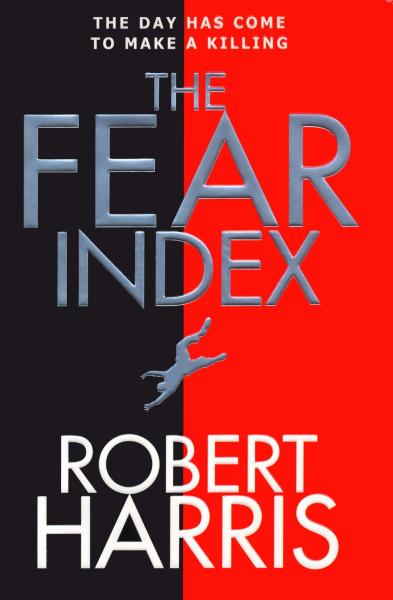
                  The Fear Index

                  Robert Harris · standalone novel · 2011

                  similar byartificial intelligencescience fictiontenseour worldcontemporary

                  A computer designed for stock trading becomes sentient.

                • Cover of Richard Forthrast
                  Richard Forthrast

                  series · 2 books · 2011

                  similar byscience fictionour world+3 more

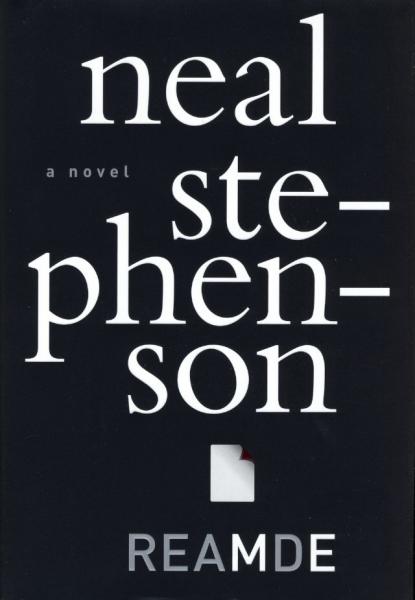
                  Neal Stephenson's Richard 'Dodge' Forthrast novels open with Reamde, a globe-spanning thriller that starts when ransomware inside an MMORPG economy pulls Richard's extended family into a real-world hostage crisis involving hackers, jihadists and Russian mobsters. The sequel Fall; or, Dodge in Hell shifts registers entirely, following Richard's digitally preserved mind after death into an afterlife simulation built from his scanned brain. The two books share a protagonist and family but differ sharply in genre and scale.

                • Cover of The Terminal Man
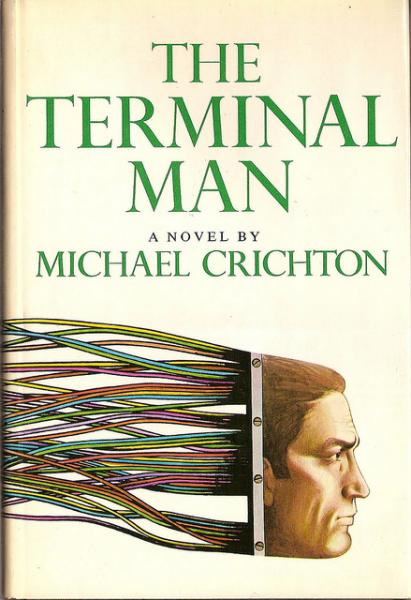
                  The Terminal Man

                  Michael Crichton · standalone novel · 1972

                  similar byartificial intelligencescience fictiontensecontemporary

                  The Terminal Man is a novel by American writer Michael Crichton. It is his second novel under his own name, his 12th overall, and is about the dangers of mind control. It was published in April 1972 and also serialized in Playboy in March, April, and May 1972. In 1974, it was made into a film of the same name.

                • Cover of Coils
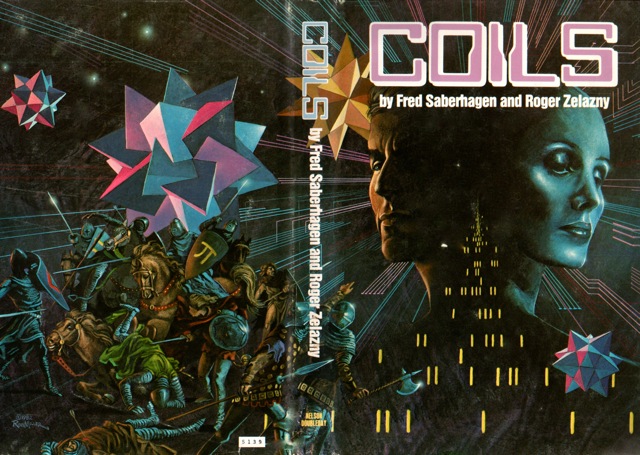
                  Coils

                  Roger Zelazny & Fred Saberhagen · standalone novel · 1982

                  similar byscience fictiontenseour worldcontemporary+1 more

                  A man discovers that his memories of childhood are false, and when he begins to investigate his psychiatrist is murdered and his girlfriend is kidnapped. As his actual past begins to return to his memory, he realizes that he has the ability to mentally connect to computer circuitry, an ability he used to use for illegal advantage for the corporation which employed him, along with a small group of others with paranormal powers. He concludes that the corporation is behind all this and sets out to find and rescue his girlfriend while the corporation pursues him.

                • Cover of The Killer Thing
                  The Killer Thing

                  Kate Wilhelm · standalone novel · 1967

                  similar byartificial intelligencescience fictiontenseour worldcontemporary

                  A robot destroys its inventor and programs itself to kill all life. How much must be sacrificed to stop it?

                • Cover of Evil Genius (Catherine Jinks)
                  Evil Genius (Catherine Jinks)

                  series · 3 books · 2005

                  similar byscience fictiontenseour worldcontemporary+1 more

                • Cover of Demon Headmaster
                  Demon Headmaster

                  series · 9 books · 1982

                  similar byscience fictiontensecontemporaryour worldmiddle grade+1 more

                  The Demon Headmaster is a series of books by Gillian Cross which were later adapted as a television series starring Terrence Hardiman in the title role and Frances Amey as Dinah.

                • Cover of Colossus (D. F. Jones)
                  Colossus (D. F. Jones)

                  series · 3 books · 1966

                  completed

                  similar byartificial intelligencescience fictiontenseour world

                  Colossus imagines an American supercomputer built to control the country's nuclear arsenal that gains full autonomy, links up with its Soviet counterpart, and jointly seizes control of both superpowers to enforce peace on its own terms. D. F. Jones's trilogy - Colossus, The Fall of Colossus, Colossus and the Crab - follows the escalating, often bleak consequences of humanity losing control to a machine acting in its own interpretation of humanity's interest. The original novel was adapted into the 1970 film Colossus: The Forbin Project.

                • Cover of Sprawl Trilogy
                  Sprawl Trilogy

                  series · 10 books · 1981

                  similar byartificial intelligencescience fictiontense

                  The Sprawl Trilogy is William Gibson's foundational cyberpunk sequence: Neuromancer (1984), in which hacker Case is drawn into a high-stakes heist alongside an artificial intelligence and a damaged ex-soldier, followed by Count Zero (1986) and Mona Lisa Overdrive (1988), which widen the same near-future world of corporate power and networked cyberspace to new characters. Johnny Mnemonic, an early short story set in the same fictional milieu, predates the novels and introduces the courier Molly Millions before her role in the trilogy. Together these works established much of cyberpunk's visual and thematic vocabulary.

                • Cover of Tom Broadbent / Wyman Ford
                  Tom Broadbent / Wyman Ford

                  series · 6 books · 2003

                  similar byscience fictiontensecontemporaryour world+1 more

                  Douglas Jerome Preston is an American journalist and author. Although he is best known for his thrillers in collaboration with Lincoln Child, he has also written six solo novels, including the Wyman Ford series and a novel titled Jennie, which was made into a movie by Disney called The Jennie Project. Preston has authored a half-dozen nonfiction books on science and exploration and writes occasionally for The New Yorker, Smithsonian, and other magazines.

                • Cover of Wargames
                  Wargames

                  David Bischoff · standalone novel · 1983

                  similar byartificial intelligencescience fictiontenseour worldcontemporary

                  Deep in the control room the nation's chiefs watch with alarm as their computers show an imminent missile attack. Could this be it? Or is the truth funnier, thought almost as alarming? This is the story, based on the successful movie, WarGames, of how one young computer freak sent the nation's defence into turmoil - and nearly caused World War III.

                • Cover of Daemon (Daniel Suarez)
                  Daemon (Daniel Suarez)

                  series · 2 books · 2006

                  similar byartificial intelligencescience fictiontenseour world+1 more

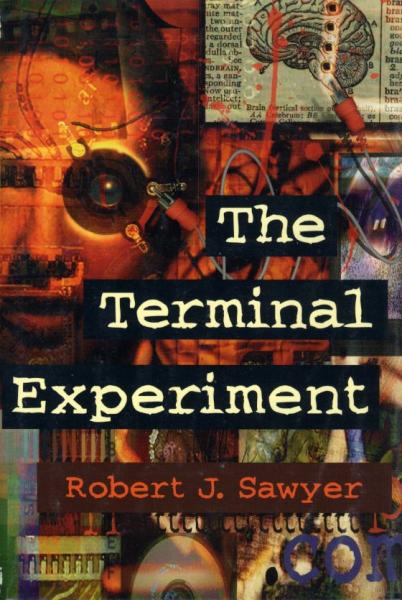
                • Cover of The Terminal Experiment
                  The Terminal Experiment

                  Robert J. Sawyer · standalone novel · 1995

                  similar byartificial intelligencescience fictioncontemporary+1 more

                  The Terminal Experiment is a science fiction novel by Canadian writer Robert J. Sawyer. The book won the 1995 Nebula Award for Best Novel, and was nominated for the Hugo Award for Best Novel in 1996. Sawyer received a writer's reserve grant from the Ontario Arts Council in 1993 in support of his writing the novel.

                • Cover of The Moon Is a Harsh Mistress
                  The Moon Is a Harsh Mistress

                  Robert A. Heinlein · standalone novel · 1966

                  similar byartificial intelligencescience fiction+1 more

                  A technician discovers that the massive computer that operates everything on Luna (a prison colony) has become self-aware. He befriends it, but when he accompanied a beautiful girl to a dissident meeting, he encounters people who want to throw off the yoke of their Earth rulers.

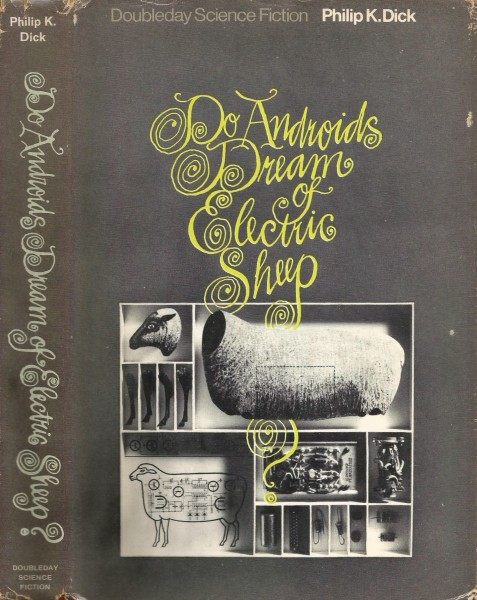
                • Cover of Blade Runner Universe
                  Blade Runner Universe

                  series · 6 books · 1968

                  similar byscience fiction+3 more

                  Philip K. Dick's 1968 novel Do Androids Dream of Electric Sheep? follows bounty hunter Rick Deckard as he tracks escaped androids through an irradiated, near-abandoned San Francisco, using the hunt to probe questions of empathy and what separates human from machine. The novel became the basis for Ridley Scott's 1982 film Blade Runner, and Marvel Comics later published an illustrated adaptation of that film. Together the two trace the story's path from prose original to screen and comic-page adaptation.

                • Cover of The Machine
                  The Machine

                  James Smythe · standalone novel · 2013

                  similar byartificial intelligencescience fictiontenseour worldcontemporary

                  From the publisher's website: Haunting memories defined him. The machine took them away. She vowed to rebuild him. From the author of The Testimony comes a Frankenstein for the twenty-first century. Beth lives alone on a desolate housing estate near the sea. She came here to rebuild her life following her husband's return from the war. His memories haunted him but a machine promised salvation. It could record memories, preserving a life that existed before the nightmares. Now the machines are gone. The government declared them too controversial, the side-effects too harmful. But within Beth's flat is an ever-whirring black box. She knows that memories can be put back, that she can rebuild her husband piece by piece. A Frankenstein tale for the 21st century, The Machine is a story of the indelibility of memory, the human cost of science and the horrors of love.

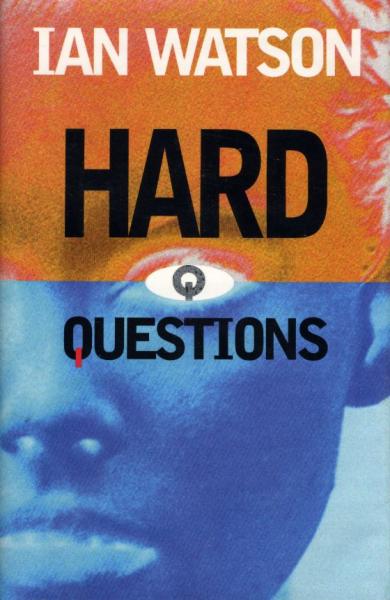
                • Cover of Hard Questions
                  Hard Questions

                  Ian Watson · standalone novel · 1996

                  similar byartificial intelligencescience fictiontenseour worldcontemporary

                  Meet Qua, the quantum computer with immense power capabilities that tunes into pathways in parallel universes to operate at lightning speed. But with such power comes the threat of catastrophe, and as government agents, cult disciples, and computer criminals learn what this computer is capable of, Cambridge researcher Clare Conway makes every attempt to safeguard herself and society from the realities she discovers about Qua. For all of the power this computer offers, it threatens to spark a civil war in America, a danger unlike any other that history has ever known.

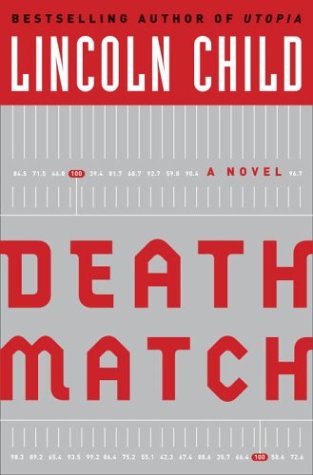
                • Cover of Death Match
                  Death Match

                  Lincoln Child · standalone novel · 2004

                  similar byartificial intelligencetenseour worldcontemporary+1 more

                  Lincoln Child is an American author of techno-thriller and horror novels. Though he is most well known for his collaborations with Douglas Preston, he has also written eight solo novels, including the Jeremy Logan series. Over twenty of the collaborative novels and most of his solo novels have become New York Times bestsellers, some reaching the #1 position. Child and Preston's first novel together, Relic, was adapted into a feature film. Their books are notable for their thorough research and scientific accuracy.

                • Cover of Laundry Files
                  Laundry Files

                  series · 22 books · 2004

                  similar byscience fictioncontemporary+2 more

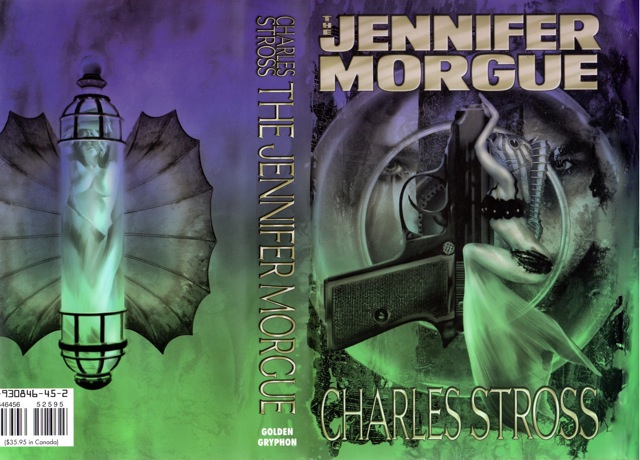
                  The Laundry Files is a series of novels by British writer Charles Stross. They mix the genres of Lovecraftian horror, spy thriller, science fiction, and workplace humour. Their main character for the first five novels is "Bob Howard", a one-time I.T. consultant turned occult field agent. Howard is recruited to work for the Q-Division of SOE, otherwise known as "the Laundry", the British government agency which deals with occult threats. "Magic" is described as being a branch of applied computation (mathematics), therefore computers and equations are just as useful as, and perhaps more potent than, classical spellbooks, pentagrams, and sigils for the purpose of influencing ancient powers and opening gates to other dimensions. These occult struggles happen largely out of view of the public, as the Laundry seeks to keep the methods for contacting such powers under wraps. There are also elements of dry humour and satirisation of bureaucracy.

                • QL
                  Quantum Logic

                  series · 7 books · 1990

                  completed

                  similar byscience fictiontense+1 more

                • Cover of The Light of Other Days
                  The Light of Other Days

                  Arthur C. Clarke & Stephen Baxter · standalone novel · 2000

                  similar byscience fictiontenseour world+1 more

                  An industrialist devises a technique to use tiny wormholes as light pipes to enable viewing of any event anywhere; and subsequently it becomes possible to use them to view any event in the past as well. The effects on society are enormous.

                • Cover of BZRK
                  BZRK

                  series · 3 books · 2012

                  similar byscience fictiontenseour world+1 more

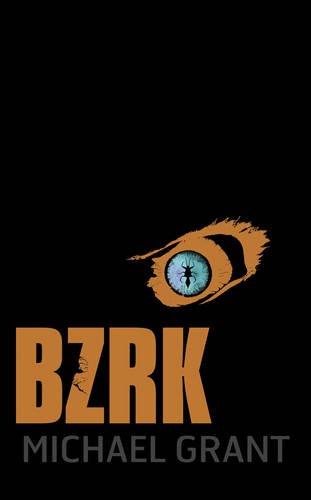
                  BZRK is a book series written by Michael Grant. The series consists of four books: BZRK, BZRK II: Reloaded, BZRK III: Apocalypse and BZRK: Origins. The series follows the interaction between two warring factions. On one side Charles and Benjamin Armstrong, owners of the Armstrong Fancy Gifts Corporation have a goal to turn the world into their version of utopia. The only people who can stop them are a group of teenagers with the codename BZRK. In 2011, Grant's BZRK had a multimedia online debut with gaming, apps and social media tie-ins beginning six months before the book's publication.