More like Concentration
anchored on:our worldcontemporaryscience fictiontime travelliterary & generalidentity+2 more
but
- Concrete Island
J. G. Ballardstandalone novel1974
similar byidentityreflectiveour worldcontemporarychallengingliterary & general
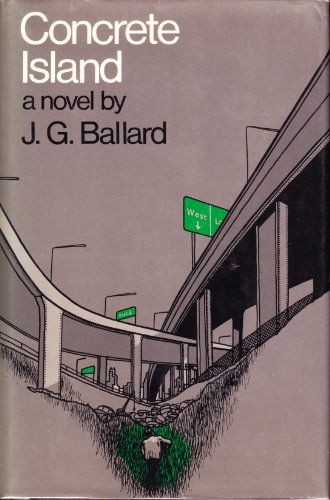
Architect Robert Maitland crashes his car onto a stretch of wasteland trapped between three converging motorways -- visible from thousands of cars, reachable by none of them. Injured and unable to climb back to the road, Maitland adapts to life on what he starts calling the Island, scavenging food thrown from car windows, and discovers he isn't alone: a runaway sex worker hiding in a bunker, and a brain-damaged former circus acrobat, both long past expecting rescue. What begins as a survival story turns into a question of whether Maitland even wants to leave. A J. G. Ballard novel of urban isolation, grouped with Crash and High-Rise.
- Lost
Gregory Maguirestandalone novel2001
similar byidentityreflectiveour worldcontemporarygrief and lossliterary & general
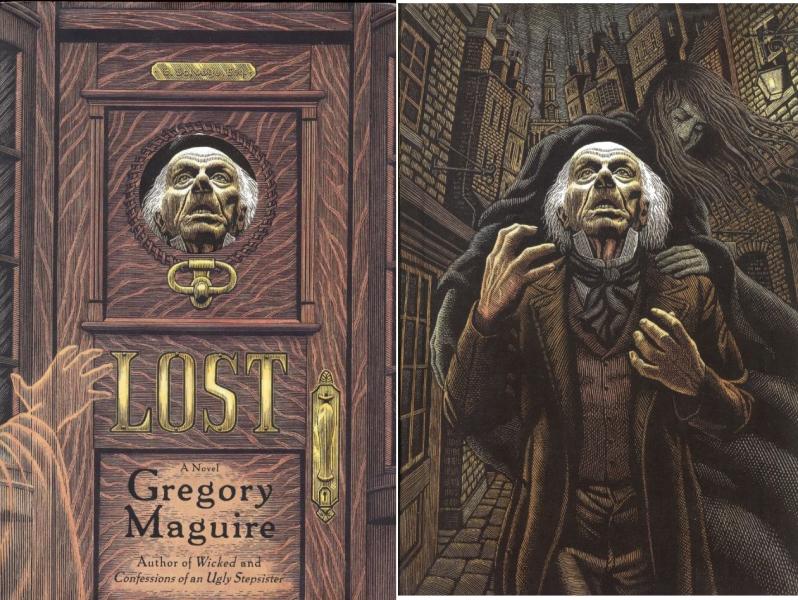
Lost is a 2001 novel by American author Gregory Maguire. Unlike many of Maguire's other adult novels, Lost is set in the real world. The novel's concept is that the protagonist is a distant relative of the man who inspired Charles Dickens' character of Ebenezer Scrooge.
- Replay
Ken Grimwoodstandalone novel1987
similar byidentityreflectiveour worldgrief and losstime travelscience fiction
Replay is a fantasy novel by American writer Ken Grimwood, first published by Arbor House in 1987. It won the 1988 World Fantasy Award for Best Novel.
- Never Let Me Go
Kazuo Ishigurostandalone novel2005
similar byidentityreflectiveour worldgrief and lossscience fictionliterary & general
Never Let Me Go is a 2005 science fiction novel by the British author Kazuo Ishiguro. It was shortlisted for the 2005 Man Booker Prize, for the 2006 Arthur C. Clarke Award and the 2005 National Book Critics Circle Award. Time magazine named it the best novel of 2005. It included the novel in its '100 Best English-language novels published since 1923—the beginning of TIME'. It also received an ALA Alex Award in 2006. A film adaptation directed by Mark Romanek was released in 2010.
- More Than Human
Theodore Sturgeonstandalone novel1953
similar byidentityreflectiveour worldscience fictionshort story cycle
More Than Human is a 1953 science fiction fix-up novel by American writer Theodore Sturgeon. It is a revision and expansion of his 1952 novella Baby Is Three, which is bracketed by two additional parts written for the novel, "The Fabulous Idiot" and "Morality". It won the 1954 International Fantasy Award, which was also given to works in science fiction. It was additionally nominated in 2004 for a "Retro Hugo" award for the year 1954. Science fiction critic and editor David Pringle included it in his book Science Fiction: The 100 Best Novels.
- Stranger in a Strange Land
Robert A. Heinleinstandalone novel1961
similar byidentityreflectivechallengingour worldscience fiction
Stranger in a Strange Land is a 1961 science fiction novel by the American author Robert A. Heinlein. It tells the story of Valentine Michael Smith, a human who comes to Earth in early adulthood after being born on the planet Mars and raised by Martians, and explores his interaction with and eventual transformation of Terran culture.
- The Man Who Folded Himself
David Gerroldstandalone novel1973
similar byidentityreflectivecontemporaryour worldscience fictiontime travel
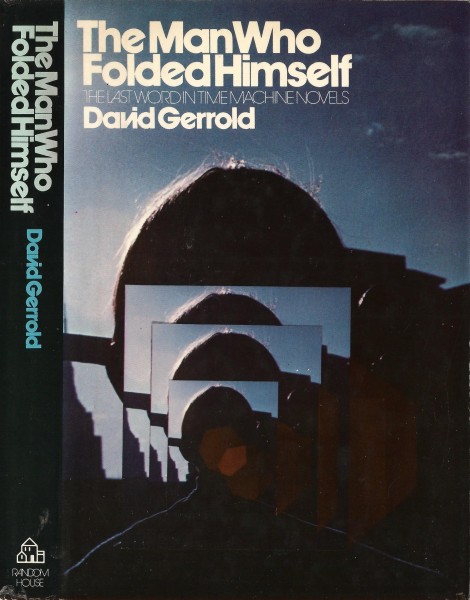
The Man Who Folded Himself is a 1973 science fiction novel by American writer David Gerrold. It was nominated for the Nebula Award for Best Novel in 1974 and the Hugo Award for Best Novel in 1974. The book explores the psychological, physical, and personal challenges that manifest when time travel is possible for a single individual at the touch of a button.
- Briefing for a Descent Into Hell
Doris Lessingstandalone novel1971
similar byidentityreflectiveour worldcontemporarychallengingliterary & general
Briefing for a Descent into Hell is a 1971 psychological novel by British novelist Doris Lessing. It was shortlisted for that the 1971 Booker Prize.
- VALIS
series4 books1981
completed
similar byidentityreflectivechallengingscience fiction+3 more
The VALIS trilogy is a set of science fiction/philosophical novels by author Philip K. Dick which include VALIS (1981), The Divine Invasion (1981), and The Transmigration of Timothy Archer (1982). Dick's first novel about the VALIS concept originally titled "VALISystem A", was published as Radio Free Albemuth after Dick's death in 1985.
- Dying Inside
Robert Silverbergstandalone novel1972
similar byidentityreflectivecontemporaryscience fiction+1 more
Dying Inside is a 1972 science fiction novel by American writer Robert Silverberg. It was first serialized in Galaxy in 1972 and published in book form by Charles Scribner's Sons later that year. The novel follows David Selig, a middle-aged telepath in contemporary New York City, as the mind-reading ability that has shaped his life begins to disappear.
- The Collected Stories of Carol Emshwiller
series2 books2011
completed
similar byidentityreflectiveour worldcontemporaryscience fictionliterary & generalshort story cycle+1 more
- A Visit from the Goon Squad
series2 books2010
similar byreflectivecontemporaryliterary & generalshort story cycle+2 more
Jennifer Egan's A Visit from the Goon Squad follows a loosely connected group of characters orbiting the music industry across several decades, told through interlocking chapters that jump between narrators, timelines, and, in one chapter, a PowerPoint presentation. The Candy House returns to several of the same characters and their descendants a decade later, in a world reshaped by a technology that lets people access and share their memories. Egan links the two books through recurring characters more than a continuous plot.
- The Ice Queen
Alice Hoffmanstandalone novel2005
similar byidentityreflectiveour worldcontemporarygrief and lossliterary & general
The Ice Queen is a 2005 novel by Alice Hoffman, published by Little, Brown.Wishes... burn your tongue the moment they're spoken, and you can never take them back.
- The Satanic Verses
Salman Rushdiestandalone novel1988
similar byidentityour worldcontemporarychallengingliterary & general+1 more
The Satanic Verses is the fourth novel by British–Indian writer Salman Rushdie. First published in September 1988, the book was inspired by the life of the Islamic prophet Muhammad. As with his previous books, Rushdie used magical realism and relied on contemporary events and people to create his characters. The title refers to the Satanic Verses, a group of Quranic verses about three pagan Meccan goddesses: Allāt, Al-Uzza, and Manāt. The part of the story that deals with the satanic verses was based on accounts from the historians al-Waqidi and al-Tabari.
- Childhood's End
Arthur C. Clarkestandalone novel1953
similar byidentityreflectiveour worldscience fiction
Childhood's End is a 1953 science fiction novel by the British author Arthur C. Clarke. The story follows a peaceful alien invasion of Earth by mysterious Overlords, whose arrival begins decades of apparent utopia under indirect alien rule, at the cost of human identity and culture.
- Speak
Louisa Hallstandalone novel2015
similar byidentityreflectiveour worldcontemporaryscience fictionliterary & general
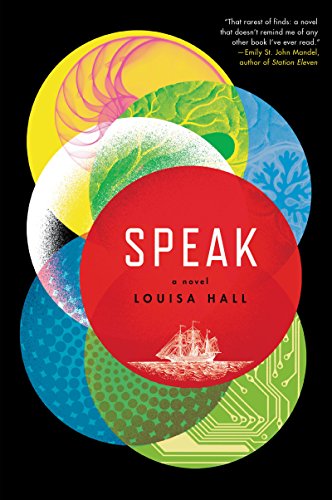
Speak is a 2015 novel by Louisa Hall. It is her second novel, after The Carriage House. The novel was well received. The novel was inspired by a story in the New York Times.
- The Dreaming Jewels
Theodore Sturgeonstandalone novel1950
similar byidentityour worldcontemporaryscience fiction+1 more
The Dreaming Jewels (1950), also known as The Synthetic Man, is a science fiction novel by American writer Theodore Sturgeon. It was his first published novel.
- The Falling Woman
Pat Murphystandalone novel1986
similar byidentityreflectivecontemporarygrief and lossliterary & general+1 more
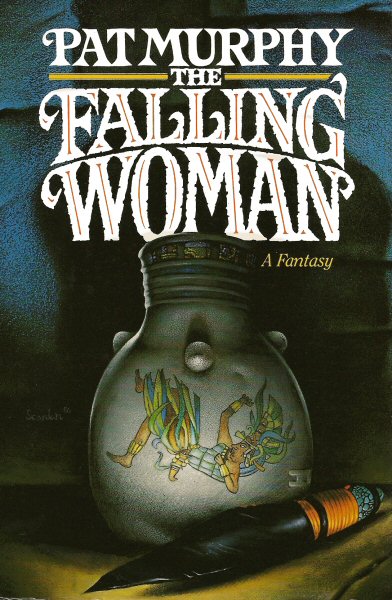
The Falling Woman is a 1986 contemporary psychological fantasy novel by Pat Murphy. The book won the Nebula Award for Best Novel in 1987.
- Godbody
Theodore Sturgeonstandalone novel1986
similar byidentityreflectiveour worldcontemporaryscience fiction
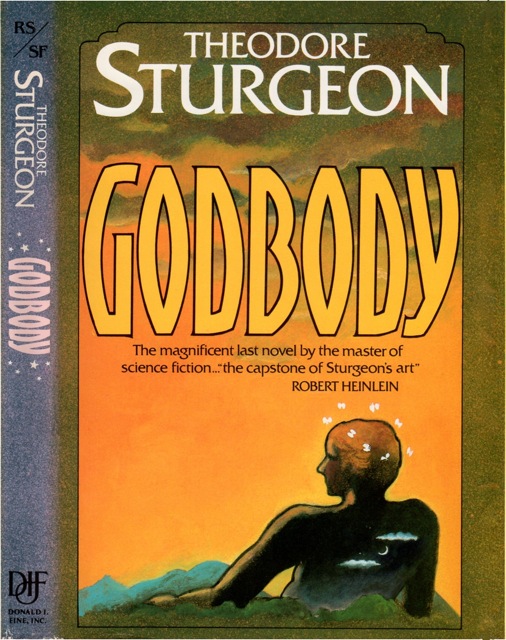
Godbody is a science fiction novel by American writer Theodore Sturgeon, published posthumously in 1986. A foreword, "Agape and Eros: The Art of Theodore Sturgeon", was contributed by Robert A. Heinlein and an afterword was contributed by Stephen R. Donaldson.
- Camouflage
Joe Haldemanstandalone novel2004
similar byidentityreflectiveour worldcontemporaryscience fiction
Camouflage is a 2004 science fiction novel by American writer Joe Haldeman. It won the James Tiptree, Jr. Award in 2004 and the Nebula Award for Best Novel in 2005.
- Whileaway
series4 books1972
completed
similar byreflectivecontemporarychallengingscience fiction+3 more
Joanna Russ's The Female Man (1975) is a single feminist science fiction novel, not a multi-book series, built around four women from parallel timelines with very different gender arrangements. One of them, Janet, comes from Whileaway, an all-female utopian Earth ten centuries in the future where men died out in a plague; the other three come from realities closer to Russ's own, and their collisions are used to interrogate what womanhood and equality could mean under different social rules.
- Wittgenstein's Mistress
David Marksonstandalone novel1988
similar byidentityreflectiveour worldcontemporarychallengingliterary & general
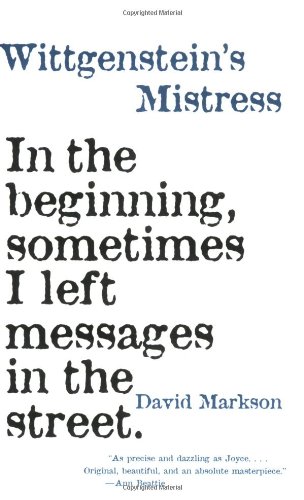
Wittgenstein's Mistress is a 1988 experimental novel written by David Markson. A highly stylized work in the tradition of Samuel Beckett, the novel is mainly a series of statements made in the first person. The protagonist is a woman named Kate who believes herself to be the last human on earth; though her statements shift quickly from topic to topic, the topics often recur, and often refer to Western cultural icons, ranging from Zeno to Beethoven to Willem de Kooning. Readers familiar with Ludwig Wittgenstein's Tractatus Logico-Philosophicus will recognize stylistic similarities to that work.
- Phases of Gravity
Dan Simmonsstandalone novel1989
similar byidentityreflectiveour worldgrief and lossliterary & general
Follows Richard Baedecker, an Apollo astronaut who walked on the moon, through his midlife crisis. He meanders through India, Glen Oak Illinois, the mountains of Colorado, and the coastline of Oregon, checking up on his son and his former Apollo crewmates.