More like Conquistador
anchored on:science fictionalternate historyalternate earthmid 20th centurycolonialismnorth america+2 more
but
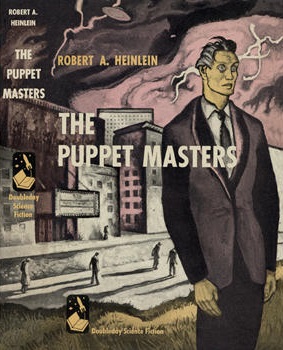
- The Puppet Masters
Robert A. Heinleinstandalone novel1951
similar bymid 20th centuryscience fictiontensesurvivalnorth america+1 more
Parasitical aliens attach themselves to human hosts and take over their bodies. Two spies are sent to find out what's happening, but the extent is much farther than they knew. With access to the humans' memories, the aliens quietly invade the government and start taking over.
- Alas, Babylon
Pat Frankstandalone novel1959
similar bymid 20th centuryscience fictiontensesurvivalnorth america+1 more
Classic novel of nuclear war and aftermath in rural Florida. From the back cover of a Bantam Pathfinder edition: "The day that the bomb dropped the thousands of years of "progress" that had covered the treacheries and weaknesses of ordinary man with a thin veneer of civilization were dissolved and melted like snow on the desert's dusty face. Then - the law of the jungle reigned but in the wreckage a few courageous survivors, men and women with the guts to have hope, were determined to build a new and better world on the ruins of the old. This is their story."
- Eden (Harry Harrison)
series5 books1984
completed
similar byscience fictionalternate historysurvivalalternate earth+3 more
Harry Harrison's Eden trilogy imagines an Earth where the dinosaurs never died out, evolving instead into the Yilane, a technologically advanced reptilian civilization that shares the planet uneasily with early humans. West of Eden (1984) introduces the clash between the two species; Winter in Eden and Return to Eden carry it forward as a shifting climate forces both sides to adapt or die. It's an alternate-evolution saga more than a conventional dinosaur adventure.
- I Am Legend
Richard Mathesonstandalone novel1954
similar bymid 20th centurytensesurvivalscience fictionnorth america
The last human survivor of the vampire epidemic has to maintain his defences against their onslaught, while attempting to research the cause and possibly solution to the plague. Robert Neville is the last living man on Earth... but he is not alone. Every other man, woman and child on the planet has become a vampire, and they are hungry for Neville's blood. By day he is the hunter, stalking the undead through the ruins of civilization. By night, he barricades himself in his home and prays for the dawn. How long can a man survive like this?
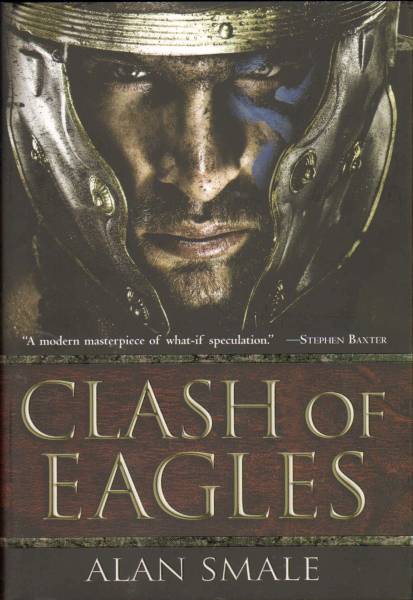
- Clash of Eagles / The Hesperian Trilogy
series4 books2010
similar bycolonialismalternate historyadventuroustensealternate earthnorth america
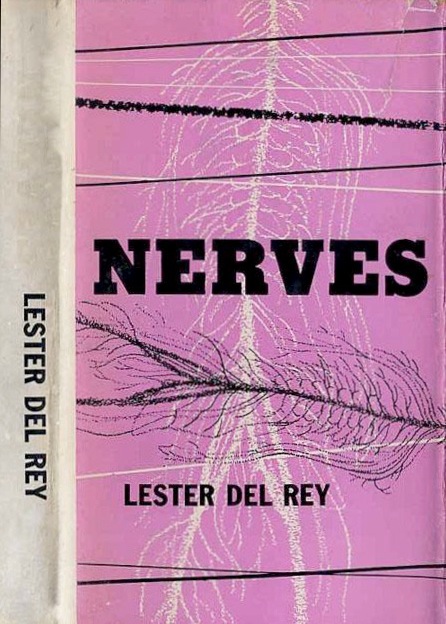
- Nerves
Lester del Reystandalone novel1956
similar bymid 20th centuryscience fictiontensesurvivalnorth america+1 more
At the great atomic plant in Kimberly, a congressional committee makes a surprise inspection raising the level of the men's tension even higher than it has been. By midday there have already been minor accidents but in the giant nuclear converters which are at the heart of the project work goes on at desperate speed. Until converter Number four fails disastrously. Jorgenson, the supervisor of the technical team and his crew had been running through a new and unstable isotope when the walls of the reactor gave way. The process of fusion is suddenly out of control...and half a continent may be destroyed in a "peace-time" disaster which will not only sacrifice millions of lives but will destroy the possibility of controlled nuclear power forever.Jorgenson, the crew chief has survived the accident and is the only man who knows how to stop the runaway reactor. But Jorgenson is trapped inside that reactor, unable to communicate. He must be found and saved quickly in a desperate race...or risk the globe itself.
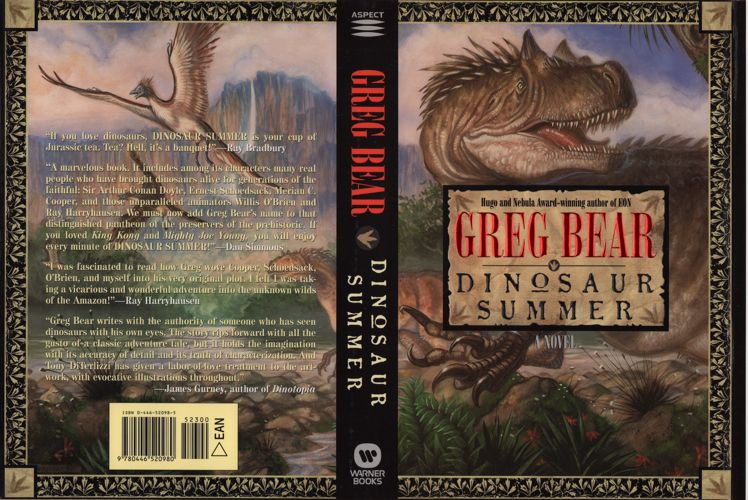
- Dinosaur Summer
Greg Bearstandalone novel1998
similar bymid 20th centuryadventuroustensesurvivalscience fiction+1 more
From the flaps of the Warner first edition: "It's the year 1947, and nobody's interested in dinosaurs anymore. Less than fifty years after Professor Challenger's famed journey to the Lost World, America's last dinosaur circus is closing down... but the adventure of a lifetime is about to begin. In a dramatic change of pace, multiple Hugo and Nebula award-winning science fiction master Greg Bear, ... presents a lavishly illustrated thriller that is certain to become a new classic adventure beyond time... Peter Belzoni is dreading summer in Manhattan. Then his father, photojournalist Anthony Belzoni, offers the youth a job, a byline in National Geographic... and a trip to South America. For the Lothar Gluck Circus, once the world's foremost dinosaur attraction, had gone bankrupt. Left behind is a menagerie of avisaurs, centrosaurs, and ankylosaurs, as well as one large predatory raptor named Dagger. And now two filmmakers and the circus trainer plan to return the giants to the wild - with Peter and his dad chronicling the odyssey for Geographic. The task seems impossible. Many have died trying to bring beasts our of the Lost World, the plateau of El Grande in Venezuela, but nobody has ever attempted to transport nearly a dozen full-grown, multiton prehistoric creatures across continents, down rivers, through jungles, and up mountains that has been isolated for 70,000,000 years... The trek will strain the technologies of trains, cargo ships, barges, trucks... en route lurk robbers and hostile, trigger-happy soldiers... and each mile toward freedom excites Dagger toward an unstoppable primal killing frenzy. When the unthinkable threatens to strand Peter and the rest of the crew in an uncharted realm, four modern Americans will face all the unknown dangers, mysteries, and terrors of El Grande..."
- The Final Countdown
Martin Caidinstandalone novel1980
similar bymid 20th centuryscience fictionadventuroustensealternate historynorth america+1 more
Amazon: December 7th, 1980. The United States Naval Carrier Nimitz is the finest warship in the world. She is carrying a nuclear payload that can level a continent. And a fleet of fighter jets that can deliver it. Her crew is a handpicked one - like Captain Matthew Yelland, who endured the torture of the Viet Cong and did not break. And Warren Lasky, the civilian "think-tank" who designed the warship to weather any battle. But a nightmare journey has brought her to a place where no amount of brains or courage can help. To a battle no man can win: Pearl Harbor December 7th, 1941.
- Have Space Suit - Will Travel
Robert A. Heinleinstandalone novel1958
similar byscience fictionadventuroustensesurvivalnorth america
From the back cover of the Del Rey 9th printing: "Skyjacked - Everything happened at once. One minute Kip Russell was walking about in his own backyard, testing out an old space suit and dreaming about going to the moon - and the next he was out cold and the captive of an insidious space pirate. The whole thing seemed like a very bad dream until he discovered he wasn't the only prisoner on board. Then the reality of the situation became inescapable. He - along with the daughter of a world-renowned scientist and a beautiful creature from an alien planet - had been skyjacked by a monstrous extraterrestrial and they were on their way to the Moon... a journey toward a fate worse than death!"
- The Black Cloud
Fred Hoylestandalone novel1957
similar bymid 20th centuryscience fictiontensesurvival
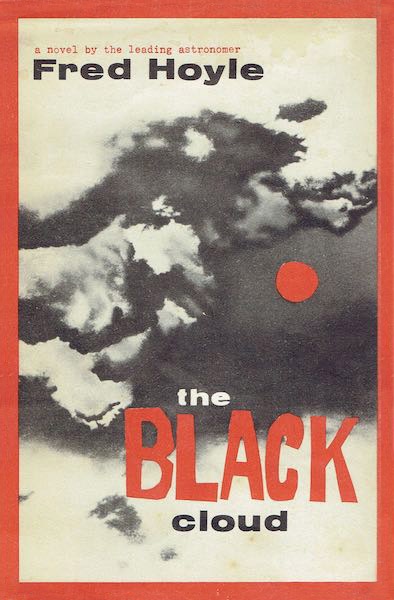
The Black Cloud is a 1957 science fiction novel by British astrophysicist Fred Hoyle. It details the arrival of an enormous cloud of gas that enters the Solar System and appears about to destroy most of the life on Earth by blocking the Sun's radiation.
- Three to Conquer
Eric Frank Russellstandalone novel1956
similar bymid 20th centuryscience fictiontensesurvivalnorth america+1 more
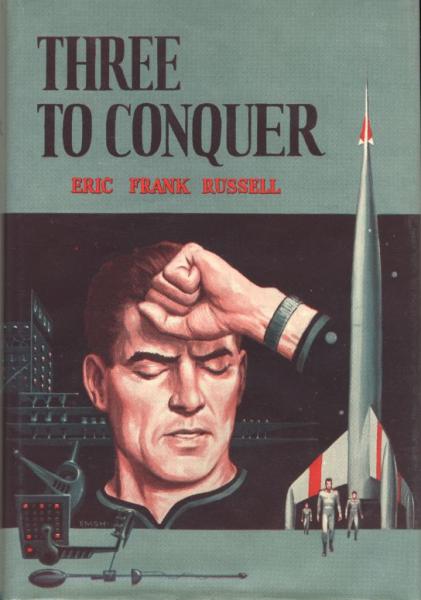
Three to Conquer is a novel by Eric Frank Russell published in 1956.
- The Kraken Wakes
John Wyndhamstandalone novel1953
similar bymid 20th centuryscience fictiontensesurvival
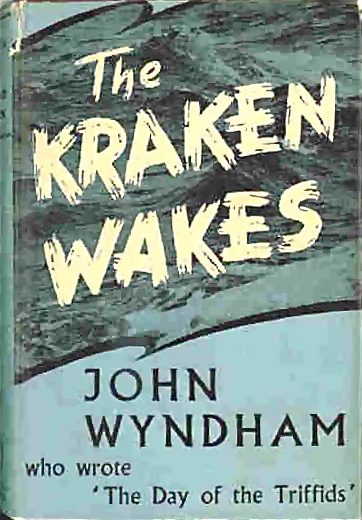
" Behind a spectacular meteor shower actually hides the beginning of an invasion by a mysterious and powerful alien race. Earth's life is disrupted by the attacks of extraterrestrials whose war machines, emerging from the depths of the oceans, seem indestructible. The coalitioned forces of the whole world are worthless, powerless in the face of the indecipherable and deadly plans of a superior intelligence, capable of bringing the entire planet to the brink of catastrophe" Goodreads May 20, 2022
- The Body Snatchers
Jack Finneystandalone novel1955
similar bymid 20th centuryscience fictiontensenorth america+1 more
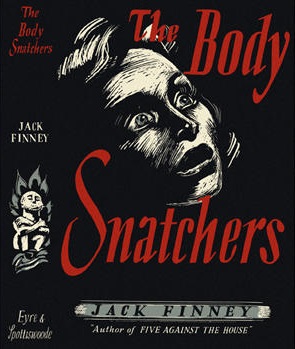
The Body Snatchers is a science fiction horror novel by American writer Jack Finney, originally serialized in Collier's magazine in November–December 1954 and published in book form the following year.
- Oswald Bastable
series5 books1971
part of Moorcock's Multiverse
similar byalternate historyadventurousscience fictionalternate earth+1 more
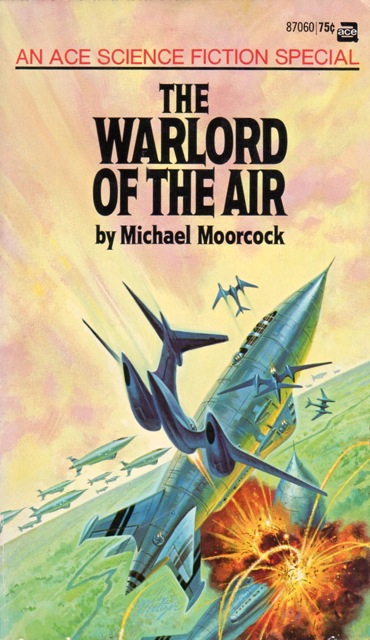
Oswald Bastable follows an Edwardian-era British soldier flung into a series of alternate futures where the First World War never happened, opening with The Warlord of the Air (1971). Across the trilogy he drifts between rival empires and airship wars, an early and influential example of what would later be called steampunk. Michael Moorcock's A Nomad of the Time Streams trilogy sits within his wider multiverse of linked worlds and recurring avatars of the Eternal Champion.
- Trinity
A. J. Hartley & Tom DeLongestandalone novel2024
similar bymid 20th centuryscience fictiontensealternate historynorth america+1 more
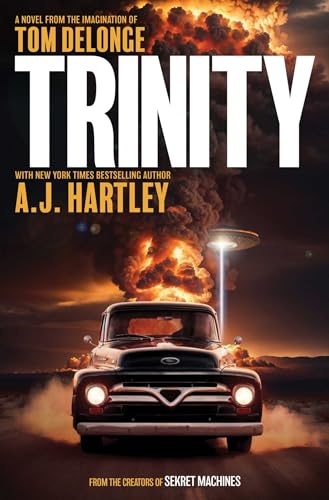
A thrilling new novel by the creators of Sekret Machines who, with the help of a team of government insiders, exposed the secret pentagon UFO program that captured America’s attention and led to the first public congressional hearings about unidentified flying objects. It’s 1962, in Trinity, Nevada, a small town on the edge of the desert, home to a military base serving the nuclear testing grounds. Van Lopez and his brother Andy have enough to do keeping their truck running and the local criminal gang happy to be concerned about nuclear tests. Van has dreams, or—he’s not sure what to call them—that he cannot explain or forget, but when he sees mysterious lights in the sky, he struggles to make sense of what now feel like his earliest memories. On the day of the atomic test, the nuclear blast brings down something over Trinity that wasn’t supposed to be there—something not of this world. Now Van is running for his life, pursued by a murderous Soviet agent and government forces bent on keeping all he has seen—and all he has remembered—from getting out. Romances and rivalries come to a head as he fights for the things he cares about most, and in that final battle he may have to make allies of his oldest enemies. A thrilling new novel by the creators of Sekret Machines who, with the help of a team of government insiders, exposed the secret pentagon UFO program that captured America’s attention and led to the first public congressional hearings about unidentified flying objects.
- Dolphin Island
Arthur C. Clarkestandalone novel1963
similar bymid 20th centuryscience fictionadventuroussurvival
A teen stows away on a giant freight hovership that makes an emergency landing near his house. When the craft is lost at sea, his life is saved by a school of dolphins that leads him to an island in the Great Barrier Reef. There he meets a research team that is trying to learn to communicate with dolphins.
- Fallout
Todd Strasserstandalone novel2013
similar bymid 20th centuryscience fictionalternate historytensesurvivalnorth america
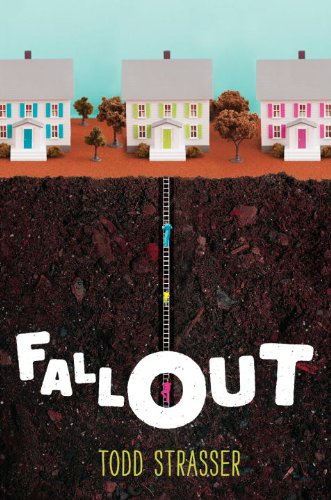
When an unthinkable nuclear attack occurs in an alternate-reality 1962, Scott is forced into his father's bomb shelter with his family and neighbors, where they rapidly consume limited supplies and fear the worst about the fate of the world outside.
- A Fall of Moondust
Arthur C. Clarkestandalone novel1961
similar byscience fictionadventuroustensesurvival
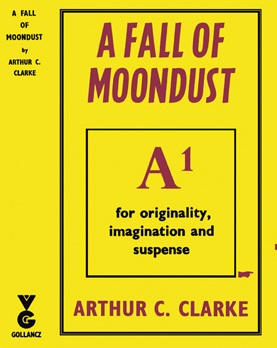
From the back cover of the Harbrace paperback: "The action of A Fall of Moondust takes place almost a century from now when tours on the moon are a common occurrence. One of the high points of each tour is a cruise around the Sea of Thirst, a body of volcanic dust, in a specially designed vessel called the Selene On a perfectly routine voyage one day the Selene suddenly disappears. How do you locate a small tourist "cruiser" buried beneath fifty feet of dust? If you find it, how do you rescue the passengers and crew? If you are on board, how do you feel and what do you do while brave men and expert technicians join forces in a race against time? Sustained excitement, lively humor, and an engaging cast of characters make this one of Arthur C. Clarke's most intriguing novels."
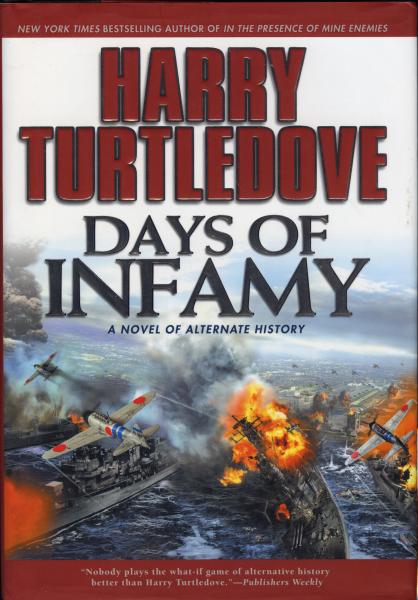
- Days of Infamy
series2 books2004
similar bycolonialismalternate historytensenorth america+1 more
Harry Turtledove's Days of Infamy duology reimagines the Pacific theater of World War II with an alternate outcome at Pearl Harbor: a Japanese invasion and occupation of Hawaii rather than a single carrier strike. Days of Infamy covers the invasion itself, while End of the Beginning follows the ensuing occupation and eventual counter-invasion. As in his other alternate-history work, Turtledove follows the changed war through a wide, rotating cast of civilian and military viewpoints.
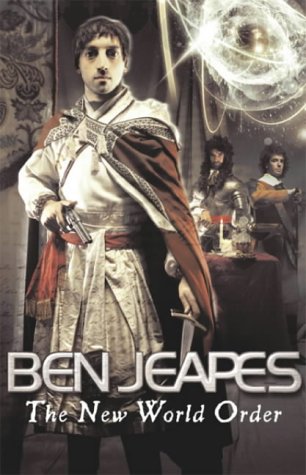
- The New World Order
Ben Jeapesstandalone novel2004
similar bycolonialismscience fictionalternate historytensealternate earth
Publisher's description: "Having ended England's Civil War between the Roundheads and the Royalists in 1645, the Overlord of the Holekhor, a race from another world, and his half-English son question the decision to colonize the island and convert their beloved English to a faith characterised by witches and myriad gods."
- Burning Paradise
Robert Charles Wilsonstandalone novel2013
similar byscience fictionalternate historytensesurvivalalternate earthnorth america
"Cassie Klyne, nineteen years old, lives in the United States in the year 2015--but it's not our United States, and it's not our 2015. Cassie's world has been at peace since the Great Armistice of 1918. There was no World War II, no Great Depression. Poverty is declining, prosperity is increasing everywhere; social instability is rare. But Cassie knows the world isn't what it seems. Her parents were part of a group who gradually discovered the awful truth: that for decades--back to the dawn of radio communications--human progress has been interfered with, made more peaceful and benign, by an extraterrestrial entity. That by interfering with our communications, this entity has tweaked history in massive and subtle ways. That humanity is, for purposes unknown, being farmed. Cassie's parents were killed for this knowledge, along with most of the other members of their group. Since then, the survivors have scattered and gone into hiding. Cassie and her younger brother Thomas now live with her aunt Nerissa, who shares these dangerous secrets. Others live nearby. For eight years they have attempted to lead unexceptional lives in order to escape detection. The tactic has worked. Until now. Because the killers are back. And they're not human"--
- The Master
T. H. Whitestandalone novel1957
similar bymid 20th centuryscience fictionadventurous+2 more
Set on and inside Rockall, a small island more than 200 miles northwest of Ireland that Britain claimed in September 1955 (and later annexed) --purportedly in response to the world-threatening events featured in this adventure story, which occurred there that summer --on and inside the rock. Twelve-year-old twins and their pet dog discover a plot to dominate the world, led by a 157-year-old genius physicist and telepath (mad scientist).
- The Year When Stardust Fell
Raymond F. Jonesstandalone novel1958
similar bymid 20th centuryscience fictiontensesurvivalnorth america
The Year When Stardust Fell is a science fiction novel written by Raymond F. Jones. It was initially published in 1958 by the John C. Winston Company.